Skip to content
amagicsoft logo icon
  • Home
  • Products
    • Magic Data Recovery
    • Magic Recovery Key
  • Store
  • Blog
  • More
    • About Amagicsoft
    • Contact US
    • Privacy Policy
    • Terms
    • License Agreement
    • Refund Policy
  • English
    • 日本語
    • 한국어
    • Deutsch
    • Français
    • 繁體中文
Wiki

Data Logging

01.12.2025 Eddie Comments Off on Data Logging
Data Logging

Table of Contents

When Problems Happen Without a Trace

A system hangs, a backup fails halfway, or a file transfer corrupts a critical archive.
If you have no logs, you only see the final symptom and guess what went wrong.

Data logging solves that gap.
By recording key events and transfer operations, you create a timeline that explains failures and supports safe recovery instead of trial and error.


What Data Logging Covers in Practice

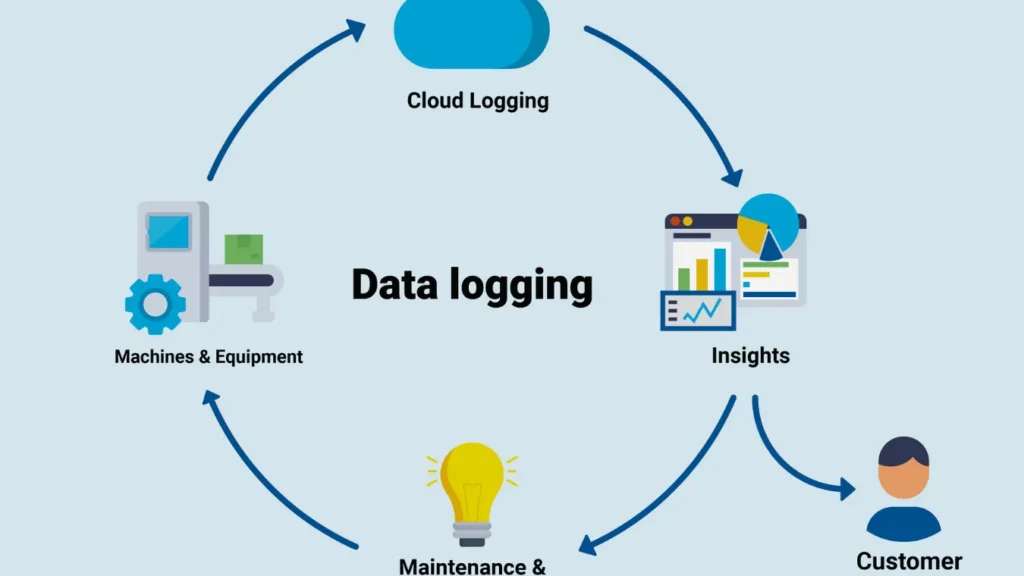
Data logging means that software records structured information about what it did and what happened around it.
Each record carries details such as time, component, action, and result.

Common log sources include:

  • Operating system events and driver messages

  • Application logs for backup, databases, and services

  • File transfer logs (FTP, SFTP, HTTP, SMB)

  • Security and audit logs for access and configuration changes

Together, they show how data moves, when operations succeed, and where errors start.

Event details that matter most

Effective logs focus on data you can act on:

  • Exact timestamps with time zone or UTC

  • IDs for jobs, sessions, and connections

  • File names, paths, sizes, and checksums when relevant

  • Error codes and plain-language summaries

With that detail, you can link a log entry directly to a file, disk, or backup set during investigation.


Logging Around Backup, Restore, and File Recovery

Backup and recovery workflows depend heavily on accurate logs.
Without them, you cannot prove that a job ran or explain why it produced partial results.

Important points in the chain:

  • Start and end times for each backup job

  • Source and destination paths, including network locations

  • Amount of data processed, skipped, and verified

  • Checksums or signatures for key files and images

When you use Amagicsoft Data Recovery after a failure, logs help you answer two questions quickly: which volume or folder to scan and which time window matters.


How Data Logging Happens Behind the Scenes

Software components usually log through a common framework rather than writing files in an ad hoc way.
That framework standardizes format, rotation, and retention.

Typical mechanisms:

  • Text log files with structured lines or JSON entries

  • Windows Event Log channels for system and application events

  • Database-backed logging for high-volume services

  • Remote log collectors that receive messages over the network

You can also route important logs into SIEM or monitoring tools to detect problems while they still develop, not only after users complain.


Building a Logging Plan for Windows-Based Systems

Instead of enabling every possible log, you pick signals that matter to your environment.
A short planning exercise pays off over time.

A practical sequence:

  1. List critical systems: backup servers, file servers, application servers, and endpoints.

  2. For each system, identify the events that affect data safety and integrity.

  3. Configure logging levels so routine operations stay visible without producing noise.

  4. Centralize key logs or copies on a secure server for long-term retention.

  5. Document where each class of log lives and who can read it during an incident.

This structure keeps logs usable and prevents disks from filling with low-value messages.


Using Logs During Incident Response and Recovery

When something breaks, you do not start with deep disk scans.
You start with logs to narrow the search.

Typical approach:

  1. Align user reports with log timestamps to find the first failure.

  2. Check backup and transfer logs around that time for warnings and errors.

  3. Identify which disk, share, or file set suffered interruption.

  4. Decide whether a restore from backup or targeted recovery from disk works best.

At that point, Amagicsoft Data Recovery can focus on the right volume and directories, guided by information the logs already revealed.

Supports Windows 7/8/10/11 and Windows Server.


Conclusion

Data logging turns invisible system behavior into a readable history.
It helps you understand why transfers fail, when backups miss files, and how system changes affect stored data.

With clear, well-structured logs feeding into your backup and recovery processes, you spend less time guessing and more time fixing issues.
Combined with tools such as Amagicsoft Data Recovery, good logging practices give you both an explanation of what happened and a reliable path back to healthy data.

Download Magic Data Recovery

Supports Windows 7/8/10/11 and Windows Server

FAQ

How is data logging done?

Data logging occurs through software components that collect events and write them to a chosen destination. Applications call logging libraries, operating systems emit event records, and devices send messages to central collectors. You configure formats, levels, and retention so important information remains accessible without overwhelming storage or staff.

What is the main purpose of logging?

The main purpose is accountability and visibility. Logging shows what systems did, who accessed resources, and how operations behaved over time. It gives you evidence when you investigate failures, measure performance, or review security alerts. Without logs, analysis depends on memory and guesswork instead of documented facts.

Why would you use a data logger?

You use a data logger when you need continuous or repeated measurement without constant human supervision. In IT, that might mean tracking transfer jobs, disk health, or service uptime. The logger stores readings or events with timestamps, so you can later review trends, detect anomalies, or correlate patterns with specific incidents.

What are the two main types of logging?

People often distinguish between operational logging and security or audit logging. Operational logs focus on performance, errors, and system health for troubleshooting and capacity planning. Security and audit logs focus on access, configuration changes, and policy enforcement so you can investigate suspicious activity and meet compliance requirements.

What is meant by data logging?

Data logging means recording information about system behavior, events, or measurements over time. Software or hardware writes structured entries that capture what happened, when it occurred, and which component took part. Those records then support troubleshooting, auditing, performance analysis, and data recovery after failures or user errors.

What is an example of data logging?

A simple example involves a backup application that records each job. It logs start and end times, the source and target locations, bytes transferred, and any errors. Later, when a restore fails or files go missing, you review those log entries to confirm what the job actually protected and where it stopped.

What is the purpose of logging data?

The main purpose is to create an objective history of system actions and outcomes. Logs let you verify that operations ran, trace the root cause of incidents, and prove compliance with policies. They also support capacity planning, performance tuning, and targeted recovery when something corrupts data or interrupts a transfer.

What is data logging in ICT?

In ICT, data logging refers to automated recording of events, metrics, and transactions across networks and systems. Routers, servers, applications, and storage devices all generate logs about traffic, resource usage, and errors. These digital traces help administrators manage infrastructure, secure services, and respond to problems efficiently.
  • WiKi
Eddie

Eddie is an IT specialist with over 10 years of experience working at several well-known companies in the computer industry. He brings deep technical knowledge and practical problem-solving skills to every project.
文章导航

Previous
Next

Search

Categories

  • Bitlocker Recovery
  • Deleted File Recovery
  • Format File Recovery
  • Hard Drive Recovery
  • License Key Recovery
  • Lost File Recovery
  • Memory Card Recovery
  • News
  • Photo Recovery
  • SSD Recovery
  • Uncategorized
  • USB Drive Recovery
  • User Guide
  • Wiki

Recent posts

  • The Pros and Cons of SSDs as External Hard Drives
    The Pros and Cons of SSDs as External Hard Drives
  • How to Use Target Disk Mode and Share Mode on Mac Computers
    How to Use Target Disk Mode and Share Mode on Mac Computers: A Complete Guide
  • Duplicate File Finder
    Duplicate File Finder

Tags

How to Magic Data Recovery Magic Recovery Key WiKi

Related posts

Duplicate File Finder
Wiki

Duplicate File Finder

02.12.2025 Eddie No comments yet

Table of Contents Duplicate Files Are Not Real Backups Many users keep “extra safety” copies of documents by dragging them into new folders or external drives.Over time, these copies multiply and turn into clutter rather than protection. Duplicate files waste storage, slow backups, and make data recovery more confusing.A Duplicate File Finder helps identify redundant copies so […]

Context Switch
Wiki

Context Switch

02.12.2025 Eddie No comments yet

Table of Contents CPU Time as a Shared Resource Modern operating systems juggle dozens or hundreds of active threads.Only a few CPU cores exist, so most threads wait in queues while a small subset runs. A context switch lets the scheduler pause one running thread and resume another.This rapid switching creates the illusion of parallelism […]

Data Acquisition
Wiki

Data Acquisition

02.12.2025 Eddie No comments yet

Table of Contents  Incident Scene: Data at Risk Before Collection When an incident occurs, the first instinct often involves “looking around” the live system.Unplanned clicks, root logins, or file copies can alter timestamps, logs, and unallocated space before anyone records a clean state. Data acquisition solves this problem.It focuses on collecting data in a controlled […]

amagicsoft logo icon

Our vision is to become a globally renowned software brand and service provider, delivering top-tier products and services to our users.

Products
  • Magic Data Recovery
  • Magic Recovery Key
Policy
  • Terms
  • Privacy Policy
  • Refund Policy
  • License Agreement
Company
  • About Amagicsoft
  • Contact US
  • Store
Follow Us

Copyright © 2025 Amagicsoft. All Rights Reserved.

  • Terms
  • Privacy Policy