
所有檔案都消失了?9 種方法讓它們重現
打開一個熟悉的資料夾,卻發現裡面完全空無一物,這實在令人驚慌。你第一反應可能會是:「為什麼會 我的所有檔案都不見了?” 然而,空的資料夾並不一定代表 Windows 已刪除其中的內容。檔案可能是被隱藏、移至其他使用者設定檔、重定向至 OneDrive,或是因檔案系統損壞而無法存取。.
如果這些檔案很重要,請停止將新資料儲存至受影響的磁碟機。已刪除的資料通常仍可恢復,直到 Windows 覆寫其儲存空間為止。本指南將說明如何安全地診斷問題、找出仍存在的檔案,以及如何使用 刪除的檔案復原 當一般的 Windows 工具無法將它們恢復時。.
目錄
當所有檔案突然消失時,應立即採取哪些措施
在測試修復方案之前,請先備份硬碟上剩餘的所有資料:
- 請停止向受影響的磁碟下載、安裝或複製檔案。.
- 請勿對 Windows 標示為 RAW 或無法讀取的磁碟進行格式化。.
- 在恢復重要資料之前,請勿執行具侵入性的修復指令。.
- 僅在裝置運作正常時,才應保持其連線狀態。.
- 如果硬碟發出喀噠聲、反覆斷開連接,或運作速度極為緩慢,請將其關機,並諮詢資料復原專家。.
這些預防措施至關重要,因為故障排除可能會改變磁碟的狀態。修復工具可能會修復目錄,同時捨棄受損的參照;而在源磁碟上安裝軟體,則可能會覆寫已被刪除的內容。.
為什麼我的所有檔案都消失了?
「“我的所有檔案都不見了”「」描述的是一種症狀,而非單一問題。您觀察到的細節通常能指向最可能的成因。.
你所看到的 | 可能的解釋 | 最佳的第一步 |
「桌面」、「文件」和「圖片」看起來像是新建立的或空的 | 臨時或不同的 Windows 設定檔 | 請檢查 C:\Users |
檔案不見了,但資料夾還在 | 隱藏屬性、刪除、惡意軟體或受損的目錄項目 | 顯示隱藏項目,然後進行掃描 |
Windows 更新後檔案消失了 | 個人設定變更、OneDrive 重定向,或 Windows.old 遷移 | 搜尋這台電腦並檢查使用者資料夾 |
外接硬碟看似空的,但仍佔用空間 | 隱藏檔案或檔案系統損壞 | 檢查屬性與「磁碟管理」 |
已刪除檔案,但儲存空間仍滿 | 資源回收筒、還原點、暫存資料,或磁碟報告不正確 | 檢查儲存設定 |
某個分割區顯示為 RAW 或「未分配」 | 檔案系統或分割區損壞 | 修復前復原資料 |
只剩下捷徑了 | 原始檔案已被移動或刪除 | 開啟捷徑的「內容」視窗,並檢查其「目標」欄位 |
在實際的技術支援案例中,當 Windows 僅是載入了臨時使用者設定檔時,使用者往往誤以為資料已被刪除。新的桌面背景、預設的工作列、個人設定遺失,以及陌生的桌面介面,都是明確的線索,顯示這些檔案其實仍存在於另一個帳戶之下。.
在整台電腦中搜尋遺失的檔案
請先從侵入性最小的方法開始。微軟也建議,若在升級後發生檔案遺失的情況,應對整台電腦進行搜尋。.
- 按下 Windows + E 鍵以開啟檔案總管。.
- 選擇 此電腦 在左側面板中。.
- 請在搜尋框中輸入已知的檔案名稱。.
- 如果您記不得檔案名稱,請試著根據副檔名進行搜尋,例如 *.docx、*.xlsx、*.pdf、*.jpg 或 *.mp4。.
- 右鍵點擊某個搜尋結果,然後選擇 開啟檔案位置.
另請檢查 首頁 > 最新消息 在「檔案總管」中,以及 Word、Excel 或建立該文件之應用程式內的「最近使用過的檔案」清單中。即使該捷徑已無法開啟,最近使用過的項目仍可能顯示原始路徑。.
如果搜尋結果為零,可能是因為 Windows 索引不完整。從 此電腦 雖然花費的時間較長,但涵蓋的範圍比「開始」選單搜尋更廣。.
顯示隱藏及受保護的檔案
當 檔案不見了,但資料夾還在, 應盡早檢查隱藏屬性。惡意軟體、傳輸中斷或錯誤指令都可能將檔案標記為隱藏或系統項目,卻未刪除其資料。.
在 Windows 11 中:
- 開啟檔案總管。.
- 選擇 檢視 > 顯示 > 隱藏項目.
- Return to the affected folder.
For a deeper check, select View > Show > Options, open the 檢視 tab, and temporarily clear Hide protected operating system files. Read the warning carefully and restore this setting after troubleshooting.
If the missing content appears faded, select it, open 屬性, 清除 隱藏, and apply the change to its subfolders and files.
Advanced users can inspect attributes from Command Prompt:
- attrib “D:\Affected Folder\*” /s /d
Replace D: and the folder name with the correct location. Avoid copying random attrib commands from forums until you have confirmed the drive letter and path.
Check for a Temporary or Different User Profile
A failed sign-in or Windows update may load a temporary profile. This makes the computer look freshly configured even though the original files remain elsewhere.
Press Windows + R, enter %userprofile%, and press Enter. Check the path shown in File Explorer. If it points to an unfamiliar account or a temporary folder, browse to:
- C:\Users
Open each recognizable user folder and inspect its Desktop, Documents, Downloads, Pictures, and Videos directories.
If Windows says it cannot sign in to your account, save any new work created during that session to an external drive before signing out. Microsoft warns that changes made in a temporary profile can disappear when the session ends.
Do not delete the old account folder after locating your files. Copy essential data to another drive first, then address the profile problem separately.
Inspect OneDrive and Other Cloud Locations
Windows may redirect Desktop, Documents, or Pictures to OneDrive. Disabling folder backup, signing into another Microsoft account, or changing synchronization settings can make all files disappear from their expected local paths.
Check both of these locations:
- C:\Users\您的名稱\桌面
- C:\Users\您的名稱\OneDrive\桌面
Repeat the check for Documents and Pictures. Next, sign in to OneDrive on the web and inspect 我的檔案, 回收站, 以及 已分享.
Pay attention to the status icons in File Explorer. A cloud icon means the file is online-only, not deleted. If you need a local copy, right-click it and choose 請始終將此裝置保持在開啟狀態.
Microsoft 365 subscribers may also use 還原您的 OneDrive to undo widespread deletion, corruption, or unwanted synchronization changes from a previous point in time.
Check the Recycle Bin and Available Backups
If you accidentally deleted a folder normally, Windows may have moved its contents to the Recycle Bin.
Open the Recycle Bin, sort by 刪除日期, select the files, and click 還原. Windows should return them to their original folders. Items removed with Shift+Delete, from many USB drives, or after emptying the Recycle Bin will not appear there.
For permanently removed data, avoid writing new files to the same disk. You can learn more about recovering Shift-deleted files or restoring files from an emptied Recycle Bin.
Next, check any backup that existed before the loss:
- 在 Windows 中搜尋 使用「檔案歷史紀錄」還原您的檔案.
- Right-click the original folder, select 屬性, ,並開啟 先前版本.
- Inspect an external backup drive or NAS.
- Check cloud trash, version history, and deleted-file areas.
File History and Previous Versions only work when Windows created a copy before the files vanished. System Restore, by contrast, primarily protects system components and should not be treated as a personal-file backup.
Recover Missing Data with Magic Data Recovery
If search, hidden-file checks, user profiles, cloud storage, and backups find nothing, the directory records may have been deleted or damaged. That is the point where recovery software becomes useful.
Magic Data Recovery scans storage directly instead of relying only on the folders that File Explorer can display. It supports recovery after accidental deletion, formatting, file-system errors, lost partitions, system reinstallation, and virus-related damage.
在以下情況下,這點尤為重要:
- Files are missing but folders are still there.
- 「資源回收筒」已經清空了。.
- A USB drive or memory card suddenly appears empty.
- Windows asks you to format a previously working drive.
- A partition becomes RAW or inaccessible.
- Normal search cannot locate the data.
Magic Data Recovery supports more than 5,000 file formats, including documents, photos, videos, audio, archives, email databases, and many specialist formats. Its scan results can be filtered by path or file type, while file preview helps confirm that you have found the correct content before recovery.
Unlike File History, it does not require a backup created in advance. Unlike command-line recovery, its visual workflow suits users who do not want to construct recovery commands manually. However, no software can restore sectors that new data has already overwritten.
如何使用 Magic Data Recovery
1. Install it safely. 下載 Magic Data Recovery, but do not install it on the drive where the files vanished. If the loss occurred on C:, use another computer or installation destination when practical.
支援 Windows 7/8/10/11 和 Windows Server
2. Scan the original location. Launch the program and select the affected disk or partition. Allow the scan to search for deleted files and file-system records.
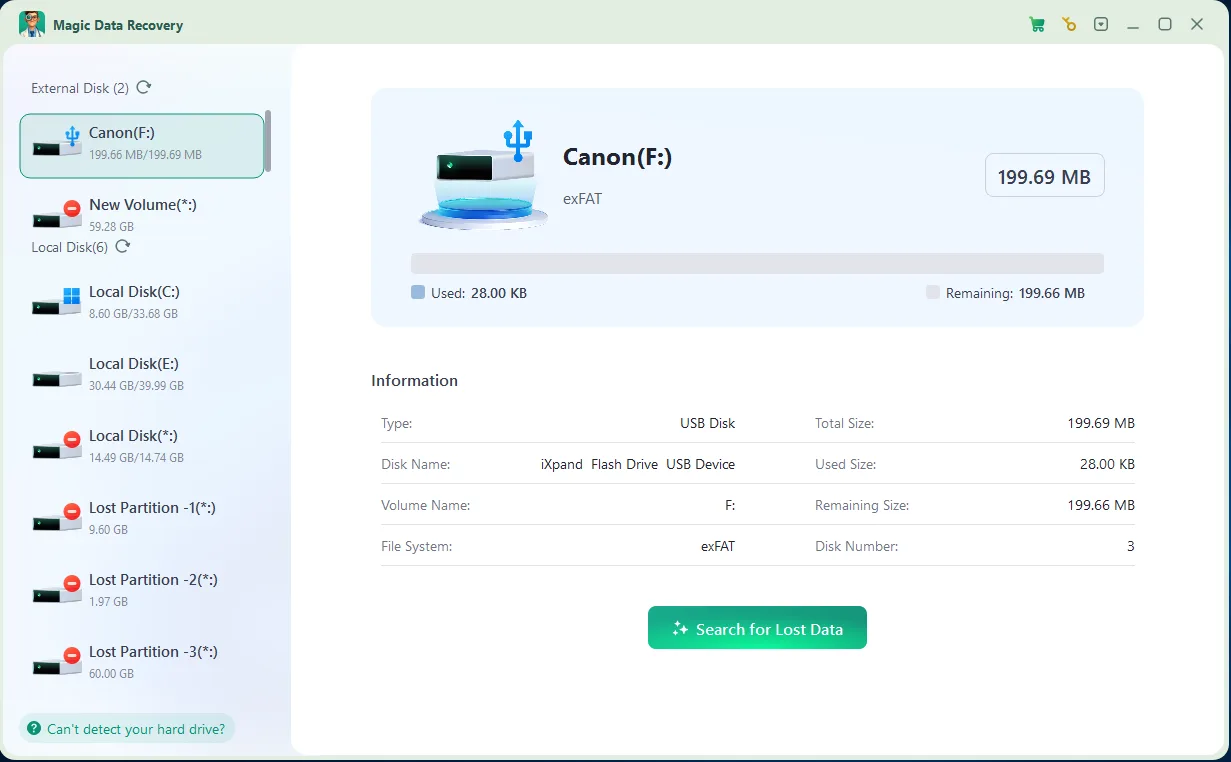
3. Preview and recover. Filter the results, preview important files, and select what you need. Save recovered data to a different physical drive.

A typical example involves a photographer whose SD card still contains named folders, while every photo appears missing. Showing hidden items may solve an attribute problem. If it does not, scanning the card can locate deleted image records without first formatting or repairing the card.
What If Files Are Missing but Folders Still There?
Folders and files do not depend on identical metadata records. A file-system problem can leave directory names visible while losing or damaging the records that point to individual files. That is why an intact folder tree does not prove that its contents remain accessible.
Check the folder’s 屬性. If it contains zero files and uses almost no space, the files may have been deleted or moved. If the drive still reports substantial used space, hidden data or damaged file-system records become more likely.
You can also compare the affected drive in Disk Management:
- Right-click Start and select 磁碟管理.
- Find the correct disk by capacity.
- Check its drive letter, partition size, and file-system status.
- Do not initialize, format, or create a new volume over missing data.
A healthy partition with no drive letter may only need an unused letter assigned. A RAW or Unallocated volume requires more caution. Recover important files before changing its structure.
Why Are Deleted Files but Storage Still Full?
搜尋 deleted files but storage still full may refer to two different situations. First, Windows may have deleted the visible files but retained other data. Second, the file system may not be reporting free space correctly.
Common explanations include:
- The files remain in the Recycle Bin.
- Another user account has its own Recycle Bin or large folders.
- Restore points and shadow copies use disk space.
- Temporary files, update files, or application caches expanded.
- OneDrive files remain downloaded locally.
- A program still holds temporary working data.
- File-system errors cause incorrect free-space reporting.
- Hidden or protected system files account for the difference.
開啟 「設定」>「系統」>「儲存空間」 and review the categories before deleting anything. Microsoft’s Windows 儲存空間使用指引 explains how Temporary files and Cleanup recommendations report space usage.
Do not run cleanup immediately if you still need to recover deleted files from that drive. Cleanup creates and removes data, and normal Windows activity can overwrite recoverable sectors. Finish recovery first. Then empty the Recycle Bin, review temporary files, and use Storage Sense if appropriate.
For external drives, disconnect and reconnect the device after safely ejecting it. If the reported usage remains inconsistent, recover important data before running repair tools.
Check and Repair the Drive—After Recovery
CHKDSK can inspect and repair logical file-system errors, but repair is not the same as recovery. The command changes file-system structures and may convert damaged fragments into .chk files. Therefore, do not make it your first step when irreplaceable files are missing.
After you recover or back up the important content, open Terminal as administrator and begin with a non-repairing scan:
- chkdsk D: /scan
Replace D: with the affected drive letter. Review the result before using repair parameters. Microsoft’s CHKDSK documentation explains each option and its effect.
If a drive disconnects, clicks, reports many bad sectors, or repeatedly becomes RAW, software repair may worsen the situation. Power it down and seek professional help, particularly when no backup exists.
What Not to Do After All Files Disappeared
A rushed response can turn recoverable loss into permanent loss. Avoid these common mistakes:
- 請勿在受影響的磁碟分割上安裝復原軟體。.
- Do not save recovered files back to their original drive.
- Do not format a RAW disk because Windows recommends it.
- Do not initialize an unknown or unallocated disk.
- Do not run CHKDSK repeatedly on a failing drive.
- Do not keep using an SSD after permanent deletion.
Recovery from an SSD can be less predictable because TRIM may allow the device to clear deleted blocks. Stop using the SSD promptly rather than assuming the files will remain available indefinitely.
How to Prevent Another Missing-File Emergency
Once the immediate problem is resolved, use a simple backup routine:
- Keep three copies of important data.
- Store them on at least two different types of media.
- Keep one copy offsite or in reliable cloud storage.
- Enable version history or File History.
- Test backups by restoring a few files periodically.
- Eject removable drives before disconnecting them.
- Investigate repeated SMART warnings or file-system errors.
Synchronization is helpful, but it is not always a complete backup. A deletion can synchronize across devices, so retain an independent versioned copy.
總結
當 all files disappeared, begin with safe checks rather than immediate repairs. Search the entire PC, reveal hidden items, inspect C:\Users, verify OneDrive, and look through the Recycle Bin and backups. If 檔案不見了,但資料夾還在, treat hidden attributes and file-system damage as distinct possibilities.
Magic Data Recovery is recommended when Windows can no longer locate the files and no usable backup exists. It addresses deletion, formatting, lost partitions, and file-system errors while offering filters and previews that make a large recovery job easier to manage.
Most importantly, it scans before you repair the source drive. For a broader explanation of safe recovery choices when 我的所有檔案都不見了, refer to Amagicsoft’s 已刪除檔案復原指南. Locate first, recover second, and repair only after your important data is safe.
支援 Windows 7/8/10/11 和 Windows Server
常見問題
為什麼我的所有檔案突然都消失了?
檔案可能會因 Windows 載入了另一個使用者設定檔、OneDrive 變更了檔案位置、檔案被設為隱藏,或是檔案系統記錄損毀而消失。此外,也有可能是因誤刪或惡意軟體所致。在嘗試修復磁碟之前,請先透過「檔案總管」搜尋、檢查隱藏項目、查看 C:\Users 目錄,並檢查雲端儲存空間。.
檔案會不會在未經刪除的情況下消失?
是的。檔案可能會留在電腦上,但在其原本的資料夾中卻變得無法看見。常見原因包括:檔案被設定為隱藏、使用臨時使用者設定檔、OneDrive 資料夾重定向、磁碟機代號變更,或是目錄資訊損毀。搜尋整台電腦有助於區分遺失的檔案與已被刪除的檔案。.
為什麼檔案不見了,但資料夾卻還在?
檔案系統會分別儲存資料夾及其內容的記錄。即使檔案記錄已被刪除、隱藏或損毀,目錄樹仍可能保持可見。請先檢查隱藏項目和資料夾屬性。如果檔案仍未出現,請在執行修復工具之前先掃描磁碟機。.
為什麼我已經刪除了檔案,但儲存空間還是滿了?
這些資料可能仍存於「資源回收筒」、還原點、暫存資料夾、其他使用者設定檔,或已下載至本機的雲端資料夾中。檔案系統錯誤也可能導致儲存空間的報告不正確。請檢視 Windows 儲存類別,但在完成任何必要的已刪除檔案還原作業之前,請暫緩執行清理作業。.
Magic Data Recovery 能否還原整個遺失的資料夾?
當仍有可用的檔案系統記錄時,該軟體可能能夠還原資料夾結構。若這些記錄嚴重受損,軟體可能會改以檔案類型為依據來整理還原的資料。請預覽重要檔案,並將其還原至另一顆磁碟機。還原成功與否仍取決於原始資料是否已被覆寫。.
當我的檔案消失時,我應該執行 CHKDSK 嗎?
若檔案具有重要價值,請勿將此作為第一反應。CHKDSK 會修復檔案系統結構並變更來源磁碟,這可能會使後續的資料復原工作更加複雜。請先搜尋、備份可存取的資料,並復原遺失的檔案。唯有在確保重要內容已安全備份後,才應執行磁碟檢查。.
已永久刪除的檔案還能恢復嗎?
有時會。Windows 通常會將已刪除的空間標記為可用空間,而非立即清除每個區塊。只要其他資料尚未覆寫這些區塊,就仍有機會進行資料恢復。請停止使用受影響的磁碟機,在其他位置安裝資料恢復軟體,並將恢復的檔案儲存至不同的實體儲存裝置中。.
如果遺失的磁碟機顯示為 RAW,我該怎麼辦?
如果磁碟中含有重要檔案,請勿進行格式化。RAW 表示 Windows 無法正常解析該檔案系統,但並不代表所有檔案都已消失。請先將資料還原至另一顆磁碟。在確認還原的檔案無誤後,您才能安全地對原始磁區進行格式化或修復。.

Jason 是一位擁有超過 15 年實務經驗的資料復原與技術支援專家。 他長期與第一線使用者密切合作,處理棘手的資料遺失案例,並針對誤刪資料、磁碟格式化、檔案系統損毀、分割區遺失、系統故障及其他緊急資料復原情況,提供實用的復原解決方案。其專業領域還涵蓋備份與還原、檔案修復及災難復原,並特別注重提供安全、可靠且技術上精準的指導。.