
Récupérer des fichiers après avoir vidé la corbeille
Vider accidentellement la corbeille peut donner l'impression que le fichier a été définitivement supprimé. Cependant, récupérer des fichiers après avoir vidé la corbeille reste possible dans de nombreux cas sous Windows si vous intervenez avant que de nouvelles données ne viennent écraser les fichiers supprimés. Ce guide explique ce qui se passe après le vidage de la Corbeille, quelles méthodes gratuites sous Windows vous devriez essayer en premier lieu, et à quel moment un outil professionnel devient le choix le plus sûr. Si votre perte de données est également liée à un formatage, à des erreurs de disque RAW ou à des dommages au niveau du système de fichiers, vous pouvez commencer par ceci solution de récupération d'un disque formaté pour un processus de récupération plus complet.
Table des matières
Peut-on récupérer des fichiers après avoir vidé la corbeille ?
Oui, vous pouvez souvent récupérer des fichiers après avoir vidé la corbeille, mais la récupération dépend du moment où la suppression a eu lieu, du type de disque et du fait que les données supprimées aient été ou non écrasées.
Lorsque vous videz la corbeille, Windows supprime l'entrée du fichier visible du système. Dans de nombreux cas, le contenu réel du fichier reste sur le périphérique de stockage pendant un certain temps. Le système se contente de marquer cet espace comme disponible. Dès que de nouveaux fichiers, des mises à jour, des téléchargements ou des installations d'applications utilisent cet espace, la récupération devient plus difficile, voire impossible.
Pour mettre toutes les chances de votre côté, respectez dès maintenant ces trois règles :
Cessez d'utiliser le lecteur concerné.
N'installez pas de logiciel de récupération sur le même lecteur.
Copiez les fichiers récupérés sur un autre support de stockage sécurisé.
Cela est d'autant plus important lorsque les fichiers supprimés étaient stockés sur le disque C, car Windows y enregistre en permanence des fichiers temporaires, le cache des navigateurs, les mises à jour du système et les données des applications.
Que se passe-t-il après avoir vidé la corbeille ?
Pour récupérer des fichiers après avoir vidé la corbeille, vous devez comprendre comment fonctionne réellement Windows.
Suppression normale ou vidage de la corbeille ?
Lorsque vous supprimez un fichier de manière normale, Windows le place généralement dans la Corbeille. Vous pouvez ouvrir la Corbeille, cliquer avec le bouton droit sur le fichier, puis sélectionner « Restaurer ».
Une fois la Corbeille vidée, Windows supprime le chemin d'accès permettant une restauration aisée. Le fichier n'apparaît plus dans la Corbeille, mais les données sous-jacentes peuvent encore exister sur le disque jusqu'à ce qu'une autre opération d'écriture les remplace.
Différence entre la récupération de données sur disque dur (HDD) et sur SSD
Sur un disque dur classique, récupérer des fichiers après avoir vidé la corbeille est souvent plus réaliste, car les données supprimées peuvent rester dans les secteurs d'origine jusqu'à ce qu'elles soient écrasées.
Sur un SSD, la situation est plus complexe. Les SSD utilisent souvent TRIM, une fonctionnalité qui aide le disque à nettoyer les blocs inutilisés. La fonction TRIM améliore les performances, mais elle peut réduire les chances de récupérer des fichiers supprimés. C'est pourquoi la rapidité est essentielle. Moins vous utilisez le SSD après la suppression, meilleures sont vos chances.
Disque dur interne ou disque dur externe ?
Les fichiers supprimés d'un disque interne sous Windows sont généralement d'abord placés dans la Corbeille. Les fichiers supprimés de clés USB, de cartes SD et de certains disques externes peuvent quant à eux contourner complètement la Corbeille. Dans ce cas, la procédure de récupération est similaire à celle utilisée pour récupérer des fichiers supprimés définitivement : vous effectuez une analyse directement sur le périphérique d'origine.
Premières choses à faire avant la reprise
Avant d'essayer une méthode, prenez quelques mesures de précaution. Ces mesures peuvent augmenter vos chances de récupérer des fichiers après avoir vidé la corbeille en toute sécurité.
- Ne plus enregistrer de nouveaux fichiers sur le lecteur concerné.
- Ne téléchargez pas d'outils de récupération sur la même partition.
- Évitez les outils de nettoyage de disque.
- Ne défragmentez pas le disque dur.
- Ne formatez pas le disque dur si Windows vous le demande.
- Préparez un autre disque pour y enregistrer les fichiers récupérés.
Ces étapes peuvent paraître simples, mais elles permettent d'éliminer le principal risque lié à la récupération : l'écrasement des données.
Méthode 1 : Vérifier l'historique des fichiers
L'historique des fichiers peut vous aider récupérer des fichiers après avoir vidé la corbeille si cette fonctionnalité était activée avant la suppression. Elle ne récupère pas les données directement depuis le disque. Elle restaure plutôt des copies antérieures à partir d'une sauvegarde.
Les étapes :
Ouvrez le dossier dans lequel les fichiers supprimés étaient initialement stockés.
Cliquez avec le bouton droit sur le dossier et sélectionnez « Propriétés ».
Ouvrez l'onglet Versions précédentes.
Sélectionnez une version disponible.
Cliquez sur « Ouvrir » pour consulter les fichiers.
Cliquez sur « Restaurer » ou copiez les fichiers vers un autre emplacement sûr.
Cette méthode est particulièrement efficace pour les documents, les photos, les dossiers de projet et les fichiers du bureau dont Windows a effectué une sauvegarde avant leur suppression. Si l'historique des fichiers n'a jamais été activé, il se peut que cette option n'affiche aucune version utile.
Pour plus d'informations sur la récupération sous Windows, vous pouvez également consulter ce guide qui explique comment récupérer les fichiers récemment supprimés Windows 10.
Méthode 2 : essayer les versions précédentes
Les versions antérieures permettent de restaurer des fichiers à partir de l'historique des fichiers ou de points de restauration. Cette fonctionnalité ne fonctionne que si Windows a créé un instantané utilisable avant la suppression.
Pour l'utiliser :
Accédez au dossier parent qui contenait le fichier supprimé.
Cliquez avec le bouton droit de la souris sur le dossier.
Sélectionnez Restaurer les versions précédentes.
Sélectionnez une version antérieure à la date de suppression.
Ouvrez-le d'abord pour vérifier que le fichier existe bien.
Copiez les fichiers nécessaires dans un dossier sécurisé.
Cette méthode est sûre car elle n'effectue ni analyse ni écriture dans la zone contenant les données supprimées d'origine. Cependant, elle ne peut rien faire s'il n'existe aucune version antérieure.
Méthode 3 : Vérifier OneDrive ou la sauvegarde dans le cloud
De nombreux utilisateurs suppriment des fichiers d'un dossier local synchronisé sans se rendre compte qu'une autre copie peut exister en ligne. Avant d'utiliser un logiciel de récupération avancé, vérifiez vos comptes cloud.
Regardez dans :
Corbeille OneDrive
Corbeille de Google Drive
Fichiers supprimés sur Dropbox
Pièces jointes au courrier électronique
Fichiers partagés sur Teams ou Slack
Dossiers de sauvegarde externes
Cette méthode peut vous aider récupérer des fichiers après avoir vidé la corbeille sans avoir à analyser le disque. Cette fonctionnalité est particulièrement utile pour les documents Word, les fichiers Excel, les PDF, les photos et les fichiers scolaires ou professionnels synchronisés entre différents appareils.
Méthode 4 : Utiliser la fonctionnalité de récupération de fichiers de Windows
Windows File Recovery est l'outil de récupération en ligne de commande de Microsoft. Il permet d'analyser les disques locaux à la recherche de fichiers supprimés qui ne peuvent pas être restaurés à partir de la Corbeille.
Cette option peut convenir aux utilisateurs avancés qui maîtrisent bien les commandes. En revanche, les utilisateurs lambda pourraient la trouver difficile, car elle nécessite de respecter une syntaxe correcte, de sélectionner le disque source et le disque de destination, ainsi que de choisir le mode de récupération.
Voici à quoi ressemble un processus de récupération de base :
Installez « Windows File Recovery » depuis le Microsoft Store.
Choisissez un autre disque de destination.
Exécutez la commande de récupération appropriée.
Recherchez les fichiers cibles dans le dossier de fichiers récupérés.
Vérifiez la qualité des fichiers après la récupération.
Cet outil peut s'avérer utile dans certains cas, mais il est moins intuitif que les logiciels de récupération modernes. Si vous souhaitez bénéficier d'un processus plus clair sous Windows 11, consultez ce guide expliquant comment Récupérer des fichiers récemment supprimés sous Windows 11 pourrait vous aider.
Méthode n° 5 : Récupérer des fichiers avec Magic Data Recovery
Lorsque vous ne disposez pas de sauvegardes et que les outils Windows ne parviennent pas à retrouver vos fichiers, un logiciel de récupération s'impose comme la solution la plus pratique. Magic Data Recovery aide les utilisateurs récupérer des fichiers après avoir vidé la corbeille en analysant le disque d'origine à la recherche d'enregistrements de fichiers supprimés et de données récupérables.
Cela s'avère utile lorsque :
Vous avez vidé la corbeille.
Vous avez utilisé Shift + Delete.
Des fichiers ont disparu d'une clé USB ou d'une carte SD.
Une partition a été formatée par erreur.
Un disque signale une erreur du système de fichiers.
Windows a été réinstallé.
Un virus a supprimé ou endommagé des fichiers.
Les outils de récupération intégrés à Windows ne parviennent pas à localiser les données manquantes.
Prise en charge de Windows 7/8/10/11 et Windows Server
Pourquoi Magic Data Recovery est un meilleur choix pour les utilisateurs lambda
Magic Data Recovery se concentre sur les scénarios courants de perte de données dans la vie réelle, et pas seulement sur les simples cas de restauration de fichiers supprimés. Il prend en charge la récupération de fichiers supprimés, la récupération de disques formatés, la récupération en cas d'erreur du système de fichiers, ainsi que la récupération à partir de nombreux périphériques de stockage.
Ses principaux avantages sont les suivants
Processus clair de numérisation, de prévisualisation et de récupération.
Prise en charge des documents, photos, vidéos, fichiers d'archive et de nombreux autres types de fichiers.
Possibilité d'analyser les disques durs internes, les disques durs externes, les clés USB, les cartes SD et d'autres supports de stockage.
Aperçu avant la récupération afin que les utilisateurs puissent vérifier si les fichiers sont utilisables.
Une procédure de récupération plus sûre grâce à l'enregistrement des fichiers dans un autre emplacement.
Cela rend l'outil plus pratique pour les utilisateurs qui ne souhaitent pas recourir à la récupération en ligne de commande ni avoir à deviner si un fichier est encore récupérable.
Comment récupérer des fichiers après avoir vidé la corbeille avec Magic Data Recovery
Veuillez suivre attentivement cette procédure :
Étape 1 : Installez Magic Data Recovery sur un disque dur sécurisé.
Ne l'installez pas sur le disque où se trouvaient vos fichiers supprimés. Si les fichiers supprimés se trouvaient sur le disque D, installez le logiciel sur le disque C ou sur un autre disque externe.
Prise en charge de Windows 7/8/10/11 et Windows Server
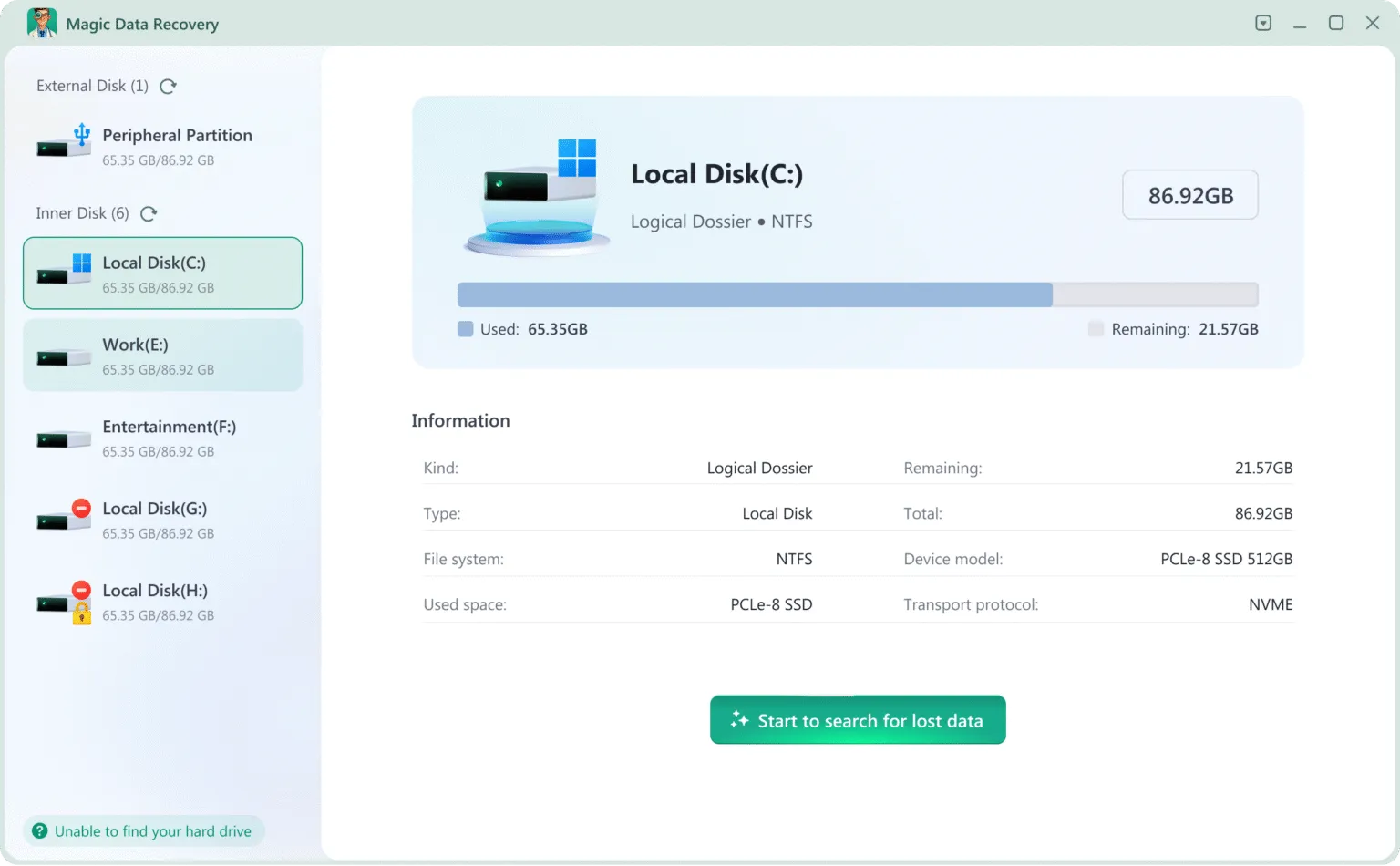
Étape 2 : Sélectionnez l'emplacement d'origine.
Lancez le logiciel et sélectionnez le lecteur, la partition, la clé USB, la carte SD ou le disque externe sur lequel les fichiers ont été supprimés.
Étape 3 : Lancez la numérisation.
Lancez une analyse pour rechercher les fichiers supprimés et perdus. Laissez l'analyse se terminer si vous souhaitez obtenir un résultat aussi complet que possible.
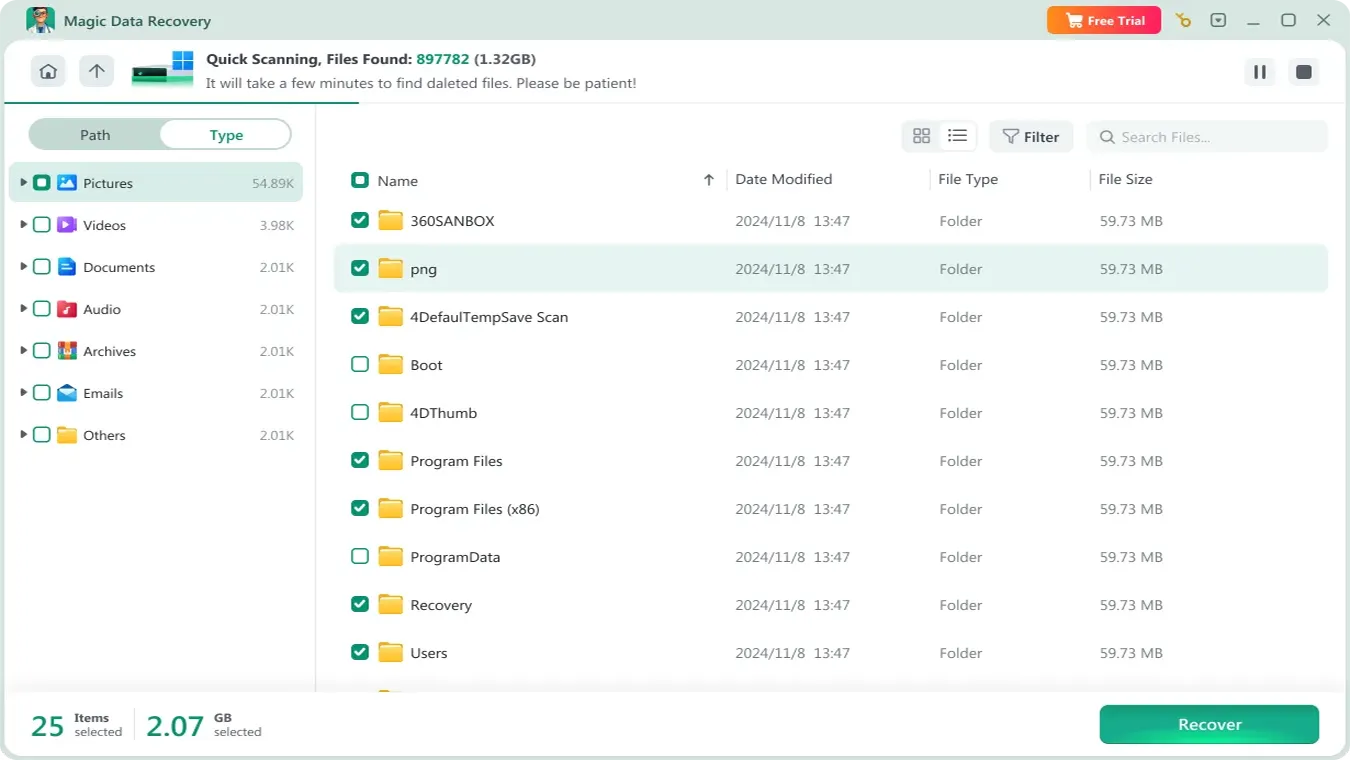
Étape 4 : Prévisualiser les fichiers récupérables.
Vérifiez les documents, photos, vidéos et autres fichiers avant de les récupérer. L'aperçu vous permet d'éviter de restaurer des fichiers inutiles ou endommagés.

Étape 5 : Restaurer sur un autre disque.
Enregistrez les fichiers récupérés sur un autre disque en bon état. Ne les réenregistrez jamais au même emplacement avant la fin de la récupération.
Pour une description plus détaillée du déroulement des opérations, consultez le Guide de récupération de mes fichiers.
Méthodes gratuites ou logiciels de récupération ?
La meilleure façon de récupérer des fichiers après avoir vidé la corbeille Cela dépend si vous aviez effectué des sauvegardes avant la suppression.
Méthode | Meilleur pour | Limites |
Historique du dossier | Utilisateurs ayant activé la sauvegarde | Impossible d'intervenir s'il n'existe aucune sauvegarde |
Versions précédentes | Anciennes copies du dossier | Cela dépend des instantanés |
OneDrive ou sauvegarde dans le cloud | Documents et photos synchronisés | Ne fonctionne que pour les fichiers synchronisés |
Récupération de fichiers sous Windows | Utilisateurs avancés | Flux de travail en ligne de commande |
Magic Data Recovery | Absence de sauvegarde, corbeille vidée, disques formatés ou présentant des erreurs | Une analyse est requise avant l'écrasement |
Une bonne stratégie de récupération commence par la vérification des sauvegardes, car celles-ci sont sûres et gratuites. Si elles s'avèrent infructueuses, analysez le disque d'origine dès que possible.
Les erreurs courantes qui réduisent le succès de la récupération
De nombreux utilisateurs aggravent la situation après avoir vidé la corbeille. Évitez ces erreurs si vous souhaitez récupérer des fichiers après avoir vidé la corbeille en toute sécurité.
Installation d'un logiciel sur le même disque dur
Si les fichiers supprimés se trouvaient sur le disque C, l'installation d'un programme de récupération sur ce disque risque d'écraser une partie des données perdues. Utilisez un autre disque dans la mesure du possible.
Enregistrement des fichiers récupérés au même emplacement
C'est l'une des erreurs les plus courantes en matière de récupération de données. Enregistrez toujours les fichiers récupérés sur un autre disque.
Lancer le nettoyage de disque trop tôt
Les outils de nettoyage de disque peuvent supprimer des fichiers temporaires et augmenter l'activité d'écriture. Attendez d'avoir terminé la restauration.
Mise en forme du disque
Si Windows vous demande de formater une clé USB ou un disque externe, ne le faites pas avant la récupération. Le formatage peut modifier la structure du système de fichiers et compliquer la récupération.
Utilisation quotidienne prolongée
La navigation sur Internet, les téléchargements, les jeux, le montage vidéo et l'installation de mises à jour peuvent tous entraîner l'écriture de nouvelles données. Cessez immédiatement d'utiliser le disque concerné.
Dans le cas d'une suppression sur disque dur, ceci récupération des fichiers effacés du disque dur Ce guide explique plus en détail les risques liés à la récupération au niveau du disque.
Comment améliorer vos chances de guérison
Pour récupérer des fichiers après avoir vidé la corbeille Pour mettre toutes les chances de votre côté, respectez l'ordre suivant :
Commencez par vérifier l'historique des fichiers, les versions précédentes et les sauvegardes dans le cloud.
Ensuite, cessez d'utiliser le disque concerné.
Ensuite, analysez le disque d'origine à l'aide d'un logiciel de récupération.
Ensuite, prévisualisez les fichiers avant la récupération.
Enfin, enregistrez les fichiers récupérés sur un autre disque.
Cette commande protège vos données et vous évite de prendre des risques inutiles. Elle vous permet également de vérifier si le fichier existe toujours avant de payer pour une récupération complète.
Quand la réadaptation peut ne pas fonctionner
Aucun guide de rétablissement sérieux ne devrait promettre des résultats garantis. Parfois, on ne peut pas récupérer des fichiers après avoir vidé la corbeille car les données d'origine n'existent plus sous une forme permettant leur récupération.
La récupération peut échouer dans les cas suivants
Le fichier a été écrasé par de nouvelles données.
Les blocs SSD ont déjà été effacés par la fonction TRIM.
Le disque dur présente de graves dommages physiques.
Le fichier a été effacé de manière sécurisée.
Le disque a été entièrement formaté et a fait l'objet d'une utilisation intensive.
Le fichier récupéré est fragmenté ou endommagé.
Si le disque émet des cliquetis, débranchez-le et contactez un laboratoire spécialisé dans la récupération de données. Les logiciels ne doivent être utilisés qu'en cas de perte logique de données, et non en cas de dommages physiques graves.
Conclusion
Apprendre à récupérer des fichiers après avoir vidé la corbeille Il s'agit avant tout de choisir la bonne méthode au bon moment. Commencez par l'Historique des fichiers, les versions précédentes, OneDrive et d'autres solutions de sauvegarde, car elles sont sûres et gratuites. Si ces options s'avèrent infructueuses, cessez d'utiliser le disque concerné et analysez-le avant que de nouvelles données ne viennent écraser les fichiers supprimés.
Magic Data Recovery est recommandé car il s'attaque au cœur du problème à l'origine des cas de corbeille vidée : les fichiers ne sont plus visibles, mais ils peuvent encore exister sur le disque. Il prend également en charge des scénarios plus généraux tels que la suppression, le formatage, les erreurs du système de fichiers, la réinstallation de Windows et la perte de données liée à un virus. Si vous avez besoin d’un processus de récupération pratique comprenant des étapes d’analyse, de prévisualisation et de récupération sécurisée, Magic Data Recovery est une option fiable à essayer avant que les données ne deviennent irrécupérables.
Pour les utilisateurs confrontés à une suppression suivie d'un formatage ou à une corruption du système de fichiers, ceci solution de récupération d'un disque formaté peut également vous aider à planifier un processus de rétablissement plus sûr.
Prise en charge de Windows 7/8/10/11 et Windows Server
FAQ
Puis-je récupérer des fichiers après avoir vidé la corbeille ?
Oui, vous pouvez souvent récupérer des fichiers après avoir vidé la corbeille si les données supprimées n'ont pas été écrasées. Cessez immédiatement d'utiliser le disque concerné, puis vérifiez les sauvegardes disponibles, telles que l'Historique des fichiers, les versions précédentes ou OneDrive. S'il n'existe aucune sauvegarde, utilisez un logiciel de récupération pour analyser le disque d'origine et enregistrez les fichiers récupérés à un autre emplacement.
Où vont les fichiers une fois que la Corbeille a été vidée ?
Une fois la corbeille vidée, Windows supprime la référence au fichier et marque l'espace de stockage comme disponible. Le contenu du fichier peut toutefois rester sur le disque jusqu'à ce que de nouvelles données viennent l'écraser. C'est pourquoi il est important d'agir rapidement. Plus vous utilisez l'ordinateur, plus les chances de récupération diminuent.
Puis-je récupérer des fichiers après avoir vidé la Corbeille sans utiliser de logiciel ?
Oui, mais uniquement dans certains cas. Vous pouvez essayer l'Historique des fichiers, les versions précédentes, OneDrive, Google Drive, Dropbox ou une autre solution de sauvegarde. Ces méthodes ne fonctionnent que si le fichier a été sauvegardé ou synchronisé avant sa suppression. En l'absence de sauvegarde, il est généralement nécessaire de recourir à un logiciel de récupération.
Le logiciel Windows File Recovery est-il efficace pour récupérer des fichiers après avoir vidé la Corbeille ?
L'outil « Récupération de fichiers Windows » permet de récupérer des fichiers supprimés à partir de périphériques de stockage locaux, mais il fonctionne via la ligne de commande. Il peut convenir aux utilisateurs avancés qui maîtrisent les lettres de lecteur, les modes de récupération et les chemins d'accès de destination. Pour les utilisateurs lambda, un logiciel de récupération graphique peut s'avérer plus simple d'utilisation, car il permet d'analyser, de filtrer, de prévisualiser et de sélectionner les fichiers avant leur récupération.
Pourquoi ne dois-je pas enregistrer les fichiers récupérés sur le même disque ?
Enregistrer les fichiers récupérés sur le même disque dur peut écraser d'autres données supprimées qui n'ont pas encore été récupérées. Cette erreur peut nuire à la qualité de la récupération ou rendre certains fichiers irrécupérables. Utilisez toujours un autre disque dur en bon état, un disque externe ou une clé USB comme destination lors de la restauration de fichiers supprimés.
Est-il possible de récupérer des fichiers stockés sur un SSD après avoir vidé la Corbeille ?
Parfois, mais la récupération sur un SSD est moins prévisible que sur un disque dur classique. De nombreux SSD utilisent la fonction TRIM, qui permet d'effacer rapidement les blocs de données supprimés. Si la fonction TRIM a déjà supprimé les données, il se peut que le logiciel de récupération ne trouve aucun fichier exploitable. Cessez immédiatement d'utiliser le SSD et lancez une analyse dès que possible.
La fonction « Restauration du système » permet-elle de récupérer des fichiers personnels supprimés de la Corbeille ?
La fonctionnalité « Restauration du système » permet principalement de restaurer les fichiers système, les paramètres, les pilotes et les modifications apportées au Registre. Elle n'est pas conçue comme un outil de récupération de fichiers personnels. Elle peut s'avérer utile de manière indirecte si des « versions précédentes » existent, mais vous ne devez pas compter uniquement sur elle. Pour récupérer vos documents personnels, photos et vidéos, consultez l'historique des fichiers, vos sauvegardes dans le cloud ou utilisez un logiciel de récupération.
Quelle est la méthode la plus sûre pour récupérer des fichiers importants ?
La méthode la plus sûre consiste à cesser d'utiliser le disque concerné, à vérifier d'abord les sauvegardes, puis à analyser l'emplacement d'origine à l'aide d'un outil de récupération. Prévisualisez les fichiers avant de les enregistrer, et récupérez-les toujours sur un autre disque. Cette procédure réduit le risque d'écrasement et vous permet de vérifier si les fichiers retrouvés sont complets et utilisables.

Jason est un spécialiste de la récupération de données et de l'assistance technique, fort de plus de 15 ans d'expérience sur le terrain. Il a beaucoup travaillé auprès des utilisateurs finaux, résolvant des cas complexes de perte de données et proposant des solutions de récupération concrètes en cas de suppression accidentelle, de disques formatés, de systèmes de fichiers endommagés, de partitions perdues, de pannes système et d’autres situations d’urgence nécessitant une récupération. Son expertise couvre également la sauvegarde et la restauration, la réparation de fichiers et la reprise après sinistre, en mettant particulièrement l’accent sur des conseils sûrs, fiables et techniquement rigoureux.