
휴지통을 비운 후 파일 복구하기
실수로 휴지통을 비우면 마치 파기의 마지막 단계인 것처럼 느껴질 수 있습니다. 하지만, 휴지통을 비운 후 파일 복구하기 삭제된 파일이 새로운 데이터로 덮어쓰기되기 전에 조치를 취한다면, 많은 Windows 환경에서 데이터 복구가 여전히 가능합니다. 이 가이드에서는 휴지통을 비운 후 어떤 일이 발생하는지, 먼저 시도해 볼 만한 무료 Windows 복구 방법이 무엇인지, 그리고 언제 전문 도구를 사용하는 것이 더 안전한 선택인지에 대해 설명합니다. 데이터 손실이 포맷, RAW 드라이브 오류 또는 파일 시스템 손상과 관련된 경우, 이 부분부터 시작해 보세요. 포맷된 드라이브 복구 솔루션 보다 포괄적인 복구 워크플로우를 위해.
목차
휴지통을 비운 후에도 파일을 복구할 수 있나요?
예, 종종 휴지통을 비운 후 파일 복구하기, 하지만 복구 가능 여부는 시기와 드라이브 유형, 그리고 삭제된 데이터가 덮어쓰여졌는지 여부에 따라 달라집니다.
휴지통을 비우면 Windows는 시스템에서 해당 파일의 가시적인 기록을 삭제합니다. 대부분의 경우, 실제 파일 내용은 일정 기간 동안 저장 장치에 남아 있습니다. 시스템은 단순히 해당 공간을 사용 가능한 공간으로 표시할 뿐입니다. 새로운 파일, 업데이트, 다운로드 또는 앱 설치로 인해 해당 공간이 사용되면, 파일을 복구하기가 더 어려워지거나 아예 불가능해질 수 있습니다.
성공 가능성을 극대화하려면 다음 세 가지 규칙을 즉시 따르세요:
영향을 받는 드라이브의 사용을 중지합니다.
동일한 드라이브에 복구 소프트웨어를 설치하지 마세요.
찾은 파일을 다른 안전한 저장 장치로 복원하십시오.
삭제된 파일이 C 드라이브에 저장되어 있던 경우, 이 점이 특히 중요합니다. Windows는 임시 파일, 브라우저 캐시, 시스템 업데이트 및 앱 데이터를 지속적으로 C 드라이브에 기록하기 때문입니다.
휴지통을 비우면 어떻게 될까요?
To 휴지통을 비운 후 파일 복구하기, Windows가 실제로 어떤 역할을 하는지 이해해야 합니다.
일반 삭제와 휴지통 비우기 비교
파일을 일반적인 방법으로 삭제하면, Windows는 대개 해당 파일을 휴지통으로 이동시킵니다. 휴지통을 열고, 해당 파일을 마우스 오른쪽 버튼으로 클릭한 다음 ‘복원’을 선택하면 됩니다.
휴지통을 비우면 Windows는 파일을 쉽게 복원할 수 있는 경로를 제거합니다. 파일은 더 이상 휴지통에 표시되지 않지만, 다른 쓰기 작업으로 덮어쓰기 전까지는 해당 파일에 대한 기본 데이터가 디스크에 남아 있을 수 있습니다.
HDD와 SSD 데이터 복구의 차이점
일반적인 HDD에서는, 휴지통을 비운 후 파일 복구하기 삭제된 데이터는 덮어쓰기될 때까지 원래 섹터에 남아 있을 수 있기 때문에, 이 방법이 종종 더 현실적입니다.
SSD의 경우 상황은 좀 더 복잡합니다. SSD는 대개 TRIM, 이는 드라이브가 사용되지 않는 블록을 정리하도록 돕는 기능입니다. TRIM은 성능을 향상시키지만, 삭제된 파일을 복구할 가능성을 낮출 수 있습니다. 따라서 속도가 중요합니다. 삭제 후 SSD를 사용할수록 복구 가능성은 낮아집니다.
내장형 드라이브 대 외장형 드라이브
Windows 내부 드라이브에서 삭제된 파일은 대개 먼저 휴지통으로 이동합니다. USB 드라이브, SD 카드 및 일부 외장 드라이브에서 삭제된 파일은 휴지통을 완전히 거치지 않을 수도 있습니다. 이 경우 복구 과정은 영구적으로 삭제된 파일을 복구하는 방법과 유사하며, 해당 장치를 직접 스캔해야 합니다.
회복에 앞서 가장 먼저 해야 할 일들
어떤 방법을 시도하기 전에 몇 가지 예방 조치를 취하십시오. 이러한 조치를 통해 ~할 가능성을 높일 수 있습니다. 휴지통을 비운 후 파일 복구하기 안전하게.
- 영향을 받는 드라이브에 새 파일 저장을 중지합니다.
- 복구 도구를 동일한 파티션에 다운로드하지 마십시오.
- 디스크 정리 도구는 사용하지 마세요.
- 드라이브를 조각 모음하지 마십시오.
- Windows에서 드라이브 포맷을 요청하더라도 포맷하지 마십시오.
- 복구된 파일을 저장할 다른 드라이브를 준비하십시오.
이 단계들은 간단해 보이지만, 복구 과정에서 가장 큰 위험 요소인 ‘데이터 덮어쓰기’ 문제를 해결해 줍니다.
방법 1: 파일 기록 확인하기
‘파일 기록’ 기능이 도움이 될 수 있습니다 휴지통을 비운 후 파일 복구하기 삭제되기 전에 해당 기능이 활성화되어 있었다면 가능합니다. 이 기능은 디스크에서 직접 데이터를 복구하는 것이 아니라, 백업본에서 이전 버전의 데이터를 복원합니다.
단계:
삭제된 파일이 원래 저장되어 있던 폴더를 엽니다.
폴더를 마우스 오른쪽 버튼으로 클릭한 다음 ‘속성’을 선택합니다.
이전 버전 탭을 엽니다.
사용 가능한 버전을 선택합니다.
‘열기’를 클릭하여 파일을 확인하세요.
'복원'을 클릭하거나 파일을 다른 안전한 위치로 복사하십시오.
이 방법은 Windows가 삭제하기 전에 백업해 둔 문서, 사진, 프로젝트 폴더 및 바탕 화면 파일에 가장 효과적입니다. ‘파일 기록’ 기능이 한 번도 켜져 있지 않았다면, 이 옵션에는 유용한 버전이 표시되지 않을 수 있습니다.
Windows에 특화된 복구 관련 정보를 더 알아보시려면, 다음 가이드를 참고하여 최근 삭제된 파일 복구 Windows 10.
방법 2: 이전 버전 사용해 보기
이전 버전에서는 파일 기록이나 복원 지점을 통해 파일을 복원할 수 있습니다. 이 기능은 삭제 전에 Windows가 사용 가능한 스냅샷을 생성한 경우에만 작동합니다.
사용 방법:
삭제된 파일이 있던 상위 폴더로 이동하세요.
폴더를 마우스 오른쪽 버튼으로 클릭합니다.
이전 버전 복원을 선택합니다.
삭제 날짜 이전의 버전을 선택하세요.
먼저 파일을 열어 파일이 있는지 확인하세요.
필요한 파일을 안전한 폴더에 복사하십시오.
이 방법은 원래 삭제된 데이터 영역을 스캔하거나 해당 영역에 데이터를 기록하지 않기 때문에 안전합니다. 하지만 이전 버전이 존재하지 않는 경우에는 도움이 되지 않습니다.
방법 3: OneDrive 또는 클라우드 백업 확인하기
많은 사용자가 로컬 동기화 폴더에서 파일을 삭제할 때, 온라인에 또 다른 사본이 존재할 수 있다는 사실을 미처 깨닫지 못합니다. 고급 복구 소프트웨어를 사용하기 전에 클라우드 계정을 확인해 보세요.
들여다보세요:
OneDrive 휴지통
Google 드라이브 휴지통
드롭박스에서 삭제된 파일
이메일 첨부 파일
팀 또는 Slack 공유 파일
외부 백업 폴더
이 방법은 여러분에게 도움이 될 수 있습니다 휴지통을 비운 후 파일 복구하기 디스크를 스캔하지 않고도 가능합니다. 특히 워드 문서, 엑셀 파일, PDF, 사진, 그리고 여러 기기에서 동기화된 학교나 업무용 파일에 유용합니다.
방법 4: Windows 파일 복구 기능 사용하기
Windows 파일 복구 도구는 마이크로소프트의 명령줄 기반 복구 도구입니다. 이 도구를 사용하면 휴지통에서 복원할 수 없는 삭제된 파일을 로컬 드라이브에서 검색할 수 있습니다.
이 옵션은 명령어 사용에 익숙한 숙련된 사용자에게 적합할 수 있습니다. 하지만 일반 사용자의 경우, 올바른 구문 입력, 소스 드라이브 선택, 대상 드라이브 선택, 복구 모드 선택 등이 필요하기 때문에 어려울 수 있습니다.
기본적인 복구 워크플로는 다음과 같습니다:
Microsoft Store에서 Windows 파일 복구를 설치하세요.
다른 대상 드라이브를 선택하십시오.
올바른 복구 명령을 실행하십시오.
복구된 폴더에서 대상 파일을 검색하십시오.
복구 후 파일 상태를 확인하십시오.
이 도구는 경우에 따라 도움이 될 수 있지만, 최신 복구 소프트웨어에 비해 시각적인 요소가 부족합니다. Windows 11에서 더 명확한 작업 흐름을 원하신다면, 다음 가이드를 참고하여 Windows 11에서 최근에 삭제된 파일 복구하기 도움이 될 수도 있습니다.
방법 5: Magic Data Recovery를 사용하여 파일 복구하기
백업 파일이 없고 Windows 도구를 사용해도 파일을 찾을 수 없는 경우, 복구 소프트웨어를 사용하는 것이 현실적인 해결책이 됩니다. Magic Data Recovery 사용자 지원 휴지통을 비운 후 파일 복구하기 원본 드라이브를 스캔하여 삭제된 파일 기록과 복구 가능한 데이터를 찾아냅니다.
다음과 같은 경우에 유용합니다:
휴지통을 비웠습니다.
Shift + 삭제를 사용했습니다.
USB 드라이브나 SD 카드에서 파일이 사라졌습니다.
실수로 파티션을 포맷했습니다.
드라이브에서 파일 시스템 오류가 발생했습니다.
Windows가 다시 설치되었습니다.
바이러스로 인해 파일이 삭제되거나 손상되었습니다.
Windows에 기본으로 제공되는 복구 도구로는 손실된 데이터를 찾을 수 없습니다.
Windows 7/8/10/11 및 Windows Server 지원
일반 사용자에게 Magic Data Recovery가 더 나은 선택인 이유
Magic Data Recovery 단순한 삭제된 파일 복원 사례뿐만 아니라, 실제 상황에서 흔히 발생하는 데이터 손실 시나리오에 중점을 둡니다. 삭제된 파일 복구, 포맷된 드라이브 복구, 파일 시스템 오류 복구 및 다양한 저장 장치에서의 복구를 지원합니다.
주요 장점은 다음과 같습니다:
스캔, 미리 보기 및 복구 워크플로우를 명확히 파악하세요.
문서, 사진, 동영상, 압축 파일 및 기타 다양한 파일 형식을 지원합니다.
내장 드라이브, 외장 드라이브, USB 드라이브, SD 카드 및 기타 저장 매체를 스캔할 수 있는 기능.
복구 전에 미리 보기를 통해 사용자가 파일을 사용할 수 있는지 확인할 수 있도록 합니다.
파일을 다른 위치에 저장하여 복구 과정을 보다 안전하게 진행할 수 있습니다.
이로 인해 명령줄 복구 방식을 사용하기 싫어하거나, 파일이 아직 복구 가능한지 추측하고 싶지 않은 사용자에게 이 도구가 더욱 실용적입니다.
Magic Data Recovery를 사용하여 휴지통을 비운 후 파일을 복구하는 방법
다음 워크플로를 주의 깊게 따르십시오:
1단계: Magic Data Recovery를 안전한 드라이브에 설치합니다.
삭제된 파일이 저장되어 있던 드라이브에는 이 소프트웨어를 설치하지 마십시오. 삭제된 파일이 D 드라이브에 있었다면, C 드라이브나 다른 외장 드라이브에 소프트웨어를 설치하십시오.
Windows 7/8/10/11 및 Windows Server 지원
2단계: 원래 위치를 선택합니다.
소프트웨어를 실행한 다음, 파일이 삭제된 드라이브, 파티션, USB 드라이브, SD 카드 또는 외장 디스크를 선택하십시오.
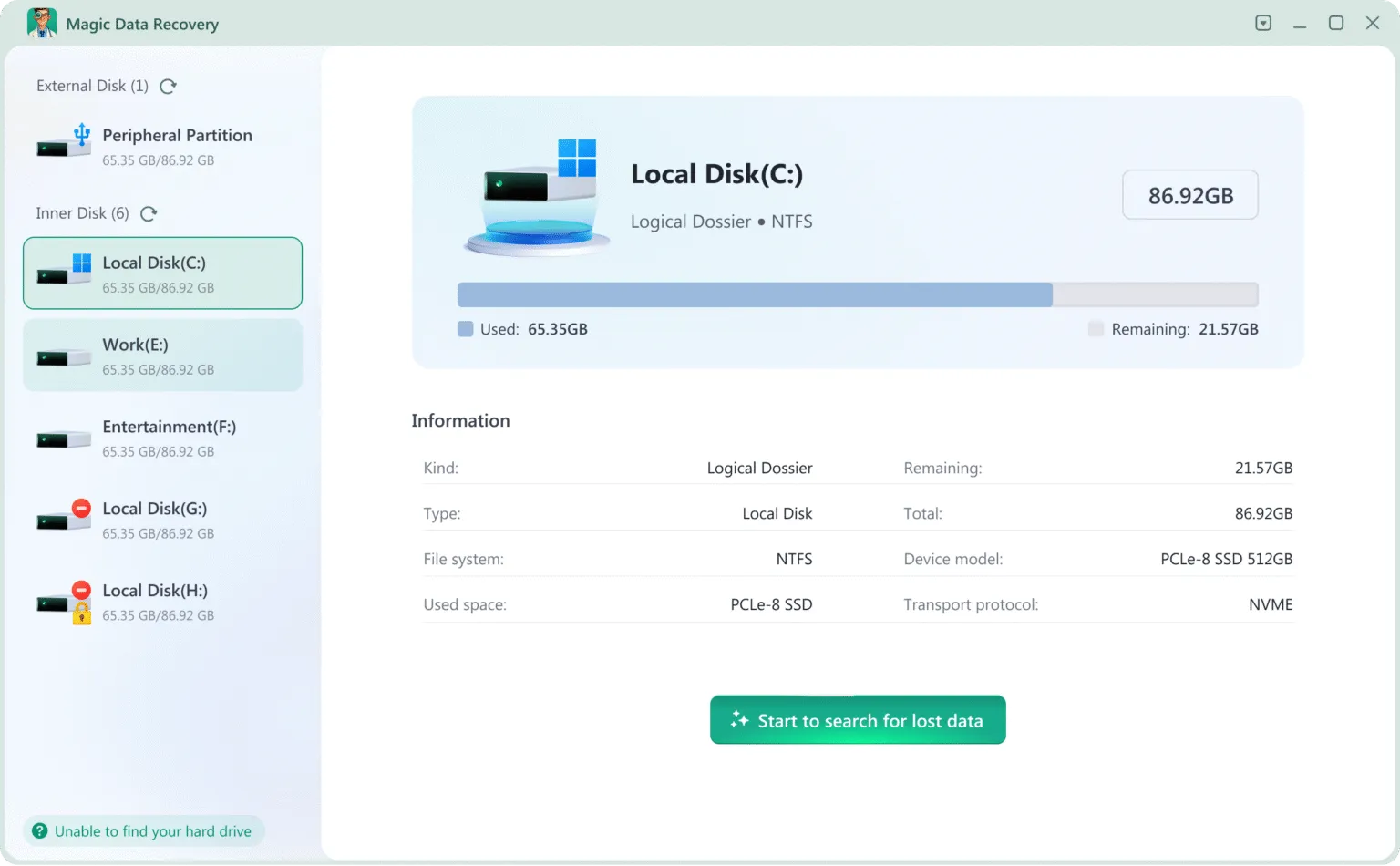
3단계: 스캔을 시작합니다.
삭제되거나 분실된 파일을 찾기 위해 스캔을 실행하세요. 가장 완벽한 결과를 얻으려면 스캔이 완료될 때까지 기다리세요.
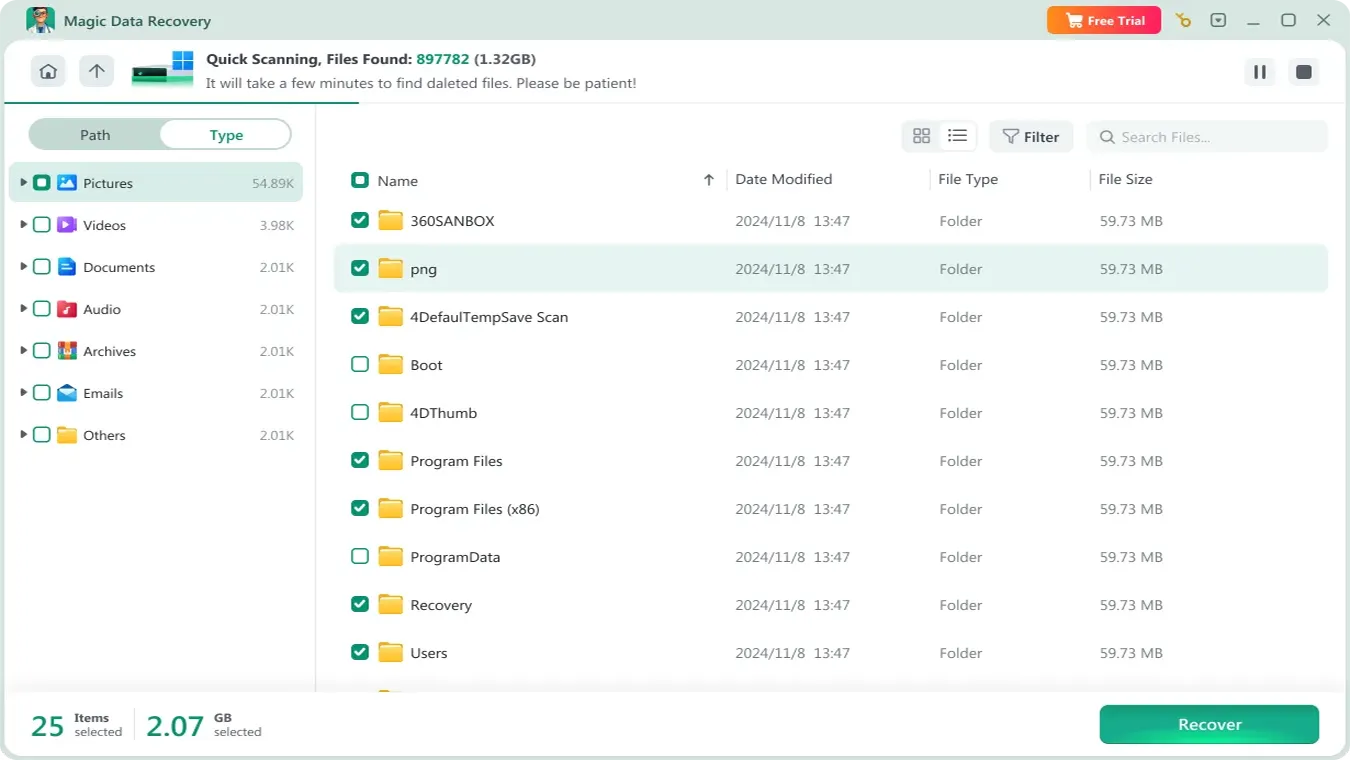
4단계: 복구 가능한 파일을 미리 보기.
복구하기 전에 문서, 사진, 동영상 및 기타 파일을 확인하세요. 미리 보기를 통해 쓸모없거나 손상된 파일을 복구하는 것을 방지할 수 있습니다.

5단계: 다른 드라이브로 복구합니다.
복구된 파일은 문제가 없는 다른 드라이브에 저장하십시오. 복구 작업이 완료되기 전에는 절대로 원래 위치에 다시 저장하지 마십시오.
더 자세한 워크플로는 다음을 참조하십시오. 내 파일 복구 가이드.
무료 방법 대 복구 소프트웨어
가장 좋은 방법은 휴지통을 비운 후 파일 복구하기 삭제하기 전에 백업을 해 두었는지 여부에 따라 다릅니다.
방법 | 최상의 대상 | 제한 사항 |
파일 기록 | 백업이 활성화된 사용자 | 백업이 없으면 어쩔 수 없습니다 |
이전 버전 | 이전 버전의 폴더 사본 | 스냅샷에 따라 다릅니다 |
OneDrive 또는 클라우드 백업 | 동기화된 문서와 사진 | 동기화된 파일에 대해서만 작동합니다. |
Windows 파일 복구 | 고급 사용자 | 명령줄 워크플로 |
Magic Data Recovery | 백업이 없거나, 휴지통을 비웠거나, 포맷되었거나, 오류가 발생한 드라이브 | 덮어쓰기 전에 스캔이 필요합니다. |
효과적인 복구 전략은 백업 확인부터 시작해야 합니다. 백업 확인은 안전하고 무료이기 때문입니다. 만약 백업 확인에 실패하면, 가능한 한 빨리 원본 드라이브를 스캔하십시오.
복구 성공을 저해하는 일반적인 실수
많은 사용자가 휴지통을 비운 후 상황을 더 악화시키곤 합니다. 만약 원하신다면 다음과 같은 실수를 피하십시오. 휴지통을 비운 후 파일 복구하기 더 안전하게.
동일한 드라이브에 소프트웨어 설치하기
삭제된 파일이 C 드라이브에 있었다면, C 드라이브에 복구 프로그램을 설치할 경우 손실된 데이터의 일부가 덮어쓰일 수 있습니다. 가능하면 다른 드라이브를 사용하십시오.
복구된 파일을 원래 위치에 다시 저장하기
이는 복구 과정에서 가장 흔히 저지르는 실수 중 하나입니다. 복구된 파일은 항상 다른 드라이브에 저장하십시오.
디스크 정리 기능을 너무 일찍 실행하는 경우
디스크 정리 도구를 사용하면 임시 기록이 삭제되고 쓰기 작업이 증가할 수 있습니다. 복구가 완료될 때까지 기다리십시오.
드라이브 포맷하기
Windows에서 USB 드라이브나 외장 디스크를 포맷하라는 메시지가 표시되더라도, 복구 작업을 완료하기 전에는 포맷하지 마십시오. 포맷을 하면 파일 시스템 구조가 변경되어 복구 작업이 더 어려워질 수 있습니다.
지속적인 일상적 사용
웹 서핑, 파일 다운로드, 게임, 동영상 편집, 업데이트 설치 등의 작업은 모두 새로운 데이터를 기록할 수 있습니다. 문제가 발생한 드라이브의 사용을 즉시 중단하십시오.
하드 드라이브 삭제 사례의 경우, 이 하드 드라이브 삭제된 파일 복구 이 가이드에서는 드라이브 수준의 복구와 관련된 위험 요소에 대해 더 자세히 설명합니다.
회복 가능성을 높이는 방법
To 휴지통을 비운 후 파일 복구하기 성공 확률을 높이려면 다음 순서를 따르세요:
먼저, 파일 기록, 이전 버전 및 클라우드 백업을 확인해 보세요.
다음으로, 문제가 발생한 디스크의 사용을 중단하십시오.
그런 다음, 복구 소프트웨어를 사용하여 원래 드라이브를 스캔하십시오.
그 후, 복구하기 전에 파일을 미리 확인하세요.
마지막으로, 복구된 파일을 다른 드라이브에 저장하세요.
이 절차는 귀하의 데이터를 보호하고 불필요한 위험을 방지해 줍니다. 또한, 전체 복구 비용을 지불하기 전에 해당 파일이 여전히 존재하는지 확인할 수 있게 해줍니다.
회복이 효과가 없을 수 있는 경우
정직한 회복 가이드라면 결과를 보장한다고 약속해서는 안 됩니다. 때로는 그럴 수 없는 경우도 있으니까요. 휴지통을 비운 후 파일 복구하기 원본 데이터가 더 이상 복구 가능한 형태로 존재하지 않기 때문입니다.
복구가 실패할 수 있습니다:
해당 파일이 새로운 데이터로 덮어쓰여졌습니다.
TRIM으로 SSD 블록이 이미 정리되었습니다.
이 드라이브는 심각한 물리적 손상을 입었습니다.
파일이 안전하게 삭제되었습니다.
디스크는 완전히 포맷된 후 집중적으로 재사용되었습니다.
복구된 파일이 조각나 있거나 손상되었습니다.
드라이브에서 딸깍거리는 소리가 난다면, 드라이브를 분리하고 전문 데이터 복구 업체에 문의하십시오. 소프트웨어는 논리적 데이터 손실에만 사용해야 하며, 심각한 물리적 손상이 발생한 경우에는 사용해서는 안 됩니다.
결론
방법 알아보기 휴지통을 비운 후 파일 복구하기 가장 중요한 것은 적절한 시기에 올바른 방법을 선택하는 것입니다. ‘파일 기록’, ‘이전 버전’, ‘OneDrive’ 및 기타 백업 기능을 먼저 활용해 보세요. 이 방법들은 안전하고 무료이기 때문입니다. 만약 이러한 방법들이 효과가 없다면, 문제가 발생한 드라이브의 사용을 중단하고, 새로운 데이터가 삭제된 파일을 덮어쓰기 전에 해당 드라이브를 스캔하세요.
Magic Data Recovery 이 도구를 권장하는 이유는 휴지통을 비운 경우의 근본적인 문제, 즉 파일이 더 이상 보이지 않지만 드라이브에는 여전히 존재할 수 있다는 점을 해결하기 때문입니다. 또한 삭제, 포맷, 파일 시스템 오류, Windows 재설치, 바이러스 관련 데이터 손실 등 더 광범위한 상황도 지원합니다. 스캔, 미리 보기, 안전한 복구 단계로 구성된 실용적인 복구 워크플로가 필요하다면, 데이터가 복구 불가능해지기 전에 Magic Data Recovery를 사용해 보는 것이 신뢰할 수 있는 선택입니다.
파일 삭제 및 포맷, 또는 파일 시스템 손상으로 인해 어려움을 겪고 있는 사용자에게는 이 방법이 포맷된 드라이브 복구 솔루션 또한 더 안전한 회복 과정을 계획하는 데 도움이 될 수 있습니다.
Windows 7/8/10/11 및 Windows Server 지원
자주 묻는 질문
휴지통을 비운 후에도 파일을 복구할 수 있나요?
예, 종종 휴지통을 비운 후 파일 복구하기 삭제된 데이터가 덮어쓰기되지 않은 경우. 해당 드라이브의 사용을 즉시 중단한 다음, ‘파일 기록’, ‘이전 버전’ 또는 ‘OneDrive’와 같은 백업 내용을 확인하십시오. 백업이 없는 경우, 복구 소프트웨어를 사용하여 원래 드라이브를 스캔하고 복구된 파일을 다른 위치에 저장하십시오.
휴지통을 비우면 파일들은 어디로 가나요?
휴지통을 비우면 Windows는 해당 파일에 대한 참조를 제거하고 해당 저장 공간을 사용 가능한 공간으로 표시합니다. 새로운 데이터가 덮어쓰기 전까지는 파일 내용이 드라이브에 남아 있을 수 있습니다. 그렇기 때문에 신속한 조치가 중요합니다. 컴퓨터를 사용할수록 복구 가능성은 낮아집니다.
휴지통을 비운 후에도 소프트웨어 없이 파일을 복구할 수 있나요?
네, 하지만 특정 경우에만 가능합니다. ‘파일 기록’, ‘이전 버전’, ‘원드라이브’, ‘구글 드라이브’, ‘드롭박스’ 또는 다른 백업 소스를 이용해 볼 수 있습니다. 이러한 방법은 파일이 삭제되기 전에 백업되거나 동기화되었을 때만 효과가 있습니다. 백업이 없는 경우에는 대개 복구 소프트웨어를 사용해야 합니다.
Windows 파일 복구 도구는 휴지통을 비운 후 파일을 복구하는 데 효과적일까요?
‘Windows 파일 복구’는 로컬 저장 장치에서 삭제된 파일을 복구하는 데 도움이 될 수 있지만, 명령줄 방식을 사용합니다. 이 기능은 드라이브 문자, 복구 모드, 대상 경로 등을 잘 이해하는 숙련된 사용자에게 적합할 수 있습니다. 일반 사용자의 경우, 복구 전에 파일을 스캔하고, 필터링하고, 미리 보고, 선택할 수 있는 시각적 복구 소프트웨어가 더 사용하기 편할 수 있습니다.
복구된 파일을 같은 드라이브에 저장하면 안 되는 이유는 무엇인가요?
복구된 파일을 동일한 드라이브에 저장하면 아직 복구되지 않은 다른 삭제된 데이터가 덮어쓰일 수 있습니다. 이러한 실수는 복구 품질을 저하시키거나 일부 파일을 복구할 수 없게 만들 수 있습니다. 삭제된 파일을 복원할 때는 항상 다른 정상적인 드라이브, 외장 디스크 또는 USB 장치를 저장 대상으로 사용하십시오.
휴지통을 비운 후에도 SSD 파일을 복구할 수 있나요?
경우에 따라 가능하지만, SSD 데이터 복구는 HDD 데이터 복구보다 결과가 예측하기 어렵습니다. 많은 SSD는 TRIM 기능을 사용하는데, 이 기능은 삭제된 데이터 블록을 신속하게 지울 수 있습니다. TRIM이 이미 데이터를 제거한 경우, 복구 소프트웨어가 사용 가능한 파일을 찾지 못할 수도 있습니다. 즉시 SSD 사용을 중단하고 가능한 한 빨리 스캔을 진행하십시오.
시스템 복원은 휴지통에서 삭제된 개인 파일을 복구할 수 있나요?
시스템 복원은 주로 시스템 파일, 설정, 드라이버 및 레지스트리 변경 사항을 복원합니다. 이 기능은 개인 파일 복구 도구로 설계된 것이 아닙니다. ‘이전 버전’이 존재하는 경우 간접적으로 도움이 될 수는 있지만, 이 기능에만 전적으로 의존해서는 안 됩니다. 개인 문서, 사진 및 동영상을 복구하려면 파일 기록, 클라우드 백업 또는 복구 소프트웨어를 확인해 보십시오.
중요한 파일을 복구하는 가장 안전한 방법은 무엇일까요?
가장 안전한 방법은 문제가 발생한 드라이브의 사용을 중단하고, 먼저 백업을 확인한 다음 복구 도구를 사용하여 원래 위치에서 스캔을 수행하는 것입니다. 파일을 저장하기 전에 미리 보기를 확인하고, 항상 다른 드라이브에 복구하십시오. 이 과정을 통해 덮어쓰기 위험을 줄일 수 있으며, 복구된 파일이 완전하고 사용 가능한지 확인하는 데 도움이 됩니다.

Jason는 15년 이상의 실무 경험을 갖춘 데이터 복구 및 기술 지원 전문가입니다. 그는 현장 사용자와 폭넓게 협력하며, 까다로운 데이터 손실 사례를 해결하고, 실수로 인한 삭제, 드라이브 포맷, 파일 시스템 손상, 파티션 손실, 시스템 장애 및 기타 긴급 복구 상황에 대한 실용적인 복구 솔루션을 제공해 왔습니다. 또한 백업 및 복원, 파일 복구, 재해 복구 분야에서도 전문성을 갖추고 있으며, 안전하고 신뢰할 수 있으며 기술적으로 정확한 지침을 제공하는 데 중점을 두고 있습니다.