
從電腦中恢復檔案:7 種安全方法
一旦遺失工作文件、家庭照片、專案資料夾或已下載的檔案,往往會讓人覺得這些資料彷彿已永久消失。然而,一個 電腦檔案復原 此問題可能有多種原因。該檔案可能被放錯位置、移至資源回收筒、永久刪除、在格式化過程中被移除、因檔案系統錯誤而被隱藏,或是卡在已無法開機的電腦中。.
本指南說明如何選擇最安全的恢復方法。您可以從 已刪除檔案復原指南, 接著從 Windows 的內建選項轉為使用 Magic Data Recovery 當已無可用備份時。.
支援 Windows 7/8/10/11 和 Windows Server
目錄
快速解答:如何從電腦中恢復檔案?
至 從電腦中恢復檔案, 請停止將新資料儲存至受影響的磁碟機,並釐清發生了什麼情況。首先檢查「檔案總管」的搜尋功能和「資源回收筒」。接著,檢視雲端儲存空間、「檔案歷史紀錄」以及「先前版本」。.
如果檔案已被永久刪除、磁碟已格式化,或 Windows 報告發生檔案系統錯誤,請使用資料恢復軟體掃描原始儲存裝置。請務必將恢復的檔案儲存至另一顆磁碟。對於任何 電腦檔案復原 在進行修復之前,應優先保護原始儲存裝置。.
電腦資料與檔案還原:首先選擇正確的方法
廣泛的 電腦檔案復原 搜尋可能指向截然不同的問題。最佳方法取決於資料遺失的情境,而不僅僅是檔案類型。.
發生了什麼事? | 最佳的第一步 | 何時該使用資料恢復軟體 |
該檔案突然消失了 | 搜尋電腦、最近使用的檔案以及隱藏資料夾 | 當 Windows 無法找到原始檔案時 |
您按下了「刪除」鍵 | 開啟「資源回收筒」並還原該項目 | 當「資源回收筒」為空時 |
您使用了 Shift + Delete | 停止使用受影響的硬碟機 | 當沒有備份或雲端副本時 |
您清空了資源回收筒 | 檢查「檔案歷史紀錄」和雲端垃圾桶 | 當沒有任何已儲存的版本時 |
您已對某個分割區或磁碟進行格式化 | 請勿再次格式化 | 掃描受影響的儲存裝置 |
Windows 要求您格式化一個磁碟機 | 取消提示 | 在進行維修前請先進行檢測 |
電腦無法開機 | 若情況允許,請將該硬碟連接至另一台電腦 | 當偵測到磁碟但仍無法存取檔案時 |
硬碟機發出喀噠聲或磨擦聲 | 關閉裝置 | 聯絡專業的資料恢復服務 |
這種「情境優先」的方法有助於使用者避免採用無法解決其特定問題的 電腦檔案復原 問題。.
進行電腦檔案恢復前的注意事項
您最初採取的行動可能會對恢復結果產生重大影響。在嘗試之前,請遵循以下注意事項: 在電腦上還原已刪除的檔案.
停止將新資料寫入受影響的磁碟機
刪除檔案通常會移除其檔案系統中的參照,並將該儲存空間標記為可重新使用。新的下載檔案、更新、暫存檔以及應用程式安裝都可能會重新使用該空間。.
因此,請立即減少電腦的使用。若遺失的檔案位於次要磁碟機上,請將該磁碟機斷開連接,直到您準備好對其進行掃描為止。若繼續使用該裝置,將增加新資料覆寫已刪除內容的可能性。.
請勿在同一個磁碟機上安裝復原軟體
假設一個已刪除的資料夾原本儲存於 C: 磁碟機上。若在 C: 磁碟機上安裝資料恢復程式,可能會將新資料寫入可恢復的磁區,導致原始資料無法恢復。.
只要情況允許,請將程式安裝在另一個分割區、外接硬碟或另一台電腦上。基於同樣的理由,請將還原的檔案儲存至來源磁碟以外的位置。.
區分邏輯性損失與物理性損壞
資料恢復軟體可處理諸如刪除、格式化、RAW 檔案系統、目錄結構損毀以及無法存取的分區等邏輯性問題。它無法修復損壞的讀寫頭或其他故障硬體。.
反覆出現的咔嗒聲、磨擦聲或咣當聲,可能表示硬碟存在硬體問題。請關閉裝置,並考慮尋求專業資料救援實驗室的協助。儲存裝置製造商與資料救援專家建議,當硬碟持續發出異常聲響時,應停止使用軟體進行救援嘗試。.
識別來源與還原目標
請記錄原始位置、大致的檔案名稱、副檔名、大小以及刪除日期。此外,請準備另一顆具備足夠可用空間的硬碟,以存放還原後的資料。.
這小小的一步,讓每一個 電腦檔案復原 這種方法更安全、更有效率。.
7 種安全恢復電腦檔案的方法
請先從侵入性最小的選項開始。只有在前一種方法不適用時,才改用下一種方法。.
方法 1:搜尋遺失或已移動的檔案
看似已被刪除的檔案,可能只是被重新命名、移動、隱藏,或是從另一個 Windows 使用者設定檔中開啟。.
- 開啟檔案總管。.
- 選擇 此電腦 以搜尋所有可用的地點。.
- 請輸入完整名稱、部分名稱,或副檔名,例如 *.docx、*.xlsx、*.jpg 或 *.pdf。.
- 依以下條件排序結果 修改日期, 類型, 或 尺寸.
- 請檢查「桌面」、「文件」、「下載」、「最近使用的檔案」,以及該應用程式的「最近文件」清單。.
- 在「檔案總管」中,啟用 檢視 > 顯示 > 隱藏項目.
在誤移或誤刪後,請立即按下 Ctrl + Z 位於同一資料夾中。此指令可撤銷該操作,且無需進行掃描。.
這項簡單的檢查能解決許多 電腦檔案復原 在某些情況下,資料實際上從未被刪除。.
方法 2:從資源回收筒還原檔案
對於最近發生的正常刪除,資源回收筒是最快的 如何復原刪除的檔案 解決方案。.
- 從桌面或 Windows 搜尋功能中開啟「資源回收筒」。.
- 請找到該檔案,並確認其原始位置。.
- 按一下滑鼠右鍵,然後選擇 還原.
- 開啟原始資料夾,並確認該檔案能否正常運作。.
Windows 通常會將還原的項目放回其原始資料夾。若已使用 Shift + Delete 鍵刪除檔案、清空資源回收筒、刪除某些大檔案,或是從特定可移除儲存裝置及網路位置刪除檔案,資源回收筒將無法派上用場。.
如需更詳細的工作流程,請參閱如何 從資源回收筒刪除檔案後進行還原.
方法 3:檢查 OneDrive、雲端垃圾桶和應用程式還原功能
許多使用者會透過 OneDrive 儲存「桌面」、「文件」或「照片」中的檔案,卻未察覺資料夾同步功能已啟用。請登入相關的雲端帳戶,開啟其「回收筒」或「垃圾桶」,並尋找遺失的項目。.
此外,當檔案仍然存在但包含不需要的變更時,也請檢查版本歷史紀錄。.
對於 Microsoft Office 檔案,請檢查該應用程式的 最近, 復原未儲存的文件, ,或「自動還原」選項。這些功能解決的問題與磁碟掃描不同。它們是還原已儲存的雲端版本、暫存副本或應用程式備份,而非從原始磁碟資料中恢復已刪除的檔案。.
若涉及 OneDrive,請依照此專用 OneDrive 檔案還原指南 在掃描本機磁碟之前。.
方法 4:使用「檔案歷史紀錄」或「先前版本」還原檔案
若 Windows 在資料遺失前已建立備份,「檔案歷史紀錄」即可還原已刪除的內容或較早的版本。.
- 開啟「檔案總管」,並瀏覽至先前存放該檔案的資料夾。.
- 用滑鼠右鍵按一下資料夾。.
- 選擇 還原先前版本.
- 選擇可用的版本。.
- 使用 開啟 在選擇之前先檢查一下 還原 或 還原至.
微軟針對「檔案歷史紀錄」的還原功能,也記錄了同樣基於資料夾的工作流程。.
此方法既安全又免費,但僅在已有可用的備份或先前版本時才有效。在 電腦檔案復原 在工作流程中,「檔案歷史紀錄」應安排在磁碟掃描之前,因為它會還原現有的副本,而不會修改已刪除的磁區。.
如需更多針對 Windows 的操作步驟,請參閱 如何在 Windows 10 中還原檔案.
方法 5:使用 Windows 檔案復原
「Windows 檔案還原」是微軟提供的一款命令列工具,用於恢復已不在「資源回收筒」中的檔案。它會掃描本機內建磁碟、外接磁碟及 USB 裝置。.
微軟指出,Windows 檔案還原功能無法直接從雲端儲存空間或網路檔案共用位置進行還原。.
基本指令結構如下:
winfr source-drive: destination-drive:[/mode] [/switches] [/switches
例如:
winfr C: E: /regular /n \Users\Name\Documents\*.docx
在此範例中,Windows 會掃描 C: 磁碟機以尋找 Word 文件,並將找到的檔案寫入 E: 磁碟機。來源與目的地必須不同。.
對於了解磁碟機代號、檔案路徑、還原模式及指令語法的使用者而言,Windows 檔案還原功能能發揮良好效果。然而,若不清楚原始資料夾的位置,或是需要檢查多種檔案類型時,操作起來可能會感到困難。.
方法 6:使用 Magic Data Recovery 恢復檔案
當「資源回收筒」為空、沒有備份,或是儲存裝置已格式化或無法存取時,, Magic Data Recovery 提供視覺化呈現 適用於個人電腦的檔案恢復軟體 工作流程。.
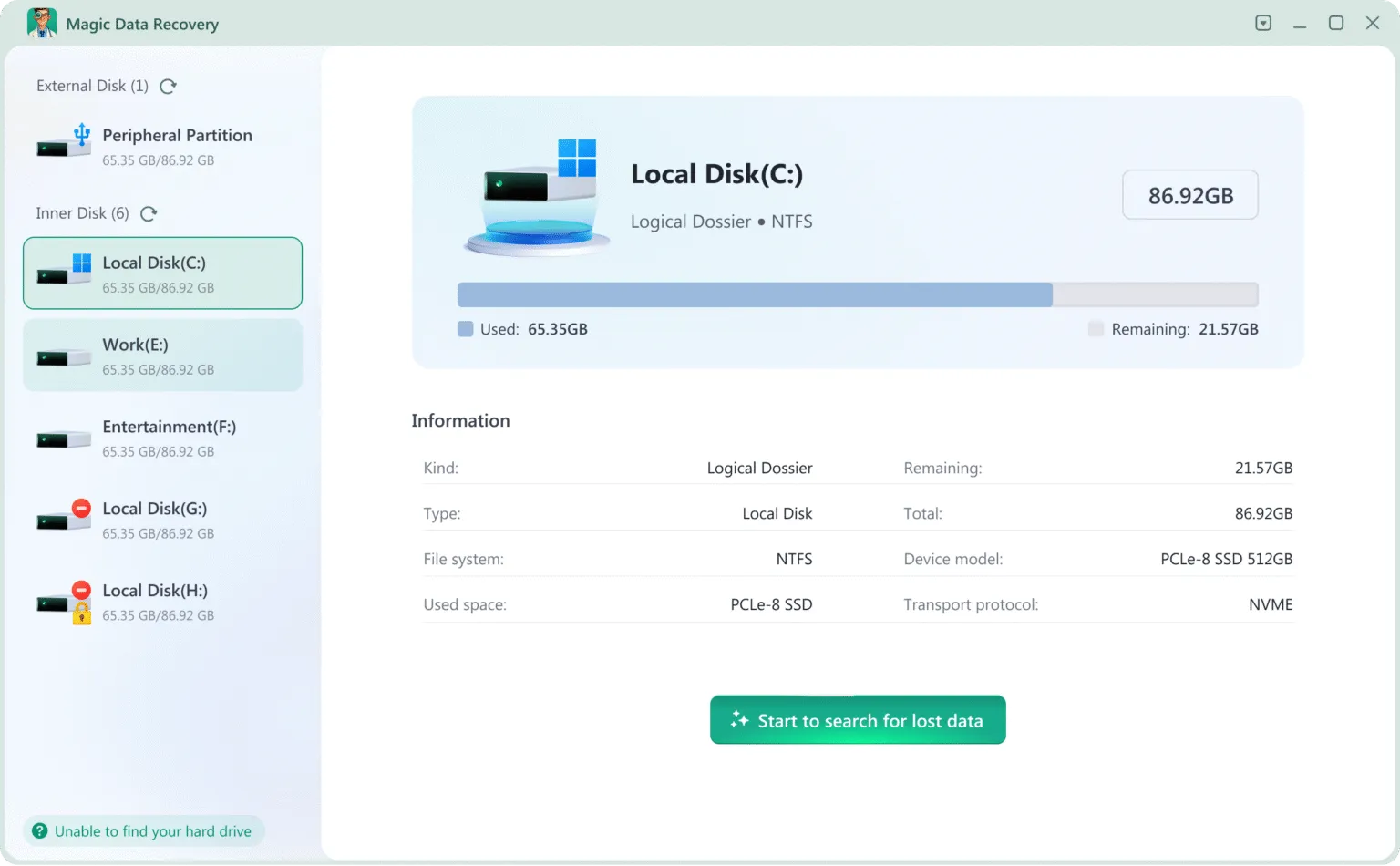
該文探討了導致……背後的關鍵問題 電腦檔案復原 請求:
- 誤刪與 Shift + Delete
- 清空資源回收桶後刪除的檔案
- 格式化的磁碟機和磁碟分割
- 檔案系統錯誤與 RAW 儲存裝置
- 因重新安裝 Windows 或系統問題而導致的資料遺失
- 遺失的文件、照片、影片、檔案、電子郵件及其他常見檔案類型
- 內建硬碟、外接硬碟、USB 裝置、記憶卡及其他連接的儲存裝置
這種更廣泛的涵蓋範圍,使得 Magic Data Recovery 在以下情況下非常實用:當 電腦檔案復原 這個問題不僅僅是最近刪除了一個檔案這麼簡單。.
與其他備份方法不同,Magic Data Recovery 無需在資料遺失前預先建立備份副本。與命令列還原不同,它允許使用者透過引導式介面選擇磁碟、掃描、篩選結果、預覽受支援的檔案,並還原選定的項目。其官方產品工作流程亦遵循相同的掃描、預覽與還原程序。.
如何使用 Magic Data Recovery
1. 請安全安裝。. 請將 Magic Data Recovery 下載並安裝在狀態良好的磁碟上,而非檔案消失的位置。.
支援 Windows 7/8/10/11 和 Windows Server
2. 選擇來源。. 啟動軟體,並選擇受影響的磁碟、分割區或已連接的裝置。.
3. 開始掃描。. 請讓掃描繼續進行,特別是在格式化後或發生檔案系統錯誤時。.
4. 篩選結果。. 可依名稱、檔案類型、路徑、大小或日期(若適用)進行搜尋。.
5. 預覽重要檔案。. 開啟受支援的預覽版本,以確認您是否選取了正確的版本。.
6. 還原至另一顆硬碟。. 將還原後的資料儲存至另一個內部分割區、外部硬碟或 USB 隨身碟中。.
假設有位辦公室使用者刪除了專案資料夾、清空了資源回收筒,隨後才發現「檔案歷史紀錄」功能從未啟用。Windows 檔案還原功能可能需要多次嘗試執行指令。Magic Data Recovery 則提供更直觀的掃描與預覽途徑。.
然而,任何負責任的資料恢復工具都不應承諾能恢復所有檔案。若原始磁區已被新資料覆寫,該檔案可能會不完整或無法恢復。.
對於希望獲得更高效 從電腦中還原檔案 解決方案:在對受影響的硬碟進行進一步變更之前,不妨試試 Magic Data Recovery。.
方法 7:從無法開機的電腦中恢復檔案
Windows 安裝失敗並不一定代表內部硬碟已損壞。如果電腦可以開機,但 Windows 無法啟動,請在備份重要資料之前,避免重置或重新安裝系統。.
可能的作法包括:
- 請從可信賴的還原環境開始,將可存取的檔案複製到外部儲存裝置。.
- 取出內建硬碟或可拆卸式 SSD,並使用相容的外接盒或轉接器將其連接至另一台 Windows 電腦。.
- 如果磁碟機顯示正常,請先複製重要的檔案。.
- 若發現資料夾遺失、無法存取分割區,或 Windows 顯示格式化提示,請使用 Magic Data Recovery 掃描已連接的磁碟機。.
將可正常運作的內建硬碟連接至另一台電腦,即可存取無法開機的電腦中的檔案。當系統仍能偵測到該硬碟,但無法存取其中的資料夾時,進行邏輯資料恢復掃描可能會有所幫助。.
《Amagicsoft 指南》: 從硬碟中恢復資料 說明了「連線至另一台電腦」的方法。該 系統恢復與資料遺失指南 涵蓋因重置、還原或作業系統復原而遺失的檔案。.
請勿拆卸已焊接的 SSD、打開硬碟外殼,或對機械性受損的硬碟反覆通電。當硬體狀態不穩定時,尋求專業維修服務比自行處理更為安全。 電腦檔案復原 嘗試。.
哪種電腦檔案恢復方法最有效?
復原選項 | 最適合 | 需要事先備份嗎? | 主要限制 |
搜尋與 Ctrl + Z | 已移動、重新命名或立即刪除的檔案 | 沒有 | 無法還原已永久刪除的資料 |
回收站 | 最近的常規刪除 | 沒有 | 永久刪除後發生錯誤 |
雲端垃圾桶或版本歷史紀錄 | 同步檔案 | 是的,透過同步或雲端儲存 | 這取決於保留設定 |
檔案歷史或先前版本 | 已備份的資料夾與較舊的副本 | 是 | 必須在損失發生之前就已存在 |
Windows 檔案復原 | 已刪除的本機檔案 | 沒有 | 需要命令列輸入 |
Magic Data Recovery | 刪除、格式化、檔案系統錯誤、無法存取的儲存裝置 | 沒有 | 無法還原已被覆寫的資料,也無法修復硬體 |
專業的資料恢復服務 | 外觀受損或極不穩定的裝置 | 沒有 | 成本較高且週轉時間較長 |
對大多數使用者而言,正確的處理順序很簡單:首先使用現有的備份,其次進行邏輯恢復掃描,當硬體出現物理故障時,則應選擇專業的檢測實驗室。.
格式化或發生檔案系統錯誤後,還能恢復檔案嗎?
雖然仍有可能進行邏輯復原,但您應避免執行任何會將新資料寫入裝置的操作。因此,一個 電腦檔案復原 針對已格式化或無法存取的磁碟機,應優先進行掃描,再進行修復。.
「快速格式化」後
A 快速格式 重建關鍵的檔案系統結構,並使該磁碟區可供儲存新資料。請勿將檔案複製至該磁碟區、再次格式化該磁碟區,或於該磁碟區上重新安裝 Windows。.
相反地,請掃描整個受影響的磁碟,並將恢復的資料備份至另一個儲存裝置。當 SSD 發生以下情況時,資料恢復可能會變得更加困難: 調整 清除未使用的區塊。.
當磁碟機顯示為 RAW 狀態或要求格式化時
「RAW」狀態表示 Windows 無法正常解析該檔案系統。請取消任何格式化提示。.
在執行復原之前進行修復操作,可能會變更檔案系統的元資料。因此,在嘗試修復之前,請先備份可存取的資料或掃描裝置。.
重設或重新安裝 Windows 之後
還原的結果取決於您所選擇的重設或安裝選項,以及 Windows 之後寫入的新資料量。.
請停止安裝應用程式及下載檔案。接著,請從另一顆硬碟或另一台電腦對受影響的磁碟進行掃描。.
遭遇病毒損害或意外的檔案系統錯誤後
若惡意軟體可能仍在運作,請將電腦從網路中斷開連接。在成功遏制威脅後,請在乾淨的環境中對儲存裝置進行掃描。.
Magic Data Recovery 可協助定位因邏輯損壞而遺失的檔案。然而,它無法解密遭勒索軟體加密的內容,也無法修復遭受物理損壞的儲存媒體。.
這些案例說明了為何廣泛的 電腦檔案復原 這份指南應涵蓋的內容不應僅限於意外刪除。.
降低復原機會的常見錯誤
在……期間請避免以下行為 電腦檔案復原:
- 在受影響的磁碟上繼續進行正常工作
- 在來源分割區上安裝復原軟體
- 將恢復的資料儲存回同一顆硬碟
- 因 Windows 要求而格式化磁碟機
- 在保護重要檔案之前執行修復指令
- 反覆掃描發出喀噠聲或斷開連接的硬碟
- 假設「系統還原」能還原個人文件
- 在不事先預覽重要檔案的情況下,還原所有掃描結果
安全的工作流程能保護來源資料、辨識資料遺失類型,並使用獨立的還原目標位置。.
如何預防未來發生檔案遺失
資料還原僅是備用方案,並非備份的替代品。請採用實用的「3-2-1」原則:保留多份副本,將它們儲存於不同類型的儲存媒體上,並將其中一份副本存放於主電腦以外的地方。.
請為「活躍資料夾」啟用 OneDrive 或其他雲端服務。設定「檔案歷史紀錄」或排程備份軟體,並定期測試是否能還原數個檔案。資料復原專家亦建議建立冗餘備份,並透過測試還原來驗證其有效性。.
此外,請監控磁碟機的運作狀態、保持資安軟體更新,並更換出現反覆錯誤的儲存裝置。明確的檔案命名與資料夾組織方式,也能避免將放錯位置的檔案誤認為已刪除的資料。.
總結
解決一個問題最安全的方法是 電腦檔案復原 關鍵在於根據問題成因選擇合適的解決方法。您可以嘗試搜尋已移動的檔案、從「資源回收筒」還原最近刪除的檔案、檢查雲端儲存空間和「檔案歷史紀錄」,若您熟悉指令操作,也可使用 Windows 檔案還原功能。.
針對永久刪除、格式化、檔案系統錯誤,或無法存取但已被偵測到的儲存裝置,, Magic Data Recovery 之所以推薦此工具,是因為它既具備廣泛的邏輯資料恢復支援,又擁有清晰簡明的掃描、預覽及恢復流程。.
它不會做出不切實際的承諾。該軟體無法修復實體硬體,也無法恢復已被新資料覆寫的磁區。然而,當備份和 Windows 內建工具無法使用時,它能填補這方面的空缺。.
從 刪除的檔案復原, 保護原始磁碟,並將重要資料備份至其他位置。.
支援 Windows 7/8/10/11 和 Windows Server
關於「Recover Files Computer」的常見問題
我能從電腦中恢復已永久刪除的檔案嗎?
是的,當儲存空間尚未被新資料覆寫時,永久刪除的檔案仍可能可復原。請停止使用受影響的磁碟,檢查「檔案歷史紀錄」和雲端備份,然後使用 Magic Data Recovery 或 Windows 檔案復原工具掃描原始磁碟。請務必將復原的項目儲存至另一顆磁碟,以免覆寫其他可能仍可復原的檔案。.
如何在不使用軟體的情況下從電腦中恢復檔案?
請檢查「資源回收筒」,刪除後立即按下 Ctrl + Z,根據檔案名稱或副檔名在電腦中搜尋,並檢視 OneDrive 或其他雲端垃圾桶資料夾。若資料遺失前已啟用「檔案歷史紀錄」或「先前版本」功能,您亦可利用這些功能。若無備份,永久刪除的資料通常需要使用磁碟掃描還原工具才能恢復。.
Magic Data Recovery 能否在格式化後復原檔案?
只要裝置仍可被偵測到,且原始內容未被新資料覆寫,Magic Data Recovery 即可掃描邏輯格式化的磁碟機並搜尋可恢復的檔案。請停止使用該格式化過的磁碟機,將軟體安裝至其他位置,完成掃描,預覽重要結果,並將恢復的檔案儲存至獨立的儲存裝置,而非原始的格式化來源。.
還原的「資源回收筒」檔案會被存放在哪裡?
Windows 通常會將還原的「資源回收筒」項目放回其原始資料夾。在點選「還原」之前,請先檢查「原始位置」欄位,以便您知道該到哪裡尋找。如果原始資料夾已不存在,或是磁碟機已斷開連接,請重新連接該裝置,或建立一個適當的儲存位置。相較之下,資料恢復軟體則允許您選擇一個新的、安全的輸出位置。.
如果電腦無法開機,還能從中恢復檔案嗎?
是的,只要儲存裝置本身仍能正常運作。請僅在硬體設計允許的情況下,才將硬碟或可拆卸式 SSD 取出,並透過相容的轉接器將其連接至另一台 Windows 電腦,然後複製可存取的資料。若裝置雖被偵測到,但檔案仍遺失或無法存取,請對其進行掃描。若裝置發出喀噠聲、燒毀或無法被偵測到,請尋求專業協助。.
「系統還原」能恢復已刪除的個人檔案嗎?
通常不行。 「系統還原」主要用於撤銷對 Windows 系統檔案、驅動程式、登錄檔設定及已安裝程式的變更。它並非設計用來備份個人文件。若要還原已刪除的照片、文件或影片,請根據資料遺失的情況,使用「資源回收筒」、「檔案歷史紀錄」、「先前版本」、雲端備份、Windows 檔案還原,或專用的資料恢復程式。.
為什麼要將檔案還原到另一個磁碟機?
將還原的檔案寫回來源磁碟,可能會覆寫其他尚未恢復的已刪除資料。使用獨立的目標位置可保留原始證據,並減少在掃描與儲存過程中可能造成的可避免損害。請使用外接硬碟、USB 裝置或具備足夠容量的另一內建分割區,並在修復來源磁碟之前,先驗證重要檔案。.
我應該在什麼時候停止使用資料恢復軟體,並聯絡專業人士?
當硬碟發出咔嗒聲、磨擦聲、散發焦味、反覆消失,或無法穩定被偵測時,請立即停止使用軟體進行資料救援。這些徵兆可能表示硬碟發生了物理性或電路故障,而非邏輯性資料遺失。持續進行電源重啟和掃描可能會使狀況惡化。專業的資料救援實驗室擁有專門處理受損硬碟的受控設備,這是普通軟體無法修復的。.

Jason 是一位擁有超過 15 年實務經驗的資料復原與技術支援專家。 他長期與第一線使用者密切合作,處理棘手的資料遺失案例,並針對誤刪資料、磁碟格式化、檔案系統損毀、分割區遺失、系統故障及其他緊急資料復原情況,提供實用的復原解決方案。其專業領域還涵蓋備份與還原、檔案修復及災難復原,並特別注重提供安全、可靠且技術上精準的指導。.