
Récupérer des fichiers ZIP supprimés : 5 méthodes sûres sous Windows
Si vous avez besoin de récupérer des fichiers ZIP supprimés, cessez d'utiliser le disque concerné avant que de nouvelles données ne remplacent l'archive supprimée. Un fichier ZIP peut contenir une série complète de photos, un projet, une sauvegarde ou un ensemble de documents. Ce guide aborde la récupération à partir de la Corbeille, OneDrive, l'Historique des fichiers, la récupération de fichiers Windows, ainsi que d'autres méthodes pratiques pour récupérer des fichiers ZIP. Si l'archive a été définitivement supprimée et qu'il ne reste aucune sauvegarde, Magic Data Recovery pourrait permettre d'analyser le support de stockage d'origine et récupérer des données ZIP supprimées.
Prise en charge de Windows 7/8/10/11 et Windows Server
Table des matières
Fichier ZIP supprimé ou fichier ZIP corrompu : comment faire la différence ?
Avant d'essayer de récupérer des fichiers ZIP supprimés, confirmer ce qui s'est passé.
Un fichier ZIP supprimé n'apparaît plus dans son dossier d'origine. Il peut toutefois encore se trouver dans la Corbeille, dans une sauvegarde, sur un espace de stockage dans le cloud ou dans un espace récupérable du système de fichiers.
Le fichier ZIP est toujours présent, mais il est corrompu : Windows ou un utilitaire d'archivage ne parvient pas à l'ouvrir ni à l'extraire. Dans ce cas, la récupération après suppression n'est pas la solution à privilégier. Vous devez disposer d'une autre copie, d'une sauvegarde ou effectuer un dépannage pour réparer le fichier ZIP.
Cette distinction est importante car la restauration d'une archive supprimée n'entraîne pas automatiquement réparer les structures ZIP endommagées. De même, un fichier ZIP récupéré dont la taille est de 0 octet ou qui ne peut pas être décompressé peut avoir été partiellement écrasé.
Que faire avant de procéder à la récupération d'un fichier ZIP ?
Microsoft explique que Windows peut marquer l'espace occupé par des fichiers supprimés comme disponible, alors que les données d'origine peuvent subsister jusqu'à ce que de nouvelles données les écrasent. Il convient donc de réduire immédiatement l'activité sur le disque concerné.
Avant de vous récupérer des fichiers ZIP supprimés:
- Cessez de télécharger, de copier, d'extraire ou de créer des fichiers sur le disque source.
- N'installez pas de logiciel de récupération sur la partition où le fichier ZIP a été perdu.
- Enregistrer les fichiers récupérés sur un autre lecteur.
- Ne formatez pas l'appareil simplement parce que l'archive a disparu.
- Si le fichier ZIP se trouvait sur un SSD, agissez vite car TRIM et les écritures ultérieures peuvent nuire à la récupérabilité.
- Si un disque dur émet des cliquetis, se déconnecte à plusieurs reprises ou disparaît de Windows, cessez toute tentative de réparation par vous-même. Les logiciels ne peuvent pas réparer les dommages physiques.
Méthode 1 : Récupérer des fichiers ZIP supprimés à partir de la corbeille
Pour une suppression normale à partir d'un disque Windows, vérifiez d'abord la Corbeille. C'est le moyen le plus simple de récupérer des fichiers ZIP supprimés car Windows peut replacer l'archive dans son dossier d'origine.
- Ouvrir Corbeille.
- Recherche de la
.zipnom de fichier ou trier par Date de suppression. - Cliquez avec le bouton droit de la souris sur l'archive.
- Choisir Restaurer.
- Ouvrez le dossier d'origine et testez le fichier ZIP.
Microsoft confirme que la restauration d'un élément de la corbeille de Windows le renvoie à son emplacement d'origine.
Cependant, cette méthode ne fonctionnera pas après un « Shift+Suppr », une vidange de la Corbeille ou certaines suppressions effectuées à partir d'un support amovible.
Méthode 2 : Vérifier OneDrive ou une autre sauvegarde
Si l'archive se trouvait dans un dossier synchronisé avec OneDrive, vérifiez le cloud avant d'analyser le disque. Pour récupérer des fichiers ZIP supprimés, connectez-vous à OneDrive, ouvrez Corbeille, sélectionnez le fichier ZIP, puis choisissez Restaurer.
Microsoft précise que les éléments de la corbeille OneDrive personnelle sont généralement conservés pendant 30 jours, tandis que la durée de conservation pour les comptes professionnels ou scolaires peut varier.
Vérifiez également tout disque de sauvegarde, NAS, pièce jointe à un e-mail, espace de travail partagé ou service de synchronisation que vous utilisez. Il vaut mieux disposer d'une copie valide stockée que de devoir reconstituer les données supprimées.
Méthode 3 : Récupérer des fichiers ZIP à l'aide de l'historique des fichiers
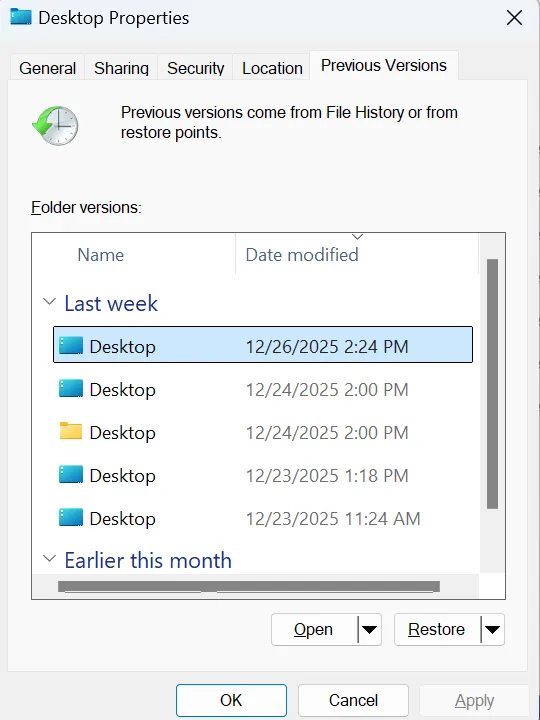
L'historique des fichiers permet de récupérer des fichiers ZIP si vous l'aviez activée avant la suppression et que Windows a sauvegardé le dossier. Microsoft décrit l'Historique des fichiers comme une fonctionnalité qui conserve les différentes versions des fichiers personnels et permet de restaurer le contenu supprimé.
- Ouvrez l'explorateur de fichiers.
- Accédez au dossier dans lequel se trouvait le fichier ZIP.
- Cliquez avec le bouton droit de la souris et choisissez Restaurer les versions précédentes.
- Sélectionnez une version antérieure à la suppression.
- Ouvrez-le pour vérifier que le fichier ZIP s'affiche bien.
- Choisir Restaurer ou Restaurer vers….
Voici une réponse utile à Comment récupérer des fichiers ZIP supprimés sur un PC sans logiciel tiers. Cependant, cela ne fonctionne que si une version antérieure existe déjà.
Méthode 4 : Utiliser la fonctionnalité de récupération de fichiers de Windows
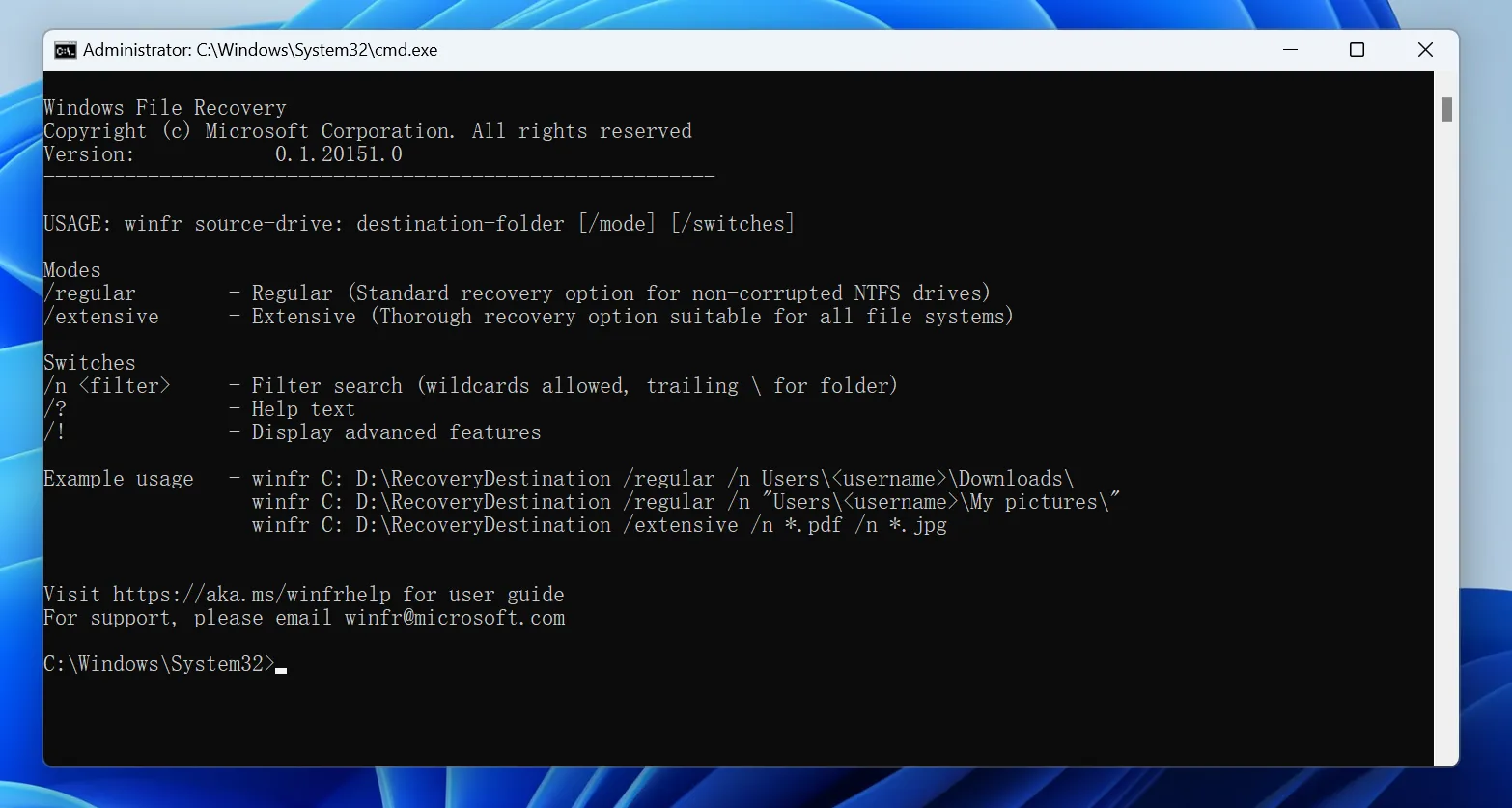
Si l'archive ne se trouve ni dans les sauvegardes ni dans la Corbeille, « Windows File Recovery » est l'outil en ligne de commande de Microsoft permettant de récupérer des fichiers supprimés sur un support de stockage local. Il prend en charge les disques durs internes, les disques durs externes et les périphériques USB, mais pas le stockage dans le cloud ni les partages réseau.
Pour un fichier ZIP récemment supprimé sur un système de fichiers NTFS, vous pouvez utiliser :
winfr C: E: /regular /n *.zip
Ici, C : est la source et E : il s'agit d'un autre disque de destination. Pour les suppressions plus anciennes, les formatages, les systèmes de fichiers autres que NTFS ou les cas plus complexes, Microsoft recommande d'utiliser le mode « Extensive ».
winfr C: E: /extensive /n *.zip
Windows File Recovery permet de récupérer des fichiers ZIP supprimés sans logiciel commercial. Cependant, son fonctionnement en ligne de commande peut s'avérer moins pratique lorsque vous souhaitez parcourir visuellement un grand nombre de résultats.
Méthode n° 5 : Récupérer des fichiers ZIP supprimés avec Magic Data Recovery
Lorsque la Corbeille est vide, qu'il n'existe aucune sauvegarde ou que l'outil de récupération de fichiers de Windows ne parvient pas à trouver l'archive, le recours à un logiciel de récupération spécialisé constitue alors une solution raisonnable.
Magic Data Recovery prend en charge les systèmes de fichiers Windows courants, notamment NTFS et FAT/exFAT, et sa liste officielle des formats de fichiers pris en charge inclut les archives ZIP.
Contrairement à l'Historique des fichiers, à OneDrive ou à la Corbeille, cette fonctionnalité ne nécessite pas de copie de sauvegarde préalablement enregistrée. Elle analyse plutôt l'espace de stockage à la recherche d'enregistrements de fichiers et de données récupérables. Elle peut donc s'avérer utile lorsque vous avez besoin de récupérer des fichiers ZIP supprimés après la suppression définitive.
Cependant, aucun outil de récupération ne peut restaurer des données qui ont déjà été écrasées ou qui ne sont plus accessibles. La fonction TRIM des SSD, les dommages graves au niveau du système de fichiers et les pannes physiques du disque peuvent également limiter les possibilités de récupération.
Si les options de récupération intégrées ne fonctionnent plus, vous pouvez essayer Magic Data Recovery avant que de nouvelles données ne viennent écraser les fichiers supprimés.
Comment utiliser Magic Data Recovery pour récupérer des fichiers ZIP supprimés
Étape 1 : Télécharger et installer Magic Data Recovery
Installez Magic Data Recovery sur un disque ou une partition différente de celle où le fichier ZIP a été supprimé. Cela permet d'éviter d'écraser les données que vous souhaitez encore récupérer.
Prise en charge de Windows 7/8/10/11 et Windows Server
Étape 2 : Sélectionnez le lecteur sur lequel le fichier ZIP a été enregistré
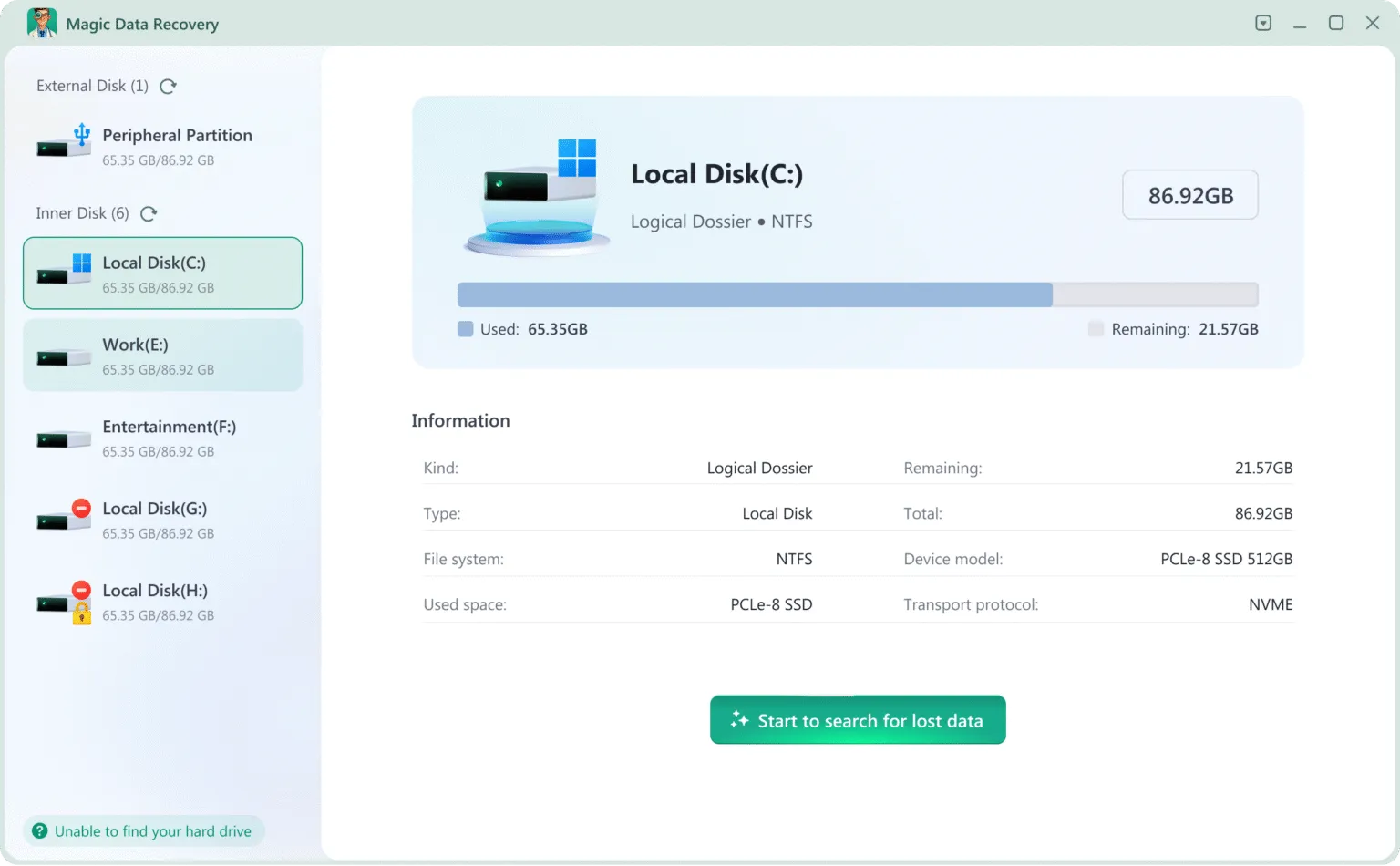
Lancez le logiciel, sélectionnez le disque ou la partition d'origine qui contenait les fichiers supprimés .zip fichier, puis lancez l'analyse.
Étape 3 : Recherche des fichiers ZIP perdus ou supprimés
Laissez l'analyse se dérouler et examinez les résultats au fur et à mesure qu'ils s'affichent. Dans la mesure du possible, effectuez une recherche ou appliquez un filtre sur les archives ZIP afin de repérer plus rapidement les fichiers pertinents.
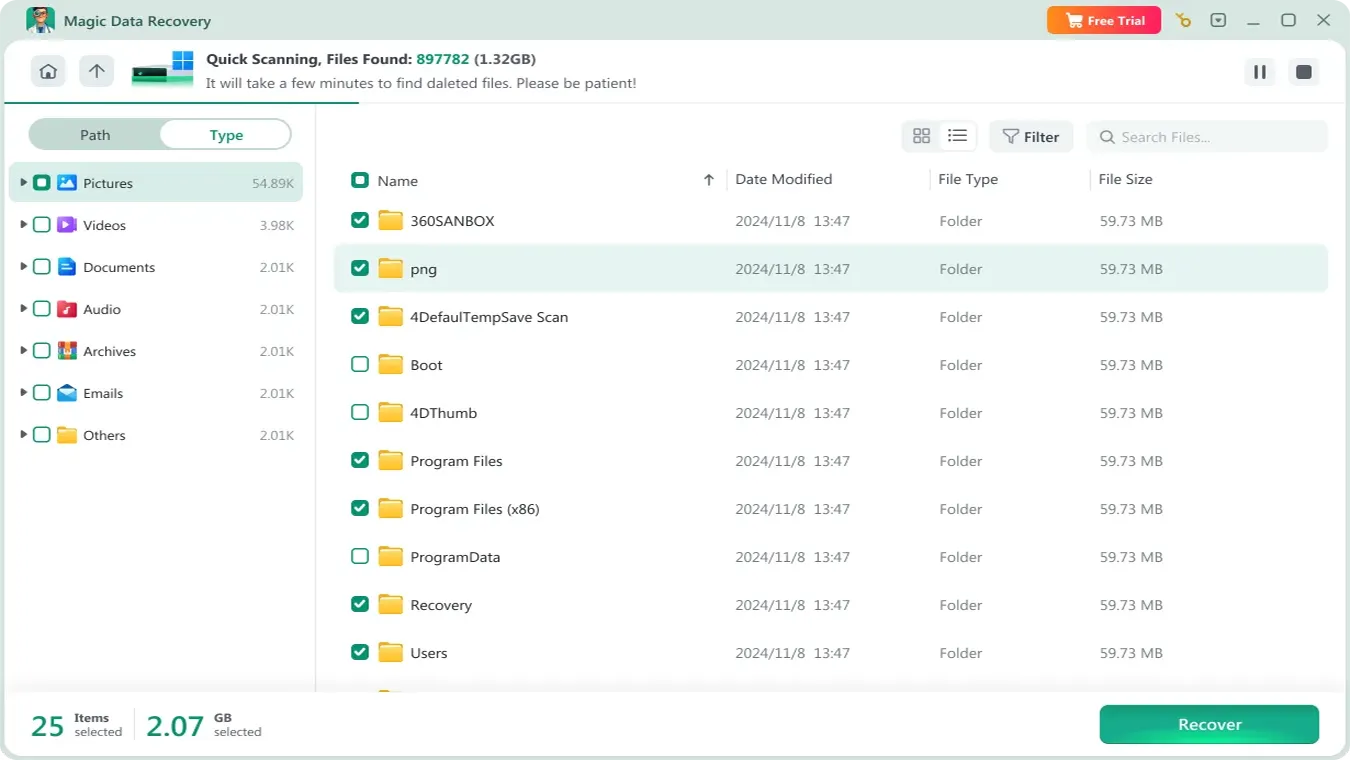
Étape 4 : Récupérer les fichiers ZIP dans un emplacement sûr
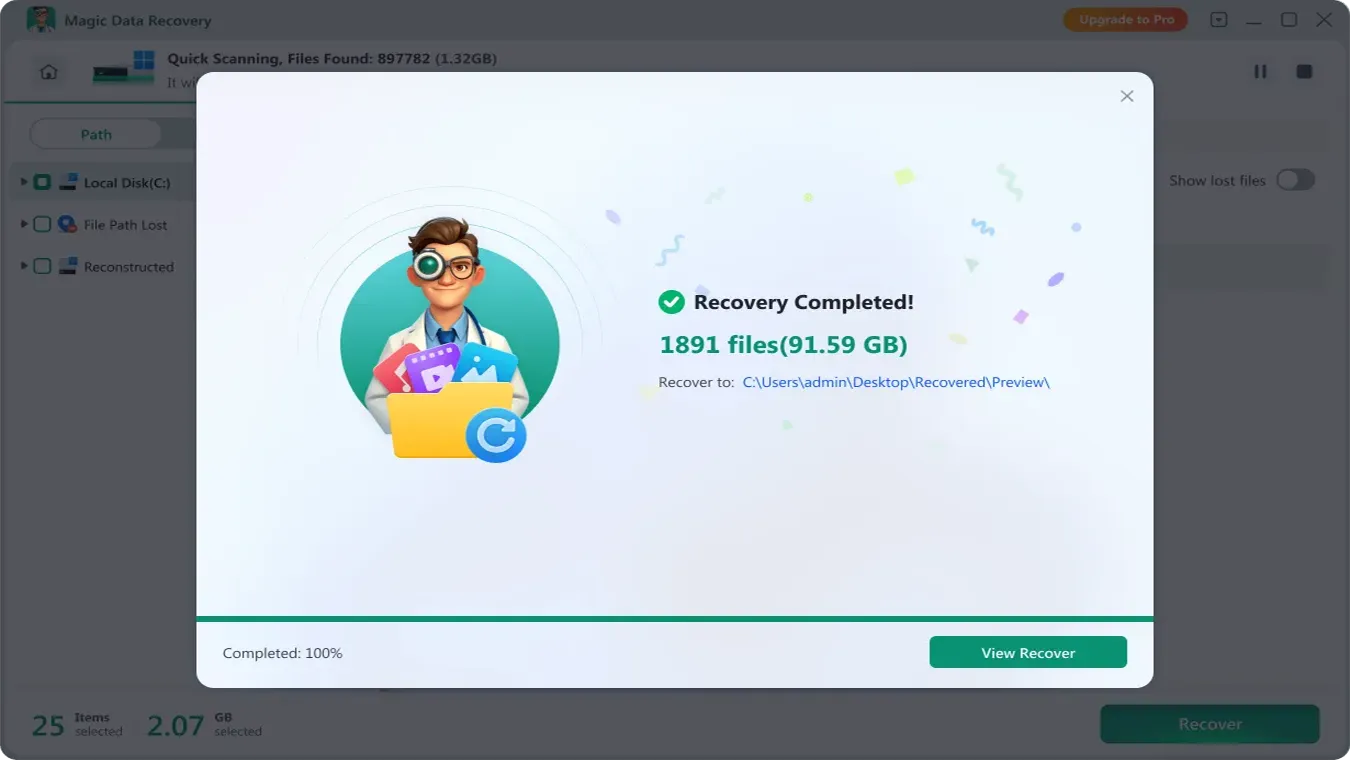
Sélectionnez les fichiers ZIP dont vous avez besoin et restaurez-les sur un autre disque en bon état. Ne les enregistrez pas à nouveau à l'emplacement d'origine où les données ont été perdues avant d'avoir vérifié que l'archive récupérée fonctionne correctement.
Pourquoi un fichier ZIP récupéré peut ne pas s'ouvrir
Le fait de trouver le bon nom de fichier ne garantit pas que l'intégralité de l'archive ait été préservée. Les fichiers ZIP contiennent des données compressées ainsi que des informations internes sur les répertoires. Si de nouvelles données ont écrasé une partie de l'archive, la décompression peut échouer.
Les causes les plus fréquentes sont les suivantes :
- De nouvelles données ont écrasé une partie de l'archive supprimée.
- La fonction TRIM du SSD a rendu les blocs supprimés inaccessibles.
- Le fichier ZIP était corrompu avant sa suppression.
- Seule une partie d'une archive fragmentée a pu être récupérée.
- Le fichier ZIP récupéré fait 0 octet ou est bien plus petit que prévu.
Par conséquent, une fois que vous récupérer des fichiers ZIP supprimés, testez l'archive en l'ouvrant et en extrayant plusieurs fichiers dans un autre dossier. Si cela ne fonctionne pas, passez au dépannage de la restauration de sauvegarde ou de la réparation du fichier ZIP plutôt que de considérer le problème comme une simple suppression.
Vous pouvez également rechercher les fichiers d'origine qui ont été compressés dans l'archive ZIP. Il se peut que des copies existent encore dans un espace de stockage en ligne, dans des pièces jointes d'e-mails, dans des dossiers partagés, sur des disques de sauvegarde ou sur un autre ordinateur.
Conseils pour améliorer la récupération des fichiers ZIP
Pour améliorer vos chances de récupérer des fichiers ZIP, veillez à éviter tout écrasement de fichiers et à conserver des copies indépendantes. Activez l'historique des fichiers ou un autre système de sauvegarde avec gestion des versions, vérifiez les archives volumineuses avant de supprimer leurs fichiers sources, et évitez de conserver la seule copie sur une clé USB ou une carte SD.
N'oubliez pas non plus que la synchronisation ne constitue pas toujours une sauvegarde permanente. Une suppression accidentelle peut se répercuter sur d'autres appareils ; il est donc recommandé de disposer d'une sauvegarde indépendante pour les archives importantes.
Conclusion
Le moyen le plus sûr de récupérer des fichiers ZIP supprimés Commencez par consulter la Corbeille, OneDrive, l'historique des fichiers, les versions précédentes et les autres sauvegardes. Ensuite, utilisez l'outil de récupération de fichiers de Windows si vous maîtrisez la ligne de commande.
Si ces solutions échouent et que le fichier ZIP a été définitivement supprimé du stockage local, Magic Data Recovery fournit une récupération de fichiers effacés option en analysant le disque concerné à la recherche de données ZIP récupérables. Toutefois, l'écrasement des données, la fonction TRIM des SSD, une corruption grave ou une défaillance physique peuvent empêcher d'obtenir un résultat exploitable. Par conséquent, cessez toute écriture sur le disque source et enregistrez les fichiers récupérés ailleurs.
Prise en charge de Windows 7/8/10/11 et Windows Server
FAQ
Comment récupérer des fichiers ZIP supprimés sous Windows 11 ?
Pour récupérer des fichiers ZIP supprimés sous Windows 11, commencez par vérifier la Corbeille. Essayez ensuite OneDrive, l'historique des fichiers, les versions précédentes ou une autre sauvegarde. Si l'archive a été supprimée définitivement, l'outil de récupération de fichiers de Windows peut analyser le stockage local. Un outil de récupération graphique tel que Magic Data Recovery constitue une autre option lorsque les méthodes intégrées ne permettent pas de retrouver le fichier ZIP.
Comment récupérer des fichiers ZIP supprimés sur un PC après avoir vidé la Corbeille ?
Si vous cherchez comment récupérer des fichiers ZIP supprimés sur un PC après avoir vidé la Corbeille, cessez d'utiliser le disque concerné. Vérifiez ensuite l'historique des fichiers, les sauvegardes dans le cloud et d'éventuelles autres copies. S'il n'existe aucune sauvegarde, utilisez l'outil de récupération de fichiers de Windows ou un logiciel de récupération de données pour analyser le support de stockage d'origine avant que de nouveaux fichiers ne viennent écraser l'archive supprimée.
Puis-je récupérer des fichiers ZIP supprimés définitivement ?
Il est parfois possible de récupérer des fichiers ZIP supprimés après une suppression définitive si les données sous-jacentes existent toujours. Les chances de récupération diminuent à mesure que vous continuez à utiliser le disque. La fonction TRIM des SSD peut également réduire les chances de récupération. Commencez par consulter vos sauvegardes, puis essayez l'outil de récupération de fichiers de Windows ou un logiciel de récupération. En cas de dommage physique du support de stockage, il est préférable de faire appel à un professionnel plutôt que d'utiliser un logiciel de récupération.
L'historique des fichiers permet-il de récupérer des fichiers ZIP ?
L'historique des fichiers permet de récupérer des fichiers ZIP si Windows a sauvegardé le dossier avant sa suppression. Ouvrez la liste des versions précédentes du dossier et sélectionnez une version antérieure à la perte. Cependant, l'historique des fichiers ne peut pas recréer une archive qui n'a jamais été sauvegardée. Dans ce cas, vous aurez besoin d'une autre copie enregistrée ou d'une méthode de récupération des fichiers supprimés.
Pourquoi mon fichier ZIP récupéré ne s'ouvre-t-il pas ?
Un fichier ZIP récupéré peut ne pas s'ouvrir si une partie de ses données compressées ou de sa structure de répertoires a été écrasée, tronquée ou corrompue. Le nom de fichier peut subsister même lorsque des données importantes de l'archive ont été perdues. Comparez la taille récupérée à la taille attendue, puis vérifiez vos sauvegardes ou récupérez les fichiers d'origine contenus dans le fichier ZIP plutôt que de vous fier à une archive incomplète.
Puis-je récupérer des fichiers ZIP à partir d'un SSD ?
Il arrive parfois que récupérer des fichiers ZIP à partir d'un SSD, mais la fonction TRIM peut rendre les blocs supprimés inaccessibles aux logiciels de récupération. Cessez immédiatement d'utiliser le SSD et vérifiez d'abord vos sauvegardes. S'il n'existe aucune copie, lancez une analyse dès que possible. Les logiciels de récupération ne peuvent pas restaurer les données que le SSD a déjà effacées en interne ou qui ont été écrasées par de nouvelles données.
Quel est le moyen le plus sûr d'éviter la perte de fichiers ZIP ?
Conservez au moins deux copies de vos archives ZIP importantes sur des supports ou des services distincts. Activez également l’historique des fichiers ou un autre système de sauvegarde avec gestion des versions pour les dossiers actifs. Avant de supprimer les fichiers sources, vérifiez que l’archive ZIP s’ouvre et s’extrait correctement. Enfin, ne vous fiez pas uniquement à la synchronisation pour vos données critiques ; conservez une sauvegarde indépendante que les suppressions accidentelles ne peuvent pas reproduire immédiatement.

Vasilii est un spécialiste de la récupération de données qui possède une dizaine d'années d'expérience pratique dans ce domaine. Tout au long de sa carrière, il a résolu avec succès des milliers de cas complexes impliquant des fichiers supprimés, des disques formatés, des partitions perdues et des systèmes de fichiers RAW. Son expertise couvre à la fois les méthodes de récupération manuelle à l'aide d'outils professionnels tels que les éditeurs hexagonaux et les solutions automatisées avancées à l'aide de logiciels de récupération. La mission de Vasilii est de rendre accessible aux professionnels de l'informatique et aux utilisateurs quotidiens des connaissances fiables en matière de récupération de données, afin de les aider à sauvegarder leurs précieuses ressources numériques.