
Récupérer des fichiers sur un système FAT32 : 5 méthodes sûres
La perte de fichiers sur une clé USB au format FAT32, une carte SD ou un ancien disque dur externe peut sembler irréversible, surtout lorsque les éléments manquants n’apparaissent jamais dans la Corbeille. Heureusement, la suppression supprime généralement la référence du fichier dans le répertoire avant d’effacer le contenu sous-jacent. Cela laisse une marge de manœuvre pour la récupération, à condition de cesser rapidement d’utiliser le périphérique. Ce guide explique comment récupérer des fichiers sur un système de fichiers FAT32 à la suite d'une suppression, d'un problème de mise en forme, d'une corruption ou d'un problème lié à un fichier caché. Commencez par les analyses gratuites, puis utilisez Magic Data Recovery lorsque le système de fichiers ne permet plus d'accéder directement à vos données. Vous pouvez également découvrir l'offre plus complète de Amagicsoft guide de récupération des fichiers effacés pour les scénarios de reprise d'activité correspondants.
Première règle : Débranchez le disque concerné jusqu'à ce que vous soyez prêt à le récupérer. Ne copiez pas de nouveaux fichiers dessus, ne le formatez pas à nouveau et n'y installez pas de logiciel de récupération.
Prise en charge de Windows 7/8/10/11 et Windows Server
Table des matières
Peut-on récupérer des fichiers sur un disque formaté en FAT32 ?
Dans de nombreux cas, oui. Le système FAT32 conserve une entrée de répertoire pour chaque fichier et utilise une table d'allocation des fichiers (FAT) pour enregistrer la chaîne de blocs contenant son contenu. La suppression marque l'entrée et les blocs comme réutilisables, mais les données sous-jacentes peuvent rester lisibles jusqu'à ce qu'une autre écriture occupe cet espace.
Le système de fichiers FAT32 ne dispose pas de journal permettant de conserver un historique détaillé des modifications ; il est donc essentiel de procéder rapidement à une analyse en lecture seule. Un fichier supprimé il y a plusieurs mois sur une carte SD inutilisée a plus de chances d'être récupérable qu'un fichier supprimé il y a quelques minutes sur une clé USB qui a immédiatement reçu de nouvelles données. La méthode la plus sûre pour récupérer des fichiers sur un système de fichiers FAT32 Il s'agit donc de réduire au minimum chaque nouvelle écriture. Pour plus d'informations techniques, consultez la section expliquant comment le La table d'allocation des fichiers FAT32 fonctionne.
Commencez par identifier le scénario de perte de données
Vérifiez comment les fichiers ont disparu avant de choisir une méthode. Une méthode inadaptée peut altérer les enregistrements du système de fichiers qui pourraient être récupérés.
Ce que vous voyez | Cause probable | La meilleure première action |
Les fichiers ont disparu après avoir appuyé sur la touche « Supprimer » | Suppression accidentelle | Vérifiez la corbeille ou la sauvegarde, puis lancez l'analyse |
Le disque est vide après le formatage | Formatage rapide ou formatage erroné | Cessez de l'utiliser et lancez une analyse approfondie |
Windows vous demande de formater le lecteur | Structure FAT32 ou secteur d'amorçage endommagé | Annulez l'invite et lancez l'analyse du disque dur |
Il reste de l'espace utilisé, mais les dossiers semblent vides | Attributs cachés ou logiciels malveillants | Lancez la commande ATTRIB et effectuez une analyse de sécurité |
L'appareil se déconnecte, émet un clic ou indique une capacité erronée | Panne matérielle ou du contrôleur | Éteignez-le et adressez-vous à un laboratoire de récupération de données |
Annulez toute invite de formatage de Windows. Évitez également d'exécuter CHKDSK avant la récupération : cet outil restaure la cohérence en modifiant les métadonnées plutôt qu'en récupérant les fichiers supprimés, ce qui peut compliquer une analyse ultérieure.
Méthode 1 : Vérifier la corbeille et les sauvegardes existantes
Ouvrez la Corbeille et effectuez une recherche par nom de fichier, type ou date de suppression. Si vous trouvez l'élément, cliquez dessus avec le bouton droit de la souris et sélectionnez Restaurer. Les fichiers supprimés de nombreux supports amovibles ne sont pas placés dans la corbeille, tout comme les éléments supprimés à l'aide de la combinaison de touches Maj+Suppr ou via certains appareils photo.
Vérifiez ensuite les lieux susceptibles de détenir un autre exemplaire :
- OneDrive, Google Drive, Dropbox ou tout autre service de synchronisation
- Historique des fichiers ou une autre sauvegarde Windows
- Un NAS, un disque de sauvegarde externe ou un dossier copié manuellement
- L'appareil photo, le téléphone, la messagerie électronique ou l'application de messagerie qui a initialement créé ou reçu le fichier
Une sauvegarde renvoie une copie intacte sans analyser le support concerné. S'il n'en existe aucune, continuez sans écrire sur le périphérique FAT32.
Méthode 2 : Récupérer des fichiers supprimés sur un disque FAT32 avec Magic Data Recovery
Lorsque les sauvegardes ne contiennent rien d'utile, Logiciel de récupération FAT32 propose une approche pratique. Magic Data Recovery analyse au-delà de la structure de dossiers visible pour rechercher des enregistrements de fichiers et du contenu identifiable, ce qui permet récupérer des fichiers supprimés sur un disque FAT32 espace que Windows considère désormais comme libre.
Il est adapté aux suppressions accidentelles, aux formatages rapides, aux clés USB ou cartes SD qui semblent vides, ainsi qu'aux volumes FAT32 corrompus ou inaccessibles. Il permet de rechercher des photos, des vidéos, des documents, des fichiers audio, des archives et d'autres types de fichiers courants.
Contrairement à ATTRIB, une analyse de récupération recherche les données qui ne figurent plus dans le répertoire actuel. Le logiciel prend en charge plus de 5 000 types de fichiers, propose des analyses rapides et approfondies, permet de prévisualiser les fichiers pris en charge avant leur enregistrement et traite les données localement sous Windows.
Comment utiliser Magic Data Recovery pour la récupération de fichiers FAT32
1. Connectez le périphérique FAT32 à un PC sous Windows. Utilisez un port ou un lecteur de carte fiable, et ignorez toute invite de formatage ou d'initialisation.
2. Installez Magic Data Recovery sur un autre disque. Ne l'installez jamais sur le volume FAT32 concerné, car l'installation pourrait écraser les données supprimées.
Prise en charge de Windows 7/8/10/11 et Windows Server
3. Sélectionnez le disque approprié et lancez l'analyse. Vérifiez la capacité et la lettre du lecteur. Laissez l'analyse complète se terminer après un formatage ou en cas de corruption.
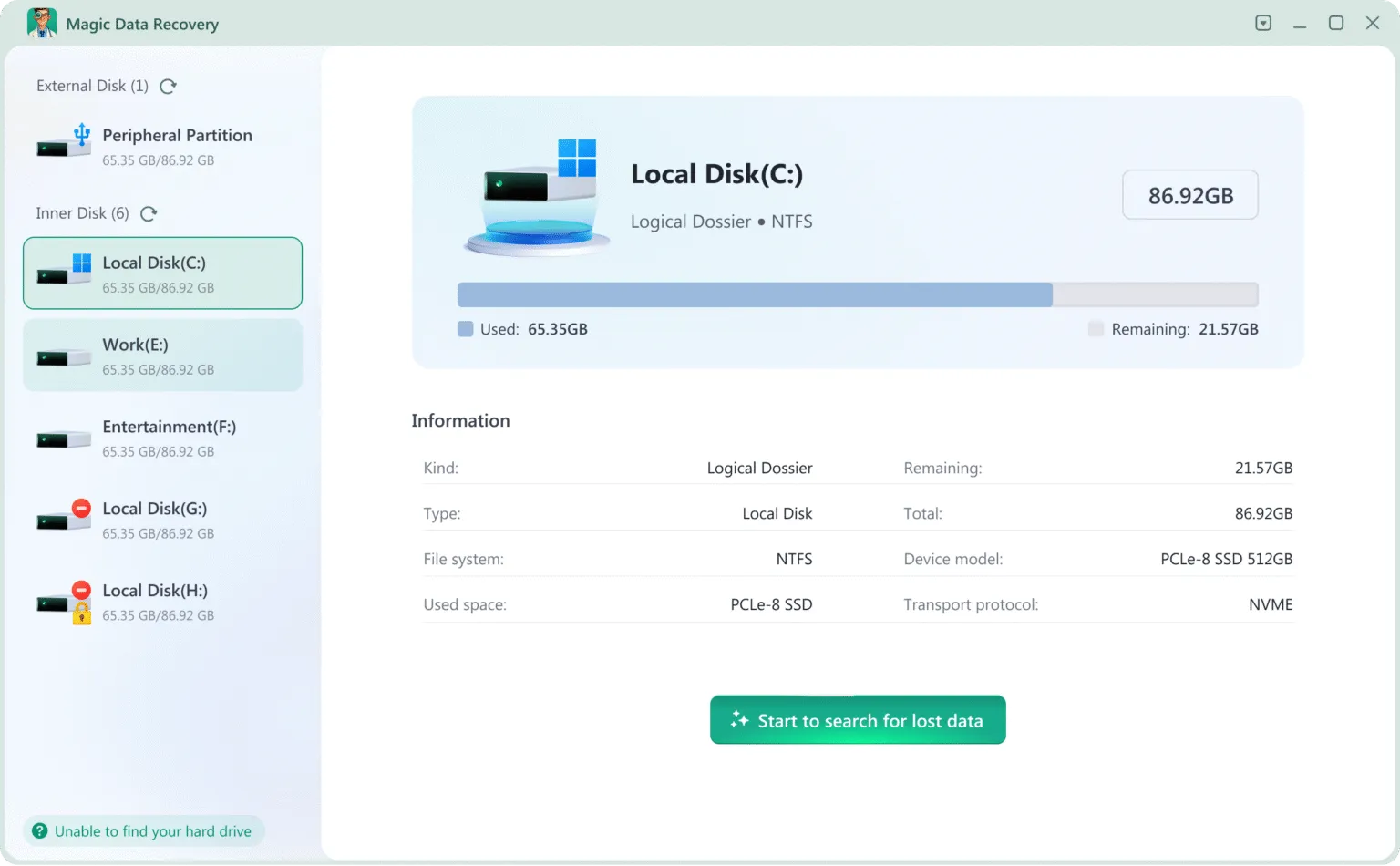
4. Filtrez les résultats et prévisualisez-les. Effectuez une recherche par nom de fichier ou par extension, parcourez les catégories de types de fichiers et prévisualisez les fichiers importants pour vérifier que leur contenu est intact.

5. Récupérer les fichiers sur un autre disque. Utilisez le disque dur interne de l'ordinateur ou un autre périphérique en bon état de fonctionnement, mais jamais le support source au format FAT32.
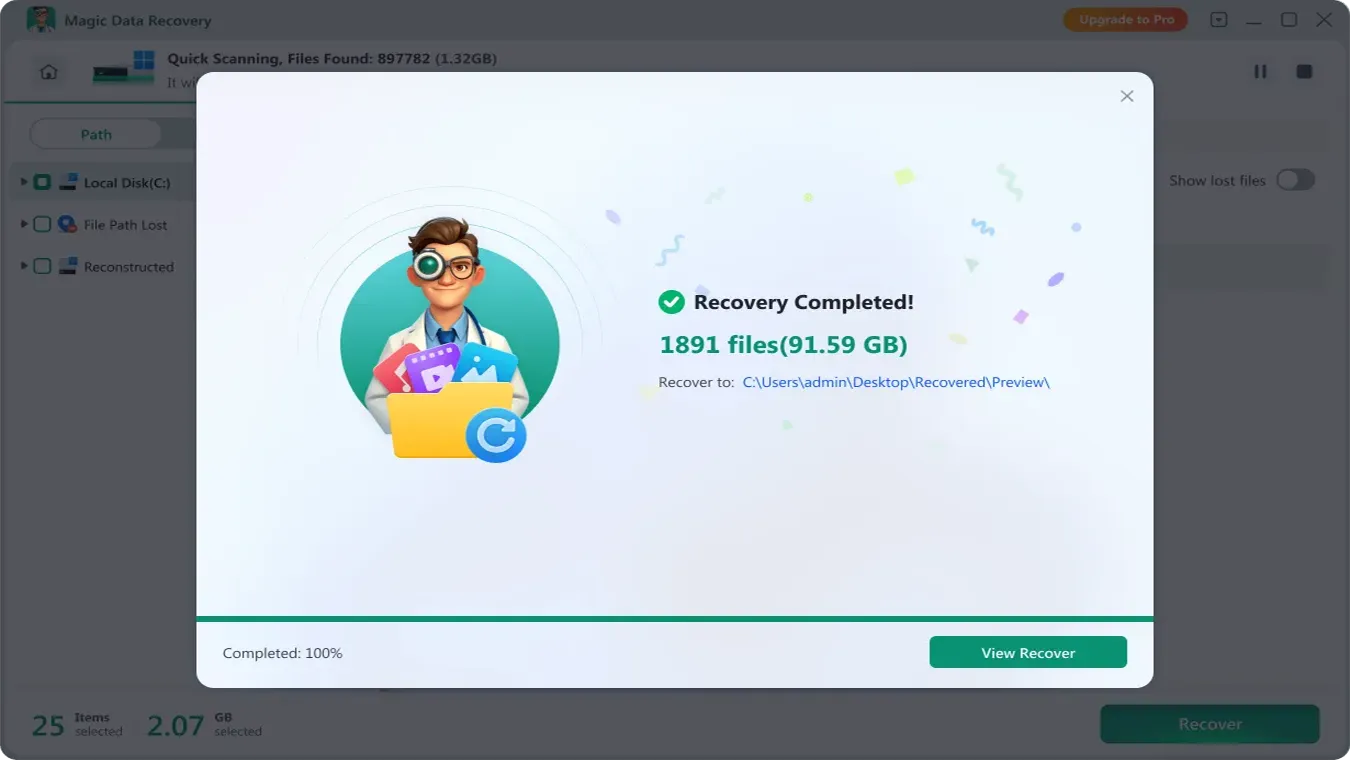
Ce processus permet de gérer le risque principal lié à Récupération de fichiers FAT32: écriture dans des grappes pouvant encore contenir des données manquantes. Aucun outil ne permet de restaurer des données écrasées ; il est donc recommandé de prévisualiser plusieurs fichiers importants avant de récupérer un ensemble volumineux.
Méthode 3 : Utiliser la récupération de fichiers Windows
L'outil « Windows File Recovery » de Microsoft est une option en ligne de commande qui prend en charge les supports FAT32 locaux. La source et la destination doivent être des lecteurs différents.
Installez « Windows File Recovery » depuis le Microsoft Store, ouvrez Windows Terminal ou l'invite de commande en tant qu'administrateur, puis suivez la syntaxe indiquée ci-dessous :
- winfr /?
Une commande de récupération type suit ce modèle :
- winfr E: D: /extensive /n *.jpg /n *.docx
Ici, E: correspond au disque concerné, D: à la destination, et les filtres recherchent les fichiers JPG et DOCX. Remplacez-les en fonction de votre cas.
Windows File Recovery est gratuit, mais sa syntaxe et ses modes de fonctionnement peuvent varier d'une version à l'autre. Il offre également moins d'aide que les interfaces graphiques Logiciel de récupération FAT32. Consultez l'aide intégrée à l'application et vérifiez attentivement les lettres attribuées aux lecteurs avant d'exécuter une commande.
Méthode 4 : Restaurer une version antérieure
La fonctionnalité « Versions précédentes » ne fonctionne que si l'historique des fichiers Windows ou un autre processus de sauvegarde a créé une copie avant la perte. Le système de fichiers FAT32 ne génère pas lui-même d'historique des versions.
Pour vérifier, connectez le disque de l'historique des fichiers ou de sauvegarde. Dans l'Explorateur de fichiers, cliquez avec le bouton droit sur le dossier qui contenait les éléments manquants, puis sélectionnez Restaurer les versions précédentes. Ouvrez d'abord une version disponible, puis copiez les fichiers nécessaires dans un emplacement sûr ou choisissez Restaurer vers.
Une liste vide signifie que Windows ne dispose d'aucun instantané enregistré pour cet emplacement. Cela ne signifie pas pour autant que la récupération par analyse soit impossible.
Méthode n° 5 : Afficher les fichiers FAT32 cachés à l'aide de la commande ATTRIB
Un logiciel malveillant, un transfert interrompu ou une modification d'attribut peuvent masquer des fichiers alors que le disque continue d'afficher de l'espace utilisé. Dans ce cas, la commande ATTRIB peut les rendre à nouveau visibles.
Commencez par activer Affichage > Afficher > Éléments cachés dans l'Explorateur de fichiers. Si certains dossiers sont toujours manquants, ouvrez l'Invite de commandes en tant qu'administrateur et exécutez la commande suivante :
- attrib -h -r -s /s /d E:\*.*
Remplacez « E: » par la lettre du lecteur au format FAT32. Cette commande supprime les attributs « caché », « en lecture seule » et « système » des fichiers et dossiers présents sur ce lecteur.
ATTRIB ne permet pas récupérer des fichiers supprimés sur un disque FAT32 stockage ; il modifie les attributs des entrées existantes. En cas d'erreurs, si le volume est au format RAW ou si des fichiers ont été supprimés, effectuez plutôt une analyse en lecture seule. Lancez ensuite une analyse de sécurité fiable si vous soupçonnez la présence d'un logiciel malveillant.
Quelle méthode de récupération FAT32 choisir ?
Méthode | Meilleur pour | Niveau technique | Principale limite |
Corbeille ou sauvegarde | Il existe un autre exemplaire intact | Facile | Souvent indisponible pour les supports amovibles |
Magic Data Recovery | Disques FAT32 supprimés, formatés, vides ou endommagés | Facile | Impossible de restaurer le contenu écrasé |
Récupération de fichiers sous Windows | Récupération gratuite en ligne de commande sous Windows | Avancé | Pas de flux de travail avec aperçu visuel |
Versions précédentes | Il existe un historique des fichiers ou des instantanés de sauvegarde | Facile | FAT32 ne crée pas de versions de lui-même |
ATTRIB | Les fichiers existent, mais possèdent des attributs « caché » ou « système » | Modéré | Ne permet pas de restaurer des fichiers supprimés |
Utilisez la commande ATTRIB pour les fichiers cachés et Logiciel de récupération FAT32 pour les données réellement supprimées ou formatées. En cas de dommages physiques, il convient de faire appel à un laboratoire de récupération de données.
Les erreurs courantes qui réduisent les chances de guérison
Évitez ces erreurs lorsque vous essayez de récupérer des fichiers sur un système de fichiers FAT32:
- Pour continuer à utiliser l'appareil : Les nouvelles données peuvent remplacer les groupes déjà publiés.
- Nouvelle mise en forme : Un autre format permet d'apporter des modifications, mais ne restaure pas les fichiers.
- Installation d'un logiciel à partir du code source : Les fichiers du programme peuvent écraser les données manquantes.
- Enregistrement des résultats dans la source : La récupération peut endommager les fichiers qui n'ont pas encore été restaurés.
- La course à pied CHKDSK Tout d'abord : Les réparations peuvent renommer des fragments ou mettre à jour les métadonnées de la table FAT.
- Mettre sous tension à plusieurs reprises un disque défaillant : Des cliquetis, des déconnexions ou une capacité incorrecte peuvent indiquer un problème matériel.
Si des données irremplaçables se trouvent sur un support physiquement endommagé, cessez de l'allumer et contactez un laboratoire spécialisé.
Conseils pour améliorer les résultats de la récupération de fichiers FAT32
Notez les noms de dossiers d'origine, les types de fichiers, leurs tailles et leurs dates avant de lancer l'analyse. Sélectionnez l'intégralité du périphérique physique lorsqu'une partition est manquante ou présente un système de fichiers incorrect ; en cas de suppression ordinaire à partir d'une partition en bon état, l'analyse du volume visible peut suffire. Laissez l'analyse approfondie se terminer si l'analyse rapide ne détecte pas les éléments recherchés.
Prévisualisez des fichiers représentatifs plutôt que de vous fier uniquement à leurs noms. Une partie d'un fichier fragmenté peut avoir été écrasée, même si son nom d'origine est resté inchangé. Récupérez en priorité les éléments les plus importants et enregistrez-les sur un support de stockage en bon état disposant d'un espace libre suffisant.
Comment éviter toute perte future de données FAT32
Le format FAT32 reste utile car il est largement pris en charge par les appareils photo, les consoles de jeux, les systèmes embarqués dans les voitures et les anciens matériels. Il ne dispose toutefois pas de journalisation et ne peut pas stocker de fichier individuel dont la taille dépasse 4 GiB. Microsoft’s Comparaison des systèmes de fichiers indique que la taille maximale des fichiers FAT32 est de 4 GiB. Les sauvegardes régulières restent plus simples et plus sûres que toute autre méthode ultérieure Récupération de fichiers FAT32 tentative.
Pour réduire les risques futurs, conservez deux copies de vos fichiers importants sur des supports distincts, éjectez les supports en toute sécurité et ne retirez jamais une carte SD pendant que l'appareil photo est en train d'enregistrer. Vérifiez le périphérique si les transferts ralentissent ou si des erreurs apparaissent. Utilisez le format exFAT ou NTFS lorsque votre matériel le prend en charge et que la taille des fichiers dépasse la limite imposée par le format FAT32.
Conclusion
Pour récupérer des fichiers sur un système de fichiers FAT32, cessez d'utiliser le périphérique, vérifiez si les données ont été supprimées ou simplement masquées, puis commencez par vérifier la sauvegarde. La commande ATTRIB permet de révéler les fichiers masqués, tandis que les options « Versions précédentes » et « Récupération de fichiers Windows » constituent des solutions intégrées dans certaines circonstances. Pour les supports FAT32 dont les données ont été supprimées, qui ont fait l'objet d'un formatage rapide, qui sont corrompus ou inaccessibles, Magic Data Recovery offre un processus plus clair : analysez le disque concerné, prévisualisez les fichiers récupérables, puis enregistrez-les ailleurs. Sa prise en charge de multiples scénarios de perte de données en fait un choix pratique lorsque les méthodes classiques ne permettent pas de retrouver le contenu manquant. Pour plus de conseils sur la récupération, rendez-vous sur le site récupération de fichiers effacés.
Prise en charge de Windows 7/8/10/11 et Windows Server
Foire aux questions sur la récupération de fichiers FAT32
Puis-je récupérer gratuitement des fichiers supprimés sur un disque formaté en FAT32 ?
Oui, si les fichiers se trouvent encore dans la Corbeille, dans une sauvegarde ou dans une version antérieure. Windows File Recovery propose également une option gratuite en ligne de commande. Cependant, aucune méthode ne permet de récupérer des clusters qui ont déjà été écrasés par de nouvelles données.
Pourquoi les fichiers FAT32 supprimés ne se trouvent-ils pas dans la Corbeille ?
Windows supprime souvent des fichiers stockés sur des clés USB et des cartes mémoire amovibles sans les envoyer dans la Corbeille. La combinaison Maj+Suppr ainsi que la suppression effectuée directement depuis un appareil photo ou un autre périphérique contournent également la Corbeille. Cessez d'utiliser le support et analysez-le sans tarder.
Puis-je récupérer des fichiers sur un disque formaté en FAT32 ?
Un formatage rapide peut laisser une grande partie de l'ancien contenu sur l'appareil, même s'il rétablit les structures importantes du système de fichiers. La récupération reste possible tant que de nouvelles données n'ont pas écrasé les anciens blocs. Un formatage complet ou une réutilisation approfondie réduit généralement considérablement ces chances.
Peut-on lancer CHKDSK sans risque avant de récupérer des fichiers FAT32 ?
CHKDSK répare les erreurs logiques du système de fichiers en modifiant les métadonnées. Cela peut s'avérer utile ultérieurement pour un disque non critique, mais cela peut compliquer la récupération ou transformer les fragments en fichiers CHK. Récupérez d'abord les données importantes, puis réparez ou reformatez le périphérique.
ATTRIB permet-il de récupérer des fichiers supprimés sur un disque FAT32 ?
Non. La commande ATTRIB supprime les attributs « caché », « système » ou « lecture seule » des entrées qui existent encore. Elle permet de révéler les fichiers masqués par des logiciels malveillants ou à la suite d'une erreur d'attribut, mais elle ne permet pas de restaurer des entrées de répertoire supprimées ni le contenu de fichiers écrasés.
Quel est le meilleur logiciel de récupération de données FAT32 pour les débutants ?
Choisissez un logiciel compatible avec le format FAT32, capable d'analyser les fichiers sans modifier la source, d'afficher un aperçu des fichiers pris en charge et de vous permettre d'enregistrer les résultats sur un autre disque. Magic Data Recovery répond à ces critères et prend en charge les cas de suppression, de formatage, de corruption et de disques inaccessibles sous Windows.
Puis-je récupérer des fichiers FAT32 en conservant leurs noms et dossiers d'origine ?
Parfois. Si les entrées de répertoire et les informations relatives à la chaîne de clusters restent intactes, un logiciel de récupération peut reconstituer les noms et chemins d'accès d'origine. Après un formatage ou une corruption grave, une analyse basée sur les signatures peut permettre de récupérer le contenu des fichiers avec des noms générés, mais sans la structure de dossiers d'origine.
Quand dois-je faire appel à un service de dépannage professionnel ?
Faites appel à un laboratoire lorsque un disque dur émet des cliquetis, se déconnecte de manière répétée, surchauffe, affiche une capacité erronée ou a subi des dégâts dus à l'eau ou à un choc. Envisagez également de faire appel à un professionnel lorsque la seule copie disponible est essentielle à l'activité de l'entreprise et que toute nouvelle tentative de dépannage par vous-même comporterait un risque inacceptable.

Jason est un spécialiste de la récupération de données et de l'assistance technique, fort de plus de 15 ans d'expérience sur le terrain. Il a beaucoup travaillé auprès des utilisateurs finaux, résolvant des cas complexes de perte de données et proposant des solutions de récupération concrètes en cas de suppression accidentelle, de disques formatés, de systèmes de fichiers endommagés, de partitions perdues, de pannes système et d’autres situations d’urgence nécessitant une récupération. Son expertise couvre également la sauvegarde et la restauration, la réparation de fichiers et la reprise après sinistre, en mettant particulièrement l’accent sur des conseils sûrs, fiables et techniquement rigoureux.