Recover Files from FAT32: 5 Safe Ways

Losing files from a FAT32 USB drive, SD card, or older external disk can feel final, especially when the missing items never appear in the Recycle Bin. Fortunately, deletion usually removes the file’s directory reference before it erases the underlying content. That leaves a recovery window—provided you stop using the device quickly. This guide explains how to recover files from FAT32 after deletion, formatting, corruption, or a hidden-file problem. Start with the free checks, then use Magic Data Recovery when the file system no longer provides a direct route to your data. You can also explore Amagicsoft’s broader 已刪除檔案復原指南 for related recovery scenarios.
第一條規則: Disconnect the affected drive until you are ready to recover it. Do not copy new files to it, format it again, or install recovery software on it.
支援 Windows 7/8/10/11 和 Windows Server
目錄
Can You Recover Files from a FAT32 Drive?
In many cases, yes. FAT32 keeps a directory entry for each file and uses a File Allocation Table to record the chain of clusters holding its content. Deletion marks the entry and clusters as reusable, but the underlying data may remain readable until another write occupies that space.
FAT32 has no journal that preserves a detailed change history, so prompt, read-only scanning matters. A file deleted months ago from an unused SD card may have a better chance than one deleted minutes ago from a USB drive that immediately received new data. The safest way to recover files from FAT32 is therefore to minimize every new write. For technical background, see how the FAT32 File Allocation Table works.
Identify the Data-Loss Scenario First
Check how the files disappeared before choosing a method. The wrong fix can change recoverable file-system records.
你所看到的 | 可能原因 | 最佳的第一步 |
Files vanished after pressing Delete | 意外刪除 | Check Recycle Bin or backup, then scan |
The drive is empty after formatting | Quick format or mistaken format | Stop using it and run a deep scan |
Windows 要求您格式化磁碟機 | Damaged FAT32 structure or boot sector | Cancel the prompt and scan the drive |
Used space remains, but folders look empty | Hidden attributes or malware | Run the ATTRIB check and a security scan |
The device disconnects, clicks, or reports the wrong capacity | Physical or controller failure | 請關機,並聯絡資料恢復中心 |
Cancel any Windows format prompt. Also avoid CHKDSK before recovery: it repairs consistency by changing metadata rather than undeleting files, which can complicate a later scan.
Method 1: Check the Recycle Bin and Existing Backups
Open the Recycle Bin and search by filename, type, or deletion date. If you find the item, right-click it and select 還原. Files deleted from many removable drives bypass the bin, as do items removed with Shift+Delete or through some cameras.
Next, check locations that may hold another copy:
- OneDrive, Google Drive, Dropbox, or another synced service
- File History or another Windows backup
- A NAS, external backup disk, or manually copied folder
- The camera, phone, email, or messaging app that originally created or received the file
A backup returns an intact copy without scanning the affected media. If none exists, continue without writing to the FAT32 device.
Method 2: Recover Deleted Files from a FAT32 Drive with Magic Data Recovery
When backups contain nothing useful, FAT32 recovery software offers a practical route. Magic Data Recovery scans beyond the visible folder structure for file records and recognizable content, which helps recover deleted files from FAT32 drive space that Windows now treats as free.
It suits accidental deletion, quick formatting, empty-looking USB or SD cards, and corrupted or inaccessible FAT32 volumes. It can search for photos, videos, documents, audio, archives, and other common file types.
Unlike ATTRIB, a recovery scan searches for data that the current directory no longer lists. The software supports more than 5,000 file types, offers quick and deep scans, previews supported files before saving, and processes data locally on Windows.
How to Use Magic Data Recovery for FAT32 File Recovery
1. Connect the FAT32 device to a Windows PC. Use a reliable port or card reader, and cancel any format or initialization prompt.
2. Install Magic Data Recovery on another disk. Never install it on the affected FAT32 volume because the installation could overwrite deleted data.
支援 Windows 7/8/10/11 和 Windows Server
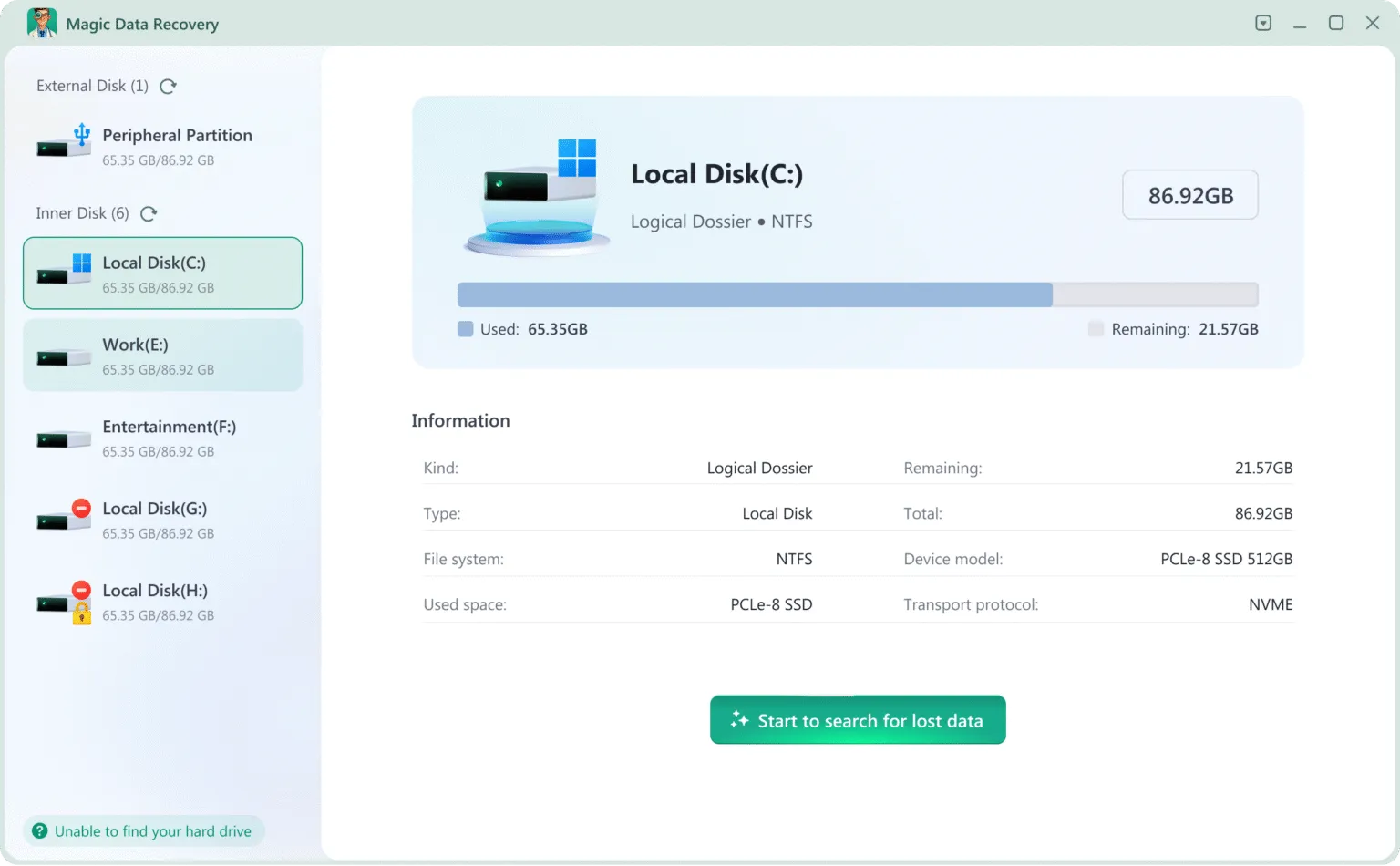
3. Select the correct drive and scan it. Confirm the capacity and drive letter. Let the full scan finish after formatting or corruption.

4. 篩選並預覽結果。. Search by filename or extension, browse file-type categories, and preview important files to assess whether their contents are intact.

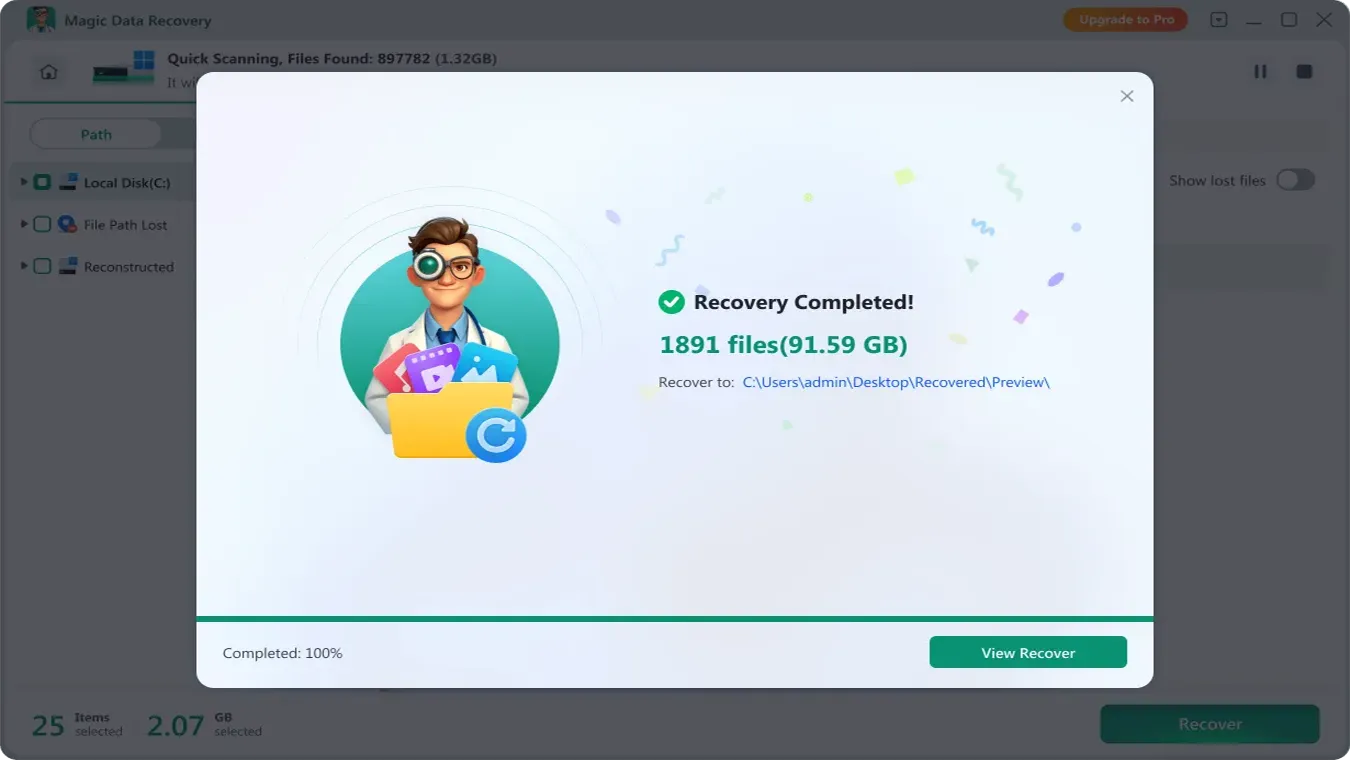
5. Recover files to a different drive. Use the computer’s internal disk or another healthy device, never the FAT32 source.

This workflow addresses the core risk in FAT32 file recovery: writing to clusters that may still hold missing content. No tool can restore overwritten data, so preview several important files before recovering a large set.
方法 3:使用 Windows 檔案復原
Microsoft’s Windows File Recovery is a command-line option that supports local FAT32 media. The source and destination must be different drives.
Install Windows File Recovery from the Microsoft Store, open Windows Terminal or Command Prompt as an administrator, and follow the current syntax shown by:
- winfr /?
A typical recovery command follows this pattern:
- winfr E: D: /extensive /n *.jpg /n *.docx
Here, E: is the affected drive, D: is the destination, and the filters request JPG and DOCX files. Replace them for your case.
Windows File Recovery is free, but its syntax and modes can change between versions. It also offers less guidance than graphical FAT32 recovery software. Check the in-app help and confirm the drive letters carefully before running a command.
Method 4: Restore a Previous Version
Previous Versions works only when Windows File History or another backup process created a copy before the loss. FAT32 itself does not generate historical versions.
To check, connect the File History or backup drive. In File Explorer, right-click the folder that contained the missing items and choose 還原先前版本. Open an available version first, then copy the required files to a safe location or choose 還原至.
An empty list means Windows has no saved snapshot for that location. It does not prove that scan-based recovery is impossible.
Method 5: Reveal Hidden FAT32 Files with ATTRIB
Malware, an interrupted transfer, or an attribute change can hide files while the drive still reports used space. In that situation, ATTRIB may make them visible again.
First enable 檢視 > 顯示 > 隱藏項目 in File Explorer. If folders remain missing, open Command Prompt as an administrator and run:
- attrib -h -r -s /s /d E:\*.*
Replace E: with the FAT32 drive letter. The command removes hidden, read-only, and system attributes from files and folders on that drive.
ATTRIB does not recover deleted files from FAT32 drive storage; it changes attributes on existing entries. If errors appear, the volume is RAW, or deletion occurred, use a read-only scan instead. Run a trusted security scan afterward if malware may be responsible.
Which FAT32 Recovery Method Should You Choose?
方法 | 最適合 | Technical level | 主要限制 |
Recycle Bin or backup | A separate intact copy exists | 簡易 | Often unavailable for removable media |
Magic Data Recovery | Deleted, formatted, empty, or corrupted FAT32 drives | 簡易 | Cannot restore overwritten content |
Windows 檔案復原 | Free command-line recovery on Windows | 進階 | No visual preview workflow |
先前版本 | File History or backup snapshots exist | 簡易 | FAT32 does not create versions itself |
屬性 | Files exist but have hidden/system attributes | 中度 | Does not undelete files |
Use ATTRIB for hidden files and FAT32 recovery software for genuinely deleted or formatted data. Physical symptoms call for a recovery lab instead.
降低復原機會的常見錯誤
Avoid these mistakes while trying to recover files from FAT32:
- Continuing to use the device: New data can replace released clusters.
- Formatting again: Another format adds changes but does not restore files.
- Installing software on the source: Program files may overwrite missing data.
- Saving results to the source: Recovery can damage files not yet restored.
- 運行 CHKDSK first: Repairs may rename fragments or update FAT metadata.
- Powering a failing disk repeatedly: Clicking, disconnecting, or the wrong capacity suggests hardware trouble.
If irreplaceable data sits on a physically unstable device, stop powering it on and contact a professional lab.
Tips to Improve FAT32 File Recovery Results
Note the original folder names, file types, sizes, and dates before scanning. Select the whole physical device when a partition is missing or shows the wrong file system; for ordinary deletion from a healthy partition, scanning the visible volume may suffice. Let a deep scan finish if the quick scan misses required items.
Preview representative files rather than trusting names alone. Part of a fragmented file may have been overwritten even when its original name survives. Recover high-priority items first and save them to healthy storage with enough free space.
How to Prevent Future FAT32 Data Loss
FAT32 remains useful because cameras, game consoles, car systems, and older hardware support it widely. Still, it lacks journaling and cannot store an individual file larger than 4 GiB. Microsoft’s file-system comparison documents the 4 GiB FAT32 file-size limit. Regular backups remain easier and safer than any later FAT32 file recovery 嘗試。.
To reduce future risk, keep two copies of important files on separate devices, eject media safely, and never remove an SD card while a camera is writing. Check the device when transfers slow down or errors appear. Use exFAT or NTFS when your hardware supports it and files exceed FAT32’s limit.
總結
至 recover files from FAT32, stop using the device, identify whether the data is deleted or merely hidden, and begin with a backup check. ATTRIB can reveal hidden files, while Previous Versions and Windows File Recovery offer built-in options in the right circumstances. For deleted, quick-formatted, corrupted, or inaccessible FAT32 media, Magic Data Recovery provides a clearer workflow: scan the affected drive, preview recoverable files, and save them elsewhere. Its support for multiple logical data-loss scenarios makes it a practical choice when basic methods cannot see the missing content. For more recovery guidance, visit the 刪除的檔案復原.
支援 Windows 7/8/10/11 和 Windows Server
FAQs About FAT32 File Recovery
Can I recover deleted files from a FAT32 drive for free?
Yes, if the files remain in the Recycle Bin, a backup, or a previous version. Windows File Recovery also provides a free command-line option. However, no method can recover clusters that new data has already overwritten.
Why are deleted FAT32 files not in the Recycle Bin?
Windows often deletes files from removable USB drives and memory cards without moving them to the Recycle Bin. Shift+Delete and deletion through cameras or other devices also bypass it. Stop using the media and scan it promptly.
Can I recover files from a formatted FAT32 drive?
A quick format may leave much of the old content on the device, although it rebuilds important file-system structures. Recovery remains possible until new data overwrites the old clusters. A full format or extensive reuse usually lowers the chances significantly.
Is CHKDSK safe before FAT32 file recovery?
CHKDSK repairs logical file-system errors by changing metadata. That may help a noncritical drive later, but it can complicate recovery or turn fragments into CHK files. Recover important data first, then repair or reformat the device.
Does ATTRIB recover deleted files from a FAT32 drive?
No. ATTRIB removes hidden, system, or read-only attributes from entries that still exist. It can reveal files hidden by malware or an attribute error, but it cannot recreate deleted directory entries or overwritten file content.
What is the best FAT32 recovery software for beginners?
Choose software that supports FAT32, scans without modifying the source, previews supported files, and lets you save results to another disk. Magic Data Recovery fits this workflow and handles deletion, formatting, corruption, and inaccessible-drive scenarios on Windows.
Can I recover FAT32 files with their original names and folders?
Sometimes. If directory entries and cluster-chain information remain intact, recovery software may reconstruct original names and paths. After formatting or severe corruption, signature-based scanning may recover file contents with generated names and without the original folder structure.
什麼時候應該尋求專業的資料恢復服務?
Use a lab when a drive clicks, disconnects repeatedly, overheats, reports the wrong capacity, or suffers water or impact damage. Also consider professional help when the only copy is business-critical and further DIY attempts would create unacceptable risk.
Jason 在電腦資料安全產業擁有超過 15 年的實務經驗。他專精於資料復原、備份與還原,以及檔案修復技術,已協助全球數百萬使用者解決複雜的資料遺失與安全問題。.