
Guide de reprise après incident informatique PowerProtect
Si vous comparez PowerProtect Cyber Recovery Avant d’aborder les options pratiques de récupération de fichiers, il est important de bien comprendre un point essentiel : la cyber-récupération d’entreprise et la récupération quotidienne de fichiers ne sont pas la même chose. La solution de Dell vise à isoler les données de sauvegarde critiques dans un coffre-fort sécurisé afin d’assurer la résilience face aux ransomwares, tandis que les outils de récupération de fichiers locaux permettent de restaurer les fichiers perdus à la suite d’une suppression, d’un formatage, d’erreurs du système de fichiers ou de problèmes liés aux périphériques de stockage. Pour les cas courants de fichiers supprimés, vous pouvez également commencer par ceci guide de récupération des fichiers effacés avant de choisir la procédure de récupération appropriée.
Dans ce guide, nous allons vous expliquer ce que PowerProtect Cyber Recovery ce qu’il fait, dans quels cas il est le plus efficace, quelles sont les limites que les utilisateurs doivent connaître, et quand un outil comme Magic Data Recovery constitue une solution plus directe pour récupérer des fichiers locaux supprimés, formatés ou inaccessibles.
Prise en charge de Windows 7/8/10/11 et Windows Server
Table des matières
Qu'est-ce que PowerProtect Cyber Recovery ?
PowerProtect Cyber Recovery Il s'agit de la solution de cyber-résilience de Dell destinée à protéger les données critiques des entreprises contre les ransomwares et les cyberattaques destructrices. Elle permet aux organisations d'isoler leurs données critiques dans un coffre-fort sécurisé et automatisé, afin qu'elles puissent récupérer des copies intactes après un incident cybernétique.
Contrairement aux logiciels de sauvegarde classiques qui restent connectés aux systèmes de production, Dell PowerProtect Cyber Recovery place les copies de sauvegarde dans un environnement isolé, tant sur le plan logique que physique. Cette conception permet de réduire le risque qu'un rançongiciel puisse atteindre simultanément toutes les copies de sauvegarde.
En termes simples, PowerProtect Cyber Recovery permet aux organisations de conserver une copie intacte et protégée de leurs données les plus importantes, hors de portée de nombreuses menaces actives. C'est essentiel, car les ransomwares ciblent souvent non seulement les systèmes en production, mais aussi les référentiels de sauvegarde.
Fonctionnement de PowerProtect Cyber Recovery
L'idée centrale derrière PowerProtect Cyber Recovery Il s'agit du « cyber recovery vault ». Un « vault » est un environnement de récupération sécurisé qui stocke des copies essentielles à l'écart du réseau de production principal. Il est généralement utilisé pour conserver une copie isolée et à sécurité intégrée des données stratégiques et essentielles à l'activité.
Un processus de travail type comprend quatre étapes :
- Identifier les systèmes et les données essentiels à l'activité.
- Copiez les sauvegardes sélectionnées dans le coffre-fort sécurisé.
- Isolez ces copies de l'environnement de production.
- Utilisez la copie de la chambre forte à des fins d'analyse, de validation ou de restauration après une attaque.
Cette conception permet PowerProtect Cyber Recovery Utile pour les entreprises qui ont besoin d'une dernière ligne de défense contre les ransomwares. Cependant, il n'est pas conçu pour récupérer un seul fichier supprimé sur un ordinateur portable personnel, une clé USB, une carte SD ou disque local formaté.
PowerProtect Cyber Recovery face à la sauvegarde traditionnelle
De nombreux utilisateurs recherchent PowerProtect Cyber Recovery car ils veulent savoir si cela remplace un logiciel de sauvegarde. La réponse est non. Cela vient compléter un stratégie de sauvegarde plutôt que de le remplacer.
La sauvegarde traditionnelle protège les données en créant des copies. Cependant, ces copies peuvent toujours être connectées au même réseau, gérées à l'aide des mêmes identifiants ou exposées au même vecteur d'attaque. En revanche, PowerProtect Cyber Recovery assure l'isolation et un accès contrôlé.
Voici une comparaison pratique :
Fonctionnalité | Sauvegarde traditionnelle | PowerProtect Cyber Recovery |
Objectif principal | Récupérer des données perdues ou endommagées | Protéger les copies saines contre les cyberattaques |
Utilisateur type | Particuliers, équipes, services informatiques | Entreprises de taille moyenne à grande |
Modèle de protection | Copie de sauvegarde | Chambre forte isolée de récupération informatique |
Meilleur cas d'utilisation | Suppression accidentelle, panne du système, restauration de routine | Récupération après une attaque par ransomware et cyber-résilience |
Complexité | Faible à moyen | Haut |
Coût et mise en place | Généralement plus facile | Cela nécessite une planification, des infrastructures et une expertise |
C'est pourquoi, PowerProtect Cyber Recovery Il est particulièrement efficace lorsqu'il s'inscrit dans le cadre d'une stratégie de cyber-résilience d'entreprise. Il ne remplace toutefois pas les outils de restauration des terminaux, de restauration des fichiers locaux, de test des sauvegardes ou de restauration au niveau des utilisateurs.
Quand PowerProtect Cyber Recovery est-il la solution idéale ?
PowerProtect Cyber Recovery Cela s'avère utile lorsqu'une organisation doit protéger des systèmes de grande valeur contre les ransomwares ou les attaques destructrices. Par exemple, un service financier peut avoir besoin d'une copie intacte de ses bases de données comptables. Un hôpital peut avoir besoin de copies protégées des systèmes contenant les dossiers des patients. Une entreprise industrielle peut avoir besoin d'une copie protégée de son ERP et de ses données opérationnelles.
Cela s'avère particulièrement pertinent lorsque :
- Votre entreprise gère des systèmes de production critiques.
- La reprise après une attaque par ransomware est désormais considérée comme un risque relevant de la responsabilité du conseil d'administration.
- Les sauvegardes existantes restent connectées au réseau de production.
- Vous avez besoin d'un environnement de restauration isolé.
- Vous utilisez déjà l'infrastructure Dell PowerProtect.
- Vous devez mettre en place un plan de reprise après sinistre, que ce soit dans des environnements sur site ou dans le cloud.
Comme il prend en charge la planification de la reprise après sinistre à l'échelle de l'entreprise, PowerProtect Cyber Recovery convient davantage aux équipes informatiques qu'aux utilisateurs occasionnels. Il est adapté aux organisations qui ont besoin de politiques de restauration structurées, d'un accès contrôlé et de processus de restauration éprouvés.
Limites de PowerProtect Cyber Recovery
Bien que PowerProtect Cyber Recovery Bien qu'il s'agisse d'un outil puissant, les utilisateurs doivent en comprendre les limites avant de le choisir comme solution de récupération générale.
Ce n'est pas un simple outil de récupération de fichiers supprimés
Si vous supprimez par inadvertance des photos, des documents Word, des vidéos, des fichiers ZIP ou des dossiers de projet depuis un PC sous Windows, PowerProtect Cyber Recovery Ce n'est ni la solution la plus rapide ni la plus pratique. Elle repose sur des copies de sauvegarde protégées et sur l'infrastructure de l'entreprise. Elle n'analyse pas votre disque dur local secteur par secteur pour retrouver les fichiers supprimés.
Dans ce cas précis, des logiciel de récupération de données est généralement plus direct.
Il faut s'y préparer avant que la perte de données ne se produise
PowerProtect Cyber Recovery protège les données qui ont déjà été sélectionnées, sauvegardées, répliquées et stockées dans le coffre-fort. Si un fichier n'a jamais été protégé par le système, le coffre-fort ne peut pas le restaurer comme par magie.
Il s'agit là d'une différence importante. La cyber-récupération est une démarche proactive. La récupération de fichiers est souvent réactive. Lorsque les utilisateurs perdent des fichiers sans disposer d'une sauvegarde, ils ont besoin d'une analyse de récupération plutôt que d'un workflow de type « Enterprise Vault ».
Cela pourrait s'avérer trop complexe pour les petites équipes
La mise en place d'un coffre-fort de récupération informatique nécessite une architecture, une planification du stockage, des règles de sécurité, un contrôle d'accès et des tests de récupération. Pour les grandes entreprises, cette planification est indispensable. Pour les petites entreprises ou les particuliers utilisant Windows, elle peut s'avérer excessive.
Si le problème concerne un disque externe formaté, un dossier « Bureau » supprimé, une partition endommagée ou des fichiers manquants à la suite d'une erreur système, un outil tel que Magic Data Recovery convient mieux au poste.
Quand le modèle Magic Data Recovery est plus adapté
Magic Data Recovery est conçu pour les utilisateurs de Windows qui ont besoin de récupérer des fichiers perdus dans des situations courantes de perte de données. Contrairement à PowerProtect Cyber Recovery, il ne nécessite pas de « Enterprise Vault » préconfiguré. À la place, il analyse le disque concerné et aide les utilisateurs à retrouver les fichiers récupérables.
Cela en fait un outil utile dans des cas tels que :
- Fichiers supprimés d'un PC ou d'un disque externe
- Corbeille vidée par erreur
- Données perdues après un formatage rapide
- Fichiers manquants à la suite d'erreurs du système de fichiers
- Documents, photos, vidéos, archives et autres types de fichiers perdus
- Données perdues sur des clés USB, des cartes SD, des disques durs ou des supports de stockage externes
Magic Data Recovery C'est un outil de récupération de fichiers Windows tout-en-un destiné aux fichiers supprimés, formatés ou perdus. Il propose aux utilisateurs un processus guidé, ce qui facilite la récupération pour les utilisateurs non initiés à l'informatique.
Pourquoi recommander Magic Data Recovery en complément de PowerProtect Cyber Recovery ?
La meilleure stratégie de reprise dépend du scénario de sinistre. PowerProtect Cyber Recovery protège les systèmes d'entreprise avant qu'un incident cybernétique ne se produise. Magic Data Recovery C'est utile lorsque des fichiers ont déjà disparu d'un périphérique local et que vous devez rechercher les données récupérables.
C'est cette différence qui fait que Magic Data Recovery un outil pratique, et non un substitut direct.
Point de douleur principal qu'il résout
De nombreux utilisateurs ne perdent pas leurs fichiers à cause d'un ransomware. Ils les perdent à la suite d'une suppression accidentelle, d'un formatage précipité, d'erreurs de partition, de transferts interrompus, de problèmes liés à un disque externe ou de pannes logicielles. Dans ces cas-là, les solutions de cyber-récupération destinées aux entreprises peuvent ne pas être d'une grande aide.
Magic Data Recovery se concentre sur ces problèmes courants liés à la perte de données.
Principaux avantages
Magic Data Recovery offre plusieurs avantages pratiques :
- Il permet de récupérer des fichiers supprimés, formatés ou perdus.
- Il fonctionne sur les périphériques de stockage Windows courants.
- Il propose un processus guidé d'analyse et de récupération.
- Il permet aux utilisateurs de prévisualiser les fichiers récupérables avant de les enregistrer.
- Il convient aussi bien aux débutants qu'aux utilisateurs expérimentés.
- Cela permet aux utilisateurs d'éviter les opérations manuelles risquées.
Pour les utilisateurs qui ont besoin de récupérer des documents, des photos, des vidéos, des fichiers audio, des e-mails, des archives ou d'autres types de fichiers courants supprimés, Magic Data Recovery offre une approche plus directe que l'infrastructure de reprise informatique d'entreprise.
Exemples de cas d'utilisation
Par exemple, si un utilisateur supprime un dossier de projet d'un disque externe, Magic Data Recovery Il peut analyser le support et rechercher les fichiers récupérables. Si une carte mémoire demande à être formatée, l'outil peut analyser la carte avant que l'utilisateur n'écrase les données d'origine. Si un formatage rapide rend les fichiers inaccessibles, le logiciel peut rechercher les enregistrements de fichiers restants et les données récupérables.
En revanche, PowerProtect Cyber Recovery Cela n'est utile que si les données perdues figurent déjà dans une copie protégée du coffre-fort.
PowerProtect Cyber Recovery vs Magic Data Recovery
Ces deux solutions s'adressent à des niveaux de restauration différents. L'une protège les copies de sauvegarde d'entreprise. L'autre permet de restaurer des fichiers locaux perdus.
Point de comparaison | PowerProtect Cyber Recovery | Magic Data Recovery |
Objectif principal | Cybérésilience et reprise après une attaque par ransomware | Récupération de fichiers supprimés, formatés ou perdus |
Meilleur pour | Entreprises et infrastructures critiques | Utilisateurs Windows, petites entreprises et récupération de données sur des supports de stockage locaux |
Source de récupération | Copie sécurisée dans le coffre-fort | Disque, partition ou périphérique concerné |
Nécessite une configuration préalable à la perte | Oui | Aucun coffre-fort de sauvegarde préconfiguré n'est nécessaire |
Gère les suppressions accidentelles | Uniquement s'il existe une sauvegarde protégée | Oui, lorsque les données n'ont pas été écrasées |
Prend en charge les disques formatés | Uniquement si une copie de sauvegarde existe | Oui, dans de nombreux cas où un remboursement est possible |
Complexité technique | Haut | Faible à moyen |
Poste recommandé | Couche de reprise après sinistre informatique d'entreprise | Couche pratique de récupération de fichiers locaux |
Par conséquent, les utilisateurs ne devraient pas se demander laquelle des deux solutions est globalement la meilleure. Il vaudrait mieux se poser la question suivante : “ À quel type de perte de données suis-je confronté ? ” Si la réponse fait intervenir un rançongiciel et des charges de travail d'entreprise protégées, PowerProtect Cyber Recovery pourrait être appropriée. Si la réponse fait état de fichiers locaux manquants, Magic Data Recovery est généralement plus pertinent.
Comment récupérer des fichiers locaux perdus avec Magic Data Recovery
Avant d'utiliser un outil de récupération, cessez d'utiliser l'appareil concerné. De nouveaux fichiers risqueraient d'écraser les données supprimées et de réduire les chances de récupération.
Procédez comme suit :
Étape 1 : Installer le logiciel sur un disque sécurisé
Ne pas installer Magic Data Recovery sur le disque où les fichiers ont été perdus. Par exemple, si des données ont disparu d'une clé USB externe, installez le logiciel sur le disque système interne de votre ordinateur.
Prise en charge de Windows 7/8/10/11 et Windows Server
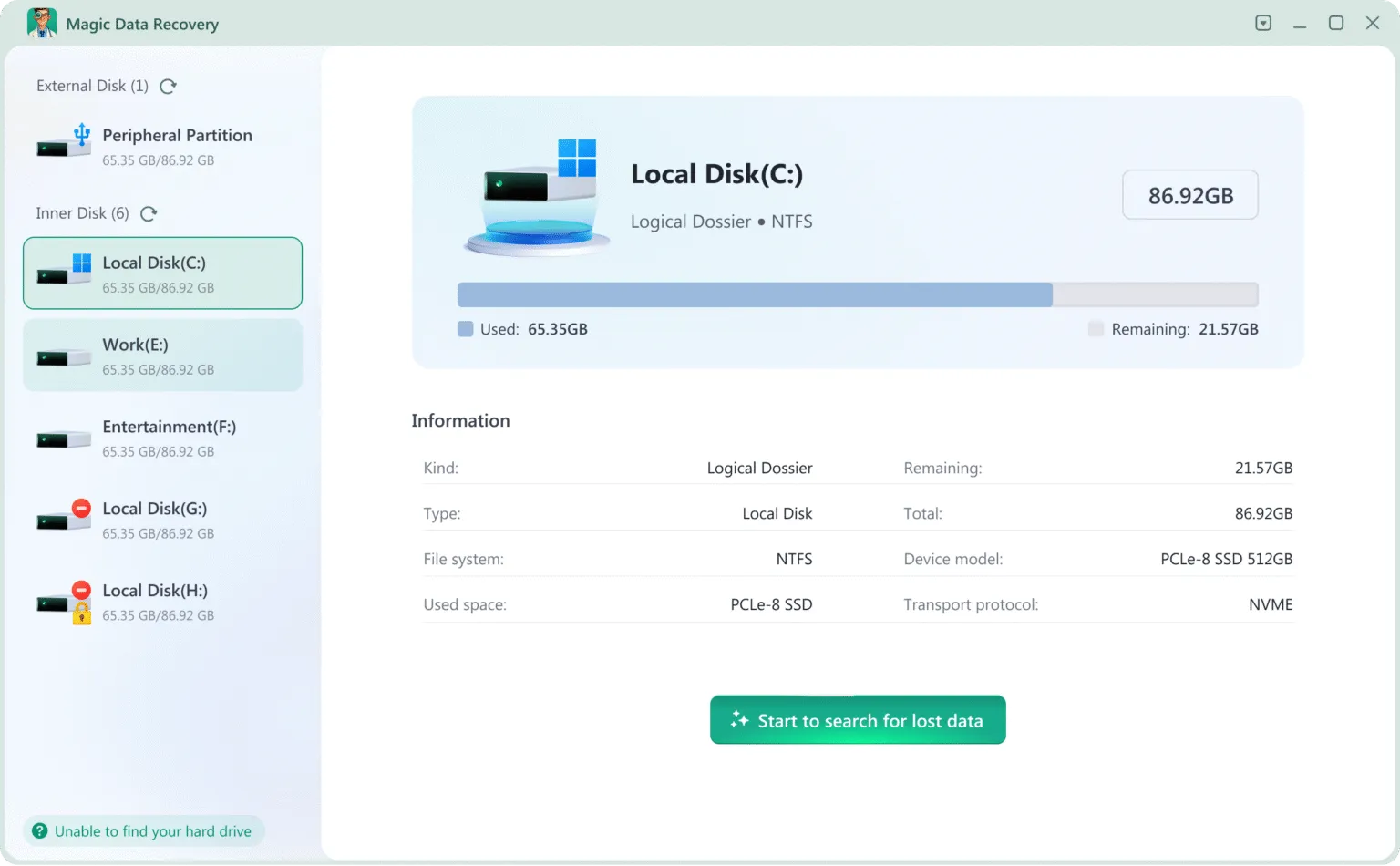
Étape 2 : Sélectionner le lieu concerné
Lancement Magic Data Recovery et sélectionnez le disque, la partition, la clé USB, la carte SD ou le périphérique de stockage externe sur lequel les fichiers ont disparu.
Étape 3 : Lancer une analyse
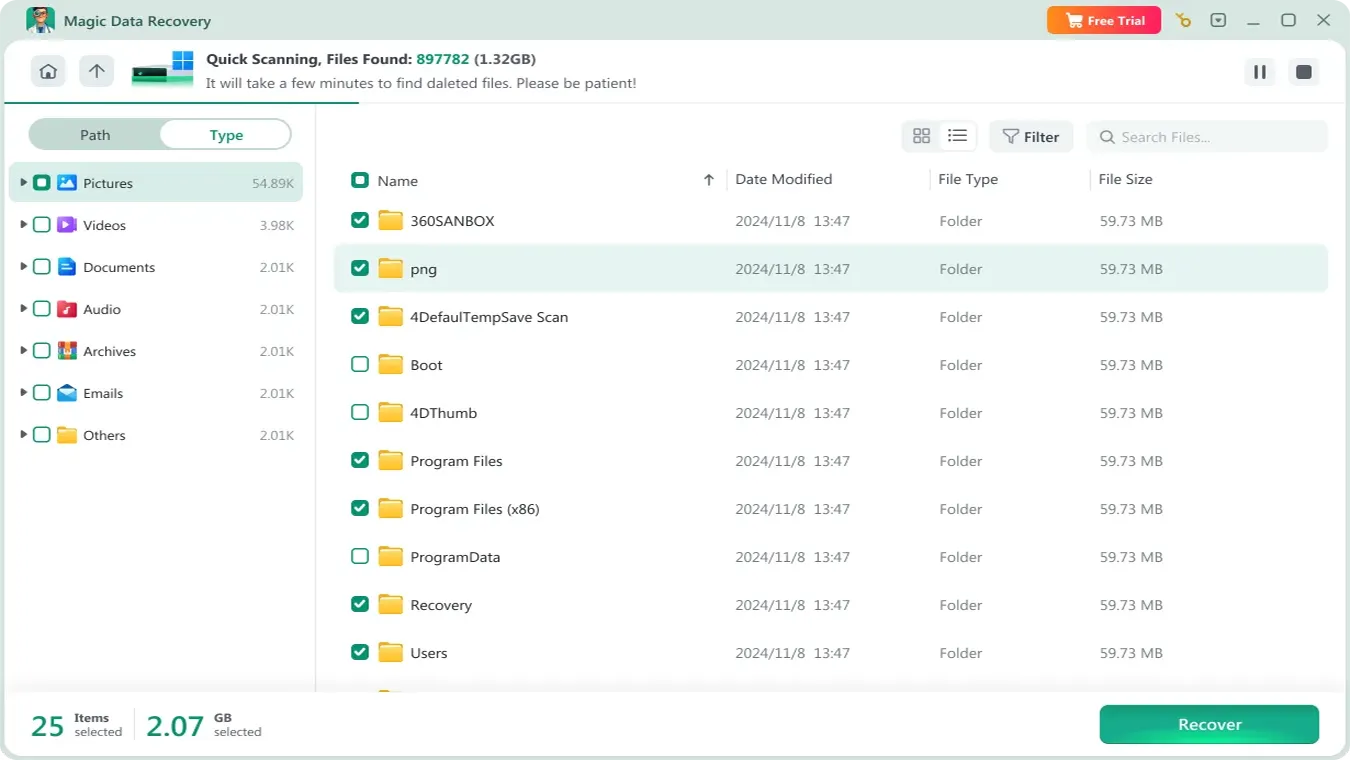
Lancez l'analyse. Une analyse rapide peut permettre de retrouver plus rapidement les fichiers récemment supprimés. Une analyse approfondie peut prendre plus de temps, mais elle permet de localiser davantage de fichiers après un formatage, en cas d'erreurs du système de fichiers ou de perte de données complexe.
Étape 4 : Aperçu des fichiers trouvés
Prévisualisez les fichiers récupérables lorsque cela est possible. Cette étape vous permet de vérifier si les fichiers détectés vous sont utiles avant de procéder à leur récupération.

Étape 5 : Enregistrer les fichiers récupérés sur un autre disque
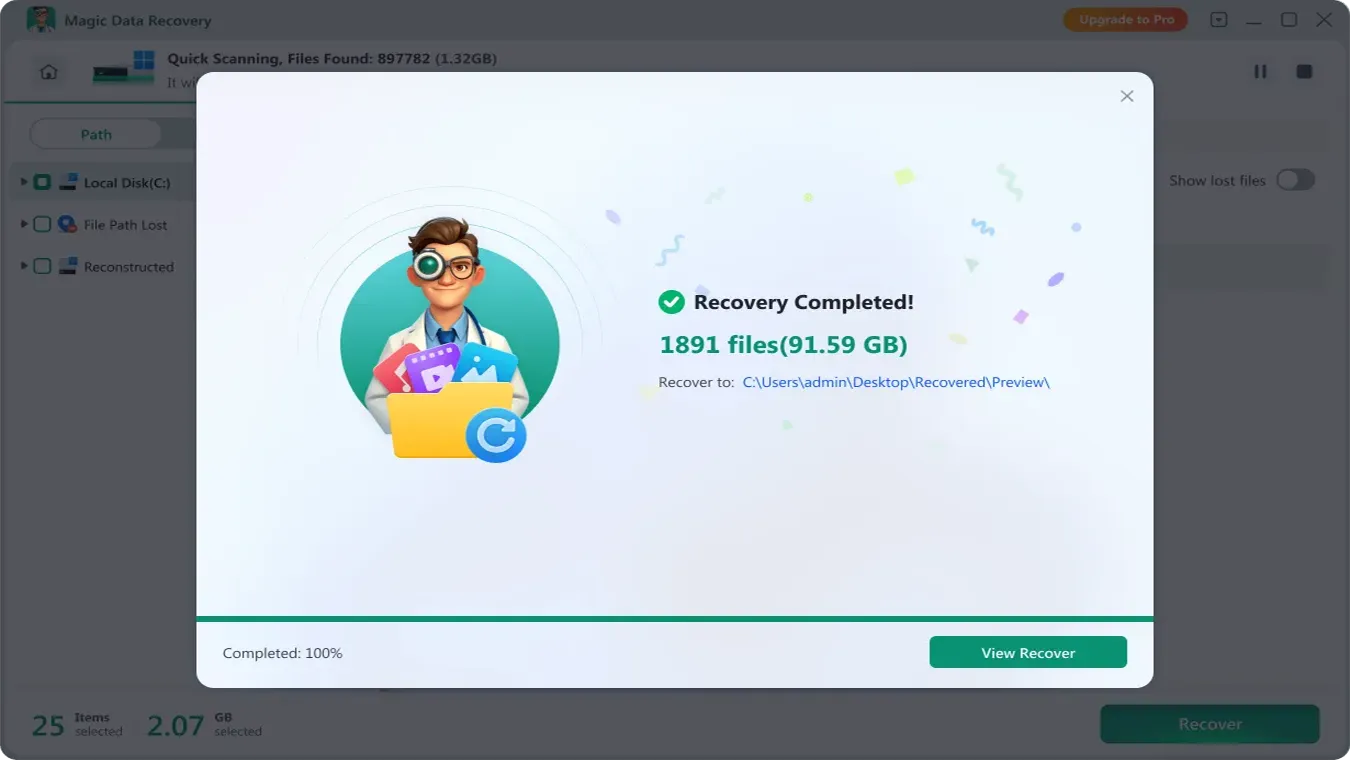
Enregistrez toujours les fichiers récupérés sur un autre disque. Les enregistrer à nouveau au même emplacement risquerait d'écraser d'autres fichiers perdus.
Bonnes pratiques avant de choisir une solution de récupération
Un plan de relance solide doit comporter à la fois des mesures de prévention et des mesures d'intervention. PowerProtect Cyber Recovery relève du domaine de la prévention et de la cyber-résilience. Magic Data Recovery relève du domaine de la gestion des incidents et de la restauration des fichiers.
Suivez ces bonnes pratiques :
- Veillez à ce que les sauvegardes importantes soient déconnectées ou protégées.
- Testez régulièrement la restauration à partir d'une sauvegarde.
- Ne vous fiez pas à une seule copie de sauvegarde.
- Cessez immédiatement d'utiliser un disque dur après une perte de données.
- Évitez de reformater un périphérique après la disparition de fichiers.
- N'installez pas d'outils de récupération sur le disque concerné.
- Utilisez l'aperçu des fichiers avant d'enregistrer les données récupérées.
- Enregistrez les fichiers récupérés sur un support de stockage en bon état.
Cette approche équilibrée contribue à réduire les risques. Elle offre également aux utilisateurs plusieurs options en cas d'échec d'une voie de récupération.
Les erreurs courantes à éviter
De nombreux échecs de récupération sont dus au fait que les utilisateurs agissent trop précipitamment. Après une perte de données, évitez les erreurs suivantes :
- Ne continuez pas à télécharger des fichiers sur le disque concerné.
- N'exécutez pas de nettoyage de disque avant la récupération.
- Ne formatez pas le périphérique à plusieurs reprises.
- N'enregistrez pas les fichiers récupérés au même emplacement.
- Ne partez pas du principe que la sauvegarde d'entreprise couvre tous les fichiers locaux.
- N'attendez pas pour procéder à la récupération tant que le disque est encore lisible.
Ces erreurs ont leur importance, car les données supprimées ou formatées restent souvent récupérables jusqu'à ce que de nouvelles données viennent les écraser. Plus tôt vous cesserez d'utiliser l'appareil, meilleures seront vos chances de récupération.
Conclusion : PowerProtect Cyber Recovery est-il suffisant ?
PowerProtect Cyber Recovery Il s'agit d'une solution robuste de cyber-résilience d'entreprise destinée aux organisations qui ont besoin de copies de sauvegarde isolées et d'un plan de reprise après une attaque par ransomware. Elle protège les données critiques de l'entreprise grâce à un modèle de coffre-fort sécurisé et offre une efficacité optimale lorsqu'elle est déployée avant une attaque ou un incident majeur.
Cependant, cela ne résout pas tous les problèmes de perte de données. Si des fichiers ont été supprimés, perdus à la suite d'un formatage ou sont devenus inaccessibles en raison d'erreurs du système de fichiers, Magic Data Recovery est souvent l'outil le plus pratique. Il permet aux utilisateurs de Windows d'analyser leurs disques locaux, de prévisualiser les fichiers récupérables et de restaurer des données sans avoir besoin d'un coffre-fort de récupération d'entreprise.
Si vous élaborez une stratégie complète de protection des données, utilisez PowerProtect Cyber Recovery en matière de cyber-résilience et d'utilisation Magic Data Recovery pour une récupération directe des fichiers locaux. Dans les cas courants de fichiers supprimés, cette méthode guide de récupération des fichiers effacés C'est un bon point de départ.
Prise en charge de Windows 7/8/10/11 et Windows Server
FAQ sur PowerProtect Cyber Recovery
Qu'est-ce que PowerProtect Cyber Recovery ?
PowerProtect Cyber Recovery est-il un logiciel de sauvegarde ?
PowerProtect Cyber Recovery permet-il de récupérer des fichiers supprimés par erreur ?
Qu'est-ce qu'un « cyber recovery vault » ?
À qui s'adresse PowerProtect Cyber Recovery ?
Dans quels cas dois-je plutôt utiliser Magic Data Recovery ?
Est-ce que Magic Data Recovery peut m'aider après un formatage ?
Les entreprises devraient-elles utiliser à la fois PowerProtect Cyber Recovery et Magic Data Recovery ?

Jason est un spécialiste de la récupération de données et de l'assistance technique, fort de plus de 15 ans d'expérience sur le terrain. Il a beaucoup travaillé auprès des utilisateurs finaux, résolvant des cas complexes de perte de données et proposant des solutions de récupération concrètes en cas de suppression accidentelle, de disques formatés, de systèmes de fichiers endommagés, de partitions perdues, de pannes système et d’autres situations d’urgence nécessitant une récupération. Son expertise couvre également la sauvegarde et la restauration, la réparation de fichiers et la reprise après sinistre, en mettant particulièrement l’accent sur des conseils sûrs, fiables et techniquement rigoureux.