
So stellen Sie gelöschte Dateien auf einem USB-Stick wieder her: 4 sichere Methoden
Dateien, die von einem USB-Stick gelöscht werden, umgehen in der Regel den Windows-Papierkorb, was jedoch nicht immer bedeutet, dass sie endgültig verloren sind. Sofern der Speicherplatz noch nicht überschrieben wurde, besteht möglicherweise noch die Möglichkeit, Gelöschte Dateien auf einem USB-Stick wiederherstellen.
Verwenden Sie den USB-Stick ab sofort nicht mehr. Kopieren Sie keine neuen Dateien darauf, formatieren Sie ihn nicht, führen Sie kein CHKDSK durch und speichern Sie wiederhergestellte Dateien nicht erneut auf demselben Gerät. Jeder neue Schreibvorgang kann die gelöschten Daten überschreiben und die Chancen auf eine Wiederherstellung verringern.
In dieser Anleitung werden vier praktische Methoden zur Datenwiederherstellung erläutert: das Suchen nach versteckten Dateien, das Wiederherstellen eines Backups, die Verwendung der Windows-Dateiwiederherstellung und das Scannen des USB-Sticks mit Magic Data Recovery. Beginnen Sie mit der Methode, die zu Ihrer Situation passt, oder entdecken Sie unsere Lösungen zur Datenwiederherstellung auf USB-Sticks bei anderen USB-Fehlern.
Unterstützt Windows 7/8/10/11 und Windows Server
Inhaltsübersicht
Können gelöschte Dateien von einem USB-Stick wiederhergestellt werden?
Ja, gelöschte USB-Dateien lassen sich möglicherweise wiederherstellen, solange der Speicherplatz, auf dem sie sich befanden, noch nicht überschrieben wurde. Windows entfernt in der Regel den Verweis im Dateisystem und kennzeichnet den belegten Speicherplatz als verfügbar. Wiederherstellungssoftware kann diesen Speicherplatz scannen und Dateien rekonstruieren, die noch intakt sind.
Die richtige Vorgehensweise hängt jedoch davon ab, ob die Dateien tatsächlich gelöscht wurden, durch Malware versteckt wurden, nach einer Formatierung verloren gegangen sind oder aufgrund einer Beschädigung des Dateisystems nicht mehr zugänglich sind.
| Szenario für Datenverlust über USB | Empfohlene erste Maßnahme |
|---|---|
| Dateien verschwinden plötzlich, aber auf dem USB-Stick wird weiterhin der belegte Speicherplatz angezeigt | Versteckte Dateien anzeigen und auf Malware prüfen |
| Die Dateien wurden mit der Taste „Entf“ oder „Umschalt + Entf“ gelöscht. | Verwenden Sie „Windows-Dateiwiederherstellung“ oder „Magic Data Recovery“ |
| Der USB-Stick wurde schnell formatiert. | Führen Sie einen gründlichen Scan mit Magic Data Recovery durch |
| Der USB-Stick wird als „RAW“ angezeigt oder es wird eine Formatierung verlangt | Stellen Sie zunächst die Daten wieder her; führen Sie CHKDSK nicht aus. |
| Das USB-Laufwerk wird in der Datenträgerverwaltung nicht erkannt | Überprüfen Sie das Gerät auf äußere Beschädigungen oder wenden Sie sich an einen professionellen Datenrettungsdienst. |
Methode 1: Versteckte Dateien auf dem USB-Stick anzeigen
Verwenden Sie diese Methode nur, wenn Dateien verschwunden sind, der USB-Stick jedoch weiterhin belegten Speicherplatz anzeigt. Damit lassen sich Dateien aufspüren, die durch Malware oder fehlerhafte Attribute verborgen wurden; tatsächlich gelöschte Dateien können damit jedoch nicht wiederhergestellt werden.
- Schließen Sie den USB-Stick an und notieren Sie sich den Laufwerksbuchstaben.
- Öffnen Sie die Eingabeaufforderung als Administrator.
- Geben Sie den folgenden Befehl ein:
attrib -h -r -s /s /d X:\*.*
Ersetzen Sie X Geben Sie den Laufwerksbuchstaben des USB-Sticks ein und drücken Sie die Eingabetaste. Öffnen Sie das Laufwerk erneut im Datei-Explorer und prüfen Sie, ob die Dateien angezeigt werden.
Methode 2: Gelöschte USB-Dateien aus einem Backup wiederherstellen
Prüfen Sie, ob die gelöschten USB-Dateien auch in OneDrive, Google Drive, auf einem anderen Computer, einem externen Sicherungslaufwerk oder in einer Windows-Sicherung vorhanden sind. Wenn die Dateien ursprünglich von Ihrem Computer auf den USB-Stick kopiert wurden, durchsuchen Sie den ursprünglichen Ordner, bevor Sie einen Wiederherstellungsscan durchführen.
Die Dateiversionsgeschichte ist nur dann hilfreich, wenn die Originaldateien in einer zuvor konfigurierten Sicherung enthalten waren. Es wird nicht automatisch eine Sicherung jedes Wechseldatenträgers (USB-Stick) erstellt.
Methode 3: Gelöschte USB-Dateien mit der Windows-Dateiwiederherstellung wiederherstellen
„Windows File Recovery“ ist ein kostenloses Microsoft-Befehlszeilentool für Windows 10 und Windows 11. Es unterstützt USB-Laufwerke, die mit NTFS, FAT oder exFAT formatiert sind, bietet jedoch keine grafische Benutzeroberfläche und keine Dateivorschau.
Installieren Sie zunächst „Windows File Recovery“ aus dem Microsoft Store. Angenommen, das betroffene USB-Laufwerk ist E: und Sie möchten die wiederhergestellten Dateien auf dem Computer speichern C: fahren.
Für eine kürzlich gelöschte Datei auf einem NTFS-USB-Laufwerk verwenden Sie folgenden Befehl:
winfr E: C: /regular /n *.docx
Bei einem FAT32- oder exFAT-USB-Stick oder wenn die Dateien bereits vor einiger Zeit gelöscht wurden, verwenden Sie den „Extensive“-Modus:
winfr E: C: /extensive /n *.jpg /n *.png /n *.docx
Ersetzen Sie die Dateiendungen durch die gewünschten Dateitypen. Geben Sie bei Aufforderung Folgendes ein: Y um die Wiederherstellung zu starten. Windows erstellt einen Wiederherstellungsordner auf dem Ziellaufwerk.
Quell- und Ziellaufwerk müssen unterschiedlich sein. Speichern Sie die wiederhergestellten Dateien niemals auf dem betroffenen USB-Laufwerk, da dadurch andere gelöschte Daten überschrieben werden könnten.
Methode 4: Gelöschte Dateien mit Magic Data Recovery wiederherstellen
Falls die Dateien endgültig gelöscht wurden, der USB-Stick formatiert wurde oder die Windows-Dateiwiederherstellung zu kompliziert zu bedienen ist, Magic Data Recovery bietet einen grafischen Wiederherstellungsprozess für Windows.
Das Programm unterstützt gelöschte, formatierte, RAW- und logisch beschädigte USB-Laufwerke sowie mehr als 5.000 Dateitypen. Mithilfe der Vorschaufunktion und der Filteroptionen können Sie die benötigten Dateien identifizieren, bevor Sie sie speichern.
Wiederherstellung gelöschter Dateien von USB mit Magic Data Recovery
Schritt 1: Sichere Installation von Magic Data Recovery
Herunterladen und installieren Magic Data Recovery auf der internen Festplatte Ihres Computers. Installieren Sie das Programm nicht auf dem betroffenen USB-Stick.
Unterstützt Windows 7/8/10/11 und Windows Server
Schritt 2: Wählen Sie den USB-Stick aus
Schließen Sie den USB-Stick an, starten Sie die Software und wählen Sie das betroffene Gerät aus der Geräteliste aus.
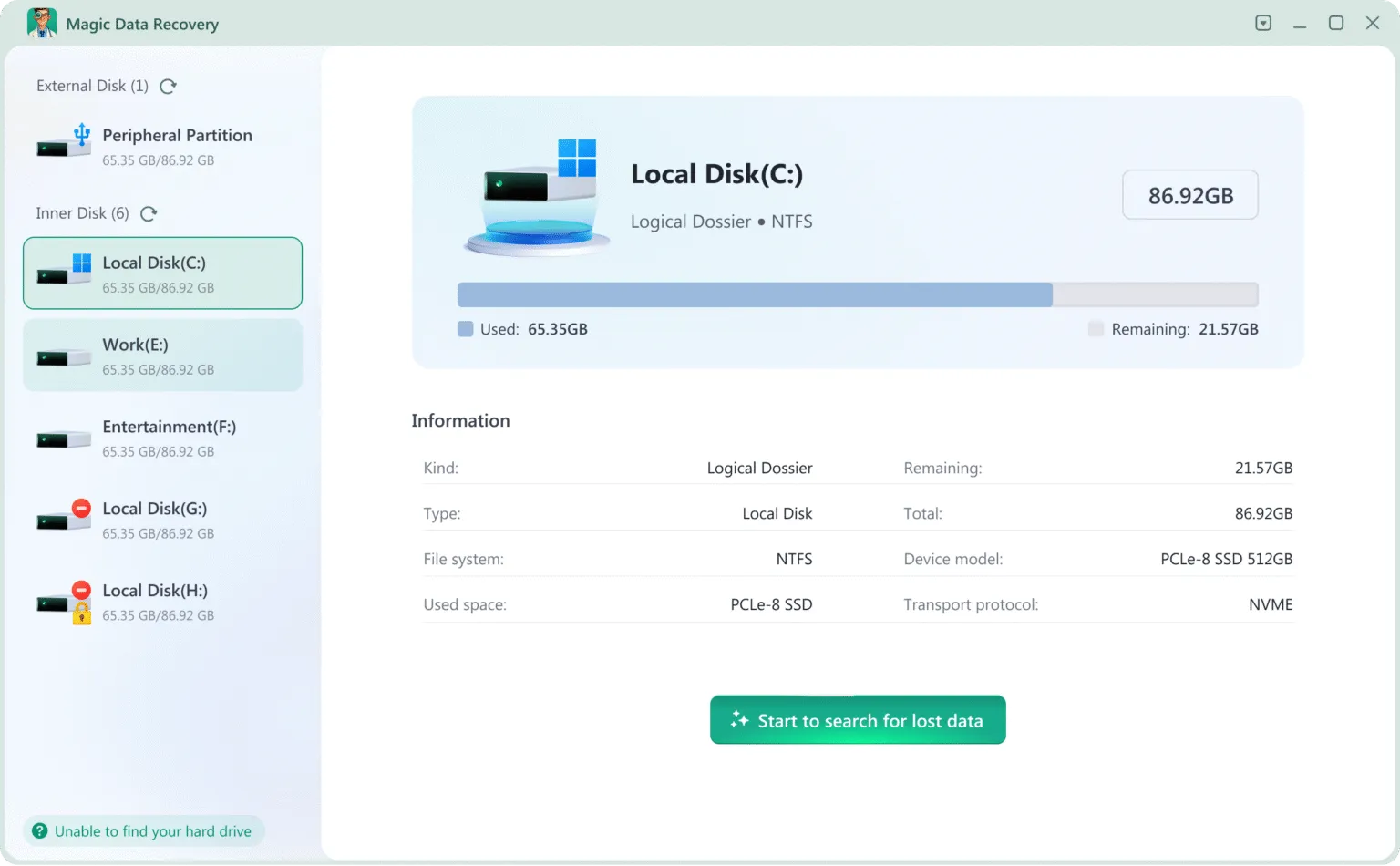
Schritt 3: Nach gelöschten Dateien suchen
Klicken Sie auf “Nach verlorenen Daten suchen”. Warten Sie, bis der Scanvorgang abgeschlossen ist, insbesondere wenn die Dateien endgültig gelöscht wurden oder der USB-Stick formatiert wurde.
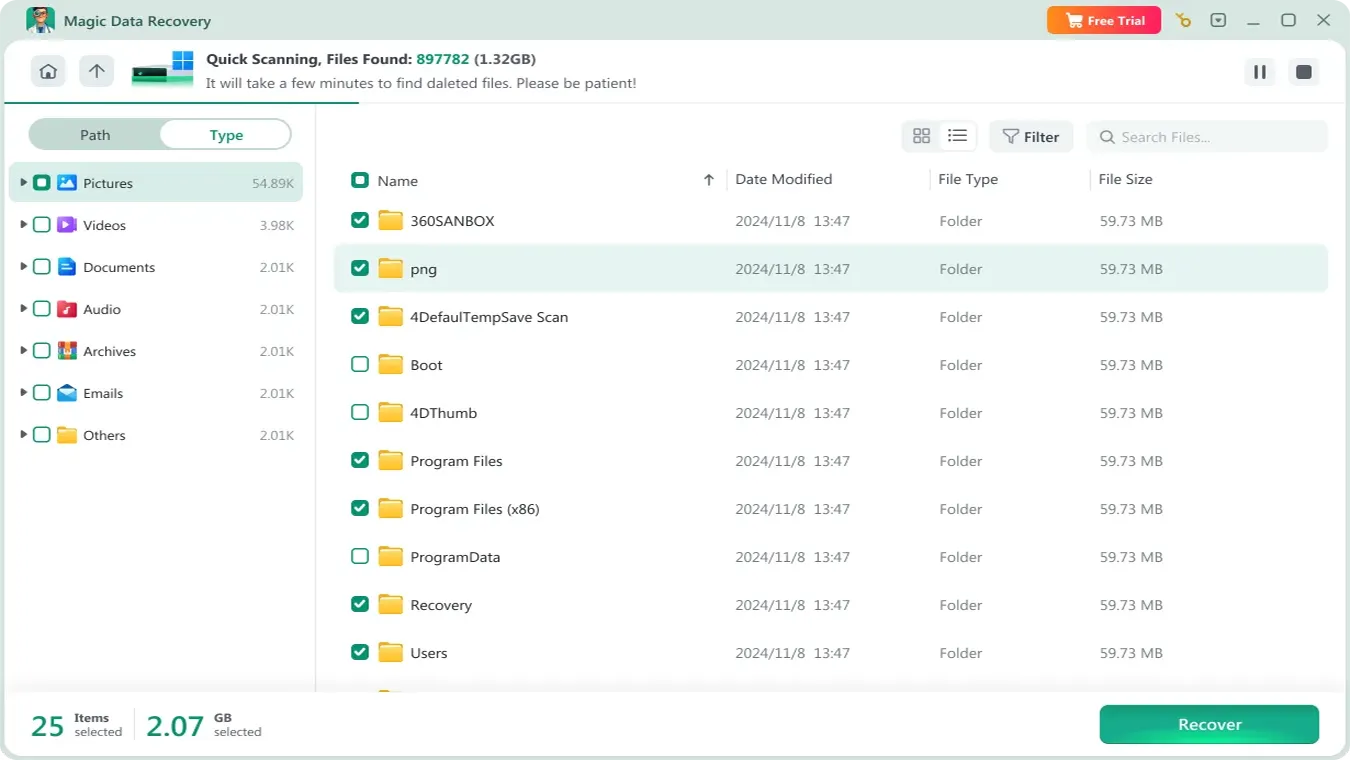
Schritt 4: Ergebnisse filtern und in der Vorschau anzeigen
Filtern Sie die Ergebnisse nach Dateityp, Name, Größe oder ursprünglichem Pfad. Zeigen Sie eine Vorschau wichtiger Dokumente, Fotos und anderer unterstützter Dateien an, um deren Zustand zu überprüfen.

Schritt 5: Dateien auf einem anderen Laufwerk wiederherstellen
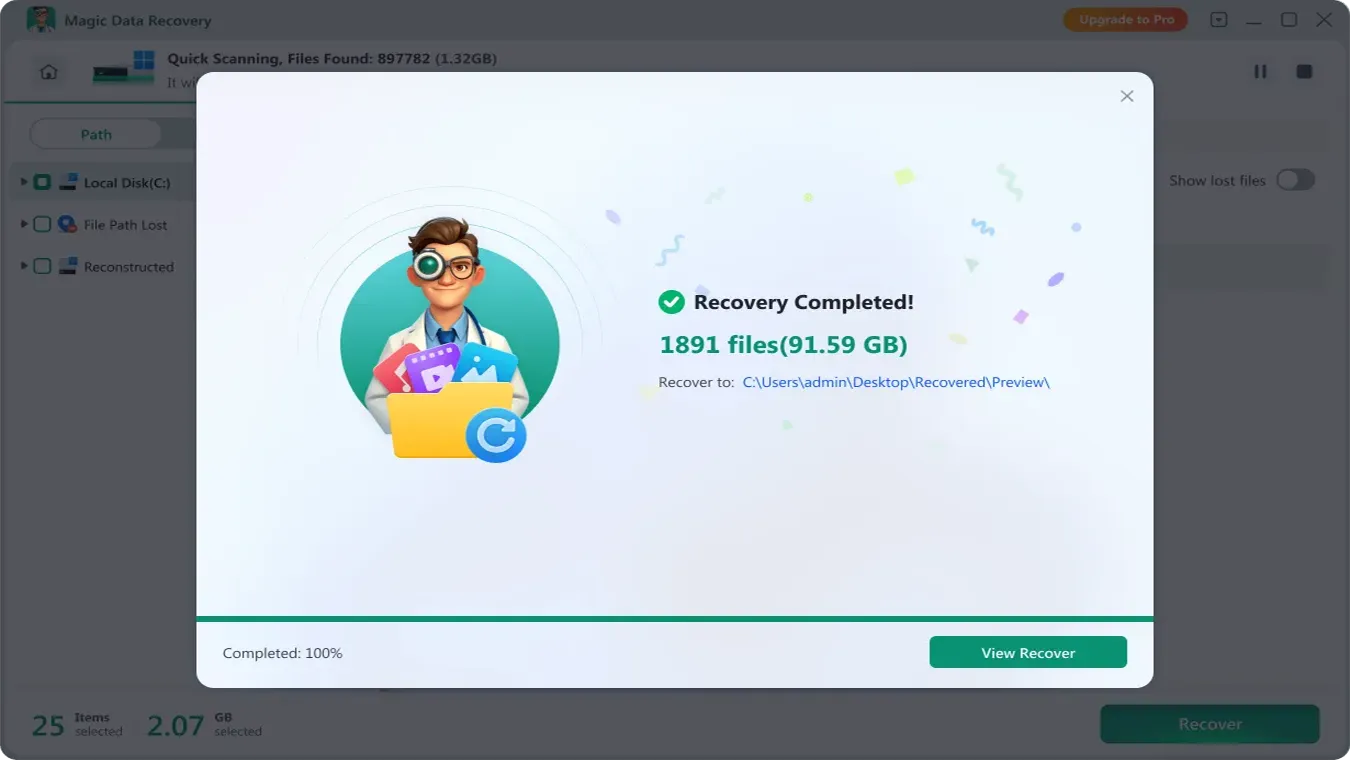
Wählen Sie die gewünschten Dateien aus und klicken Sie auf “Wiederherstellen”. Speichern Sie sie auf dem Computer oder einem anderen externen Laufwerk – nicht auf dem betroffenen USB-Gerät.
Vergleich der Wiederherstellungsoptionen: Eingebaute Tools vs. professionelle Software
| Methode | Am besten für | Hauptbeschränkung |
|---|---|---|
| Befehl „ATTRIB“ | Durch Malware oder Attribute versteckte Dateien | Gelöschte Dateien können nicht wiederhergestellt werden |
| Wiederherstellung aus dem Backup | Dateien, für die bereits eine Sicherungskopie vorhanden ist | Erfordert eine vor dem Löschen erstellte Sicherungskopie |
| Windows Dateiwiederherstellung | Gelöschte Dateien auf einem lesbaren USB-Stick | Befehlszeilenschnittstelle und keine Vorschau |
| Magic Data Recovery | Gelöschte, formatierte, RAW- oder logisch beschädigte USB-Sticks | Physikalisch beschädigte Hardware kann nicht repariert werden |
| Abhol- und Rückbringservice | Verbogene, defekte oder elektrisch beschädigte USB-Sticks | In der Regel teuer und zeitaufwendig |
Wählen Sie die Methode entsprechend der Art und Weise aus, wie die Dateien verloren gegangen sind. Bei einer tatsächlichen Löschung ohne Sicherung ist ein Wiederherstellungsscan in der Regel sinnvoller als „ATTRIB“ oder andere Befehle zur Dateisichtbarkeit.
Was Sie vor der Wiederherstellung von USB-Dateien nicht tun sollten
- Kopieren Sie keine neuen Dateien auf den USB-Stick.
- Formatieren Sie das Laufwerk nicht, auch wenn Windows Sie dazu auffordert.
- Führen Sie CHKDSK nicht aus, bevor Sie wichtige Daten wiederhergestellt haben.
- Installieren Sie keine Wiederherstellungssoftware auf dem betroffenen USB-Stick.
- Speichern Sie wiederhergestellte Dateien nicht erneut auf demselben Gerät.
- Verwenden Sie keine Software mehr und suchen Sie professionelle Hilfe auf, wenn der USB-Stick physisch beschädigt ist.
Schlussfolgerung
Sie können oft Gelöschte Dateien auf einem USB-Stick wiederherstellen wenn Sie das Gerät nicht mehr verwenden, bevor die gelöschten Daten überschrieben werden. Mit dem Befehl „ATTRIB“ lassen sich versteckte Dateien anzeigen, während Sicherungskopien und die Windows-Dateiwiederherstellung in bestimmten Situationen hilfreich sein können. Bei dauerhaft gelöschten, formatierten oder logisch unzugänglichen USB-Daten, Magic Data Recovery bietet einen anschaulicheren Scan-, Vorschau- und Wiederherstellungsprozess.
Speichern Sie wiederhergestellte Dateien stets auf einem anderen Laufwerk. Hilfe bei Formatierungsfehlern, RAW-Laufwerken, fehlenden Dateien und Problemen bei der USB-Erkennung finden Sie auf unserer Lösungen zur Datenwiederherstellung auf USB-Sticks.
Unterstützt Windows 7/8/10/11 und Windows Server
FAQs
Kann ich gelöschte Dateien von einem USB-Stick wiederherstellen?
Wohin gelangen gelöschte Dateien von einem USB-Stick?
Kann ich gelöschte USB-Dateien ohne Software wiederherstellen?
Kann CMD dauerhaft gelöschte Dateien von einem USB-Stick wiederherstellen?
Kann ich Dateien wiederherstellen, nachdem ich ein USB-Laufwerk formatiert habe?
Warum befinden sich gelöschte USB-Dateien nicht im Papierkorb?
Können Dateien von einem RAW-USB-Stick wiederhergestellt werden?
Kann Software Dateien von einem physisch beschädigten USB-Stick wiederherstellen?

Jason ist ein Spezialist für Datenwiederherstellung und technischen Support mit über 15 Jahren praktischer Erfahrung. Er hat intensiv mit Endnutzern zusammengearbeitet, schwierige Fälle von Datenverlust behoben und praktische Lösungen für versehentlich gelöschte Daten, formatierte Laufwerke, beschädigte Dateisysteme, verlorene Partitionen, Systemausfälle und andere Notfälle im Bereich der Datenwiederherstellung bereitgestellt. Zu seinen Fachgebieten gehören außerdem Datensicherung und -wiederherstellung, Dateireparatur sowie Notfallwiederherstellung, wobei er besonderen Wert auf eine sichere, zuverlässige und technisch korrekte Beratung legt.