
Guide de récupération des fichiers supprimés sous Windows 11
La suppression accidentelle de fichiers importants peut être source de stress, surtout lorsque vous ne les retrouvez pas dans la Corbeille. La bonne nouvelle, c’est qu’il vous reste plusieurs moyens sûrs de restaurer des fichiers supprimés sous Windows 11, à condition d'agir rapidement et d'éviter d'écrire de nouvelles données sur le disque concerné. Ce guide explique le fonctionnement de la suppression sous Windows, les options intégrées à essayer en priorité, et dans quels cas il convient d'utiliser un outil dédié solution de récupération des fichiers effacés devient le choix le plus sûr.
Si vous avez besoin de Récupérer des fichiers supprimés sous Windows 11 Les données que les utilisateurs perdent généralement après avoir vidé la Corbeille, formaté un disque ou corrigé une erreur du système de fichiers : la règle la plus importante est simple : cesser immédiatement d'utiliser le disque. Les nouveaux téléchargements, les installations de logiciels, les mises à jour ou les fichiers enregistrés risquent d'écraser les données supprimées et de réduire les chances de récupération.
Table des matières
Pourquoi les fichiers supprimés peuvent-ils encore être récupérables ?
Lorsque vous supprimez un fichier sous Windows 11, le système supprime généralement l'entrée correspondant à ce fichier de l'affichage normal. Cependant, il se peut que le contenu réel du fichier ne soit pas immédiatement effacé de l'espace de stockage. À la place, Windows marque cet espace comme disponible pour de nouvelles données.
C'est pourquoi Windows permet de récupérer des fichiers supprimés Ces méthodes peuvent s'avérer efficaces dans de nombreux cas. Toutefois, la réussite de la récupération dépend de plusieurs facteurs :
- Le fichier se trouve-t-il toujours dans la corbeille ?
- Qu'il s'agisse de l'historique des fichiers ou d'une autre sauvegarde
- Si OneDrive a synchronisé le fichier
- L'espace occupé par le fichier supprimé a-t-il été écrasé par de nouvelles données ?
- Que le disque présente des erreurs au niveau du système de fichiers ou des dommages physiques
Par conséquent, évitez toute intervention hasardeuse. Ne formatez pas à nouveau le disque. N'utilisez pas d'outils de réparation de disque avant la récupération. De même, n'installez pas de logiciel de récupération sur le disque même où se trouvaient les fichiers supprimés.
Meilleure méthode pour récupérer des fichiers supprimés sous Windows 11
Avant d'utiliser des outils avancés, suivez l'ordre de récupération le plus sûr indiqué ci-dessous. Cette approche vous permet d'éviter tout risque inutile et donne d'abord une chance aux méthodes simples de fonctionner.
Vérifier d'abord la corbeille
La corbeille est le moyen le plus rapide de restaurer des fichiers supprimés si vous les avez supprimés normalement depuis un disque interne.
Les étapes :
- Ouvrez la corbeille sur le bureau.
- Recherchez le nom du fichier ou du dossier supprimé.
- Cliquez avec le bouton droit de la souris sur l'élément.
- Sélectionnez Restaurer.
- Vérifiez l'emplacement d'origine du dossier.
Cette méthode est particulièrement efficace pour les fichiers récemment supprimés. Elle peut toutefois s'avérer inefficace si vous avez utilisé la combinaison de touches Maj + Suppr, vidé la Corbeille, supprimé des fichiers d'un périphérique amovible ou supprimé des fichiers OneDrive stockés uniquement dans le cloud.
Cochez la case « Dossier d'origine » et « Rechercher dans Windows »
Il arrive parfois que le fichier existe toujours, mais que la fonction de recherche de Windows, la modification des raccourcis ou le déplacement de dossiers rendent sa localisation difficile. Avant d'utiliser un logiciel de récupération, effectuez une recherche minutieuse.
Essayez les solutions suivantes :
- Ouvrez l'Explorateur de fichiers et recherchez le nom du fichier.
- Recherchez par extension de fichier, par exemple .docx, .xlsx, .jpg, .pdf ou .mp4.
- Vérifiez le Bureau, le dossier « Téléchargements », le dossier « Documents », le dossier « Images » et les dossiers de projet personnalisés.
- Trier les dossiers par date de modification.
- Vérifiez si ce fichier se trouve sur un autre compte utilisateur.
Cette étape peut sembler élémentaire, mais elle permet d'éviter des tentatives de récupération inutiles lorsque le fichier a été déplacé et non supprimé.
Récupérer des fichiers supprimés à partir de l'historique des fichiers
Si l'historique des fichiers était activé avant la suppression, il permet de restaurer d'anciennes versions des fichiers et dossiers. Cette méthode est particulièrement adaptée aux documents, aux dossiers scolaires, aux dossiers professionnels et aux dossiers de projet.
Les étapes :
- Ouvrez le dossier dans lequel se trouvait le fichier supprimé.
- Cliquez avec le bouton droit de la souris dans le dossier.
- Sélectionnez « Propriétés ».
- Ouvrez l'onglet Versions précédentes.
- Sélectionnez une version antérieure à la suppression.
- Cliquez sur « Restaurer » ou copiez le fichier à un autre emplacement.
L'historique des fichiers ne vous sera d'aucune utilité si vous ne l'avez jamais activé. Il vaut toutefois la peine de vérifier avant de passer à des méthodes de récupération plus approfondies.
Récupérer des fichiers supprimés sur OneDrive
Si vos dossiers « Bureau », « Documents » ou « Images » sont synchronisés avec OneDrive, vos fichiers supprimés peuvent se trouver dans la corbeille OneDrive plutôt que dans la corbeille locale de Windows.
Les étapes :
- Accédez à OneDrive en ligne.
- Connectez-vous avec le même compte Microsoft.
- Ouvrir la corbeille.
- Sélectionnez les fichiers ou dossiers supprimés.
- Cliquez sur Restaurer.
Cette méthode est particulièrement utile pour les utilisateurs qui travaillent sur plusieurs appareils. Cependant, la restauration depuis le cloud est soumise à des limites de conservation ; n'attendez donc pas trop longtemps.
Essayez la récupération de fichiers Windows
« Windows File Recovery » est un outil en ligne de commande de Microsoft permettant de récupérer des fichiers supprimés sur des périphériques de stockage locaux. Il peut s'avérer utile lorsque les fichiers n'apparaissent plus dans la Corbeille, mais son utilisation peut sembler trop technique pour les utilisateurs lambda.
Voici à quoi ressemble le format de base d'une commande :
winfr lecteur-source : lecteur-destination : /mode /switches
Par exemple, si vous souhaitez récupérer des documents supprimés du lecteur C: vers le lecteur E:, vous pouvez utiliser une commande qui cible le dossier « Documents » et enregistre les fichiers récupérés sur un autre lecteur.
Cet outil présente deux limites majeures pour de nombreux utilisateurs :
- Il utilise une syntaxe de ligne de commande, ce qui peut prêter à confusion.
- Vous devez connaître le lecteur source, le lecteur de destination, le mode et les filtres appropriés.
C'est pourquoi Windows File Recovery peut convenir aux utilisateurs avertis, mais de nombreux utilisateurs lambda préfèrent un processus intuitif permettant de scanner et de prévisualiser les fichiers.
Quand les méthodes intégrées ne suffisent pas
Les outils intégrés fonctionnent mieux lorsque le fichier se trouve encore dans la Corbeille, dans l'historique des sauvegardes ou dans un espace de stockage dans le cloud. Cependant, ils échouent souvent dans des situations plus complexes.
Vous aurez peut-être besoin d'un logiciel de récupération spécialisé si :
- Vous avez vidé la corbeille.
- Vous avez utilisé Shift + Delete.
- Vous avez supprimé des fichiers d'une clé USB, d'une carte SD ou d'un disque dur externe.
- Le disque a été formaté par erreur.
- Windows vous demande de formater le disque avant de l'utiliser.
- Le système de fichiers présente des erreurs.
- Un virus ou un plantage inattendu a entraîné la perte de fichiers.
- Vous devez prévisualiser les fichiers avant de les récupérer.
À ce stade, l'objectif change. Il ne s'agit plus simplement de trouver un nom de fichier. Vous devez analyser le périphérique de stockage en toute sécurité, vérifier la qualité des fichiers et restaurer les données vers un autre emplacement.
Pour les utilisateurs qui comparent des outils gratuits, ceci Guide des logiciels gratuits de récupération de données Cela permet également de comprendre pourquoi l'aperçu, la profondeur d'analyse et la destination de récupération sont importants.
Pourquoi Magic Data Recovery est un choix pratique
Magic Data Recovery est utile lorsque les méthodes intégrées à Windows ne permettent pas de restaurer des fichiers supprimés avec succès. Il permet de récupérer des données en cas de suppression, de formatage, d'erreurs du système de fichiers, de perte de partition, de dommages causés par un virus et d'autres situations courantes de perte de données.
Son principal atout réside dans son processus guidé. Au lieu de saisir des commandes, vous pouvez analyser un disque, prévisualiser les fichiers récupérables, sélectionner uniquement ceux dont vous avez besoin et enregistrer les données récupérées dans un autre emplacement sécurisé.
Principaux problèmes qu'il résout
Magic Data Recovery est utile dans des situations concrètes telles que :
- Récupération de fichiers après avoir vidé la corbeille
- Récupération de fichiers supprimés sous Windows 11, Windows 10 et d'autres systèmes Windows
- Retrouver des documents, des photos, des vidéos, des archives et des fichiers professionnels perdus
- Récupération de fichiers sur des disques formatés ou des partitions inaccessibles
- Analyse des disques externes, des clés USB, des cartes mémoire et des disques locaux
- Prévisualiser les fichiers avant la récupération afin d'éviter de restaurer des données inutilisables
Cela permet un meilleur ajustement lorsque les éléments de base Windows permet de récupérer des fichiers supprimés Ces méthodes ne donnent aucun résultat.
Pourquoi cette méthode peut-elle s'avérer plus fiable que les méthodes classiques ?
La corbeille ne fonctionne que si Windows conserve encore l'élément supprimé à cet endroit. L'historique des fichiers ne fonctionne que si vous aviez activé la sauvegarde avant la disparition du fichier. La fonctionnalité de récupération de fichiers de Windows peut vous aider, mais elle nécessite des opérations en ligne de commande.
Magic Data Recovery propose une procédure de récupération plus intuitive :
- Sélectionnez le disque sur lequel les fichiers ont été perdus.
- Lancer une analyse.
- Prévisualisez des documents, des photos, des vidéos et d'autres fichiers.
- Choisissez les fichiers dont vous avez besoin.
- Récupérez-les sur un autre disque.
Ce processus permet d'éviter les approximations. Il aide également les utilisateurs à ne pas commettre une erreur courante : restaurer des fichiers au même emplacement et écraser ainsi d'autres données supprimées.
En ce qui concerne la suppression des données d'un disque dur, vous pouvez également consulter ce guide connexe qui explique comment récupérer les fichiers effacés du disque dur.
Comment récupérer des fichiers supprimés avec Magic Data Recovery
Suivez ces étapes si la Corbeille, la sauvegarde et la restauration depuis le cloud ne permettent pas de résoudre le problème.
Étape 1 : Cesser d'utiliser le disque affecté
Avant de lancer l'analyse, cessez d'enregistrer des fichiers sur le disque concerné. Si les fichiers supprimés se trouvaient sur le disque C:, évitez d'installer de nouveaux programmes, de télécharger des fichiers volumineux ou de mettre à jour le système.
Si possible, connectez le disque dur à un autre ordinateur sous Windows et lancez l'analyse à partir de celui-ci.
Étape 2 : Installer Magic Data Recovery sur un disque sécurisé
Installer Magic Data Recovery sur un disque différent de celui où se trouvent les fichiers perdus. Par exemple, si vous avez supprimé des fichiers d'un disque externe, installez le logiciel sur le disque interne de votre ordinateur.
Prise en charge de Windows 7/8/10/11 et Windows Server
Vous pouvez suivre le site officiel Magic Data Recovery guide de l'utilisateur si vous avez besoin d'un processus de gestion détaillé pour un produit.
Étape 3 : Sélectionnez l'emplacement des données perdues
Lancez le programme et sélectionnez le disque, la partition, la clé USB, la carte mémoire ou le disque dur externe sur lequel se trouvaient les fichiers supprimés.
Si vous ne connaissez pas le dossier exact, lancez une analyse complète de la partition. Une analyse complète prend plus de temps, mais elle offre une meilleure couverture.
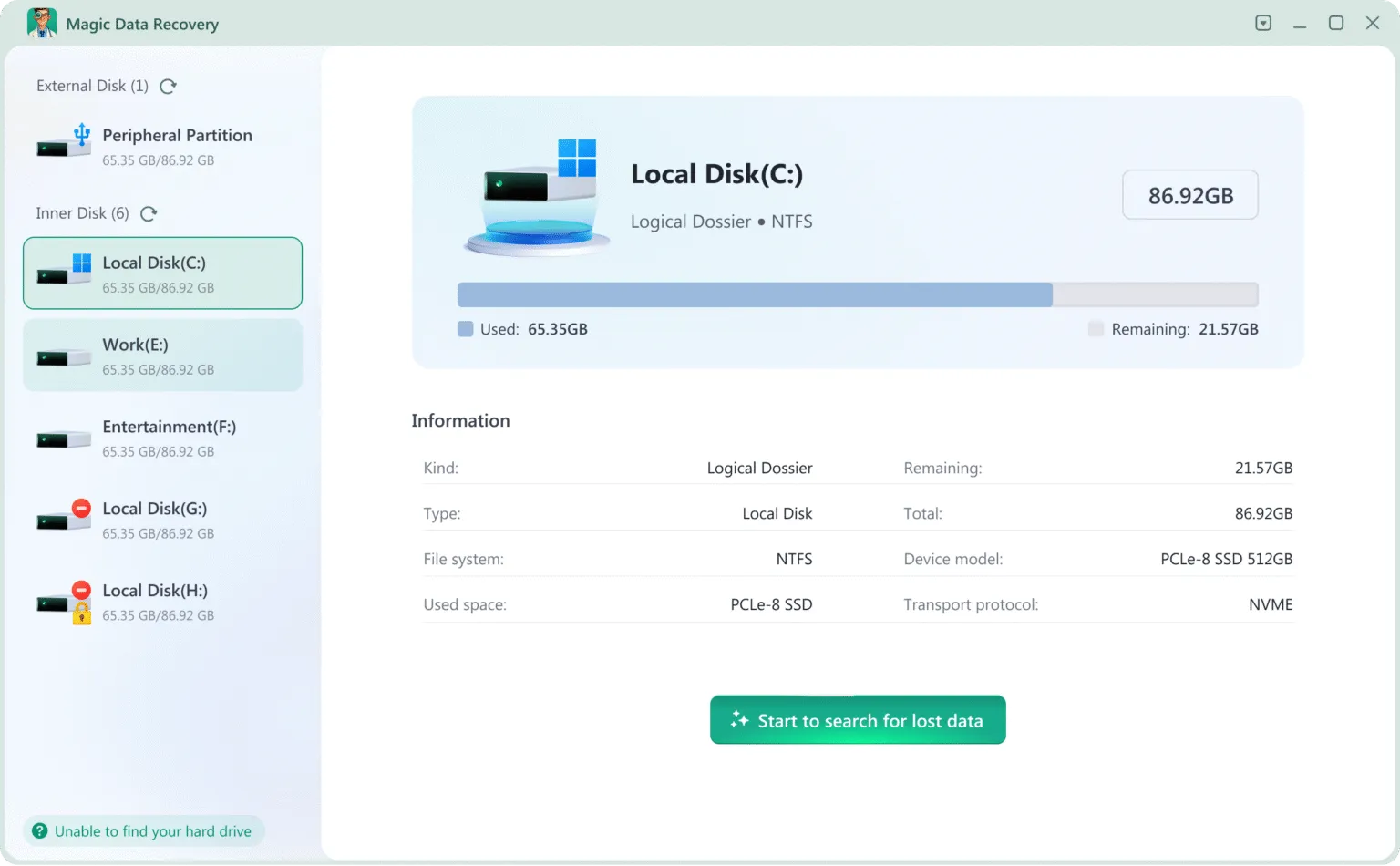
Étape 4 : Numérisation et prévisualisation des fichiers
Lancez l'analyse et attendez les résultats. Utilisez ensuite l'aperçu pour vérifier si les fichiers sont exploitables. Cette étape est importante, car le fait qu'un fichier ait été récupéré ne signifie pas toujours que son contenu est intact.
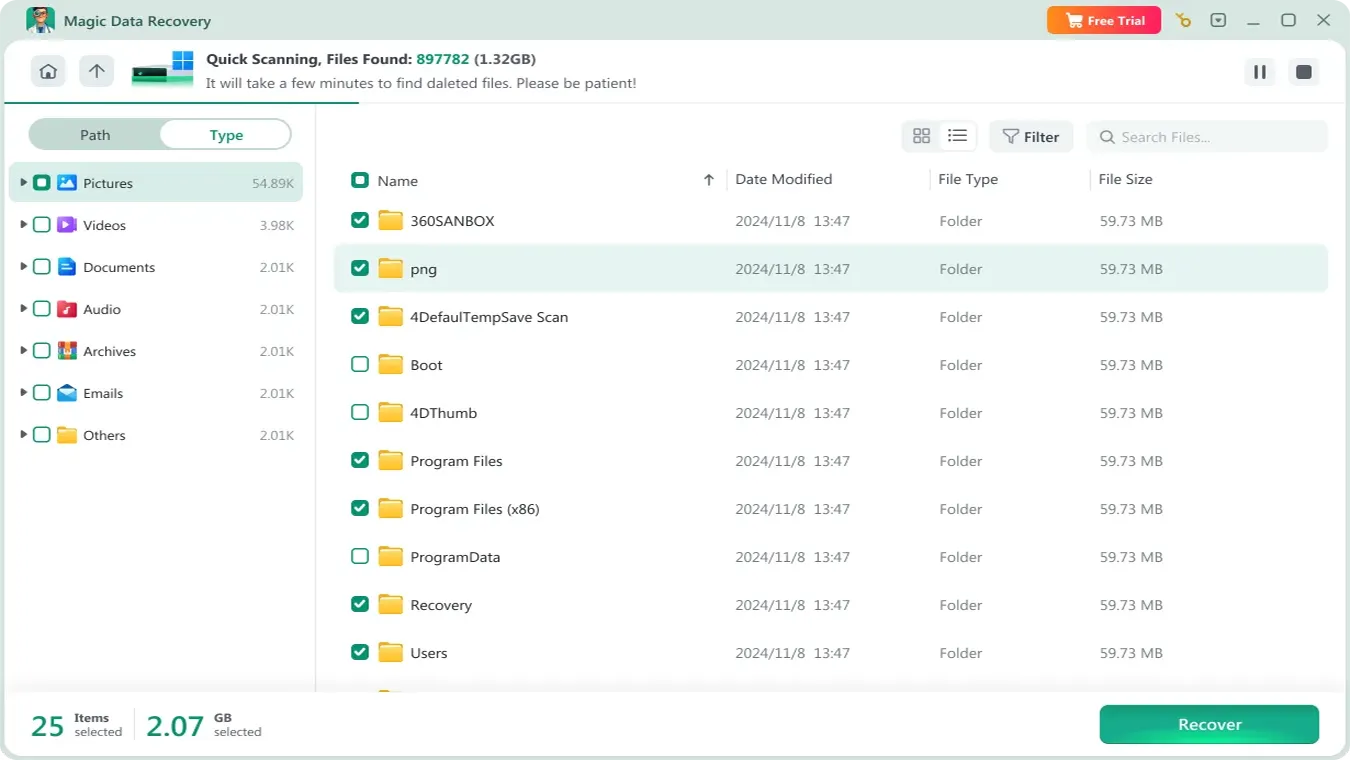
Par exemple, si vous devez restaurer des documents Word, l'aperçu vous permet de vérifier si le document s'ouvre correctement. Vous pouvez également consulter ce guide connexe sur Récupération de fichiers Word supprimés si vos fichiers perdus sont principalement des documents DOC ou DOCX.
Étape 5 : Récupération sur un autre disque
Sélectionnez les fichiers dont vous avez besoin et enregistrez-les sur un autre disque. Ne les restaurez jamais à l'emplacement même où ils ont été supprimés.
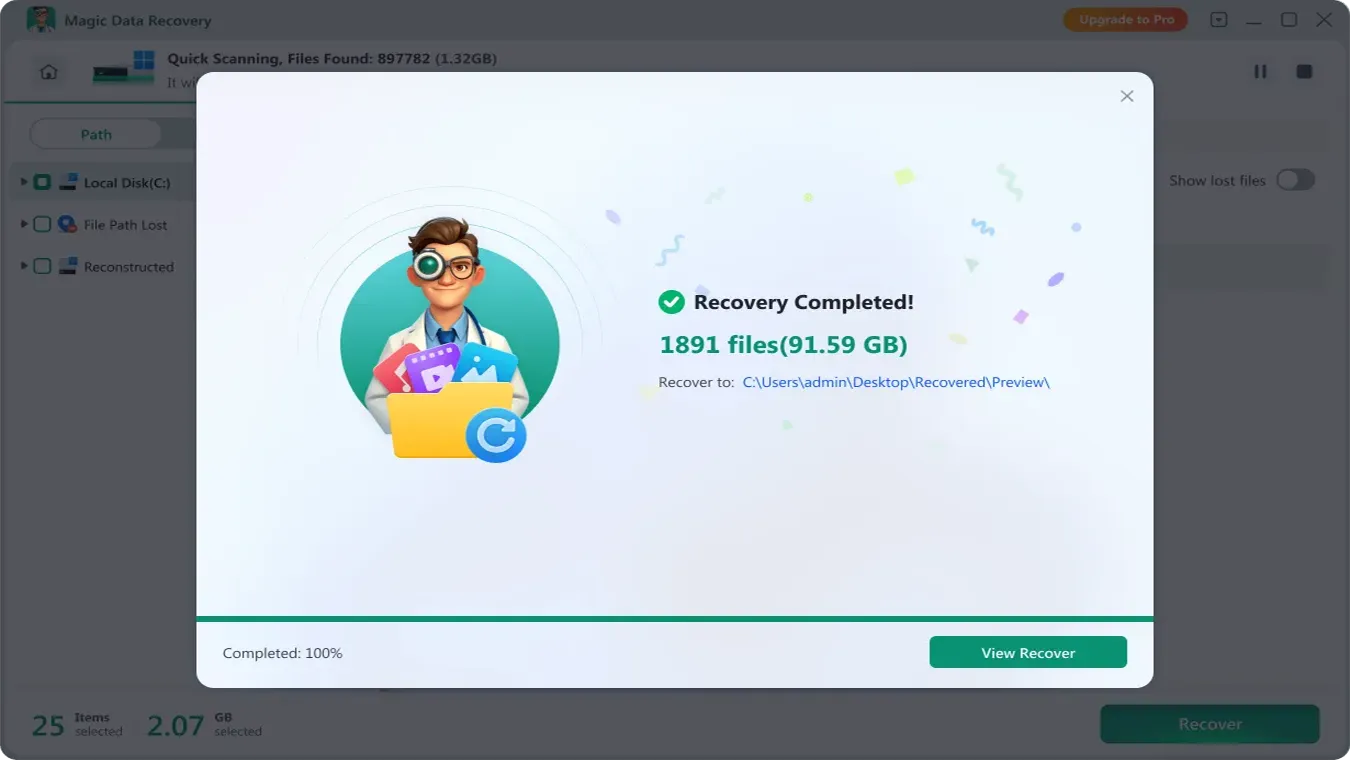
Par exemple :
- Supprimé du lecteur C : → restaurer sur le lecteur D : ou sur un disque externe
- Supprimé de la clé USB → récupérer sur le disque dur interne de l'ordinateur
- Supprimé de la carte SD → restaurer dans un dossier du disque dur
Cela permet de protéger les données récupérables restantes et d'améliorer le résultat global de la récupération.
Si, après avoir prévisualisé les résultats, vous souhaitez récupérer davantage de fichiers, vous pouvez vous procurer la version complète à partir du Page d'achat Magic Data Recovery.
Récupérer des fichiers supprimés sous Windows 11 : comparaison des méthodes
Méthode | Meilleur pour | Difficulté | Principale limitation |
Corbeille | Fichiers locaux récemment supprimés | Facile | Ne fonctionne pas après vidage ou Shift + Delete |
Historique du dossier | Fichiers personnels sauvegardés | Facile | Doit être activé avant la suppression |
Corbeille OneDrive | Fichiers en nuage synchronisés | Facile | Des limites de conservation des données dans le cloud s'appliquent |
Récupération de fichiers sous Windows | Récupération technique locale | Moyen à difficile | Nécessite une utilisation en ligne de commande |
Magic Data Recovery | Données supprimées, formatées, endommagées ou inaccessibles | Facile à moyen | La récupération dépend de l'état de réécriture |
Cette comparaison montre pourquoi il vaut mieux commencer par les options gratuites intégrées, puis se tourner vers un logiciel de récupération lorsque ces méthodes s'avèrent inefficaces.
Les erreurs courantes qui réduisent le succès de la récupération
De nombreuses tentatives de récupération échouent parce que les utilisateurs agissent trop rapidement. Évitez ces erreurs :
Installation d'un logiciel sur le même disque dur
Si vous avez supprimé des fichiers du lecteur C:, l'installation d'un logiciel sur ce lecteur risque d'écraser l'espace occupé par les fichiers supprimés. Utilisez un autre lecteur dans la mesure du possible.
Enregistrement des fichiers récupérés sur le disque d'origine
C'est l'une des erreurs les plus dangereuses. Veillez toujours à restaurer vos fichiers sur un autre disque.
Exécution de CHKDSK avant la restauration
CHKDSK Cette opération peut corriger des erreurs du système de fichiers, mais elle peut également modifier les enregistrements des fichiers. Si votre priorité est la récupération des données, commencez par analyser et récupérer les fichiers importants.
Reformater le disque
Si Windows vous demande de formater un disque, ne cliquez pas sur « Formater » avant d'avoir effectué la récupération. Le formatage risque d'aggraver la situation.
Considérer que les noms de fichiers garantissent une récupération complète
Le résultat d'une analyse peut afficher le nom d'un fichier, mais son contenu peut être endommagé. Dans la mesure du possible, prévisualisez les fichiers importants avant de les récupérer.
Bonnes pratiques après la restauration de fichiers supprimés
Après avoir restaurer des fichiers supprimés, les protéger contre d'éventuelles pertes futures.
Utilisez ces conseils :
- Activez l'historique des fichiers ou un autre outil de sauvegarde.
- Synchronisez vos documents importants avec OneDrive ou un autre service de stockage en ligne.
- Conservez une sauvegarde hors ligne pour vos fichiers essentiels.
- Évitez de stocker vos fichiers importants uniquement sur des clés USB ou des cartes SD.
- Vérifiez les paramètres de la corbeille et évitez de la contourner, sauf en cas de nécessité.
- Utilisez un logiciel antivirus pour réduire les risques de suppression liés aux virus.
Un bon outil de récupération est utile en cas de perte de données, mais un plan de sauvegarde permet d'éviter que de telles situations ne se reproduisent.
Conclusion
Pour restaurer des fichiers supprimés Sous Windows 11, pour procéder en toute sécurité, commencez par la Corbeille, la recherche Windows, l'historique des fichiers et OneDrive. Si ces méthodes échouent, l'outil de récupération de fichiers de Windows peut aider les utilisateurs avertis, mais son fonctionnement en ligne de commande peut ne pas convenir à tout le monde.
Pour les cas plus complexes, Magic Data Recovery offre une approche plus claire et plus sûre. Il analyse les périphériques de stockage, prend en charge la récupération des fichiers supprimés et formatés, gère les cas d'erreurs du système de fichiers et vous permet de prévisualiser les fichiers avant de les restaurer. Cela en fait un choix pratique pour les utilisateurs qui ont besoin d'un outil fiable solution de récupération des fichiers effacés sans se limiter aux outils Windows de base.
Si vous essayez de Récupérer des fichiers supprimés sous Windows 11 Si vous ne les retrouvez ni dans la Corbeille ni dans les sauvegardes, cessez d'utiliser le disque concerné et lancez une analyse dès que possible. Plus vous agirez rapidement, plus vous aurez de chances de récupérer des fichiers exploitables.
Prise en charge de Windows 7/8/10/11 et Windows Server
FAQ
Puis-je récupérer des fichiers supprimés sous Windows 11 après avoir vidé la Corbeille ?
Oui, vous pouvez toujours récupérer des fichiers supprimés après avoir vidé la Corbeille, à condition que les données de ces fichiers n'aient pas été écrasées. Cessez immédiatement d'utiliser le disque concerné, puis essayez l'outil de récupération de fichiers de Windows ou un outil de récupération dédié. Par mesure de sécurité, analysez d'abord le disque et récupérez les fichiers sur un autre périphérique de stockage.
Quelle est la meilleure façon de récupérer des fichiers supprimés par inadvertance sous Windows 11 ?
La meilleure méthode dépend de la manière dont les fichiers ont été supprimés. Commencez par la Corbeille, puis vérifiez l'Historique des fichiers, OneDrive et les versions précédentes. Si ces options s'avèrent infructueuses, utilisez un logiciel de récupération capable d'analyser le disque dur et de prévisualiser les fichiers avant leur récupération. Cet ordre de procédure rend le processus plus sûr et plus efficace.
La fonctionnalité « Restauration du système » de Windows permet-elle de récupérer des fichiers personnels supprimés ?
Non, la fonction « Restauration du système » permet principalement de restaurer les fichiers système, les pilotes, les paramètres et les modifications apportées au Registre. Elle ne sert pas d'outil de récupération de fichiers personnels tels que des documents, des photos, des vidéos ou des fichiers téléchargés. Pour récupérer des fichiers personnels, utilisez la Corbeille, l'Historique des fichiers, OneDrive, la fonction de récupération de fichiers de Windows ou un logiciel dédié à la récupération de fichiers supprimés.
Puis-je récupérer des fichiers supprimés définitivement sans logiciel ?
Parfois, oui. Si vous aviez activé l'historique des fichiers, la sauvegarde dans le cloud ou la synchronisation OneDrive avant la suppression, vous pouvez restaurer les fichiers sans logiciel supplémentaire. En revanche, s'il n'existe aucune sauvegarde et que les fichiers n'apparaissent plus dans la corbeille, vous aurez généralement besoin d'un outil de récupération pour analyser le périphérique de stockage.
Le logiciel Magic Data Recovery est-il fiable pour la récupération de fichiers supprimés ?
Oui, Magic Data Recovery utilise un processus d'analyse et de prévisualisation qui permet aux utilisateurs de vérifier les fichiers récupérables avant de les enregistrer. Pour plus de sécurité, installez-le sur un autre disque dur et récupérez les fichiers vers un emplacement distinct. Cela évite d'écraser les données supprimées qui pourraient encore se trouver sur le disque d'origine.
Pourquoi ne dois-je pas enregistrer les fichiers récupérés sur le même disque ?
Enregistrer les fichiers récupérés sur le même disque peut écraser d'autres fichiers supprimés qui restent récupérables. Ce risque est particulièrement élevé lors d'une récupération à partir du disque C:, de clés USB, de cartes SD ou de disques externes. Choisissez toujours un autre disque comme destination de récupération afin de protéger les données restantes.
Puis-je récupérer des fichiers supprimés à partir d'une clé USB ou d'une carte SD sous Windows 11 ?
Oui, mais les clés USB et les cartes SD contournent souvent la corbeille de Windows. Si vous avez supprimé des fichiers d'un support amovible, cessez immédiatement d'utiliser ce périphérique. Connectez-le ensuite à votre PC sous Windows 11 et analysez-le à l'aide d'un outil de récupération prenant en charge les périphériques amovibles et l'aperçu des fichiers.
Que dois-je faire si Windows me demande de formater le disque avant la restauration ?
Ne formatez pas le disque si vous avez besoin des fichiers. Le formatage peut compliquer la récupération, surtout si les nouvelles structures du système de fichiers écrasent les anciennes entrées. Annulez plutôt l'invite, connectez le disque en toute sécurité et analysez-le d'abord à l'aide d'un logiciel de récupération de données. Récupérez les fichiers importants avant de tenter toute réparation ou tout formatage.

Jason est un spécialiste de la récupération de données et de l'assistance technique, fort de plus de 15 ans d'expérience sur le terrain. Il a beaucoup travaillé auprès des utilisateurs finaux, résolvant des cas complexes de perte de données et proposant des solutions de récupération concrètes en cas de suppression accidentelle, de disques formatés, de systèmes de fichiers endommagés, de partitions perdues, de pannes système et d’autres situations d’urgence nécessitant une récupération. Son expertise couvre également la sauvegarde et la restauration, la réparation de fichiers et la reprise après sinistre, en mettant particulièrement l’accent sur des conseils sûrs, fiables et techniquement rigoureux.