
Le PC ne reconnaît pas la clé USB - Causes et solutions
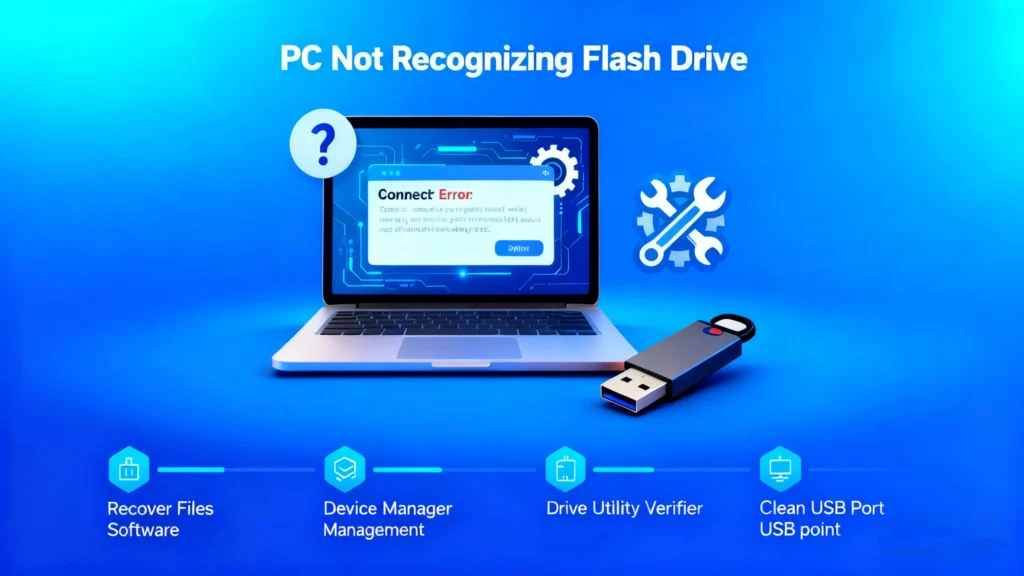
Lorsque votre Le PC ne reconnaît pas une clé USB, Ce problème peut vous empêcher d'accéder à des fichiers importants et perturber votre travail. Cet article explique pourquoi un ordinateur ne détecte pas votre clé USB et fournit des solutions étape par étape pour résoudre le problème, y compris les raisons courantes telles que les problèmes de connexion matérielle, les conflits de pilotes, les erreurs de système de fichiers et la manière de récupérer les données lorsque les solutions standard échouent.
Ce problème est plus fréquent que ne le pensent de nombreux utilisateurs. D'après notre expérience en matière de dépannage, les lecteurs flash peuvent ne pas s'afficher en raison de conflits de pilotes, d'erreurs de système de fichiers, de pertes de partitions ou de problèmes liés au matériel. Si certaines causes sont faciles à résoudre, d'autres nécessitent une manipulation soigneuse pour éviter une perte de données permanente.
Ce guide explique pourquoi un PC ne reconnaît pas une clé USB, L'objectif est d'améliorer la qualité de l'enseignement et de l'apprentissage. Solutions pour clés USB étape par étape, et montre comment récupérer des fichiers en toute sécurité à l'aide du logiciel Magic Data Recovery lorsque les solutions habituelles échouent.
Prise en charge de Windows 7/8/10/11 et Windows Server
Table des matières
Que signifie “Le PC ne reconnaît pas la clé USB” ?
Lorsque les utilisateurs signalent un Le PC ne reconnaît pas la clé USB Le problème est généralement lié à l'un des scénarios suivants :
- La clé USB n'apparaît pas dans l'explorateur de fichiers
- Le périphérique USB n'est pas présent dans Gestion des disques
- Le lecteur apparaît comme “Inconnu” ou “Non alloué”.”
- Windows affiche un message d'erreur demandant de formater le lecteur.
- Le système détecte le périphérique USB mais ne peut pas accéder aux fichiers.
Chaque scénario indique une cause sous-jacente différente, d'où l'importance d'un diagnostic correct.
Raisons courantes pour lesquelles un PC ne reconnaît pas une clé USB
Comprendre la cause vous permet de choisir la bonne solution et d'éviter les pertes de données inutiles.
1. Problèmes de port ou de câble USB
Dans le cadre d'une utilisation quotidienne, les ports USB accumulent de la poussière ou s'usent. Un port mal fixé ou endommagé peut interrompre la connexion et donner l'impression que la clé USB est défectueuse.
Les signes typiques sont les suivants
- Le lecteur fonctionne sur un autre ordinateur
- Bruits de connexion intermittents
- Pas d'indicateur d'alimentation sur la clé USB
2. Pilotes USB obsolètes ou corrompus
Windows s'appuie sur les pilotes USB pour communiquer avec les périphériques externes. Lorsque les pilotes sont obsolètes ou corrompus, le système peut ne pas reconnaître la clé USB.
Ce phénomène est particulièrement fréquent après :
- Mises à jour de Windows
- Blocage du système
- Changements manuels de conducteur
3. Erreurs du système de fichiers
La corruption du système de fichiers est l'une des raisons techniques les plus fréquentes à l'origine d'une défaillance du système de fichiers. Le PC ne reconnaît pas la clé USB problème.
Elle peut être due à :
- Ejection incorrecte
- Perte soudaine de puissance
- Infection par un virus ou un logiciel malveillant
Dans ce cas, Windows peut détecter le périphérique mais refuser de l'ouvrir.
4. Partitions perdues ou endommagées
Si la table de partition est endommagée ou supprimée, la clé USB peut apparaître comme “Non allouée” ou ne pas apparaître du tout.
Cela se produit souvent après :
- Erreurs de formatage du disque
- Utilisation du disque sur plusieurs systèmes d'exploitation
- Opérations de gestion des disques défectueuses
5. Conflits de lettres de lecteur
Parfois, la clé USB est reconnue, mais Windows ne lui attribue pas de lettre de lecteur, ce qui la rend invisible dans l'explorateur de fichiers.
Comment réparer un PC qui ne reconnaît pas une clé USB : Solutions étape par étape
Avant d'envisager la récupération des données d'un disque dur externe, essayez dans l'ordre les solutions suivantes qui ont fait leurs preuves.
Vérifier les ports USB et essayer un autre ordinateur
Commencez par vérifier le matériel de base :
- Branchez la clé USB sur un autre port USB
- Évitez les concentrateurs USB ; connectez-vous directement à l'ordinateur.
- Tester le lecteur sur un autre ordinateur
Si cela fonctionne ailleurs, le problème est probablement lié au système.
Mise à jour ou réinstallation des pilotes USB
- Presse Windows + X et ouvrir Gestionnaire de périphériques
- Élargir Contrôleurs de bus universel en série
- Cliquez avec le bouton droit de la souris sur chaque périphérique USB et choisissez Mise à jour du pilote
- Redémarrez votre PC
Cette étape permet de résoudre de nombreux cas où le Le PC ne reconnaît pas la clé USB est lié au conducteur.
Vérifier la présence de lecteurs cachés dans la gestion des disques
- Presse Windows + R, type
diskmgmt.msc, et appuyez sur Entrée - Recherchez la clé USB dans la liste
Si le lecteur apparaît mais n'a pas de lettre :
- Cliquer avec le bouton droit de la souris
- Choisir Modifier la lettre du lecteur et les chemins d'accès
- Attribuer une nouvelle lettre
Réparer les erreurs du système de fichiers à l'aide de CHKDSK
Si le disque est visible mais inaccessible :
- Ouvrir l'invite de commande en tant qu'administrateur
- Type :
chkdsk X : /f
(Remplacer X par la lettre du lecteur)
Cette méthode permet de corriger les erreurs du système de fichiers logiques sans formatage.
Lorsque les solutions standard échouent : Récupérer les données en toute sécurité
Si la réparation du système de fichiers échoue ou si la partition est manquante, la poursuite des travaux de bricolage risque d'écraser les données récupérables. À ce stade, la récupération des données est l'approche la plus sûre.
Pourquoi les erreurs de système de fichiers et les pertes de partitions sont-elles dangereuses ?
Lorsqu'un Le PC ne reconnaît pas la clé USB est dû à une corruption du système de fichiers ou à une perte de partition :
- Le formatage efface les métadonnées
- La réinitialisation du disque écrase les structures
- Des tentatives de réparation répétées peuvent réduire le succès de la récupération
Logiciel de récupération professionnel est conçu pour lire les données brutes sans altérer le lecteur.
Récupérer les données d'une clé USB non reconnue avec Magic Data Recovery
Magic Data Recovery est une solution fiable pour les situations où un PC ne reconnaît pas une clé USB en raison de dommages logiques.
Problèmes fondamentaux qu'il résout
- La clé USB ne s'affiche pas en raison d'erreurs dans le système de fichiers
- Clé USB marquée comme RAW ou non alloués
- Partitions perdues ou supprimées
- Formatage accidentel
Principaux avantages
- Soutien FAT32, exFAT, et NTFS systèmes de fichiers
- La technologie d'analyse en profondeur permet de localiser les partitions perdues
- Le processus de récupération en lecture seule empêche l'écrasement des données.
- Interface conviviale adaptée aux utilisateurs non techniques
Cas d'utilisation typique
Un utilisateur retire une clé USB sans l'éjecter en toute sécurité. Lors du branchement suivant, le PC ne reconnaît plus correctement la clé USB. La gestion des disques indique qu'il s'agit d'un disque RAW. Au lieu de formater, l'utilisateur exécute Magic Data Recovery, analyse le périphérique, prévisualise les fichiers et les restaure dans un emplacement sûr.
Pourquoi est-il plus fiable que les réparations manuelles ?
Les commandes manuelles se concentrent sur la réparation des structures, et non sur la préservation des données. Magic Data Recovery donne la priorité à l'extraction des fichiers, réduisant ainsi le risque de perte permanente.
Si vous recherchez une solution plus sûre et plus efficace, Magic Data Recovery mérite d'être prise en considération.
Prise en charge de Windows 7/8/10/11 et Windows Server
Meilleures pratiques pour éviter les problèmes de reconnaissance des clés USB
L'expérience montre qu'il est souvent plus facile de prévenir que de guérir.
- Toujours utiliser “Retirer le matériel en toute sécurité”
- Évitez d'utiliser la même clé USB sur des systèmes incompatibles.
- Maintenir le logiciel antivirus à jour
- Sauvegarder régulièrement les données critiques
- Ne pas interrompre les transferts de fichiers
Le respect de ces habitudes réduit le risque d'être confronté à une Le PC ne reconnaît pas la clé USB de nouveau.
Conclusion
A Le PC ne reconnaît pas la clé USB peut résulter de simples problèmes de connexion ou de dommages logiques plus profonds. Des solutions de base telles que la mise à jour des pilotes ou l'attribution de lettres de lecteur permettent souvent de résoudre des cas mineurs. Toutefois, lorsque des erreurs de système de fichiers ou des pertes de partitions sont en jeu, il peut être risqué de tenter des réparations sans récupération.
Dans de tels scénarios, Magic Data Recovery offres une solution pratique et fiable en se concentrant sur l'extraction sûre des données plutôt que sur les réparations risquées. Son approche équilibrée convient aussi bien aux utilisateurs quotidiens qu'aux professionnels qui attachent de l'importance à l'intégrité des données.
Prise en charge de Windows 7/8/10/11 et Windows Server
FAQ
Pourquoi mon PC ne reconnaît-il pas ma clé USB ?
Comment réparer une clé USB non reconnue sous Windows ?
Que faire si mon PC détecte l'USB mais ne peut pas accéder aux fichiers ?
Une clé USB peut-elle être récupérée si elle n'est pas détectée par le PC ?
Pourquoi mon PC indique-t-il “Périphérique USB non reconnu” ?
Le fait de changer de port USB peut-il aider une clé USB à ne pas s'afficher ?
Le formatage permet-il de résoudre un problème de disque flash non reconnu ?
Comment puis-je éviter qu'à l'avenir mon PC ne reconnaisse plus les lecteurs flash ?

Erin Smith est reconnue comme l'une des rédactrices les plus professionnelles d'Amagicsoft. Elle a continuellement perfectionné ses compétences rédactionnelles au cours des 10 dernières années et a aidé des millions de lecteurs à résoudre leurs problèmes techniques.