
Hard Disk Repair: These Cases You Can Fix Yourself

Hard disks are the backbone of data storage for both personal and professional use. However, they are not immune to failures. From mechanical wear and electronic malfunctions to corrupted file systems, a failing hard disk can lead to lost partitions, inaccessible files, or a RAW drive. Understanding the difference between physical damage and logical errors is crucial for effective hard disk repair, and find the professional HDD solutions.
Table of Contents
Supports Windows 7/8/10/11 and Windows Server
Why drives get corrupted: Physical vs. Logical Problems
When it comes to hard disk repair, all issues can generally be divided into two categories:
1.Physical problems – Mechanical failures, clicking noises, burnt circuits, or drives that are not detected by the BIOS or Disk Management.
2.Logical problems – Cases where the hardware is intact, but the partition structures (partition table or file systems) are corrupted or missing.
How to Check if It’s Physical or Logical
- Signs of physical problems: unusual noises, overheating, drive not recognized by the system at all.
- Signs of logical problems: the drive is detected but shows as RAW, or unallocated space.
If the symptoms suggest a physical failure, do not attempt DIY fixes. Instead, take the drive to a certified recovery center. If it’s a logical issue, software-based repair is often possible.
⚠️ Why you should never disassemble a hard disk yourself: Opening a hard drive outside a professional cleanroom exposes the platters to dust and static electricity. Even a single dust particle can scratch the platter surface. Moreover, delicate components like the read/write head can be permanently damaged. Such actions often make professional recovery impossible, leading to irreversible data loss.
Hard Disk Repair for Physical Problems
When a hard disk suffers from physical damage, such as clicking noises, overheating, or electronic failure, it is best left to professionals. Attempting to open or repair the drive at home is risky because:
- Dust particles can damage platters permanently.
- Specialized tools and a cleanroom environment are required.
- DIY attempts often lead to irreversible data loss.
Important: Hard disk disassembly should only be performed in a certified cleanroom by trained professionals. Opening a drive outside this environment can further damage delicate components and make HDD data recovery impossible.
For this reason, physically damaged drives should always be repaired at a local certified data recovery center.

Hard Disk Repair for Logical Problems
Logical issues are far more common and typically involve partition loss or a RAW file system. In these cases, the drive is physically fine, but partition table is wiped or file system metadata is corrupted. A RAW drive means Windows cannot recognize the file system, making repair essential before data recovery.
Repair File System with Hex Editors
WinHex is a professional hex editor often used in data recovery. Advanced users can analyze partition tables, locate deleted entries, and manually repair the file systems. However, editing the hexadecimal value is risky, unless you have a solid understanding for the file system and partition structure.

Fixing RAW Drives with CHKDSK
A RAW drive may result from corrupted metadata. The first attempt should be the CHKDSK utility:
chkdsk X: /f /r
(Replace X: with the affected drive letter.)
If successful, the file system will be repaired and the drive restored to normal use. However, the chkdsk command is designed to solve partition problems. That is to say, in order to make the partition accessible again, it may make changes to files or even cause file loss.

Hard Disk Repair Made Simple with Magic Data Recovery
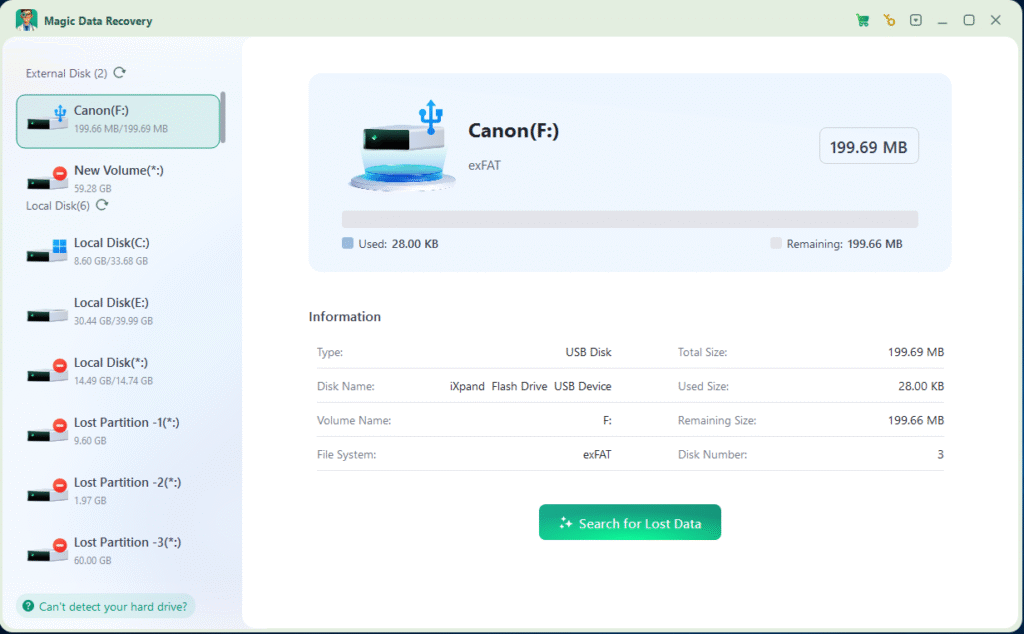
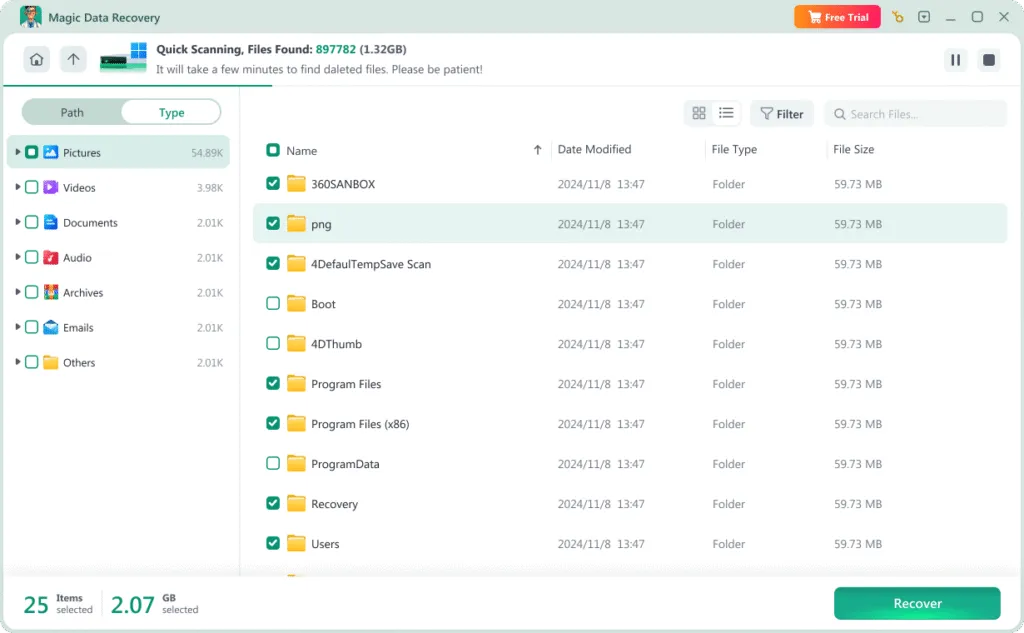
For users without technical expertise, Magic Data Recovery provides a safer alternative. It automatically scans for lost partitions, rebuilds damaged file systems, and recovers files from corrupted drives. Even beginners can perform effective hard disk repair without risking further data loss with some simple steps below:
1. Download and Install. You also need to prepare another drive to save the files.
Supports Windows 7/8/10/11 and Windows Server


Conclusion
Hard disk repair requires a clear understanding of the underlying problem. Physical issues, such as mechanical failures, clicking noises, or electronic damage, must always be handled by certified professionals in a cleanroom environment to avoid further data loss. On the other hand, logical errors—like lost partitions or RAW drives—can often be repaired safely using software tools. Advanced users may choose Hex Editor or CHKDSK, while non-technical users can rely on Magic Data Recovery for guided, safe, and effective repair.
By correctly identifying whether a problem is physical or logical and choosing the appropriate hdd solution, you can maximize the chances of recovering your data while minimizing risk. This approach ensures that your hard disk repair can be safe and efficient.
Supports Windows 7/8/10/11 and Windows Server
FAQ
What causes the hard disk to fail?
How to tell if your HDD is completely damaged?
Can a hard disk be repaired?

Vasilii is a data recovery specialist with around 10 years of hands-on experience in the field. Throughout his career, he has successfully solved thousands of complex cases involving deleted files, formatted drives, lost partitions, and RAW file systems. His expertise covers both manual recovery methods using professional tools like hex editors and advanced automated solutions with recovery software. Vasilii's mission is to make reliable data recovery knowledge accessible to both IT professionals and everyday users, helping them safeguard their valuable digital assets.