
How to Recover Deleted Files from Pen Drive in 7 Effective Ways
Losing important files from a USB flash drive can be frustrating. Whether you accidentally pressed Delete, formatted the drive by mistake, or encountered a file system error, data loss on pen drives happens more often than most users expect. In many cases, recover deleted files from pen drive is still possible. When files are lost due to deletion, the data is not immediately erased. Instead, the storage space is marked as available, which means recovery tools can often restore the files before they are overwritten.
In this in-depth guide, you will learn practical, proven ways to recover lost data from a pen drive. We will also review pen drive data recovery software free options and explain why professional tools like Magic Data Recovery are often more reliable in real-world recovery scenarios.
Supports Windows 7/8/10/11 and Windows Server
Table of Contents
How File Deletion Works on a Pen Drive
Before jumping into recovery methods, it is important to understand what actually happens when files are deleted from a USB flash drive.
When you delete a file:
- The file system removes the reference to the data.
- The actual file content remains on the drive.
- New data may overwrite the deleted file over time.
This is why recover deleted files from pen drive is time-sensitive. The sooner you act, the higher the recovery success rate.
Common Causes of Pen Drive Data Loss
- Accidental deletion
- Formatting the USB drive
- Virus or malware attacks
- File system corruption
- Improper ejection of the device
- Power interruptions during file transfer
Each scenario requires a slightly different recovery approach, which we will cover step by step.
What to Do Immediately After Data Loss
Taking the right actions early can significantly improve recovery results.
Do this first:
- Stop using the pen drive immediately.
- Do not save new files to the same device.
- Safely eject the USB drive.
- Prepare another storage device for recovered files.
Avoid running disk repair tools unless you fully understand their impact. Some utilities may permanently overwrite recoverable data.
Method 1: Check for Hidden or Existing Copies (Quick Win)
In some cases, files are not deleted but simply hidden.
Steps:
- Connect the pen drive to your computer.
- Open File Explorer.
- Enable Show hidden files.
- Check whether the missing files reappear.
This method is simple but effective when malware or system settings hide files rather than delete them.
Method 2: Use Windows Built-In Tools (Limited but Free)
Windows offers basic tools that may help in specific scenarios.
Windows File Recovery
- Available for Windows 10 and later.
- Works through Command Prompt.
- Supports NTFS, FAT, and exFAT file systems.
While this option is free, it requires technical knowledge and offers no preview function. Recovery results vary, especially for formatted pen drives.
Method 3: Pen Drive Data Recovery Software Free
Many users search for pen drive data recovery software free solutions. Free tools can be useful, but they often come with limitations.
Popular Free Recovery Tools
Free tools may recover recently deleted files, but they often struggle with:
- Formatted pen drives
- Deep file system damage
- Complex data loss scenarios
This is where advanced recovery software becomes essential.
Method 4: Recover Deleted Files from Pen Drive Using Magic Data Recovery (Recommended)
When free tools fail or data loss is more complex, Magic Data Recovery offers a more reliable solution. It can recover less than 500MB files for testing and recover unlimited files after purchasing.
Magic Data Recovery is designed to recover deleted files from pen drive, even after formatting or file system corruption. It balances ease of use with professional-grade recovery capabilities.
Core Problems It Solves
- Accidental file deletion
- Formatted USB flash drives
- Corrupted or inaccessible pen drives
- Data loss caused by malware or power failure
Key Advantages of Magic Data Recovery
- Supports FAT32, exFAT, and NTFS file systems
- Deep Scan for formatted or severely damaged drives
- File preview before recovery
- Clear, guided recovery steps for non-technical users
- Recovery without modifying original data
Step-by-Step Recovery Process
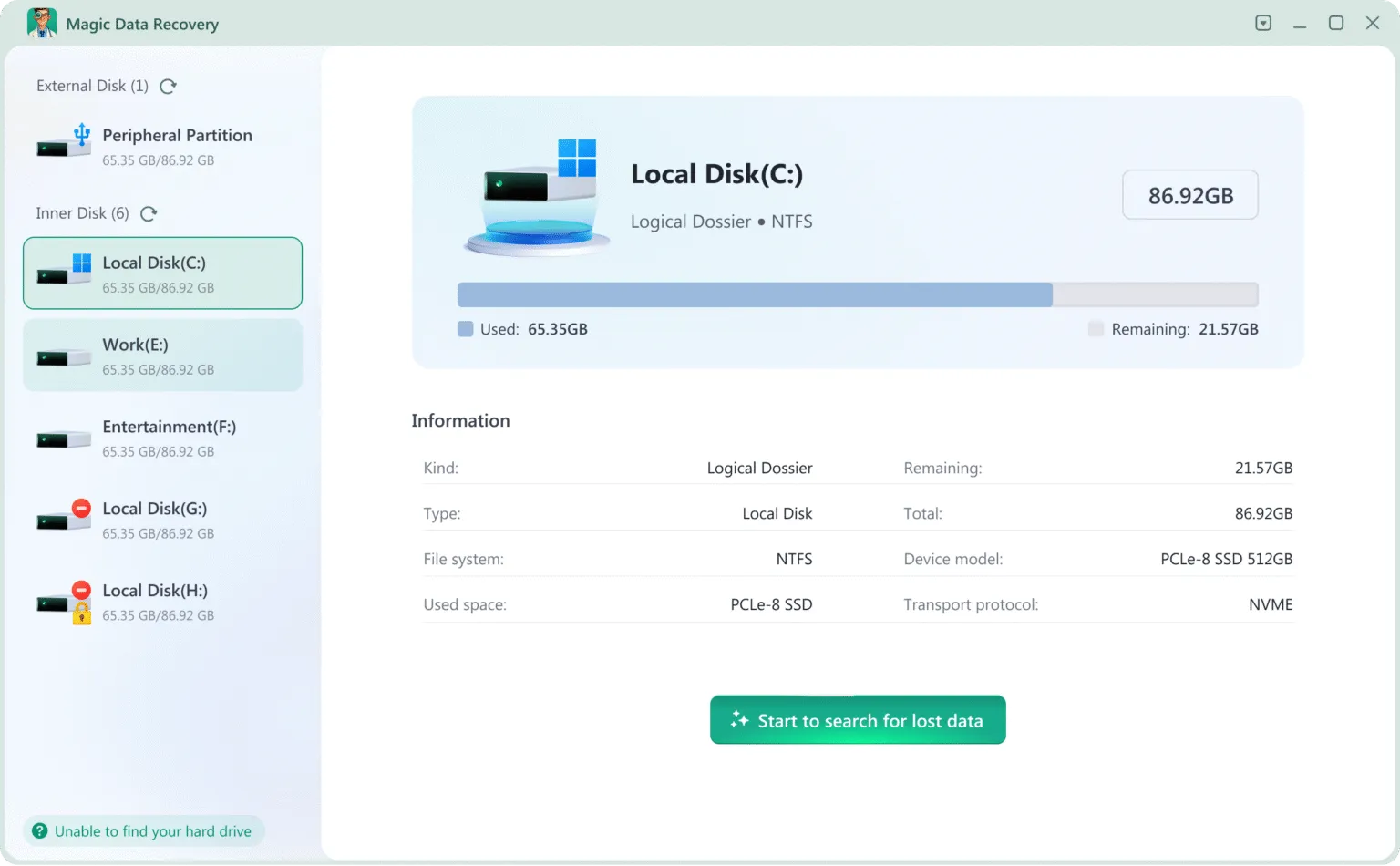
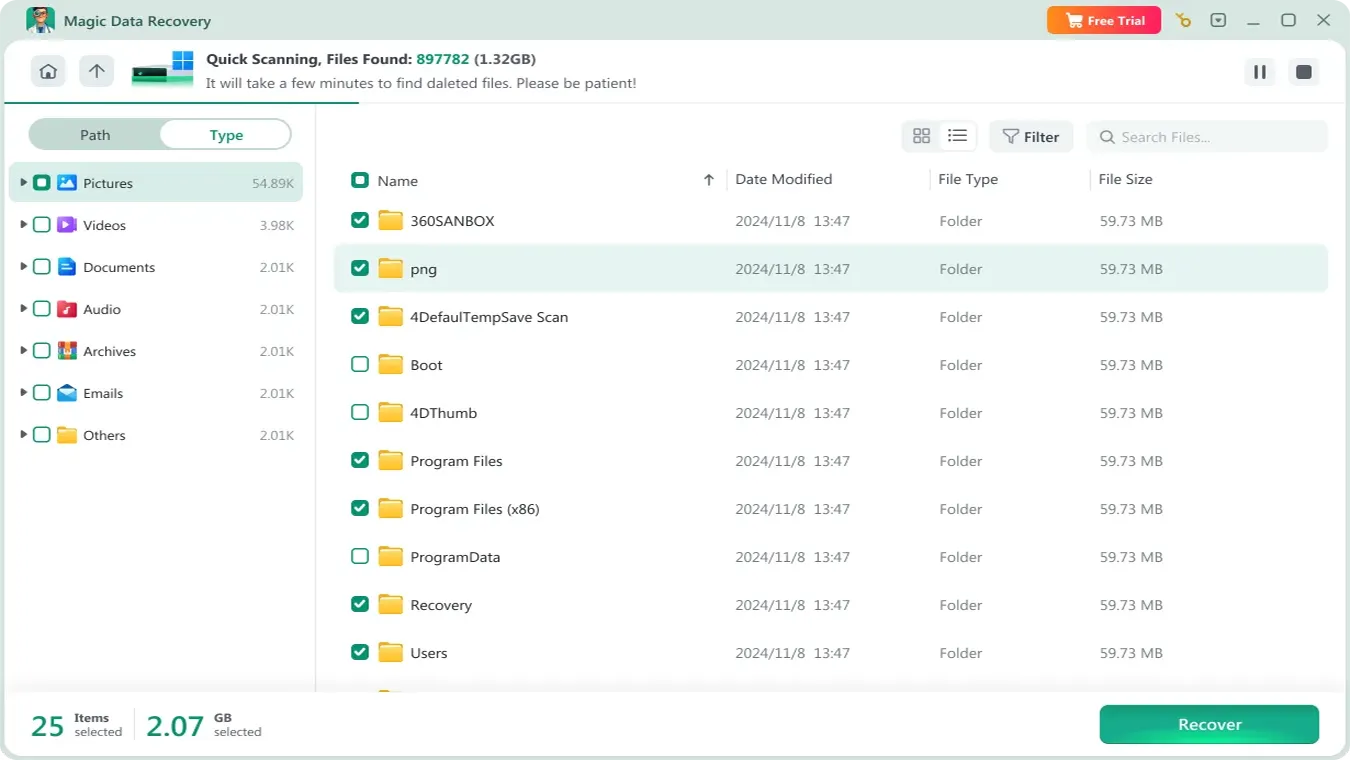
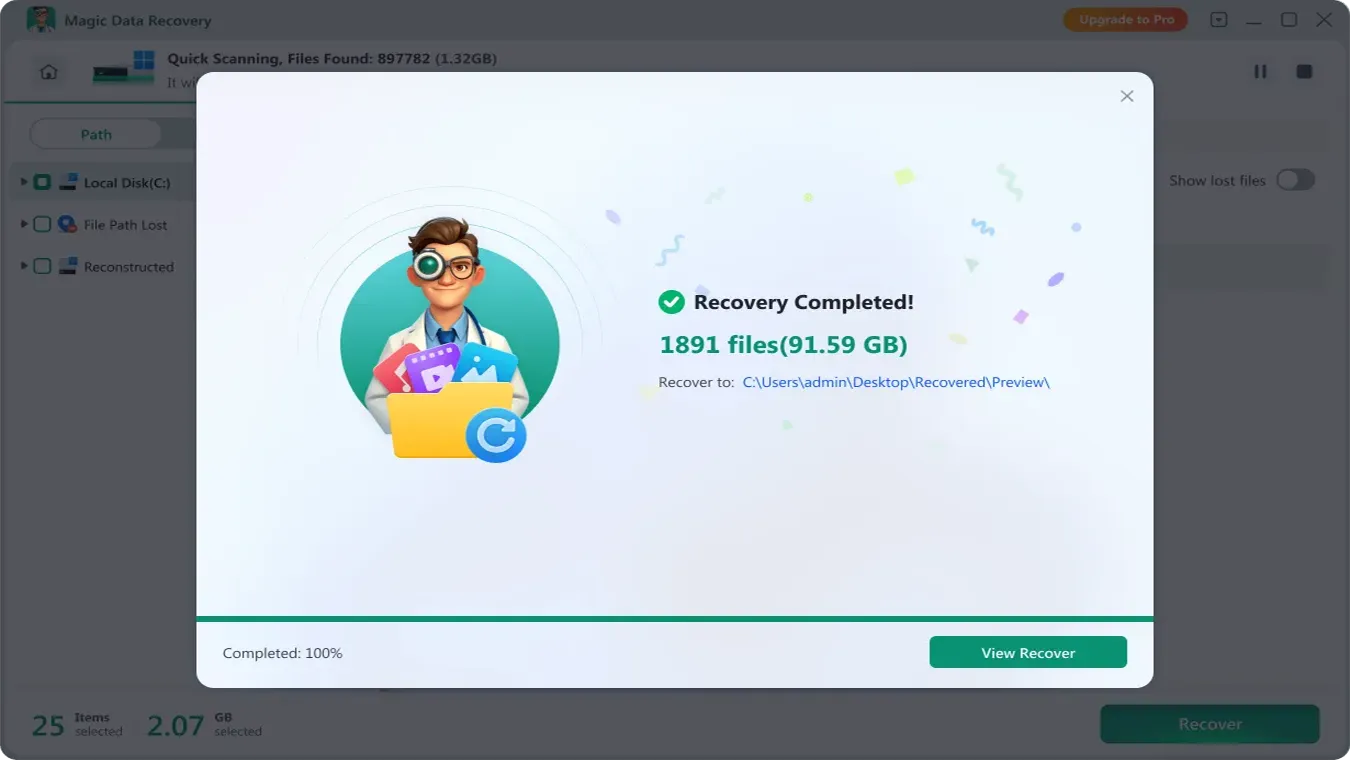
1. Download and Install: Get Magic Data Recovery from the official website and install it on your computer.
Supports Windows 7/8/10/11 and Windows Server

Real-World Use Case
A common scenario involves users formatting a pen drive to fix an error. Standard free tools may detect nothing. Magic Data Recovery, however, can perform a deep scan to rebuild file structures and retrieve documents, photos, and videos that seemed permanently lost.
Compared to basic pen drive data recovery software free tools, Magic Data Recovery provides more consistent results across complex recovery situations.
If you are looking for a more efficient solution, Magic Data Recovery is worth considering.
Method 5: Recover Files from Pen Drive Using Existing Backups
If you lost files from a pen drive but you have the backup image of the pen drive, you can use the image to restore your backup image directly.
You can restore files if:
- A backup image of the pen drive was created earlier
- Files were copied to another storage device
- Cloud or system backup tools synchronized the data
To recover data, simply locate the backup source and restore the files to a new drive.
If no backup exists, recovery after formatting is usually not feasible, and further attempts may produce unreliable results.
Method 6: Recover Files from Pen Drive Using Advanced Manual Tools
For severely corrupted pen drives, advanced manual tools such as WinHex can be used to attempt recovery at the sector level. These tools read raw disk data and require manual reconstruction of files.
However, this method:
- Requires professional knowledge of file systems
- Involves complex, low-level operations
- Carries a high risk of additional data damage
Without strong technical expertise, manual recovery is not recommended. Improper use may permanently overwrite recoverable data. In such cases, seeking professional assistance is a safer option.
Method 7: Seek Professional Recovery Services (Last Resort)
If the pen drive is physically damaged or not detected at all, software recovery may fail.
Professional services can help when:
- The USB controller is damaged
- The drive is not recognized by any system
- Data is extremely valuable
This option is costly and should be considered only after software solutions are exhausted.
Tips to Improve Pen Drive Data Recovery Success
- Always recover files to a different drive.
- Perform a full scan if quick scan finds nothing.
- Avoid repeated formatting attempts.
- Back up important data regularly.
Preventive habits reduce the need to recover deleted files from pen drive in the future.
Conclusion
Data loss from USB flash drives is common, but permanent loss is not inevitable. With the right approach, you can successfully recover deleted files from pen drive, even in complex situations.
While pen drive data recovery software free options are helpful for simple cases, they often fall short when dealing with formatted or corrupted drives. Magic Data Recovery stands out because it combines ease of use with advanced scanning technology, making it suitable for both everyday users and more demanding recovery scenarios.
If you want a dependable, well-designed solution that focuses on solving real problems rather than quick fixes, Magic Data Recovery is a practical and trustworthy option.
Supports Windows 7/8/10/11 and Windows Server
FAQs
How to recover deleted files on USB drive Windows 11?
Where do deleted files in USB go?
How to recover deleted files from pen drive due to virus?
Can I recover permanently deleted files from a drive?
Is it possible to recover deleted files from USB?
Is there a Recycle Bin on a USB drive?
Where do permanently deleted files actually go?
How do I recover a file I accidentally deleted?

Erin Smith is recognized as one of the most professional writers at Amagicsoft. She has continually honed her writing skills over the past 10 years and helped millions of readers solve their tech problems.