
The Best Free Software to Recover Deleted Files from SD Card

Accidentally deleting photos, videos, documents, or work files from a memory card can feel final. In many cases, however, the data still exists until new information overwrites it. Therefore, you may still be able to recover deleted files from SD card if you stop using the card and choose the right SD card recovery method.
This guide explains what happens after deletion, what to do first, and how Magic Data Recovery can help when no backup exists. The goal is to protect the remaining data and improve your chance of recovery.
Supports Windows 7/8/10/11 and Windows Server
PAGE CONTENT:
What to Do Before SD Card Recovery
Before you try to recover deleted files from SD card, remove the card from the camera, phone, drone, dashcam, or other device. Do not record anything else, and do not format the card even if Windows asks you to do so.
Next, connect it to a computer with a stable card reader. Avoid loose adapters and unreliable USB hubs because interruptions can affect the scan. If the card repeatedly disconnects, becomes unusually hot, or shows the wrong capacity, stop the DIY process. Those signs may point to physical failure.
You should also avoid running CHKDSK before recovery. CHKDSK repairs file system structures, but it does not specifically restore files deleted by the user. Since it writes changes to the card, it may reduce recoverable information in some cases.
Finally, prepare another drive for the recovered data. Never save restored files back to the original SD card. Otherwise, new files may overwrite data that the scan has not restored yet.
Can You Recover Deleted Files from SD Card?
Yes, you can often recover deleted files from SD card when the deleted data has not been overwritten. Deleting a file usually removes its reference from the file system. The card then marks that space as available, but the original content may remain until the device writes new data over it.
This is why timing matters. If you continue taking photos, recording videos, or copying files to the card, the device may reuse the same space. Once that happens, complete recovery becomes much harder.
Large videos are often harder to recover because they may occupy several areas of the card. Therefore, stop using the card as soon as you notice the loss.
Common Scenarios for Deleting Files from SD Cards
SD cards are prone to data loss due to their portable nature and frequent use in cameras, smartphones, tablets, and other devices. Here are the most common scenarios where files get deleted or lost:
Accidental Deletion: A simple mistake while managing files, such as hitting the “Delete All” button by accident.
Formatting the SD Card: Accidentally formatting the card or doing so when the device prompts an error.
Physical Damage: Water damage, bending, or corrosion that makes the card unreadable.
File System Errors: Corruption due to improper ejection, power outages, or virus attacks.
RAW SD Card Errors: The card shows as “RAW” and requires formatting, leading to data loss.
Partition Loss: Loss of partitions due to software glitches or improper management.
Check Backups and Recently Deleted Folders First
The safest way to recover deleted files from SD card is to restore an existing copy. Before installing software, check whether your phone, computer, or cloud service already saved the missing files.
On a phone, open Gallery, Photos, or File Manager and look for Recently Deleted, Trash, or Recycle Bin. Google Photos, OneDrive, Dropbox, and similar services may also contain copies if automatic backup was enabled.
Windows users should check OneDrive, File History, imported Pictures folders, and external backup drives. Files deleted directly from a removable SD card do not always enter the normal Windows Recycle Bin, so an empty Recycle Bin does not mean the data is gone.
Mac users can check Photos, iCloud Photos, Trash, and Time Machine. If the files were previously imported, a backup may restore them without scanning the SD card.
When no copy exists, you need a tool that reads the card itself.
Best Free Software to Recover Deleted Files from SD Card: Magic Data Recovery
For effective and user-friendly SD card recovery, Magic Data Recovery stands out as the top choice. Here’s why it’s ideal for both beginners and advanced users:
Free Trial: Test the software with a free trial to scan and preview recoverable files before purchasing.
Support for Multiple File Types: Recovers photos (JPG, PNG, RAW), videos (MP4, AVI), documents (PDF, DOCX), audio files, and more.
Wide Device Compatibility: Works with all SD card types (standard, microSD, miniSD) and brands (SanDisk, Samsung, Kingston, etc.).
Easy-to-Use Interface: Simple 3-step process: connect the SD card, scan for lost files, and recover.
Deep Scan Technology: Performs a thorough scan to locate permanently deleted or hidden files.
Selective Recovery: Preview files before recovery to ensure you’re retrieving the right data.
Supports Windows 7/8/10/11 and Windows Server
How to Use Magic Data Recovery
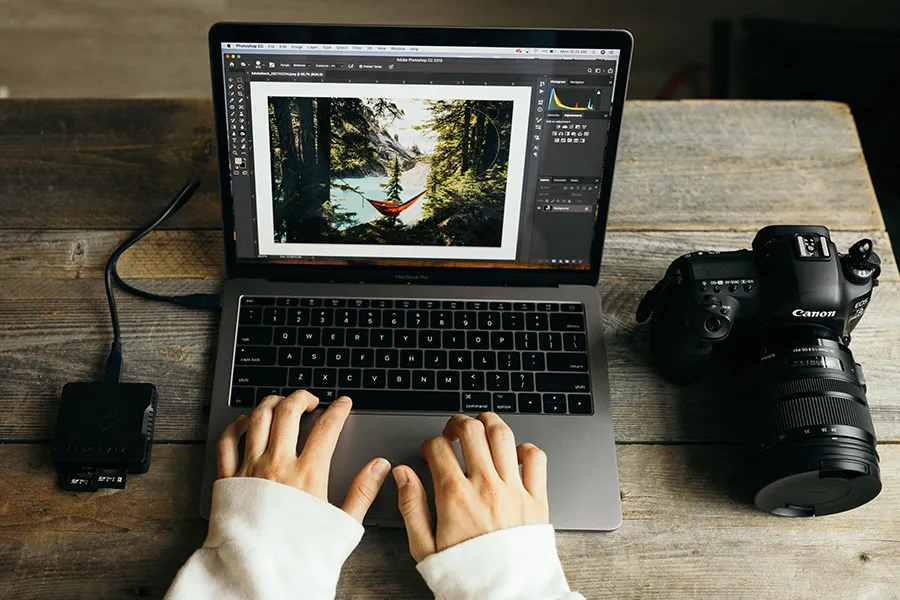
1. Connect the SD Card: Insert the card into your computer using a card reader
2. Launch the Software: Download and install Magic Data Recovery.
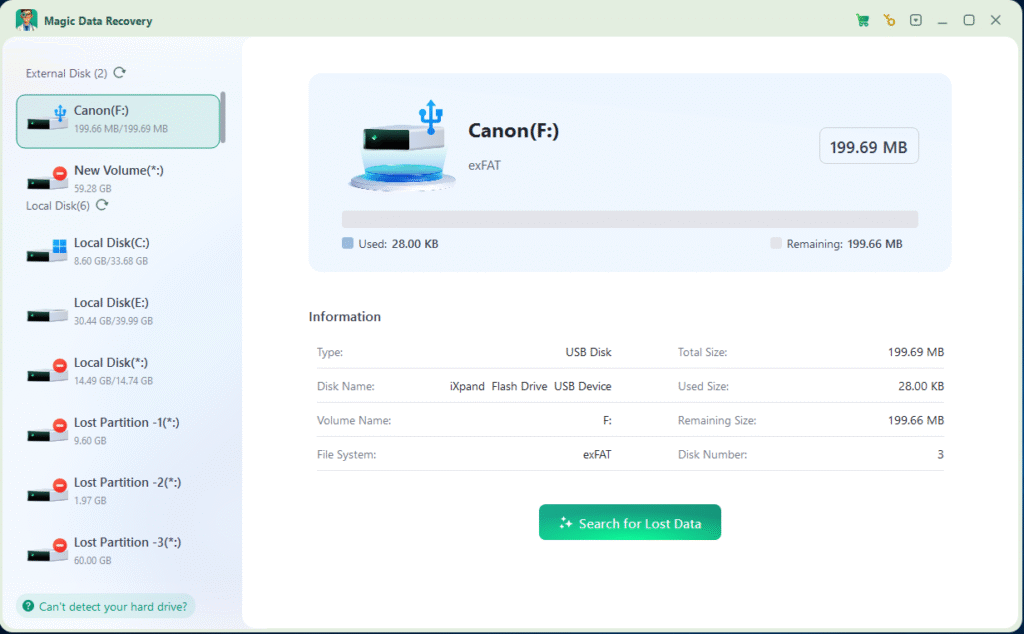
3. Scan the SD Card: Select the SD card from the list of drives and Click Search for Lost Data button to scan.
All files (including the lost files) can be viewed in Magic Data Recovery once the scan is complete.
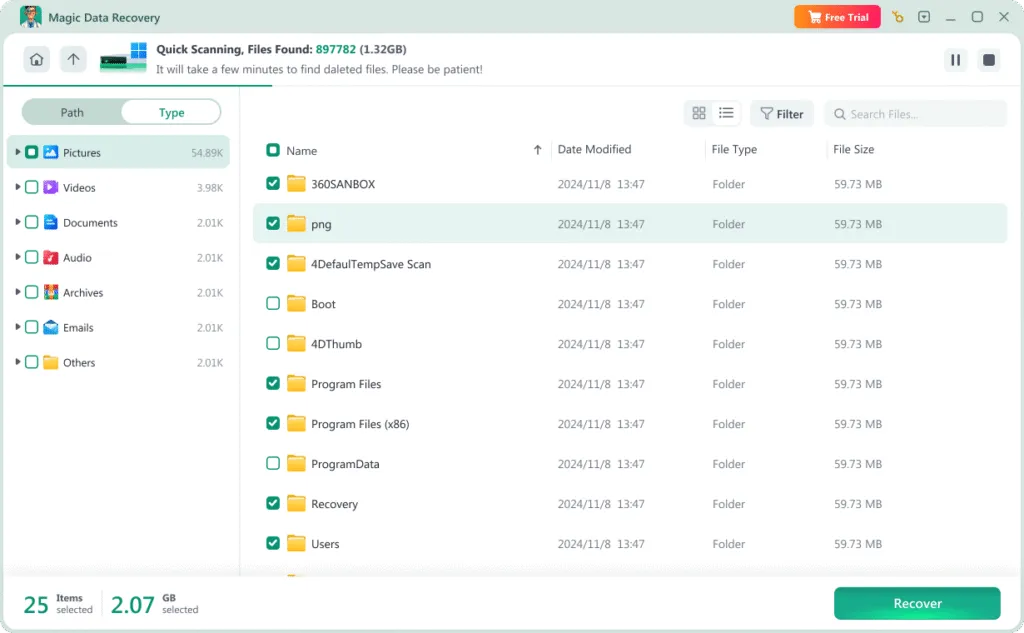
4. Preview and Recover: Review the scanned files, select the ones you want to recover, and save them to a safe location (avoid saving back to the SD card).


Important Tips for SD Card Recovery
To increase the chances of successful recovery, follow these best practices:
Stop Using the SD Card Immediately: Avoid taking new photos, recording videos, or transferring files to prevent overwriting lost data.
Use a Reliable Card Reader: A faulty reader can cause further damage. Use a high-quality USB card reader for connection.
Check for Physical Damage: If the card is physically damaged (e.g., bent pins, burnt edges), do not attempt to insert it into devices. Consult a professional data recovery service.
Regular Backups: Prevent future loss by backing up important files to cloud storage, external hard drives, or your computer.
How to Prevent Future SD Card Data Loss
Regular backups provide the best protection. Keep one copy on a computer or external drive and another in cloud storage.
In addition, avoid removing a card while the device writes data, and replace cards that become slow or unstable. Even a high-quality card can wear out, so an SD card should never serve as the only long-term storage location.
Conclusion
To recover deleted files from SD card, act quickly and avoid changing the original storage. Start with Recently Deleted folders and backups because they provide the safest recovery path. When no copy exists, scan the card before formatting or repairing it.
Magic Data Recovery is a practical SD card recovery recommendation because it addresses the main difficulties ordinary users face. It simplifies device selection, scans multiple file types, provides filtering and preview options, and saves recovered files to another drive. These features make the process clearer than command-line recovery and easier to manage than raw file carving.
No tool can guarantee recovery after overwriting or physical failure. However, Magic Data Recovery offers a balanced solution for deleted, formatted, RAW, and logically damaged SD cards. If you need a straightforward way to recover deleted files from SD card, try the scan, review the results, and restore the most important files to a safe location.
FAQ
Can I Recover Deleted Files from SD Card for Free?
What if my SD card shows as 'RAW'?
Is free SD card recovery software safe?
Can Permanently Deleted Files Be Recovered from an SD Card?
Can I Recover Deleted Photos from a Camera SD Card?
Should I Run CHKDSK Before Recovery?
Why Do Some Recovered Videos Not Play?

Erin Smith is recognized as one of the most professional writers at Amagicsoft. She has continually honed her writing skills over the past 10 years and helped millions of readers solve their tech problems.