
Como recuperar arquivos apagados em um pen drive: 4 métodos seguros
Os arquivos excluídos de um pen drive geralmente não vão para a Lixeira do Windows, mas isso nem sempre significa que tenham sido apagados de forma definitiva. Se o espaço de armazenamento não tiver sido sobrescrito, talvez ainda seja possível recuperar arquivos excluídos de um pen drive.
Pare de usar o pen drive imediatamente. Não copie novos arquivos para ele, não o formate, não execute o CHKDSK nem salve os arquivos recuperados de volta no mesmo dispositivo. Cada nova gravação pode sobrescrever os dados excluídos e reduzir as chances de recuperação.
Este guia explica quatro métodos práticos de recuperação: verificar se há arquivos ocultos, restaurar um backup, usar o Recuperação de Arquivos do Windows e fazer uma varredura na unidade USB com Magic Data Recovery. Comece com o método que melhor se adapta à sua situação ou explore nosso Soluções para recuperação de pen drives para outros erros de USB.
Compatível com Windows 7/8/10/11 e Windows Server
Índice
É possível recuperar arquivos excluídos de um pen drive?
Sim, os arquivos excluídos de um dispositivo USB podem ser recuperados, desde que o espaço de armazenamento em que estavam não tenha sido sobrescrito. O Windows normalmente remove a referência do sistema de arquivos e marca o espaço ocupado como disponível. Um software de recuperação pode fazer uma varredura nesse espaço e reconstruir os arquivos que permaneceram intactos.
No entanto, o método correto depende se os arquivos foram realmente excluídos, ocultados por malware, perdidos após a formatação ou tornados inacessíveis devido a danos no sistema de arquivos.
| Cenário de perda de dados por USB | Primeira ação recomendada |
|---|---|
| Os arquivos desaparecem de repente, mas o pen drive ainda mostra espaço ocupado | Mostrar arquivos ocultos e verificar se há malware |
| Os arquivos foram excluídos usando as teclas Delete ou Shift + Delete | Use o Windows File Recovery ou o Magic Data Recovery |
| O pen drive foi formatado rapidamente | Execute uma verificação completa com o Magic Data Recovery |
| O pen drive aparece como RAW ou solicita formatação | Recupere os dados primeiro; não execute o CHKDSK |
| A unidade USB não é detectada no Gerenciamento de Discos | Verifique se há danos físicos ou entre em contato com um serviço profissional de recuperação |
Método 1: Exibir arquivos ocultos no pen drive
Utilize este método apenas quando os arquivos tiverem desaparecido, mas a unidade USB ainda mostrar espaço de armazenamento ocupado. Ele pode revelar arquivos ocultos por malware ou por atributos incorretos, mas não consegue restaurar arquivos que foram efetivamente excluídos.
- Conecte a unidade USB e anote a letra da unidade.
- Abra o prompt de comando como administrador.
- Digite o seguinte comando:
attrib -h -r -s /s /d X:\*.*
Substituir X com a letra da unidade USB e pressione Enter. Reabra a unidade no Explorador de Arquivos e verifique se os arquivos estão visíveis.
Método 2: Restaurar arquivos excluídos de um dispositivo USB a partir de um backup
Verifique se os arquivos excluídos da unidade USB também existem no OneDrive, no Google Drive, em outro computador, em uma unidade externa de backup ou em um backup do Windows. Se os arquivos tiverem sido originalmente copiados do seu computador para a unidade USB, procure na pasta original antes de executar uma verificação de recuperação.
O Histórico de Arquivos só funciona se os arquivos originais tiverem sido incluídos em um backup configurado anteriormente. Ele não cria automaticamente um backup de todas as unidades USB removíveis.
Método 3: Recuperar arquivos apagados de um pen drive com a ferramenta de recuperação de arquivos do Windows
O Windows File Recovery é uma ferramenta gratuita da Microsoft de linha de comando para o Windows 10 e o Windows 11. Ela é compatível com unidades USB formatadas em NTFS, FAT ou exFAT, mas não oferece uma interface gráfica nem visualização de arquivos.
Primeiro, instale o Windows File Recovery na Microsoft Store. Suponhamos que a unidade USB afetada seja E: e você deseja salvar os arquivos recuperados no computador C: dirigir.
Para recuperar um arquivo excluído recentemente de uma unidade USB com sistema de arquivos NTFS, use:
winfr E: C: /regular /n *.docx
Para uma unidade USB formatada em FAT32 ou exFAT, ou quando os arquivos foram excluídos há algum tempo, use o modo Extensivo:
winfr E: C: /extensive /n *.jpg /n *.png /n *.docx
Substitua as extensões pelos tipos de arquivo que você precisar. Quando for solicitado, digite Y para iniciar a recuperação. O Windows criará uma pasta de recuperação na unidade de destino.
A unidade de origem e a de destino devem ser diferentes. Nunca recupere arquivos de volta para a unidade USB afetada, pois isso pode sobrescrever outros dados excluídos.
Método 4: Recuperar arquivos excluídos com o Magic Data Recovery
Se os arquivos foram excluídos definitivamente, se a unidade USB foi formatada ou se a Recuperação de Arquivos do Windows for muito difícil de usar, Magic Data Recovery oferece um processo gráfico de recuperação para o Windows.
O programa é compatível com pen drives apagados, formatados, no formato RAW e com danos lógicos, além de mais de 5.000 tipos de arquivos. Os recursos de visualização e filtragem ajudam você a identificar os arquivos necessários antes de salvá-los.
Como recuperar arquivos excluídos do USB usando o Magic Data Recovery
Etapa 1: Instale o Magic Data Recovery com segurança
Faça o download e instale Magic Data Recovery no disco rígido interno do seu computador. Não o instale na unidade USB afetada.
Compatível com Windows 7/8/10/11 e Windows Server
Etapa 2: Selecione a unidade USB
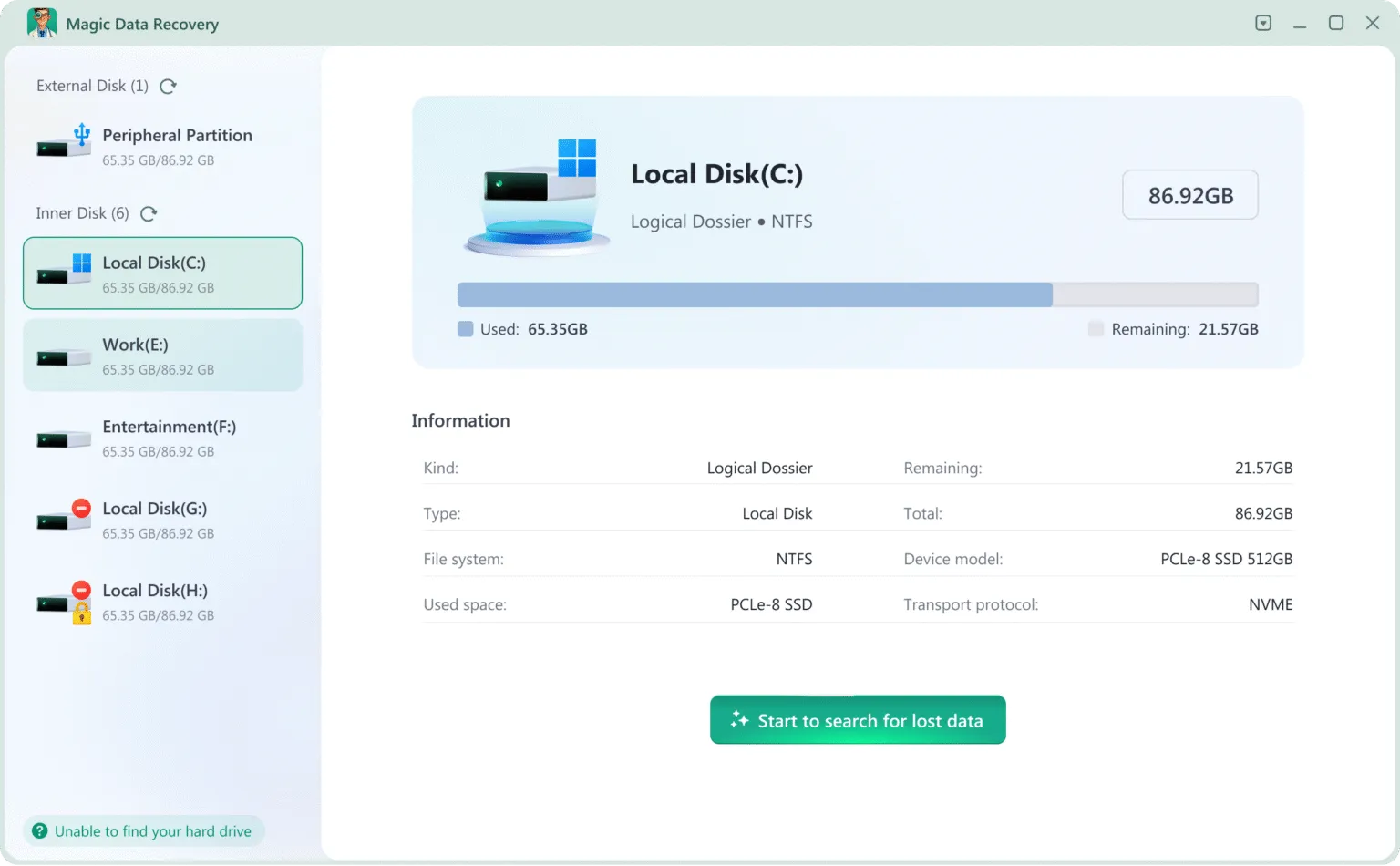
Conecte o pen drive, inicie o software e selecione o dispositivo afetado na lista de dispositivos.
Etapa 3: Verificar se há arquivos excluídos
Clique em “Procurar dados perdidos”. Aguarde até que a verificação seja concluída, principalmente se os arquivos tiverem sido excluídos definitivamente ou se a unidade USB tiver sido formatada.
Etapa 4: Filtrar e visualizar os resultados
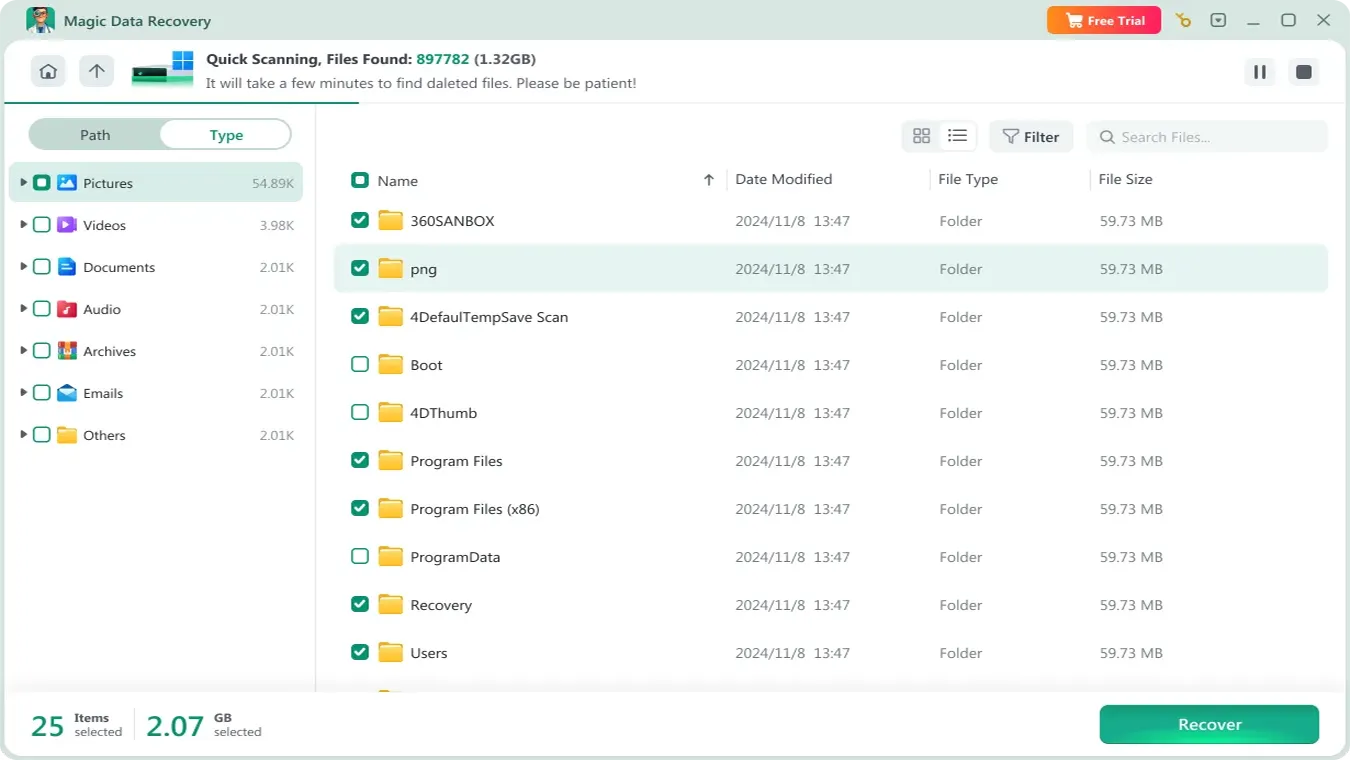
Filtre os resultados por tipo de arquivo, nome, tamanho ou caminho original. Visualize documentos importantes, fotos e outros arquivos compatíveis para verificar seu estado.

Etapa 5: Recuperar arquivos em outra unidade
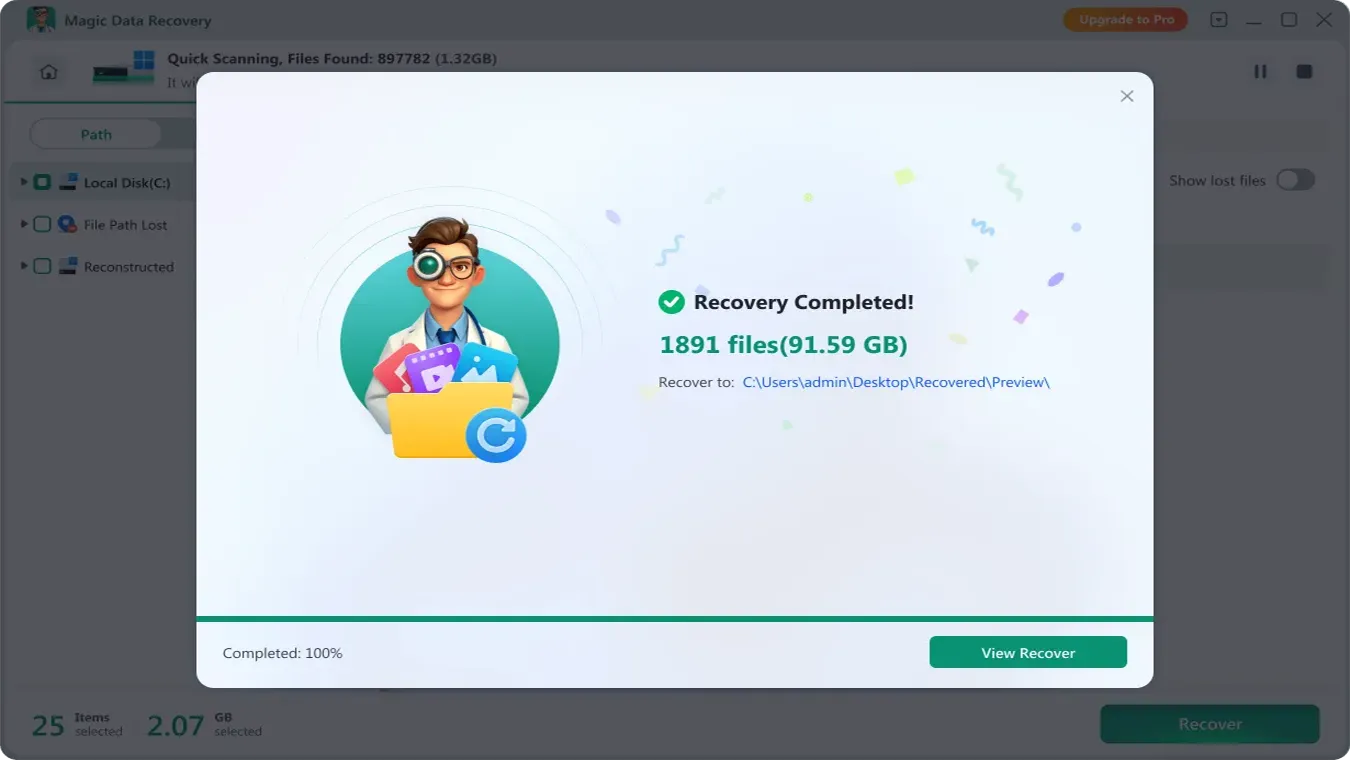
Selecione os arquivos necessários e clique em “Recuperar”. Salve-os no computador ou em outro dispositivo de armazenamento externo — não no dispositivo USB afetado.
Comparação das opções de recuperação: Ferramentas integradas vs. software profissional
| Método | Melhor para | Principal limitação |
|---|---|---|
| Comando ATTRIB | Arquivos ocultos por malware ou por atributos | Não é possível recuperar arquivos excluídos |
| Restauração de backup | Arquivos com uma cópia de backup já existente | É necessário que haja um backup criado antes da exclusão |
| Recuperação de arquivos do Windows | Arquivos excluídos em um pen drive legível | Interface de linha de comando e sem visualização prévia |
| Magic Data Recovery | Pen drives com arquivos excluídos, formatados, no formato RAW ou com danos lógicos | Não é possível reparar hardware fisicamente danificado |
| Serviço de recuperação | Pen drives amassados, quebrados ou com danos elétricos | Geralmente caro e demorado |
Escolha o método com base na forma como os arquivos foram perdidos. No caso de exclusão efetiva sem backup, uma varredura de recuperação costuma ser mais adequada do que o comando ATTRIB ou outros comandos relacionados à visibilidade dos arquivos.
O que não fazer antes da recuperação de arquivos de um dispositivo USB
- Não copie novos arquivos para o pen drive.
- Não formate a unidade, mesmo que o Windows peça para você fazer isso.
- Não execute o CHKDSK antes de recuperar dados importantes.
- Não instale nenhum software de recuperação na unidade USB afetada.
- Não salve os arquivos recuperados no mesmo dispositivo.
- Pare de usar o software e procure ajuda profissional caso o pen drive esteja fisicamente danificado.
Conclusão
Muitas vezes, você pode recuperar arquivos excluídos de um pen drive se você parar de usar o dispositivo antes que os dados excluídos sejam sobrescritos. O comando ATTRIB pode revelar arquivos ocultos, enquanto os backups e a Recuperação de Arquivos do Windows podem ajudar em situações específicas. Para dados de USB excluídos permanentemente, formatados ou logicamente inacessíveis, Magic Data Recovery oferece um processo de verificação, visualização e recuperação mais intuitivo.
Sempre salve os arquivos recuperados em outra unidade. Para obter ajuda com erros de formatação, unidades RAW, arquivos perdidos e problemas de detecção de USB, acesse nosso Soluções para recuperação de pen drives.
Compatível com Windows 7/8/10/11 e Windows Server
Perguntas frequentes
É possível recuperar arquivos excluídos de um pen drive?
Para onde vão os arquivos excluídos de um pen drive?
É possível recuperar arquivos apagados de um pen drive sem usar nenhum software?
O CMD consegue recuperar arquivos excluídos permanentemente de uma unidade USB?
Posso recuperar arquivos depois de formatar uma unidade USB?
Por que os arquivos excluídos do USB não aparecem na Lixeira?
É possível recuperar arquivos de uma unidade USB no formato RAW?
É possível recuperar arquivos de um pen drive fisicamente danificado usando um software?

Jason é especialista em recuperação de dados e suporte técnico, com mais de 15 anos de experiência prática. Ele tem trabalhado extensivamente com usuários finais, resolvendo casos complexos de perda de dados e oferecendo soluções práticas de recuperação para exclusões acidentais, unidades formatadas, sistemas de arquivos danificados, partições perdidas, falhas de sistema e outras emergências de recuperação. Sua especialização também abrange backup e restauração, reparo de arquivos e recuperação de desastres, com forte ênfase em orientações seguras, confiáveis e tecnicamente precisas.