
Arquivos copiados e colados desapareceram no Windows 10
Você copia uma pasta, abre o destino, pressiona Ctrl + V — e alguns ou todos os arquivos simplesmente não aparecem. Quando Arquivos cortados e colados desapareceram no Windows 10, não repita a transferência nem comece a baixar ferramentas de recuperação para a unidade afetada. Os arquivos podem simplesmente estar no lugar errado, ocultos, armazenados no OneDrive ou ainda na origem. Se a transferência realmente os excluiu, cada nova gravação pode reduzir a chance de recuperação.
Este guia segue a ordem mais segura: primeiro, localize; em seguida, recupere a partir de uma cópia existente; e só faça a varredura do dispositivo de armazenamento quando for necessário. Para uma visão geral mais abrangente, consulte nosso guia de recuperação de arquivos excluídos.
Índice
O que fazer primeiro quando os arquivos copiados e colados desaparecem no Windows 10
Pare para pensar antes de tentar soluções aleatórias. Em caso de falha real na transferência, as próximas ações são mais importantes do que o número de métodos de recuperação que você tentar.
- Pare de copiar, baixar ou instalar qualquer coisa nas unidades de origem e de destino.
- Mantenha uma unidade USB ou um disco externo conectado, caso tenha sido utilizado na mudança, a menos que esteja emitindo ruídos incomuns ou se desconectando repetidamente.
- Anote a pasta original, o destino pretendido, os nomes dos arquivos e o tempo aproximado de transferência.
- Verifique se os dados perdidos estavam em um HDD, SSD, pen drive, cartão SD, recurso compartilhado em rede ou pasta do OneDrive.
- Prepare uma unidade de armazenamento saudável separada, caso precise recuperar arquivos.
Se uma unidade emitir um clique e desaparecer da Gerenciamento de disco, ou se o Windows travar, desligue o computador. O software não consegue reparar danos físicos, e acessos repetidos podem agravar o problema. Um laboratório especializado em recuperação de dados é a opção mais segura para dados insubstituíveis.
Por que os arquivos somem depois de cortar e colar?
Cortar e colar é uma operação de movimentação, não um backup. No mesmo volume, o Windows geralmente consegue atualizar a localização do arquivo sem copiar cada byte. Entre unidades diferentes, no entanto, o processo geralmente precisa copiar os dados para o destino e, em seguida, remover o item de origem após a conclusão da cópia.
Uma perda de conexão, uma falha no sistema, um conflito de sincronização ou um erro de armazenamento podem interromper essa sequência.
O que aconteceu | Explicação mais provável | Verifique primeiro |
A janela de progresso nunca apareceu | Os itens ainda podem ser cortados na origem | Pasta original e, em seguida, Ctrl + V |
A jogada acabou de terminar | Os arquivos podem estar na pasta errada | Ctrl + Z e a Pesquisa do Windows |
Uma unidade USB foi desconectada | A transferência pode estar incompleta | Ambas as unidades; não reparar nem formatar |
O OneDrive exibia setas de sincronização ou um X vermelho | Um problema de sincronização ou de redirecionamento de pastas pode ocultar os arquivos | OneDrive na web, Lixeira, status da sincronização |
Os arquivos desapareceram após uma reinicialização | Podem estar envolvidos itens ocultos, outro perfil de usuário ou uma movimentação malsucedida | Pesquisa, itens ocultos, origem e destino |
O Windows solicita que se formate o destino | Danos no sistema de arquivos podem impedir o acesso | Cancelar a formatação e a verificação antes dos reparos |
Há um detalhe que pode ser facilmente mal interpretado: excluir um arquivo não armazena uma segunda cópia de seu conteúdo no Histórico da Área de Transferência. A área de transferência registra principalmente a ação de mover. A combinação de teclas Win + V pode ajudar com textos copiados e itens compatíveis da área de transferência, mas não é uma forma confiável de recuperar uma pasta perdida.
7 maneiras de recuperar arquivos perdidos durante o processo de cortar e colar
Analise essas soluções com o objetivo de recuperar arquivos perdidos durante o processo de copiar e colar. As verificações iniciais não gravam muitos dados no disco e, muitas vezes, resolvem o problema sem a necessidade de um software de recuperação.
Verifique o código-fonte e tente colar uma vez
Volte para a pasta de onde os itens foram selecionados. Uma operação de arrastar e soltar com falha ou que não foi concluída pode deixá-los lá. Se os itens recortados ainda estiverem selecionados ou parecerem esmaecidos, abra um destino seguro e pressione Ctrl + V uma vez.
Além disso, verifique cuidadosamente o destino pretendido. Classifique por Data de modificação, alterne para a visualização “Detalhes” e verifique o conteúdo de qualquer pasta que tenha sido destacada no momento em que você colou. É surpreendentemente fácil soltar uma pasta um nível mais abaixo do que se pretendia.
Não corte os itens novamente. Se eles permanecerem na fonte, use copiar e colar desta vez, confirme se as cópias abrem corretamente e só então exclua os originais.
Desfazer a ação imediatamente
Se a transferência foi a sua última ação no Explorador de Arquivos, pressione Ctrl + Z. Como alternativa, clique com o botão direito do mouse em uma área vazia no Explorador de Arquivos e selecione Desfazer movimentação. Essa é a maneira mais rápida de desfazer o corte e a colagem e devolver o arquivo movido com sucesso à sua pasta original.
Use essa opção somente quando souber qual foi a última ação realizada. Após várias renomeações, exclusões ou movimentações, a combinação Ctrl + Z pode reverter outra ação. Se o comando não produzir um resultado claro, pare e procure em ambas as unidades, em vez de pressioná-lo repetidamente.
Pesquise em todo o PC, incluindo itens ocultos
Quando os arquivos de corte desapareceram, muitas vezes eles ficam em locais errados, em vez de serem excluídos. Abra o Explorador de Arquivos, selecione Este PC, e pesquise por um nome exato ou extensão de arquivo. Por exemplo, use *.docx, *.jpg ou parte do nome de um projeto específico. Em seguida, classifique os resultados por “Data de modificação”.
Em seguida, habilite Exibir > Itens ocultos no Explorador de Arquivos. Verifique estes locais, conforme o caso:
- As pastas originais e as pretendidas
- Downloads, Documentos, Área de Trabalho e Arquivos recentes
- C:\Users\SeuNome e outras pastas de perfil de usuário
- A raiz da unidade de destino
- %temp% caso a operação de movimentação tenha sido realizada por um aplicativo, em vez do Explorador de Arquivos
Clique com o botão direito do mouse em um resultado da pesquisa e selecione Abrir localização do arquivo. Não presuma que o primeiro arquivo encontrado esteja completo; abra-o e verifique seu conteúdo.
Verifique a Lixeira e o OneDrive separadamente
Uma ação normal não envia arquivos para a Lixeira, mas uma exclusão acidental durante a limpeza pode fazer isso. Abra a Lixeira e classifique por Data de exclusão, e recuperar os itens relevantes. Arquivos excluídos de algumas unidades removíveis ou locais de rede podem não passar por ela. Portanto, uma Lixeira vazia não prova que arquivos ausentes após uma mudança são irrecuperáveis.
Se alguma dessas pastas tiver sido sincronizada, faça login no OneDrive na web. Verifique o destino, a pasta original na nuvem, os resultados da pesquisa e a Lixeira online. Além disso, verifique os dois caminhos locais:
- C:\Usuários\SeuNome\OneDrive\…
- C:\Usuários\SeuNome\…
O recurso “Backup de pastas conhecidas” do OneDrive pode redirecionar as pastas “Área de Trabalho”, “Documentos” ou “Imagens” para o diretório do OneDrive. Uma conta pausada ou desvinculada pode, portanto, fazer com que os arquivos pareçam estar faltando localmente, mesmo que a cópia na nuvem ainda exista. A Microsoft explica como recuperar arquivos e pastas excluídos do OneDrive.
Restaurar uma versão anterior ou um backup do histórico de arquivos
Os backups oferecem a solução mais eficaz quando os arquivos foram perdidos durante o processo de copiar e colar. Navegue até a pasta que originalmente continha os arquivos, clique com o botão direito do mouse nela e selecione Restaurar versões anteriores.
Selecione uma versão com data anterior à mudança e escolha Aberto primeiro. Se os arquivos estiverem presentes, use Restaurar para e selecione um local diferente para não sobrescrever os dados atuais.
Você também pode abrir o Painel de Controle, procurar por “Histórico de Arquivos” e selecionar Restaurar arquivos pessoais. Essas opções só funcionam se o Histórico de Arquivos, um backup ou uma versão anterior utilizável já existisse antes da perda. A Microsoft confirma que o recurso “Versões Anteriores” lista as cópias disponíveis e permite a restauração para outro local em seu Instruções sobre o Histórico de Arquivos.
Para outro passo a passo voltado para o Windows, leia Como recuperar arquivos excluídos no Windows 10.
Use a Recuperação de Arquivos do Windows se preferir usar comandos
O Windows File Recovery da Microsoft é uma opção gratuita de linha de comando para arquivos excluídos em unidades internas locais, unidades externas e dispositivos USB. Ele não recupera conteúdo armazenado exclusivamente na nuvem nem em compartilhamentos de rede. A unidade de origem e a de destino devem ser diferentes.
Por exemplo, este comando procura na unidade C por documentos do Word na pasta “Documentos” de um usuário e salva os resultados recuperáveis na unidade E:
winfr C: E: /regular /n \Users\YourName\Documents\*.docx
Substitua “YourName” e as unidades pelos valores corretos. Se o modo Regular não encontrar nada, as orientações da Microsoft podem indicar que você utilize o modo Extensivo, dependendo do sistema de arquivos e das circunstâncias. Verifique o atual Documentação sobre recuperação de arquivos do Windows antes de executar um comando.
Essa ferramenta é útil, mas não oferece visualização gráfica. Para usuários que não trabalham com sintaxe de linha de comando, um fluxo de trabalho de recuperação visual pode reduzir erros de seleção.
Recupere arquivos perdidos ao copiar e colar com o Magic Data Recovery
Se as buscas, a Lixeira, o OneDrive e os backups não encontrarem nada, é possível que o sistema de arquivos já não exiba os itens ausentes. Magic Data Recovery pode digitalizar diretamente da unidade original para Recuperar arquivos da Lixeira no Windows 10.
Compatível com Windows 7/8/10/11 e Windows Server
Ele abrange mais do que apenas uma mudança interrompida. O software também oferece suporte à perda de dados causada por:
- Exclusão acidental ou definitiva
- Formatação
- Erros no sistema de arquivos
- Armazenamento corrompido ou inacessível
- Reinstalação do Windows
- Perda de arquivos relacionada a vírus
Essa cobertura mais ampla é importante em um cenário comum. Suponha que você copie uma pasta de um cliente de um disco interno para um pen drive. O pen drive é desconectado, a pasta desaparece da fonte e, mais tarde, o Windows exibe uma mensagem de erro na unidade removível.
Uma busca por pastas não consegue resolver todas as três possibilidades. Uma varredura no nível do armazenamento pode examinar o disco original e, se necessário, o dispositivo de destino, sem depender apenas do que o Explorador de Arquivos exibe.
Como recuperar arquivos após cortar e colar
1. Instale o Magic Data Recovery em uma unidade diferente daquela em que os arquivos foram perdidos. Se a unidade de origem for C, use outra unidade física, se possível.
2. Inicie o programa e selecione primeiro o volume de origem. Se a transferência tiver sido feita para outro dispositivo, faça a varredura desse destino separadamente em seguida.
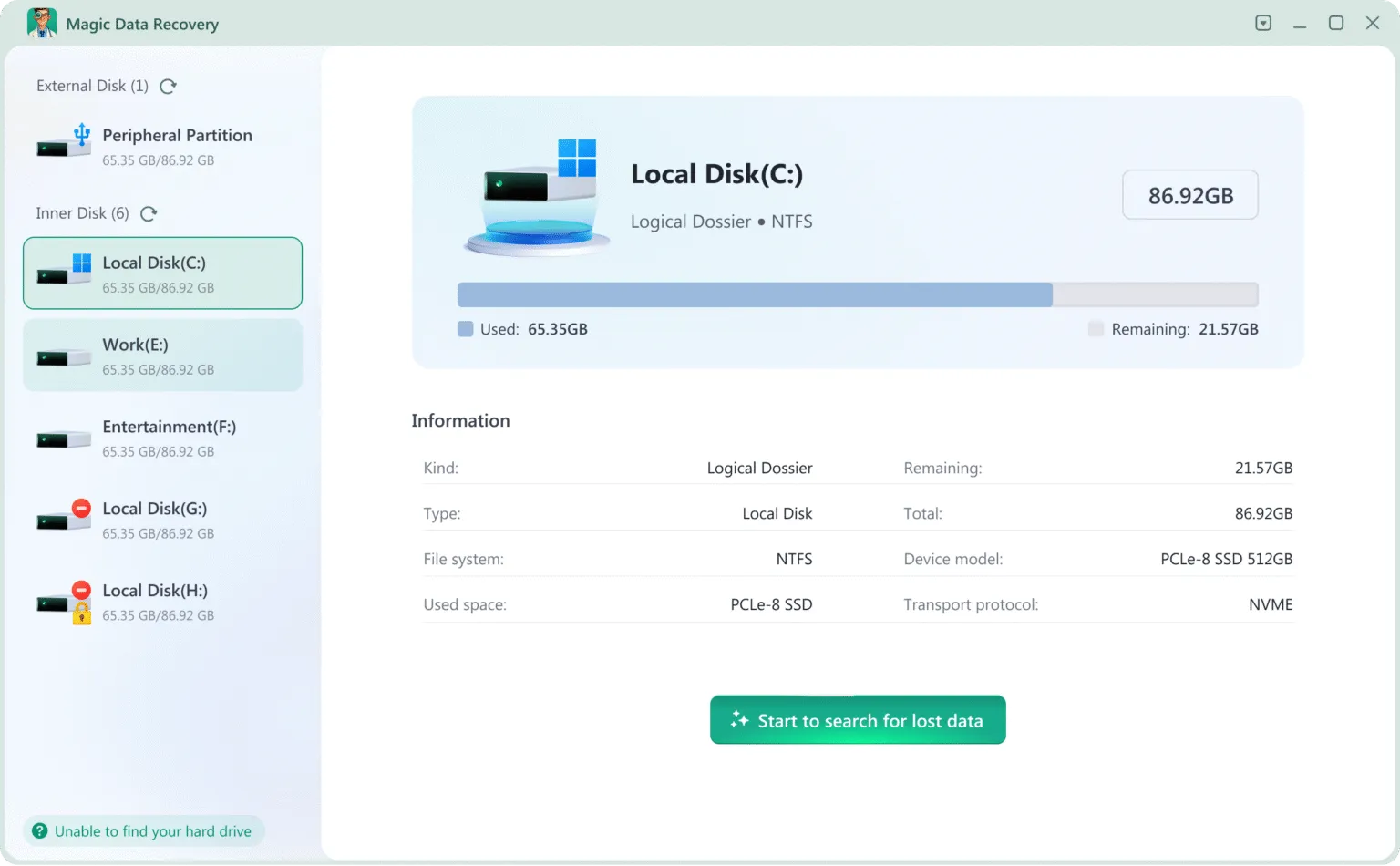
3. Deixe a varredura ser executada. Use os filtros de caminho, tipo de arquivo, data, tamanho e nome para refinar os resultados.
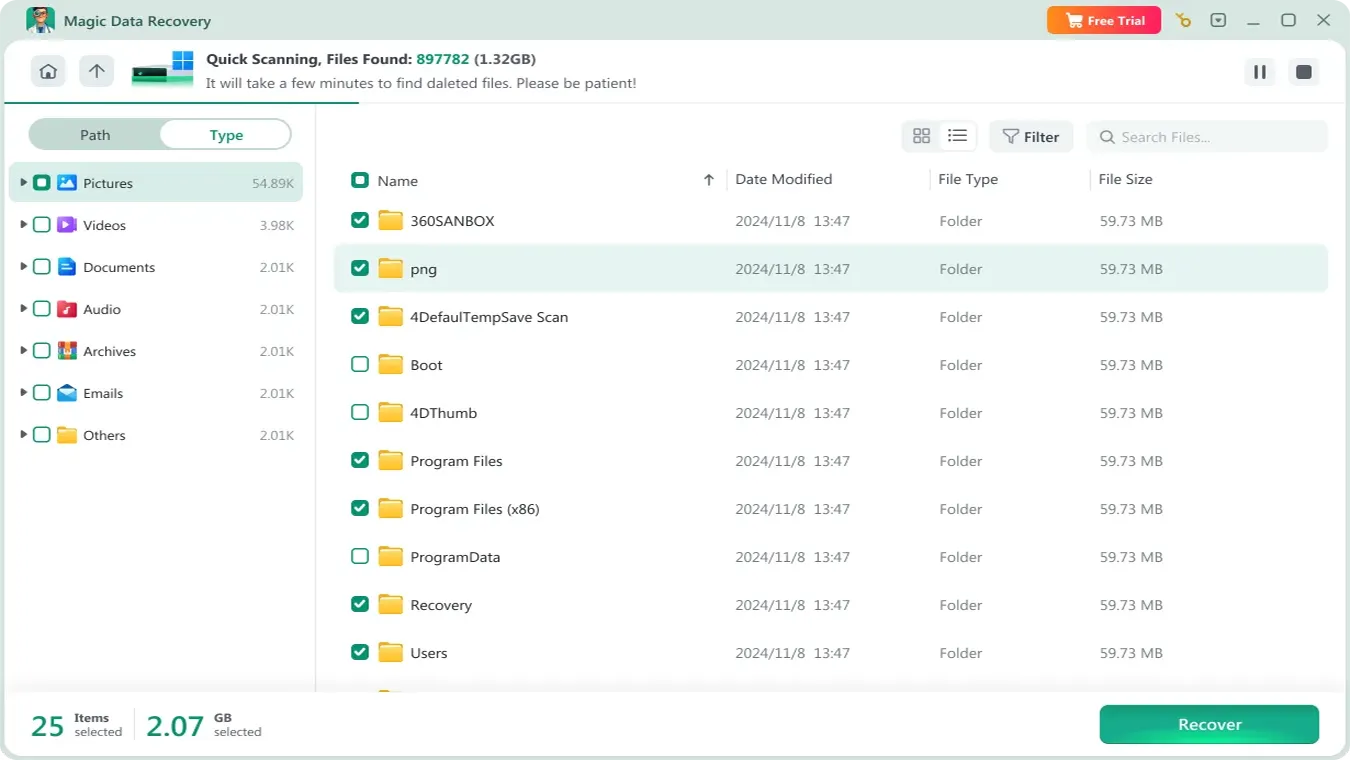
4. Visualize documentos, fotos, vídeos ou outros arquivos compatíveis. Um nome conhecido, por si só, não comprova que o conteúdo esteja intacto.

5. Selecione os itens necessários e recupere-os em uma unidade separada e em boas condições. Nunca salve os resultados no disco que está sendo verificado.
A principal vantagem é a verificação. O fluxo de trabalho “digitalizar-visualizar-recuperar” permite que usuários comuns do Windows inspecionem os dados encontrados antes de escolher um destino seguro. Além disso, é mais prático do que um método de recuperação de arquivos excluídos com finalidade única quando não se tem certeza se a operação malsucedida envolveu exclusão, formatação ou um sistema de arquivos corrompido.
Se você precisar de uma maneira visual de recuperar arquivos após copiar e colar, vale a pena tentar o Magic Data Recovery antes que o uso contínuo do computador sobrescreva os dados perdidos. O Guia do usuário do Magic Data Recovery explica a interface e as etapas de recuperação com mais detalhes.
Nenhuma ferramenta de recuperação pode garantir a recuperação de todos os arquivos. Os resultados dependem da atividade de sobrescrita, do estado da unidade, da fragmentação, da criptografia e da tecnologia de armazenamento. Em um SSD, TRIM pode apagar blocos excluídos, às vezes rapidamente. É por isso que interromper as gravações e iniciar a verificação imediatamente é mais importante do que tentar primeiro vários utilitários de reparo.
Qual método de recuperação você deve escolher?
Método | Melhor para | Principal limitação |
Verificar origem/destino | Um lance incompleto ou errado | Não é possível recuperar dados excluídos |
Ctrl + Z | Essa foi a última ação do Explorer | Pode reverter a ação incorreta realizada recentemente |
Pesquisa do Windows | Os arquivos existem, mas foram movidos para outro local | Não é possível localizar conteúdo não indexado ou excluído de maneira confiável |
Lixeira/OneDrive | Uma exclusão acidental ou sincronizada | Abrange apenas os itens mantidos nesse local |
Histórico do arquivo/Versões anteriores | Já havia um backup antes da perda | Deve ter sido ativado ou estar disponível anteriormente |
Recuperação de arquivos do Windows | Usuários experientes da linha de comando | Sem visualização prévia; é necessário um destino separado |
Magic Data Recovery | Ausência de backup, exclusão definitiva, formatação ou erros no sistema de arquivos | A recuperação depende dos dados remanescentes que não foram sobrescritos |
Erros que podem dificultar a recuperação de arquivos perdidos
Quando Arquivos cortados e colados desapareceram no Windows 10, evite ações que alterem o armazenamento afetado:
- Não formate um pen drive só porque o Windows diz que ele precisa ser formatado.
- Não execute CHKDSK antes de proteger dados importantes. O CHKDSK repara a consistência do sistema de arquivos; ele não foi projetado para recuperar todos os arquivos perdidos e pode alterar os metadados.
- Não instale softwares de recuperação nem salve os itens recuperados na unidade de origem.
- Não desfragmente um HDD nem otimize um SSD após a perda.
- Não continue tentando fazer uma transferência para um dispositivo instável.
- Não abra um disco rígido fisicamente danificado nem execute varreduras repetidas nele.
Se os arquivos forem essenciais para os negócios e a unidade apresentar sinais físicos de falha, pare de tentar consertá-la por conta própria. O valor dos dados — e não o preço da unidade — deve orientar essa decisão.
Como evitar a perda de dados ao copiar e colar da próxima vez
No caso de arquivos importantes, substitua o procedimento de copiar e colar por uma rotina de “verificar e depois excluir”:
- Copie a pasta para o destino.
- Compare o número de arquivos e o tamanho total.
- Abra vários arquivos importantes, especialmente arquivos compactados grandes, vídeos e bancos de dados de projetos.
- Guarde o original até que a cópia de segurança ou a cópia de destino tenha sido verificada.
- Exclua o arquivo original somente quando tiver certeza de que a transferência foi concluída.
Para um trabalho de qualidade, siga as Princípio 3-2-1: mantenha três cópias, utilize dois tipos de armazenamento e mantenha uma cópia fora do local. Ejetar com segurança as mídias removíveis, substituir cabos que não sejam confiáveis, monitorar unidades que se desconectam e manter visível o status de sincronização do OneDrive durante transferências de grandes volumes de dados.
Conclusão
Se Arquivos cortados e colados desapareceram no Windows 10, primeiro verifique se os arquivos ainda estão na origem, se foram colocados na pasta errada, se estão ocultos ou se foram redirecionados pelo OneDrive. Em seguida, verifique a Lixeira e os backups. Essas opções são rápidas, gratuitas e apresentam menor risco de alterar os dados recuperáveis.
Quando não restar nenhuma cópia normal, Magic Data Recovery Vale a pena experimentar, pois ele realiza uma varredura além do Explorador de Arquivos e oferece suporte à exclusão, formatação, erros no sistema de arquivos e outras situações de perda lógica de dados em um único fluxo de trabalho guiado. Pare de usar o disco afetado, visualize o que a varredura encontrar e salve os arquivos recuperados em outro local.
Para conhecer mais princípios de recuperação segura e soluções relacionadas, volte à guia de recuperação de arquivos excluídos.
Compatível com Windows 7/8/10/11 e Windows Server
Perguntas frequentes sobre o desaparecimento de arquivos ao copiar e colar no Windows 10
Para onde vão os arquivos quando eu os recorto, mas não os colo?
Normalmente, eles permanecem na pasta original até que a transferência seja concluída. A ação “Cortar” marca os itens para transferência; ela não cria um backup no Histórico da Área de Transferência. Volte à pasta de origem e, em seguida, tente pressionar Ctrl + V uma vez no destino pretendido, caso os itens ainda existam.
O atalho Ctrl + Z consegue recuperar arquivos perdidos durante o processo de cortar e colar?
Ctrl + Z pode desfazer uma ação recente bem-sucedida, desde que essa seja a última ação relevante realizada no Explorador de Arquivos. Use-o imediatamente e verifique ambos os locais. Após outras operações com arquivos, o atalho pode desfazer uma ação diferente, portanto, tentativas repetidas podem causar mais confusão.
Por que meus arquivos desapareceram depois que os movi para um pen drive?
O pen drive pode ter se desconectado, apresentado um erro no sistema de arquivos, recebido os arquivos em outra pasta ou apresentado falha antes que a transferência fosse concluída. Verifique ambos os locais sem formatar o pen drive. Se os arquivos não aparecerem em nenhum dos dois, faça uma varredura em cada dispositivo separadamente e recupere-os em um terceiro dispositivo de armazenamento.
Os arquivos copiados e colados ficam armazenados na área de transferência do Windows 10?
Não funciona como um backup para recuperação. A área de transferência pode armazenar informações sobre os arquivos selecionados e a operação de movimentação solicitada, mas o Histórico da Área de Transferência não é um repositório para recuperação de arquivos. Se os arquivos originais foram excluídos ou o disco ficou inacessível, a combinação de teclas Win + V não irá reconstruir seu conteúdo.
É possível recuperar arquivos cortados sem usar um software?
Sim, se os arquivos foram extraviados, ainda estiverem na Lixeira ou no OneDrive, ou estiverem protegidos pelo Histórico de Arquivos, pelas Versões Anteriores ou por outro backup. A pesquisa e a restauração do backup devem ser as primeiras medidas a serem tomadas. Caso não haja uma cópia disponível, pode ser necessário utilizar um software de varredura de armazenamento.
Por que os arquivos que sumiram não estão na Lixeira?
Normalmente, uma operação de remoção não utiliza a Lixeira. Arquivos excluídos de mídias removíveis, compartilhamentos de rede, com a combinação Shift + Delete ou após uma exclusão em grande volume também podem ignorá-la. Verifique a origem, o destino, a Lixeira na nuvem, os backups e, em seguida, o dispositivo de armazenamento afetado.
O Magic Data Recovery consegue recuperar arquivos perdidos durante uma transferência que deu errado?
Ele pode fazer uma varredura no dispositivo de origem ou de destino em busca de arquivos recuperáveis após exclusão, formatação ou erros no sistema de arquivos. O sucesso depende de os dados ainda estarem presentes no meio de armazenamento e não terem sido sobrescritos. Salve os itens recuperados em uma unidade diferente que esteja em boas condições.
Devo executar o CHKDSK quando os arquivos somem após copiar e colar?
Mas não sem antes proteger os dados importantes. O CHKDSK repara as estruturas do sistema de arquivos e pode alterar os metadados; portanto, não é a primeira medida de recuperação mais segura. Primeiro, procure, restaure um backup ou verifique e copie os arquivos recuperáveis; só então proceda com os reparos no sistema de arquivos, depois que os dados estiverem protegidos.

Jason é especialista em recuperação de dados e suporte técnico, com mais de 15 anos de experiência prática. Ele tem trabalhado extensivamente com usuários finais, resolvendo casos complexos de perda de dados e oferecendo soluções práticas de recuperação para exclusões acidentais, unidades formatadas, sistemas de arquivos danificados, partições perdidas, falhas de sistema e outras emergências de recuperação. Sua especialização também abrange backup e restauração, reparo de arquivos e recuperação de desastres, com forte ênfase em orientações seguras, confiáveis e tecnicamente precisas.