
Cómo encontrar un archivo que ha desaparecido
Un informe desaparece de «Documentos». Una carpeta de fotos ya no está en el escritorio. Sabes que el archivo existía ayer, pero Windows no lo encuentra hoy. Si te estás preguntando Cómo encontrar un archivo que ha desaparecido, no des por hecho que se haya borrado definitivamente. Es posible que se haya movido, que esté oculto, que se haya sincronizado con otra ubicación o que se haya abierto en un perfil de Windows diferente. Si se ha borrado, actuar con rapidez puede aumentar las posibilidades de recuperarlo.
Esta guía sigue un orden seguro: localizar el archivo, comprobar los lugares donde se guardan copias y escanear la unidad original solo cuando las búsquedas habituales no den resultado. Para obtener una explicación más detallada de los casos de eliminación recuperables, consulta Amagicsoft‘s guía de recuperación de archivos eliminados. Sin embargo, antes de nada, deja de guardar datos nuevos en la unidad afectada si es posible borrar el archivo. Las nuevas operaciones de escritura pueden sobrescribir el espacio que aún contiene el archivo perdido.
Índice
¿Por qué ha desaparecido mi archivo?
La mayoría de los archivos que faltan se pueden clasificar en dos grupos: o bien el archivo sigue existiendo, pero Windows ya no lo muestra donde cabría esperar, o bien su registro de directorio se ha eliminado o está dañado.
Las causas más comunes son:
- Traslado, cambio de nombre o eliminación accidentales
- Atributos ocultos o un índice de búsqueda de Windows incompleto
- Un perfil de usuario de Windows temporal o diferente
- Problema de redireccionamiento de carpetas de OneDrive o de sincronización
- La cuarentena del antivirus o una actualización de Windows
- Formateo, malware o daños en el sistema de archivos
La función de búsqueda de Windows puede localizar un archivo que se haya movido, pero no puede localizar una entrada de directorio que se haya eliminado. No es necesario utilizar un programa de recuperación cuando el archivo simplemente se encuentra en otra cuenta de usuario. Por lo tanto, Cómo encontrar un archivo que ha desaparecido Empieza con un diagnóstico, no con una orden de reparación.
Cómo encontrar un archivo que ha desaparecido: elige la solución adecuada
Toma el síntoma como punto de partida, en lugar de probar todos los métodos al azar.
Lo que se nota | Causa probable | El mejor punto de partida |
Un archivo ha desaparecido después de que organizaras las carpetas | El archivo se ha movido o se le ha cambiado el nombre | Buscar en este ordenador |
Una carpeta parece estar vacía, pero sigue ocupando espacio en el disco duro | Elementos ocultos, cambios en el perfil o un problema con el sistema de archivos | Mostrar archivos ocultos y comprobar las carpetas de los usuarios |
Se han modificado el escritorio o los documentos tras la configuración de OneDrive | Problema de redirección o sincronización de carpetas conocidas | Comprueba las carpetas de OneDrive locales y en línea |
Los archivos desaparecieron tras una actualización de Windows | Perfil temporal o datos migrados | Comprueba las carpetas C:\Users y Windows.old |
Un archivo EXE o un archivo comprimido que había descargado ha desaparecido | Cuarentena del antivirus | Consultar el historial de protección |
El archivo no aparece en la búsqueda, en la Papelera de reciclaje ni en las copias de seguridad | Eliminación o daño en el sistema de archivos | Escanear con Magic Data Recovery |
Método 1: Busca en todo el ordenador, no solo en la carpeta antigua
Es la forma más rápida de Encontrar un archivo perdido en Windows cuando se le cambió el nombre o se trasladó.
- Pulsa Windows + E para abrir el Explorador de archivos.
- Seleccione Este PC en el panel de la izquierda.
- Introduce el nombre completo del archivo o una parte distintiva del mismo en el cuadro de búsqueda.
- Haz clic con el botón derecho del ratón en un resultado y selecciona Abrir la ubicación del archivo.
- Ordenar los resultados por Fecha de modificación, Tipo, o Talla si aparecen muchos resultados.
¿No recuerdas el nombre exacto? Busca por extensión: *.docx, *.xlsx, *.jpg o *.pdf. También puedes utilizar un intervalo de fechas o una palabra concreta que aparezca en un documento indexado.
Si un archivo debería aparecer pero no lo hace, abre Configuración > Privacidad y seguridad > Búsqueda en Windows > Opciones avanzadas de indexación. Comprueba que la carpeta esté incluida o ejecuta el solucionador de problemas de búsqueda e indexación.
Método 2: Mostrar los archivos ocultos y comprobar sus atributos
Si un El archivo ha desaparecido del ordenador Si no aparece ningún mensaje de confirmación al eliminar carpetas, es posible que simplemente esté oculta.
- Abra el Explorador de archivos.
- Seleccione Ver > Mostrar > Elementos ocultos.
- Vuelve a la carpeta en la que se guardó el archivo por última vez.
- Si aparece en color difuminado, haz clic con el botón derecho del ratón sobre él y selecciona Propiedades.
- Borrar Oculto, y seleccione Solicitar.
Si falta una carpeta, aplica el cambio a sus subcarpetas y archivos cuando Windows te lo solicite. Evita acceder a los archivos protegidos del sistema operativo con el único fin de buscar un documento personal; una modificación accidental podría dañar Windows.
Método 3: Revisa la Papelera de reciclaje y las ubicaciones recientes
Abre la Papelera de reciclaje y busca el nombre del archivo. Cambia a la vista «Detalles» y, a continuación, ordena por Fecha de eliminación o Ubicación original. Si encuentras el elemento, haz clic con el botón derecho del ratón sobre él y selecciona Restaurar. Windows lo devuelve a su carpeta anterior.
La combinación de teclas Mayús+Supr, una Papelera de reciclaje vacía, algunos archivos eliminados de unidades extraíbles y los archivos de gran tamaño pueden eludir esta medida de seguridad. En esos casos, evita crear nuevos archivos en la misma unidad y pasa al método de recuperación que se indica a continuación.
Método 4: Busca en el perfil de usuario de Windows adecuado
Algo sorprendentemente habitual Archivo que falta en Windows 11 Esto suele ocurrir tras una actualización, un reinicio, un cambio de cuenta o un error en el perfil. El escritorio puede parecer nuevo, pero los archivos originales siguen estando en otro perfil.
Abre C:\Users y revisa las carpetas que pertenezcan a cuentas que reconozcas. En concreto, comprueba:
- C:\Usuarios\TuNombre\Escritorio
- C:\Usuarios\TuNombre\Documentos
- C:\Usuarios\TuNombre\Descargas
- C:\Usuarios\TuNombre\Imágenes
Si Windows muestra el mensaje “No podemos iniciar sesión en tu cuenta”, guarda el trabajo nuevo en un dispositivo externo antes de cerrar sesión; los cambios realizados en el perfil temporal pueden desaparecer. A continuación, reinicia el equipo e inicia sesión en la cuenta correcta.
Tras una actualización importante, comprueba la carpeta C:\Windows.old\Users\TuNombre. Copia los datos personales lo antes posible, ya que Windows no conserva la carpeta Windows.old indefinidamente.
Método 5: Buscar en OneDrive, tanto en línea como localmente
OneDrive puede redirigir las carpetas «Escritorio», «Documentos» e «Imágenes». Por ello, es posible que un archivo desaparezca de su ruta local original, aunque siga estando en C:\Users\TuNombre\OneDrive o en la nube.
Compruebe estos lugares:
- Revisa las carpetas «Escritorio», «Documentos» e «Imágenes» dentro de la carpeta local de OneDrive.
- Inicia sesión en OneDrive.com y utiliza Buscar en todo.
- Consulte Mis archivos, Recientes, Compartido, y la Papelera de reciclaje en línea.
- Confirma la cuenta y comprueba si hay errores en el icono de sincronización.
Prueba con descripciones, etiquetas, fechas y lugares, además del nombre del archivo. Los usuarios de Microsoft 365 que cumplan los requisitos también pueden restaurar OneDrive a un punto anterior, pero una restauración general puede afectar a los archivos más recientes.
Método 6: Revisar la cuarentena del antivirus
Si ha desaparecido un instalador, un script, un archivo comprimido o un ejecutable que hayas descargado, abre Seguridad de Windows > Protección contra virus y amenazas > Historial de protección. Las herramientas antivirus de terceros cuentan con su propia página de cuarentena o de historial de eventos.
Comprueba el nombre de la detección, la ruta original y la hora. Restaura el elemento solo si confías en su origen y has comprobado que se trata de un falso positivo.
Método 7: Restaurar una copia desde el historial de archivos o desde versiones anteriores
Este método solo funciona si ya existía una copia de seguridad o un punto de restauración antes de que el archivo desapareciera.
- Abre la carpeta en la que se encontraba anteriormente el archivo.
- Haga clic con el botón derecho en la carpeta y seleccione Propiedades.
- Abrir Versiones anteriores.
- Selecciona una versión anterior a la pérdida.
- Elija Abrir para revisarlo antes de utilizarlo Restaurar.
La vista previa evita que se sustituya el contenido actual que resulta útil. También puedes buscar Recupera tus archivos con «Historial de archivos» desde el inicio. Instrucciones sobre «Historial de archivos» de Microsoft Explica cómo restaurar una copia anterior, siempre que el Historial de archivos la haya guardado antes de que se produjera la pérdida.
Método 8: Buscar un archivo borrado con Magic Data Recovery
Si la búsqueda, la comprobación de elementos ocultos, los perfiles de usuario, OneDrive, la Papelera de reciclaje y las copias de seguridad no dan ningún resultado, es posible que el archivo ya no tenga una entrada normal en el directorio. Esto suele ocurrir tras un borrado accidental, un formateo, un daño en el sistema de archivos, la actividad de malware o una transferencia interrumpida.
Magic Data Recovery subsana esa carencia. En lugar de basarse en el índice de Windows, analiza un disco duro, un SSD, una unidad USB o una tarjeta de memoria en busca de datos recuperables. El análisis rápido y avanzado, los filtros y la vista previa ayudan a identificar el elemento adecuado. Es compatible con situaciones de eliminación, formateo y errores del sistema de archivos.
Cómo utilizar Magic Data Recovery
1. Descarga e instala Magic Data Recovery. Si es posible, instálalo en una unidad distinta a aquella en la que se ha perdido el archivo.
Compatible con Windows 7/8/10/11 y Windows Server
2. Inicia el programa y selecciona la partición original o el dispositivo de almacenamiento.
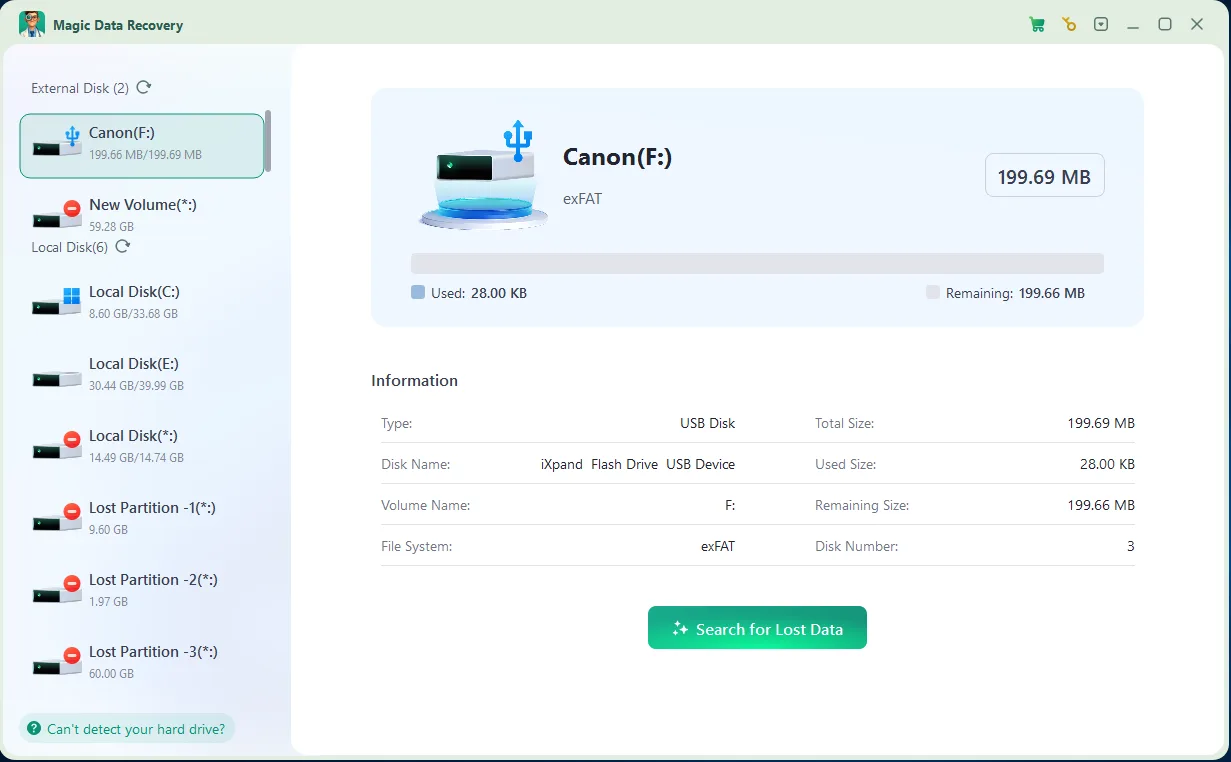
3. Inicia el análisis. Deja que finalice el análisis más exhaustivo si el elemento no aparece en los primeros resultados.
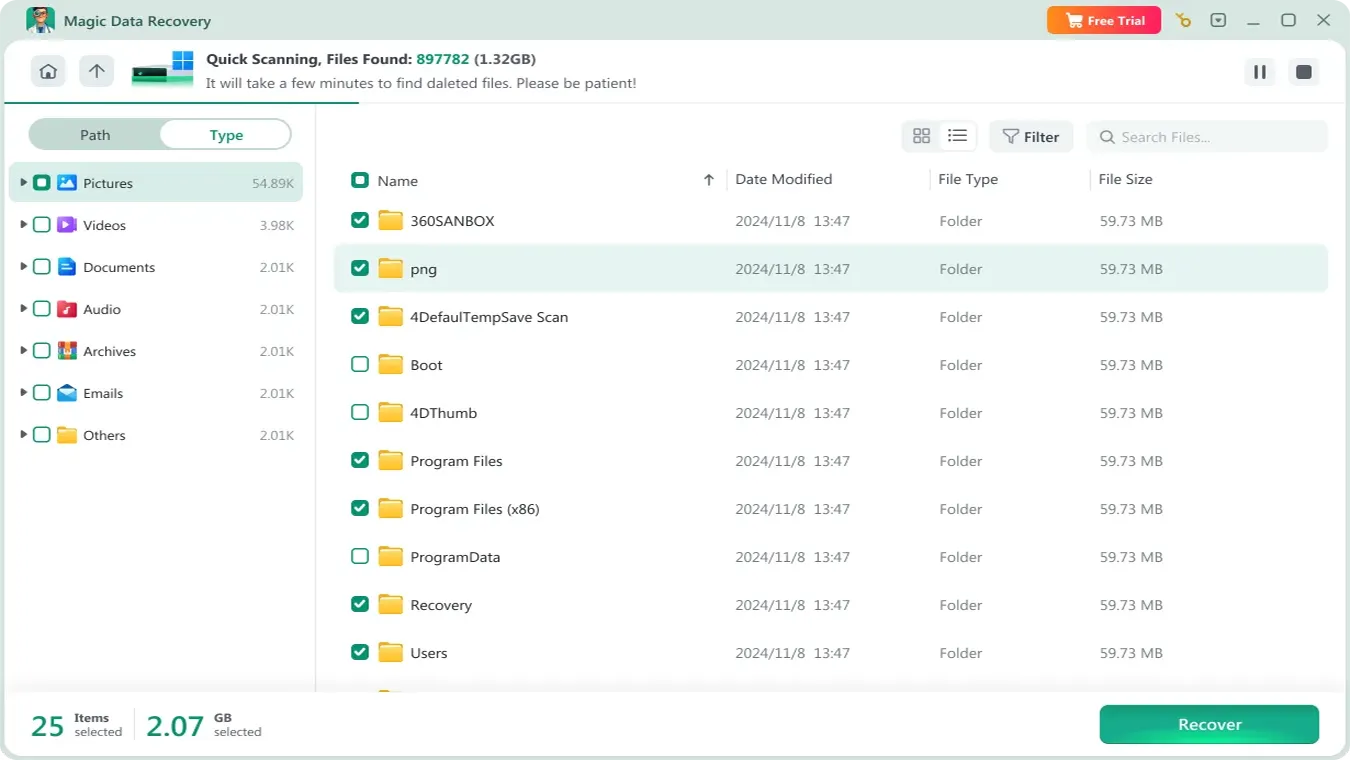
4. Filtra por nombre de archivo, tipo, ruta, tamaño o fecha y, a continuación, previsualiza los archivos disponibles.
5. Selecciona el archivo y recupéralo en otra unidad.
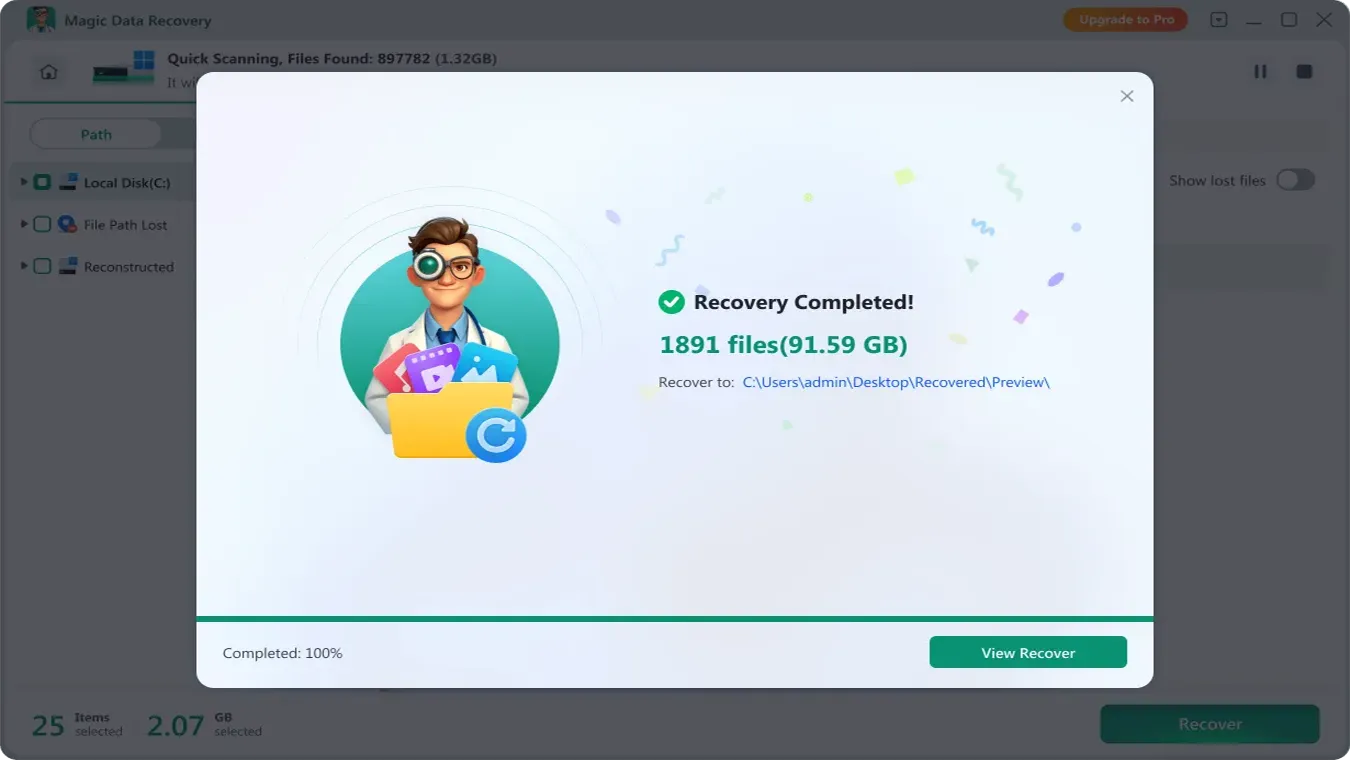
Esto resulta más fiable que la búsqueda habitual cuando Windows ya no muestra el archivo, ya que el análisis examina los registros de almacenamiento y las firmas de los archivos, y no solo las entradas activas del índice. Ninguna herramienta puede recuperar datos sobrescritos, y la función TRIM de los SSD puede borrar los bloques eliminados.
Si buscas una solución más eficaz tras el fallo de las comprobaciones integradas, prueba Magic Data Recovery antes de reparar o formatear la unidad afectada.
Lo que no debes hacer antes de encontrar el archivo perdido
Al aprender Cómo encontrar un archivo que ha desaparecido, el orden en que se realizan las acciones puede influir en el resultado.
- No sigas utilizando la unidad afectada. Las descargas, las actualizaciones y los archivos nuevos pueden sobrescribir los datos eliminados.
- No instales el software de recuperación en esa misma unidad si hay otra unidad disponible. El propio programa de instalación escribe datos.
- No formatees una unidad solo porque Windows indique que no se puede leer. Recupera primero los archivos importantes.
- No ejecutes CHKDSK como primer paso de recuperación. CHKDSK repara las estructuras del sistema de archivos; no recupera los archivos eliminados y puede modificar los metadatos dañados.
- No guardes los archivos recuperados en la unidad original. Esto puede sobrescribir otros elementos que aún se pueden recuperar.
Si la unidad hace ruido, se desconecta repetidamente o desaparece de «Administración de discos», deja de intentar recuperarla con programas informáticos. Un fallo físico puede requerir acudir a un laboratorio de recuperación profesional.
Cómo evitar que los archivos vuelvan a desaparecer
Una vez que el archivo esté a salvo, activa una copia de seguridad con control de versiones, como «Historial de archivos», y guarda otra copia en un dispositivo independiente o en un servicio en la nube de confianza. La sincronización por sí sola no siempre equivale a una copia de seguridad, ya que las eliminaciones también pueden sincronizarse. Averigua dónde almacena OneDrive las carpetas protegidas, revisa los eventos del antivirus y sustituye cualquier unidad que muestre errores de forma repetida tras copiar sus datos.
Conclusión
La forma más segura de determinar Cómo encontrar un archivo que ha desaparecido consiste en pasar de la comprobación de ubicaciones a la recuperación. Busca en este PC, muestra los elementos ocultos, revisa la Papelera de reciclaje, comprueba el perfil de Windows y revisa OneDrive y las copias de seguridad. Estos métodos resuelven muchos casos sin modificar los datos originales.
Cuando el archivo no se encuentra en ninguna de las ubicaciones habituales, Magic Data Recovery Merece la pena recomendarlo porque puede buscar, más allá del índice de Windows, datos perdidos por borrado, formateo o errores del sistema de archivos. Además, te permite filtrar y previsualizar los resultados antes de la recuperación. Para conocer más opciones prácticas y consejos de prevención, vuelve a visitar la página de Amagicsoft: guía de recuperación de archivos eliminados, y guarda siempre los archivos recuperados en otra unidad.
Compatible con Windows 7/8/10/11 y Windows Server
Preguntas frecuentes sobre cómo encontrar un archivo que ha desaparecido
¿Dónde está mi archivo si no lo he borrado?
Es posible que se haya movido a otra carpeta, que esté oculto, que se haya sincronizado con OneDrive o que se encuentre en otro perfil de usuario de Windows. Busca en «Este PC», activa la opción «Elementos ocultos», revisa la carpeta C:\Users y comprueba OneDrive en línea antes de dar por hecho que el archivo se ha eliminado.
¿Cómo puedo encontrar un archivo que ha desaparecido en Windows 11?
Abre el Explorador de archivos, selecciona «Este PC» y busca por nombre completo, parte del nombre o extensión. A continuación, comprueba los elementos ocultos, la Papelera de reciclaje, tu perfil de usuario original, OneDrive y las versiones anteriores. Si no lo encuentras en ninguno de ellos, analiza la unidad original con un programa de recuperación.
¿Por qué han desaparecido los archivos de mi escritorio tras una actualización de Windows?
Es posible que Windows te haya iniciado sesión en un perfil temporal, haya cargado otra cuenta, haya redirigido el escritorio a OneDrive o haya trasladado datos antiguos a la carpeta «Windows.old». Comprueba las carpetas C:\Users, la carpeta de escritorio de OneDrive y C:\Windows.old\Users antes de modificar la configuración del sistema.
¿Puede Windows Search encontrar un archivo eliminado?
Normalmente no. La búsqueda de Windows localiza archivos activos a los que el sistema aún puede acceder e indexar. Es posible que un archivo eliminado aparezca brevemente en los resultados obsoletos, pero el enlace no se abrirá. Comprueba la Papelera de reciclaje, las copias de seguridad o, en su lugar, realiza un análisis de recuperación.
¿Por qué mi archivo perdido no está en la Papelera de reciclaje?
Es posible que el archivo se haya eliminado con Shift+Supr, se haya borrado de un soporte extraíble, se haya vaciado de la papelera de reciclaje o que su tamaño supere el límite configurado. Los archivos sincronizados en la nube pueden aparecer, en su lugar, en la papelera de reciclaje en línea del proveedor. De lo contrario, revisa el dispositivo de almacenamiento original lo antes posible.
¿Puedo recuperar un archivo que se ha perdido sin tener una copia de seguridad?
Es posible. En primer lugar, descarta que se trate de un archivo movido, oculto, sincronizado o en cuarentena. Si se ha eliminado, un programa de recuperación podría encontrar registros restantes o firmas del archivo. El éxito depende de si se ha sobrescrito el archivo con datos nuevos y, en el caso de los SSD, de si la función TRIM ha borrado sus bloques.
¿Debería ejecutar CHKDSK cuando desaparecen archivos de repente?
Pero antes, asegúrate de proteger los datos importantes. CHKDSK repara las estructuras del sistema de archivos y puede alterar los metadatos dañados; no es una herramienta para recuperar archivos borrados. Copia primero los archivos que se puedan leer o realiza un análisis de recuperación y, a continuación, diagnostica y repara la unidad una vez que tus datos estén a salvo.
¿Sirve de algo Magic Data Recovery si ya no existe el nombre del archivo?
Sí, es posible que siga identificando el contenido recuperable mediante la firma del archivo, incluso cuando no se disponga del nombre original o de la ruta de la carpeta. Utiliza los filtros por tipo de archivo y la vista previa para verificar los resultados. La recuperación sigue dependiendo del estado de la unidad y de si los bloques de almacenamiento correspondientes han sido sobrescritos.

Jason es un especialista en recuperación de datos y asistencia técnica con más de 15 años de experiencia práctica. Ha trabajado intensamente con usuarios finales, resolviendo casos complejos de pérdida de datos y ofreciendo soluciones prácticas de recuperación para eliminaciones accidentales, unidades formateadas, sistemas de archivos dañados, particiones perdidas, fallos del sistema y otras situaciones de emergencia relacionadas con la recuperación. Su experiencia también abarca las copias de seguridad y la restauración, la reparación de archivos y la recuperación ante desastres, con especial énfasis en ofrecer una orientación segura, fiable y técnicamente precisa.