
Guida pratica al recupero dei file cancellati
L'eliminazione accidentale di dati importanti può causare un'ansia immediata, soprattutto quando non si è sicuri se recuperare i file cancellati è ancora realistico. Molti pensano che la cancellazione significhi una perdita permanente, ma spesso questa supposizione non è corretta.
This guide explains how file deletion actually works, what determines the success of recovering a deleted file, and which metodi di recupero dei file cancellati are safest in everyday situations. It also shows when built-in Windows options are enough and when a dedicated solution like Magic Data Recovery becomes a practical choice.
Supporta Windows 7/8/10/11 e Windows Server
Vi chiedete se i vostri file possono essere recuperati? Scoprire in pochi secondi con il nostro controllo rapido qui sotto.
Valutazione del recupero dati
Rispondete a 3 rapide domande per valutare le vostre possibilità di recupero
Indice dei contenuti
Recuperare i file cancellati è davvero possibile?
In molte situazioni, recuperare i file cancellati is possible because deletion usually removes file references rather than erasing the actual data immediately. The file system marks the occupied storage space as available for reuse, but the original content may remain intact until new data overwrites it.
However, recovery success depends heavily on what happens after deletion. Continued use of the same drive increases the risk of overwriting deleted data and reduces the chance of successful recovery.
Therefore, if an important file disappears, stop unnecessary activity on the affected drive as soon as possible. Avoid downloading files, installing programs, or copying new data to it until you determine the best recovery method.
Cosa succede quando un file viene cancellato?
When a file is deleted, the file system updates its tabella dei file instead of wiping the file contents immediately. As a result:
- The file entry disappears from normal view.
- The data blocks may remain on the disk.
- The occupied space becomes available for reuse by the system.
Questo meccanismo spiega perché Recupero di un file cancellato can still succeed if no new data has replaced the original content.
The situation can be different on SSDs. Features such as TRIM may allow deleted blocks to be cleared more quickly, which can significantly reduce the recovery window.
Fattori chiave che influenzano il recupero di un file cancellato
Diversi fattori influenzano il successo del recupero:
- Time elapsed since deletion: Recently deleted files generally have a better chance of recovery.
- Disk usage after deletion: New files may overwrite the storage space previously occupied by deleted data.
- Storage device type: HDDs, SSDs, USB drives, and SD cards do not always handle deleted data in the same way.
- Metodo di cancellazione: Using Shift + Delete or svuotare il Cestino bypasses normal Recycle Bin restoration.
- Available backups: File History or another backup can provide a safer recovery path.
- System features: TRIM su SSD may make permanently deleted data much harder to recover.
Understanding these variables helps set realistic expectations before recuperare i file cancellati.
Situazioni comuni in cui i file vengono eliminati
I file vengono comunemente persi a causa di:
- Cancellazione accidentale
- Utilizzo di Maiusc + Canc
- Svuotare il cestino
- Errori del file system o problemi logici
- Attività di malware
- Formattazione dell'unità sbagliata
Ogni situazione influisce sulla difficoltà di recupero in modo diverso.
For example, a recently deleted file may still be available in the Recycle Bin, while a file removed with Shift + Delete requires a different approach. Similarly, formatted or logically damaged storage may require scanning rather than simple file restoration.
Come recuperare i file cancellati senza software
Before using recovery software, check whether built-in Windows options still apply. These methods are usually the safest starting point because they do not require scanning deleted disk space.
Undo a Recent Deletion
If you accidentally deleted a file only moments ago, try pressing Ctrl + Z in the folder where the file was stored.
Windows may reverse the most recent deletion and return the file to its original location. This option works best immediately after accidental deletion and before performing many other file operations.
Ripristino dal cestino
Se il file rimane nel Cestino, il ripristino richiede pochi secondi.
- Aperto Cestino.
- Individua il file o la cartella eliminati.
- Fare clic con il tasto destro del mouse e selezionare Ripristino.
Windows riporterà il file nella sua posizione originale.
If you used Shift + Delete or already emptied the Recycle Bin, this method will not be available.
Recupero da backup o cronologia dei file
If you enabled backups before the file was deleted, an earlier version may still exist.
In Windows, open:
Pannello di controllo > Sistema e sicurezza > Cronologia file
Then select Ripristino dei file personali and check whether an earlier copy of the missing file is available.
You can also right-click the folder that originally contained the file, select Proprietà, e controllare Versioni precedenti if that feature was available on your system.
If Recycle Bin and backup-based methods cannot locate the file, a disk-scanning recovery solution may be the next option.
Come recuperare i file cancellati utilizzando Magic Data Recovery
Quando le soluzioni manuali non funzionano più, Magic Data Recovery offers a practical approach to recuperare i file cancellati while minimizing changes to the original storage device.
This can be useful when files were permanently deleted, the Recycle Bin was emptied, or no usable backup exists.
Perché l'Magic Data Recovery funziona bene
Magic Data Recovery focuses on read-only scanning, which helps minimize unnecessary changes to the source drive. It also allows users to preview results before recovery, reducing unnecessary file restoration.
I vantaggi principali includono:
- Modalità di scansione non distruttiva
- Support for common Windows file systems such as NTFS, FAT32, and exFAT
- Anteprima prima del recupero
- Support for HDDs, SSDs, USB drives, SD cards, and other storage media
- Interfaccia semplice per gli utenti di tutti i giorni
Passo dopo passo: Recupero di un file cancellato con Magic Data Recovery
Passo 1: Scaricare e installare Magic Data Recovery
Download Magic Data Recovery and install it on a drive different from the affected one whenever possible.
This precaution helps reduce the risk of overwriting the deleted data you are trying to recover.
Supporta Windows 7/8/10/11 e Windows Server
Fase 2: Selezionare l'unità da scansionare
Open the software and choose the drive or storage device where the files were deleted. Then start the scan from the main interface.
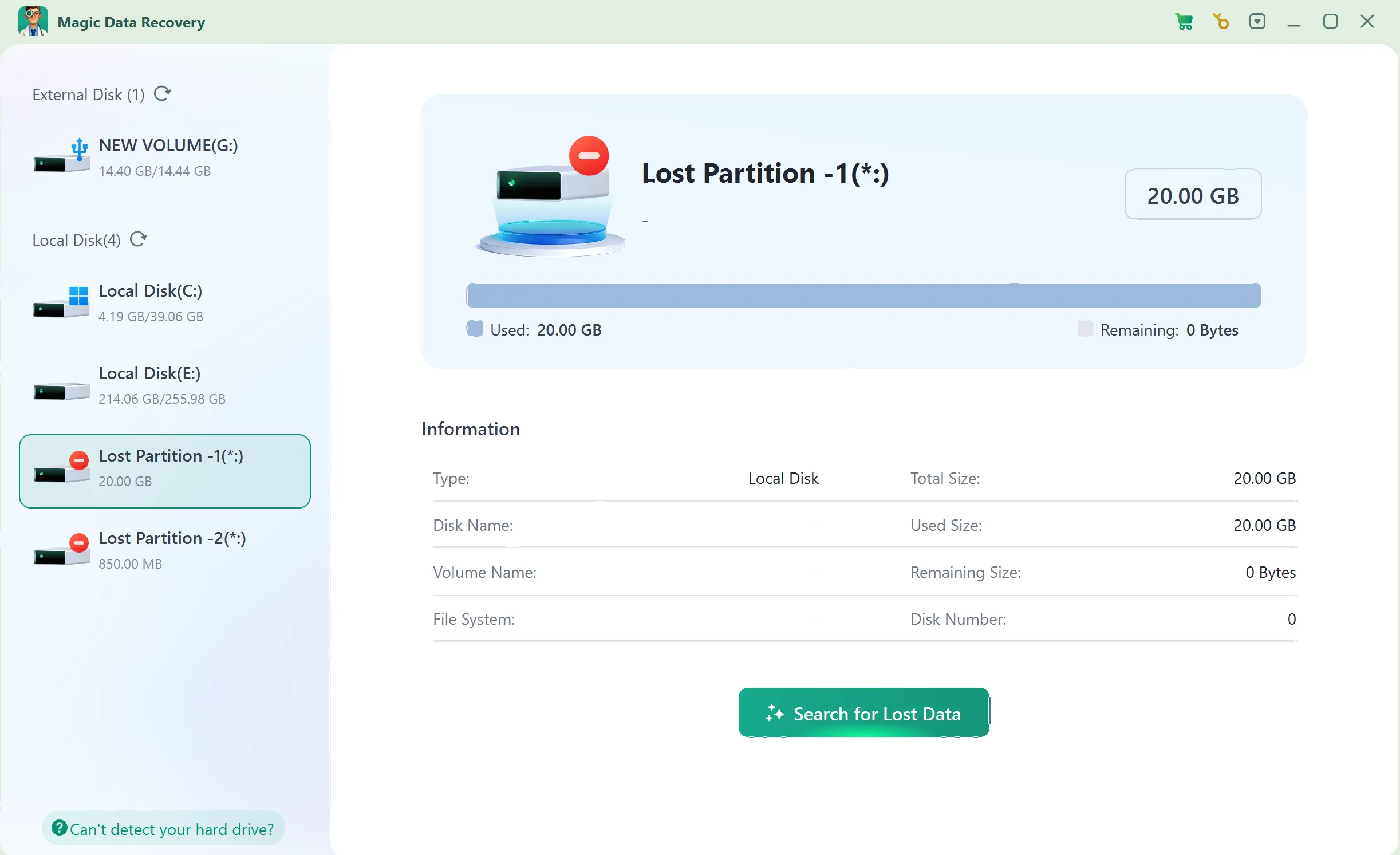
Fase 3: Scansione the Drive for Deleted Files
The program scans the selected drive automatically. As scanning continues, recoverable files appear progressively in the results list.
You can browse the available results during the scan or wait for it to finish for a more complete view.
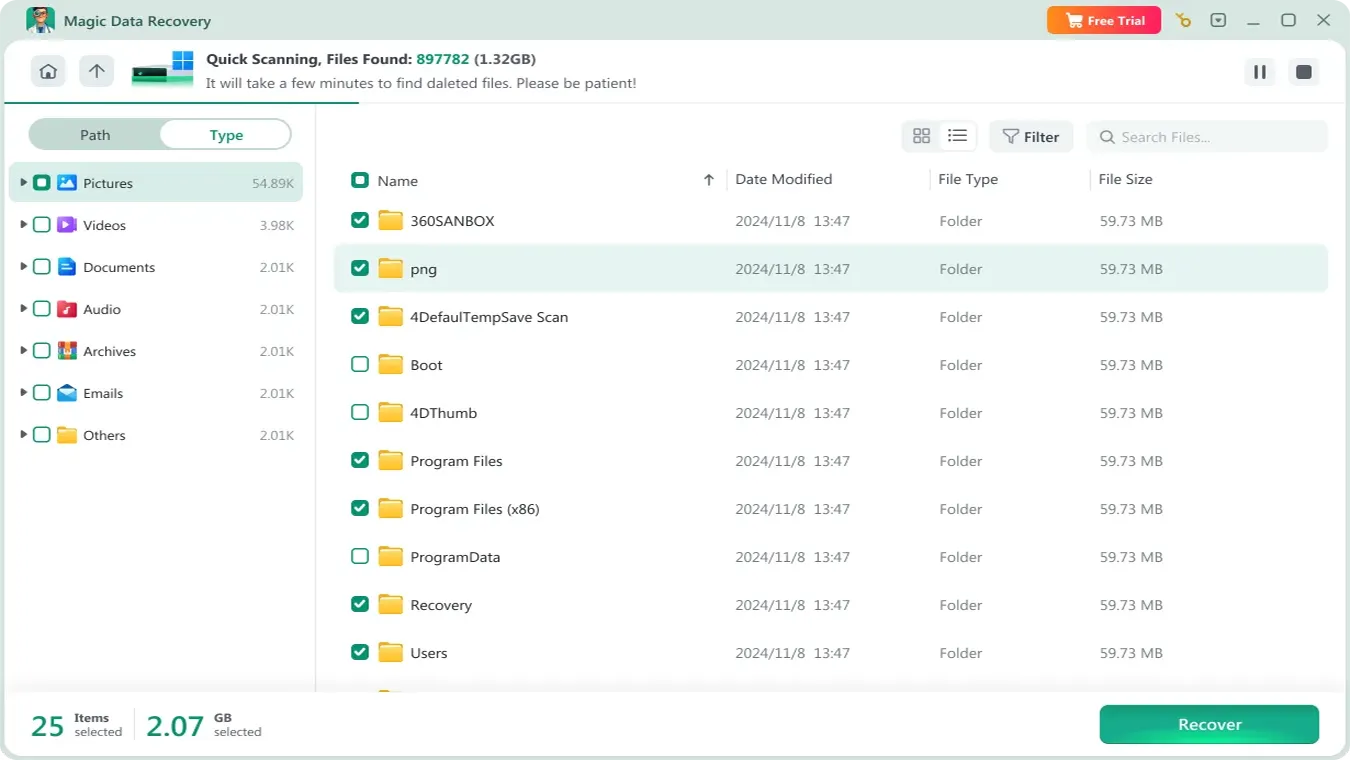
Passo 4: Anteprima Deleted Files Before Recovery
Use the preview feature to confirm the content of files before restoring them.
Previewing helps you identify the files you actually need and check whether their contents appear usable before completing the recovery.

Passo 5: Recupero I file in una posizione sicura
Select the files you need and save them to a different drive or storage device.
Avoid restoring data to the same location from which it was deleted because doing so may overwrite other files that are still recoverable.

Le migliori pratiche per evitare perdite permanenti
Migliorare il successo del recupero:
- Interrompere immediatamente l'utilizzo dell'unità interessata.
- Evitare di installare strumenti di ripristino sullo stesso disco.
- Do not save new files to the affected drive.
- Recover files to a separate location.
- Avoid formatting or repairing the drive before important files are recovered.
- Limit unnecessary repeated scans.
These steps can significantly improve the effectiveness of recuperare i file cancellati, particularly on HDDs, USB drives, and memory cards where deleted data may remain until overwritten.
However, SSD recovery can be less predictable because TRIM and garbage collection may clear deleted blocks even when you have not intentionally written new files.
When Recovering Deleted Files May Not Work
Although many deleted files can be recovered, no recovery method can guarantee success in every situation.
Recovery may no longer be possible if:
- The original data has already been overwritten.
- SSD TRIM has cleared the deleted blocks.
- Secure erase or data-wiping software was used.
- The storage device has serious physical damage.
- Parts of the deleted file have already been replaced by new data.
This is why stopping further use of the affected drive is one of the most important actions after discovering data loss.
Conclusione
Scegliere il giusto approccio per i file eliminati matters when data loss occurs. Start with built-in options such as Undo Delete, Recycle Bin, File History, or Previous Versions whenever they are available.
If the files were permanently deleted and no backup exists, stop using the affected storage device before attempting further recovery.
Magic Data Recovery provides a practical option for scanning the affected drive, previewing recoverable files, and restoring selected data to a safe location. For users who need another method for recuperare i file cancellati, it offers an accessible option when built-in Windows solutions are no longer enough.
Supporta Windows 7/8/10/11 e Windows Server
FAQ sul recupero dei file eliminati
Come si recuperano i file eliminati in modo permanente?
Come posso recuperare un file che ho cancellato per sbaglio?
How do I recover permanently deleted files from Recycle Bin?
I file cancellati possono davvero essere recuperati?
I file eliminati in modo permanente sono davvero scomparsi?
Dove vanno a finire i file eliminati in modo permanente?
Come recuperare i file eliminati se non si trovano nel Cestino?
Quale strumento viene utilizzato per recuperare i file eliminati?

Vasilii è uno specialista del recupero dati con circa 10 anni di esperienza pratica nel settore. Nel corso della sua carriera, ha risolto con successo migliaia di casi complessi riguardanti file cancellati, unità formattate, partizioni perse e file system RAW. La sua esperienza copre sia i metodi di recupero manuale utilizzando strumenti professionali come gli editor esadecimali, sia le soluzioni automatiche avanzate con i software di recupero. La missione di Vasilii è quella di rendere accessibile la conoscenza del recupero dati affidabile sia ai professionisti IT che agli utenti di tutti i giorni, aiutandoli a salvaguardare i loro preziosi beni digitali.