
Um guia prático para recuperar arquivos excluídos
A exclusão acidental de dados importantes pode causar ansiedade imediata, especialmente quando você não tem certeza se recuperação de arquivos excluídos ainda é realista. Muitas pessoas supõem que a exclusão significa perda permanente, mas essa suposição geralmente é incorreta.
This guide explains how file deletion actually works, what determines the success of recovering a deleted file, and which métodos de recuperação de arquivos excluídos are safest in everyday situations. It also shows when built-in Windows options are enough and when a dedicated solution like Magic Data Recovery becomes a practical choice.
Compatível com Windows 7/8/10/11 e Windows Server
Está se perguntando se seus arquivos podem ser recuperados? Saiba mais em segundos com nossa verificação rápida abaixo.
Avaliação da recuperação de dados
Responda a 3 perguntas rápidas para estimar suas chances de recuperação
Índice
A recuperação de arquivos excluídos é realmente possível?
Em muitas situações, recuperação de arquivos excluídos is possible because deletion usually removes file references rather than erasing the actual data immediately. The sistema de arquivos marks the occupied storage space as available for reuse, but the original content may remain intact until new data overwrites it.
However, recovery success depends heavily on what happens after deletion. Continued use of the same drive increases the risk of overwriting deleted data and reduces the chance of successful recovery.
Therefore, if an important file disappears, stop unnecessary activity on the affected drive as soon as possible. Avoid downloading files, installing programs, or copying new data to it until you determine the best recovery method.
O que acontece quando um arquivo é excluído?
When a file is deleted, the file system updates its tabela de arquivos instead of wiping the file contents immediately. As a result:
- The file entry disappears from normal view.
- The data blocks may remain on the disk.
- The occupied space becomes available for reuse by the system.
Esse mecanismo explica por que Recuperação de um arquivo excluído can still succeed if no new data has replaced the original content.
The situation can be different on SSDs. Features such as TRIM may allow deleted blocks to be cleared more quickly, which can significantly reduce the recovery window.
Principais fatores que afetam a recuperação de um arquivo excluído
Vários fatores influenciam o sucesso da recuperação:
- Time elapsed since deletion: Recently deleted files generally have a better chance of recovery.
- Disk usage after deletion: New files may overwrite the storage space previously occupied by deleted data.
- Storage device type: HDDs, SSDs, USB drives, and SD cards do not always handle deleted data in the same way.
- Método de exclusão: Using Shift + Delete or esvaziar a Lixeira bypasses normal Recycle Bin restoration.
- Available backups: File History or another backup can provide a safer recovery path.
- System features: TRIM em SSDs may make permanently deleted data much harder to recover.
Understanding these variables helps set realistic expectations before recuperação de arquivos excluídos.
Situações comuns em que os arquivos são excluídos
Os arquivos geralmente são perdidos devido a:
- Exclusão acidental
- Usando Shift + Delete
- Esvaziando a lixeira
- Erros no sistema de arquivos ou problemas lógicos
- Atividade de malware
- Formatação da unidade errada
Cada situação afeta a dificuldade de recuperação de forma diferente.
For example, a recently deleted file may still be available in the Recycle Bin, while a file removed with Shift + Delete requires a different approach. Similarly, formatted or logically damaged storage may require scanning rather than simple file restoration.
Como recuperar arquivos excluídos sem software
Before using recovery software, check whether built-in Windows options still apply. These methods are usually the safest starting point because they do not require scanning deleted disk space.
Undo a Recent Deletion
If you accidentally deleted a file only moments ago, try pressing Ctrl + Z in the folder where the file was stored.
Windows may reverse the most recent deletion and return the file to its original location. This option works best immediately after accidental deletion and before performing many other file operations.
Restaurar da Lixeira
Se o arquivo permanecer na Lixeira, a restauração levará apenas alguns segundos.
- Aberto Lixeira.
- Encontre o arquivo ou a pasta excluída.
- Clique com o botão direito do mouse e selecione Restaurar.
Windows will return the file to its original location.
If you used Shift + Delete or already emptied the Recycle Bin, this method will not be available.
Recuperação de backup ou histórico de arquivos
If you enabled backups before the file was deleted, an earlier version may still exist.
In Windows, open:
Painel de Controle > Sistema e Segurança > Histórico de Arquivos
Then select Restaurar arquivos pessoais and check whether an earlier copy of the missing file is available.
You can also right-click the folder that originally contained the file, select Propriedades, e verifique Versões anteriores if that feature was available on your system.
If Recycle Bin and backup-based methods cannot locate the file, a disk-scanning recovery solution may be the next option.
Como recuperar arquivos excluídos usando o Magic Data Recovery
Quando as soluções manuais não funcionam mais, Magic Data Recovery offers a practical approach to recuperação de arquivos excluídos while minimizing changes to the original storage device.
This can be useful when files were permanently deleted, the Recycle Bin was emptied, or no usable backup exists.
Por que o Magic Data Recovery funciona bem
Magic Data Recovery focuses on read-only scanning, which helps minimize unnecessary changes to the source drive. It also allows users to preview results before recovery, reducing unnecessary file restoration.
Os principais benefícios incluem:
- Modo de escaneamento não destrutivo
- Support for common Windows file systems such as NTFS, FAT32, and exFAT
- Pré-visualização antes da recuperação
- Support for HDDs, SSDs, USB drives, SD cards, and other storage media
- Interface simples para usuários comuns
Passo a passo: Recuperação de um arquivo excluído com o Magic Data Recovery
Etapa 1: Faça o download e instale o Magic Data Recovery
Download Magic Data Recovery and install it on a drive different from the affected one whenever possible.
This precaution helps reduce the risk of overwriting the deleted data you are trying to recover.
Compatível com Windows 7/8/10/11 e Windows Server
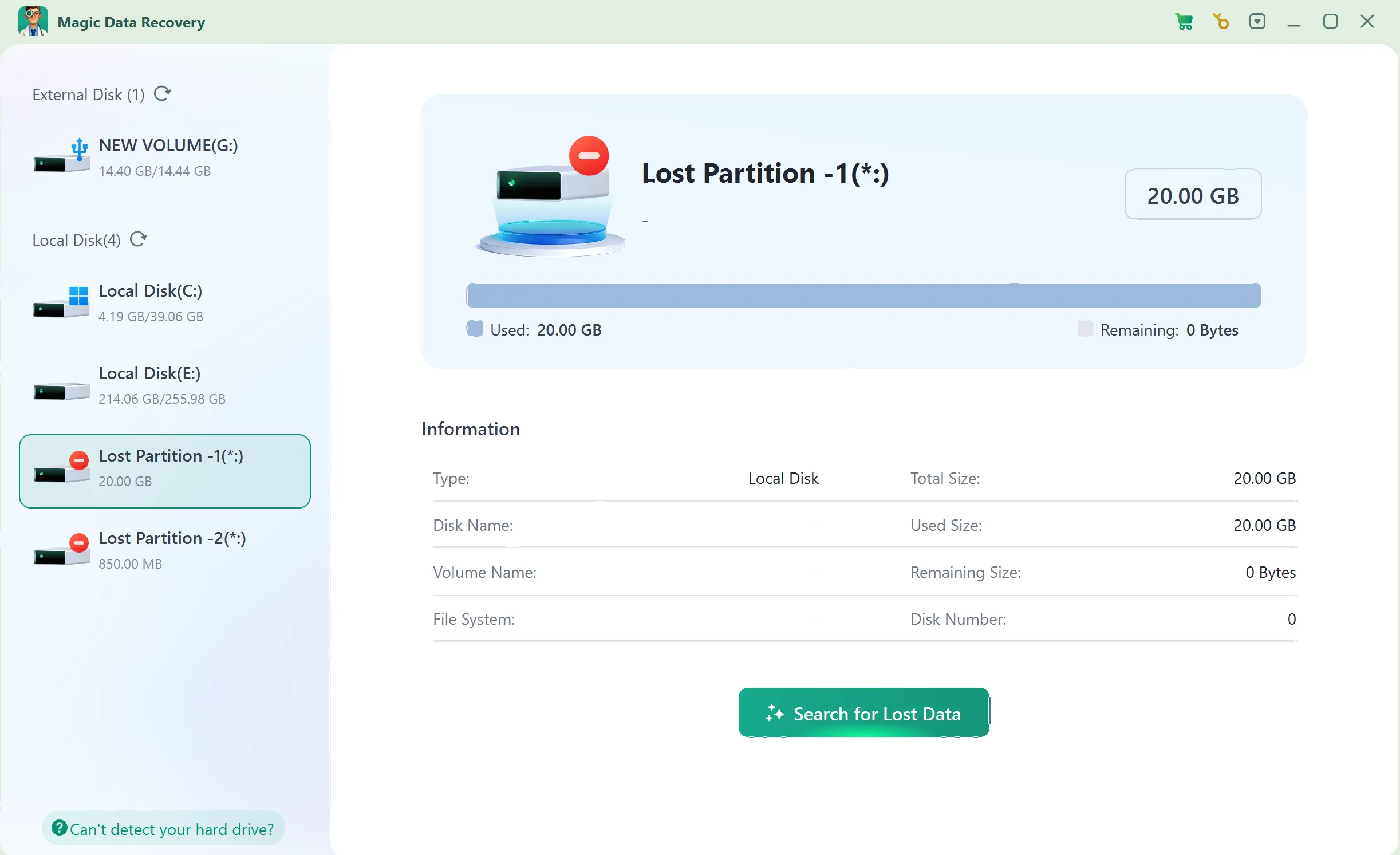
Etapa 2: Selecione a unidade a ser examinada
Open the software and choose the drive or storage device where the files were deleted. Then start the scan from the main interface.
Etapa 3: Escaneamento the Drive for Deleted Files
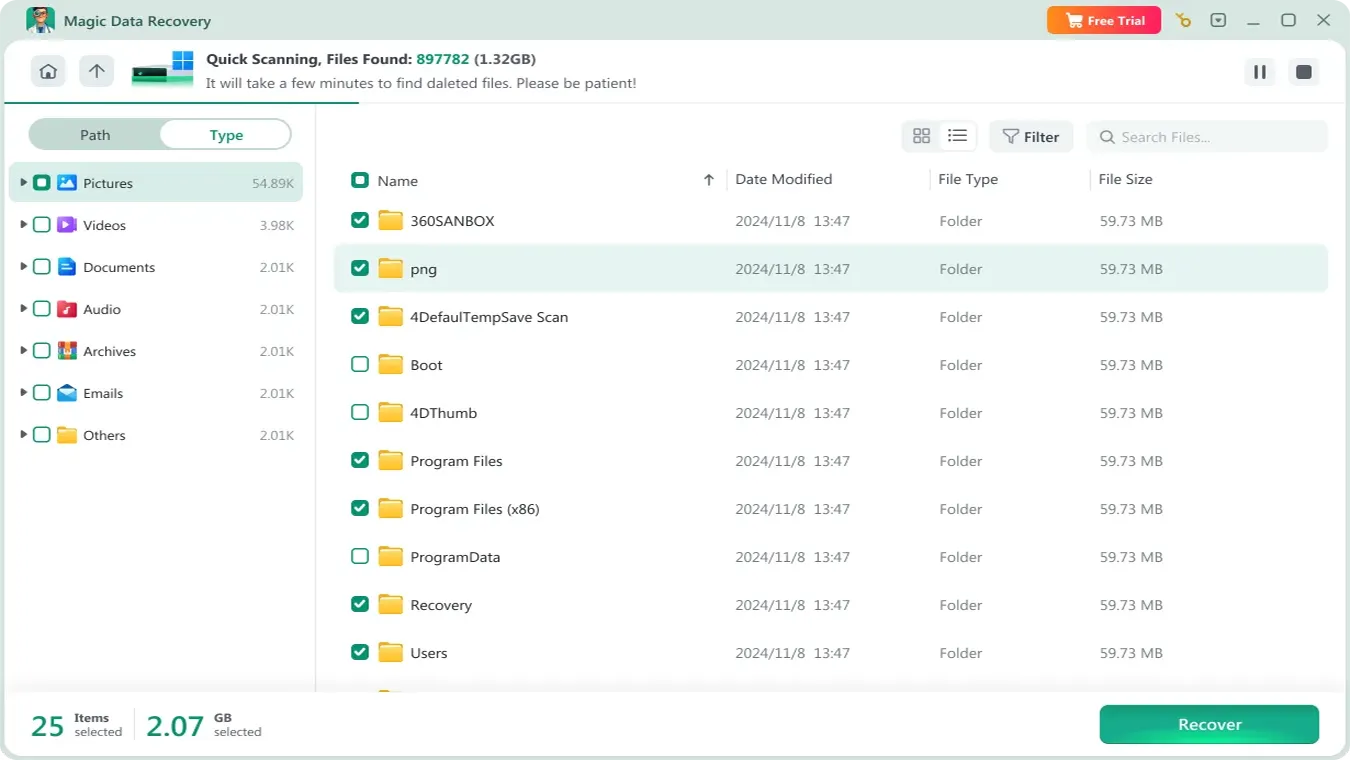
The program scans the selected drive automatically. As scanning continues, recoverable files appear progressively in the results list.
You can browse the available results during the scan or wait for it to finish for a more complete view.
Etapa 4: Prévia Deleted Files Before Recovery
Use the preview feature to confirm the content of files before restoring them.
Previewing helps you identify the files you actually need and check whether their contents appear usable before completing the recovery.

Etapa 5: Recuperar Arquivos em um local seguro
Select the files you need and save them to a different drive or storage device.
Avoid restoring data to the same location from which it was deleted because doing so may overwrite other files that are still recoverable.

Práticas recomendadas para evitar perdas permanentes
Para melhorar o sucesso da recuperação:
- Pare de usar a unidade afetada imediatamente.
- Evite instalar ferramentas de recuperação no mesmo disco.
- Do not save new files to the affected drive.
- Recover files to a separate location.
- Avoid formatting or repairing the drive before important files are recovered.
- Limit unnecessary repeated scans.
These steps can significantly improve the effectiveness of recuperação de arquivos excluídos, particularly on HDDs, USB drives, and memory cards where deleted data may remain until overwritten.
However, SSD recovery can be less predictable because TRIM and garbage collection may clear deleted blocks even when you have not intentionally written new files.
When Recovering Deleted Files May Not Work
Although many deleted files can be recovered, no recovery method can guarantee success in every situation.
Recovery may no longer be possible if:
- The original data has already been overwritten.
- SSD TRIM has cleared the deleted blocks.
- Secure erase or data-wiping software was used.
- The storage device has serious physical damage.
- Parts of the deleted file have already been replaced by new data.
This is why stopping further use of the affected drive is one of the most important actions after discovering data loss.
Conclusão
Escolhendo o caminho certo abordagem para arquivos excluídos matters when data loss occurs. Start with built-in options such as Undo Delete, Recycle Bin, File History, or Previous Versions whenever they are available.
If the files were permanently deleted and no backup exists, stop using the affected storage device before attempting further recovery.
Magic Data Recovery provides a practical option for scanning the affected drive, previewing recoverable files, and restoring selected data to a safe location. For users who need another method for recuperação de arquivos excluídos, it offers an accessible option when built-in Windows solutions are no longer enough.
Compatível com Windows 7/8/10/11 e Windows Server
Perguntas frequentes sobre a recuperação de arquivos excluídos
Como faço para recuperar arquivos excluídos permanentemente?
Como faço para recuperar um arquivo que excluí acidentalmente?
How do I recover permanently deleted files from Recycle Bin?
Os arquivos excluídos podem realmente ser recuperados?
Os arquivos excluídos permanentemente realmente desapareceram?
Para onde vão os arquivos excluídos permanentemente?
Como recuperar arquivos excluídos que não estão na Lixeira?
Qual ferramenta é usada para recuperar arquivos excluídos?

Vasilii é um especialista em recuperação de dados com cerca de 10 anos de experiência prática na área. Ao longo de sua carreira, ele resolveu com sucesso milhares de casos complexos envolvendo arquivos excluídos, unidades formatadas, partições perdidas e sistemas de arquivos RAW. Sua experiência abrange métodos de recuperação manual usando ferramentas profissionais, como editores hexadecimais, e soluções automatizadas avançadas com software de recuperação. A missão do Vasilii é tornar o conhecimento confiável sobre recuperação de dados acessível tanto para profissionais de TI quanto para usuários comuns, ajudando-os a proteger seus valiosos ativos digitais.