
Como recuperar arquivos excluídos da Lixeira: 5 maneiras
Deleted a file from the Recycle Bin or emptied it by mistake? If you want to know como recuperar arquivos excluídos da Lixeira, the good news is that recovery may still be possible on Windows 11 or Windows 10 as long as the original data has not been overwritten. If the file is still in the Recycle Bin, use Restore first. If the bin has already been emptied, you can try File History, Previous Versions, Windows File Recovery, or other methods covered in our Recycle Bin recovery guide.
Most importantly, stop saving new files to the affected drive. Deleted file space may be reused by Windows, and new data can overwrite the files you want to recover. This guide explains five practical recovery methods, starting with built-in Windows options. If no backup is available and you prefer a graphical recovery solution, Magic Data Recovery can scan the affected drive and preview recoverable files before recovery.
Compatível com Windows 7/8/10/11 e Windows Server
Índice
Which Recycle Bin Recovery Method Should You Use?
The best recovery method depends on whether the file is still in the Recycle Bin, whether the bin has already been emptied, and whether you have a backup. Use the table below to quickly choose the most suitable option.
| Situação | Melhor método de recuperação | Backup Required? |
|---|---|---|
| O arquivo ainda está na Lixeira | Restore it directly from the Recycle Bin | Não |
| The Recycle Bin has already been emptied | Histórico de arquivos ou versões anteriores | Sim |
| The file was synced with OneDrive | Verifique a Lixeira do OneDrive | No, if the file is still retained |
| Não há backup disponível | Recuperação de arquivos do Windows | Não |
| You prefer a graphical recovery tool | Magic Data Recovery | Não |
| The file was deleted with Shift + Delete | Windows File Recovery or data recovery software | Não |
| The file was deleted from an SSD | Stop using the drive and attempt recovery as soon as possible | Não |
If the deleted files are no longer available in the Recycle Bin, avoid saving new data to the affected drive before attempting recovery. New writes may overwrite the deleted data and reduce the chance of successful recovery.
É possível recuperar arquivos excluídos da Lixeira?
Yes, deleted Recycle Bin files may still be recoverable, but the result depends on how they were deleted. If a file is still inside the Recycle Bin, Windows can restore it immediately. After you empty the Recycle Bin or use Shift + Delete, the file is no longer available through the normal Windows interface.
On many file systems, deleted data may remain on the storage device until its space is reused. Recovery therefore becomes less likely as new data is written. SSDs require extra caution because TRIM and subsequent garbage collection can make deleted data unavailable much sooner than on a traditional HDD.
Pontos-chave para entender:
- Os arquivos excluídos não desaparecem imediatamente. Eles permanecem no disco até que novos dados os substituam.
- Os arquivos excluídos após o esvaziamento da Lixeira são mais difíceis de recuperar, mas as ferramentas adequadas ainda podem recuperá-los.
- As chances de recuperação dependem do tamanho do arquivo, do tipo de armazenamento (HDD vs. SSD) e do uso do sistema após a exclusão.
Compreender esses princípios básicos garante que você use os métodos de recuperação mais eficazes.
Method 1: Restore Deleted Files Directly from the Recycle Bin
If the deleted files are still in the Recycle Bin, restoring them is the easiest and safest option.
- Clique duas vezes no ícone Lixeira icon on the desktop.
- Locate the file or folder you want to recover.
- Right-click the item and select Restaurar.
- Windows will return the file to its original location.
If you are unsure where the file came from, check the Localização original column in the Recycle Bin before restoring it.
This method only works if the file has not been permanently deleted or removed by emptying the Recycle Bin.
Method 2: Recover Deleted Files with File History or Previous Versions
If the Recycle Bin has already been emptied, Windows File History may help restore an earlier version of the deleted file or folder. However, this method only works if File History or another compatible backup was enabled before the deletion occurred.
Restaurar arquivos com o Histórico de Arquivos
- Aberto Painel de controle e vá para Sistema e segurança > Histórico de arquivos.
- Selecione Restaurar arquivos pessoais.
- Browse through the available backups until you find the file you need.
- Select the file and click the Restaurar botão.
Restore a Previous Version of a Folder
You can also check whether Windows has saved an earlier version of the folder that originally contained the deleted file.
- Aberto Explorador de arquivos.
- Navigate to the folder where the deleted file was previously stored.
- Clique com o botão direito do mouse na pasta e selecione Propriedades.
- Abra o Versões anteriores guia.
- Select an available version created before the file was deleted.
- Clique em Aberto to check its contents or Restaurar para recuperá-lo.
If no previous versions are listed, Windows may not have a suitable backup available.
Method 3: Check the OneDrive Recycle Bin
If your Desktop, Documents, Pictures, or another folder was synced with OneDrive, the deleted file may still be available in the OneDrive Recycle Bin even if it is no longer in the Windows Recycle Bin.
Para verificar:
- Sign in to your OneDrive account in a web browser.
- Selecione Lixeira no menu à esquerda.
- Locate the deleted file or folder.
- Selecione-o e clique Restaurar.
The restored item will normally return to its original OneDrive location.
This method is especially useful if the file was stored in a folder protected by OneDrive backup or synchronization. If the file is no longer available in the OneDrive Recycle Bin, continue with the recovery methods below.
Method 4: Recover Deleted Files with Windows File Recovery
If you have emptied the Recycle Bin and do not have a usable backup, Recuperação de arquivos do Windows is a free command-line tool from Microsoft that can attempt to recover deleted files from local drives, external drives, and USB storage devices.
First, install Recuperação de arquivos do Windows from the Microsoft Store and run it as administrator.
O formato básico do comando é:
winfr source-drive: destination-drive: [/mode] [/switches]
For example, to search for deleted files in the Documents folder on drive C: and save recovered files to drive E:, you can use:
winfr C: E: /regular /n \Usuários\\Documentos\
The source and destination drives must be different. Avoid saving recovered files back to the same drive because this may overwrite other deleted data.
If Regular mode does not find the files you need, you can try Modo abrangente for a deeper scan:
winfr C: E: /extensive /n \Users\<username>\Documents\
Windows File Recovery can be effective, but it requires command-line input and may be less convenient for users who prefer a graphical interface.
Method 5: Recover Recycle Bin Deleted Files with Magic Data Recovery
If the Recycle Bin has been emptied, no backup is available, and you prefer a graphical recovery tool, Magic Data Recovery can scan the affected drive for deleted files and let you preview recoverable data before saving it.
It can also be used in other data-loss situations, including accidental deletion, formatting, and file system errors.
Como usar o Magic Data Recovery
1.Install and launch Magic Data Recovery. If possible, install it on a different drive from the one containing the deleted files.
Compatível com Windows 7/8/10/11 e Windows Server

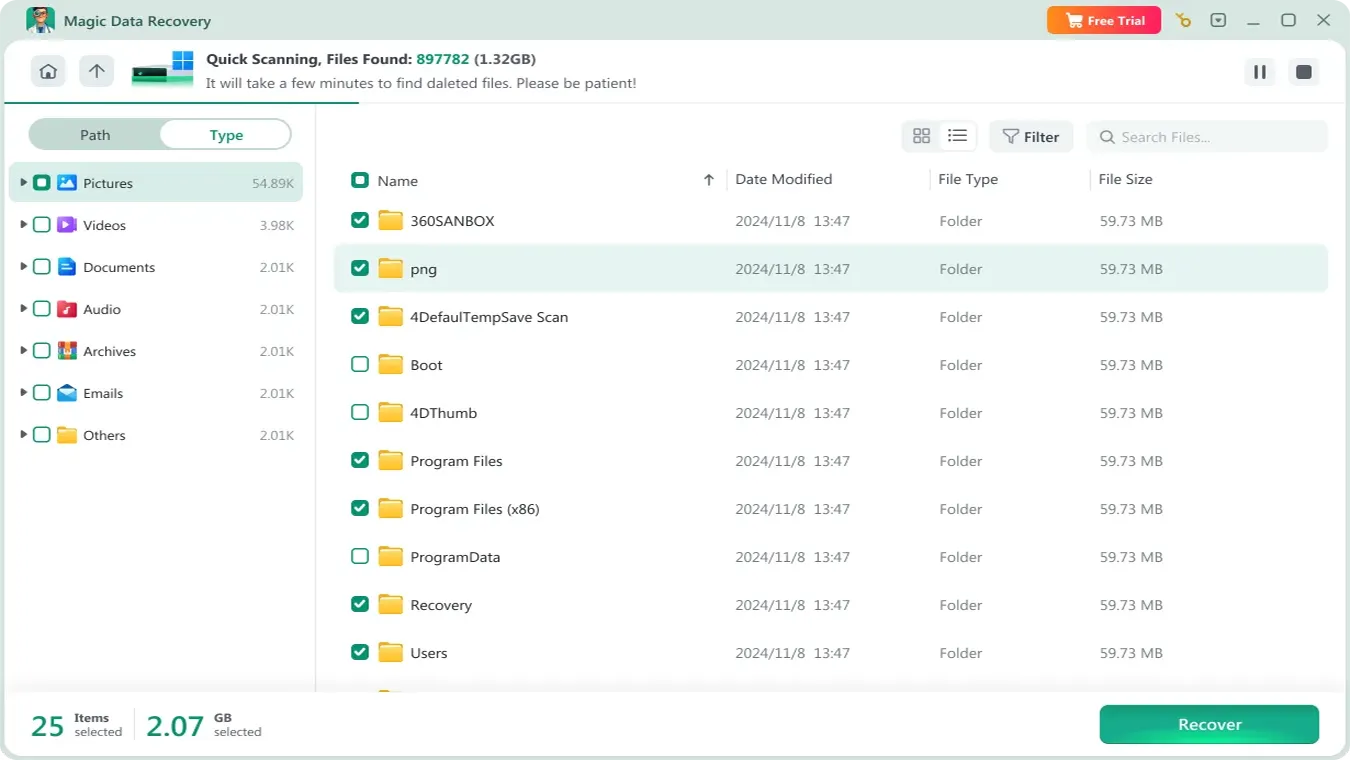


Avoid recovering files to the original drive until the recovery process is complete. Writing new data to the affected drive may overwrite other deleted files and reduce the chance of recovery.
Why Recycle Bin Recovery May Fail
Recovering files deleted from the Recycle Bin is not always possible. Recovery mainly depends on whether the deleted data has been overwritten and the type of storage device being used.
| Motivo | Impacto na recuperação |
|---|---|
| New data was written to the drive | Deleted data may be partially or completely overwritten |
| The file was deleted from an SSD | TRIM may make deleted data unavailable more quickly |
| A unidade apresenta erros no sistema de arquivos | File records may be harder to locate or restore |
| The file was securely erased | Recovery is usually not possible with standard recovery tools |
To improve your chances of recovery, stop using the affected drive as soon as possible and avoid saving recovered files back to the same location.
Conclusão
Recovering files deleted from the Recycle Bin depends mainly on how the files were removed and whether their original data has been overwritten. If the files are still in the Recycle Bin, restore them directly. After the bin has been emptied, check File History, Previous Versions, OneDrive, and Windows File Recovery first. You can also explore our complete Recycle Bin recovery guide for more recovery scenarios and practical tips.
If you have no usable backup and the deleted files are no longer accessible through Windows, Magic Data Recovery can scan the original drive, locate recoverable files, and let you preview them before recovery. Whichever method you choose, avoid writing new data to the affected drive and save recovered files to a different location whenever possible.
Compatível com Windows 7/8/10/11 e Windows Server
Perguntas frequentes
Can I recover permanently deleted files after emptying the Recycle Bin?
Como faço para recuperar arquivos excluídos da Lixeira sem usar nenhum software?
Can Windows File Recovery recover files deleted from Recycle Bin?
Where do files restored from Recycle Bin go?
Why are my deleted files not in the Recycle Bin?
Posso recuperar arquivos excluídos com Shift + Delete?
Can I recover Recycle Bin files from an SSD?
How long can files be recovered after the Recycle Bin is emptied?

Jason é especialista em recuperação de dados e suporte técnico, com mais de 15 anos de experiência prática. Ele tem trabalhado extensivamente com usuários finais, resolvendo casos complexos de perda de dados e oferecendo soluções práticas de recuperação para exclusões acidentais, unidades formatadas, sistemas de arquivos danificados, partições perdidas, falhas de sistema e outras emergências de recuperação. Sua especialização também abrange backup e restauração, reparo de arquivos e recuperação de desastres, com forte ênfase em orientações seguras, confiáveis e tecnicamente precisas.