
Guia de recuperação de dados da Western Digital
A perda de arquivos de um disco rígido da Western Digital pode parecer uma situação urgente, especialmente quando o disco armazena documentos de trabalho, fotos de família, vídeos, backups ou arquivos de projetos. A boa notícia é que Recuperação de dados da Western Digital isso geralmente é possível quando o problema decorre de exclusão, formatação, corrupção do sistema de arquivos ou de uma unidade que ainda aparece no Windows. Para obter mais informações sobre recuperação de discos rígidos, você também pode visitar o site Amagicsoft Soluções para discos rígidos antes de começar.
Este guia explica como Recuperação de dados da Western Digital como funciona, o que você deve fazer primeiro, quais erros evitar e como recuperar arquivos do WD My Passport, WD Elements, WD My Book e discos rígidos internos da Western Digital. Você também aprenderá quando a recuperação por software é recomendável e quando a recuperação em laboratório profissional se torna a opção mais segura.
Índice
O que é a recuperação de dados da Western Digital?
Recuperação de dados da Western Digital significa recuperar arquivos perdidos, excluídos, formatados, corrompidos ou inacessíveis de dispositivos de armazenamento da Western Digital. Esses dispositivos podem incluir o WD My Passport, o WD Elements, o WD My Book, o WD Blue, o WD Black, o WD Red e outros discos rígidos internos ou externos da Western Digital.
Em muitos casos, os arquivos não desaparecem imediatamente após a exclusão ou a formatação rápida. Em vez disso, o sistema de arquivos marca o espaço como disponível. Até que novos dados sobrescrevam esse espaço, um software de recuperação ainda pode localizar e restaurar os arquivos originais.
No entanto, a recuperação depende do tipo de problema. Problemas lógicos geralmente oferecem mais chances de você mesmo conseguir recuperar os dados. Problemas físicos exigem mais cuidado.
Unidades comuns da Western Digital abrangidas
Recuperação de dados da Western Digital pode se aplicar a muitos produtos da WD, incluindo:
- Discos rígidos externos WD My Passport
- Unidades portáteis e de mesa WD Elements
- Unidades de backup de mesa WD My Book
- HDDs internos WD Blue
- Unidades de alto desempenho WD Black
- Unidades WD Red NAS utilizadas para armazenamento em residências ou pequenos escritórios
- Discos rígidos SATA mais antigos da Western Digital
Embora essas unidades tenham diferentes casos de uso, a lógica de recuperação é semelhante. Se o Windows ainda conseguir detectar a unidade, um software de recuperação pode ajudar. Se a unidade emitir cliques, parar de girar repetidamente, superaquecer ou não aparecer na BIOS ou Gerenciamento de disco, pare de usá-lo e considere recorrer a um serviço profissional.
Causas comuns de perda de dados em dispositivos da Western Digital
Antes de escolher um método de recuperação, identifique o que aconteceu. Isso ajuda a evitar etapas arriscadas e a escolher a opção certa Recuperação de dados da Western Digital solução.
Exclusão acidental
Muitos usuários perdem arquivos ao excluir a pasta errada, esvaziar a Lixeira ou pressionar Shift + Delete. Nesse caso, o conteúdo do arquivo pode permanecer na unidade WD até que o Windows grave novos dados sobre ele.
Por esse motivo, pare de usar a unidade imediatamente. Não copie novos arquivos para ela. Além disso, evite instalar softwares de recuperação na mesma unidade em que os arquivos perdidos estavam armazenados.
Formatação do disco WD errado
A formatação de um disco rígido externo da WD pode fazer com que todos os arquivos desapareçam em questão de segundos. Felizmente, a formatação rápida geralmente remove apenas as referências do sistema de arquivos, e não o conteúdo real de cada arquivo.
Um disco WD formatado ainda tem chances de recuperação se você agir rapidamente. Não o formate novamente. Não crie uma nova partição. Em vez disso, faça uma varredura em todo o disco com um software de recuperação.
Corrupção do sistema de arquivos ou unidade RAW
Um disco da Western Digital pode, de repente, passar a aparecer como RAW, ficar inacessível ou ilegível. O Windows pode exibir uma mensagem como “É necessário formatar o disco antes de poder usá-lo.”
Não clique em “Formatar” se os arquivos forem importantes. A formatação pode facilitar o acesso à unidade, mas pode reduzir as chances de sucesso Recuperação de dados da Western Digital.
Unidade WD não reconhecida
Às vezes, um disco rígido externo da WD não aparece no Explorador de Arquivos. A causa pode ser um cabo solto, uma porta USB com defeito, um driver desatualizado, uma tabela de partições corrompida ou uma falha de hardware.
Comece com verificações simples. Tente usar outro cabo USB, outra porta USB ou outro computador. Se a unidade aparecer no Gerenciamento de Discos, a recuperação por meio de software pode funcionar. Se a unidade emitir ruídos anormais, interrompa o teste.
Vírus, malware ou erros do sistema
Malwares podem excluir, ocultar, criptografar ou danificar arquivos em um disco rígido da Western Digital. Desligamentos repentinos e falhas no sistema também podem corromper o sistema de arquivos.
Nesses casos, um software de recuperação pode ajudar a localizar arquivos excluídos ou inacessíveis. No entanto, verifique se há malware no computador antes de restaurar os arquivos, para evitar uma nova infecção.
O que fazer antes da recuperação de dados da Western Digital
Os primeiros minutos após a perda de dados são fundamentais. Um fluxo de trabalho seguro pode aumentar suas chances de recuperação.
- Pare de usar o disco WD afetado.
- Não salve novos arquivos na unidade.
- Não instale o software de recuperação na mesma unidade.
- Não execute o CHKDSK antes de recuperar arquivos importantes.
- Não formate a unidade quando o Windows solicitar.
- Use outro disco rígido em bom estado para salvar os arquivos recuperados.
- Verifique se o problema é lógico ou físico.
- Comece fazendo uma varredura de pré-visualização antes de pagar pela recuperação.
Essas etapas se aplicam à maioria dos Recuperação de dados da Western Digital casos, incluindo arquivos excluídos, partições formatadas, discos WD corrompidos e discos rígidos externos inacessíveis.
Recuperação por software x Recuperação em laboratório profissional
Nem todos os problemas com discos rígidos da WD devem ser tratados da mesma maneira. A tabela abaixo ajuda você a decidir.
Situação | Que tal usar um software de recuperação? | Usar o Laboratório Profissional? | Motivo |
Arquivos excluídos da unidade WD | Sim | Normalmente não | Os dados podem permanecer até serem sobrescritos |
Unidade WD formatada rapidamente | Sim | Normalmente não | Os registros de arquivos podem ser perdidos, mas os setores de dados podem permanecer |
A unidade WD aparece como RAW | Sim, se for detectável | Talvez | A corrupção lógica muitas vezes pode ser detectada |
O disco rígido externo da WD solicita a formatação | Sim | Talvez | Recuperar arquivos antes do reparo ou da formatação |
O disco rígido WD emite cliques ou rangidos | Não | Sim | Os danos mecânicos podem se agravar com o uso |
Unidade não detectada no BIOS ou no Gerenciamento de Discos | Não, na maioria dos casos | Sim | O software não consegue fazer a verificação de uma unidade que não foi detectada |
Falha no RAID do NAS da WD | Tenha cuidado | Muitas vezes, sim | A recuperação do RAID requer uma estrutura e uma ordem de discos corretas |
Unidade queimada, derrubada ou danificada por água | Não | Sim | O reparo físico requer um processo controlado em laboratório |
Na maioria dos casos lógicos, Recuperação de dados da Western Digital O software oferece aos usuários um primeiro passo prático. Em casos de danos físicos graves, é mais seguro recorrer a um serviço de laboratório.
A melhor solução para recuperação de dados da Western Digital: Magic Data Recovery
Quando sua unidade WD ainda é reconhecida pelo Windows, o Magic Data Recovery oferece uma maneira clara e prática de recuperar arquivos perdidos. Ele foi desenvolvido para lidar com casos comuns de perda de dados na prática, incluindo exclusão, formatação, erros no sistema de arquivos, partições inacessíveis e perda de dados causada por vírus.
Você pode saber mais no site oficial Magic Data Recovery página do produto.
Compatível com Windows 7/8/10/11 e Windows Server
Principais problemas que ele resolve
O Magic Data Recovery ajuda em várias coisas Recuperação de dados da Western Digital cenários:
- Arquivos excluídos do WD My Passport, do WD Elements ou de discos internos da WD
- Arquivos perdidos após uma formatação rápida
- Partições inacessíveis ou corrompidas
- Problemas com o sistema de arquivos RAW
- Pastas ausentes após erros no sistema
- Perda de dados causada por malware ou desligamento incorreto
- Arquivos perdidos de discos rígidos WD antigos conectados a um PC com Windows
Por que isso é útil para a recuperação de discos WD
Magic Data Recovery É útil porque se concentra na recuperação de arquivos antes do reparo do disco. Isso é importante porque os comandos de reparo podem alterar as estruturas do disco. Se os arquivos forem importantes, recupere-os primeiro e repare a unidade depois.
Suas principais vantagens incluem:
- Processo de varredura focado na leitura, que evita gravar os arquivos recuperados de volta na unidade de origem
- Varredura profunda em busca de dados excluídos, formatados e inacessíveis
- Visualização do arquivo antes da recuperação
- Fluxo de trabalho simples para usuários não técnicos
- Compatibilidade com diversos tipos de arquivos, incluindo documentos, fotos, vídeos, arquivos compactados e muito mais
- Recuperação de discos rígidos internos e externos
- Processo de limpeza, visualização e recuperação
Em comparação com métodos manuais, como CHKDSK, Gerenciamento de disco Seja para reparo ou reconstrução de partições, o Magic Data Recovery oferece mais controle aos usuários. Você pode verificar se arquivos importantes são recuperáveis antes de fazer alterações na unidade.
Como recuperar dados de um disco rígido da Western Digital
Siga estas etapas para ter mais segurança Recuperação de dados da Western Digital.
Passo 1: Conecte o disco rígido WD corretamente
Conecte seu disco rígido Western Digital diretamente ao computador. Evite hubs USB instáveis. No caso de discos externos, tente usar o cabo original, se disponível. Para discos internos da WD, conecte o disco por meio de uma interface SATA ou de um adaptador USB para SATA confiável.
Se o Windows detectar a unidade, prossiga para a próxima etapa. Se a unidade emitir sons de clique ou se desconectar repetidamente, pare e considere procurar um serviço de assistência técnica profissional.
Etapa 2: Instale o Magic Data Recovery em uma unidade saudável
Baixe e instale o Magic Data Recovery em uma unidade diferente, e não na unidade WD afetada. Isso evita que o instalador sobrescreva os arquivos que podem ser recuperados.
Compatível com Windows 7/8/10/11 e Windows Server
Por exemplo, se você perdeu arquivos de um disco externo WD My Passport, instale o software na unidade interna do seu computador. Se você perdeu arquivos da unidade interna C, use outro computador ou outro disco em bom estado, sempre que possível.
Etapa 3: Selecione o disco rígido da Western Digital
Inicie o Magic Data Recovery e selecione a unidade WD ou a partição afetada. Se os arquivos perdidos estavam em uma partição formatada, selecione essa partição ou o disco inteiro, conforme necessário.
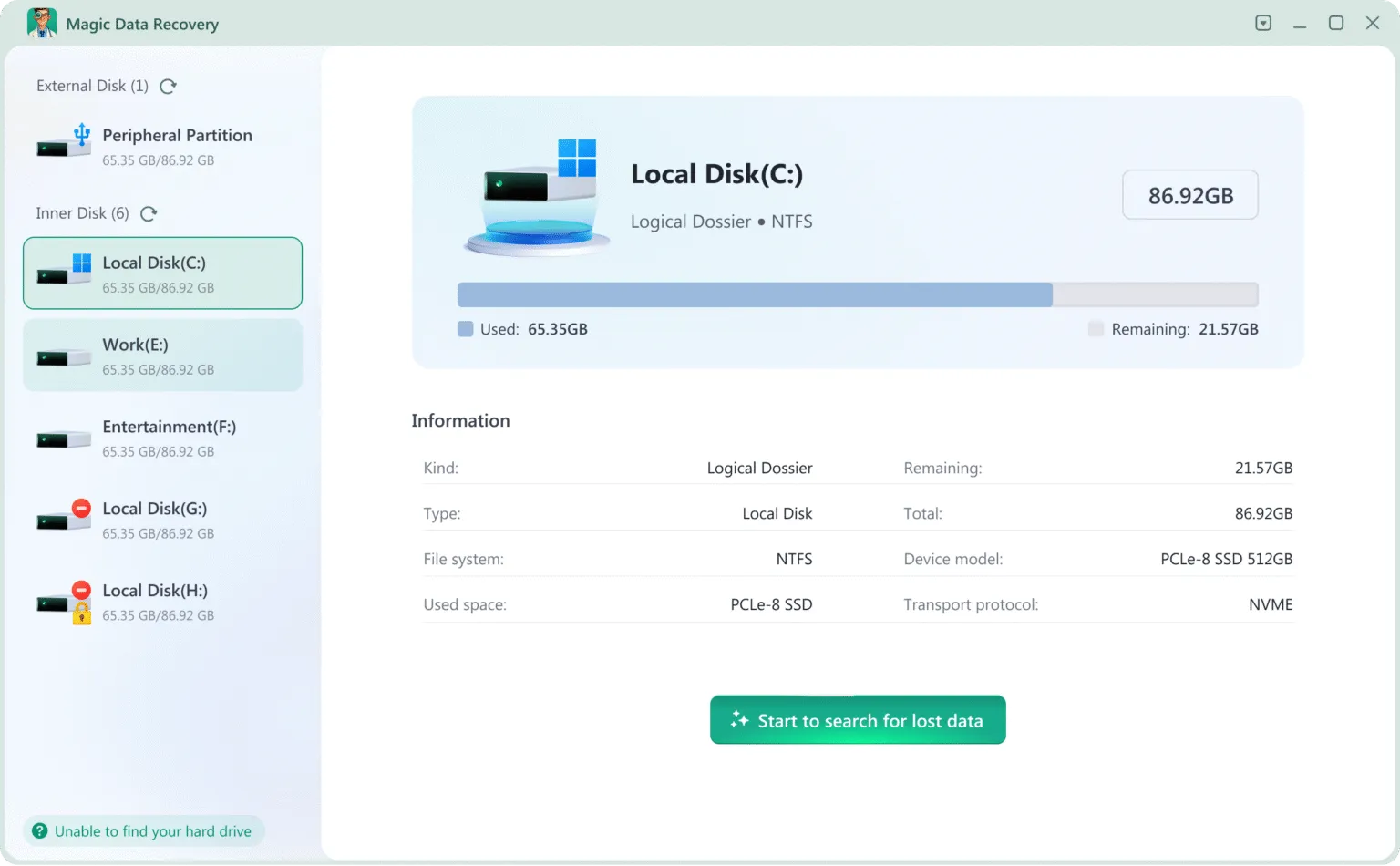
Essa etapa é importante para Recuperação de dados da Western Digital porque partições perdidas ou sistemas de arquivos corrompidos podem não aparecer com nomes de pastas normais.
Etapa 4: Inicie uma verificação profunda
Execute uma verificação para localizar arquivos excluídos, formatados ou inacessíveis. O tempo de verificação depende do tamanho da unidade, da velocidade da conexão e da quantidade de dados.
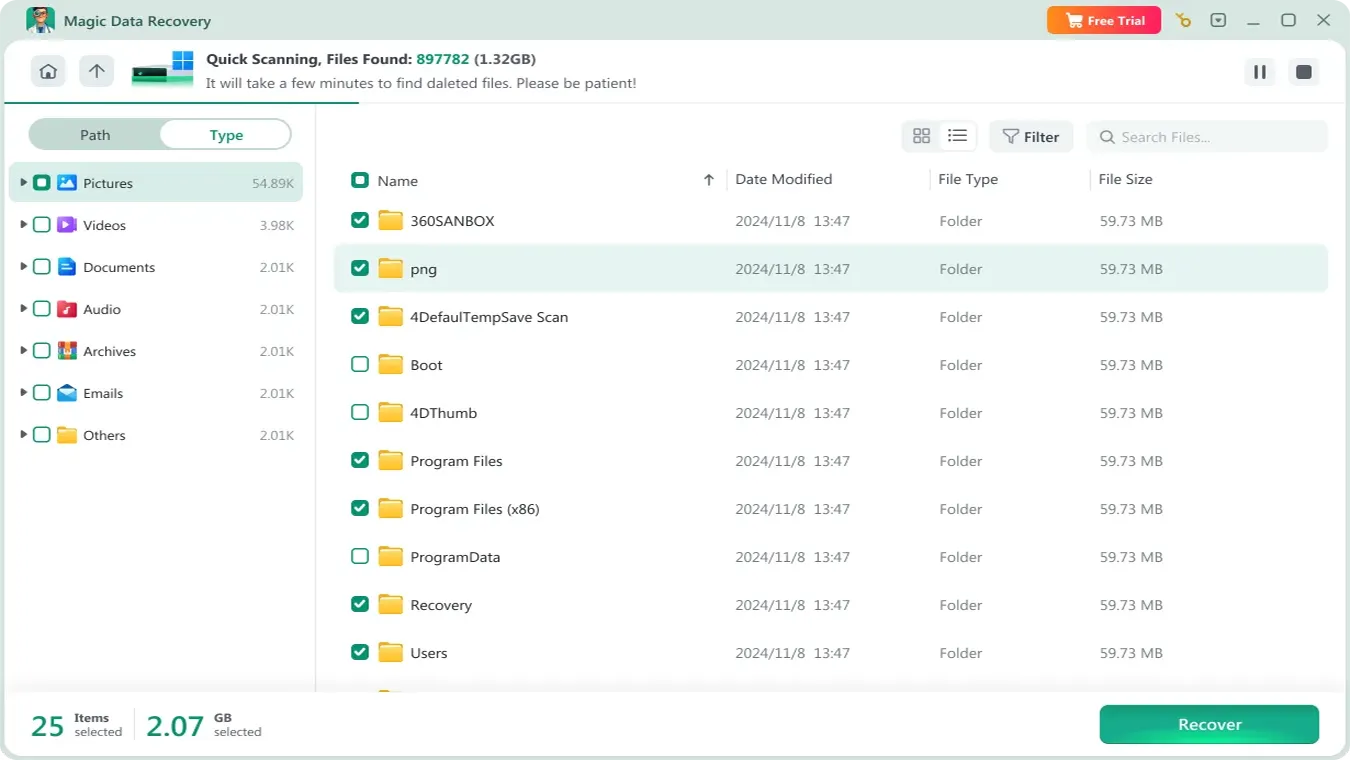
No caso de discos rígidos de mesa da WD de grande capacidade, uma verificação completa pode demorar mais tempo. Mantenha o disco conectado e evite usá-lo durante a verificação.
Etapa 5: Preview Recoverable Files (Visualizar arquivos recuperáveis)
Após a varredura, visualize os arquivos de que você precisa. Isso ajuda a verificar se as fotos, documentos, vídeos ou arquivos estão em condições de uso antes da recuperação.

Use filtros como tipo de arquivo, nome do arquivo, caminho ou data, quando disponíveis. Isso pode economizar tempo, especialmente ao fazer a varredura de um disco rígido externo WD de grande capacidade.
Etapa 6: Salvar arquivos em outra unidade
Nunca salve os arquivos recuperados de volta no mesmo disco da Western Digital. Escolha outro disco em bom estado, um disco externo ou outro local de armazenamento.
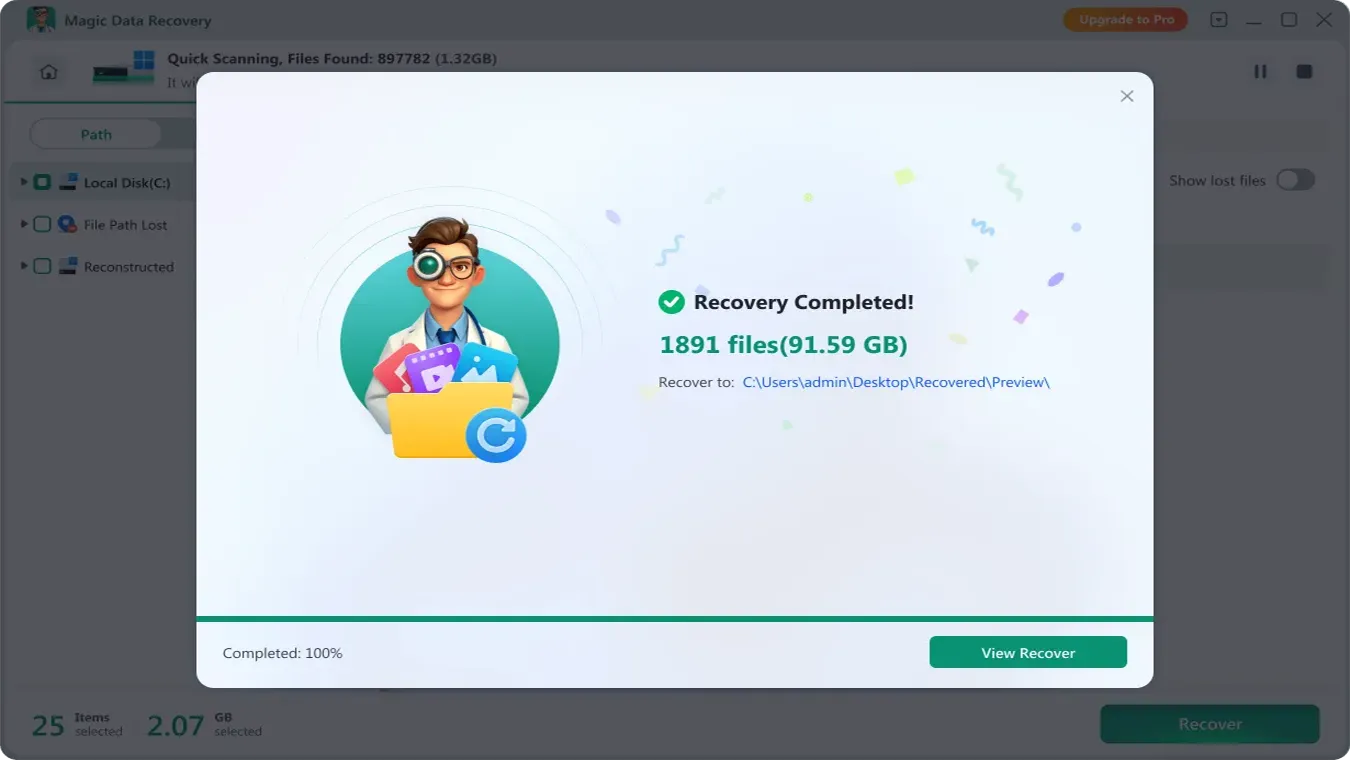
Salvar arquivos na unidade de origem pode sobrescrever outros dados recuperáveis. Essa regra é essencial para qualquer Recuperação de dados da Western Digital tentativa.
Recuperação de dados da Western Digital para diversos modelos da WD
Diferentes discos rígidos da WD costumam apresentar falhas de maneiras distintas. Veja a seguir como lidar com os modelos mais comuns.
Recuperação de dados do WD My Passport
Os discos WD My Passport são portáteis e amplamente utilizados para backups, fotos, arquivos de trabalho e armazenamento durante viagens. Os problemas mais comuns incluem exclusão acidental, corrupção do sistema de arquivos, problemas de conexão e erros de formatação.
Para recuperar dados do WD My Passport, verifique primeiro o cabo e a porta USB. Em seguida, faça uma varredura na unidade com o Magic Data Recovery, caso o Windows ainda a detecte. Se a unidade estiver protegida por senha ou criptografada, desbloqueie-a primeiro usando o software adequado da WD ou a senha antes de iniciar a varredura.
Recuperação do WD Elements
Os discos WD Elements costumam ser usados como dispositivos de armazenamento simples do tipo “plug-and-play”. Os usuários podem perder dados após formatar o disco para uso em Mac, Windows, TV ou console de videogame.
Para a recuperação de dados do WD Elements, evite reformatar o disco novamente. Conecte-o a um PC com Windows e faça uma varredura o mais rápido possível. Se o disco tiver sido reformatado para outro sistema de arquivos, uma varredura profunda pode ajudar a localizar os arquivos perdidos por meio de suas assinaturas.
Recuperação de dados do WD My Book
Os discos WD My Book são discos externos para computadores de mesa, frequentemente utilizados para backups de grande volume. Como esses discos podem armazenar anos de dados, os usuários devem ter cuidado quando surgirem erros.
Se o seu WD My Book ficar inacessível, não o inicialize nem o formate. Verifique se a unidade aparece em Gerenciamento de disco. Se isso acontecer, comece pela recuperação por meio do software. Se o aparelho não ligar ou emitir ruídos anormais, procure ajuda profissional.
Recuperação de discos internos WD Blue, Black e Red
Os discos rígidos internos da Western Digital podem apresentar falhas após travamentos do sistema, erros de partição, reinstalações do Windows ou ataques de malware.
Se o computador ainda inicializar, evite salvar novos dados na partição afetada. Se o Windows não conseguir inicializar, remova o disco WD e conecte-o a outro computador que esteja funcionando. Em seguida, execute o Magic Data Recovery para fazer uma varredura no disco e recuperar os arquivos para um local separado.
O WD Drive Utilities consegue recuperar arquivos perdidos?
O WD Drive Utilities pode ajudar os usuários a testar e gerenciar unidades da Western Digital compatíveis, mas os utilitários de diagnóstico não são o mesmo que um software de recuperação de arquivos. Eles podem verificar o estado da unidade, executar testes ou gerenciar configurações, mas não substituem um software dedicado Recuperação de dados da Western Digital ferramenta.
Se o seu objetivo for recuperar arquivos excluídos, formatados ou inacessíveis, use primeiro um software de recuperação. Depois de salvar os arquivos importantes, você pode executar diagnósticos ou procedimentos de reparo para avaliar o estado da unidade.
Erros a evitar durante a recuperação de dados da Western Digital
Muitas falhas na recuperação ocorrem porque os usuários tentam consertar a unidade antes de salvar seus arquivos. Evite esses erros:
- Não formate a unidade quando o Windows solicitar.
- Não execute CHKDSK antes de recuperar dados importantes.
- Não inicialize um disco não alocado.
- Não recrie partições, a menos que você tenha um backup.
- Não salve os arquivos recuperados na mesma unidade WD.
- Não continue testando um acionamento que esteja fazendo barulho de clique ou rangido.
- Não abra a caixa do disco rígido em casa.
- Não presuma que a substituição em garantia inclua a recuperação de arquivos.
A substituição em garantia pode resolver o problema com o hardware, mas não necessariamente recupera os arquivos perdidos. Portanto, concentre-se primeiro na recuperação de dados, caso os arquivos sejam importantes.
Quando você deve interromper a recuperação por conta própria?
Chega de “faça você mesmo” Recuperação de dados da Western Digital imediatamente, caso perceba sinais de falha física:
- Sons de estalo, rangido ou bipe
- O disco gira para cima e para baixo repetidamente
- O disco se superaquece rapidamente
- O computador trava quando a unidade é conectada
- A unidade desaparece durante a varredura
- Cheiro de queimado ou danos visíveis
- Queda violenta ou danos causados pela água
Nesses casos, continuar usando o dispositivo pode dificultar a recuperação. Um laboratório especializado pode examinar o disco rígido com equipamentos específicos.
Por que o Magic Data Recovery é recomendado
Magic Data Recovery É recomendado porque resolve os problemas mais comuns de perda de dados da Western Digital seguindo uma sequência mais segura: primeiro, fazer a varredura; depois, visualizar os arquivos; em seguida, recuperar os dados; e, por fim, reparar a unidade, se necessário.
É uma boa opção para usuários que buscam algo prático Recuperação de dados da Western Digital solução sem precisar usar ferramentas complexas de linha de comando. É especialmente útil quando os arquivos foram excluídos, a unidade WD foi formatada, o sistema de arquivos ficou corrompido ou a unidade ainda aparece no Windows, mas os arquivos estão faltando.
Se você estiver procurando uma solução mais eficiente, experimente o Magic Data Recovery antes de tentar operações de reparo arriscadas. Ele permite que você verifique quais arquivos podem ser recuperados antes de fazer alterações na unidade.
Conclusão
Recuperação de dados da Western Digital Isso geralmente é possível quando a unidade apresenta danos lógicos, arquivos excluídos, erros de formatação ou corrupção do sistema de arquivos. A regra mais importante é simples: pare de usar a unidade WD afetada e recupere os arquivos importantes antes de tentar reparar o disco.
Magic Data Recovery é uma excelente opção, pois permite a recuperação de discos rígidos com arquivos excluídos, formatados, corrompidos e inacessíveis em um único fluxo de trabalho. Ele ajuda usuários comuns a fazer a varredura de discos da Western Digital, visualizar os arquivos recuperáveis e salvá-los em um local seguro, sem etapas técnicas desnecessárias.
Para conhecer mais soluções de recuperação de discos rígidos e orientações relacionadas, acesse o site da Amagicsoft Soluções para discos rígidos.
Compatível com Windows 7/8/10/11 e Windows Server
Perguntas frequentes sobre a recuperação de dados da Western Digital
É possível recuperar dados de um disco da Western Digital após a exclusão?
Sim, Recuperação de dados da Western Digital Muitas vezes, é possível recuperá-los após a exclusão, desde que os arquivos perdidos não tenham sido sobrescritos. Quando você exclui um arquivo, o Windows geralmente remove a referência ao arquivo, em vez de apagar instantaneamente todo o conteúdo. Pare de usar a unidade WD, evite salvar novos dados e faça uma verificação com um software de recuperação o mais rápido possível.
É possível recuperar dados de um disco rígido externo WD que foi formatado?
Sim, a recuperação de um disco rígido externo WD formatado pode funcionar, especialmente após uma formatação rápida. Os arquivos originais podem ainda estar presentes no disco até que novos dados os sobrescrevam. Não formate a unidade novamente nem crie novas partições. Use o Magic Data Recovery para fazer uma varredura completa da unidade e salve os arquivos recuperados em outro dispositivo de armazenamento.
O que devo fazer se meu disco WD pedir para ser formatado?
Não clique em “Formatar” se precisar dos arquivos. Essa mensagem costuma aparecer quando o sistema de arquivos fica corrompido ou ilegível. Em vez disso, conecte a unidade com segurança, verifique se ela aparece no Gerenciamento de Discos e execute primeiro um software de recuperação. Depois de salvar os arquivos importantes, você pode decidir se deseja reparar ou reformatar a unidade.
O Magic Data Recovery consegue recuperar arquivos do WD My Passport?
Sim, o Magic Data Recovery pode ajudar a recuperar arquivos excluídos, formatados ou inacessíveis de unidades WD My Passport, desde que a unidade continue sendo reconhecida pelo Windows. Ele pode fazer uma varredura na unidade, exibir os arquivos recuperáveis e permitir que você visualize uma prévia deles antes da recuperação. Sempre salve os arquivos restaurados em outra unidade para evitar sobrescrever os dados restantes.
O WD Drive Utilities é suficiente para a recuperação de dados?
Não. O WD Drive Utilities pode ajudar a testar ou gerenciar unidades da Western Digital compatíveis, mas não é uma ferramenta dedicada à recuperação de arquivos. Ele pode ajudar a verificar o estado de saúde da unidade, mas não substitui softwares projetados para recuperar arquivos excluídos, formatados ou inacessíveis. Use um software de recuperação primeiro se seu objetivo principal for a restauração de arquivos.
Por que meu disco rígido da Western Digital não é reconhecido?
Uma unidade WD pode não ser reconhecida devido a um cabo com defeito, uma porta USB danificada, um driver desatualizado, um sistema de arquivos corrompido, uma partição perdida ou uma falha física. Tente primeiro usar outro cabo, outra porta ou outro computador. Se a unidade aparecer no Gerenciamento de Discos, a recuperação por meio de software pode ajudar. Se ela emitir um clique ou não girar corretamente, procure ajuda profissional.
Devo executar o CHKDSK antes da recuperação de dados da Western Digital?
Evite executar o CHKDSK antes de recuperar arquivos importantes. O CHKDSK pode reparar erros no sistema de arquivos, mas também pode alterar as estruturas do disco e tornar mais difícil a recuperação de alguns arquivos perdidos. Uma abordagem mais segura é primeiro fazer a varredura e recuperar seus arquivos. Depois disso, você pode executar comandos de reparo, caso ainda queira reutilizar a unidade.
Quando devo recorrer a um serviço profissional de recuperação de dados da Western Digital?
Recorra a um serviço profissional se o seu disco WD apresentar danos físicos, ruídos de clique, desconexões repetidas, superaquecimento, danos causados por água ou não for detectado na BIOS ou no Gerenciamento de Discos. O software não consegue recuperar dados de um disco que o sistema não consiga ler de forma confiável. Nesses casos, continuar tentando fazer a recuperação por conta própria pode reduzir as chances de sucesso na recuperação.

Jason é especialista em recuperação de dados e suporte técnico, com mais de 15 anos de experiência prática. Ele tem trabalhado extensivamente com usuários finais, resolvendo casos complexos de perda de dados e oferecendo soluções práticas de recuperação para exclusões acidentais, unidades formatadas, sistemas de arquivos danificados, partições perdidas, falhas de sistema e outras emergências de recuperação. Sua especialização também abrange backup e restauração, reparo de arquivos e recuperação de desastres, com forte ênfase em orientações seguras, confiáveis e tecnicamente precisas.