
Leitfaden zur Datenwiederherstellung nach einem Ransomware-Angriff
Ein Ransomware-Angriff kann Ihre Dokumente, Fotos, Videos, Arbeitsdateien und Geschäftsunterlagen innerhalb weniger Minuten sperren. In einem solchen Fall suchen viele Nutzer nach Datenwiederherstellung nach Ransomware-Angriffen denn sie wollen eine klare Antwort: Können die Dateien noch wiederhergestellt werden?
Die ehrliche Antwort lautet: manchmal. Die richtige Wiederherstellungsmethode hängt davon ab, wie die Ransomware Ihre Dateien angegriffen hat. In manchen Fällen sind einwandfreie Backups oder offizielle Entschlüsselungsprogramme erforderlich. In anderen Fällen handelt es sich um gelöschte Originaldateien, beschädigte Dateisysteme, formatierte Laufwerke oder verlorene Dateien, die möglicherweise dennoch mit zuverlässigen Wiederherstellung gelöschter Dateien Software.
Dieser Leitfaden erklärt, wie Datenwiederherstellung nach Ransomware-Angriffen Was funktioniert, was man zuerst tun sollte, welche Wiederherstellungsmethoden einen Versuch wert sind und wann Magic Data Recovery kann dabei helfen, gelöschte, verlorene, formatierte oder durch Dateisystemfehler betroffene Daten nach einem Ransomware-Vorfall wiederherzustellen.
Unterstützt Windows 7/8/10/11 und Windows Server
Inhaltsübersicht
Kurzantwort: Was ist die beste Methode zur Datenwiederherstellung nach einem Ransomware-Angriff?
Das Beste Datenwiederherstellung nach Ransomware-Angriffen Eine Möglichkeit besteht darin, die Dateien aus einem einwandfreien Backup wiederherzustellen, das vor dem Angriff erstellt wurde. Falls kein brauchbares Backup vorhanden ist, prüfen Sie, ob für Ihre Ransomware-Variante ein vertrauenswürdiges Entschlüsselungsprogramm verfügbar ist. Falls die Ransomware Originaldateien gelöscht, das Dateisystem beschädigt oder beim Erstellen verschlüsselter Kopien Daten entfernt hat, kann ein Datenwiederherstellungstool wie beispielsweise Magic Data Recovery kann dabei helfen, das betroffene Laufwerk zu scannen und verbleibende Dateispuren wiederherzustellen.
Eine Wiederherstellungssoftware ist jedoch kein Entschlüsselungsprogramm für Ransomware. Ohne den richtigen Entschlüsselungsschlüssel kann sie stark verschlüsselte Dateien nicht entsperren. Ihr Nutzen liegt darin, wiederherstellbare Originaldateien, gelöschte Dateien, verlorene Dateien, Daten von formatierten Laufwerken sowie Dateien, die von logischen Speicherfehlern betroffen sind, aufzufinden.
Erste Schritte vor der Datenwiederherstellung nach einem Ransomware-Angriff
Ihre ersten Maßnahmen können sich direkt auf das Ergebnis der Wiederherstellung auswirken. Bevor Sie irgendetwas versuchen, Datenwiederherstellung nach Ransomware-Angriffen Methode: Konzentrieren Sie sich auf Eindämmung und Erhaltung.
1. Trennen Sie das infizierte Gerät vom Netzwerk.
Ziehen Sie das Netzwerkkabel ab, schalten Sie das WLAN aus und trennen Sie die Verbindung zu freigegebenen Laufwerken. Ransomware kann sich über zugeordnete Laufwerke, Netzwerkfreigaben, Cloud-Synchronisierungsordner und externe Speichergeräte verbreiten.
Schließen Sie den Computer erst wieder an, wenn Sie das Ausmaß der Infektion kennen. Wenn Sie mehrere Computer verwalten, isolieren Sie die betroffenen Geräte nacheinander.
2. Zahlen Sie das Lösegeld nicht sofort
Die Zahlung des Lösegelds bietet keine Garantie dafür, dass die Kriminellen ein funktionierendes Entschlüsselungsprogramm zur Verfügung stellen. Außerdem könnte dies zu weiteren Angriffen ermutigen. Prüfen Sie daher zunächst Ihre Backups, Entschlüsselungsprogramme und Wiederherstellungsmöglichkeiten.
Unternehmen sollten vor jeder Entscheidung Mitarbeiter aus dem Bereich IT-Sicherheit, Rechtsberater, Ansprechpartner für Cyberversicherungen oder Experten für die Reaktion auf Sicherheitsvorfälle hinzuziehen.
3. Beweismittel sichern
Notieren Sie sich die Lösegeldforderung, die Dateiendungen der verschlüsselten Dateien, verdächtige E-Mail-Anhänge, die Namen der Malware-Dateien sowie den zeitlichen Ablauf des Angriffs. Diese Angaben helfen dabei, die Ransomware-Familie zu identifizieren.
Beispielsweise kann eine Dateiendung wie .lockbit, .stop, .djvu, .phobos oder ein anderes ungewöhnliches Suffix auf eine bekannte Ransomware-Variante hindeuten. Sobald Sie die Variante identifiziert haben, können Sie prüfen, ob ein vertrauenswürdiges Entschlüsselungsprogramm existiert.
4. Schreiben Sie keine neuen Daten mehr auf das betroffene Laufwerk
Falls die Ransomware Originaldateien gelöscht oder das Dateisystem beschädigt hat, können neue Daten wiederherstellbare Inhalte überschreiben. Vermeiden Sie es, Software zu installieren, Dateien herunterzuladen, Bereinigungstools auszuführen oder wiederhergestellte Daten auf demselben Laufwerk zu speichern.
Für mehr Sicherheit Wiederherstellung von Dateien nach einem Ransomware-Angriff, schließen Sie das betroffene Laufwerk an einen nicht betroffenen Windows-Computer an und stellen Sie die Dateien auf einem anderen Speichermedium wieder her.
Kann man durch Ransomware verschlüsselte Dateien wiederherstellen?
In manchen Fällen können Sie mit Ransomware verschlüsselte Dateien wiederherstellen, aber nicht immer. Entscheidend ist, dass Sie verstehen, was tatsächlich mit Ihren Daten passiert ist.
Fall 1: Sie verfügen über ein einwandfreies Backup
Dies ist die sicherste Datenwiederherstellung nach Ransomware-Angriffen Pfad. Mit einer einwandfreien Sicherung können Sie Dateien aus einem Zeitpunkt vor der Verschlüsselung wiederherstellen.
Überprüfen Sie vor der Wiederherstellung das Backup und das Zielsystem. Sollte sich auf dem Computer noch Ransomware befinden, könnte diese die wiederhergestellten Dateien erneut verschlüsseln.
Fall 2: Es gibt einen vertrauenswürdigen Entschlüsseler
Einige Ransomware-Familien weisen Implementierungsfehler auf oder es wurden bereits Entschlüsselungscodes veröffentlicht. In solchen Fällen stellen Sicherheitsforscher unter Umständen kostenlose Entschlüsselungsprogramme zur Verfügung.
Laden Sie Entschlüsselungsprogramme ausschließlich von vertrauenswürdigen Sicherheitsorganisationen oder offiziellen Projekten zur Wiederherstellung nach Ransomware-Angriffen herunter. Beliebige Downloads von “Entschlüsselungsprogrammen” können weitere Malware enthalten.
Fall 3: Die Ransomware hat die Originaldateien gelöscht
Bei vielen Ransomware-Angriffen werden während des Angriffs Kopien verschlüsselt, Originale gelöscht oder Dateieinträge überschrieben. Wenn der ursprüngliche Dateiinhalt noch auf der Festplatte vorhanden ist, Software zur Datenwiederherstellung nach Ransomware-Angriffen könnte dabei helfen, diese gelöschten Originale wiederherzustellen.
Hier kann Magic Data Recovery nützlich sein. Das Programm durchsucht das Speichermedium nach gelöschten Dateien, verlorenen Dateieinträgen und Dateisignaturen, anstatt zu versuchen, die Verschlüsselung zu knacken.
Fall 4: Die Dateien sind vollständig verschlüsselt, und es gibt keinen Schlüssel
Wenn die einzigen verbleibenden Dateien stark verschlüsselt sind und weder ein Backup noch ein Entschlüsselungsprogramm vorhanden ist, kann normale Wiederherstellungssoftware diese Dateien nicht entschlüsseln. In diesem Fall können Sie die verschlüsselten Dateien dennoch aufbewahren, für den Fall, dass später ein Entschlüsselungsprogramm verfügbar wird.
Benennen Sie verschlüsselte Dateien nicht willkürlich um, bearbeiten Sie sie nicht und “reparieren” Sie sie nicht. Dies könnte Metadaten beschädigen, die für eine spätere Entschlüsselung benötigt werden.
Die besten Methoden zur Datenwiederherstellung nach Ransomware-Angriffen im Vergleich
Anders Wiederherstellung nach einem Ransomware-Angriff Die verschiedenen Methoden lösen unterschiedliche Probleme. Wählen Sie anhand der folgenden Tabelle den richtigen Weg aus.
Methode | Am besten für | Beschränkungen | Schwierigkeitsgrad |
Saubere Sicherung und Wiederherstellung | Dateien, die vor dem Angriff gesichert wurden | Erfordert einen sicheren Sicherungspunkt | Mittel |
Versionsverlauf der Cloud-Version | OneDrive, Dropbox, Google Drive oder ähnliche synchronisierte Dateien | Kann fehlschlagen, wenn verschlüsselte Dateien über saubere Versionen synchronisiert werden | Einfach |
Offizielles Entschlüsselungsprogramm | Bekannte Ransomware-Varianten mit verfügbaren Schlüsseln | Funktioniert nur bei bestimmten Ransomware-Familien | Mittel |
Windows Vorgängerversionen | Systeme mit Wiederherstellungspunkten oder Schattenkopien | Viele Ransomware-Varianten löschen Schattenkopien | Einfach |
Magic Data Recovery | Gelöschte Originale, verlorene Dateien, formatierte Laufwerke, Dateisystemfehler, durch Viren verursachte Löschungen | Ohne Schlüssel können die Dateien nicht entschlüsselt werden | Einfach |
Professioneller Bergungsdienst | Geschäftskritische Fälle, beschädigte Laufwerke, komplexe Speichersysteme, RAID, Server | Höhere Kosten und längere Bearbeitungszeit | Hart |
Ein intelligentes Datenwiederherstellung nach Ransomware-Angriffen Beginnen Sie mit der Methode, die das geringste Risiko birgt. Überprüfen Sie zunächst die Sicherungskopien und den Versionsverlauf. Suchen Sie anschließend nach Entschlüsselungsprogrammen. Sollten diese Optionen fehlschlagen und Dateien lokal möglicherweise gelöscht worden sein oder verloren gegangen sein, scannen Sie das ursprüngliche Laufwerk mit einem Wiederherstellungstool.
So stellen Sie gelöschte oder verlorene Dateien nach einem Ransomware-Angriff mit Magic Data Recovery wieder her
Magic Data Recovery ist nicht dafür ausgelegt, die Verschlüsselung von Ransomware zu “knacken”. Stattdessen hilft es, wenn Ransomware oder Malware auf Speicherebene zu Datenverlusten führt.
Diese Unterscheidung ist wichtig. Wenn Ransomware Originaldateien gelöscht, lokale Kopien entfernt, das Dateisystem beschädigt, eine Partition formatiert oder ein Laufwerk unzugänglich gemacht hat, kann Magic Data Recovery das betroffene Speichermedium scannen und nach wiederherstellbaren Daten suchen.
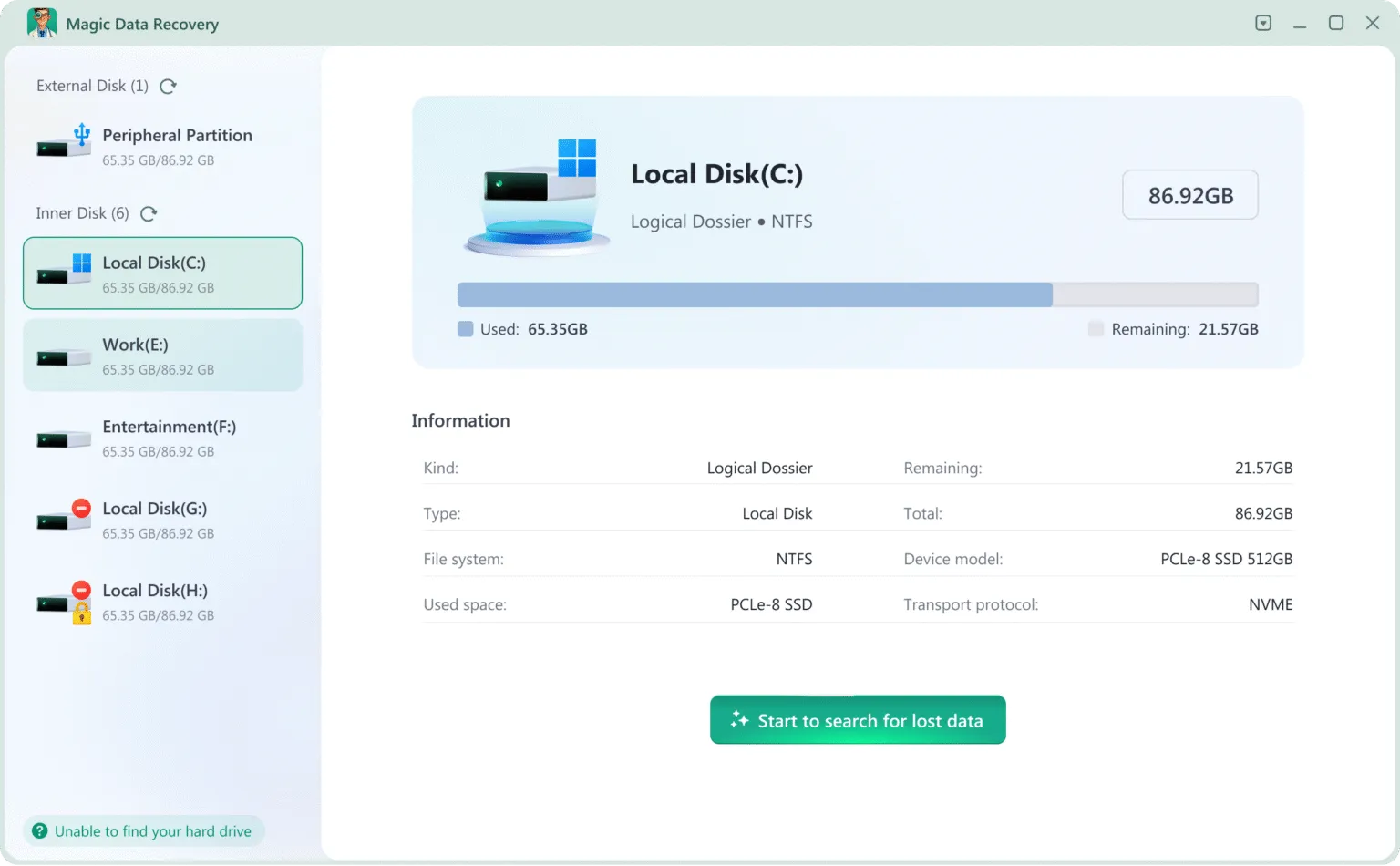
Welche Probleme löst Magic Data Recovery?
Nach einem Ransomware-Angriff sehen sich Nutzer häufig mit verschiedenen Problemen konfrontiert:
- Die Originaldateien sind nach der Verschlüsselung verschwunden.
- Der Papierkorb wurde geleert.
- In den lokalen Cloud-Synchronisierungsordnern sind Dateien verloren gegangen.
- Externe Laufwerke oder USB-Geräte konnten nicht mehr gelesen werden.
- Eine Partition, die als RAW-Partition angezeigt wird oder auf die nicht mehr zugegriffen werden kann.
- Nach der Malware-Beseitigung sind Dateien verschwunden.
- Das System wurde während der Wiederherstellung neu installiert oder zurückgesetzt.
Magic Data Recovery hilft bei diesen logischen Datenverlustszenarien. Es unterstützt die Wiederherstellung gelöschter Dateien, formatierter Laufwerke, bei Dateisystemfehlern, verlorenen Partitionen und auf vielen Speichergeräten, darunter Festplatten, SSDs, USB-Sticks, SD-Karten und externe Laufwerke.
Warum sie zuverlässiger sein kann als zufällige Korrekturen
Viele Nutzer versuchen nach einem Ransomware-Angriff riskante Maßnahmen. Sie benennen verschlüsselte Dateien um, führen Reparaturbefehle aus, formatieren das Laufwerk, installieren Windows neu oder laden unbekannte Entschlüsselungsprogramme herunter. Diese Maßnahmen können die Chancen auf eine erfolgreiche Wiederherstellung von Dateien nach einem Ransomware-Angriff.
Magic Data Recovery folgt einem sichereren Arbeitsablauf:
1. Wählen Sie das betroffene Laufwerk aus.
2. Nach verlorenen und gelöschten Dateien suchen.
3. Filtern Sie die Ergebnisse nach Dateityp, Name, Größe oder Datum.
4. Zeigen Sie, sofern möglich, eine Vorschau der wiederherstellbaren Dateien an.
5. Stellen Sie die ausgewählten Dateien auf einem anderen sicheren Laufwerk wieder her.
Dieser Prozess aus „Scannen – Vorschau – Wiederherstellen“ hilft Ihnen, Spekulationen zu vermeiden. Außerdem können Sie so vor dem Speichern prüfen, ob die gefundenen Dokumente, Fotos, Videos, Archive und anderen Dateien brauchbar sind.
Wann sollten Sie Magic Data Recovery verwenden?
Verwenden Sie Magic Data Recovery nach einem Ransomware-Angriff, wenn:
- Es fehlen Sicherungskopien oder diese sind unvollständig.
- Die Optionen zur Wiederherstellung aus der Cloud schlagen fehl.
- Die Dateien waren früher lokal gespeichert.
- Die Ransomware hat die Originale gelöscht, nachdem sie verschlüsselte Kopien erstellt hatte.
- Ein Laufwerk weist nach der Entfernung von Malware Dateisystemfehler auf.
- Sie müssen Dateien von einem externen Gerät wiederherstellen, das während des Angriffs betroffen war.
Eine detaillierte Anleitung finden Sie auch unter Magic Data Recovery Benutzerhandbuch bevor Sie wichtige Speichergeräte scannen.
Schritte zur Wiederherstellung von Dateien nach einem Ransomware-Angriff
Befolgen Sie diese Schritte sorgfältig:
1. Trennen Sie den infizierten Computer vom Netzwerk.
2. Entfernen Sie das betroffene Laufwerk, sofern möglich.
3. Schließen Sie das Laufwerk über einen USB-Adapter oder ein Gehäuse an einen einwandfrei funktionierenden Windows-PC an.
4. Installieren Sie Magic Data Recovery auf dem nicht betroffenen Computer, nicht auf dem betroffenen Laufwerk.
Unterstützt Windows 7/8/10/11 und Windows Server
5. Starten Sie die Software und wählen Sie das betroffene Laufwerk oder die betroffene Partition aus.
6. Starten Sie einen Scan und warten Sie, bis die wiederherstellbaren Dateien angezeigt werden.
7. Verwenden Sie Filter, um Dokumente, Fotos, Videos, Archivdateien oder Projektdateien zu finden.
8. Dateien in der Vorschau anzeigen, sofern verfügbar.
9. Die ausgewählten Dateien auf ein anderes intaktes Laufwerk wiederherstellen.
10. Überprüfen Sie wiederhergestellte Dateien vor dem Öffnen mit einer Sicherheitssoftware.
Diese Methode bietet Ihnen eine praktische Datenwiederherstellung nach Ransomware-Angriffen Option, wenn es sich um gelöschte, verlorene oder logisch beschädigte Daten handelt und nicht nur um verschlüsselte Dateien.
Magic Data Recovery im Vergleich zu anderen Optionen zur Wiederherstellung nach einem Ransomware-Angriff
Es gibt kein einziges Tool, das jeden Ransomware-Fall lösen kann. Die beste Wahl hängt vom Angriffsmuster ab.
Wiederherstellungsoption | Bester Anwendungsfall | Hauptvorteil | Wichtigste Einschränkung |
Sicherung und Wiederherstellung | Es gibt einwandfreie Kopien aus der Zeit vor dem Angriff | Die sicherste und umfassendste Option | Erfordert zuverlässige Datensicherungen |
Entschlüsselungsprogramm | Bekannte Ransomware mit verfügbarem Entschlüsselungsprogramm | Kann verschlüsselte Dateien entsperren | Variantenspezifisch |
Cloud-Rollback | Synchronisierte Ordner und Cloud-Dateien | Einfach für unterstützte Konten | Möglicherweise werden nur lokal gespeicherte Dateien nicht berücksichtigt |
Magic Data Recovery | Gelöschte Originale und Verlust lokaler Daten | Durchsucht die Festplatte nach wiederherstellbaren Daten | Starke Verschlüsselung kann nicht entschlüsselt werden |
Professionelle Dienstleistung | Unternehmensspeicher oder schwere Schäden | Bearbeitet komplexe Fälle | Höhere Kosten |
Deshalb, Magic Data Recovery funktioniert am besten als Teil eines mehrschichtigen Datenwiederherstellung nach Ransomware-Angriffen Plan. Dies ist besonders nützlich, wenn die integrierten Wiederherstellungsoptionen versagen und die verlorenen Dateien zuvor auf einem lokalen Laufwerk gespeichert waren.
Häufige Fehler, die den Erfolg der Datenwiederherstellung nach einem Ransomware-Angriff beeinträchtigen
Vermeiden Sie diese Fehler vor und während der Genesung.
Fehler 1: Dateien wiederherstellen, bevor die Malware entfernt wurde
Falls die Ransomware noch auf dem System läuft, könnten die wiederhergestellten Dateien erneut verschlüsselt werden. Bereinigen Sie zunächst die Umgebung und stellen Sie dann die Dateien wieder her.
Fehler 2: Wiederhergestellte Dateien auf demselben Laufwerk speichern
Das Speichern wiederhergestellter Dateien auf dem ursprünglichen Laufwerk kann dazu führen, dass andere wiederherstellbare Daten überschrieben werden. Wählen Sie daher immer ein anderes einwandfreies Laufwerk, ein externes Laufwerk oder ein USB-Gerät.
Fehler 3: Das Laufwerk zu früh formatieren
Durch das Formatieren sieht das System zwar aufgeräumt aus, doch dabei können auch Dateisystem-Einträge gelöscht werden, die Wiederherstellungsprogrammen helfen, verlorene Dateien zu finden. Stellen Sie daher zunächst wichtige Daten wieder her und reparieren oder formatieren Sie das Laufwerk erst danach.
Fehler 4: Unbekannten Entschlüsselungsprogrammen vertrauen
Gefälschte Entschlüsselungsprogramme sind weit verbreitet. Laden Sie Wiederherstellungstools nur von vertrauenswürdigen Anbietern, offiziellen Sicherheitsprojekten oder namhaften Cybersicherheitsunternehmen herunter.
Fehler 5: Annehmen, dass die Synchronisierung eine Datensicherung ist
Die Cloud-Synchronisierung kopiert Änderungen auf alle Geräte. Wenn Ransomware lokale Dateien verschlüsselt, werden die verschlüsselten Versionen möglicherweise in die Cloud synchronisiert. Nutzen Sie umgehend die Versionshistorie oder Rollback-Funktionen und erstellen Sie unabhängige Sicherungskopien.
So lässt sich die Wiederherstellung nach einem Ransomware-Angriff in Zukunft verbessern
Eine gute Vorbereitung ist der Schlüssel zur Zukunft Datenwiederherstellung nach Ransomware-Angriffen schneller und sicherer.
Beachten Sie folgende bewährte Vorgehensweisen:
- Bewahren Sie mindestens eine Offline- oder nicht vernetzte Sicherungskopie auf.
- Testen Sie die Backups regelmäßig.
- Aktivieren Sie den Versionsverlauf für wichtige Cloud-Ordner.
- Verwenden Sie seriöse Sicherheitssoftware.
- Halten Sie Windows, Browser und Unternehmensanwendungen auf dem neuesten Stand.
- Schreiben Sie den Schreibzugriff auf freigegebene Ordner ein.
- Vermeiden Sie es, Administrator-Konten für die tägliche Arbeit zu verwenden.
- Schulen Sie die Nutzer darin, Phishing-E-Mails und verdächtige Downloads zu erkennen.
- Speichern Sie wichtige Dateien an mehr als einem Ort.
- Führen Sie eine schriftliche Checkliste für den Notfall.
Backups sind nach wie vor der beste Schutz. Dennoch ist ein Wiederherstellungstool von Nutzen, wenn Datenverluste außerhalb des Backup-Fensters auftreten, lokale Dateien verschwinden oder das Dateisystem beschädigt wird.
Zusammenfassung: Der beste Plan zur Datenwiederherstellung nach einem Ransomware-Angriff
Das Beste Datenwiederherstellung nach Ransomware-Angriffen Eine Strategie lässt sich nicht mit einem einzigen Knopfdruck umsetzen. Es ist ein sorgfältiger Prozess.
Isolieren Sie zunächst die infizierten Geräte. Identifizieren Sie anschließend die Ransomware-Variante. Überprüfen Sie dann intakte Backups, den Versionsverlauf in der Cloud und vertrauenswürdige Entschlüsselungsprogramme. Wenn sich die Dateien mit diesen Methoden nicht wiederherstellen lassen und die verlorenen Daten zuvor auf einem lokalen Laufwerk gespeichert waren, verwenden Sie Magic Data Recovery, um nach gelöschten, verlorenen, formatierten oder durch Dateisystemfehler betroffenen Dateien zu suchen.
Magic Data Recovery ist empfehlenswert, da es eine echte Lücke bei der Datenwiederherstellung schließt. Es verspricht nicht, jede mit Ransomware verschlüsselte Datei zu entschlüsseln. Stattdessen bietet es Nutzern eine klare und praktische Möglichkeit, wiederherstellbare Originaldateien, gelöschte Dateien, fehlende Dokumente, verlorene Fotos, beschädigte Speicherdaten und Dateien, die von logischem Datenverlust betroffen sind, wiederherzustellen.
Wenn Sie auf der Suche nach einem sichereren und effizienteren Wiederherstellung gelöschter Dateien Als Lösung nach einem Ransomware-Vorfall ist Magic Data Recovery ein praktisches Tool, das man ausprobieren sollte, bevor man weitere Änderungen am betroffenen Laufwerk vornimmt.
Unterstützt Windows 7/8/10/11 und Windows Server
Häufig gestellte Fragen zur Datenwiederherstellung nach einem Ransomware-Angriff
Was ist die Wiederherstellung von Daten nach einem Ransomware-Angriff?
Datenwiederherstellung nach einem Ransomware-Angriff ist der Vorgang der Wiederherstellung von Dateien, nachdem Ransomware Daten verschlüsselt, gelöscht, beschädigt oder den Zugriff darauf blockiert hat. Dabei können saubere Backups, die Versionshistorie in der Cloud, offizielle Entschlüsselungsprogramme, Software zur Dateiwiederherstellung oder professionelle Wiederherstellungsdienste zum Einsatz kommen. Die richtige Methode hängt davon ab, ob die Dateien verschlüsselt, gelöscht, überschrieben oder aufgrund einer Beschädigung des Dateisystems verloren gegangen sind.
Können durch Ransomware verschlüsselte Dateien wiederhergestellt werden, ohne dass man zahlt?
Manchmal, aber nicht immer. Sie können mit Ransomware verschlüsselte Dateien möglicherweise wiederherstellen, wenn Sie über ein intaktes Backup, einen Versionsverlauf in der Cloud oder ein vertrauenswürdiges Entschlüsselungsprogramm für diese spezielle Ransomware-Variante verfügen. Wenn kein Schlüssel oder Backup vorhanden ist, kann herkömmliche Wiederherstellungssoftware die starke Verschlüsselung nicht knacken. Es ist jedoch möglich, dass gelöschte Originaldateien, die noch auf dem Laufwerk vorhanden sind, wiederhergestellt werden können.
Kann Magic Data Recovery von Ransomware verschlüsselte Dateien entschlüsseln?
Nr. Magic Data Recovery ist kein Ransomware-Entschlüsseler und sollte auch nicht als solcher dargestellt werden. Ohne den richtigen Schlüssel kann es stark verschlüsselte Dateien nicht entsperren. Seine Funktion ist eine andere: Es durchsucht Speichermedien nach gelöschten, verlorenen, formatierten oder durch Dateisystemfehler betroffenen Daten, die nach einem Ransomware-Angriff möglicherweise noch vorhanden sind.
Wann sollte ich nach einem Ransomware-Angriff eine Datenwiederherstellungssoftware einsetzen?
Verwenden Sie Software zur Datenwiederherstellung nach Ransomware-Angriffen wenn Backups, die Wiederherstellung aus der Cloud und Entschlüsselungsprogramme versagen und die Dateien ursprünglich lokal gespeichert waren. Dies ist besonders nützlich, wenn Ransomware Originaldateien gelöscht, das Dateisystem beschädigt, lokale Kopien entfernt oder dazu geführt hat, dass auf ein Laufwerk nicht mehr zugegriffen werden kann. Verwenden Sie das betroffene Laufwerk nicht mehr, bevor Sie es scannen.
Sollte ich die Ransomware entfernen, bevor ich die Dateien wiederherstelle?
Sie sollten das infizierte Gerät unverzüglich isolieren, dabei jedoch Maßnahmen vermeiden, die wiederherstellbare Daten überschreiben könnten. Für eine sicherere Wiederherstellung schließen Sie das betroffene Laufwerk an einen nicht infizierten Computer an und scannen Sie es dort. Nachdem Sie die benötigten Dateien wiederhergestellt haben, entfernen Sie die Malware, stellen Sie das System gegebenenfalls wieder her und scannen Sie die wiederhergestellten Dateien, bevor Sie sie öffnen.
Können Cloud-Backups bei der Wiederherstellung nach einem Ransomware-Angriff helfen?
Ja, Cloud-Backups und der Versionsverlauf können dabei helfen, Wiederherstellung nach einem Ransomware-Angriff, insbesondere wenn die verschlüsselten Versionen noch nicht alle unbeschädigten Kopien ersetzt haben. Überprüfen Sie OneDrive, Google Drive, Dropbox oder andere Cloud-Dienste auf Papierkörbe, Dateiversionsverlauf und Optionen zur Wiederherstellung des Kontostands. Unterbrechen Sie zunächst die Synchronisierung, falls der Angriff noch aktiv ist.
Warum sollte ich wiederhergestellte Dateien nicht auf demselben Laufwerk speichern?
Das Speichern wiederhergestellter Dateien auf demselben Laufwerk kann andere verlorene Daten überschreiben, die die Wiederherstellungssoftware noch nicht wiederhergestellt hat. Speichern Sie Dateien zur Wiederherstellung stets auf einem anderen intakten Laufwerk, einer externen Festplatte oder einem USB-Gerät. Diese Regel ist wichtig bei Wiederherstellung von Dateien nach einem Ransomware-Angriff da gelöschte Originaldateien möglicherweise nur noch im ungenutzten Speicherplatz vorhanden sind.
Wie sieht der sicherste Ablauf bei der Datenwiederherstellung nach einem Ransomware-Angriff aus?
Das sicherste Datenwiederherstellung nach Ransomware-Angriffen Die Vorgehensweise lautet: Das Gerät isolieren, die Ransomware identifizieren, intakte Backups überprüfen, den Versionsverlauf in der Cloud einsehen, nach offiziellen Entschlüsselungsprogrammen suchen, nach gelöschten oder verlorenen lokalen Dateien suchen und bei komplexen Speichersystemen Fachleute hinzuziehen. Diese Vorgehensweise verringert das Risiko und vermeidet unnötige Änderungen am betroffenen Laufwerk.

Jason ist ein Spezialist für Datenwiederherstellung und technischen Support mit über 15 Jahren praktischer Erfahrung. Er hat intensiv mit Endnutzern zusammengearbeitet, schwierige Fälle von Datenverlust behoben und praktische Lösungen für versehentlich gelöschte Daten, formatierte Laufwerke, beschädigte Dateisysteme, verlorene Partitionen, Systemausfälle und andere Notfälle im Bereich der Datenwiederherstellung bereitgestellt. Zu seinen Fachgebieten gehören außerdem Datensicherung und -wiederherstellung, Dateireparatur sowie Notfallwiederherstellung, wobei er besonderen Wert auf eine sichere, zuverlässige und technisch korrekte Beratung legt.