
Recuperación de datos perdidos de USB: recupera archivos de USB borrados, formateados o dañados

Perder archivos importantes de una memoria USB puede resultar estresante, sobre todo cuando se trata de documentos de trabajo, fotos, vídeos, proyectos escolares o copias de seguridad. La buena noticia es que, a menudo, es posible recuperar los datos perdidos de una memoria USB si los archivos no han sido sobrescritos. Tanto si tus archivos se han borrado accidentalmente, se han perdido tras un formateo, han quedado ocultos por errores del sistema de archivos o han desaparecido de una memoria USB dañada, el primer paso es siempre el mismo: deja de utilizar la memoria USB inmediatamente y elige el método de recuperación adecuado.
En esta guía, aprenderás en qué casos aún es posible recuperar archivos de un dispositivo USB, qué debes comprobar antes de utilizar un programa de recuperación, qué métodos gratuitos merece la pena probar y cómo recuperar datos perdidos de una memoria USB con Magic Data Recovery.
Compatible con Windows 7/8/10/11 y Windows Server
Índice
¿Qué es la recuperación de datos perdidos de un dispositivo USB?
La recuperación de datos perdidos en un dispositivo USB consiste en recuperar archivos que han desaparecido de una memoria USB, un pendrive o cualquier dispositivo de almacenamiento USB extraíble. Estos archivos pueden haberse perdido debido a un borrado accidental, un formateo, un error en el sistema de archivos, la eliminación de un virus, una expulsión incorrecta, una transferencia de archivos interrumpida o porque la memoria USB ha dejado de ser legible de forma repentina.
En muchos casos, los archivos perdidos no se borran inmediatamente de la unidad USB. En su lugar, el sistema marca el espacio que ocupaban como disponible para nuevos datos. Siempre que ningún archivo nuevo haya sobrescrito ese espacio, un software fiable de recuperación de datos de USB puede escanear la unidad y reconstruir los archivos recuperables.
Qué hay que hacer antes de recuperar datos perdidos de un USB
Antes de probar cualquier método de recuperación de datos perdidos de un dispositivo USB, sigue unos pasos de seguridad para evitar que la pérdida de datos empeore.
Deje de utilizar la unidad USB inmediatamente
No copies, muevas, elimines, renombres ni guardes ningún archivo nuevo en la memoria USB. Los nuevos datos podrían sobrescribir los archivos perdidos y hacer imposible su recuperación.
No formatees la memoria USB
Si Windows te indica “Debes formatear el disco antes de poder utilizarlo”, no hagas clic en «Formatear». El formateo podría reconstruir el sistema de archivos y reducir las posibilidades de que la recuperación se realice con éxito.
No utilices las herramientas de reparación demasiado pronto
Herramientas como CHKDSK pueden reparar errores del sistema de archivos, pero también pueden alterar la estructura de los archivos perdidos. Si la unidad USB contiene datos importantes, recupera primero los archivos y repara la unidad más tarde.
Prueba con otro puerto USB u ordenador
Si no se detecta la memoria USB, prueba con otro puerto USB, otro ordenador o un adaptador diferente. Esto te ayudará a determinar si el problema lo causa la memoria USB o el ordenador.
Comprueba si el dispositivo USB aparece en «Administración de discos»
Si la unidad USB aparece en «Administración de discos» de Windows con una letra de unidad, un sistema de archivos RAW o espacio no asignado, es posible que aún se pueda recuperar mediante un programa. Si no aparece en ningún sitio, es posible que la unidad tenga daños físicos.
Motivos habituales por los que se pierden datos de una memoria USB
Antes de iniciar la recuperación de datos perdidos de una memoria USB, conviene entender por qué desaparecieron los archivos. Las distintas causas requieren medidas de recuperación diferentes.
Supresión accidental
Los archivos eliminados de una memoria USB no suelen ir a parar a la Papelera de reciclaje de Windows. Si eliminas archivos de una memoria USB y luego te das cuenta de que son importantes, deja de utilizarla inmediatamente. Es posible que los archivos eliminados aún se puedan recuperar antes de que se sobrescriban.
Formateo de unidades USB
Si has formateado accidentalmente una memoria USB, es posible que aún se pueda recuperar, sobre todo si se trata de un formateo rápido. Sin embargo, si la memoria se ha sobrescrito por completo o se ha llenado de nuevos archivos tras el formateo, la probabilidad de recuperación será mucho menor.
Corrupción del sistema de archivos
Una memoria USB puede mostrar errores como “El archivo o el directorio está dañado y no se puede leer” o “Debes formatear el disco antes de poder utilizarlo”. En este caso, es posible que los archivos sigan existiendo, pero la estructura del sistema de archivos está dañada.
No se muestran los archivos del USB
A veces, los archivos quedan ocultos debido a la actividad de un virus, a cambios en los atributos de los archivos o a errores en los directorios. Es posible que veas espacio utilizado en la unidad USB, pero que no aparezca ningún archivo en el Explorador de archivos. Esta situación suele ser recuperable si el área de almacenamiento sigue intacta.
Expulsión incorrecta o transferencia interrumpida
Si se retira una unidad USB mientras se están copiando archivos, se puede dañar la tabla de archivos o dejar archivos incompletos. Si la unidad sigue apareciendo en Windows, es posible que un programa de recuperación de datos pueda analizarla y encontrar los archivos perdidos.
¿Se pueden recuperar archivos perdidos de un USB de forma gratuita?
Sí, puedes probar varios métodos gratuitos antes de recurrir a un software profesional de recuperación de datos de USB. Sin embargo, estos métodos solo funcionan en situaciones concretas.
Mostrar archivos ocultos
Si tu memoria USB muestra espacio ocupado pero faltan archivos, es posible que estos estén ocultos.
Abre el Explorador de archivos, haz clic en «Ver», activa la opción «Elementos ocultos» y comprueba si aparecen las carpetas que faltaban.
También puedes abrir el Símbolo del sistema y utilizar el comando «attrib» para eliminar los atributos de los archivos ocultos. Este método resulta útil cuando los archivos quedan ocultos debido a cambios en los atributos del sistema o a la actividad de un virus.
Restaurar desde una copia de seguridad
Si has copiado archivos del USB a OneDrive, Google Drive, Dropbox, un disco duro externo u otro ordenador, comprueba primero tu copia de seguridad. Recuperar los datos a partir de la copia de seguridad es más seguro que escanear la unidad USB original.
Prueba con otro ordenador o con otro puerto USB
A veces, el problema no es la memoria USB en sí, sino el puerto USB, el controlador o el ordenador. Conecta la memoria USB a otro ordenador o prueba con otro puerto USB antes de dar por hecho que los archivos se han perdido.
Utiliza un programa de recuperación de datos USB
Si los archivos se han borrado, se han perdido tras formatear el dispositivo o han desaparecido debido a un error en el sistema de archivos, Magic Data Recovery puede escanear la unidad USB y mostrar una vista previa de los archivos recuperables antes de proceder a la recuperación. Esto resulta útil cuando no estás seguro de si los archivos aún se pueden recuperar.
Cómo recuperar datos perdidos de una memoria USB con Magic Data Recovery
Después de respirar hondo, hay que identificar el estado de la unidad para elegir la solución adecuada.Dos escenarios
Escenario 1: La unidad funciona, pero “faltan” archivos”
Esto suele ocurrir cuando archivos borrados accidentalmente o formatear la unidad. La unidad en sí está bien, pero los archivos han “desaparecido”.
¿Por qué es posible la recuperación? Cuando eliminas un archivo o formateas la unidad, el sistema no borra los datos inmediatamente. Lo que hace es marcar el espacio que ocupa como disponible. Piense que es como quitar la ficha de un libro del catálogo de la biblioteca: el libro en sí sigue en la estantería hasta que uno nuevo ocupa su lugar. El software de recuperación de datos actúa como un bibliotecario que puede ignorar el catálogo y buscar su libro directamente en las estanterías.
Escenario 2: La unidad no se abre o muestra errores (corrupción del sistema de archivos)
Si su ordenador reconoce la unidad (por ejemplo, ve una letra de unidad en “Este PC”), pero no puede abrirla o aparece un error como “El archivo o directorio está dañado y es ilegible,es probable que el sistema de archivos de la unidad esté dañado.
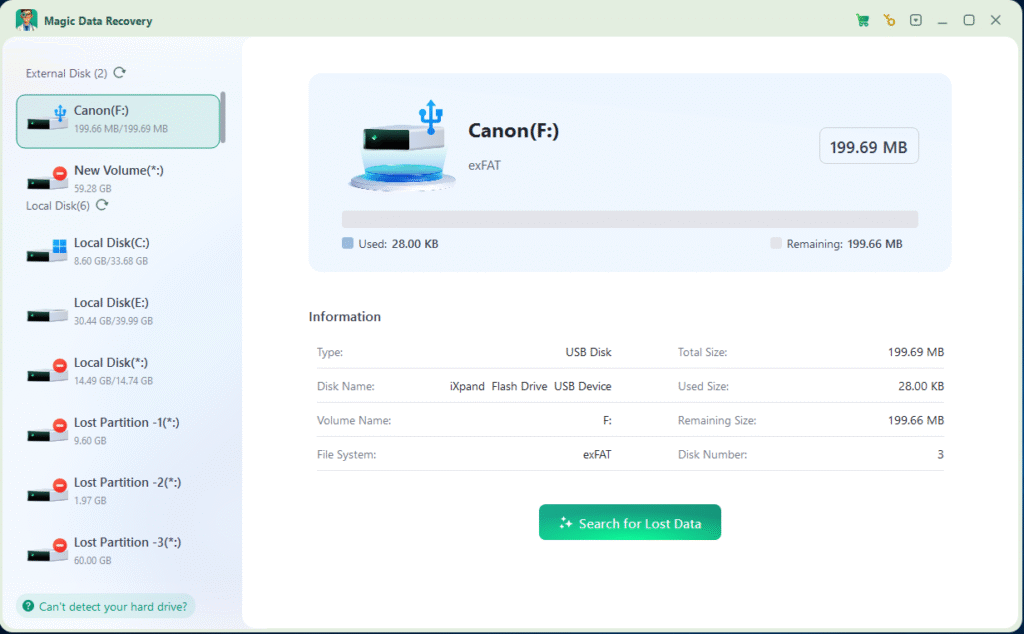
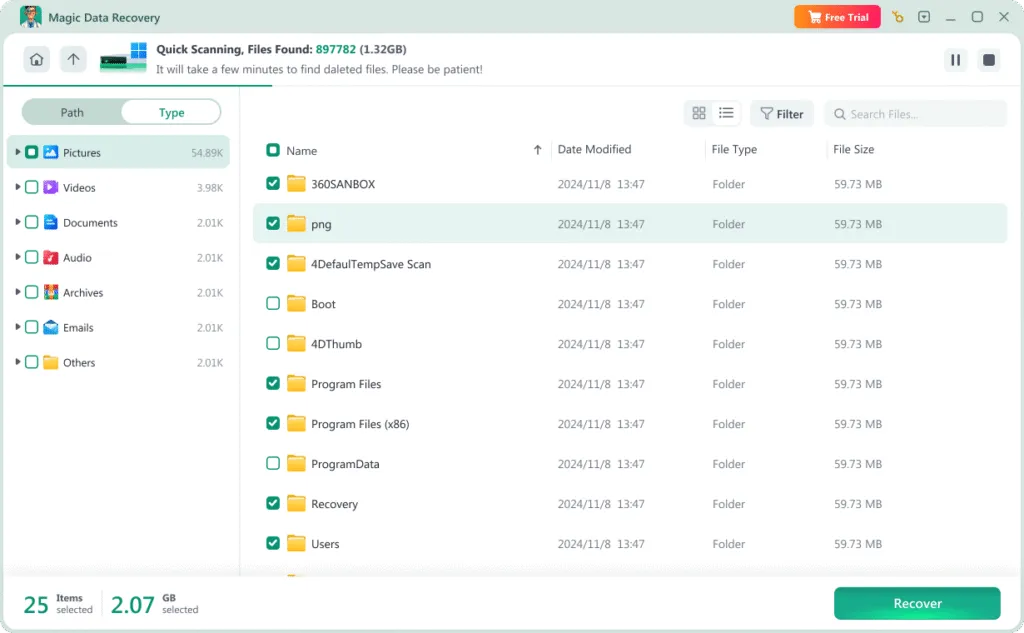
En ambos casos, Puede utilizar un software de recuperación de datos para recuperar los archivos de una unidad USB con facilidad. Aquí están los Pasos para la recuperación:
1.Instale el software de recuperación de datos: Instale un programa fiable de recuperación de datos como Magic Data Recovery en su disco duro del ordenador. Recuerda, no instale el software en la unidad USB que está intentando recuperar.
Compatible con Windows 7/8/10/11 y Windows Server


Conclusión
A menudo es posible recuperar datos perdidos de una memoria USB cuando los archivos se han borrado, formateado, ocultado o se han perdido debido a errores del sistema de archivos. La regla más importante es dejar de utilizar la memoria USB inmediatamente y evitar formatearla o guardar nuevos datos en ella.
Empieza por comprobar aspectos básicos, como los archivos ocultos, las copias de seguridad, otro puerto USB u otro ordenador. Si los archivos perdidos siguen sin aparecer, utiliza Magic Data Recovery para escanear la unidad USB, obtener una vista previa de los archivos recuperables y guardarlos en una ubicación segura. Si el Unidad USB Si el dispositivo presenta daños físicos o no se detecta en absoluto, un servicio profesional de recuperación puede ser la opción más segura.
Compatible con Windows 7/8/10/11 y Windows Server
Preguntas frecuentes
¿En qué consiste la recuperación de datos perdidos de un dispositivo USB?
¿Puedo recuperar archivos borrados de una memoria USB?
¿Puedo recuperar archivos de una memoria USB formateada?
¿Por qué no aparecen mis archivos del USB?
¿Debería ejecutar CHKDSK antes de recuperar los archivos del USB?
¿Puede Magic Data Recovery recuperar datos de una memoria USB dañada?
¿Dónde debo guardar los archivos recuperados del USB?
¿Cuándo es imposible recuperar datos perdidos de un dispositivo USB?

Vasilii es un especialista en recuperación de datos con unos 10 años de experiencia práctica en este campo. A lo largo de su carrera, ha resuelto con éxito miles de casos complejos relacionados con archivos borrados, unidades formateadas, particiones perdidas y sistemas de archivos RAW. Su experiencia abarca tanto métodos de recuperación manual con herramientas profesionales como editores hexadecimales como soluciones automatizadas avanzadas con software de recuperación. La misión de Vasilii es poner los conocimientos sobre recuperación de datos al alcance tanto de los profesionales informáticos como de los usuarios de a pie, ayudándoles a salvaguardar sus valiosos activos digitales.