
USB Lost Data Recovery: Recover Deleted, Formatted or Corrupted USB Files

Losing important files from a USB drive can be stressful, especially when the files include work documents, photos, videos, school projects, or backup data. The good news is that USB lost data recovery is often possible if the lost files have not been overwritten. Whether your files were accidentally deleted, lost after formatting, hidden by file system errors, or missing from a corrupted USB flash drive, the first step is always the same: stop using the USB drive immediately and choose the right recovery method.
In this guide, you will learn when USB files can still be recovered, what to check before using recovery software, which free methods are worth trying, and how to recover lost data from a USB drive with Magic Data Recovery.
Supports Windows 7/8/10/11 and Windows Server
Table of Contents
What Is USB Lost Data Recovery?
USB lost data recovery means recovering files that disappeared from a USB flash drive, pen drive, thumb drive, or removable USB storage device. These files may be lost because of accidental deletion, formatting, file system corruption, virus removal, improper ejection, interrupted file transfer, or a USB drive that suddenly becomes unreadable.
In many cases, the lost files are not immediately erased from the USB drive. Instead, the system marks their storage space as available for new data. As long as new files have not overwritten that space, reliable USB data recovery software can scan the drive and rebuild recoverable files.
What to Do Before USB Lost Data Recovery
Before you try any USB lost data recovery method, take a few safe steps to avoid making the data loss worse.
Stop Using the USB Drive Immediately
Do not copy, move, delete, rename, or save any new files to the USB drive. New data may overwrite the lost files and make recovery impossible.
Do Not Format the USB Drive
If Windows says “You need to format the disk before you can use it,” do not click Format. Formatting may rebuild the file system and reduce the chance of successful recovery.
Do Not Run Repair Tools Too Early
Tools such as CHKDSK may repair file system errors, but they can also change the structure of lost files. If the USB drive contains important data, recover the files first and repair the drive later.
Try Another USB Port or Computer
If the USB drive is not detected, try another USB port, another computer, or a different adapter. This helps confirm whether the problem is caused by the USB drive or the computer.
Check Whether the USB Appears in Disk Management
If the USB drive appears in Windows Disk Management with a drive letter, RAW file system, or unallocated space, software recovery may still be possible. If it does not appear anywhere, the drive may have physical damage.
Common Reasons Why Data Gets Lost from a USB Drive
Before starting USB lost data recovery, it helps to understand why the files disappeared. Different causes require different recovery actions.
Accidental Deletion
Files deleted from a USB drive usually do not go to the Windows Recycle Bin. If you delete files from a USB flash drive and later realize they are important, stop using the drive immediately. The deleted files may still be recoverable before they are overwritten.
USB Drive Formatting
If you accidentally formatted a USB drive, recovery may still be possible, especially after a quick format. However, if the drive was fully overwritten or filled with new files after formatting, the recovery success rate will be much lower.
File System Corruption
A USB drive may show errors such as “The file or directory is corrupted and unreadable” or “You need to format the disk before you can use it.” In this case, the files may still exist, but the file system structure is damaged.
USB Files Not Showing
Sometimes files are hidden because of virus activity, file attribute changes, or directory errors. You may see used space on the USB drive, but no files appear in File Explorer. This situation is often recoverable if the storage area is still intact.
Improper Ejection or Interrupted Transfer
Removing a USB drive while files are being copied can damage the file table or leave files incomplete. If the drive still appears in Windows, data recovery software may be able to scan the USB drive and find lost files.
Can You Recover Lost USB Files for Free?
Yes, you can try several free methods before using professional USB data recovery software. However, these methods only work in specific situations.
Check Hidden Files
If your USB drive shows used space but files are missing, the files may be hidden.
Open File Explorer, click View, enable Hidden items, and check whether the missing folders appear.
You can also open Command Prompt and use the attrib command to remove hidden file attributes. This method is useful when files are hidden by system attribute changes or virus activity.
Restore from a Backup
If you copied USB files to OneDrive, Google Drive, Dropbox, an external hard drive, or another computer, check your backup first. Backup recovery is safer than scanning the original USB drive.
Try Another Computer or USB Port
Sometimes the problem is not the USB drive itself but the USB port, driver, or computer. Connect the USB drive to another computer or try a different USB port before assuming the files are lost.
Use USB Data Recovery Software
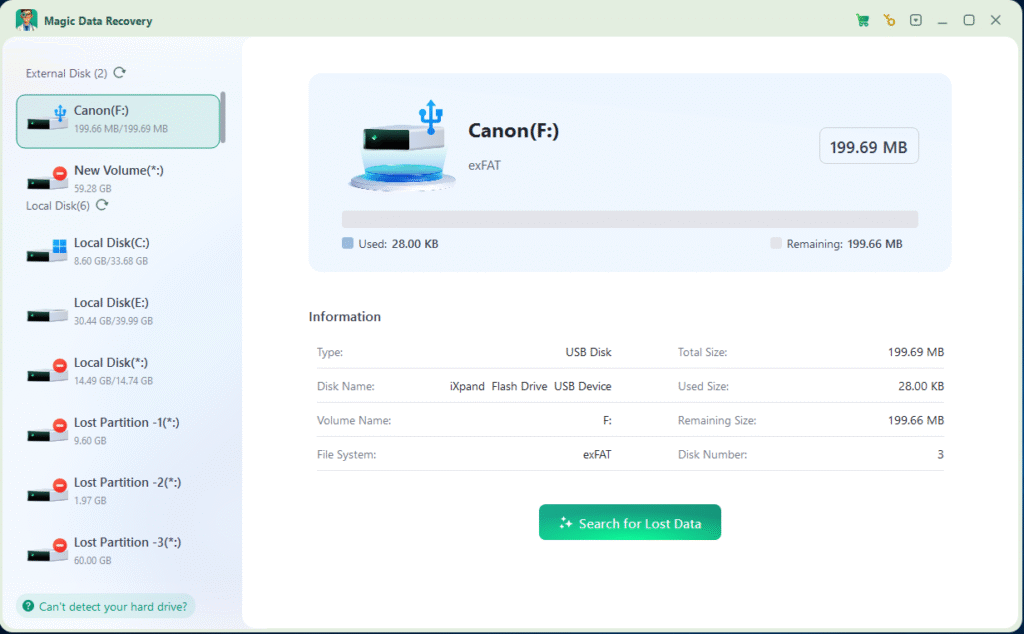
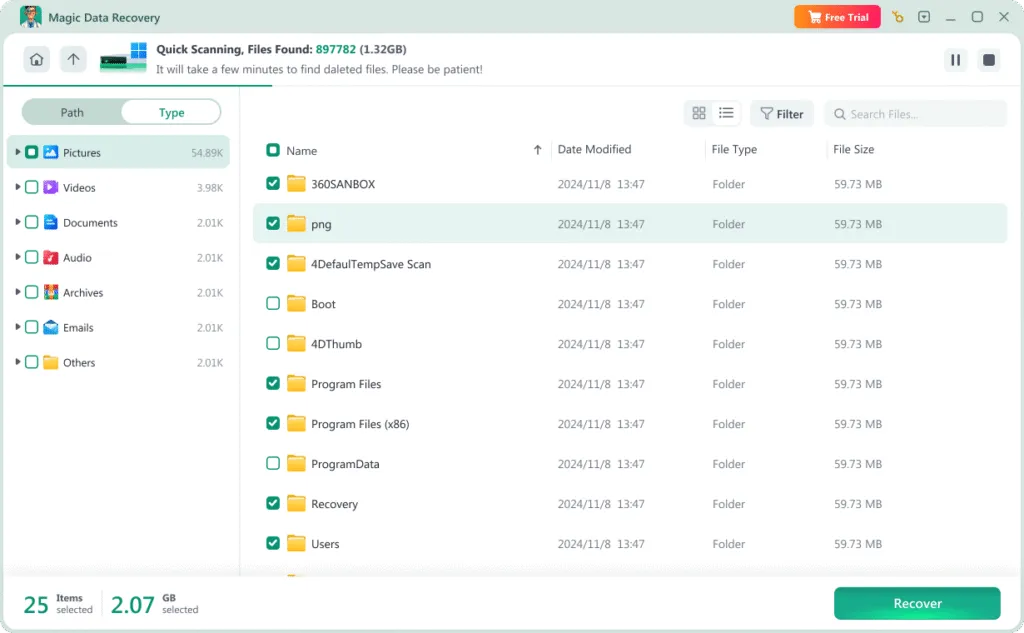
If the files were deleted, lost after formatting, or missing because of file system corruption, Magic Data Recovery can scan the USB drive and preview recoverable files before recovery. This is useful when you are not sure whether the files are still recoverable.
How to Recover Lost Data from a USB Drive with Magic Data Recovery
After taking a deep breath, you need to identify the drive’s condition to choose the right solution.Two Scenarios
Scenario 1: The Drive Works, but Files Are “Missing”
This usually happens when you’ve accidentally deleted files or formatted the drive. The drive itself is fine, but the files are “gone”.
Why is recovery possible? When you delete a file or format the drive, the system doesn’t erase the data immediately. Instead, it just marks the space it occupies as available. Think of it like removing a book’s card from the library catalog—the book itself is still on the shelf until a new one takes its place. Data recovery software acts like a librarian who can ignore the catalog and search the shelves directly for your book.
Scenario 2: The Drive Won’t Open or Shows Errors (File System Corruption)
If your computer recognizes the drive (e.g., you see a drive letter in “This PC”), but you can’t open it or you get an error like “The file or directory is corrupted and unreadable,” the drive’s file system is likely damaged.
In either scenario, you can use a Data Recovery Software to recover the files from a USB drive easily. Here are the Recovery Steps:
1.Install Data Recovery Software: Install a reliable data recovery program like Magic Data Recovery onto your computer’s hard drive. Remember, do not install the software onto the USB drive you’re trying to recover!
Supports Windows 7/8/10/11 and Windows Server


Conclusion
USB lost data recovery is often possible when files are deleted, formatted, hidden, or lost because of file system errors. The most important rule is to stop using the USB drive immediately and avoid formatting or saving new data to it.
Start with basic checks such as hidden files, backups, another USB port, or another computer. If the lost files are still missing, use Magic Data Recovery to scan the USB drive, preview recoverable files, and save them to a safe location. If the USB drive is physically damaged or not detected at all, professional recovery service may be the safer option.
Supports Windows 7/8/10/11 and Windows Server
FAQs
What is USB lost data recovery?
Can I recover deleted files from a USB drive?
Can I recover files from a formatted USB drive?
Why are my USB files not showing?
Should I run CHKDSK before recovering USB files?
Can Magic Data Recovery recover data from a corrupted USB drive?
Where should I save recovered USB files?
When is USB lost data recovery impossible?

Vasilii is a data recovery specialist with around 10 years of hands-on experience in the field. Throughout his career, he has successfully solved thousands of complex cases involving deleted files, formatted drives, lost partitions, and RAW file systems. His expertise covers both manual recovery methods using professional tools like hex editors and advanced automated solutions with recovery software. Vasilii's mission is to make reliable data recovery knowledge accessible to both IT professionals and everyday users, helping them safeguard their valuable digital assets.