
Recuperación de datos de SSD: ¿Qué se puede recuperar?

La recuperación de datos de unidades SSD ha cobrado cada vez más importancia a medida que estas unidades de estado sólido sustituyen a los discos duros tradicionales en ordenadores portátiles, de sobremesa, consolas de videojuegos y entornos empresariales. Aunque las unidades SSD ofrecen una velocidad, fiabilidad y eficiencia energética excepcionales, siguen siendo vulnerables a la pérdida de datos provocada por el borrado accidental, el formateo, la corrupción de particiones, problemas de firmware, ataques de malware y fallos inesperados de hardware.
A diferencia de los discos duros convencionales, los SSD utilizan memoria flash NAND y tecnologías avanzadas como TRIM, la recolección de basura y la nivelación de desgaste para optimizar el rendimiento. Aunque estas características mejoran la velocidad y la vida útil, también pueden hacer que Recuperación de archivos perdidos de discos SSD más complicado. Por ello, muchos usuarios creen erróneamente que, una vez que se borran los datos de un SSD, se pierden para siempre.
La buena noticia es que la recuperación de datos de un SSD sigue siendo posible en muchas situaciones, sobre todo cuando hay que recuperar archivos de una partición RAW o recuperar información de un SSD al que ya no se puede acceder. Esta guía explica cómo funciona la recuperación de un SSD, el impacto de la función TRIM en la recuperabilidad y los métodos más eficaces para restaurar los datos perdidos. Para los usuarios que buscan una solución de recuperación fiable, Magic Data Recovery ofrece herramientas especializadas diseñadas para recuperar archivos de discos SSD de forma segura y eficaz.
Compatible con Windows 7/8/10/11 y Windows Server
Índice
Recuperación de datos SSD tras borrado o formateo: Por qué es difícil
Muchos usuarios esperan poder restaurar archivos tras un borrado o formateo accidental, pero la recuperación de SSD no es tan sencilla. Esto se debe principalmente a la TRIM comando.
- Qué hace TRIM: TRIM está diseñado para optimizar SSD rendimiento, al liberar automáticamente los bloques no utilizados.
- Impacto en la recuperación: Una vez que se ha ejecutado TRIM, las posibilidades de recuperar archivos borrados se vuelven extremadamente bajas porque los bloques de datos se sobrescriben.
Esto significa que, en la mayoría de los casos, no es posible recuperar archivos tras su eliminación o tras formatear un SSD, a diferencia de lo que ocurre con los discos tradicionales Discos duros. Sin embargo, en el caso de archivos muy pequeños (de entre 1 y 2 KB), como los documentos de texto, a menudo sigue siendo posible recuperarlos con éxito. Esto se debe a que pueden almacenarse íntegramente dentro del registro del sistema de archivos, por lo que, si se intenta la recuperación rápidamente, los datos pueden recuperarse.
Cómo comprobar si TRIM está activado en su SSD
Dado que el TRIM desempeña un papel fundamental en Recuperación de datos SSD, es importante saber si está activada en tu sistema. He aquí cómo puede comprobarlo en Windows:
1.Abrir símbolo del sistema: Haga clic en Inicio menú, escriba cmd, y, a continuación, haga clic con el botón derecho y seleccione Ejecutar como administrador.

2.Introduzca el comando: Escribe lo siguiente y pulsa Intro:
fsutil behavior query DisableDeleteNotify

3.Leer el resultado:
- Si ve DisableDeleteNotify = 0, TRIM es habilitado.
- Si ve DisableDeleteNotify = 1, TRIM es desactivado.
Para más detalles, puede consultar la guía oficial de Microsoft:
👉 Comprobar el estado de TRIM mediante el comando fsutil (Microsoft Docs)
Si TRIM está activado, las posibilidades de recuperar datos borrados o formateados son extremadamente bajas.
Recuperación de datos de SSD para errores lógicos y soluciones
Aunque recuperar archivos borrados de una unidad SSD es todo un reto, la pérdida de datos no suele ser permanente. Muchos fallos de las SSD se deben a errores lógicos, incluyendo:
- Corrupción del sistema de archivos
- Una tabla de particiones dañada
- Corrupción de la unidad por pérdida repentina de energía
En estos casos, es mucho más probable que la recuperación de los datos de la unidad SSD tenga éxito.
Uso de CHKDSK (con precaución)
Una solución comúnmente sugerida para los errores de SSD es ejecutar CHKDSK (Comprobar disco) en Windows.
- Cómo funciona: CHKDSK analiza la unidad en busca de errores e intenta reparar los sistemas de archivos dañados.
- Riesgos: Aunque CHKDSK puede restaurar el acceso a la unidad, también puede conducir a nuevas pérdidas de datos, especialmente si las estructuras de los archivos ya están dañadas.
Por esta razón, CHKDSK sólo debe utilizarse cuando esté dispuesto a arriesgarse a perder algunos archivos.
Recuperación de datos ssd segura y fiable con Magic Data Recovery
Para usuarios que desean una solución más segura y fiable, Magic Data Recovery ofrece una opción potente pero fácil de usar.
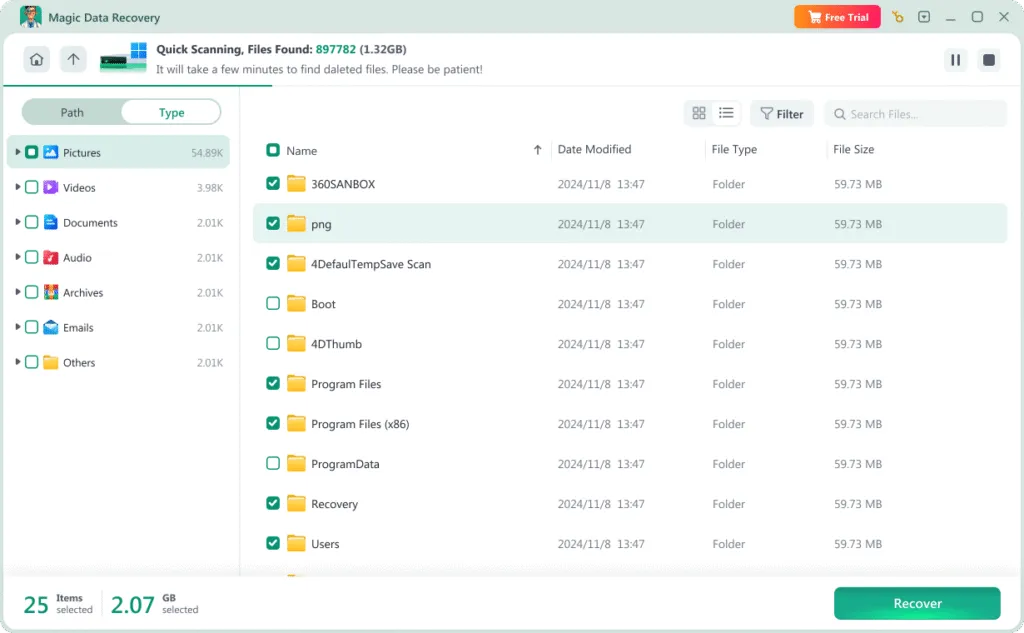
- Fácil de usar: No requiere conocimientos técnicos: basta con instalar, escanear y recuperar.
- Asegure: A diferencia de las arriesgadas herramientas de línea de comandos, realiza un análisis de sólo lectura para garantizar que sus datos originales nunca se alteren ni dañen durante el proceso de recuperación.
- Versátil: Soporta la recuperación de SSDs, HDDs, unidades USB, tarjetas de memoria y más.
- Eficaz: Escanea en profundidad en busca de particiones perdidas e inaccesibles, garantizando la mayor tasa de recuperación posible.
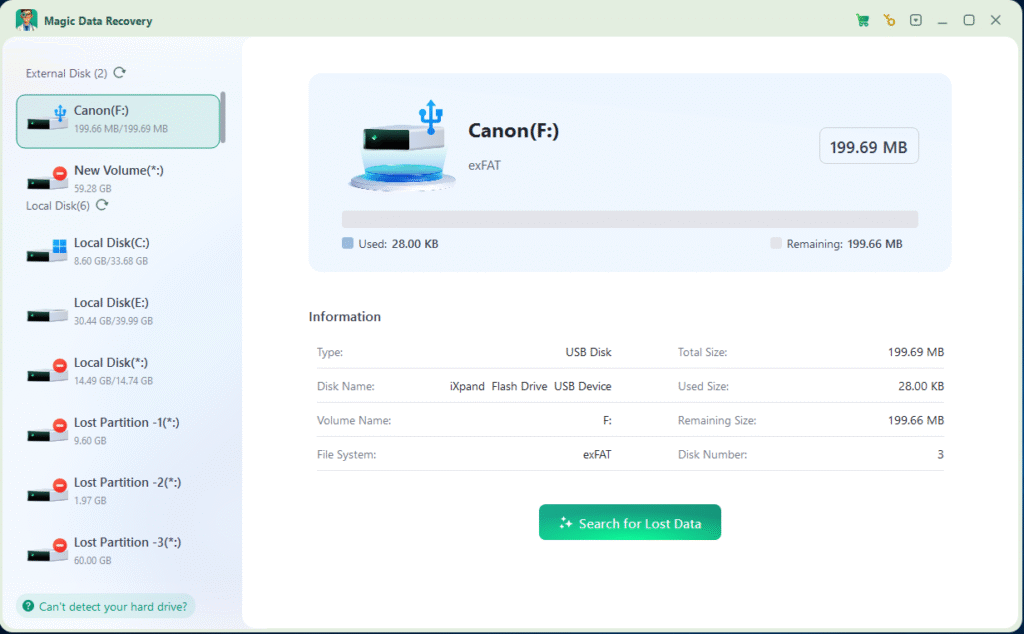
En lugar de confiar en las soluciones de ensayo y error, Magic Data Recovery proporciona una herramienta de nivel profesional diseñada específicamente para la recuperación segura de datos con los siguientes pasos:
1.Descargar e instalar el software desde el sitio web oficial.
Compatible con Windows 7/8/10/11 y Windows Server


Conclusión
A menudo es posible recuperar datos de un SSD, aunque las tecnologías modernas de los SSD, como TRIM y la recolección de basura, pueden hacer que el proceso de recuperación resulte más complejo que el de los discos duros tradicionales. ¿Es posible que pérdida de datos ya sea debido a un borrado accidental, un formateo, daños en la partición, sistemas de archivos RAW, problemas de firmware o dificultades en la detección del SSD, tomar medidas inmediatas puede aumentar considerablemente las posibilidades de que la recuperación se realice con éxito recuperación de datos de discos SSD.
Lo más importante es dejar de utilizar el SSD en cuanto se produzca la pérdida de datos. Si se sigue utilizando, se pueden activar operaciones de escritura adicionales que sobrescriban de forma permanente los archivos recuperables. Antes de intentar reparaciones, formateos o soluciones del sistema, siempre es recomendable recuperar primero los datos importantes.
Con el método de recuperación adecuado y un software de recuperación profesional, es posible resolver muchos casos de pérdida de datos en SSD sin necesidad de recurrir a costosos servicios de laboratorio. Magic Data Recovery Ayuda a los usuarios a recuperar archivos perdidos de unidades SSD, al tiempo que ofrece una experiencia de recuperación segura y fácil de usar tanto para principiantes como para usuarios avanzados.
Compatible con Windows 7/8/10/11 y Windows Server
PREGUNTAS FRECUENTES
¿Se pueden recuperar los datos de un SSD después de borrarlos?
¿Puedo recuperar datos de una unidad SSD formateada?
¿Hace TRIM imposible la recuperación de datos de las SSD?
¿Se puede recuperar un SSD averiado o que ya no funciona?
¿Se pueden recuperar archivos de un SSD que no se detecta?
¿Cómo puedo aumentar las posibilidades de recuperar los datos de un SSD?

Vasilii es un especialista en recuperación de datos con unos 10 años de experiencia práctica en este campo. A lo largo de su carrera, ha resuelto con éxito miles de casos complejos relacionados con archivos borrados, unidades formateadas, particiones perdidas y sistemas de archivos RAW. Su experiencia abarca tanto métodos de recuperación manual con herramientas profesionales como editores hexadecimales como soluciones automatizadas avanzadas con software de recuperación. La misión de Vasilii es poner los conocimientos sobre recuperación de datos al alcance tanto de los profesionales informáticos como de los usuarios de a pie, ayudándoles a salvaguardar sus valiosos activos digitales.