
Cómo recuperar un archivo Excel no guardado

Compatible con Windows 7/8/10/11 y Windows Server
Índice
Por qué no se guardan los archivos de Excel
Cómo recuperar un archivo Excel no guardado: Todos los métodos de trabajo
1. Utilice la recuperación automática incorporada de Excel (opción más eficaz)
Microsoft Excel guarda automáticamente versiones temporales del libro cada pocos minutos.
Estos son los pasos:
① Abrir Excel
② Ir a Archivo > Información
③ Seleccionar Gestionar el Libro de Trabajo
④ Pulse Recuperar libros de trabajo no guardados
⑤ Elige la versión que quieras y guárdala inmediatamente
Consejo: Si AutoRecover estaba desactivado, considere la posibilidad de activarlo en Archivo > Opciones > Guardar para evitar futuras pérdidas de datos.
2. Encontrar manualmente la ubicación del archivo Excel no guardado
Excel almacena las copias de seguridad dentro de una carpeta específica. Si la interfaz integrada no muestra su archivo, puede navegar manualmente hasta su ruta.
Ubicación común de archivos Excel no guardados (Windows)
C:Usuarios[SuNombre]AplicacionesDatosLocalMicrosoftOfficeArchivosNoGuardados
Cómo utilizarlo
① Abrir el Explorador de archivos
② Pegar la ruta
③ Busque archivos con la extensión .tmp o .xlsb extensión
④ Abra cada archivo para confirmar la versión.
Este método suele descubrir copias de seguridad temporales que Excel no muestra en el programa.
3. Compruebe la ubicación de los archivos temporales de Excel
Windows suele almacenar los autoguardados de Excel dentro del directorio temporal del sistema. Localizar esta carpeta te da otra oportunidad de recuperar tu trabajo.
Ubicación típica de los archivos temporales de Excel
C:Usuarios[SuNombre]AplicacionesDatosLocalTemp
Pasos para comprobar el temporal
① Prensa Ganar + R
② Tipo %temp%
③ Ordenar por “Fecha de modificación”
④ Buscar archivos temporales relacionados con Excel creados recientemente.
Este directorio es especialmente útil tras un fallo repentino o un reinicio forzado.
4. Restaurar desde versiones anteriores (Historial de archivos de Windows)
Si el Historial de archivos está activado, Windows puede conservar versiones anteriores de su archivo Excel.
Cómo restaurar
① Haga clic con el botón derecho del ratón en la carpeta que contiene su archivo Excel
② Elegir Restaurar versiones anteriores
③ Seleccionar la copia de seguridad correcta
④ Pulse Restaurar
Sin embargo, este método sólo funciona si el Historial de archivos o el Historial de versiones de OneDrive estaban activos de antemano.
5. Recuperar archivos Excel no guardados con Magic Data Recovery (solución profesional)
If Excel’s built-in recovery options cannot find the workbook, first determine whether the file was previously saved. Magic Data Recovery can help when an existing Excel file—or an AutoRecover or temporary copy—was deleted, lost after formatting, or became inaccessible because of a file system problem. If the workbook was never saved and no temporary copy was created, data recovery software may not be able to reconstruct it. Magic Data Recovery provides a read-only scanning engine capable of restoring Excel data even after formatting or corruption.
Por qué ayuda Magic Data Recovery
Recovers deleted Excel files and recoverable temporary copies
Compatible con entornos NTFS, FAT32, exFAT y SSD/TRIM
Escaneado de sólo lectura para proteger los datos originales
Útil cuando los archivos temporales han sido eliminados por el software de limpieza
Pasos para la recuperación
① Descargar e instalar Magic Data Recovery
Compatible con Windows 7/8/10/11 y Windows Server
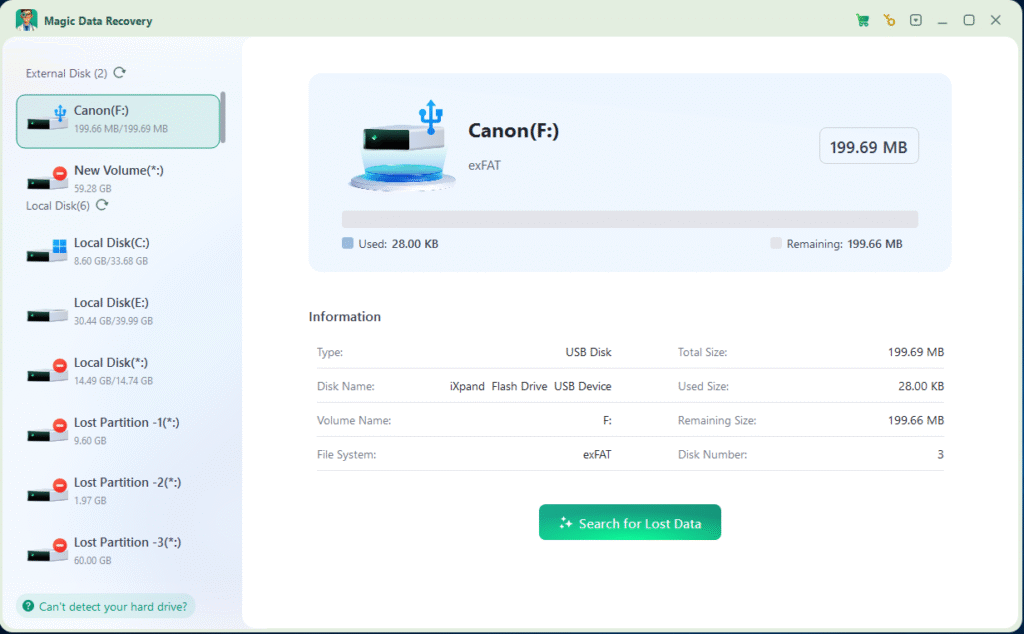
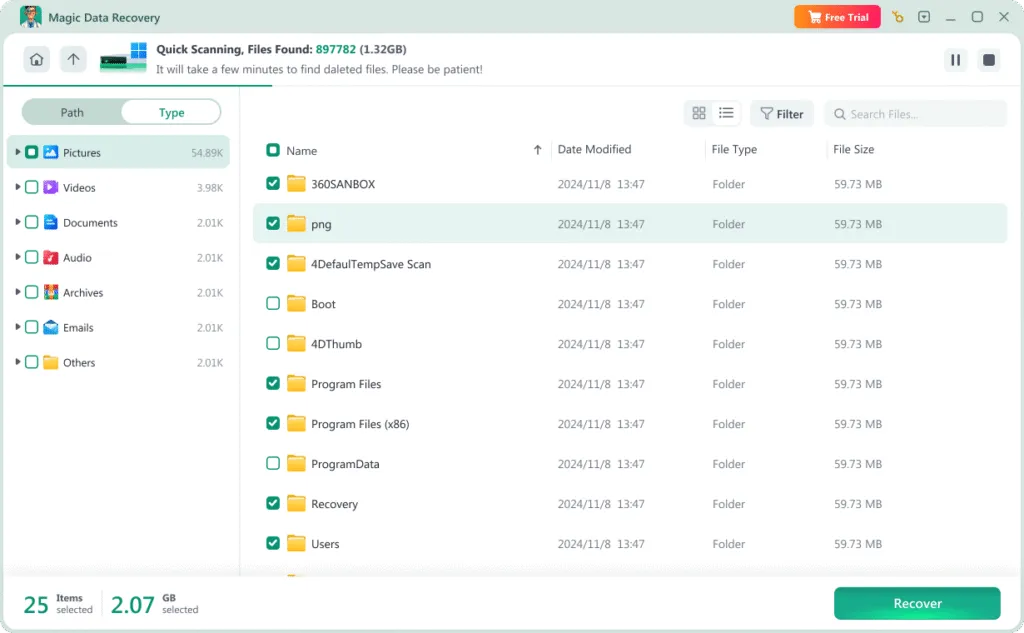
④ Filtrar resultados por tipos de archivo Excel (*.xlsx, *.xls, .xlsb)
⑤ Previsualizar el libro de trabajo recuperado y guardarlo en una ubicación segura.

Métodos comunes frente a Magic Data Recovery
Antes de elegir un método de recuperación, es importante comprender qué puede conseguir cada uno de ellos de forma realista. Las herramientas integradas de Excel son prácticas para situaciones sencillas, como el trabajo no guardado provocado por un bloqueo, pero se basan por completo en archivos temporales que pueden dejar de existir tras una limpieza del sistema o un apagado inesperado. Una herramienta profesional como Magic Data Recovery, sin embargo, escanea el disco directamente y proporciona una forma más profunda y completa de recuperar archivos de Excel perdidos cuando los métodos estándar no son suficientes. La siguiente comparativa describe las principales diferencias para que pueda elegir la opción más adecuada.
Elemento de comparación | Métodos habituales de Excel/Windows | Magic Data Recovery |
Ámbito de recuperación | Recupera archivos no guardados a través de AutoRecover o carpetas temporales | Recovers deleted Excel files and recoverable AutoRecover or temporary copies through disk scanning |
Dependencia de la ubicación de los archivos | Depende totalmente del ubicación del archivo Excel no guardado y ubicación de los archivos temporales de Excel | Funciona aunque se hayan eliminado los archivos temporales o las rutas no estén disponibles. |
Tasa de éxito | Efectivo sólo cuando los archivos temporales todavía existen y AutoRecover fue activado | Mayor porcentaje de éxito en casos complejos como borrados accidentales, fallos del sistema o errores de partición. |
Disponibilidad de versiones | Proporciona sólo la versión autoguardada más reciente | Identifica varias versiones de archivos recuperables detectadas durante la exploración del disco |
Requisitos técnicos | Requiere que Excel y las rutas de Windows funcionen con normalidad | Funciona independientemente de Excel y admite sistemas corruptos o inestables |
Facilidad de uso | Gratuito, pero a menudo requiere navegación manual y comprobar varias carpetas. | Ofrece pasos guiados, previsualización de archivos y recuperación simplificada para todos los usuarios. |
Soporte para escenarios avanzados | No es adecuado para archivos borrados o rutas del sistema que faltan | Useful when a previously saved Excel file is lost because of deletion, formatting, a RAW partition, or file system errors |
El mejor caso de uso | Escenarios básicos no guardados tras accidentes menores | Pérdida grave de datos, borrado o problemas a nivel de sistema que las herramientas estándar no pueden resolver |
Resumen
Compatible con Windows 7/8/10/11 y Windows Server
Cómo recuperar un archivo Excel no guardado Preguntas frecuentes
¿Dónde puedo encontrar la ubicación del archivo Excel no guardado?
¿Cómo se recupera un archivo Excel tras un fallo?
¿Puedo restaurar manualmente los archivos temporales de Excel?
¿Qué ocurre si se desactiva la opción AutoRecover?
¿Puede Excel recuperar archivos sobrescritos?
¿Se borran automáticamente los archivos temporales de Excel?
¿Recuperará Magic Data Recovery archivos Excel dañados?
¿Es posible recuperar un archivo Excel eliminado definitivamente?

Erin Smith es reconocida como una de las redactoras más profesionales de Amagicsoft. Ha perfeccionado continuamente sus habilidades de escritura durante los últimos 10 años y ha ayudado a millones de lectores a resolver sus problemas tecnológicos.