
Recuperar archivos borrados hace dos años: 5 formas de hacerlo
¿Podrías Recuperar archivos borrados hace dos años, ¿o ha pasado demasiado tiempo? La respuesta sincera es: a veces. La fecha por sí sola no determina si un archivo borrado se puede recuperar. Lo que haya ocurrido con el espacio de almacenamiento después es mucho más importante. Si has dejado de utilizar un disco duro antiguo, has conservado una copia de seguridad o has sincronizado el archivo con la nube en algún momento, la recuperación aún puede ser posible. Sin embargo, un SSD en uso activo supone un caso mucho más complicado.
Esta guía explica cómo evaluar tus posibilidades, dónde buscar copias olvidadas y cómo intentar recuperarlas sin empeorar la situación. Puedes empezar con Amagicsoft’s guía de recuperación de archivos eliminados o escanear una unidad de Windows accesible con Magic Data Recovery cuando las copias de seguridad no sirven de nada.
Primera regla: Deja de escribir datos nuevos en la unidad que contenía los archivos eliminados. No instales programas de recuperación, no descargues actualizaciones ni guardes los archivos recuperados en esa misma unidad.
Compatible con Windows 7/8/10/11 y Windows Server
Índice
¿Se pueden recuperar archivos borrados hace dos años?
Sí, es posible que recuperar archivos borrados hace dos años, pero ninguna herramienta puede garantizar el éxito. Cuando Windows elimina un archivo, normalmente borra la referencia del sistema de archivos a esos datos y marca el espacio ocupado como disponible. El contenido original puede permanecer allí hasta que Windows u otra aplicación reutilice esos sectores.
Esa distinción explica por qué la antigüedad de un borrado puede llevar a confusión. Un disco duro portátil que haya estado guardado en un cajón durante dos años puede seguir conteniendo los datos antiguos. Por el contrario, una unidad del sistema que se utilice a diario puede sobrescribir ese mismo espacio en cuestión de horas, días o meses.
La tecnología de almacenamiento también es importante. En muchos SSD modernos, el Comando TRIM indica a la unidad que los bloques eliminados ya no contienen datos necesarios. De este modo, el SSD puede borrar esos bloques durante el proceso de limpieza de memoria. Como resultado, las posibilidades de recuperación de datos de un SSD con la función TRIM activada suelen ser mucho menores que las de recuperación de un disco duro mecánico sin usar.
Comprobación de posibilidades de recuperación rápida
Situación | Probabilidad alta | La mejor primera acción |
Existe una copia de seguridad o una copia sincronizada | Alta | Restaurar la copia sin escanear la unidad original |
Se desconectó un disco duro externo tras el borrado | De regular a bueno | Conéctalo como unidad secundaria y realiza un análisis en modo de solo lectura |
A partir de entonces, la memoria USB o la tarjeta SD apenas se utilizaron | Moderado | Si es posible, bloquea la tarjeta y, a continuación, escanéala. |
Un disco duro se utilizó de forma habitual durante dos años | Bajo a incierto | Deja de utilizarlo y realiza un análisis desde otra instalación de Windows |
Un SSD con TRIM activado permaneció encendido y activo | Bajo | Comprueba las copias de seguridad y otras copias antes de iniciar un análisis |
La unidad hace clic, se desconecta o no se detecta | No lo hagas tú mismo | Apágalo y acude a un centro de recuperación de datos |
Estas cifras son estimaciones orientativas, no garantías. El tamaño del archivo, la fragmentación, el formato, el cifrado y las escrituras posteriores pueden influir en el resultado.
¿Qué factores determinan si los archivos antiguos eliminados se pueden recuperar?
Antes de intentar recuperar archivos borrados hace años, ten en cuenta cuatro factores.
1. Sobrescritura
La sobrescritura es el mayor obstáculo. Un archivo eliminado solo puede recuperarse mientras los bloques de almacenamiento en los que se encontraba sigan conteniendo los datos originales. Una vez que los nuevos datos sustituyen a esos bloques, el software de recuperación no puede reconstruir el contenido sobrescrito. Incluso un archivo localizado por su nombre puede abrirse solo parcialmente o aparecer dañado si solo se han conservado algunos de sus bloques.
2. Disco duro (HDD) frente a SSD
Un disco duro tradicional (HDD) escribe los datos de forma magnética y, por lo general, no borra todos los sectores eliminados de una sola vez. Esto permite que las herramientas de recuperación encuentren registros de archivos antiguos o firmas de archivos sin procesar. Los SSD funcionan de forma diferente. La función TRIM y la recolección interna de basura pueden eliminar el contenido eliminado antes de que otro archivo visible ocupe la misma dirección lógica.
3. Actividad desde la eliminación
Cada actualización de Windows, caché del navegador, instalación de aplicaciones, importación de fotos y documento guardado puede ocupar espacio libre. Por lo tanto, una unidad C: casi llena que se utiliza a diario crea un entorno de recuperación deficiente. Una unidad externa desconectada ofrece un entorno mucho mejor.
4. Copias de seguridad y copias secundarias
El original eliminado no es tu única opción. El Historial de archivos, una copia de seguridad externa, OneDrive, un portátil antiguo, los archivos adjuntos de correo electrónico, las aplicaciones de mensajería y la copia de un compañero de trabajo pueden conservar el archivo de forma independiente. Cuando la gente pregunta cómo Recuperar archivos borrados hace dos años, esta búsqueda más amplia suele dar mejores resultados que escanear primero el disco.
Qué hay que hacer antes de intentar la recuperación
Toma estas precauciones antes de poner en marcha cualquier herramienta:
- Deja de utilizar el dispositivo afectado. Apaga el ordenador si los datos que faltan se encontraban en su disco duro interno.
- No instales software en esa unidad. Utiliza otro ordenador u otra unidad física para la instalación.
- Prepara un destino aparte. Los archivos recuperados deben guardarse en un disco diferente.
- Comprueba si hay síntomas físicos. Si se oyen chasquidos o chirridos, se producen desconexiones repetidas o falta una unidad en «Administración de discos», es necesario recurrir a la ayuda de un profesional.
- Conserva las pruebas importantes. Si los archivos tienen importancia jurídica o comercial, plantéate realizar una imagen sector por sector o recurrir a un servicio forense cualificado antes de realizar ningún experimento.
Estos pasos no mejoran los datos que ya han sido sobrescritos. Evitan que nuevas escrituras evitables reduzcan las posibilidades restantes.
Cómo recuperar archivos borrados hace dos años: 5 métodos seguros
Empieza por métodos que no alteren el almacenamiento original. Recurre al escaneo del disco solo si no existe ninguna copia utilizable.
Método 1: Buscar en copias de seguridad, almacenamiento en la nube y dispositivos antiguos
La forma más rápida de recuperar archivos borrados hace años A menudo consiste en encontrar una copia que se haya conservado. Busca más allá de la carpeta en la que se encontraba originalmente el archivo.
- Abre OneDrive, Google Drive, Dropbox, iCloud Drive u otro servicio que utilizases en aquel momento.
- Comprueba las papeleras de reciclaje en la nube y el historial de versiones, teniendo en cuenta que los plazos de conservación estándar rara vez superan los dos años.
- Revisa las unidades de copia de seguridad externas, las instantáneas de NAS, los conjuntos de copias de seguridad de Windows y las imágenes antiguas del sistema.
- Busca en ordenadores antiguos, teléfonos en desuso, cámaras, tarjetas SD y memorias USB.
- Busca correos electrónicos por nombre de archivo, extensión, destinatario, nombre del proyecto y fecha aproximada.
- Revisa Slack, Teams, WhatsApp u otros servicios en los que hayas subido el archivo.
- Pregunta a los colaboradores si se han descargado o han recibido una copia.
Por ejemplo, es posible que un diseñador haya borrado un archivo PSD de un ordenador portátil hace dos años, pero que aún encuentre una versión compartida en un hilo de correo electrónico. Esa copia intacta es más segura y útil que un fragmento de disco recuperado parcialmente.
Método 2: Restaurar con el Historial de archivos o las versiones anteriores
El Historial de archivos de Windows solo puede restaurar una copia anterior si lo has activado y el destino de copia de seguridad sigue conteniendo la versión correspondiente. No retrocede en el tiempo por sí solo.
- Conecta la unidad o la ubicación de red que se utilizaba anteriormente para el Historial de archivos.
- Abre el menú «Inicio» y busca Recupera tus archivos con «Historial de archivos».
- Ve a la carpeta en la que antes se encontraba el archivo que falta.
- Utiliza las flechas para consultar las fechas disponibles.
- Selecciona el archivo y restáuralo, preferiblemente en una ubicación alternativa primero.
También puedes hacer clic con el botón derecho del ratón en la carpeta en la que se encontraba anteriormente el archivo y seleccionar Propiedades, y abrir Versiones anteriores. Es posible que aparezca una versión si la ha creado «Historial de archivos» u otro sistema de copias de seguridad. Copia el archivo que necesites en lugar de sustituir la carpeta actual de inmediato.
No confundas la función «Restaurar sistema» con una copia de seguridad de archivos personales. La función «Restaurar sistema» se centra principalmente en la configuración del sistema, los controladores y las aplicaciones; no es un método fiable para recuperar documentos personales eliminados.
Método 3: Analizar la unidad con Magic Data Recovery
Si no existe ninguna copia de seguridad y el dispositivo funciona con normalidad, un análisis en profundidad es la forma más práctica de buscar los datos que aún contiene. Magic Data Recovery Recupera archivos perdidos por borrado, formateo, errores del sistema de archivos, particiones inaccesibles y otras situaciones de pérdida lógica de datos. Puede escanear discos duros internos, unidades externas, memorias USB, tarjetas de memoria y SSD conectados a Windows.
Su utilidad en casos de eliminación antigua radica en un flujo de trabajo de escaneo controlado y de solo lectura: selecciona el volumen afectado, escanéalo, filtra los resultados, previsualiza los archivos compatibles y guarda solo los elementos útiles en otro dispositivo. Es compatible con más de 5.000 formatos de archivo, por lo que con un solo escaneo se pueden buscar documentos, fotos, vídeos, archivos comprimidos y tipos de archivo menos comunes. El paso de la vista previa es importante porque el nombre de un archivo en los resultados no garantiza que el contenido del mismo se mantenga intacto.
Cómo utilizar Magic Data Recovery
1. Conecta el dispositivo afectado a un ordenador con Windows como unidad secundaria. Si el archivo eliminado se encontraba en la unidad C:, instala y ejecuta el software desde otro disco físico o conecta la unidad antigua a otro ordenador.
Compatible con Windows 7/8/10/11 y Windows Server
2. Inicia Magic Data Recovery y selecciona el volumen en el que se guardó originalmente el archivo.
3. Inicia el análisis. Deja que el análisis en profundidad termine cuando los resultados rápidos no incluyan el elemento que falta.
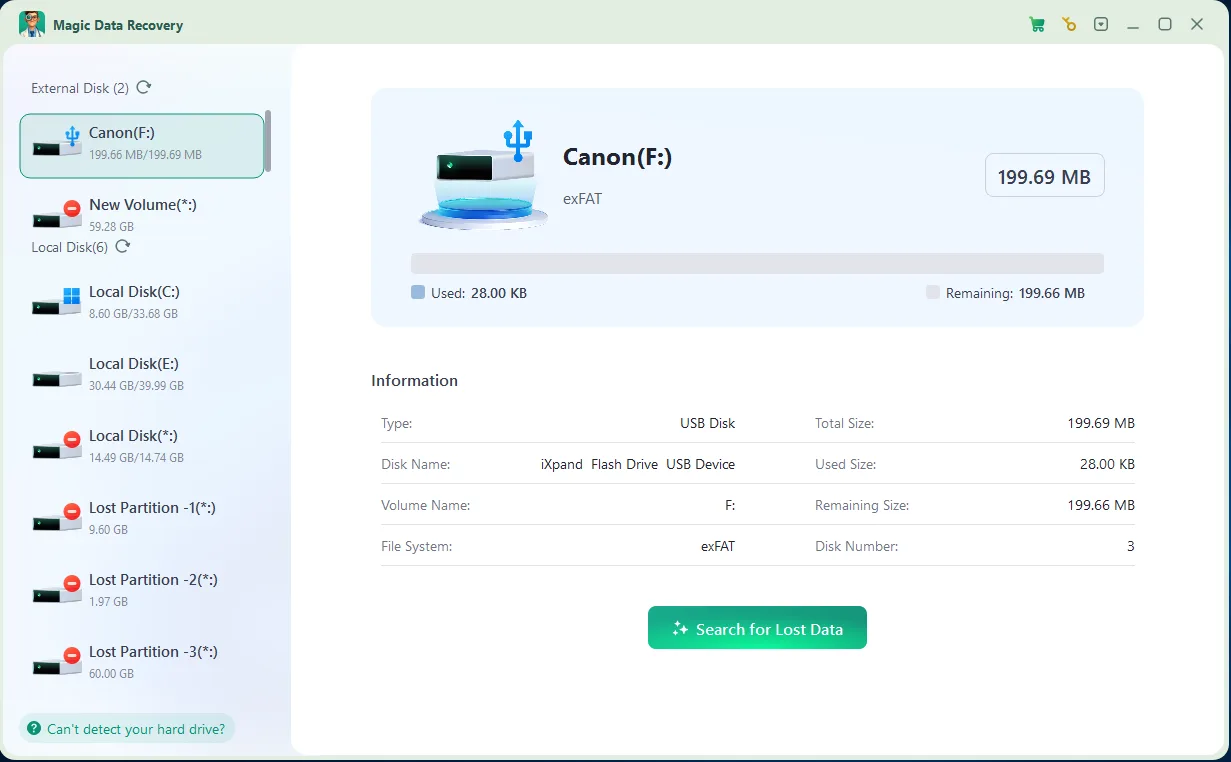
4. Filtra por tipo de archivo, nombre, tamaño o ruta. Comprueba también los archivos encontrados por firma, ya que es posible que los registros antiguos del directorio ya no existan.
5. Previsualiza las coincidencias probables. Una previsualización correcta es una prueba más fiable de la integridad que el nombre del archivo original por sí solo.

6. Selecciona los archivos y recupéralos en otra unidad física.
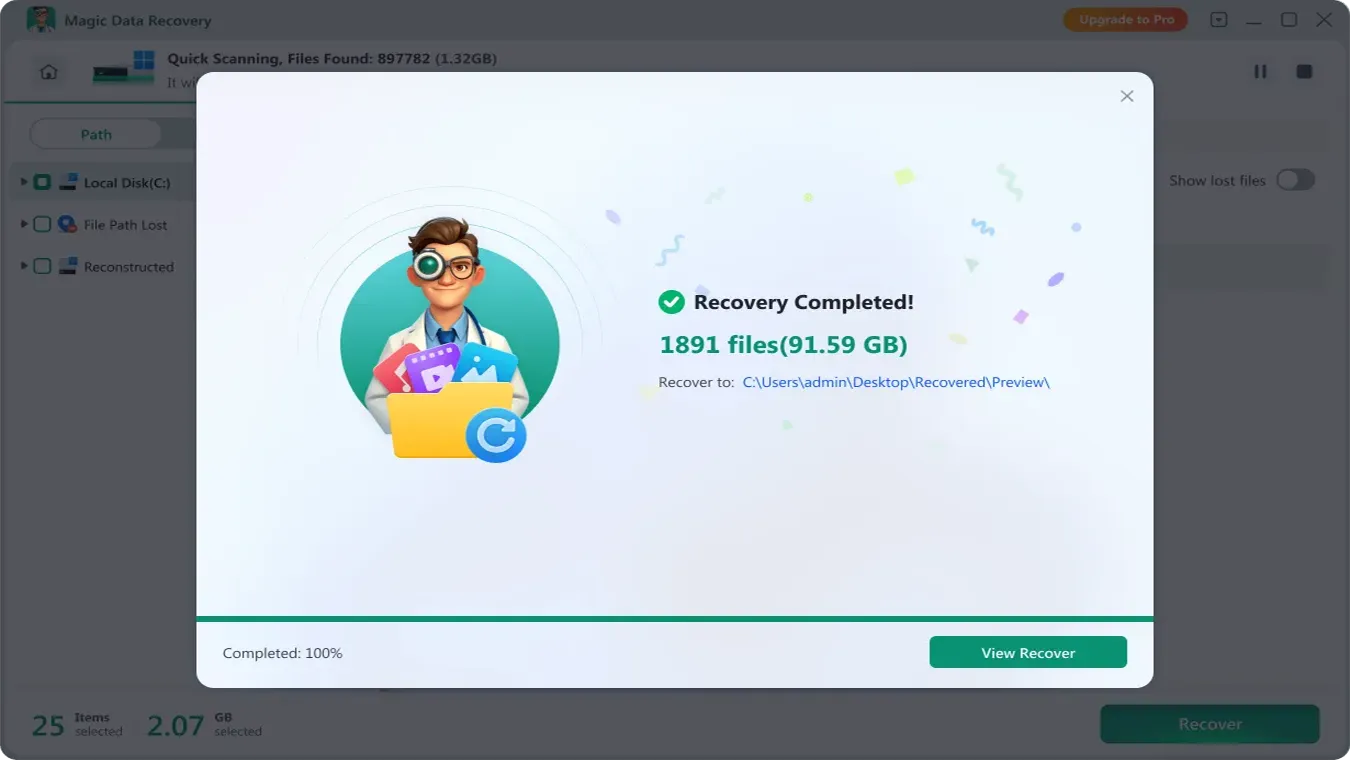
7. Abre y comprueba las copias restauradas antes de reorganizarlas o cambiarles el nombre.
Magic Data Recovery resulta más adecuado que la navegación manual cuando han desaparecido entradas del directorio, una partición ha dejado de ser accesible o un formateo rápido ha modificado el sistema de archivos. No obstante, no puede recuperar sectores que la unidad haya sobrescrito, borrado de forma segura o descartado mediante la función TRIM del SSD. Esta limitación se aplica al software de recuperación de datos en general.
Método 4: Prueba la función de recuperación de archivos de Windows
Microsoft proporciona Recuperación de archivos de Windows, una utilidad de línea de comandos para archivos que faltan en el almacenamiento local. Es compatible con unidades internas, unidades externas y dispositivos USB, pero no permite la recuperación directa desde el almacenamiento en la nube ni desde recursos compartidos de red. Las recomendaciones de Microsoft aconsejan reducir al mínimo el uso del ordenador y elegir una unidad de destino distinta de la de origen.
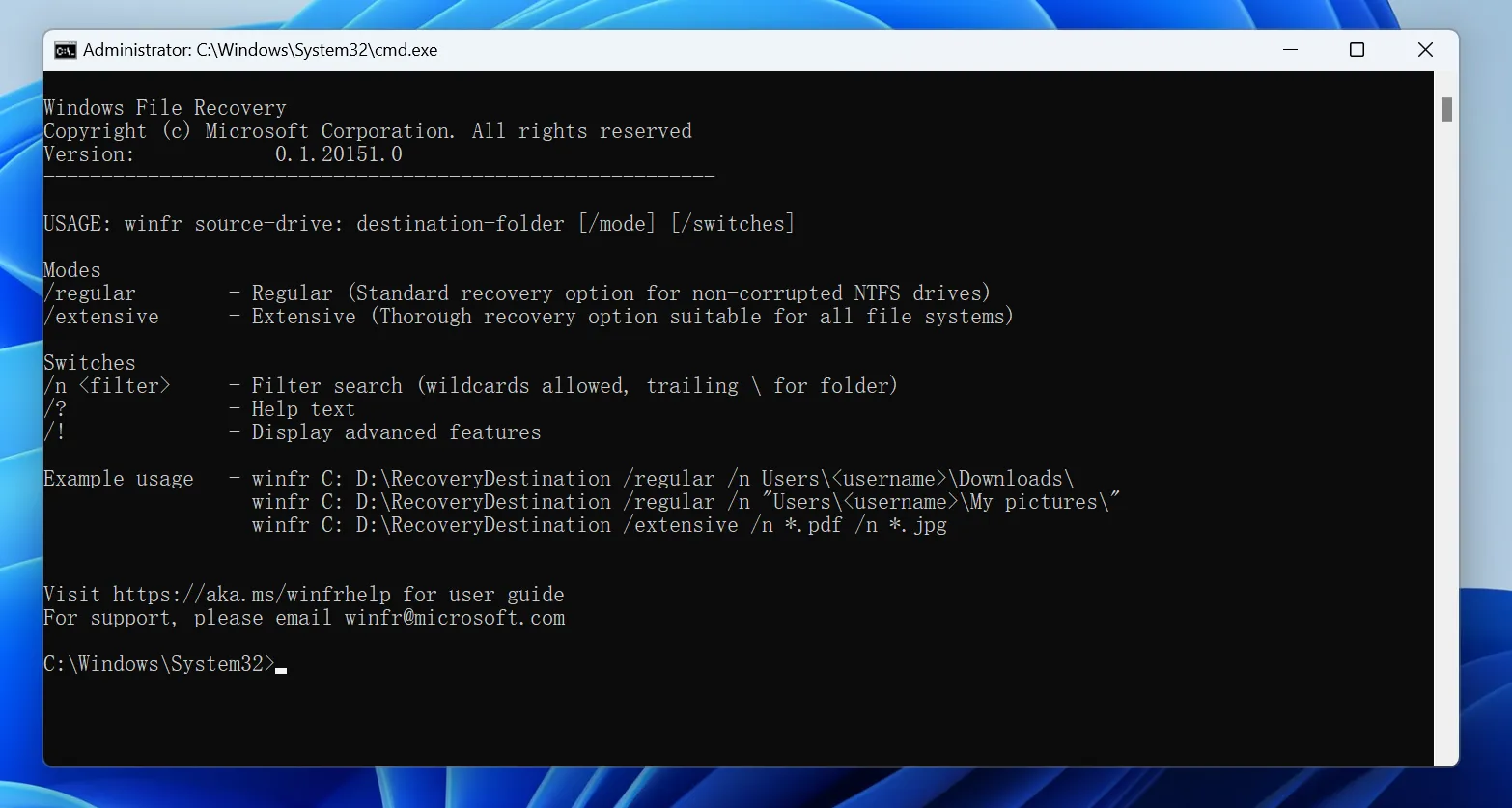
Instala la aplicación desde la Tienda de Microsoft en una unidad segura, si es posible. A continuación, abre la Terminal o el Símbolo del sistema como administrador. Para un archivo eliminado hace tiempo en una unidad NTFS, un ejemplo de comando es:
- winfr E: F: /extensive /n *.docx /n *.pdf
En este ejemplo, E: es el origen y F: es el destino. La opción /extensive realiza una búsqueda más amplia, mientras que los filtros /n limitan los resultados a archivos de Word y PDF. Sustituye las letras de unidad y los tipos de archivo por tus propios valores.
Windows File Recovery es gratuito, pero su interfaz de línea de comandos aumenta el riesgo de cometer errores y ofrece una revisión de los resultados menos práctica. Si quieres previsualizaciones y un filtrado más sencillo mientras intentas Recuperar archivos borrados hace dos años, una herramienta gráfica de recuperación puede facilitar el flujo de trabajo.
Método 5: Ponte en contacto con un laboratorio profesional de recuperación de datos
Deja de intentar la recuperación por tu cuenta y ponte en contacto con un laboratorio de confianza cuando:
- el disco duro hace ruidos, chirría, reduce la velocidad o deja de funcionar de forma intermitente;
- el dispositivo haya sufrido daños por agua, fuego, golpes o problemas eléctricos;
- los datos perdidos tienen un gran valor económico, jurídico o personal;
- la unidad utiliza hardware dañado o un controlador defectuoso;
- Es necesario seguir un proceso forense y contar con una cadena de custodia documentada.
Un laboratorio puede reparar o estabilizar el hardware defectuoso y recuperar los sectores legibles con equipos especializados. Sin embargo, no puede revertir una sobrescritura efectiva ni recrear bloques de SSD que ya hayan sido borrados mediante TRIM. Solicita un diagnóstico, un presupuesto por escrito, las condiciones de privacidad y una política de tarifas clara antes de dar tu visto bueno al trabajo.
¿Qué método deberías probar primero?
Tu situación | Orden recomendado |
El archivo se ha sincronizado o compartido | Nube/historial de versiones → correo electrónico y mensajes → dispositivos antiguos |
El archivo estaba en un disco duro desconectado | Copias de seguridad → Análisis Magic Data Recovery → Recuperación de archivos de Windows |
El archivo se encontraba en un disco duro de Windows activo | Dejar de usar → copias de seguridad → escanear desde otro ordenador |
El archivo estaba en un SSD activo | Copias de seguridad y copias → análisis minucioso → enviar al laboratorio solo si el hardware está defectuoso |
La unidad presenta un fallo físico | Apagar → laboratorio profesional |
Este orden protege el dispositivo original y da prioridad a las copias intactas. Además, evita perder tiempo con la Papelera de reciclaje cuando el plazo de retención de Windows o en la nube ya ha expirado hace tiempo.
Errores comunes que reducen las posibilidades de recuperación
A menudo, los usuarios provocan más daños tras darse cuenta de la pérdida. Evita estos errores:
- Seguir utilizando el ordenador. Los procesos en segundo plano escriben datos incluso cuando no estás guardando archivos de forma deliberada.
- Instalación de la herramienta en el volumen afectado. Es posible que el programa de instalación sobrescriba precisamente los sectores que necesitas.
- Volver a los orígenes. Los archivos recuperados pueden sobrescribir otro contenido eliminado durante la misma sesión.
- Primero se ejecuta CHKDSK. Las reparaciones del sistema de archivos modifican los metadatos y no están diseñadas para recuperar archivos de usuario eliminados.
- Escanear repetidamente un disco con fallos físicos. Cada vez que se apague y se vuelva a encender el aparato, el daño mecánico puede agravarse.
- Confiar en el nombre de un archivo sin previsualizarlo. Los metadatos antiguos pueden conservarse aunque se haya perdido parte o la totalidad del contenido del archivo.
- Espero que me den una garantía. Cualquier afirmación de que la recuperación es segura al cabo de dos años pasa por alto el borrado, la función TRIM, el cifrado y el estado del dispositivo.
Cómo evitar que se repita el mismo problema la próxima vez
Una vez realizada la recuperación, establece una rutina de copias de seguridad basada en el Principio 3-2-1: guarda tres copias de los datos importantes, almacénalas en dos tipos de soportes y mantén una copia fuera de las instalaciones. Activa el «Historial de archivos» u otra copia de seguridad con versiones, pero revisa la configuración de retención para que las versiones anteriores no desaparezcan de forma inesperada.
En el caso de las carpetas en la nube, infórmate sobre cómo funciona la sincronización de la eliminación. Al eliminar un archivo de una carpeta sincronizada, este puede desaparecer de la nube y de otros dispositivos conectados. Por último, realiza algunas pruebas de restauración cada pocos meses. Una copia de seguridad que nunca haya superado una prueba de restauración sigue siendo una mera suposición, no una protección.
Conclusión
Es posible que pueda Recuperar archivos borrados hace dos años, sobre todo cuando se conserva una copia de seguridad o cuando el disco duro original, la unidad USB o la tarjeta de memoria apenas se han utilizado tras el borrado. Empieza por buscar en cuentas en la nube, dispositivos antiguos, el correo electrónico y el «Historial de archivos». Si no hay ninguna copia, deja de escribir en la fuente y realiza un análisis minucioso.
Magic Data Recovery Es una opción práctica para los usuarios de Windows que necesitan escanear dispositivos de almacenamiento en los que se han borrado, formateado o se ha dañado el sistema de archivos, sin tener que lidiar con comandos complejos. Su flujo de trabajo de filtrado y vista previa te ayuda a determinar qué se puede recuperar antes de guardar los archivos en otra ubicación. Para obtener más información sobre cómo funciona la recuperación de archivos borrados, consulta la guía de Amagicsoft sobre recuperación de archivos eliminados. La lección clave sigue siendo sencilla: el tiempo transcurrido importa menos que la actividad posterior del disco duro, pero el momento más seguro para actuar es ahora.
Compatible con Windows 7/8/10/11 y Windows Server
Preguntas frecuentes sobre cómo recuperar archivos borrados hace años
¿Es realmente posible recuperar archivos borrados hace dos años?
Sí, pero solo si aún existe una copia de seguridad intacta o si los datos del disco siguen siendo recuperables. Un disco duro desconectado puede conservar el contenido eliminado durante años, mientras que un SSD en uso activo puede borrarlo mucho antes mediante TRIM y la recolección de basura.
¿La Papelera de reciclaje conserva los archivos eliminados durante dos años?
Windows no establece un plazo de retención fijo de dos años. El contenido de la Papelera de reciclaje depende del espacio asignado, de las acciones del usuario y de la configuración de limpieza. Si se ha vaciado la Papelera o se han eliminado los elementos más antiguos, comprueba las copias de seguridad y revisa la unidad original.
¿Puedo recuperar archivos antiguos que he borrado de un SSD?
Puedes intentarlo, pero la recuperación de un SSD suele tener pocas posibilidades de éxito una vez que TRIM ha eliminado los bloques. Deja de utilizar el SSD, comprueba primero las copias de seguridad y realiza el análisis desde otro sistema. El software no puede restaurar los bloques que TRIM ya ha borrado.
¿Se pueden recuperar los archivos sobrescritos al cabo de dos años?
Ningún programa de recuperación puede reconstruir el contenido original una vez que los nuevos datos hayan sobrescrito definitivamente los mismos bloques de almacenamiento físico. No obstante, es posible que encuentres otra versión en una copia de seguridad, en el historial de la nube, en un archivo adjunto de correo electrónico, en una copia temporal o en el dispositivo de un colaborador.
¿Sirve Windows File Recovery para recuperar archivos que se borraron hace años?
Windows File Recovery incluye un «modo exhaustivo» para los casos más complicados, como los borrados más antiguos. El éxito sigue dependiendo de los datos que se hayan conservado. Utiliza unidades de origen y destino distintas y sigue al pie de la letra la sintaxis de los comandos de Microsoft para evitar escrituras innecesarias.
¿Debería ejecutar CHKDSK antes de utilizar un programa de recuperación de datos?
No. CHKDSK repara las estructuras del sistema de archivos; no sirve como herramienta para recuperar archivos borrados. Sus modificaciones pueden complicar la recuperación en algunos casos. Recupera o realiza una copia de seguridad de los datos importantes primero; a continuación, repara el sistema de archivos una vez que tus archivos estén a salvo.
¿Dónde debo guardar los archivos recuperados?
Guarda siempre los archivos recuperados en una unidad física diferente. Si los vuelves a guardar en la unidad de origen, podrías sobrescribir otros datos eliminados que el análisis aún no haya recuperado. Comprueba las copias recuperadas antes de moverlas o cambiarles el nombre.
¿Cuándo debería recurrir a un servicio profesional de recuperación de datos?
Acude a un laboratorio si el disco hace ruido, se desconecta, ha sufrido daños físicos o contiene datos de gran valor e irremplazables. Deja de encenderlo. Un laboratorio puede solucionar fallos de hardware, pero no puede revertir la sobrescritura ni el borrado TRIM de un SSD.

Jason es un especialista en recuperación de datos y asistencia técnica con más de 15 años de experiencia práctica. Ha trabajado intensamente con usuarios finales, resolviendo casos complejos de pérdida de datos y ofreciendo soluciones prácticas de recuperación para eliminaciones accidentales, unidades formateadas, sistemas de archivos dañados, particiones perdidas, fallos del sistema y otras situaciones de emergencia relacionadas con la recuperación. Su experiencia también abarca las copias de seguridad y la restauración, la reparación de archivos y la recuperación ante desastres, con especial énfasis en ofrecer una orientación segura, fiable y técnicamente precisa.