
Comment récupérer des fichiers vidéo supprimés sur une carte SD
La suppression d'un clip enregistré par une caméra, un drone, une caméra embarquée ou un téléphone peut effacer en quelques secondes un moment irremplaçable. La bonne nouvelle, c'est que la suppression ne détruit pas toujours immédiatement les données vidéo. Si vous cessez d'utiliser la carte avant que de nouveaux enregistrements n'écrasent cet espace, vous pourrez peut-être encore récupérer des vidéos supprimées depuis une carte SD stockage.
Ce guide présente les options les plus sûres, de la vérification des sauvegardes à la lecture de la carte sur un PC Windows. Pour obtenir davantage de conseils sur les cartes mémoire, rendez-vous sur le site de Amagicsoft Récupération de la carte SD. Si les vidéos ne sont plus disponibles via une sauvegarde, Magic Data Recovery Il permet d'analyser des cartes SD effacées, formatées, au format RAW ou inaccessibles, et de prévisualiser les fichiers détectés avant de les enregistrer.
Prise en charge de Windows 7/8/10/11 et Windows Server
Table des matières
Réponse rapide : Peut-on récupérer des vidéos supprimées d'une carte SD ?
Oui, souvent… mais pas systématiquement. Lorsqu’un appareil photo ou un ordinateur supprime une vidéo, la carte SD marque généralement ses blocs de stockage comme disponibles, au lieu d’effacer chaque octet d’un seul coup. Les logiciels de récupération peuvent alors analyser ces blocs, tandis que les données d’origine restent intactes.
Vos chances dépendent principalement de ce qui s'est passé par la suite. Enregistrer un autre clip en 4K, reformater la carte ou y copier des fichiers risque d'écraser les séquences supprimées. Une défaillance physique pose un problème différent et peut nécessiter l'intervention d'un laboratoire spécialisé dans la récupération de données.
La récupération de vidéos présente également un défi que la récupération de photos ne pose pas. Les fichiers MP4, MOV ou MTS volumineux peuvent occuper de nombreux blocs non contigus. Une analyse peut permettre de retrouver le nom du fichier et une partie de son contenu, mais le clip récupéré risque tout de même de se figer ou de ne pas s'ouvrir. C'est pourquoi il est important de procéder à un aperçu ou à un test de lecture lorsque vous récupérer des fichiers vidéo depuis une carte SD médias.
Choisissez la bonne méthode de récupération de vidéos sur carte SD
Commencez par la méthode la moins invasive adaptée à votre situation.
Que s'est-il passé ? | La meilleure première action | Perspectives de reprise |
La vidéo a été sauvegardée ou importée précédemment | Vérifiez la sauvegarde, le compte cloud, l'ordinateur ou la bibliothèque d'édition | C'est parfait ; pas besoin de numérisation |
Vous avez supprimé des vidéos dans l'appareil photo, le téléphone ou l'Explorateur de fichiers | Cessez d'utiliser la carte et lancez une analyse de récupération | C'est souvent possible si l'espace n'a pas été écrasé |
Vous avez effectué un formatage rapide de la carte SD | Lisez la carte avant de l'enregistrer ou de la reformater à nouveau | C'est souvent possible, même si les noms et dossiers d'origine risquent d'être perdus |
Windows vous demande de formater la carte ou l'affiche au format RAW | Annulez la demande de formatage et numérisez la carte ou une image de celle-ci | C'est possible lorsque le dommage est logique |
La carte se déconnecte, surchauffe ou n'est détectée par aucun lecteur | Cessez toute tentative de rétablissement par vous-même et consultez un spécialiste du rétablissement | Un équipement professionnel peut s'avérer nécessaire |
Avant de récupérer des fichiers vidéo depuis une carte SD
Les premières minutes peuvent avoir une incidence plus importante sur le résultat que le choix du logiciel. Si vous prévoyez de récupérer des fichiers vidéo depuis une carte SD médias, veuillez respecter ces consignes avant de commencer Récupération de vidéos sur une carte SD:
- Arrêtez immédiatement l'enregistrement. Éteignez l'appareil photo, le drone ou le téléphone, puis retirez la carte en toute sécurité. Même un court extrait vidéo peut réutiliser des blocs de mémoire qui appartenaient à une vidéo supprimée.
- Ne formatez pas la carte. Si Windows affiche le message “ Vous devez formater le disque avant de pouvoir l'utiliser ”, sélectionnez « Annuler ».
- Évitez d'utiliser CHKDSK pour l'instant. CHKDSK répare les structures du système de fichiers en les modifiant. Cette opération ne permet pas de restaurer les données vidéo et peut compliquer toute récupération ultérieure. Commencez par effectuer une analyse ou une image de la carte.
- Utilisez un lecteur de carte fiable. Un adaptateur mal fixé peut interrompre une lecture prolongée. Si le lecteur dispose d'une option « lecture seule » d'origine, activez-la.
- Préparez un autre disque dur. Ne copiez jamais les vidéos sur la carte SD concernée. Enregistrez-les sur le disque interne ou sur un disque externe distinct disposant d'un espace libre suffisant.
- Ne forcez pas une carte défectueuse. Il n'est pas recommandé de répéter les lectures lorsque la carte disparaît, indique une capacité erronée, devient anormalement chaude ou présente des dommages visibles.
Méthode 1 : Restaurer des vidéos à partir d'une sauvegarde ou d'une copie importée
Avant de numériser la carte, essayez d'en trouver un autre exemplaire. Cette méthode est rapide, gratuite et ne présente aucun risque d'écraser le support d'origine.
Consultez ces sites :
- L'application mobile ou le service cloud du fabricant d'appareils photo
- Google Photos, OneDrive, iCloud ou une autre bibliothèque synchronisée
- Les dossiers « Vidéos », « Images », « Téléchargements » ou « Importation » de votre ordinateur
- Le cache multimédia ou le dossier de projet d'une application de montage
- Un NAS, un disque dur externe de sauvegarde ou un service de sauvegarde automatique
- La corbeille, mais uniquement si vous aviez déjà copié la vidéo sur l'ordinateur et que vous aviez ensuite supprimé cette copie
Les vidéos supprimées directement depuis une carte SD amovible contournent souvent la Corbeille de Windows. Par conséquent, le fait que la Corbeille soit vide ne signifie pas que les séquences sont irrécupérables ; cela signifie simplement que vous devez analyser la carte elle-même. Si une sauvegarde contient le clip, vous pouvez passer cette étape Récupération de vidéos sur une carte SD entièrement.
Méthode 2 : Récupérer des vidéos supprimées depuis une carte SD avec Magic Data Recovery
En l'absence de sauvegarde, une analyse en lecture seule constitue généralement la prochaine étape la plus pratique. Magic Data Recovery convient aux utilisateurs qui souhaitent récupérer des vidéos supprimées depuis une carte SD les supports sans avoir à apprendre la syntaxe de la ligne de commande.
Ce logiciel traite plusieurs causes courantes de perte de vidéos : suppression accidentelle, formatage rapide, corruption du système de fichiers, erreurs de partition, ou encore carte passée en mode RAW ou inaccessible. Il prend en charge plus de 5 000 types de fichiers, notamment les formats MP4, MOV, MKV, AVI, WMV, MTS, M2TS, TS, 3GP et d'autres formats propres aux appareils photo. L'analyse rapide recherche les éléments récemment supprimés, tandis que l'analyse approfondie explore le support de stockage de manière plus exhaustive lorsque des enregistrements du système de fichiers sont manquants.
Tout aussi important, le processus distingue l'analyse de l'enregistrement. Vous pouvez filtrer les résultats et prévisualiser les vidéos prises en charge avant de choisir celles que vous souhaitez restaurer. Cette vérification est précieuse, car trouver un fichier ne revient pas à récupérer un clip complet et lisible.
Étape 1 : Connectez la carte SD à un PC sous Windows
Retirez la carte de l'appareil d'origine et insérez-la dans un lecteur de carte USB fiable. Ouvrez l'Explorateur de fichiers et vérifiez que Windows attribue une lettre de lecteur à la carte. Si Windows affiche une invite de formatage, annulez-la.
Étape 2 : Installer Magic Data Recovery sur un autre disque
Téléchargez et installez le programme sur le disque dur interne de l'ordinateur, et non sur la carte SD concernée. Cela évite que le programme d'installation n'écrase les données vidéo supprimées.
Prise en charge de Windows 7/8/10/11 et Windows Server
Étape 3 : Sélectionnez la carte SD et lancez l'analyse
Lancez le logiciel et identifiez la carte grâce à sa lettre de lecteur et à sa capacité. Sélectionnez-la, puis lancez l'analyse. Laissez l'analyse rapide se terminer, puis laissez l'analyse approfondie se poursuivre si les fichiers souhaités n'apparaissent pas immédiatement.
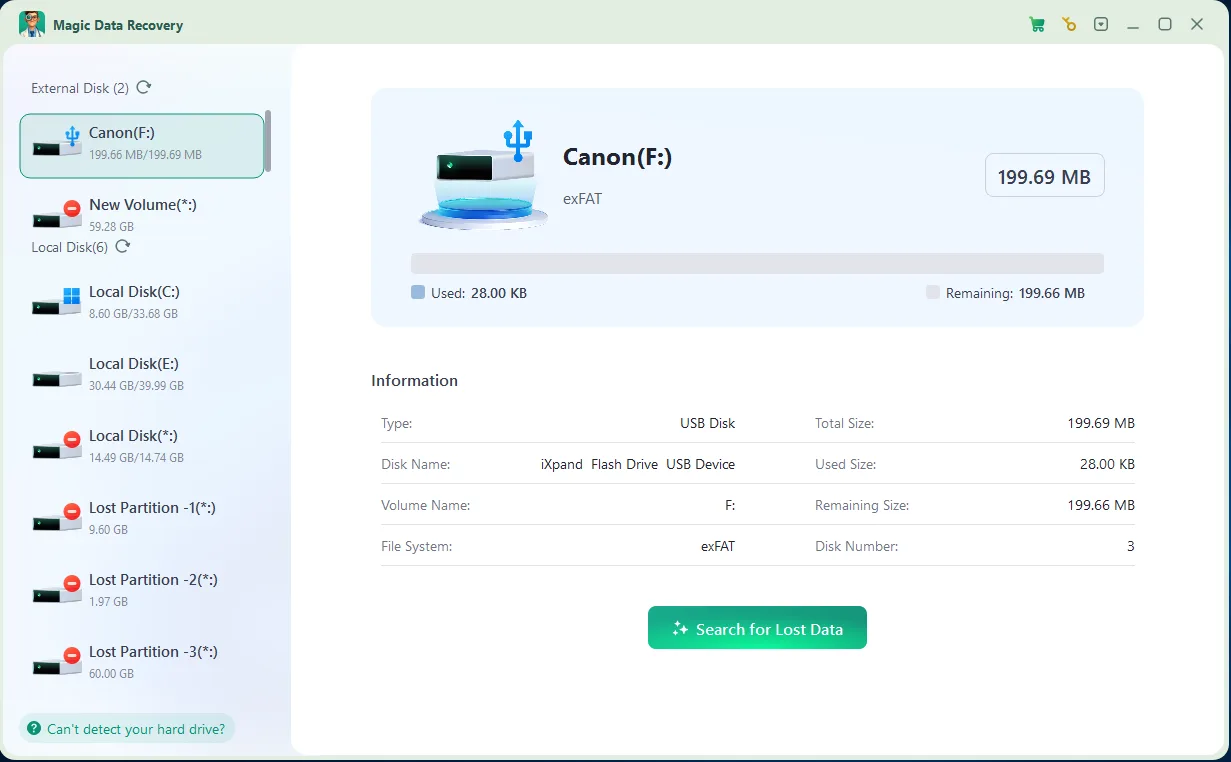
Étape 4 : Filtrer et prévisualiser les vidéos trouvées
Utilisez le filtre par type de fichier pour cibler les formats vidéo tels que MP4, MOV, AVI, MTS ou M2TS. Effectuez une recherche à partir du nom de fichier d'origine si vous vous en souvenez, mais examinez également les fichiers dont le nom a été généré automatiquement. Un système de fichiers formaté ou endommagé peut ne plus conserver l'ancienne structure de dossiers.

Prévisualisez les extraits dès lors que le logiciel prend en charge ce format. Pour les enregistrements longs, ne vous contentez pas de vérifier la première image. Vérifiez que la durée affichée est réaliste et que l'extrait ne s'arrête pas au bout de quelques secondes.
Étape 5 : Récupérer les vidéos sur un autre disque dur
Sélectionnez les clips dont vous avez besoin et enregistrez-les sur votre ordinateur ou sur un autre disque externe. Ne choisissez pas la carte SD d'origine. Ensuite, ouvrez chaque fichier récupéré dans un lecteur multimédia et conservez-en une copie intacte avant de tenter toute réparation ou conversion.
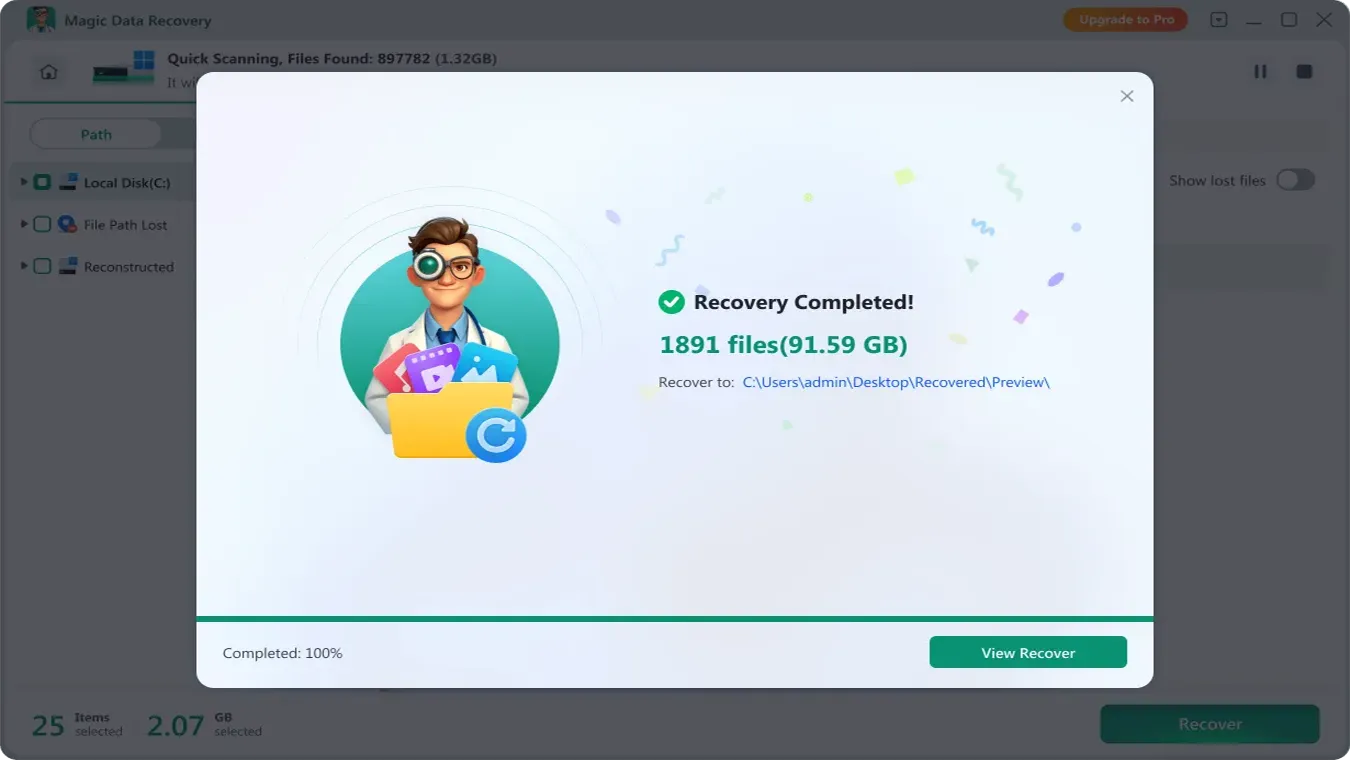
Ce processus (analyse, prévisualisation, enregistrement) est plus fiable qu'un simple utilitaire de récupération de fichiers lorsque la carte a été formatée ou que son système de fichiers est endommagé. Si vous avez perdu vos données à la suite d'un formatage, la solution de Amagicsoft Guide de récupération des données d'une carte SD formatée explique ce scénario plus en détail.
Méthode n° 3 : utiliser gratuitement la fonctionnalité de récupération de fichiers de Windows
Les utilisateurs expérimentés de Windows peuvent essayer l’outil « Windows File Recovery » de Microsoft. Il s’agit d’une application en ligne de commande plutôt que d’un outil graphique ; elle offre donc moins d’indications et ne propose pas d’aperçu vidéo pratique. Elle constitue néanmoins un moyen gratuit de récupérer des fichiers vidéo depuis une carte SD stockage lorsque la carte s'affiche avec une lettre de lecteur.
Microsoft précise que les périphériques FAT et exFAT nécessitent le mode « Extensive ». La plupart des cartes mémoire d'appareils photo et de téléphones utilisent l'un de ces systèmes de fichiers. Supposons que la carte SD concernée soit le lecteur E: et qu'un lecteur de destination distinct soit le lecteur D:. Voici un exemple de commande :
- winfr E: D: /extensive /n *.mp4 /n *.mov /n *.mts /n *.m2ts
Remplacez les deux lettres de lecteur par celles qui s'affichent sur votre PC. La source et la destination doivent être différentes. Vous pouvez ajouter ou supprimer des extensions en fonction de votre appareil photo. Vérifier Instructions de Microsoft pour la récupération de fichiers sous Windows avant d'exécuter la commande.
Cette option est particulièrement adaptée aux utilisateurs qui maîtrisent la vérification des chemins d'accès et de la syntaxe. Si vous avez besoin de comparer des vignettes, de filtrer un grand nombre de résultats ou de vérifier la lecture avant d'enregistrer, une interface graphique Récupération de vidéos sur une carte SD Cet outil est plus facile à gérer.
Méthode n° 4 : Créer une image de carte ou faire appel à un service professionnel
Une carte en bon état peut généralement supporter une numérisation effectuée avec précaution. Une carte instable nécessite une approche plus prudente. Le logiciel d'imagerie lit la carte secteur par secteur et crée un fichier sur un autre disque. Vous numérisez ensuite cette image plutôt que d'accéder à plusieurs reprises au support d'origine.
Pensez d’abord à créer une image si la carte se lit très lentement, se déconnecte de temps à autre ou génère des erreurs d’E/S, tout en affichant toujours la capacité correcte. Ce processus nécessite un espace de destination suffisant pour la capacité totale de la carte, et pas seulement pour la taille des vidéos supprimées. Informations techniques Récupération de vidéos sur une carte SD Certains outils permettent d'analyser ce type d'images, et des workflows avancés peuvent reconstituer des structures propres à certains appareils photo, comme le format AVCHD.
Cessez toute tentative de récupération par vos propres moyens si aucun ordinateur ni lecteur ne détecte la carte, si sa capacité s'affiche comme étant nulle ou manifestement erronée, si la carte est fissurée ou si elle chauffe. Un logiciel ne peut pas réparer un contrôleur défectueux ni une puce mémoire endommagée. Un laboratoire spécialisé peut évaluer le matériel sans le soumettre à des cycles d'alimentation répétés.
Comment récupérer des vidéos à partir d'une carte SD formatée ou endommagée
La suppression, le formatage et la corruption ne sont pas identiques :
- Format rapide: Le système reconstitue les métadonnées du système de fichiers, mais une grande partie de l'ancien contenu peut subsister jusqu'à ce qu'il soit écrasé. Une analyse en profondeur permet de localiser les vidéos grâce à leurs signatures.
- Format complet ou remplacer : La récupération devient beaucoup moins probable, car l'opération risque de remplacer les données sous-jacentes.
- Carte au format RAW ou inaccessible : Le système de fichiers est illisible, bien que la mémoire puisse encore contenir des données vidéo. Annulez les invites de formatage et effectuez d'abord une analyse.
- Dommages physiques : Le logiciel ne parvient pas à communiquer de manière fiable avec le support de stockage. Continuer à reconnecter la carte risque d'aggraver le problème.
Si la carte reste stable et que Windows affiche la capacité correcte, lancez une analyse complète pour récupérer des vidéos supprimées depuis une carte SD enregistrez-les et sauvegardez les résultats ailleurs. Ne réparez pas, ne formatez pas et n'initialisez pas la carte avant d'avoir récupéré et vérifié en toute sécurité les séquences importantes.
Pourquoi les vidéos récupérées sur une carte SD peuvent ne pas s'afficher
Parfois, un Récupération de vidéos sur une carte SD La numérisation génère un fichier MP4 ou MOV dont la taille semble correcte, mais le clip ne s'ouvre pas. Parmi les causes courantes, on peut citer :
- De nouveaux enregistrements ont écrasé une partie de la vidéo supprimée.
- Le fichier d'origine était fragmenté, et l'analyse n'a permis de retrouver que certains fragments.
- L'appareil photo s'est éteint avant d'avoir enregistré les dernières métadonnées du conteneur.
- Une corruption du système de fichiers a entraîné une dissociation entre le nom de fichier et le contenu vidéo correspondant.
- L'extension récupérée ne correspond pas au format réel.
Commencez par tester le fichier dans un autre lecteur multimédia fiable. Ensuite, copiez la vidéo récupérée et essayez de la réparer ou de la remuxer sur cette copie, jamais sur votre seul fichier récupéré. Un outil de réparation peut reconstituer les métadonnées endommagées du conteneur, mais il ne peut pas recréer les images qui ont été écrasées. Dans les cas complexes liés au format AVCHD, même une récupération réussie peut ne restituer que des flux MTS individuels plutôt que la structure complète du dossier de l'appareil photo.
Les erreurs qui réduisent les chances de réussite de la récupération de vidéos sur une carte SD
Évitez ces réactions courantes lorsque vous essayez de récupérer des vidéos supprimées depuis une carte SD stockage :
- Enregistrer un “ extrait test ” pour vérifier si la carte fonctionne toujours
- Mise en forme de la carte pour que Windows puisse l'ouvrir
- Exécution de CHKDSK avant la restauration
- Installation de logiciels ou enregistrement de fichiers restaurés sur la carte concernée
- Lire à plusieurs reprises une carte physiquement instable
- En partant du principe que tous les fichiers portant l'extension MP4 sont complets
- Réparer l'unique exemplaire retrouvé plutôt qu'une copie
Le principe le plus sûr est simple : conserver la carte d'origine, limiter au maximum les écritures et vérifier les vidéos récupérées sur un autre disque dur.
Conclusion
Pour récupérer des vidéos supprimées depuis une carte SD stockage, cessez d'utiliser la carte, vérifiez les sauvegardes, puis choisissez une méthode adaptée au type de panne. Une carte stable et détectée se prête bien à une analyse logicielle. Une carte instable ou invisible nécessite en revanche des compétences en création d'images ou une récupération matérielle par des professionnels.
Magic Data Recovery est recommandé pour les opérations courantes de récupération sous Windows, car il permet de gérer les suppressions, les formatages, les erreurs du système de fichiers et les cartes inaccessibles au sein d’un seul processus guidé. Sa prise en charge étendue des formats vidéo, ses modes d’analyse « Rapide » et « Approfondie », ses filtres et son étape de prévisualisation vous aident à évaluer les fichiers avant de les enregistrer dans un emplacement sûr. Pour plus de conseils en matière de prévention et de récupération, retournez à la page Récupération de la carte SD.
Prise en charge de Windows 7/8/10/11 et Windows Server
FAQ
Puis-je récupérer des vidéos supprimées définitivement depuis une carte SD ?
Oui, à condition que de nouvelles données n'aient pas écrasé les clusters de la vidéo supprimée. Pour récupérer des vidéos supprimées depuis une carte SD stockage, cessez d'utiliser la carte, connectez-la à un ordinateur et lancez une analyse en lecture seule. La récupération devient peu probable après de nombreux enregistrements, un écrasement complet ou des dommages physiques importants.
Puis-je récupérer des vidéos supprimées sur une carte SD sans passer par un ordinateur ?
Vérifiez d'abord la corbeille de la galerie de l'appareil, la sauvegarde dans le cloud ou l'application appareil photo. Les applications de récupération de données peuvent écrire des données sur la même carte et entraîner un écrasement des données. Pour plus de sécurité, Récupération de vidéos sur une carte SD, retirez la carte et utilisez un ordinateur équipé d'un lecteur de carte fiable.
Puis-je récupérer des vidéos après avoir formaté une carte SD ?
Une carte mémoire formatée rapidement peut encore contenir des vidéos récupérables tant que de nouveaux fichiers ne les ont pas remplacées. Ne la formatez pas à nouveau et n’y enregistrez rien. Pour récupérer des fichiers vidéo depuis une carte SD stockage, lancez une analyse approfondie et restaurez les résultats ailleurs. Un formatage complet ou un écrasement des données réduit considérablement les chances de récupération.
Les vidéos supprimées d'une carte SD sont-elles envoyées dans la corbeille ?
En général, ce n'est pas le cas lorsque vous les supprimez directement depuis une carte SD amovible. En revanche, une vidéo copiée sur un ordinateur puis supprimée de ce dossier local peut rester dans la Corbeille de l'ordinateur. Vérifiez ces deux emplacements avant de lancer l'analyse.
Pourquoi ma vidéo MP4 récupérée est-elle corrompue ou illisible ?
Le fichier est peut-être incomplet, soit parce que de nouvelles données ont écrasé certains blocs, soit parce que la vidéo d'origine était fragmentée. Il se peut également que les métadonnées du conteneur soient manquantes. Essayez un autre lecteur, puis tentez de réparer une copie du fichier. La réparation ne permet pas de restaurer les images vidéo qui n'existent plus.
Comment récupérer des vidéos supprimées de la carte microSD d'un téléphone ?
Éteignez le téléphone, retirez la carte microSD, puis connectez-la à un PC à l'aide d'un lecteur de carte. Analysez la carte et enregistrez les vidéos récupérées sur un autre disque. Si le téléphone a chiffré la carte en tant que mémoire interne, la récupération peut nécessiter l'utilisation de l'appareil d'origine.
Combien de temps dure la récupération d'une vidéo sur une carte SD ?
La durée de l'analyse dépend de la capacité de la carte, de la vitesse de connexion, de l'état de la carte et de la profondeur d'analyse. Une analyse rapide peut se terminer assez vite, tandis qu'une analyse approfondie ou la création d'une image secteur par secteur prendra plus de temps. Évitez d'interrompre une analyse qui se déroule sans problème, sauf si la carte présente des signes de défaillance physique.
Quand dois-je faire appel à un service professionnel de récupération de données sur carte SD ?
Choisissez un professionnel Récupération de vidéos sur une carte SD service lorsque la carte n'est détectée par aucun lecteur, affiche une capacité nulle ou erronée, se déconnecte de manière répétée, surchauffe ou présente des dommages visibles. Cessez de la mettre sous tension, car des tentatives répétées de réparation par soi-même peuvent aggraver une panne matérielle.

Jason est un spécialiste de la récupération de données et de l'assistance technique, fort de plus de 15 ans d'expérience sur le terrain. Il a beaucoup travaillé auprès des utilisateurs finaux, résolvant des cas complexes de perte de données et proposant des solutions de récupération concrètes en cas de suppression accidentelle, de disques formatés, de systèmes de fichiers endommagés, de partitions perdues, de pannes système et d’autres situations d’urgence nécessitant une récupération. Son expertise couvre également la sauvegarde et la restauration, la réparation de fichiers et la reprise après sinistre, en mettant particulièrement l’accent sur des conseils sûrs, fiables et techniquement rigoureux.