
Come ripristinare un disco rigido formattato in modo sicuro ed efficace
La formattazione accidentale di un disco rigido è un'esperienza comune e stressante. Può accadere durante una reinstallazione del sistema operativo, l'inizializzazione del disco, errori di partizione, o per un semplice errore umano. Quando ciò accade, molti utenti pensano che i loro file siano definitivamente persi. La buona notizia è che, in molti casi, è possibile ripristinare un disco rigido formattato se si adottano le giuste misure e si evitano azioni che sovrascrivono i dati recuperabili. Questa guida spiega cosa fa realmente la formattazione, quando è possibile il recupero e come recuperare il disco rigido formattato dati in modo sicuro con uno strumento affidabile.Magic Data Recovery e la soluzione per il recupero delle unità formattate.
Supporta Windows 7/8/10/11 e Windows Server
Vi chiedete se i vostri file possono essere recuperati? Scoprire in pochi secondi con il nostro controllo rapido qui sotto.
Valutazione del recupero dati
Rispondete a 3 rapide domande per valutare le vostre possibilità di recupero
Indice dei contenuti
Cosa succede quando un disco rigido viene formattato?
La formattazione non sempre cancella immediatamente i dati. In genere, invece, rimuove i riferimenti al file system che indicano al sistema operativo dove sono memorizzati i file.
Formato rapido vs. formato completo
- Formato rapido elimina le tabelle di allocazione dei file, ma lascia intatti i dati.
- Formato completo esegue un passaggio a riempimento zero, cancellando fisicamente i settori di memorizzazione dei dati e garantendo l'irrecuperabilità dei dati.
La comprensione di questa distinzione è fondamentale quando si cerca di ripristinare un disco rigido formattato, in quanto i formati rapidi offrono una possibilità di recupero molto più elevata.
È possibile ripristinare un disco rigido formattato?
Sì, spesso è possibile ripristinare un disco rigido formattato, a condizione che:
- L'unità non è stata sovrascritta in modo massiccio
- TRIM non ha cancellato i dati sulle unità SSD
- È un formato rapido
Fattori che influenzano il successo del recupero
- Tipo di unità (HDD o SSD)
- File system (NTFS, FAT32, exFAT)
- Tempo trascorso dalla formattazione
- Nuovi dati scritti dopo la formattazione
Le unità disco tradizionali offrono in genere un successo di recupero maggiore rispetto alle unità SSD, a causa del modo in cui queste ultime gestiscono i dati eliminati.
Cause comuni di formattazione del disco rigido
Capire perché si verifica la formattazione aiuta a prevenire future perdite di dati:
- Formattazione accidentale durante la gestione del disco
- Reinstallazione del sistema operativo
- Partizioni corrotte
- Danni da virus o malware
- Inizializzazione errata dell'unità esterna
Ognuno di questi scenari può comunque consentire di ripristinare un disco rigido formattato se gestita correttamente.
Il modo migliore per ripristinare un disco rigido formattato
I servizi di recupero dati professionali sono costosi e spesso non necessari per le perdite di dati logici. I moderni software di recupero offrono un'alternativa più sicura e accessibile.
Perché è consigliato l'Magic Data Recovery
Magic Data Recovery è stato progettato per gestire le unità formattate utilizzando algoritmi di scansione avanzati, pur rimanendo accessibile agli utenti non tecnici.
I vantaggi principali includono:
- Scansione profonda ottimizzata per i dischi rigidi formattati
- Supporto per i file system NTFS, FAT ed exFAT
- Anteprima dei file prima del recupero
- Scansione gratuita per valutare la recuperabilità
Queste caratteristiche lo rendono una scelta pratica per gli utenti che devono recuperare il disco rigido formattato dati senza rischiare ulteriori danni.
Come ripristinare un disco rigido formattato con Magic Data Recovery
Di seguito viene riportata una guida passo-passo basata sulle migliori pratiche di recupero standard.
Passo 1: Scaricare e installare Magic Data Recovery
Scaricare e installare Magic Data Recovery su un'altra unità, non sull'unità che si desidera ripristinare. L'installazione su un'unità separata impedisce la sovrascrittura dei dati recuperabili.
Supporta Windows 7/8/10/11 e Windows Server
Fase 2: Avviare il software e selezionare l'unità
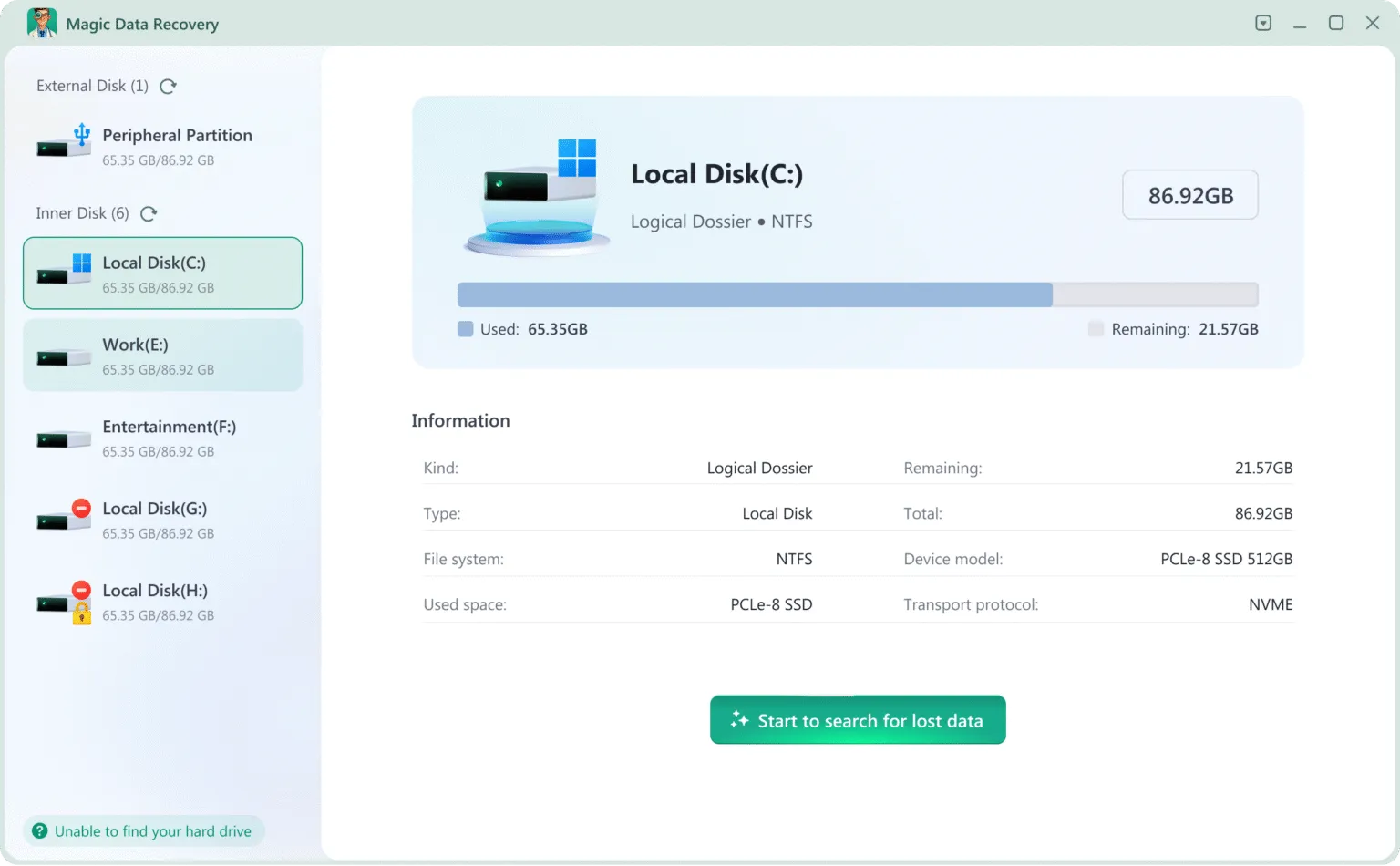
Aprire Magic Data Recovery, selezionare il disco rigido formattato dall'elenco dei dispositivi e fare clic su Ricerca. Il software guida l'utente attraverso il processo di scansione senza richiedere competenze tecniche.
Fase 3: Attendere il completamento della scansione
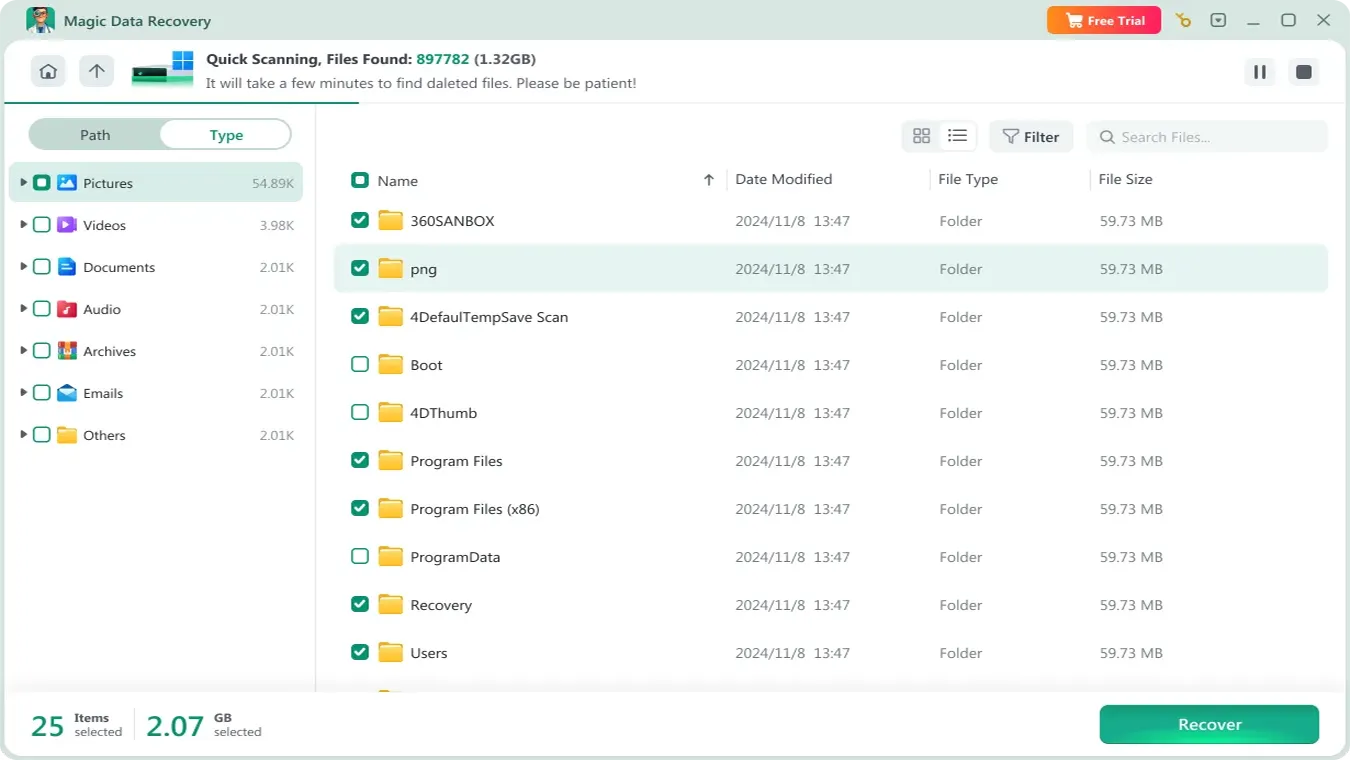
Esegue automaticamente una scansione avanzata. Al termine, elenca tutti i file recuperabili rilevati sull'unità formattata.
Fase 4: Anteprima dei file dopo la scansione
Al termine della scansione:
- Anteprima di foto, video e documenti
- Verifica dell'integrità dei file prima del ripristino
Questo passaggio garantisce il ripristino dei soli file importanti.

Passo 5: Recuperare i file in una posizione sicura
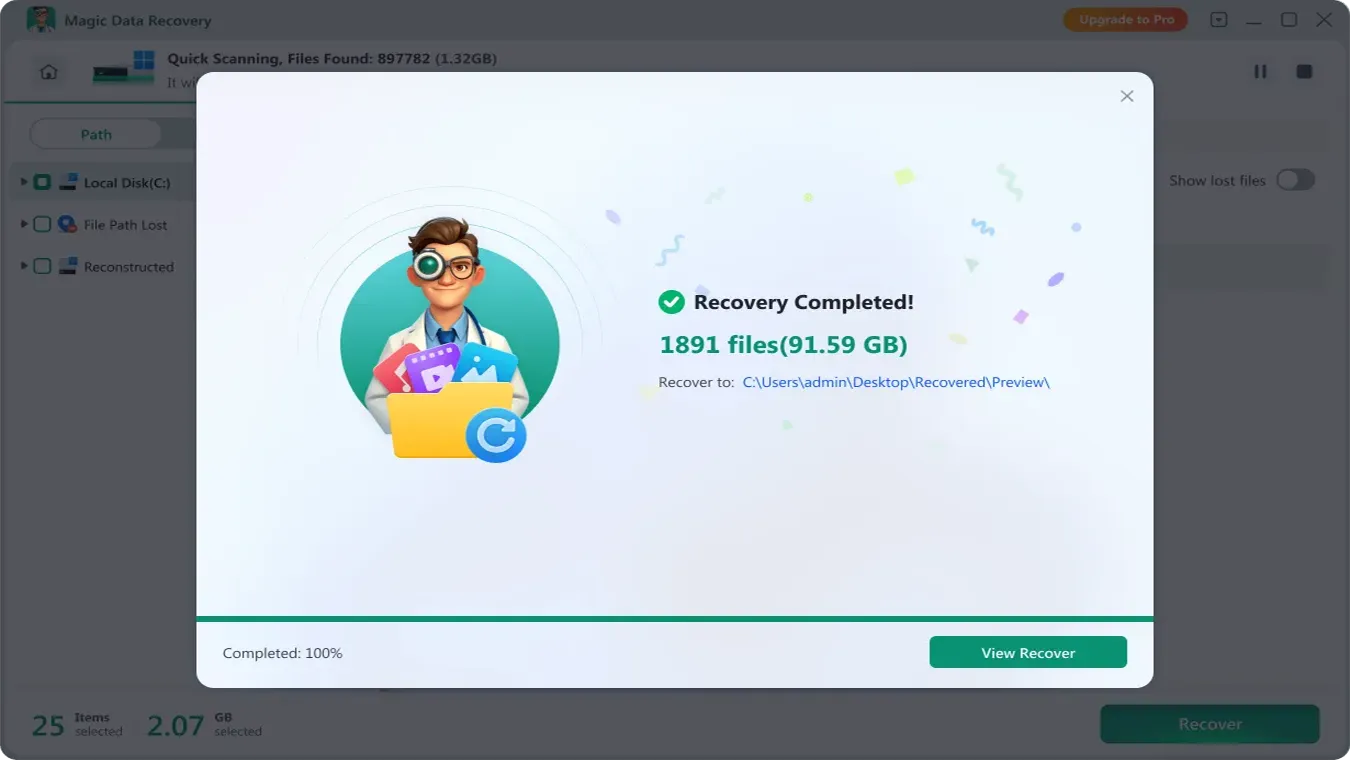
Selezionate i file desiderati e recuperateli su un'altra unità o su una memoria esterna.
Importante: Non salvare i file recuperati nell'unità formattata originale nel caso in cui i file persi vengano sovrascritti.
Suggerimenti per migliorare il successo del recupero delle unità formattate
- Smettere di utilizzare l'unità subito dopo la formattazione
- Evitare di reinstallare il sistema operativo sullo stesso disco.
- Utilizzare strumenti di recupero in sola lettura
- Recuperate sempre i file in una posizione separata
Seguendo queste best practice si migliorano notevolmente le possibilità di ripristinare un disco rigido formattato con successo.
Conclusione
Formattazione di un disco rigido non significa automaticamente perdita permanente dei dati. Con il giusto approccio e un'azione tempestiva, è spesso possibile ripristinare un disco rigido formattato con successo. Magic Data Recovery offre una soluzione equilibrata, combinando capacità di scansione profonda con un processo di recupero semplice e guidato.
Se siete alla ricerca di un prodotto affidabile e pratico Soluzione per il recupero delle unità formattate senza ricorrere a servizi costosi, Magic Data Recovery è una soluzione che vale la pena di prendere in considerazione.
Supporta Windows 7/8/10/11 e Windows Server
Domande frequenti sul ripristino di un disco rigido formattato
È possibile annullare la formattazione di un'unità?
È possibile recuperare i dati da un disco rigido cancellato?
Dove vanno a finire i dati formattati?
È possibile recuperare un disco rigido formattato?
È possibile ripartizionare un disco rigido?
I dati sono memorizzati in modo permanente sul disco rigido?

Vasilii è uno specialista del recupero dati con circa 10 anni di esperienza pratica nel settore. Nel corso della sua carriera, ha risolto con successo migliaia di casi complessi riguardanti file cancellati, unità formattate, partizioni perse e file system RAW. La sua esperienza copre sia i metodi di recupero manuale utilizzando strumenti professionali come gli editor esadecimali, sia le soluzioni automatiche avanzate con i software di recupero. La missione di Vasilii è quella di rendere accessibile la conoscenza del recupero dati affidabile sia ai professionisti IT che agli utenti di tutti i giorni, aiutandoli a salvaguardare i loro preziosi beni digitali.