
How to Restore a Formatted Hard Drive Safely and Effectively
Accidentally formatting a hard drive is a common and stressful experience. It can happen during an operating system reinstallation, disk initialization, partition errors, or simple human error. When this occurs, many users assume their files are permanently lost. The good news is that, in many cases, you can restore a formatted hard drive if you take the right steps and avoid actions that overwrite recoverable data. This guide explains what formatting really does, when recovery is possible, and how to recover formatted hard drive data safely with a reliable tool-Magic Data Recovery and the formatted drive recovery solution.
Supports Windows 7/8/10/11 and Windows Server
Wondering if your files can be recovered? Find out in seconds with our quick check below.
Data Recovery Assessment
Answer 3 quick questions to estimate your recovery chances
Table of Contents
What Happens When a Hard Drive Is Formatted?
Formatting does not always erase data immediately. Instead, it usually removes the file system references that tell the operating system where files are stored.
Quick Format vs. Full Format
- Quick format deletes file allocation tables but leaves the data intact.
- Full format executes a zero-fill pass, physically clearing the data storage sectors and ensuring the data is unrecoverable.
Understanding this distinction is critical when trying to restore a formatted hard drive, as quick formats offer a much higher chance of recovery.
Is It Possible to Restore a Formatted Hard Drive ?
Yes, it is often possible to restore a formatted hard drive, provided that:
- The drive has not been heavily overwritten
- TRIM has not erased data on SSDs
- It is a quick format
Factors That Affect Recovery Success
- Drive type (HDD vs SSD)
- File system (NTFS, FAT32, exFAT)
- Time elapsed since formatting
- New data written after formatting
Traditional HDDs generally offer higher recovery success than SSDs due to how SSDs manage deleted data.
Common Causes of Hard Drive Formatting
Understanding why formatting occurs helps prevent future data loss:
- Accidental formatting during disk management
- Operating system reinstallation
- Corrupted partitions
- Virus or malware damage
- Incorrect external drive initialization
Each of these scenarios may still allow you to restore a formatted hard drive if handled correctly.
Best Way to Restore a Formatted Hard Drive
Professional data recovery services are expensive and often unnecessary for logical data loss. Modern recovery software offers a safer, more accessible alternative.
Why Magic Data Recovery Is Recommended
Magic Data Recovery is designed to handle formatted drives using advanced scanning algorithms while remaining accessible to non-technical users.
Key advantages include:
- Deep scan optimized for formatted hard drives
- Support for NTFS, FAT, and exFAT file systems
- File preview before recovery
- Free scan to assess recoverability
These features make it a practical choice for users who need to recover formatted hard drive data without risking further damage.
How to Restore a Formatted Hard Drive with Magic Data Recovery
Below is a step-by-step guide based on standard recovery best practices.
Step 1: Download and Install Magic Data Recovery
Download and install Magic Data Recovery on a different drive—not on the drive you want to recover. Installing on a separate drive prevents overwriting recoverable data.
Supports Windows 7/8/10/11 and Windows Server
Step 2: Launch the Software and Select the Drive
Open Magic Data Recovery, select the formatted hard drive from the device list, and click Search. The software guides you through the scan process without requiring technical expertise.
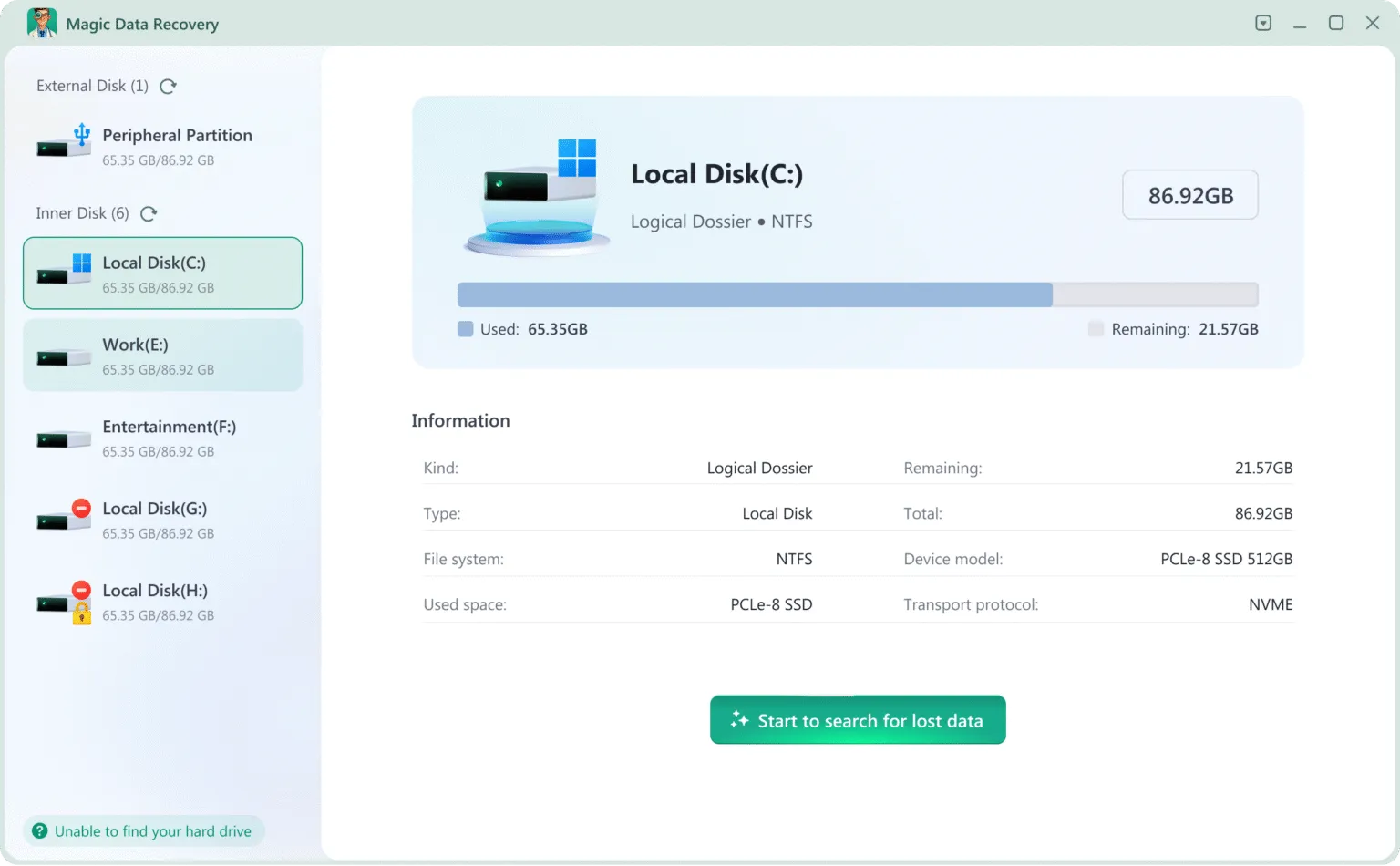
Step 3: Wait Until the Scan Completes
It runs an advanced scan automatically. Once finished, it lists all recoverable files detected on the formatted drive.
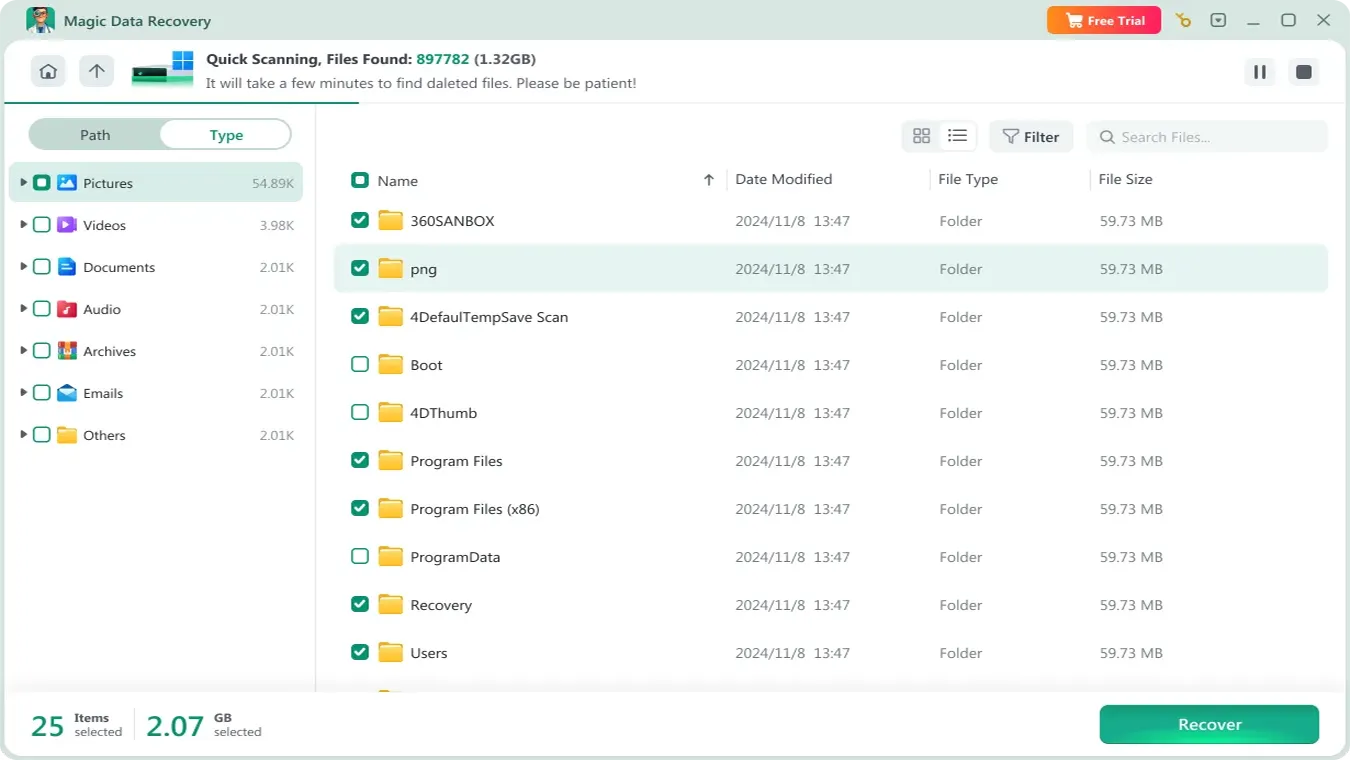
Step 4: Preview Files After the Scan
After scanning completes:
- Preview photos, videos, and documents
- Verify file integrity before recovery
This step ensures you only restore files that matter.

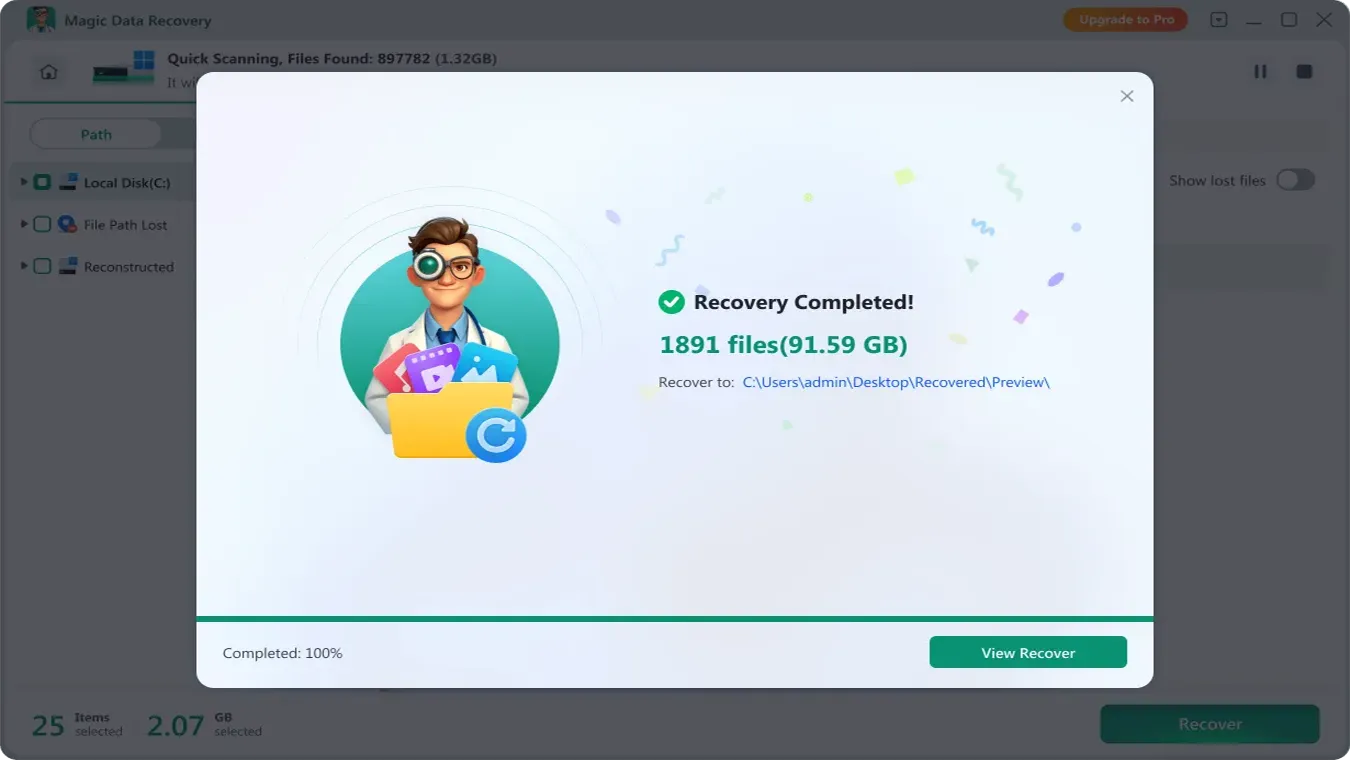
Step 5: Recover Files to a Safe Location
Select the files you need and recover them to a different drive or external storage.
Important: Do not save recovered files back to the original formatted drive in case the lost files get overwritten.
Tips to Improve Formatted Drive Recovery Success
- Stop using the drive immediately after formatting
- Avoid reinstalling the operating system on the same disk
- Use read-only recovery tools
- Always recover files to a separate location
Following these best practices significantly improves your chances to restore a formatted hard drive successfully.
Conclusion
Formatting a hard drive does not automatically mean permanent data loss. With the right approach and timely action, you can often restore a formatted hard drive successfully. Magic Data Recovery offers a balanced solution by combining deep scanning capabilities with a simple, guided recovery process.
If you are looking for a reliable and practical formatted drive recovery solution without resorting to costly services, Magic Data Recovery is a solution worth considering.
Supports Windows 7/8/10/11 and Windows Server
FAQs About Restoring a Formatted Hard Drive
Can you undo formatting a drive?
Is it possible to recover data from a wiped hard drive?
Where does formatted data go?
Can a formatted hard disk be recovered?
Is it possible to unpartition a hard drive?
Is data permanently stored in hard disk?

Vasilii is a data recovery specialist with around 10 years of hands-on experience in the field. Throughout his career, he has successfully solved thousands of complex cases involving deleted files, formatted drives, lost partitions, and RAW file systems. His expertise covers both manual recovery methods using professional tools like hex editors and advanced automated solutions with recovery software. Vasilii's mission is to make reliable data recovery knowledge accessible to both IT professionals and everyday users, helping them safeguard their valuable digital assets.