
Guida completa al recupero dei dati persi a causa di un guasto logico dell'HDD

Un Guasto logico dell'HDD Si verifica quando il file system, la tabella delle partizioni, i record di avvio o altre strutture di dati presenti su un disco rigido risultano danneggiati o illeggibili. Il disco potrebbe comunque accendersi e apparire in Windows, ma non è più possibile accedere normalmente a file, cartelle o intere partizioni.
Tra i sintomi più comuni vi è la presenza di un disco rigido che appare come RAW, una partizione mancante, un messaggio del tipo “Sistema operativo non trovato” oppure Windows che richiede di formattare il disco prima di utilizzarlo.
Prima di provare a risolvere un errore logico su un disco rigido, smetti di scrivere nuovi dati sull'unità interessata. Se i file sono importanti, recuperali o esegui un backup prima di eseguire comandi di riparazione, formattare l'unità o creare una nuova partizione.
Per gli utenti alla ricerca di un prodotto affidabile Soluzione HDD, l'approccio più sicuro consiste nel recuperare prima i file importanti e poi riparare l'unità. Magic Data Recovery è in grado di eseguire la scansione di dischi rigidi logicamente danneggiati, in formato RAW, formattati o inaccessibili e di recuperare i file selezionati su un altro dispositivo di archiviazione prima di tentare ulteriori riparazioni.
Importante: Se l'HDD emette rumori simili a scatti, stridii, ronzii o rumori ripetuti di avvio, scollegarlo immediatamente. Questi sintomi potrebbero indicare un guasto fisico piuttosto che un guasto logico, e continuare a utilizzarlo potrebbe aggravare il danno.
Che cos'è un guasto logico dell'HDD?
A guasto logico del disco rigido è un problema a livello di software che impedisce al sistema operativo di leggere correttamente i dati memorizzati su un disco rigido.
I componenti fisici dell'unità potrebbero essere ancora funzionanti, ma Windows non è in grado di interpretare il file system né di individuare i file poiché alcune importanti strutture di dati sono state danneggiate, eliminate o sovrascritte.
Un modo semplice per comprenderlo è immaginare una biblioteca in cui tutti i libri sono ancora sugli scaffali, ma il catalogo che indica la collocazione di ciascun libro è stato danneggiato. Le informazioni potrebbero ancora esistere, ma il sistema non è più in grado di individuarle o organizzarle correttamente.
Un errore logico può influire su:
- Il file system
- La tabella delle partizioni
- Il Tabella file master, o MFT
- Il settore di avvio
- Il Master Boot Record, ovvero MBR
- La tabella delle partizioni GUID, ovvero GPT
- Record relativi a file e cartelle
- Informazioni sull'avvio del sistema operativo
A differenza di un disco rigido danneggiato fisicamente, un HDD danneggiato a livello logico può spesso essere recuperato senza aprire l'unità. Tuttavia, il successo del recupero dipende dalle condizioni del disco e dal fatto che i file originali siano stati sovrascritti da nuovi dati.
Sintomi comuni di un guasto logico dell'HDD
I seguenti sintomi potrebbero indicare un danno logico.
1. L'HDD viene visualizzato come RAW
Una partizione Windows corretta utilizza normalmente un file system riconosciuto, come NTFS, FAT32 o exFAT.
Se Windows visualizza la partizione come RAW, è possibile che il file system sia mancante, danneggiato o illeggibile. Potrebbe inoltre comparire un messaggio del tipo:
Per poter utilizzare l'unità X:, è necessario formattarla.
Non formattare l'unità se hai ancora bisogno dei file che contiene.
2. La partizione diventa non allocata
L'HDD potrebbe essere visualizzato in "Gestione disco", ma una parte o tutta la sua capacità è contrassegnata come Non allocato.
Ciò può verificarsi quando viene eliminata una voce della partizione o quando la tabella delle partizioni risulta danneggiata. I file potrebbero comunque rimanere sul disco, anche se Windows non è più in grado di visualizzare la partizione originale.
Non creare un nuovo volume nello spazio non allocato prima di aver recuperato i dati.
3. File o cartelle che diventano inaccessibili
È possibile che la lettera dell'unità sia visibile, ma che all'apertura venga visualizzato un messaggio di errore del tipo:
- Il file o la directory sono danneggiati e illeggibili.
- Accesso negato.
- Il parametro non è corretto.
- La posizione non è disponibile.
- Il volume non contiene un file system riconosciuto.
Questi errori possono essere causati da un danneggiamento del file system, da record di directory danneggiati, da problemi relativi ai permessi o da settori illeggibili.
4. Una partizione o una lettera di unità scompare
È possibile che una partizione non venga più visualizzata in Esplora file, anche se il disco rigido è visibile in Gestione disco.
In alcuni casi, la partizione è integra ma ha perso la lettera di unità. In altri casi, la partizione stessa è stata eliminata o danneggiata.
5. Windows non si avvia
Se l'errore logico interessa l'unità di sistema, il computer potrebbe visualizzare messaggi del tipo:
- Sistema operativo non trovato
- Dispositivo di avvio non trovato
- Tabella delle partizioni non valida
- Si è verificato un errore di lettura del disco
- Nessun dispositivo di avvio
Un errore di avvio non significa necessariamente che il disco rigido sia danneggiato fisicamente. È possibile che i record di avvio, la partizione di sistema o i file del sistema operativo siano danneggiati.
6. I file scompaiono o presentano nomi e dimensioni errati
Il danneggiamento logico può compromettere i record dei file e le informazioni relative alle directory. I file potrebbero scomparire, comparire con nomi insoliti, mostrare una dimensione pari a zero byte o essere spostati in cartelle inaspettate.
7. Windows controlla ripetutamente l'unità
Windows potrebbe richiedere ripetutamente un controllo del disco durante l'avvio se rileva incongruenze nel file system. Ciò può indicare la presenza di errori logici, ma i controlli ricorrenti possono anche essere un segnale che l'unità sta diventando instabile.
Guasto logico vs. guasto fisico del disco rigido
Prima di procedere alla riparazione, occorre stabilire se il problema sia di natura logica o fisica.
Sintomo | Tipo di guasto probabile | Azione consigliata |
L'HDD viene visualizzato come RAW | Logico | Recupera i dati prima di formattare o riparare il disco |
La partizione viene visualizzata come non allocata | Logico | Non creare un nuovo volume; esegui una scansione alla ricerca dei dati persi |
Mancano dei file, ma l'HDD viene rilevato | Logico | Interrompere la scrittura dei dati e avviare il ripristino |
Windows richiede di formattare il disco rigido | Logico | Annulla la richiesta di formattazione |
L'HDD non ha una lettera di unità | Problema logico o di configurazione | Controllare la gestione del disco |
“Viene visualizzato il messaggio ”Sistema operativo non trovato” | Logico o fisico | Verifica se l'HDD viene rilevato e presta attenzione a eventuali rumori insoliti |
L'HDD emette rumori simili a clic o stridii | Fisico | Scollegare l'unità |
L'HDD non viene rilevato nel BIOS né in Gestione disco | Probabilmente di natura fisica | Controlla una volta il collegamento, poi valuta se ricorrere all'aiuto di un professionista |
L'HDD si disconnette ripetutamente | Probabilmente di natura fisica | Smetti di usarlo se i dati sono importanti |
L'HDD provoca gravi blocchi durante le operazioni di lettura | Probabilmente settori fisici o danneggiati | Evita di eseguire scansioni ripetute e valuta la possibilità di creare un'immagine del disco |
Odore di bruciato o danni elettrici visibili | Fisico o elettrico | Scollegare immediatamente l'unità |
Un disco può presentare sia un danneggiamento logico che un deterioramento fisico. Ad esempio, i settori danneggiati possono compromettere i metadati del file system e far sì che una partizione venga visualizzata come RAW.
Per questo motivo, non date per scontato che un disco sia fisicamente integro solo perché si accende ancora.
Identificazione dei sintomi di un guasto logico dell'HDD
Se non siete sicuri del tipo di errore del disco rigido, cercate questi sintomi comuni di danno logico:
- Sistema di file RAW: Il computer mostra la partizione del disco rigido come “RAW” e chiede: “È necessario formattare il disco nell'unità X: prima di poterlo utilizzare”.” NON formattare l'unità.
- Partizioni mancanti o scomparse: L'unità appare in Gestione disco ma viene visualizzata come “Spazio non allocato”, oppure le partizioni che c'erano prima sono sparite.
- Errore di avvio del sistema operativo: Il computer non si avvia, visualizzando messaggi come “Sistema operativo non trovato” se il sistema operativo si trova sull'unità interessata.
Se si verifica uno di questi problemi, è molto probabile che si tratti di un guasto logico dell'unità disco.
Come riparare un HDD con un guasto logico
Possiamo utilizzare Lo strumento ’disk doctor“ incorporato di Windows - il comando chkdsk per riparare un'unità USB danneggiata. Questo comando è L'utility di riparazione ufficiale di livello professionale di Microsoft che è preinstallato in ogni sistema Windows, il che lo rende uno dei metodi più affidabili per risolvere gli errori dell'unità senza software di terze parti. Tuttavia, si noti che questa operazione può comportare alcuni rischi, poiché apporta modifiche alla struttura del disco. In alcuni casi, queste modifiche potrebbero rendere più difficile il successivo recupero dei dati.
Prima di procedere, accertarsi di avere conoscenze informatiche sufficienti e di aver creato un backup del disco o della partizione. Il comando CHKDSK apporta modifiche alla struttura del disco e, in alcuni casi, tali modifiche potrebbero rendere più difficile il successivo recupero dei dati.
Fasi di riparazione:
1.Prendere nota della lettera dell'unità: Collegare l'unità USB e aprire Gestione disco (fare clic con il pulsante destro del mouse sul menu Start) per vedere quale lettera è stata assegnata all'unità (ad esempio, G:). RAW significa che il file system o la tabella di allocazione dei file sono danneggiati.


3.Immettere il comando:chkdsk G: /f /r
Nella finestra di comando nera, digitate il seguente comando e premete Invio. Assicurarsi di sostituire G: con la lettera effettiva dell'unità USB.
- G: è la lettera dell'unità.
- /f indica al comando di correggere tutti gli errori che trova.
- /r indica di individuare i settori danneggiati e di recuperare le informazioni leggibili (il processo è più lungo ma più accurato).


La soluzione più sicura per un guasto logico dell'HDD
Quando ci si trova di fronte a una corruzione logica, la fase più critica è quella di interrompere immediatamente l'utilizzo dell'unità. Non tentare di eseguire utility di riparazione come CHKDSK o tentare di riformattare, poiché queste azioni possono scrivere nuovi dati sui vecchi file, rendendo il recupero molto più difficile o addirittura impossibile.
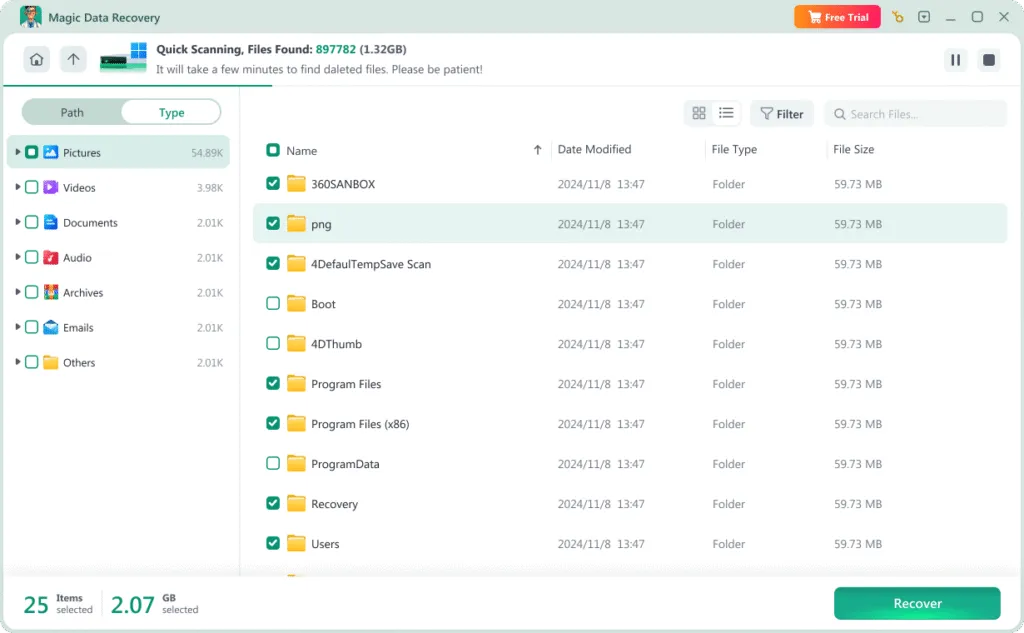
La soluzione più sicura ed efficace per il recupero dei dati da un disco rigido (HDD) consiste nell'utilizzare un software dedicato al recupero dei dati. Questo tipo di software esegue una scansione in sola lettura dei piatti del disco, aggirando il file system danneggiato per individuare e ricostruire i file originali.
Qui è dove Magic Data Recovery eccelle. È stato progettato specificamente per gestire questi scenari, offrendo un modo potente ma facile da usare per salvare i dati da dischi rigidi formattati, danneggiati o inaccessibili.
Passo dopo passo: Recupero dei dati da un HDD con guasto logico
Magic Data Recovery rende semplice un processo complesso. Seguite questi passaggi per recuperare i vostri file in modo sicuro.
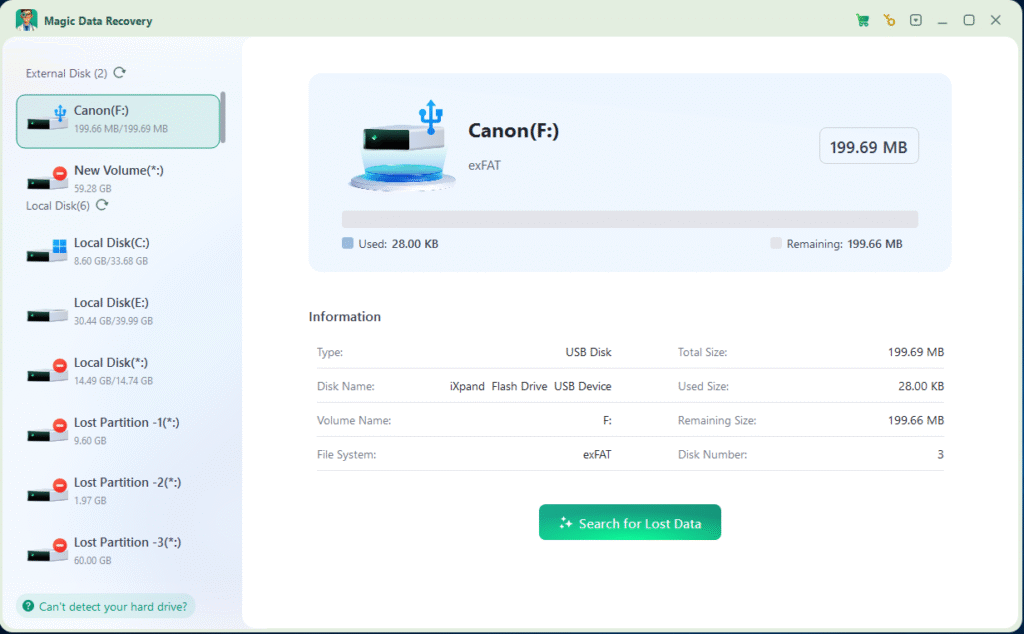
1. Interrompere tutte le attività: Innanzitutto, per evitare la sovrascrittura dei dati, non salvare nuovi file o installare programmi sull'unità interessata. Se si tratta dell'unità principale del sistema, è meglio collegarla a un altro computer come unità secondaria per il ripristino.
Supporta Windows 7/8/10/11 e Windows Server
2. Scaricare e installare il software: Scaricare Magic Data Recovery su un computer separato e funzionante o su un'altra unità. L'installazione è rapida e semplice.


Conclusione
Un Guasto logico dell'HDD non significa necessariamente che il disco rigido o i suoi file siano andati persi definitivamente. In molti casi, l'HDD viene ancora rilevato, ma Windows non riesce ad accedere ai dati memorizzati perché il file system, la tabella delle partizioni, le informazioni di avvio o altre strutture logiche sono state danneggiate.
Il più sicuro Soluzione HDD è quello di smettere di utilizzare l'unità interessata, verificare la presenza di segni di danni fisici, recuperare i file importanti su un altro dispositivo di archiviazione e solo successivamente tentare di riparare o formattare l'HDD originale. Magic Data Recovery è in grado di eseguire la scansione di dischi rigidi rilevati, sia che si tratti di dischi RAW, formattati, inaccessibili o danneggiati a livello logico, di visualizzare in anteprima i file recuperabili e di ripristinare i dati selezionati in una posizione sicura.
Evita di eseguire comandi di riparazione, creare nuove partizioni o accettare una richiesta di formattazione da parte di Windows prima che i tuoi file importanti siano stati recuperati. Se il disco rigido emette rumori insoliti, si disconnette ripetutamente o contiene dati insostituibili, smetti di utilizzarlo e contatta un servizio professionale di recupero dati.
Supporta Windows 7/8/10/11 e Windows Server
FAQ
Che cos'è un guasto logico dell'HDD?
Come faccio a capire se un guasto dell'HDD è di natura logica o fisica?
È possibile riparare un guasto logico del disco rigido?
CHKDSK è in grado di risolvere un guasto logico del disco rigido?
Devo eseguire CHKDSK prima di recuperare i miei file?
Devo formattare un disco rigido RAW?
È possibile recuperare i dati da un disco rigido non allocato?
È possibile recuperare i dati da un disco rigido che non viene rilevato?

Vasilii è uno specialista del recupero dati con circa 10 anni di esperienza pratica nel settore. Nel corso della sua carriera, ha risolto con successo migliaia di casi complessi riguardanti file cancellati, unità formattate, partizioni perse e file system RAW. La sua esperienza copre sia i metodi di recupero manuale utilizzando strumenti professionali come gli editor esadecimali, sia le soluzioni automatiche avanzate con i software di recupero. La missione di Vasilii è quella di rendere accessibile la conoscenza del recupero dati affidabile sia ai professionisti IT che agli utenti di tutti i giorni, aiutandoli a salvaguardare i loro preziosi beni digitali.