Pular para o conteúdo
ícone do logotipo da amagicsoft
  • Início
  • Produtos
    • Magic Data Recovery
    • Magic Recovery Key
  • Loja
  • Blog
  • Mais informações
    • Sobre o Amagicsoft
    • Entre em contato conosco
    • Política de privacidade
    • Termos
    • Contrato de licença
    • Política de reembolso
  • Português
    • English
    • 日本語
    • 한국어
    • Deutsch
    • Français
    • Español
    • Italiano
    • 繁體中文
Recuperação de arquivos formatados

Como desfazer a formatação do cartão SD em um computador com Windows (100% Work)

28.06.2025 Smith, Erin Comentários desativados em How to Unformat SD Card on Windows Computer (100% Work)

I took the SD card out of the camera and put it into my computer. Then, an error message popped up, stating “SD card is not formatted.” I formatted the card, and now, every single file on the SD card has vanished. Please, does anyone know how I can unformat SD card?

Mistakes as simple as accidentally formatting an SD card can lead to the loss of all your precious files. A number of users have experienced these regrettable situations and are looking for methods to undo the SD card formatting. Luckily, there are reliable ways to achieve this.

This article will walk you through the steps of unformatting SD card. We’ll also delve into the methods for recovering data from a formatted SD card. You’ll be introduced to a range of different approaches and be able to figure out which is the most effective for your situation. By the time you finish reading this guide, you’ll have the skills to recover data from your SD card using Magic Data Recovery without any hassle.

Baixar Magic Data Recovery

Compatível com Windows 7/8/10/11 e Windows Server

Índice

Is It Possible to Unformat SD Card?

The answer is yes, but the likelihood of a successful unformatting varies. Success hinges on multiple elements, like the kind of formatting carried out and how much activity has occurred on the SD card subsequent to the formatação.
There are two main types of formatting: Quick format and Full format.
Formato completo: Conversely, if you uncheck the Quick Format option during the formatting operation, it will be a Full format. When a full format is performed, the data is more thoroughly erased. Although in some cases, with specialized and powerful data recovery tools, there may be a slim chance of recovery, generally speaking, the files are much more likely to be irrecoverable compared to after a quick format. The process of scanning for bad sectors and overwriting data in a more comprehensive way makes it difficult to retrieve the original files.
Formato rápido: If you select the Quick Format option during the formatting operation, a quick format will be carried out. Since the actual data on the SD card is not truly erased during a quick format, there is a relatively high chance of recovering the files. It is possible to retrieve the data that was previously on the card.
Se você já accidentally formatted your SD card, it’s best to stop using it right away. When an SD card is formatted, the files aren’t erased immediately. Instead, the space where the files were stored is flagged as unusable for new data. But if you continue to use the memory card, new data might overwrite the lost files, making recovery extremely challenging.

How to Unformat SD Card Free?

There are various methods for data recovery, yet choosing the right one is of utmost importance. It serves as the key to retrieving data from an unformatted SD card. An inappropriate approach not only fails to recover the data but may also cause secondary damage to the data, making it impossible to restore forever. 
Here, I will recommend four data recovery solutions. Certainly, the first one is the most highly recommended.

Method 1: Use the Magic Data Recovery

Magic Data Recovery is a top – tier professional data recovery software designed to assist you in retrieving data from diverse data loss situations. One of its key advantages is that when utilized to recover data from an SD card, it ensures that the data on the SD card remains intact while striving to restore the most comprehensive set of lost data. Here’s a step – by – step guide on how to use it to address the “Unformat SD Card” issue:

1. First, connect your SD card to a Windows computer via a card reader. Ensure that the Windows computer can successfully recognize the SD card. This connection is crucial for the subsequent data recovery process.

2. Em seguida, clique no botão abaixo para fazer o download do Magic Data Recovery. Isso permitirá que você obtenha esse poderoso software profissional de recuperação de dados.

Baixar Magic Data Recovery

Compatível com Windows 7/8/10/11 e Windows Server

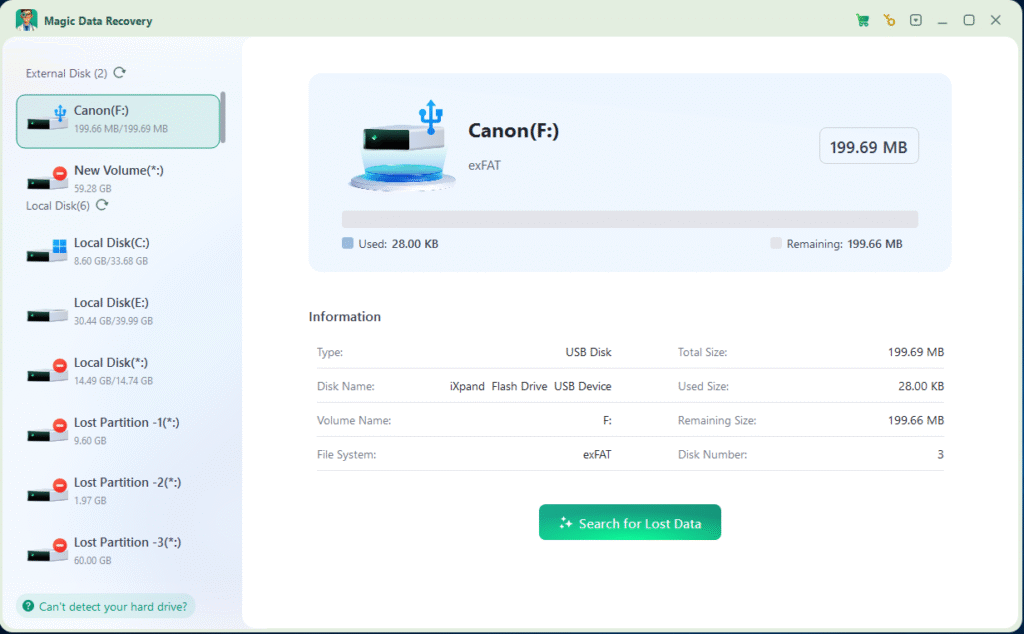
3. Once the download is complete, install Magic Data Recovery on your computer. After the installation, launch the software. In the application interface, select your SD card as the drive to be scanned.

Conecte o cartão SD inicializado ao PC antes de executar o programa de recuperação do cartão SD
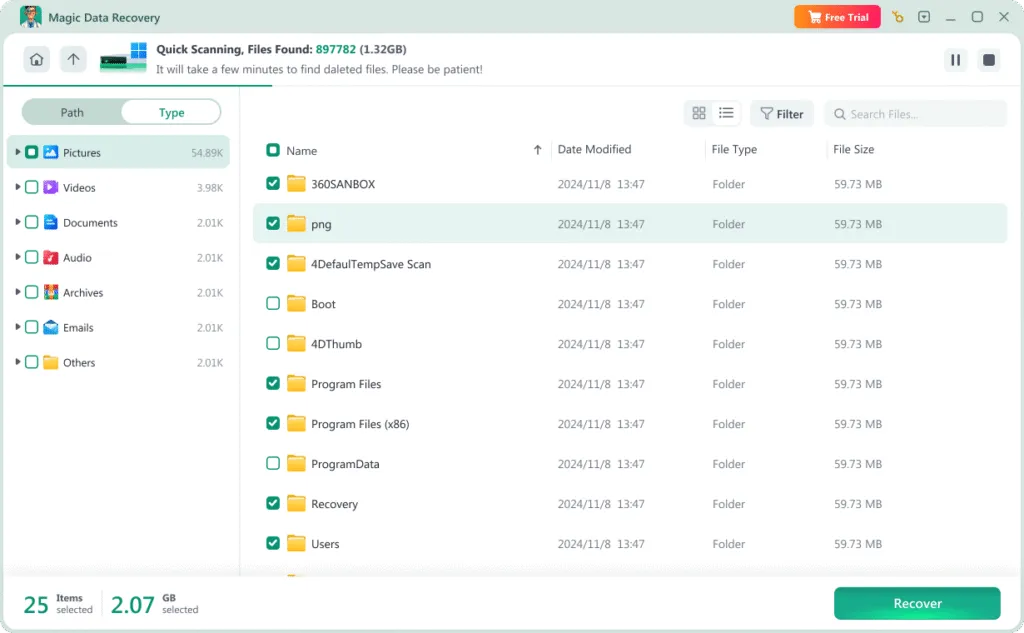
4. O processo de digitalização pode levar um certo tempo. A duração depende de fatores como a configuração de hardware de seu computador e o tamanho do cartão SD. Seja paciente durante esse período. Após a conclusão da verificação, todos os arquivos perdidos no cartão SD serão exibidos na interface do software.
Visualização dos arquivos recuperados com o programa de recuperação de cartão SD

5. Then, simply check the boxes next to the files you wish to recover. After selecting the desired files, click the “Recover” button. At this point, choose another drive on your computer to save the recovered files. It is important to save them to a different drive to avoid overwriting the original data.

Salve os arquivos recuperados usando o programa de recuperação de cartão SD

6. Finally, after the recovery process is completed, you can access and check the recovered files in the designated save location to ensure that all the necessary data has been successfully retrieved.

Method 2: Restore From Backup or Cloud

If you’ve been diligent about backing up your SD card or have promptly synchronized its data to the cloud, consider yourself fortunate. Recovering your lost files becomes a significantly smoother process.
Recovering from Backup Images
If you have a imagem de backup of your SD card, the first step is to identify the location where the backup is stored. This could be an external hard drive, a network – attached storage (NAS) device, or even a dedicated backup software’s storage location. Once located, use the corresponding backup software or utility to initiate the restoration process. For instance, if you used Windows Backup to create an image of your SD card, open the Windows Backup application, navigate to the restore section, and select the backup image relevant to your SD card. Follow the on – screen prompts to restore the data back to a new or reformatted SD card.
Recovering from the Cloud
In case you’ve been syncing your SD card data to a cloud service like Google Drive, Dropbox, or OneDrive, accessing your files is relatively straightforward. Log in to your cloud service account through a web browser or the dedicated mobile/desktop application. Navigate to the folder or directory where your SD card data was synced. Select all the files you wish to recover and choose the option to download them. You can then transfer these downloaded files back to your SD card. Some cloud services also offer the option to directly restore data to a connected storage device if it’s recognized within their ecosystem. This method not only ensures that your precious memories, important documents, or work – related files are retrieved but also provides a convenient way to get your SD card back to its previous state.

Method 3: Using CMD (Command Prompt)

The Command Prompt (CMD) is a native tool in Windows that can assist you in recovering data from a formatted memory card. This approach is somewhat technical but can be highly effective. It is an ideal option for those who prefer not to depend on third – party software and wish to utilize the tools already present on their system.

Using CMD for data recovery entails running specific commands to examine the disk and retrieve lost files. Although it may seem a bit daunting initially, following the correct steps can make the process manageable. If you are comfortable with using command lines and desire a built – in solution, CMD can be a powerful method for unformatting an SD card and Recuperação de seus dados.

Steps to Use CMD to Unformat an SD Card
1. Connect the SD card to your computer using a card reader.

2. Open the Command Prompt as an administrator. You can achieve this by typing “cmd” in the search bar. Then, right – click on “Command Prompt” and select “Run as administrator”.

3. Type chkdsk X: /f (replace X with the SD card’s drive letter) in the Command Prompt window. Press Enter and wait for the process to complete. The Command Prompt will scan and attempt to fix any errors on the SD card.

4. Type attrib –h –r –s /s /d X:. and press the Enter key on your keyboard. (Remember X signifies the SD card drive letter).

If CMD successfully unformats the SD card, it will recover all the lost data and save them in a new folder on the SD card.

Method 4: Contact Local Data Recovery Service Store

You can search for local data recovery stores or computer repair shops on Google Maps, and inquire whether they offer data recovery services, or you can directly visit the stores to find out.
Opting to reach out to a local data recovery service store comes with a plethora of significant drawbacks. First and foremost, the process of finding a trustworthy local service is extremely time – consuming. You have to sift through numerous directories, online platforms, and customer reviews just to shortlist potential stores, which could take days or even weeks, depending on your location.
Assessing the capabilities of the engineers and the integrity of the store is an uphill battle. It’s challenging to determine whether the technicians have the requisite skills and experience to handle your specific Recuperação de dados do cartão SD scenario. Although most of these stores claim to operate under a “no – recovery, no – charge” policy, there are hidden risks. Inexperienced engineers might use incorrect handling methods or inappropriate techniques, leading to secondary damage to your data. This not only means you might not retrieve your data but could also exacerbate the situation, further diminishing the already meager prospects of successful recovery through alternative means.
Cost is another major factor. Local data recovery services are exorbitantly priced compared to data recovery software. The fees they levy are typically several times higher, and this substantial cost differential can be a significant deterrent, especially when there are no guarantees of a positive outcome.
The waiting period for data recovery with local services is notoriously long. You could be left in limbo for days or weeks without any updates on the status of your SD card. This lack of timeliness can be a massive inconvenience, especially if you urgently need the data for work, crucial projects, or personal matters.
Another concerning aspect is the potential exposure of your personal sensitive information. When you entrust your SD card to a local data recovery service, the engineers handling it will have access to all the data stored on it. This includes personal photos, financial documents, private messages, and other sensitive information. There’s no foolproof way to ensure that this information won’t be seen or misused by the engineers. Even if the store has a privacy policy in place, there’s always a risk of human error or unethical behavior. Given these numerous downsides, it’s essential to thoroughly consider all aspects before choosing a local data recovery service store over other available options.

Crucial Advice Regarding Fix an Unformattable SD Card

Halt Usage of the SD Card Immediately

The instant you discover that your SD card has been accidentally formatted or is presenting issues that could potentially lead to data loss, cease using it without delay. When an SD card is formatted, the operating system merely marks the space where files were previously stored as available for new data. However, the actual data remains on the card until it gets overwritten. Any new writing operation, such as taking additional photos if the card is in a camera, saving new files, or even running disk – checking utilities that might attempt to write to the card, can overwrite the lost data. This overwriting makes data recovery extremely arduous, if not impossible. Thus, physically remove the SD card from the device it is inserted in (like a camera or a mobile phone) to prevent any involuntary data – writing actions.

Never Save the Recovered Files Back to the Same SD Card

When using a third – party ferramenta de recuperação de dados, never save the recovered files back to the same SD card during the recovering process.

Saving the recovered files to the very SD card from which you are trying to recover data can lead to overwriting of the remaining lost data. Since the SD card has already experienced data loss, and during the recovery process, the data is in a vulnerable state. If new data (the recovered files) is written back to the same card, there’s a high probability that it will overwrite the areas where other lost files might still be present in a recoverable state. This can significantly reduce the chances of fully recovering all the original data. It is always recommended to choose an external storage device, like an external hard drive, a USB flash drive, or a cloud storage location to save the recovered files.

Backup the Recovered Data Promptly

Once you have successfully retrieved data from the formatted SD card, do not assume that your task is complete. Immediately back up the recovered data to a secondary storage device, such as an external hard drive, another SD card, or a cloud storage service. This ensures that in the event of any unforeseen problems with the original SD card in the future (such as physical damage or further software glitches), your data remains secure. Additionally, forming a habit of regularly backing up your data can effectively prevent similar data – loss headaches in the future.
Baixar Magic Data Recovery

Compatível com Windows 7/8/10/11 e Windows Server

PERGUNTAS FREQUENTES

Q1. How to fix an unformattable SD card?

If you have already lost data from your current SD card, the first thing you need to do is use Magic Data Recovery to scan your SD card. After the scan is completed, recover the data to an external storage device or another partition. Then, you can format the SD card to resolve the issue of an "unformat SD card".

Q2. How do I format my SD card back to normal?

Right - click "This PC" on your desktop. In the right - click menu, click "Manage" to open Computer Management. Then, in the Computer Management window, click "Disk Management". In Disk Management, you can select your drive. Right - click the drive you've selected and choose "Format..." to format it.

Q3. Can SD card format be recovered?

Whether data on a formatted SD card can be recovered largely hinges on the formatting method employed, specifically whether it was a Quick Format or a Full Format. Data that has been quick - formatted can typically be fully restored, with a success rate of nearly 100%. In contrast, when it comes to data formatted using the full - format option, the outcome depends on the degree of data destruction. Generally, the difficulty of recovering such data is extremely high. Since the vast majority of users utilize the quick format function, the likelihood of successfully recovering data after formatting is relatively high.

Q4. Can you retrieve a formatted SD card?

Yes. In most cases, data from a formatted SD card can still be recovered as long as no new files have overwritten the original data. You can use professional data recovery software like Magic Data Recovery to scan the SD card and restore deleted photos, videos, and other files.

Q5. How to cancel formatting SD card?

If the formatting process has already started, you cannot “cancel” it midway. However, if the format has completed accidentally, avoid writing new data to the SD card. Then use a recovery tool such as Magic Data Recovery to scan the card and recover the lost files.

Q6. How to fix a damaged SD card that cannot be formatted?

You can try repairing the SD card by reconnecting it using a different card reader, running CHKDSK in Windows, or recreating the partition through Disk Management. If the card still refuses to format, you should first recover the important data with Magic Data Recovery, then attempt to repair or replace the card.

Q7. How to reformat SD card back to original size?

If your SD card shows the wrong or reduced capacity, you can restore the original size by deleting all existing partitions and creating a new full-size partition through Disk Management, then formatting it to FAT32 or exFAT. If you need to retrieve files before doing this, use Magic Data Recovery to safely recover the data first.
  • Magic Data Recovery
Smith, Erin

Erin Smith é reconhecida como uma das redatoras mais profissionais do Amagicsoft. Ela aprimorou continuamente suas habilidades de redação nos últimos 10 anos e ajudou milhões de leitores a resolver seus problemas de tecnologia.

Navegação de Post

Anterior
Próximo

Pesquisa

Categorias

  • Recuperação do Bitlocker
  • Recuperação de arquivos excluídos
  • Correção do problema do disco
  • Recuperação de documentos
  • Recuperação de arquivos formatados
  • Recuperação de disco rígido
  • Recuperação da chave de licença
  • Recuperação de arquivos perdidos
  • Recuperação de cartão de memória
  • Notícias
  • Recuperação de partição
  • Recuperação de senha
  • Recuperação de fotos
  • Recuperação de SSD
  • Recuperação de unidade USB
  • Guia do usuário
  • Recuperação de vídeo
  • Wiki
  • Correção de problemas do Windows

Publicações recentes

  • Um guia completo para a recuperação gratuita de dados de unidades RAW
    Um guia completo para a recuperação gratuita de dados de unidades RAW
  • a taxa de falha da SSD em relação ao HDD
    Taxa de falha de SSD vs. HDD 2025-2026: qual é mais confiável?
  • Um guia completo para a recuperação de dados de partição
    Um guia completo para a recuperação de dados de partição

Tags

CHKDSK e ferramentas de disco Reparo de disco Solução de problemas de erros Como fazer Magic Data Recovery Magic Recovery Key WiKi

Publicações relacionadas

Um guia completo para a recuperação gratuita de dados de unidades RAW
Correção do problema do disco

Um guia completo para a recuperação gratuita de dados de unidades RAW

10.01.2026 Vasilii Nenhum comentário ainda

Quando um disco rígido, unidade flash USB ou disco externo aparece repentinamente como RAW, a maioria dos usuários entra em pânico. O Windows pode solicitar a formatação da unidade, os arquivos parecem inacessíveis e dados importantes parecem perdidos. Essa situação geralmente leva a uma pergunta crítica: a recuperação gratuita de dados de unidades RAW é realmente possível? A boa notícia é que [...]

Um guia completo para a recuperação de dados de partição
Recuperação de partição

Um guia completo para a recuperação de dados de partição

10.01.2026 Vasilii Nenhum comentário ainda

A perda de acesso a uma partição inteira do disco pode ser muito mais estressante do que a exclusão de alguns arquivos. Quando uma partição desaparece repentinamente, os usuários geralmente presumem que todos os dados foram perdidos permanentemente. Na realidade, a recuperação de dados da partição é frequentemente possível se as medidas corretas forem tomadas com antecedência. Este guia explica como ocorre a perda de partição, se os dados [...]

Saiba como realizar a recuperação de dados do pen drive após a formatação
Recuperação de unidade USB

Recuperação de dados do pen drive após o formato: Guia passo a passo

10.01.2026 Jason Nenhum comentário ainda

Perceber que você apagou acidentalmente a unidade USB pode ser um momento de cortar o coração. Muitos usuários acreditam que um clique rápido significa perda permanente, mas, na verdade, é possível executar a recuperação de dados do pen drive após a formatação com a abordagem correta. Independentemente de a perda ter ocorrido devido a um clique incorreto, a um prompt forçado do sistema ou a um erro no sistema de arquivos, [...]

ícone do logotipo da amagicsoft

Nossa visão é nos tornarmos uma marca de software e um provedor de serviços de renome mundial, oferecendo produtos e serviços de primeira linha aos nossos usuários.

Produtos
  • Magic Data Recovery
  • Magic Recovery Key
Política
  • Termos
  • Política de privacidade
  • Política de reembolso
  • Contrato de licença
Empresa
  • Sobre o Amagicsoft
  • Entre em contato conosco
  • Loja
Siga-nos

Direitos autorais © 2025 Amagicsoft. Todos os direitos reservados.

  • Termos
  • Política de privacidade