CHKDSK:修復磁碟錯誤的終極指南

目錄
Understanding CHKDSK – Your First Line of Defense
What is CHKDSK? A Core Windows Utility
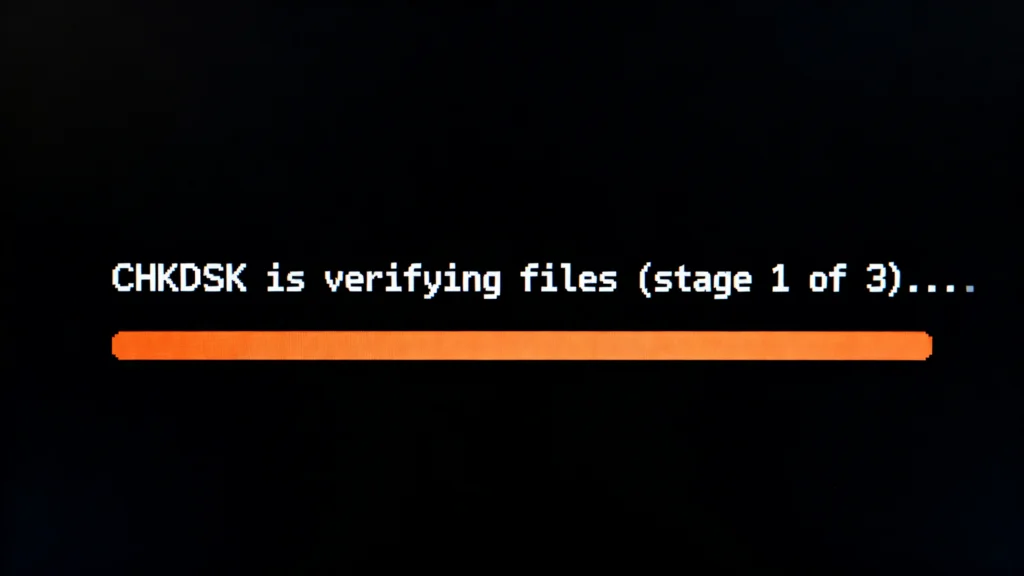
CHKDSK, short for “Check Disk,” is a command-line utility built into every version of the Windows operating system. Its primary function is to scan the file system and physical integrity of a disk volume (like your C: drive or an external USB drive). Think of it as a diagnostic scanner for your hard drive. It doesn’t just look at your files; it examines the very structure that holds your data—the NTFS or FAT32 file system—and the disk surface itself.
的 CHKDSK command has been a cornerstone of Windows maintenance for decades. When you experience symptoms like system crashes, failed boots, or corrupted files, running this tool is often the first troubleshooting step recommended by IT professionals. Its core purpose is to find logical errors and, in some cases, physical defects, then attempt to repair them.
What Does CHKDSK Do? The Two-Phase Scan
所以、, what does chkdsk do in detail? The utility operates in two distinct, sequential phases, each targeting a different aspect of disk health.
- File System Integrity Check: In this phase, CHKDSK verifies the file system’s metadata. It checks crucial structures like the Master File Table (MFT), security descriptors, file indexes, and folder structures. It looks for inconsistencies—for example, a file that is listed in the MFT but has no actual data clusters assigned, or clusters marked as “in use” but not linked to any file (lost clusters). Fixing these logical errors helps Windows locate and access your files correctly.
- Disk Surface (Bad Sector) Scan: After checking the file system, CHKDSK can optionally scan the disk’s surface for physical errors. A “sector” is the smallest unit of storage on a disk. A “bad sector” is a tiny portion of the disk that is physically damaged and can no longer reliably store data. When CHKDSK finds a 壞扇區, it marks it as unusable. It then attempts to recover any readable information from that sector and moves it to a healthy, reserved area of the disk. This process prevents Windows from writing future data to a faulty spot, protecting your data from corruption.
In summary, CHKDSK works to ensure the logical file system is sound and to isolate physical disk flaws, thereby stabilizing your system and preventing data loss from these specific types of errors.
When Should You Run CHKDSK? Key Use Cases
認識 如何執行 chkdsk is important, but knowing when to run it is crucial. Here are the most common scenarios where initiating a CHKDSK scan is advisable:
- Frequent System Crashes or Blue Screens of Death (BSOD): If your computer randomly freezes or crashes, especially with disk-related error codes, a corrupted file system might be the culprit.
- File Corruption Errors: You try to open a document, photo, or program and receive errors stating the file is corrupt, damaged, or unreadable.
- Unusually Slow Computer Performance: If your disk is struggling with bad sectors, the read/write heads have to work harder, skipping faulty areas, which drastically slows down data access.
- Failed Drive Detection: Windows may fail to recognize an external hard drive or USB stick, or it might ask you to format it before use—a classic sign of 檔案系統損壞.
- Post-Power Failure or Improper Shutdown: A sudden loss of power can interrupt file system writes, leaving it in an inconsistent state. Running CHKDSK after such an event is a wise precaution.
- General System Maintenance: Some users schedule a periodic CHKDSK scan (every few months) as part of proactive system care, especially for older mechanical hard drives (硬碟機) which are more prone to developing bad sectors over time.
A Critical Warning: If you suspect your drive is suffering from severe physical failure (e.g., making clicking/grinding noises, is completely undetected, or has massive corruption), do not run CHKDSK. Its intensive scan can push a failing drive over the edge. In such cases, your immediate priority should be data recovery, not repair.
How to Run CHKDSK: A Step-by-Step Guide

Method 1: How to Run CHKDSK via Command Prompt (with Parameters)
This method offers the most control. You can use specific parameters to tailor the scan.
- Open Command Prompt as Administrator:
- Type “cmd” in the Windows Start menu search bar.
- Right-click on “Command Prompt” and select “Run as administrator.”
- Understand Basic Parameters:
/f: Tells CHKDSK to fix any logical file system errors it finds. This is the most common parameter./r: Locates bad sectors and recovers readable information. This implies/fand is a more intensive scan./x: Forces the volume to dismount (unlock) before the scan starts. Also implies/f.
- Execute the Command:
- To fix errors on your C: drive, type:
chkdsk C: /f - To perform a full surface scan and repair, type:
chkdsk C: /r - If the drive is in use, you will be prompted to schedule the scan for the next system restart. Type
Yand restart your computer.
- To fix errors on your C: drive, type:
Method 2: Running CHKDSK from Windows File Explorer (Graphical Interface)
For users less comfortable with the command line, this is a simpler approach.
- Open “This PC” or “File Explorer.”
- Right-click on the drive you want to check (e.g., Local Disk C:) and select “Properties.”
- Go to the “Tools” tab.
- Under the “Error checking” section, click the “Check” button.
- Windows may state “You don’t need to scan this drive.” To proceed with a scan, click “Scan drive.” For a deeper scan with bad sector check, you often need to use the Command Prompt method.
Best Practice: For a thorough maintenance scan, using the chkdsk /r command from an elevated Command Prompt is considered the industry standard. Be prepared for it to take several hours on large, traditional hard drives.
The Risks: When CHKDSK Might Cause Problems
雖然 CHKDSK is a powerful repair tool, it is not without risks. Understanding these is key to using it responsibly.
- Data Loss During Repair: To fix file system inconsistencies, CHKDSK might delete file entries it deems irreparably corrupt or truncate files. If its assessment is wrong, valid data can be lost.
- Inaccessible Partitions: In severe corruption cases, the repair process can alter partition table or boot sector information, sometimes rendering a partition inaccessible or “未熟的” in Disk Management.
- Stress on Failing Drives: As mentioned, the exhaustive read/write operations of the
/rscan can be the final straw for a physically deteriorating drive. - Incomplete or Interrupted Scans: If a CHKDSK scan is interrupted by a power cut or forced shutdown, the file system can be left in a worse state than before.
This is a critical point of experience: A tool designed to save your data can, under specific circumstances, contribute to its loss. Therefore, the universal best practice—one I cannot stress enough—is to ensure you have a verified backup of your important data before running any disk repair utility, including CHKDSK.
Data Recovery After a Failed CHKDSK Operation
What if you’ve already run CHKDSK and now find files missing or a partition gone? Panic is not the solution. When built-in tools fall short or cause new issues, you need a dedicated, professional-grade recovery tool.
Why Magic Data Recovery Is the Recommended Solution
If you are facing data loss following a CHKDSK operation, Magic Data Recovery 從 Amagicsoft provides a robust and user-friendly path to get your files back. Here’s why it stands out as the go-to solution for this specific problem:
- Solves the Core Pain Point: It specializes in recovering data from formatted, corrupted, RAW, or inaccessible partitions—exactly the situations that can arise from an aggressive CHKDSK repair. It bypasses the damaged file system and performs a deep scan of the raw disk sectors to reconstruct your files and folder structure.
- Key Product Advantages:
- 高回收率: Advanced algorithms can recover a vast array of file types—documents, photos, videos, emails, and archives—even from challenging scenarios.
- Non-Destructive & Safe: The software operates in a read-only mode. It never writes to the damaged drive you are trying to recover from, eliminating the risk of further data overwriting.
- 復原前的預覽: You can see a preview of recoverable files (like photos and documents) before purchasing the software, ensuring the data you need is indeed retrievable.
- 直覺式介面: Designed for all user levels, it guides you through a simple three-step process: Select Drive > Scan > Recover.
- Typical Use Case: Imagine you ran
chkdsk /ron an external drive that was behaving strangely. After the scan, the drive appears empty in File Explorer, or Windows asks you to format it. Instead of formatting (which would permanently destroy data), you would run Magic Data Recovery, select the problematic drive, run the quick and deep scan, and browse the recovered files it finds. - Why It’s More Reliable: 雖然 free file recovery software exists, they often lack the sophisticated engine needed to handle complex file system damage. Magic Data Recovery is built on professional recovery logic, offering a much higher chance of successful, structured recovery compared to basic tools. Its focused design for partition-level issues makes it specifically suited for post-CHKDSK complications.
If you find yourself in a situation where CHKDSK has left your data inaccessible, a professional tool like Magic Data Recovery offers your best chance at restoration. You can download and try the software to scan your drive and see what can be recovered before making any commitment.
支援 Windows 7/8/10/11 和 Windows Server
Conclusion and Best Practices Summary
CHKDSK remains an essential, first-response tool in the Windows user’s maintenance kit for addressing disk errors. Understanding what does chkdsk do and knowing precisely 如何執行 chkdsk empowers you to tackle many common system stability issues head-on. Its ability to repair logical file system errors and remap 壞扇區 can extend the life of your drive and protect your data.
However, its power comes with responsibility. Always back up data before running disk checks, and be aware of the potential risks involved. In the event that a repair attempt leads to further data loss or an inaccessible drive, do not resort to further DIY methods that might overwrite your data.
This is why we recommend having a reliable solution like Magic Data Recovery in your digital toolkit. It serves as a critical safety net, specializing in the very 資料遺失 scenarios that can occur from disk repair utilities. By combining cautious use of built-in tools like CHKDSK with the power of a dedicated recovery solution, you create a comprehensive strategy for both maintaining your system’s health and safeguarding your invaluable digital information.
常見問題
1. How do I run a CHKDSK scan?
2. Can CHKDSK fix SD card?
3. Which is better, chkdsk r or f?
4. Does CHKDSK fix corrupted files?
5. Can CHKDSK fix a hard drive?
6. How often should I run CHKDSK?
7. How to uncorrupt corrupted files?
8. What does CHKDSK c:/f do?
Erin Smith 是 Amagicsoft 公認最專業的作家之一。過去 10 年來,她不斷磨練自己的寫作技巧,幫助數百萬讀者解決技術問題。.