コンテンツへスキップ
amagicsoftロゴアイコン
  • ホーム
  • 製品紹介
    • Magic Data Recovery
    • Magic Recovery Key
  • 店舗
  • ブログ
  • もっと見る
    • Amagicsoftについて
    • お問い合わせ
    • プライバシーポリシー
    • 利用規約
    • ライセンス契約
    • 返金ポリシー
  • 日本語
    • English
    • 한국어
    • Deutsch
    • Français
    • 繁體中文
ウィキ

CHKDSK:ディスクエラーを修正する究極のガイド
2025年12月17日 Smith, Erin コメントはまだない
chkdskの実行方法
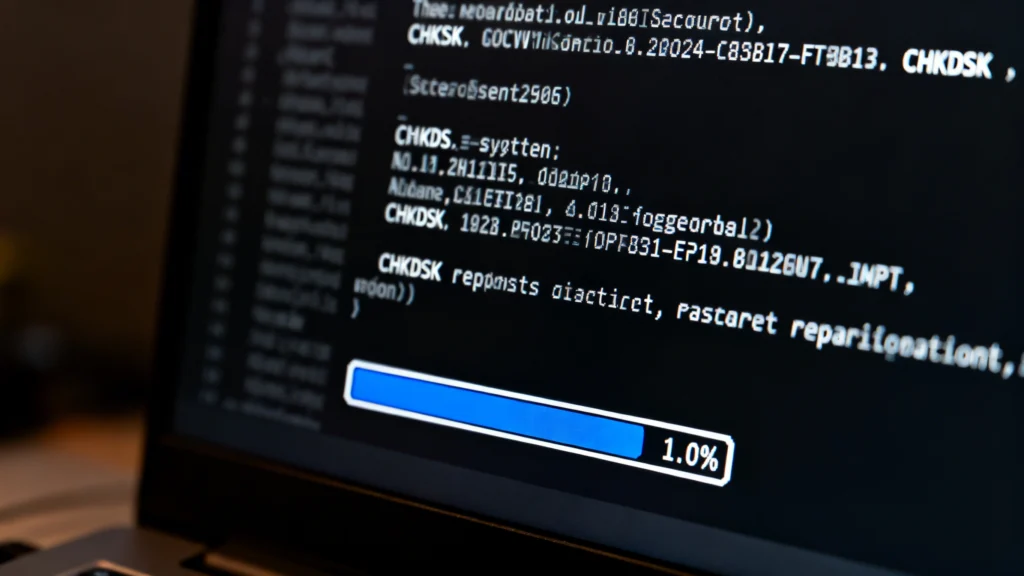
In this comprehensive guide, we will dive deep into チェックディスク—what it is, what does chkdsk do, and the precise steps on chkdskの実行方法. We’ll explore its benefits, limitations, and the potential risks. Most importantly, we’ll provide a reliable safety net for scenarios where running CHKDSK might result in inaccessible partitions または lost data, introducing a proven recovery solution from アマジックソフト.

目次

Understanding CHKDSK – Your First Line of Defense

What is CHKDSK? A Core Windows Utility

チェックディスク, short for “Check Disk,” is a command-line utility built into every version of the Windows operating system. Its primary function is to scan the file system and physical integrity of a disk volume (like your C: drive or an external USB drive). Think of it as a diagnostic scanner for your hard drive. It doesn’t just look at your files; it examines the very structure that holds your data—the NTFS or FAT32 file system—and the disk surface itself.

について チェックディスク command has been a cornerstone of Windows maintenance for decades. When you experience symptoms like system crashes, failed boots, or corrupted files, running this tool is often the first troubleshooting step recommended by IT professionals. Its core purpose is to find logical errors and, in some cases, physical defects, then attempt to repair them.

What Does CHKDSK Do? The Two-Phase Scan

だから, what does chkdsk do in detail? The utility operates in two distinct, sequential phases, each targeting a different aspect of disk health.

  1. File System Integrity Check: In this phase, チェックディスク verifies the file system’s metadata. It checks crucial structures like the Master File Table (MFT), security descriptors, file indexes, and folder structures. It looks for inconsistencies—for example, a file that is listed in the MFT but has no actual data clusters assigned, or clusters marked as “in use” but not linked to any file (lost clusters). Fixing these logical errors helps Windows locate and access your files correctly.
  2. Disk Surface (Bad Sector) Scan: After checking the file system, チェックディスク can optionally scan the disk’s surface for physical errors. A “sector” is the smallest unit of storage on a disk. A “bad sector” is a tiny portion of the disk that is physically damaged and can no longer reliably store data. When チェックディスク finds a 不良セクター, it marks it as unusable. It then attempts to recover any readable information from that sector and moves it to a healthy, reserved area of the disk. This process prevents Windows from writing future data to a faulty spot, protecting your data from corruption.

In summary, CHKDSK works to ensure the logical file system is sound and to isolate physical disk flaws, thereby stabilizing your system and preventing data loss from these specific types of errors.

When Should You Run CHKDSK? Key Use Cases

知ること chkdskの実行方法 is important, but knowing when to run it is crucial. Here are the most common scenarios where initiating a チェックディスク scan is advisable:

  • Frequent System Crashes or Blue Screens of Death (BSOD): If your computer randomly freezes or crashes, especially with disk-related error codes, a corrupted file system might be the culprit.
  • File Corruption Errors: You try to open a document, photo, or program and receive errors stating the file is corrupt, damaged, or unreadable.
  • Unusually Slow Computer Performance: If your disk is struggling with bad sectors, the read/write heads have to work harder, skipping faulty areas, which drastically slows down data access.
  • Failed Drive Detection: Windows may fail to recognize an external hard drive or USB stick, or it might ask you to format it before use—a classic sign of ファイルシステムの損傷.
  • Post-Power Failure or Improper Shutdown: A sudden loss of power can interrupt file system writes, leaving it in an inconsistent state. Running チェックディスク after such an event is a wise precaution.
  • General System Maintenance: Some users schedule a periodic チェックディスク scan (every few months) as part of proactive system care, especially for older mechanical hard drives (HDD) which are more prone to developing bad sectors over time.

A Critical Warning: If you suspect your drive is suffering from severe physical failure (e.g., making clicking/grinding noises, is completely undetected, or has massive corruption), do not run CHKDSK. Its intensive scan can push a failing drive over the edge. In such cases, your immediate priority should be data recovery, not repair.

How to Run CHKDSK: A Step-by-Step Guide

There are two primary methods to execute the チェックディスク command. Let’s walk through both.
Run CHKDSK via Command Prompt

Method 1: How to Run CHKDSK via Command Prompt (with Parameters)

This method offers the most control. You can use specific parameters to tailor the scan.

  1. Open Command Prompt as Administrator:
    • Type “cmd” in the Windows Start menu search bar.
    • Right-click on “Command Prompt” and select “Run as administrator.”
  2. Understand Basic Parameters:
    • /f: Tells チェックディスク to fix any logical file system errors it finds. This is the most common parameter.
    • /r: Locates bad sectors and recovers readable information. This implies /f and is a more intensive scan.
    • /x: Forces the volume to dismount (unlock) before the scan starts. Also implies /f.
  3. Execute the Command:
    • To fix errors on your C: drive, type: chkdsk C: /f
    • To perform a full surface scan and repair, type: chkdsk C: /r
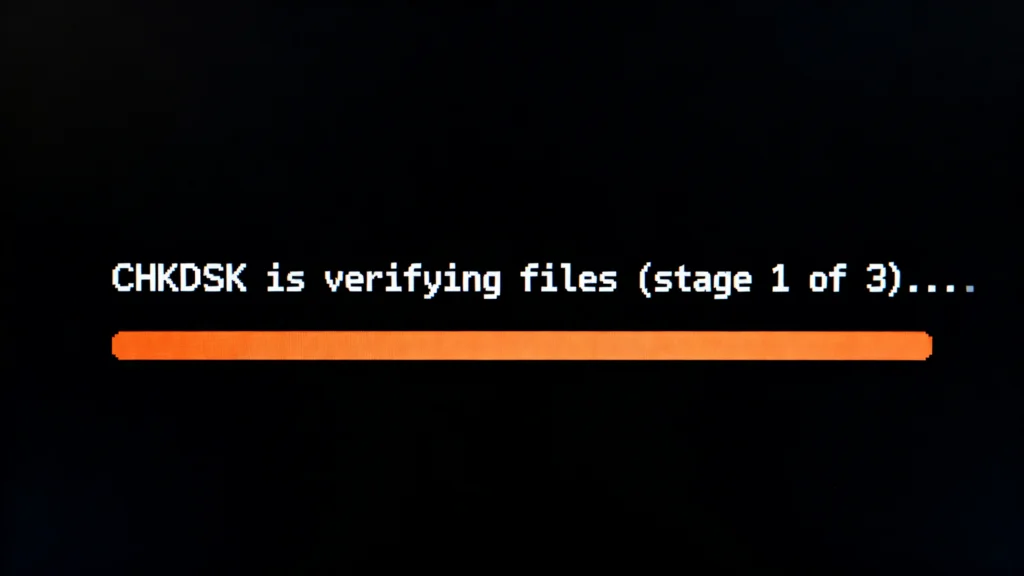
    • If the drive is in use, you will be prompted to schedule the scan for the next system restart. Type Y and restart your computer.

Method 2: Running CHKDSK from Windows File Explorer (Graphical Interface)

For users less comfortable with the command line, this is a simpler approach.

  1. Open “This PC” or “File Explorer.”
  2. Right-click on the drive you want to check (e.g., Local Disk C:) and select “Properties.”
  3. Go to the “Tools” tab.
  4. Under the “Error checking” section, click the “Check” button.
  5. Windows may state “You don’t need to scan this drive.” To proceed with a scan, click “Scan drive.” For a deeper scan with bad sector check, you often need to use the Command Prompt method.

Best Practice: For a thorough maintenance scan, using the chkdsk /r command from an elevated Command Prompt is considered the industry standard. Be prepared for it to take several hours on large, traditional hard drives.

The Risks: When CHKDSK Might Cause Problems

一方 チェックディスク is a powerful repair tool, it is not without risks. Understanding these is key to using it responsibly.

  • Data Loss During Repair: To fix file system inconsistencies, チェックディスク might delete file entries it deems irreparably corrupt or truncate files. If its assessment is wrong, valid data can be lost.
  • Inaccessible Partitions: In severe corruption cases, the repair process can alter partition table or boot sector information, sometimes rendering a partition inaccessible or “生” in Disk Management.
  • Stress on Failing Drives: As mentioned, the exhaustive read/write operations of the /r scan can be the final straw for a physically deteriorating drive.
  • Incomplete or Interrupted Scans: If a チェックディスク scan is interrupted by a power cut or forced shutdown, the file system can be left in a worse state than before.

This is a critical point of experience: A tool designed to save your data can, under specific circumstances, contribute to its loss. Therefore, the universal best practice—one I cannot stress enough—is to ensure you have a verified backup of your important data before running any disk repair utility, including CHKDSK.

Data Recovery After a Failed CHKDSK Operation

What if you’ve already run チェックディスク and now find files missing or a partition gone? Panic is not the solution. When built-in tools fall short or cause new issues, you need a dedicated, professional-grade recovery tool.

Why Magic Data Recovery Is the Recommended Solution

If you are facing data loss following a チェックディスク operation, Magic Data Recovery より アマジックソフト provides a robust and user-friendly path to get your files back. Here’s why it stands out as the go-to solution for this specific problem:

  • Solves the Core Pain Point: It specializes in recovering data from formatted, corrupted, RAW, or inaccessible partitions—exactly the situations that can arise from an aggressive チェックディスク repair. It bypasses the damaged file system and performs a deep scan of the raw disk sectors to reconstruct your files and folder structure.
  • Key Product Advantages:
    • 高い回収率: Advanced algorithms can recover a vast array of file types—documents, photos, videos, emails, and archives—even from challenging scenarios.
    • Non-Destructive & Safe: The software operates in a read-only mode. It never writes to the damaged drive you are trying to recover from, eliminating the risk of further data overwriting.
    • リカバリーの前にプレビューを: You can see a preview of recoverable files (like photos and documents) before purchasing the software, ensuring the data you need is indeed retrievable.
    • 直感的なインターフェース: Designed for all user levels, it guides you through a simple three-step process: Select Drive > Scan > Recover.
  • Typical Use Case: Imagine you ran chkdsk /r on an external drive that was behaving strangely. After the scan, the drive appears empty in File Explorer, or Windows asks you to format it. Instead of formatting (which would permanently destroy data), you would run Magic Data Recovery, select the problematic drive, run the quick and deep scan, and browse the recovered files it finds.
  • Why It’s More Reliable: 一方 free file recovery software exists, they often lack the sophisticated engine needed to handle complex file system damage. Magic Data Recovery is built on professional recovery logic, offering a much higher chance of successful, structured recovery compared to basic tools. Its focused design for partition-level issues makes it specifically suited for post-チェックディスク complications.

If you find yourself in a situation where CHKDSK has left your data inaccessible, a professional tool like Magic Data Recovery offers your best chance at restoration. You can download and try the software to scan your drive and see what can be recovered before making any commitment.

Magic Data Recoveryをダウンロード

Windows 7/8/10/11およびWindows Serverをサポート

Conclusion and Best Practices Summary

チェックディスク remains an essential, first-response tool in the Windows user’s maintenance kit for addressing disk errors. Understanding what does chkdsk do and knowing precisely chkdskの実行方法 empowers you to tackle many common system stability issues head-on. Its ability to repair logical file system errors and remap 不良セクタ can extend the life of your drive and protect your data.

However, its power comes with responsibility. Always back up data before running disk checks, and be aware of the potential risks involved. In the event that a repair attempt leads to further data loss or an inaccessible drive, do not resort to further DIY methods that might overwrite your data.

This is why we recommend having a reliable solution like Magic Data Recovery in your digital toolkit. It serves as a critical safety net, specializing in the very データ損失 scenarios that can occur from disk repair utilities. By combining cautious use of built-in tools like チェックディスク with the power of a dedicated recovery solution, you create a comprehensive strategy for both maintaining your system’s health and safeguarding your invaluable digital information.

よくあるご質問

1. How do I run a CHKDSK scan?

The easiest way is via Command Prompt (Admin). Type chkdsk C: /f and press Enter (replace “C” with your drive letter). For a deeper scan, use chkdsk C: /r instead. You can also run it from the Properties menu of any drive in File Explorer.

2. Can CHKDSK fix SD card?

Yes, it can fix logical errors on SD cards. Connect the card, open Command Prompt as Admin, and run chkdsk [SD Card Drive Letter]: /f. It cannot repair physical damage. If the card is failing, avoid running CHKDSK and use data recovery software first.

3. Which is better, chkdsk r or f?

Use /f to quickly fix file system errors. Use /r for a more thorough scan that also checks for and repairs bad sectors. The /r command includes /f but takes much longer to complete.

4. Does CHKDSK fix corrupted files?

It fixes the file system structure to make corrupted files accessible again, but it does not repair the actual content of a corrupted file. For files damaged at the content level, you need a backup or a dedicated file repair tool.

5. Can CHKDSK fix a hard drive?

It can fix logical errors and isolate physical bad sectors, which can stabilize a drive. However, it cannot repair hardware failures (e.g., clicking sounds, a dead drive). For physical damage, consult a professional data recovery service.

6. How often should I run CHKDSK?

Run it only when you notice problems like crashes, slow performance, or file errors. For preventative maintenance on an older hard drive, running chkdsk /r once a year is sufficient. There’s no need to run it frequently on modern, healthy SSDs.

7. How to uncorrupt corrupted files?

First, try restoring from a backup. If that’s not available, use specialized file repair software for specific file types (e.g., DOCX, JPG). For widespread corruption or inaccessible drives, professional data recovery software like Magic Data Recovery is often the most effective solution.

8. What does CHKDSK c:/f do?

The command chkdsk c: /f scans the C: drive and fixes any logical errors it finds in the file system, such as directory or security descriptor issues. It does not scan for physical disk errors. Windows will usually schedule this scan for the next restart if the drive is in use.
  • WiKi
Smith, Erin

エリン・スミスは、Amagicsoftで最もプロフェッショナルなライターの一人として認められています。過去10年にわたりライティングスキルを磨き続け、何百万人もの読者の技術的な問題解決に貢献してきました。.

投稿ナビゲーション

前へ
次のページ

検索

カテゴリー

  • ビットロッカーのリカバリ
  • 削除されたファイルの復元
  • フォーマットファイルの復元
  • ハードディスク・ドライブ復旧
  • ライセンスキーの回復
  • 紛失ファイルの復元
  • メモリーカード復元
  • ニュース
  • パスワード復旧
  • フォトリカバリー
  • SSDリカバリー
  • USBドライブ復元
  • ユーザーガイド
  • ビデオ・リカバリー
  • ウィキ

最近の投稿

  • retrieving deleted files from hard drive
    How to Retrieve Deleted Files from Hard Drive
  • CHKDSKコマンドの使い方
    CHKDSKコマンド:完全ガイド
  • chkdskの実行方法
    CHKDSK:ディスクエラーを修正する究極のガイド

タグ

どのように Magic Data Recovery Magic Recovery Key WiKi

関連記事

CHKDSKコマンドの使い方
ウィキ

CHKDSKコマンド:完全ガイド

2025年12月17日 Smith, Erin コメントはまだない

CHKDSK (Check Disk) is a built-in Windows tool that helps maintain and repair file systems on hard drives by checking for errors, bad sectors, and fragmented files. It’s an essential utility for keeping your disk healthy and optimizing performance. It provide several CHKDSK Commands for fixing file system errors, bad sectors, and fragmented files. Table of Contents How CHKDSK Works Check Disk scans your hard drive and checks for file system errors, bad sectors, and fragmented files. Depending on the parameters you use, it can also attempt repairs on these issues and recover lost data from bad sectors. How to Run Check Disk To run CHKDSK, follow these steps: Open […]

ExFATファイルシステムとは
ウィキ

exFATファイルシステムとは

2025年12月16日 Vasilii コメントはまだない

exFAT(Extended File Allocation Table)は、FAT32の制限、特に最大ファイルサイズ4GBの制限を克服するためにMicrosoftが開発した最新のファイルシステムです。exFATは、大容量ファイル、クロスプラットフォーム互換性、低オーバーヘッドに最適化されており、最新のコンシューマ向けストレージデバイスに適しています。目次 exFATファイルシステムの目的と設計思想 exFATは、特定の問題に対処するために導入されました。従来のFATファイルシステムはシンプルで広く互換性がありましたが、最新のストレージ需要にはますます適さなくなっていました。FAT32は、[...]を超えるサイズのファイルを保存することができません。

NTFSファイルシステムとは
ウィキ

NTFSファイルシステムとは

2025年12月16日 Vasilii コメントはまだない

NTFS(New Technology File System)は、マイクロソフトが開発した独自のジャーナリングファイルシステムで、Windows 10やWindows 11を含む最新のWindowsオペレーティングシステムのデフォルトのファイルシステムとして使用されている。FAT32のような以前のファイルシステムの制限を克服するために設計され、最新のストレージ環境向けに信頼性、セキュリティ、スケーラビリティ、パフォーマンスを向上させている。データ復旧とデジタル・フォレンジックの観点から、NTFSは堅牢で情報量が豊富なファイルシステムと考えられている。その内部メタデータ構造は、ファイル、パーミッション、および変更に関する広範な詳細を保持し、誤って削除したりファイルシステムが破損したりした場合でも、多くの場合、専門的な復旧が可能になります。目次 NTFSファイルシステムの構造 NTFSは[...]です。

amagicsoftロゴアイコン

当社のビジョンは、世界的に有名なソフトウェア ブランドおよびサービス プロバイダーとなり、一流の製品とサービスをユーザーに提供することです。

製品紹介
  • Magic Data Recovery
  • Magic Recovery Key
ポリシー
  • 利用規約
  • プライバシーポリシー
  • 返金ポリシー
  • ライセンス契約
会社概要
  • Amagicsoftについて
  • お問い合わせ
  • 店舗
フォローする

著作権©2025 Amagicsoft。無断複写転載を禁じます。

  • 利用規約
  • プライバシーポリシー