
Dateien von der Festplatte unter Windows 10 wiederherstellen
Der Verlust von Dateien auf einer Festplatte kann schwerwiegende Folgen haben, insbesondere wenn es sich bei den fehlenden Daten um Arbeitsdokumente, Familienfotos, Videos, Projektordner oder Geschäftsunterlagen handelt. Die gute Nachricht ist, dass viele Dateien noch wiederherstellbar sind, wenn Sie schnell handeln und vermeiden, neue Daten auf dasselbe Laufwerk zu schreiben. In dieser Anleitung wird erklärt, wie Sie Dateien von der Festplatte wiederherstellen Schritt für Schritt, einschließlich integrierter Windows-Funktionen, Sicherungsoptionen und professioneller Wiederherstellungssoftware.
Wenn der Datenverlust auf einer internen Festplatte, einem externen Laufwerk, der Festplatte eines alten Laptops oder einem Windows-10-Computer aufgetreten ist, finden Sie weitere Informationen in der umfassenden Anleitung von Amagicsoft Anleitung zur Festplattenwiederherstellung. In diesem Artikel erklären wir Ihnen, was Sie als Erstes tun sollten und wie Sie Dateien von der Festplatte unter Windows 10 wiederherstellen, und wenn ein spezielles Tool wie Magic Data Recovery ist die sicherere Wahl.
Unterstützt Windows 7/8/10/11 und Windows Server
Inhaltsübersicht
Kann man Dateien von einer Festplatte wiederherstellen?
Ja, in vielen Fällen können Sie Dateien von der Festplatte wiederherstellen sofern die verlorenen Daten nicht überschrieben wurden. Wenn Windows eine Datei löscht, entfernt es in der Regel den Dateieintrag oder markiert den Speicherplatz als verfügbar. Die eigentlichen Daten können auf dem Laufwerk verbleiben, bis neue Dateien diesen Platz belegen.
Deshalb ist das richtige Timing entscheidend. Je häufiger Sie die betroffene Festplatte nutzen, desto größer ist das Risiko, dass Windows, Anwendungen, Downloads oder Systemaktualisierungen die gelöschten Daten überschreiben.
Zu den gängigen Wiederherstellungsszenarien gehören:
- Versehentlich gelöschte Dateien
- Dateien, die aus dem Papierkorb gelöscht wurden
- Dateien nach dem Formatieren verloren
- Fehlende Ordner nach Systemfehlern
- Datenverlust aufgrund einer Beschädigung des Dateisystems
- Dateien, die von einer externen Festplatte verloren gegangen sind
- Dokumente, Fotos, Videos, Archivdateien und andere Dateitypen, die unerwartet verschwunden sind
Allerdings kann keine Wiederherstellungsmethode in jedem Fall einen Erfolg garantieren. Wenn die Festplatte schwere physische Schäden aufweist, Klickgeräusche macht, nach Verbranntem riecht oder sich wiederholt trennt, sollten Sie sie nicht mehr verwenden und sich an ein professionelles Datenrettungslabor wenden.
Was Sie vor der Wiederherstellung von Dateien von der Festplatte tun sollten
Bevor Sie versuchen Dateien von der Festplatte unter Windows 10 wiederherstellen, ergreifen Sie einige Vorsichtsmaßnahmen. Diese Maßnahmen verbessern die Chancen auf eine Wiederherstellung und verringern das Risiko eines dauerhaften Datenverlusts.
Verwenden Sie die betroffene Festplatte nicht mehr
Speichern Sie keine neuen Dateien, installieren Sie keine Software, laden Sie keine Updates herunter und kopieren Sie keine Daten auf dasselbe Laufwerk. Befanden sich die fehlenden Dateien auf dem Laufwerk C:, sollten Sie den Computer so weit wie möglich nicht mehr benutzen. Befanden sich die Dateien auf einer externen Festplatte, trennen Sie diese vorsichtig vom Computer, bis Sie bereit sind, sie zu scannen.
Formatieren oder reparieren Sie das Laufwerk nicht zuerst
Windows fordert Sie möglicherweise auf, ein Laufwerk zu formatieren, bevor Sie es verwenden. Klicken Sie nicht auf „Formatieren“, wenn das Laufwerk wichtige Dateien enthält. Führen Sie außerdem vor der Wiederherstellung kein CHKDSK aus, wenn das Dateisystem beschädigt ist. Reparaturbefehle können Dateisätze verändern und die Wiederherstellung erschweren.
Einen weiteren Speicherort einrichten
Speichern Sie wiederhergestellte Dateien immer auf einem anderen Laufwerk. Wenn Sie beispielsweise Dateien von der Festplatte wiederherstellen D: Speichern Sie die wiederhergestellten Dateien auf Laufwerk C:, einem externen Laufwerk oder einem anderen sicheren Speicherort. Das Wiederherstellen von Dateien auf demselben Laufwerk kann andere wiederherstellbare Daten überschreiben.
Methode 1: Dateien aus dem Papierkorb wiederherstellen
Wenn Sie kürzlich Dateien von einer internen Festplatte gelöscht haben, sollten Sie zuerst im Papierkorb nachsehen. Diese Methode ist schnell, kostenlos und sicher.
Schritte:
- Öffnen Sie den Papierkorb auf dem Desktop.
- Suchen Sie nach der gelöschten Datei oder dem gelöschten Ordner.
- Klicken Sie mit der rechten Maustaste auf das Element.
- Wählen Sie Wiederherstellen.
- Überprüfen Sie den Originalordner.
Diese Methode funktioniert nur, wenn sich die gelöschte Datei noch im Papierkorb befindet. Sie hilft nicht, wenn Sie die Tastenkombination „Umschalt + Entf“ verwendet, den Papierkorb geleert, Dateien von externen Laufwerken gelöscht oder Daten nach einer Formatierung verloren haben.
Methode 2: Dateien von der Festplatte unter Windows 10 mit dem Dateiverlauf wiederherstellen
„Dateiversionsverlauf“ ist eine Windows-Sicherungsfunktion. Wenn diese Funktion vor dem Datenverlust aktiviert war, können Sie damit ältere Versionen von Dateien oder Ordnern wiederherstellen.
Schritte:
- Öffnen Sie den Datei-Explorer.
- Wechseln Sie zu dem Ordner, in dem die Datei gespeichert wurde.
- Klicken Sie mit der rechten Maustaste auf den Ordner.
- Wählen Sie „Vorherige Versionen wiederherstellen“.
- Wählen Sie eine Version aus der Liste aus.
- Klicken Sie auf „Wiederherstellen“ oder „Öffnen“, um die Dateien zunächst zu überprüfen.
Diese Methode ist nützlich, wenn Sie Dateien von der Festplatte unter Windows 10 wiederherstellen nach versehentlichem Löschen, ungewollten Änderungen oder dem Ersetzen von Ordnern. Dies funktioniert jedoch nur, wenn die Dateiversionsgeschichte oder frühere Versionen bereits verfügbar waren, bevor die Dateien verschwunden sind.
Methode 3: Dateien aus einem Backup oder der Cloud-Synchronisierung wiederherstellen
Bevor Sie eine Wiederherstellungssoftware verwenden, prüfen Sie, ob Ihre Dateien in einem Backup oder einem Cloud-Konto vorhanden sind. Viele Nutzer vergessen, dass Windows-Ordner möglicherweise mit OneDrive, Google Drive, Dropbox oder einem anderen Backup-Tool synchronisiert werden.
Überprüfen Sie diese Orte:
- Windows-Sicherung
- OneDrive-Papierkorb
- Externe Sicherungslaufwerke
- NAS-Sicherungsordner
- Alte Laptop- oder Desktop-Festplatten
- E-Mail-Anhänge
- USB-Kopien
- Projekt-Exportordner
Diese Methode ist oft die sauberste Lösung, da sie vollständige Dateien mit ihren ursprünglichen Namen und Ordnerstrukturen wiederherstellt. Falls jedoch kein Backup vorhanden ist, ist ein gründlicherer Scan der Festplatte erforderlich.
Methode 4: Windows-Dateiwiederherstellung verwenden
„Windows File Recovery“ ist ein Microsoft-Befehlszeilentool für Windows 10 Version 2004 und höher. Es kann gelöschte Dateien von lokalen Speichergeräten wiederherstellen, darunter interne Laufwerke, externe Festplatten und USB-Geräte.
Diese Option kann für fortgeschrittene Benutzer hilfreich sein, hat jedoch ihre Grenzen. Sie erfordert die Eingabe von Befehlen, die korrekte Syntax für die Wiederherstellung sowie ein separates Ziellaufwerk. Für normale Benutzer kann die Arbeit mit der Befehlszeile verwirrend sein.
Ein einfaches Beispiel könnte so aussehen:
winfr C: D: /regular /n \Benutzer\IhrName\Dokumente\
In diesem Beispiel durchsucht das Tool das Laufwerk C: und speichert die wiederhergestellten Dateien auf dem Laufwerk D:. Sie sollten Dateien niemals auf demselben Quelllaufwerk wiederherstellen.
Die Windows-Dateiwiederherstellung kann hilfreich sein, wenn Sie den Dateipfad oder den Dateityp kennen. Dennoch ist sie möglicherweise nicht ideal für Benutzer, die eine visuelle Benutzeroberfläche, eine Dateivorschau, die Durchsicht von Ordnern oder einfachere Filterfunktionen wünschen.
Methode 5: Dateien von der Festplatte mit Magic Data Recovery wiederherstellen
Wenn sich Dateien nicht im Papierkorb befinden, die Dateiversionsgeschichte nicht verfügbar ist oder das Laufwerk formatiert oder beschädigt wurde, ist eine spezielle Wiederherstellungssoftware die sinnvollere Lösung. Magic Data Recovery wurde für Nutzer entwickelt, die eine übersichtliche und effiziente Möglichkeit benötigen, Dateien von der Festplatte wiederherstellen ohne komplizierte Befehle.
Du kannst es von der offiziellen Magic Data Recovery Seite.
Unterstützt Windows 7/8/10/11 und Windows Server
Magic Data Recovery hilft bei typischen Szenarien für Datenverluste auf Festplatten, darunter:
- Gelöschte Dateien
- Formatierte Festplatten
- Verlorene Ordner
- Fehler im Dateisystem
- RAW oder unzugängliche Partitionen
- Datenverlust auf einer externen Festplatte
- Dateien fehlen nach versehentlichen Vorgängen
- Dokumente, Fotos, Videos, Archivdateien und andere Dateiformate
Im Gegensatz zu den standardmäßigen Windows-Wiederherstellungsoptionen scannt Magic Data Recovery das ausgewählte Laufwerk und zeigt die wiederherstellbaren Dateien in einer grafischen Benutzeroberfläche an. Sie können vor der Wiederherstellung eine Vorschau der Dateien anzeigen, die Ergebnisse filtern und die Daten an einem sicheren Ort wiederherstellen.
Warum Magic Data Recovery für die Wiederherstellung von Festplatten nützlich ist
Magic Data Recovery ist nützlich, weil es sich auf das eigentliche Problem der Datenwiederherstellung konzentriert: verlorene Daten zu finden, bevor sie überschrieben werden. Es unterstützt viele verschiedene Situationen, in denen Daten verloren gehen können, und bietet Windows-Nutzern einen unkomplizierten Arbeitsablauf.
Die wichtigsten Vorteile sind:
- Tiefenscan nach gelöschten, formatierten und beschädigten Daten
- Vorschau vor der Wiederherstellung
- Unterstützung für interne und externe Festplatten
- Übersichtliche Filter- und Suchoptionen
- Wiederherstellung für viele Dateiformate
- Einfacher Arbeitsablauf für nichttechnische Benutzer
- Sichere Wiederherstellung an einem anderen Ort
Für Nutzer, die eine umfassendere Festplattenlösung suchen, bietet Amagicsoft zudem einen speziellen Artikel zum Thema Software zur Wiederherstellung von Festplattenlaufwerken.
So stellen Sie Dateien von der Festplatte mit Magic Data Recovery wieder her
Folgen Sie diesen Schritten:
1. Laden Sie Magic Data Recovery herunter und installieren Sie es auf Ihrem Computer.
Bitte laden Sie die Software von der Amagicsoft-Website herunter oder klicken Sie auf die folgende Schaltfläche, um die Software herunterzuladen.
Unterstützt Windows 7/8/10/11 und Windows Server
2. Schließen Sie die Festplatte an und starten Sie Magic Data Recovery
Schließen Sie die Festplatte an Ihren Computer an und starten Sie anschließend die Software, um die Festplatte aus der Geräteliste auszuwählen.
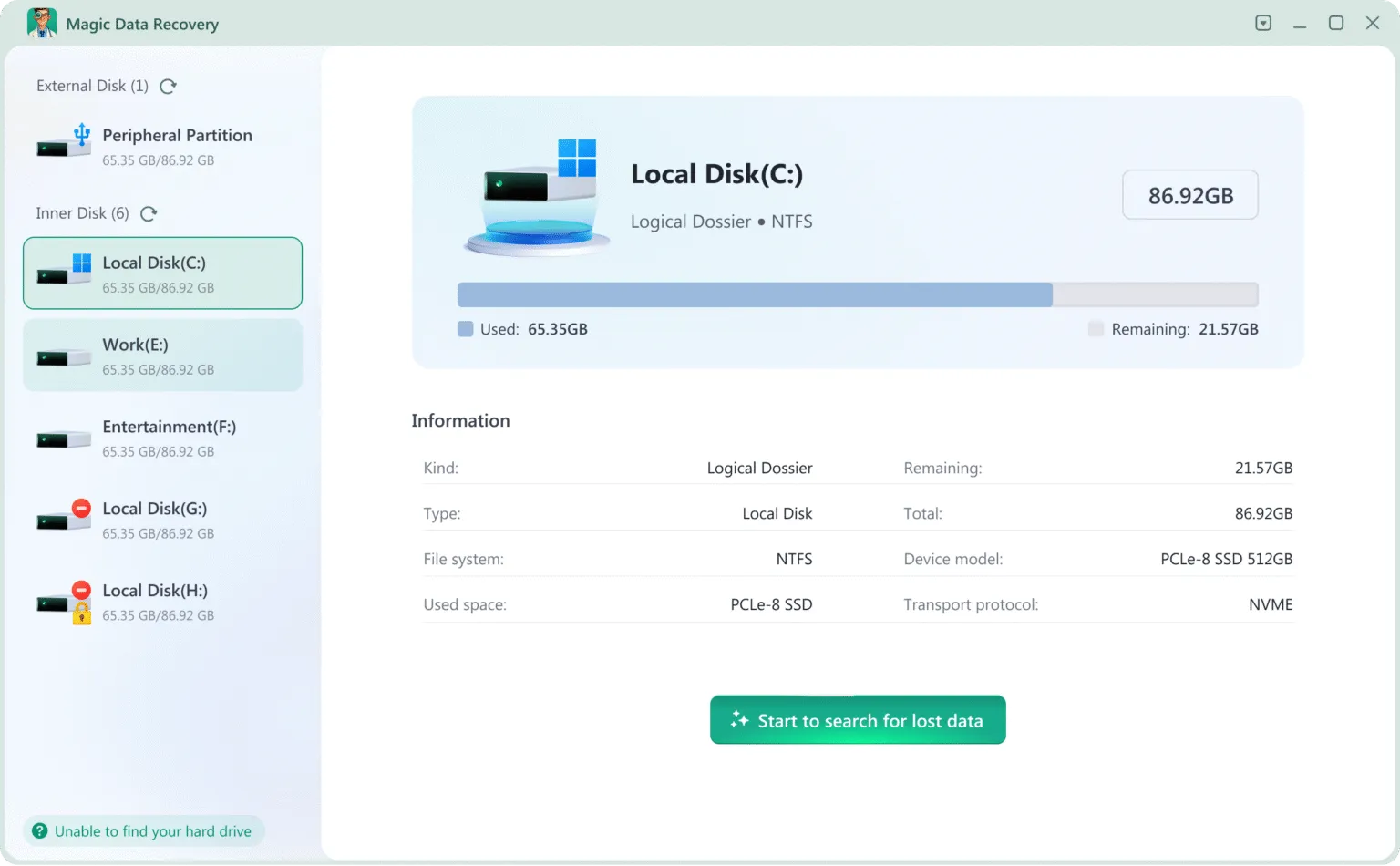
3. Starten Sie einen Scan
Klicken Sie auf die Schaltfläche “Nach verlorenen Daten suchen”, um nach Ihren verlorenen Dateien zu suchen.
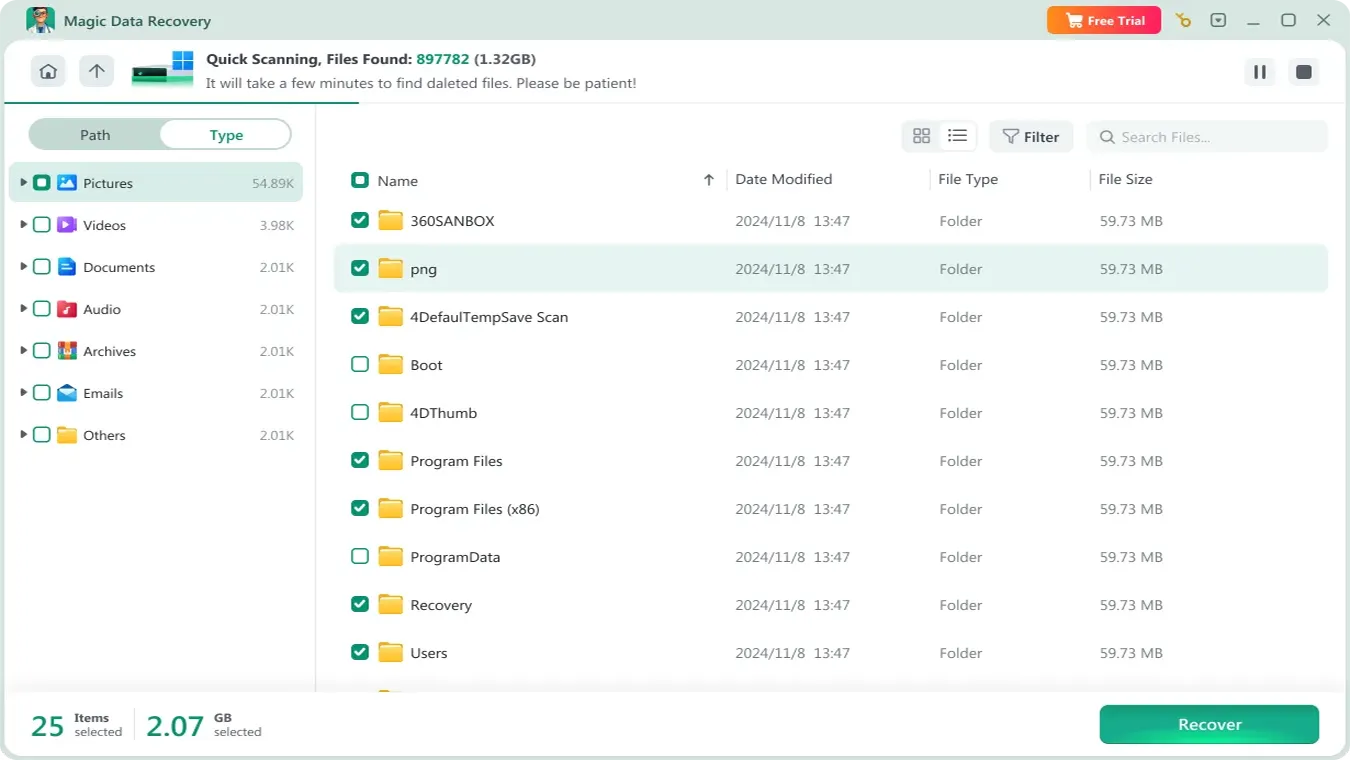
4. Vorschau wiederherstellbarer Dateien
Filter nach Dateityp und Vorschau vor der Wiederherstellung.

5. Sicheres Wiederherstellen von Dateien
Speichern Sie wiederhergestellte Dateien auf einem anderen Speichergerät.
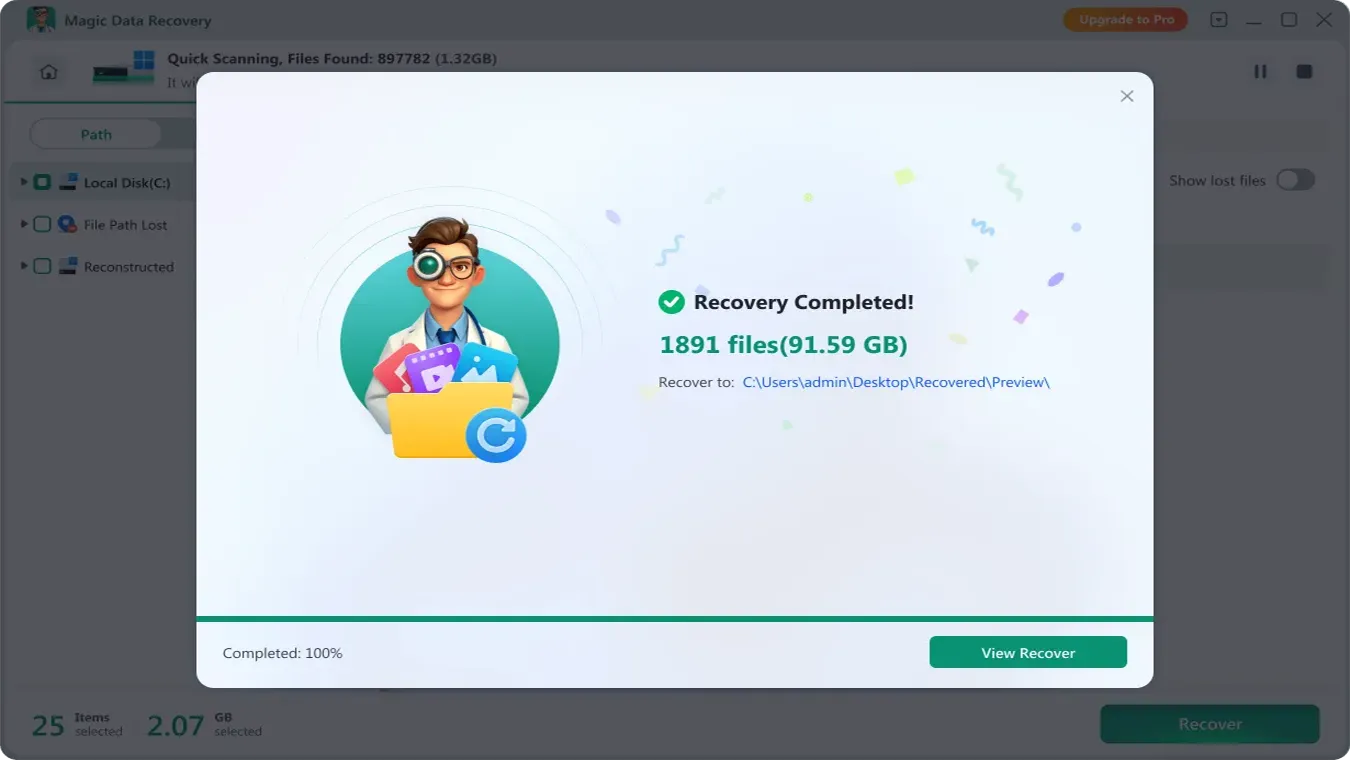
Wenn sich Ihre gelöschten Dateien beispielsweise auf einer externen Festplatte befanden, installieren Sie Magic Data Recovery auf der internen Festplatte Ihres Computers. Scannen Sie anschließend die externe Festplatte und speichern Sie die wiederhergestellten Dateien auf Ihrem Computer oder einer anderen externen Festplatte.
Wenn Sie ein konkreteres Szenario zum Löschen von Dateien benötigen, können Sie in dieser Anleitung nachlesen, wie man Gelöschte Dateien auf der Festplatte wiederherstellen.
Kostenlose Methoden vs. Datenrettungssoftware: Was sollten Sie zuerst ausprobieren?
Die beste Methode hängt davon ab, wie die Dateien verloren gegangen sind. Bei einer einfach gelöschten Datei reicht oft schon die Wiederherstellung über den Papierkorb aus. Bei einem formatierten Laufwerk, einer RAW-Partition oder einem beschädigten Dateisystem ist in der Regel ein gründlicherer Scan erforderlich.
Verwenden Sie kostenlose Windows-Methoden, wenn:
- Die Datei wurde kürzlich gelöscht
- Die Datei befindet sich noch im Papierkorb
- Die Dateiversionsgeschichte wurde aktiviert
- Es ist ein Backup vorhanden
- Der Ordner enthält frühere Versionen
- Sie kennen den genauen Dateipfad und können Befehle verwenden
Verwenden Sie Magic Data Recovery, wenn:
- Der Papierkorb ist leer
- Die Festplatte wurde formatiert
- Windows fordert Sie auf, das Laufwerk zu formatieren
- Dateien sind nach einem Dateisystemfehler verschwunden
- Die Partition wurde RAW oder unzugänglich
- Sie müssen die Dateien vor der Wiederherstellung in der Vorschau anzeigen
- Die Windows-Dateiwiederherstellung erscheint mir zu kompliziert
- Sie wünschen sich einen geführten Wiederherstellungs-Workflow
Wenn Sie verschiedene kostenlose Optionen vergleichen, bietet dieser Artikel von Amagicsoft Informationen zu Datenwiederherstellung Freeware kann Ihnen helfen, die Stärken und Grenzen kostenloser Tools zu verstehen.
Häufige Fehler bei der Festplattenwiederherstellung, die es zu vermeiden gilt
Viele Nutzer verringern ihre Heilungschancen, indem sie zu früh die falschen Maßnahmen ergreifen. Vermeiden Sie diese Fehler, bevor Sie Dateien von der Festplatte unter Windows 10 wiederherstellen.
Wiederherstellungssoftware auf demselben Laufwerk installieren
Wenn sich die verlorenen Dateien auf Laufwerk C: befanden, installieren Sie die Wiederherstellungssoftware nicht auf Laufwerk C:, es sei denn, Sie haben keine andere Wahl. Bei der Installation werden neue Daten erstellt, die die gelöschten Dateien überschreiben könnten.
Wiederhergestellte Dateien auf derselben Festplatte speichern
Speichern Sie wiederhergestellte Dateien immer an einem anderen Speicherort. Das Speichern der Dateien zurück auf dem Ursprungslaufwerk kann andere wiederherstellbare Daten beschädigen.
Das Laufwerk formatieren, wenn Windows Sie dazu auffordert
Durch eine Formatierung wird das Laufwerk zwar wieder zugänglich, aber dabei werden auch die Dateisystemstrukturen verändert. Stellen Sie zuerst Ihre Dateien wieder her und reparieren oder formatieren Sie das Laufwerk erst danach.
Festplattenreparatur vor der Datenwiederherstellung durchführen
Tools wie CHKDSK können Probleme mit dem Dateisystem beheben, können dabei jedoch auch Metadaten verändern. Wenn Ihre Dateien wichtig sind, sollten Sie zunächst eine Datenprüfung durchführen und die Daten wiederherstellen.
Falls das Problem auf beschädigte Dateisystemdatensätze zurückzuführen ist, könnte Ihnen diese Anleitung zum Thema Wiederherstellung der Master File Table nützlich.
So steigern Sie die Erfolgsquote bei der Festplattenwiederherstellung
Mit einem sorgfältigen Arbeitsablauf können Sie Ihre Chancen verbessern.
Stellen Sie zunächst fest, wo die Dateien verloren gegangen sind. Verwenden Sie das betreffende Laufwerk anschließend nicht mehr. Prüfen Sie dann einfache Wiederherstellungsmöglichkeiten wie den Papierkorb, den Dateiverlauf und Sicherungskopien. Wenn diese Methoden nicht zum Erfolg führen, verwenden Sie ein spezielles Scan-Tool. Speichern Sie die wiederhergestellten Dateien schließlich auf einem anderen Datenträger.
Praktische Tipps:
- Handeln Sie so schnell wie möglich.
- Laden Sie keine Dateien auf das betroffene Laufwerk herunter.
- Verwenden Sie einen anderen Computer, falls auf dem Systemlaufwerk Daten verloren gegangen sind.
- Scannen Sie die gesamte Partition, nicht nur einen Ordner.
- Zeigen Sie wichtige Dateien vor der Wiederherstellung in der Vorschau an.
- Stellen Sie zuerst die wichtigsten Dateien wieder her.
- Ersetzen Sie eine defekte Festplatte nach der Wiederherstellung.
Diese Vorgehensweise gewährleistet einen sicheren und logischen Ablauf. Außerdem beugt sie häufigen Fehlern vor, die die Wiederherstellung erschweren.
Wenn Software keine Dateien von einer Festplatte wiederherstellen kann
Software kann viele Probleme im Zusammenhang mit logischem Datenverlust lösen, aber nicht in jedem Fall. Wenn die Festplatte physisch beschädigt ist, benötigen Sie möglicherweise einen professionellen Datenrettungsdienst.
Zu den Anzeichen für ein mögliches körperliches Versagen gehören:
- Klick- oder Knirschgeräusche
- Das Laufwerk dreht sich nicht
- Brennender Geruch
- Starker Sturz oder Wasserschaden
- Häufige Verbindungsabbrüche
- Das BIOS kann das Laufwerk nicht erkennen
- Der Computer friert ein, wenn das Laufwerk angeschlossen wird
Versuchen Sie in solchen Fällen nicht, den Scanvorgang wiederholt durchzuführen. Schalten Sie das Laufwerk aus und wenden Sie sich an einen Fachmann. Eine weitere Nutzung kann zu weiteren Schäden führen.
Fazit: Der beste Weg, um Dateien von der Festplatte wiederherzustellen
Der beste Weg zur Dateien von der Festplatte wiederherstellen Beginnen Sie mit der sichersten Methode und gehen Sie Schritt für Schritt vor. Überprüfen Sie zunächst den Papierkorb. Versuchen Sie es anschließend mit der Dateiversionsgeschichte, Backups, Cloud-Speicher oder der Windows-Dateiwiederherstellung. Wenn diese Optionen nicht funktionieren, scannen Sie das Laufwerk mit einem speziellen Tool.
Für Windows-Benutzer, Magic Data Recovery ist eine praktische Wahl, da es gelöschte Dateien, formatierte Laufwerke, Dateisystemfehler und andere häufige Szenarien für Datenverluste auf Festplatten unterstützt. Es bietet einen visuellen Arbeitsablauf, eine Dateivorschau, einen Tiefenscan und die Wiederherstellung an einem sicheren Speicherort. Wenn Sie nach einer effizienteren Lösung suchen, um Dateien von der Festplatte unter Windows 10 wiederherstellen, Sie können Magic Data Recovery ausprobieren und prüfen, ob Ihre verlorenen Dateien gefunden werden können, bevor Sie sie wiederherstellen.
Du kannst auch zu Amagicsoft zurückkehren Anleitung zur Festplattenwiederherstellung für weitere Lösungen zur Festplattenwiederherstellung, Tipps zur Fehlerbehebung und entsprechende Anleitungen zur Datenwiederherstellung. Wenn der Scan Ihre Dateien findet und die Vorschau einwandfrei funktioniert, können Sie mit der Wiederherstellung fortfahren oder die Magic Data Recovery-Kaufseite um den vollständigen Wiederherstellungsmodus zu aktivieren.
Unterstützt Windows 7/8/10/11 und Windows Server
Häufig gestellte Fragen zur Wiederherstellung von Dateien von der Festplatte
Kann ich Dateien von der Festplatte wiederherstellen, nachdem ich sie gelöscht habe?
Ja, gelöschte Dateien lassen sich oft von einer Festplatte wiederherstellen, sofern die Daten noch nicht überschrieben wurden. Beginnen Sie mit dem Papierkorb und dem Dateiverlauf. Sollten diese Methoden fehlschlagen, scannen Sie das Laufwerk mit einer Wiederherstellungssoftware. Verwenden Sie das betroffene Laufwerk nicht mehr, um die Chancen auf eine erfolgreiche Wiederherstellung zu erhöhen.
Wie kann ich Dateien von einer Festplatte unter Windows 10 kostenlos wiederherstellen?
Sie können es mit dem Papierkorb, der Dateiversionsgeschichte, früheren Versionen, Backups, Cloud-Speicher und der Windows-Dateiwiederherstellung versuchen. Diese Methoden funktionieren am besten, wenn die Dateien erst kürzlich gelöscht oder vor dem Verlust gesichert wurden. Wenn das Laufwerk formatiert oder beschädigt wurde, reichen kostenlose Methoden möglicherweise nicht aus, und es ist unter Umständen ein tiefergehender Scan erforderlich.
Kann ich Dateien von einer formatierten Festplatte wiederherstellen?
Ja, eine Wiederherstellung von Daten auf einer formatierten Festplatte ist möglich, sofern diese nicht durch neue Daten überschrieben wurden. Speichern Sie nichts auf dem formatierten Laufwerk. Verwenden Sie ein Wiederherstellungstool, das einen Tiefenscan unterstützt, und speichern Sie die gefundenen Dateien auf einem anderen Laufwerk. Bei einer Schnellformatierung sind die Chancen auf eine erfolgreiche Wiederherstellung in der Regel besser als bei einer vollständigen Überschreibung.
Warum sollte ich wiederhergestellte Dateien nicht auf derselben Festplatte speichern?
Das Speichern wiederhergestellter Dateien auf derselben Festplatte kann andere verlorene Daten überschreiben, die sich noch auf der Festplatte befinden. Dies kann die Erfolgsaussichten bei der Wiederherstellung der verbleibenden Dateien verringern. Verwenden Sie als Ziel für die Wiederherstellung stets eine andere Partition, ein externes Laufwerk oder ein separates Speichergerät, um die ursprüngliche Festplatte unverändert zu lassen.
Eignet sich „Windows File Recovery“ für die Wiederherstellung von Festplatten?
„Windows File Recovery“ kann dabei helfen, gelöschte Dateien von lokalen Laufwerken unter unterstützten Windows 10-Versionen wiederherzustellen, erfordert jedoch die Eingabe von Befehlszeilenbefehlen. Es eignet sich für fortgeschrittene Benutzer, die das Quelllaufwerk, das Ziellaufwerk und die Dateipfade kennen. Für normale Benutzer ist eine visuelle Wiederherstellungssoftware mit Vorschau und Filtern in der Regel einfacher zu bedienen.
Kann Magic Data Recovery Dateien von einer externen Festplatte wiederherstellen?
Ja, Magic Data Recovery kann externe Festplatten scannen, die an einen Windows-Computer angeschlossen sind. Das Programm kann dabei helfen, gelöschte, formatierte, unzugängliche oder fehlende Dateien wiederherzustellen, sofern das Laufwerk noch in Windows oder in der Datenträgerverwaltung angezeigt wird. Um optimale Ergebnisse zu erzielen, sollten Sie das externe Laufwerk vor dem Scanvorgang nicht formatieren.
Was soll ich tun, wenn meine Festplatte klickende Geräusche macht?
Verwenden Sie das Laufwerk sofort nicht mehr. Klickgeräusche, Schleifgeräusche oder wiederholte Verbindungsabbrüche können auf einen physischen Defekt hindeuten. Eine Software-Wiederherstellung ist bei schweren Hardwareschäden nicht die sicherste Option. Schalten Sie das Laufwerk aus und ziehen Sie einen professionellen Datenrettungsdienst in Betracht, insbesondere wenn die Dateien wertvoll sind und kein Backup vorhanden ist.
Ist die Wiederherstellung von Festplattendaten immer erfolgreich?
Nein, die Wiederherstellung von Festplattendaten ist nicht immer erfolgreich. Der Erfolg hängt davon ab, ob die verlorenen Daten überschrieben wurden, ob die Festplatte physische Schäden aufweist und inwieweit das Dateisystem beeinträchtigt wurde. Schnelles Handeln, das Vermeiden neuer Schreibvorgänge und die Anwendung der richtigen Wiederherstellungsmethode können die Erfolgschancen erheblich verbessern.

Jason hat über 15 Jahre praktische Erfahrung in der Computersicherheitsbranche. Er ist spezialisiert auf Datenwiederherstellung, Backup und Wiederherstellung sowie Dateireparaturtechnologien und hat Millionen von Benutzern weltweit bei der Lösung komplexer Datenverluste und Sicherheitsprobleme geholfen.