
So stellen Sie nicht gespeicherte oder gelöschte Notepad++-Dateien wieder her
Wenn ein Tab nach einem Absturz, einem Neustart oder einem versehentlichen Schließen verloren geht, können Stunden an Arbeit innerhalb von Sekunden zunichte gemacht werden. Die gute Nachricht ist, dass Notepad++ möglicherweise einen temporären Schnappschuss gespeichert hat, auch wenn Sie nie auf „Speichern“ geklickt haben. In dieser Anleitung wird erklärt, So stellen Sie nicht gespeicherte Notepad++-Dateien wieder her, wo man zuerst suchen sollte und wann ein Wiederherstellung gelöschter Dateien Ein Scan ist angebracht. Falls der fehlende Inhalt bereits auf die Festplatte geschrieben worden war, Magic Data Recovery kann auch nach gelöschten TXT-Dateien und verlorenen Notepad++-Sicherungskopien suchen.
Unterstützt Windows 7/8/10/11 und Windows Server
Maßnahmen vor der Fehlerbehebung: Vermeiden Sie es, Programme zu installieren, große Dateien herunterzuladen oder Bereinigungsprogramme auf dem betroffenen Laufwerk auszuführen. Neue Daten könnten eine gelöschte Textdatei oder einen Sicherungs-Snapshot überschreiben.
Inhaltsübersicht
Kann Notepad++ eine nicht gespeicherte Datei wiederherstellen?
Manchmal. Die Antwort hängt davon ab, ob Notepad++ den Text vor dem Verlust in seinen Sicherungsordner geschrieben hat.
Notepad++ kann in festgelegten Intervallen einen Sitzungs-Snapshot der bearbeiteten Registerkarten erstellen. Der Standard-Speicherort für die Sicherungsdateien bei einer Standardinstallation lautet in der Regel:
- %AppData%\Notepad++\backup
Diese Momentaufnahme ist jedoch nur vorübergehend. Laut dem Offizielles Notepad++-Benutzerhandbuch, Notepad++ erstellt regelmäßig Sicherungskopien geänderter Dateien und löscht eine Sicherungskopie, sobald die zugehörige Datei gespeichert wurde. Auch das Schließen einer nicht gespeicherten Registerkarte und die Entscheidung, diese nicht zu speichern, kann dazu führen, dass die temporäre Kopie gelöscht wird.
Diese Unterscheidung ist wichtig, weil Dateien mit Notepad++ wiederherstellen Nicht alle Methoden lösen dasselbe Problem:
| Was ist passiert? | Die beste erste Methode | Kann eine Datenwiederherstellungssoftware helfen? |
| Notepad++ ist abgestürzt, während die Registerkarte noch geöffnet war | Öffnen Sie Notepad++ erneut und überprüfen Sie die wiederhergestellte Sitzung | In der Regel unnötig |
| Ein nicht gespeicherter Reiter ist nach einem Neustart oder einem Update verschwunden | Überprüfen Sie den Notepad++-Sicherungsordner und die Datei „session.xml“ | Möglicherweise, wenn ein Snapshot vorhanden war und gelöscht wurde |
| Eine gespeicherte .txt-Datei, Code-Datei oder Protokolldatei wurde gelöscht | Überprüfen Sie den Papierkorb und den Dateiverlauf und scannen Sie anschließend das Laufwerk. | Ja, sofern die Datei nicht überschrieben wurde |
| Eine Datei wurde ersetzt oder mit unerwünschten Änderungen gespeichert | Aktivieren Sie „Sicherung beim Speichern“, „Vorherige Versionen“ oder „Cloud-Verlauf“ | Wiederherstellungsprogramme können möglicherweise eine ältere, gelöschte Kopie finden |
| Das Dokument wurde nie gespeichert, und die regelmäßige Datensicherung war deaktiviert. | Es darf keine Kopie der Festplatte vorhanden sein | In der Regel nicht; Software kann keinen Text rekonstruieren, der nie auf einem Speichermedium gespeichert wurde. |
So stellen Sie nicht gespeicherte Notepad++-Dateien wieder her: 7 praktische Methoden
Beginnen Sie mit der am wenigsten eingreifenden Option. Führen Sie nicht sofort einen vollständigen Festplattenscan durch, wenn Notepad++ noch über einen gültigen Sitzungs-Snapshot verfügt.
Methode 1: Notepad++ erneut öffnen und die vorherige Sitzung überprüfen
Falls Notepad++ oder Windows unerwartet geschlossen wurden, starten Sie Notepad++ einmal und warten Sie, bis die Registerkarten geladen sind. Wenn Aktuelle Sitzung für den nächsten Start speichern Wenn die automatische Sicherung aktiviert war, öffnet das Programm möglicherweise unbenannte Registerkarten wie „Neu 1“ erneut, zusammen mit nicht gespeicherten Änderungen in benannten Dateien.
Sobald die fehlende Registerkarte erscheint:
- Wählen Sie Datei > Speichern unter.
- Geben Sie dem Dokument einen eindeutigen Dateinamen und eine eindeutige Dateiendung.
- Speichern Sie die Datei in einem Sicherungsordner, vorzugsweise auf einem anderen Laufwerk, falls die Originalfestplatte Fehler aufweist.
Schließen Sie die Anwendung nicht wiederholt und öffnen Sie sie nicht erneut. Die Sitzungsdaten können sich bei jedem Start ändern; speichern Sie daher alle wiederhergestellten Inhalte sofort.
Methode 2: Den Standard-Sicherungsordner von Notepad++ öffnen
Bei den meisten Standard-Windows-Installationen bietet das Sicherungsverzeichnis die schnellste Lösung für So stellen Sie nicht gespeicherte Notepad++-Dateien wieder her.
- Presse Gewinn + R.
- Fügen Sie „%AppData%\Notepad++\backup“ ein und drücken Sie Eingabe.
- Sortieren Sie den Ordner nach Datum der Änderung.
- Achten Sie auf Namen wie „new 24.08.2026_09:15:00“ oder „notes.txt 24.08.2026_09:15:00“.
- Kopieren Sie verdächtige Dateien in einen anderen Ordner, bevor Sie sie öffnen.
- Öffnen Sie jede Datei in Notepad++ und speichern Sie die richtige Datei mit der vorgesehenen Dateiendung.
Suchen Sie nicht nur nach *.txt. Regelmäßige Snapshots enden oft mit einem Zeitstempel statt mit der Endung .txt, sodass bei einer Suche mit Platzhaltern möglicherweise genau die Datei übersehen wird, die Sie benötigen.
Methode 3: Überprüfen Sie den konfigurierten oder portablen Speicherort für Backups
Der Standardpfad für „AppData“ ist nicht einheitlich. Bei einer portablen Notepad++-Installation können Konfigurationsdateien und Sicherungskopien im Verzeichnis von „notepad++.exe“ gespeichert werden. Benutzer können auch ein benutzerdefiniertes Verzeichnis auswählen.
Öffnen Sie Einstellungen > Einstellungen > Sicherung und sehen Sie sich diese Optionen an:
- Aktuelle Sitzung für den nächsten Start speichern
- Sitzungs-Snapshot und regelmäßige Sicherung aktivieren
- Sicherungspfad
- Sicherung beim Speichern Einstellungen
Wenn ein Sicherungspfad angezeigt wird, kopieren Sie ihn in den Datei-Explorer. Im portablen Modus suchen Sie im Installationsverzeichnis von Notepad++ nach einem Unterordner namens „Backup“. Wenn die Anwendung nicht verfügbar ist, suchen Sie auf dem Computer nach Ordnern mit dem Namen „Notepad++“ und überprüfen Sie anschließend die zuletzt geänderten Sicherungsverzeichnisse.
Beachten Sie bitte, dass Sitzungs-Snapshot und regelmäßige Sicherung unterscheidet sich von Sicherung beim Speichern. Ersteres schützt vorübergehend nicht gespeicherte Änderungen. Letzteres kann .bak-Kopien erstellen, wenn Sie ein Dokument aktiv speichern.
Methode 4: Verwenden Sie die Datei „session.xml“, um die Sicherungsdatei zu finden
Wenn der Sicherungsordner Dutzende von Elementen mit Zeitstempel enthält, ordnet „session.xml“ eine fehlende Registerkarte möglicherweise ihrem Snapshot zu.
- Schließen Sie weder Notepad++ noch die wiederhergestellten Registerkarten, bevor Sie die entsprechenden Ordner kopiert haben.
- Öffnen Sie „%AppData%\Notepad++“ im Datei-Explorer.
- Kopieren Sie die Datei „session.xml“ und den gesamten Sicherungsordner an einen sicheren Ort.
- Öffnen Sie die kopierte Datei „session.xml“ in einem anderen Editor.
- Suchen Sie nach dem ursprünglichen Dateinamen, dem Tab-Namen oder dem „backupFilePath“.
Ein Eintrag kann den ursprünglichen Dateinamen und einen mit einem Zeitstempel versehenen „backupFilePath“ enthalten. Navigieren Sie zu diesem Pfad, kopieren Sie die Sicherungskopie und öffnen Sie die Kopie. Diese Vorgehensweise ist besonders nützlich, wenn Sie Notepad-Dateien wiederherstellen deren Sicherungsnamen nicht mehr mit den ursprünglichen Projektnamen übereinstimmen.
„session.xml“ ist ein Verzeichnis, nicht das Dokument selbst. Falls darin auf eine Sicherung verwiesen wird, die nicht mehr vorhanden ist, gehen Sie bitte zum Papierkorb, zu den früheren Versionen oder starten Sie einen Scan nach gelöschten Dateien.
Methode 5: Windows, Papierkorb und zuletzt verwendete Speicherorte durchsuchen
Möglicherweise wurde die Datei gespeichert und ist nicht ungespeichert. Sie hat vielleicht eine andere Dateiendung, befindet sich in einem anderen Ordner oder wurde versehentlich verschoben.
Probieren Sie diese Kontrollen aus:
- Öffnen Sie den Datei-Explorer und suchen Sie Dieser PC nach einer bestimmten Phrase, dem Dateinamen, *.txt oder der erwarteten Dateiendung.
- Ergebnisse sortieren nach Datum der Änderung.
- Siehe Startseite/Schnellzugriff > Zuletzt angesehen und Notepad++’s Datei > Zuletzt geöffnete Datei Menü.
- Öffnen Sie den Papierkorb und suchen Sie nach Name, Dateityp oder Löschdatum.
- Wenn die Datei angezeigt wird, stellen Sie sie wieder her oder kopieren Sie sie an einen sicheren Ort.
Wenn im Datei-Explorer gerade versehentlich eine Datei verschoben oder umbenannt wurde, Strg + Z kann den Vorgang rückgängig machen. Verwenden Sie diese Option nur, wenn Sie genau wissen, welche Dateiaktion zuletzt durchgeführt wurde.
Methode 6: Eine frühere Version oder eine Cloud-Kopie wiederherstellen
Windows und Cloud-Dienste können Versionen speichern, die Notepad++ selbst nicht mehr bereithält. Klicken Sie mit der rechten Maustaste auf die Originaldatei oder den übergeordneten Ordner und wählen Sie Eigenschaften, und öffnen Frühere Versionen. Die verfügbaren Kopien können aus dem Dateiverlauf oder aus Daten von Wiederherstellungspunkten stammen.
Bevor Sie auf „Wiederherstellen“ klicken, verwenden Sie Öffnen Sie um die Version zu überprüfen. Kopieren Sie anschließend das gewünschte Dokument an einen anderen Ort. Bei einer Wiederherstellung an Ort und Stelle kann der aktuelle Ordnerinhalt überschrieben werden.
Wenn sich die Datei in OneDrive, Dropbox, Google Drive, Git oder einem anderen synchronisierten Speicherort befand, überprüfen Sie den webbasierten Papierkorb und den Versionsverlauf des jeweiligen Dienstes. Dies ist oft die beste Lösung für eine überschriebene Datei, da dabei einzelne historische Versionen erhalten bleiben und nicht der gesamte Speicherplatz durchsucht werden muss.
Die Suche nach „%TEMP%“ ist eine Ausweichmöglichkeit mit geringer Wahrscheinlichkeit und nicht die primäre Wiederherstellungsmethode von Notepad++. Notepad++ greift normalerweise auf den konfigurierten Snapshot-Ordner zurück. Dennoch können Sie „%TEMP%“ in das Feld „Ausführen“ eingeben, nach Datum sortieren und die zuletzt erstellten textähnlichen Dateien überprüfen, falls alle dokumentierten Speicherorte leer sind.
Methode 7: Gelöschte Notizblock-Dateien mit Magic Data Recovery wiederherstellen
Verwenden Sie eine Wiederherstellungssoftware, wenn eine gespeicherte TXT-Datei, eine .bak-Kopie oder ein Notepad++-Snapshot auf der Festplatte vorhanden war und später gelöscht wurde. Dies unterscheidet sich von der Wiederherstellung von Text, der den Arbeitsspeicher des Computers nie verlassen hat.
Magic Data Recovery behandelt Fälle, die mit den integrierten Funktionen von Notepad++ nicht gelöst werden können: endgültiges Löschen, ein geleerter Papierkorb, versehentliches Formatieren, ein RAW- oder beschädigtes Dateisystem sowie Dateien, die von internen oder externen Speichermedien verloren gegangen sind. Das Programm unterstützt Schnell- und Tiefenscans, zeigt vor dem Speichern eine Vorschau der wiederherstellbaren Dateien an und erkennt mehr als 5.000 Dateitypen.
So wenden Sie es sicher an:
1. Schreiben Sie keine neuen Daten mehr auf das Laufwerk, auf dem sich die fehlende Datei befand.
2. Laden Sie Magic Data Recovery nach Möglichkeit herunter und installieren Sie es auf einem anderen Laufwerk.
Unterstützt Windows 7/8/10/11 und Windows Server
3. Starten Sie das Programm und wählen Sie die betroffene Partition oder das betroffene Speichermedium aus.
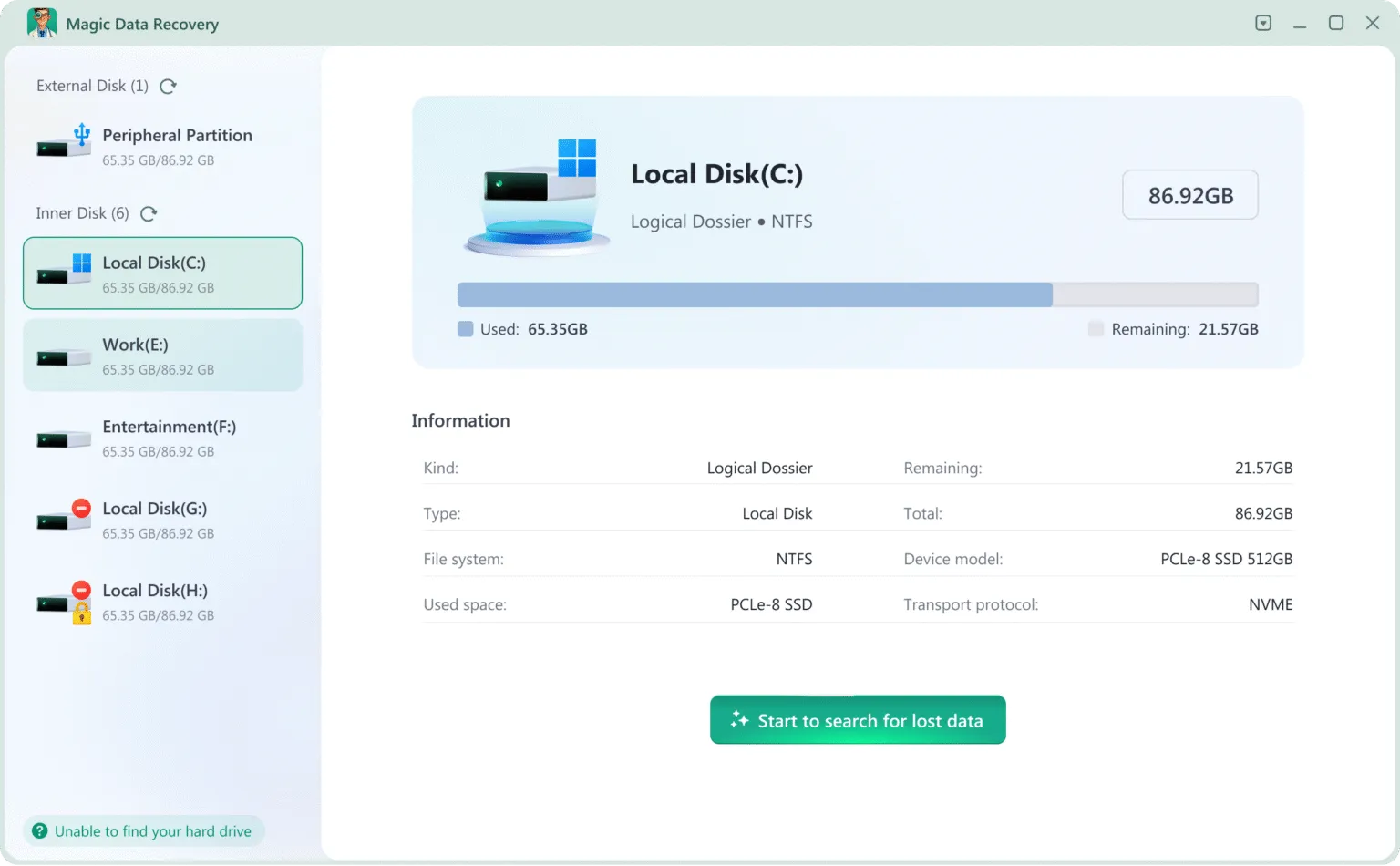
4. Starten Sie den Scan und filtern Sie anschließend die Ergebnisse nach Pfad, Dateityp, Name, Größe oder Änderungsdatum.
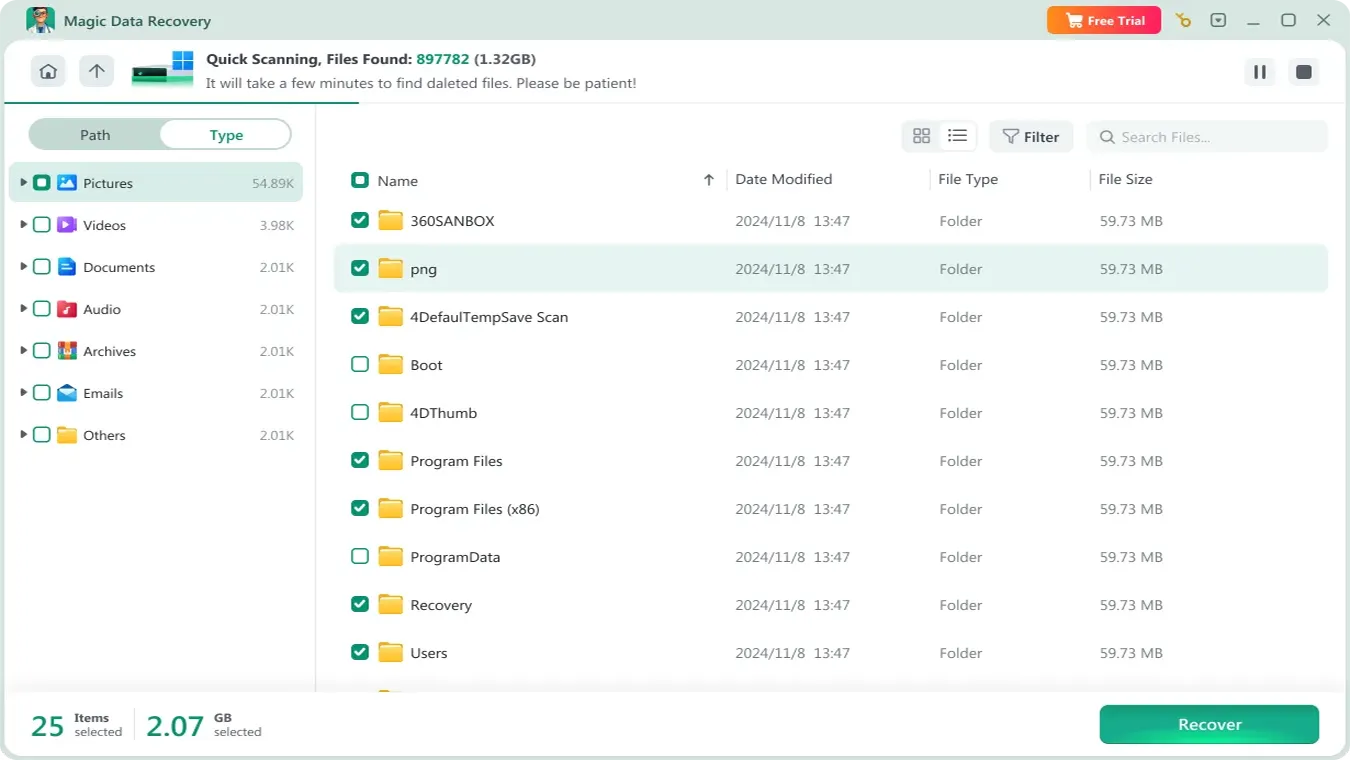
5. Vorschau auf mögliche TXT-, Quellcode-, Protokoll-, .bak- oder Notepad++-Snapshot-Dateien.
6. Wiederherstellen der ausgewählten Elemente auf einem anderen Laufwerk.
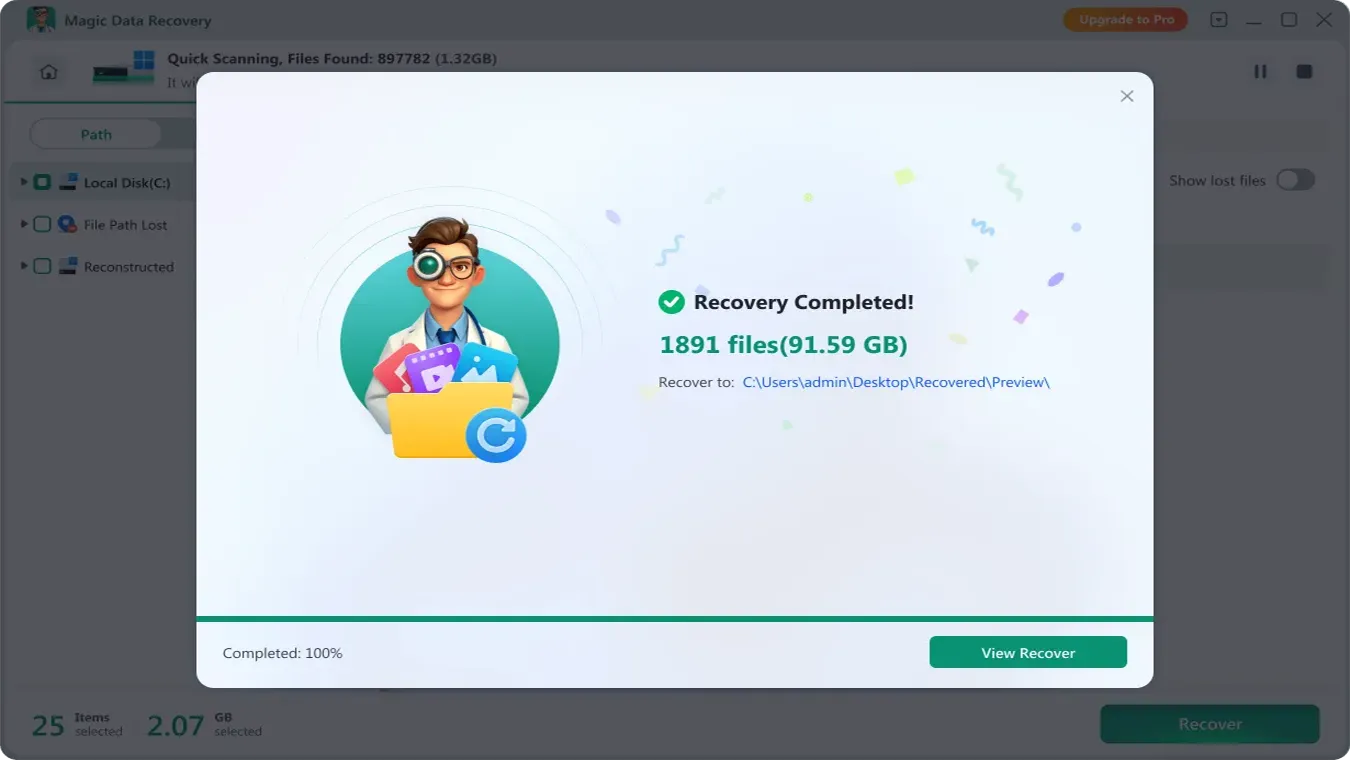
Warum ist dieser Ansatz zuverlässiger als das Durchsuchen zufälliger temporärer Ordner? Er durchsucht den Speicher nach Dateisystem-Einträgen und erkennbaren Dateidaten, anstatt sich auf einen vermuteten Pfad zu verlassen. Daher kann er Notepad-Dateien wiederherstellen die Windows nicht mehr anzeigt. Dennoch kann kein zuverlässiges Tool eine Wiederherstellung garantieren: SSD TRIM, sicheres Löschen, physische Beschädigungen und überschriebene Sektoren können dazu führen, dass eine Datei nicht mehr wiederherstellbar ist.
Notepad++-Sicherung und -Wiederherstellung im Vergleich zu Datenwiederherstellungssoftware
Die Wahl der richtigen Methode spart Zeit und reduziert unnötige Festplattenaktivitäten.
Option | Am besten für | Hauptvorteil | Begrenzung |
Vorherige Sitzung wieder öffnen | Absturz oder erzwungener Neustart | Schnell und in Notepad++ integriert | Hängt von den Sitzungseinstellungen und intakten Snapshots ab |
Notepad++-Sicherungsordner | Nicht gespeicherte Änderungen werden regelmäßig erfasst | Behält den aktuellsten temporären Text bei | Der Schnappschuss kann nach dem Speichern oder Schließen der Registerkarte verschwinden. |
Sicherung beim Speichern / .bak | Ältere Version einer gespeicherten Datei | Einfacher Text mit gut lesbarem Inhalt | Muss zuvor aktiviert worden sein |
Versionshistorie für Windows oder die Cloud-Version | Überschriebene oder synchronisierte Dokumente | Es können mehrere Versionen wiederhergestellt werden | Erfordert eine vorherige Sicherung oder Synchronisierung |
Magic Data Recovery | Gelöschte gespeicherte Dateien oder gelöschte Snapshots | Durchsucht auch Ordner außerhalb des sichtbaren Bereichs und unterstützt beschädigte Dateisysteme | Text, der nie auf die Festplatte geschrieben wurde, kann nicht wiederhergestellt werden |
Das Beste Dateien mit Notepad++ wiederherstellen Der Arbeitsablauf ist daher mehrstufig: Überprüfung der aktiven Sitzung, Kopieren des Sicherungsordners, Überprüfung des Versionsverlaufs und Scannen des Laufwerks nur dann, wenn wahrscheinlich eine Festplattenkopie existierte.
Warum der Notepad++-Sicherungsordner möglicherweise leer ist
Ein leerer Ordner bedeutet nicht automatisch, dass Notepad++ eine Fehlfunktion aufweist. Häufige Gründe hierfür sind:
- Die regelmäßige Datensicherung war vor dem Datenverlust deaktiviert.
- Die Zeit war noch nicht abgelaufen, als es zum Absturz kam.
- Da Sie die Datei gespeichert haben, hat Notepad++ den temporären Snapshot gelöscht.
- Du hast den Tab geschlossen und ausgewählt Nein wenn man zum Speichern aufgefordert wird.
- Notepad++ verwendet einen benutzerdefinierten oder portablen Sicherungspfad.
- Der betreffende „AppData“-Ordner gehört einem anderen Windows-Konto.
- Die Dateien wurden durch ein Bereinigungsprogramm, eine Antiviren-Maßnahme, das Zurücksetzen des Profils oder einen Speicherfehler gelöscht.
- Mehrere Notepad++-Instanzen wiesen ein unterschiedliches Sitzungsverhalten auf.
Wenn Sie den Verdacht haben, dass Daten gelöscht wurden, sichern Sie den Ordner und das Laufwerk, bevor Sie einen Scan durchführen. Wenn Sie weiterhin auf derselben Systempartition arbeiten, kann genau der Snapshot überschrieben werden, den Sie eigentlich suchen.
So verhindern Sie den Verlust von Notepad++-Arbeitsdaten
Sobald du weißt, So stellen Sie nicht gespeicherte Notepad++-Dateien wieder her, nehmen Sie sich eine Minute Zeit, um den nächsten Vorfall zu verhindern.
- Öffnen Sie Einstellungen > Einstellungen > Sicherung.
- Aktivieren Sie Aktuelle Sitzung für den nächsten Start speichern.
- Aktivieren Sie Sitzungs-Snapshot und regelmäßige Sicherung und wählen Sie ein sinnvolles Intervall aus.
- Einschalten Sicherung beim Speichern für wichtige Daten und verwenden Sie ein eigenes Sicherungsverzeichnis.
- Speichern Sie neue Registerkarten frühzeitig unter aussagekräftigen Namen.
- Speichern Sie wichtige Dokumente in einem versionierten oder synchronisierten Ordner.
- Verwenden Sie Git für den Code und führen Sie ein separates, getestetes Backup für unersetzbare Notizen.
Regelmäßige Momentaufnahmen dienen als Sicherheitsnetz, nicht als Archiv. Wenn ein Dokument wichtig ist, speichern Sie es als richtige Datei und beziehen Sie es in einen regelmäßigen Sicherungsplan ein.
Schlussfolgerung
Um das Problem zu lösen So stellen Sie nicht gespeicherte Notepad++-Dateien wieder her, öffnen Sie zunächst die vorherige Sitzung erneut, überprüfen Sie den Ordner „%AppData%\Notepad++\backup“, vergewissern Sie sich, dass der konfigurierte Sicherungspfad korrekt ist, und ordnen Sie die Registerkarten mithilfe der Datei „session.xml“ den Snapshots zu. Überprüfen Sie bei gespeicherten Dateien außerdem den Papierkorb, die früheren Versionen und den Cloud-Verlauf.
Wenn ein TXT-Dokument oder ein Snapshot tatsächlich auf die Festplatte geschrieben und später gelöscht wurde, Magic Data Recovery ist einen Versuch wert, da es gelöschte Dateien, formatierte Speichermedien und Dateisystemfehler scannen kann und Ihnen gleichzeitig eine Vorschau der Ergebnisse ermöglicht. Es ergänzt integrierte Sicherungskopien; es erschafft jedoch keine Inhalte, die nie gespeichert wurden. Weitere Grundsätze für eine sichere Datenwiederherstellung und entsprechende Methoden finden Sie auf der Anleitung zur Wiederherstellung gelöschter Dateien.
Unterstützt Windows 7/8/10/11 und Windows Server
Häufig gestellte Fragen zur Dateiwiederherstellung in Notepad++
Wo speichert Notepad++ nicht gespeicherte Dateien?
Wenn die regelmäßige Datensicherung aktiviert ist, werden die Snapshots bei einer Standardinstallation normalerweise im Verzeichnis „%AppData%\Notepad++\backup“ gespeichert. Bei einer portablen Installation oder einer benutzerdefinierten Konfiguration kann ein anderes Verzeichnis verwendet werden. Überprüfen Sie Einstellungen > Einstellungen > Sicherung für den aktiven Pfad, bevor davon ausgegangen wird, dass die Dateien fehlen.
Wie kann ich einen geschlossenen, nicht gespeicherten Reiter in Notepad++ wiederherstellen?
Öffnen Sie zunächst Notepad++ erneut und suchen Sie dann im Sicherungsverzeichnis nach einer kürzlich geänderten neuen Datei mit dem Namen „N@Zeitstempel“. Wenn Sie die Registerkarte absichtlich geschlossen und das Speichern verweigert haben, hat Notepad++ den Snapshot möglicherweise entfernt, sodass eine Wiederherstellung weniger sicher ist.
Kann Notepad++ Dateien nach einem Neustart des Computers wiederherstellen?
Ja, sofern der Sitzungsspeicher und die regelmäßige Sicherung aktiviert waren und die entsprechenden Dateien intakt sind. Starten Sie Notepad++ einmal und überprüfen Sie, ob die Registerkarten wiederhergestellt wurden. Wenn nichts angezeigt wird, kopieren Sie den Sicherungsordner und die Datei „session.xml“, bevor Sie weitergehende Wiederherstellungsmaßnahmen ergreifen.
Warum ist mein Notepad++-Sicherungsordner leer?
Möglicherweise wurde die regelmäßige Datensicherung deaktiviert, das Snapshot-Intervall ist noch nicht abgelaufen oder Notepad++ verwendet einen anderen Pfad. Das Programm löscht außerdem temporäre Snapshots, nachdem eine Datei gespeichert oder eine ungespeicherte Registerkarte geschlossen wurde.
Kann ich eine nicht gespeicherte Notepad++-Datei aus dem Temp-Ordner wiederherstellen?
Sie können unter „%TEMP%“ nachsehen, dies ist jedoch nur eine sekundäre Ausweichmöglichkeit. Notepad++ speichert regelmäßige Snapshots normalerweise in dem konfigurierten Sicherungsordner und nicht im allgemeinen Windows-Temp-Verzeichnis. Konzentrieren Sie sich zunächst auf den offiziellen Sicherungspfad und die Sitzungsdateien.
Kann Magic Data Recovery eine nicht gespeicherte Notepad++-Datei wiederherstellen?
Es kann einen gelöschten Notepad++-Snapshot oder eine zuvor gespeicherte Textdatei wiederherstellen, sofern diese Daten auf die Festplatte geschrieben und nicht überschrieben wurden. Ein ungespeicherter Speicherpuffer, den Notepad++ nie auf den Speicher geschrieben hat, kann jedoch nicht rekonstruiert werden.
Wie kann ich eine endgültig gelöschte TXT-Datei wiederherstellen?
Verwenden Sie das betroffene Laufwerk nicht mehr, überprüfen Sie die vorhandenen Sicherungskopien und scannen Sie es mit einem Tool zur Dateiwiederherstellung. Speichern Sie die wiederhergestellten Dateien auf einem anderen Laufwerk. Die Ergebnisse hängen davon ab, ob die ursprünglichen Daten durch Windows, SSD-TRIM oder spätere Aktivitäten überschrieben wurden.
Werden durch eine Neuinstallation von Notepad++ nicht gespeicherte Dateien wiederhergestellt?
In der Regel nicht. Bei einer Neuinstallation wird ein fehlender Snapshot nicht wiederhergestellt, und es kann zu Änderungen an den Konfigurationsdaten kommen. Kopieren Sie zunächst die vorhandenen Ordner „AppData“ und „Backup“ von Notepad++. Suchen Sie nach verlorenen Dateien oder führen Sie einen Scan durch, bevor Sie etwas auf dem betroffenen Laufwerk installieren.

Jason ist ein Spezialist für Datenwiederherstellung und technischen Support mit über 15 Jahren praktischer Erfahrung. Er hat intensiv mit Endnutzern zusammengearbeitet, schwierige Fälle von Datenverlust behoben und praktische Lösungen für versehentlich gelöschte Daten, formatierte Laufwerke, beschädigte Dateisysteme, verlorene Partitionen, Systemausfälle und andere Notfälle im Bereich der Datenwiederherstellung bereitgestellt. Zu seinen Fachgebieten gehören außerdem Datensicherung und -wiederherstellung, Dateireparatur sowie Notfallwiederherstellung, wobei er besonderen Wert auf eine sichere, zuverlässige und technisch korrekte Beratung legt.