
Recuperación de archivos de un disco duro externo: 7 métodos
When you need external hard drive recover files solutions, your first priority is to protect the data that may still remain on the drive. Accidental deletion, formatting, a RAW partition, or file-system corruption does not always mean your files are gone forever. In many logical data-loss cases, recovery remains possible as long as new data has not overwritten the original storage space.
Esta guía explica cómo recuperar archivos de un disco duro externo safely, how to choose the right external drive recovery method, and when data recovery software makes sense. In addition, you will learn how Magic Data Recovery can simplify the process for Windows users who prefer a visual workflow instead of command-line tools.
Compatible con Windows 7/8/10/11 y Windows Server
Índice
External Hard Drive Recover Files: What to Do First
Antes de probar cualquier external hard drive recover files method, stop using the affected drive. New writes may overwrite recoverable data.
Por lo tanto:
- Stop copying, moving, or creating files on the drive.
- Do not format a RAW or inaccessible drive.
- Evite CHKDSK before you save critical files.
- Install recovery software on another healthy drive.
- Guarda los archivos recuperados en otro dispositivo de almacenamiento.
- Disconnect the drive if it clicks, grinds, or repeatedly loses power.
Therefore, prevent further writes before recovery.
Can Your External Hard Drive Still Be Recovered?
The answer depends on whether the problem is logical or physical. Logical loss includes deletion, formatting, lost partitions, hidden files, and RAW-drive problems. Physical failure involves hardware damage.
Síntoma | Posible problema | El mejor primer paso |
Archivos eliminados | Logical loss | Deja de utilizar la unidad y comprueba las copias de seguridad |
Unidad formateada | Logical loss | Deja de utilizarlo y haz un análisis |
La partición se convierte en RAW | Daños en el sistema de archivos | Recover before formatting |
Files disappear but drive opens | Hidden files or logical error | Check attributes, then scan |
Drive appears only in Disk Management | Partition or file-system issue | Do not format it |
Clicking or grinding | Fallo físico | Desconecta la unidad |
Burnt smell, liquid damage, or no spin | Fallo físico | Ponte en contacto con un servicio de asistencia en carretera |
If Windows still detects the drive, DIY Recuperación de datos de discos duros externos may work. Hardware failure calls for professional help.
7 External Hard Drive Recover Files Methods
Method 1: Check the External Hard Drive in Disk Management
Before starting an external hard drive recover files process, confirm that Windows can still detect the device.
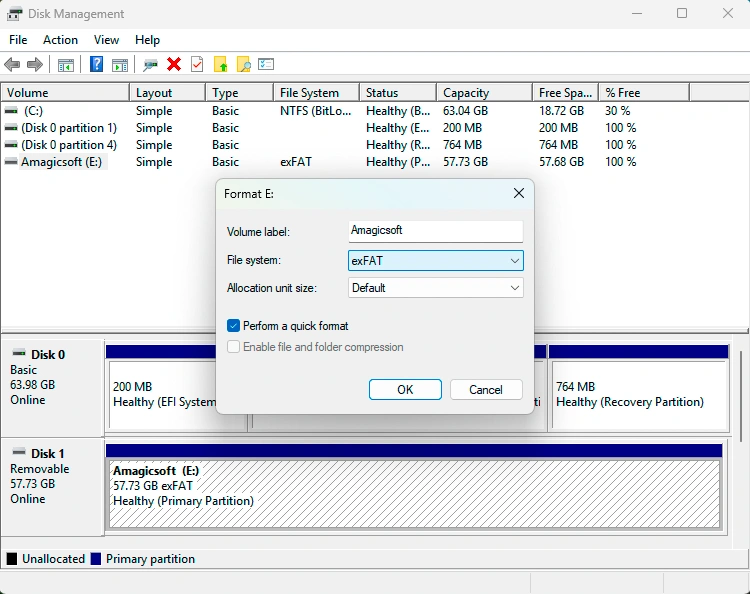
Pulse Windows + X, seleccione Gestión de discos, and locate the drive. Check its capacity, partition status, and drive letter.
If Disk Management sees the drive but File Explorer does not, you may have a drive-letter, partition, or file-system problem. Do not format the disk even if Windows prompts you. If the drive clicks, repeatedly disconnects, or fails to spin, stop DIY recovery.
Method 2: Restore Files from a Backup
Next, check File History, OneDrive, Google Drive, Dropbox, NAS storage, another external disk, or your normal backup system.
A backup is usually the safest solution. If no usable copy exists, move to software de recuperación de discos duros externos.
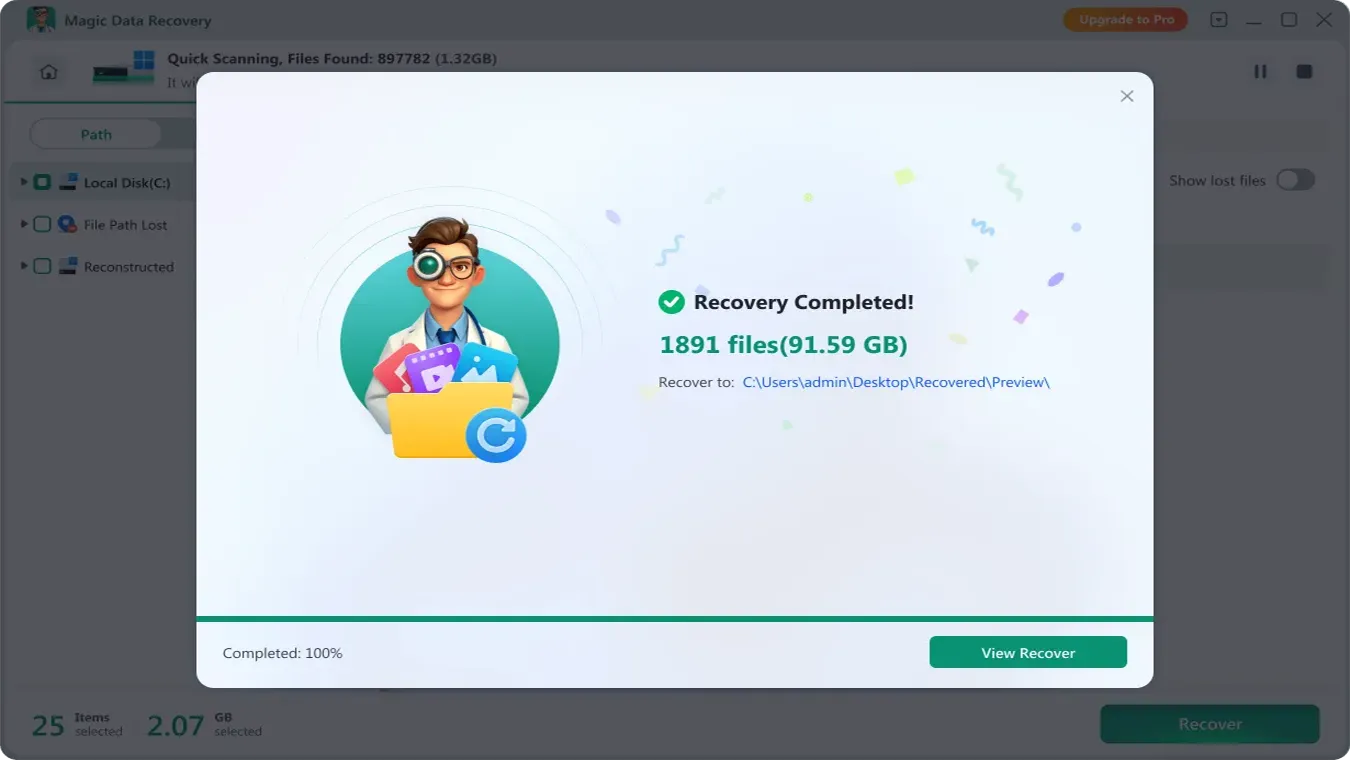
Method 3: External Hard Drive Recover Files with Magic Data Recovery
When no usable backup exists, Magic Data Recovery provides a practical external hard drive recover files option for Windows users.
It supports common storage devices and many file types. Moreover, its graphical interface suits deletion, formatting, RAW partitions, and other logical data-loss cases on readable drives. Its scan, preview, and recovery workflow makes external hard drive file recovery easier.
Paso 1: Descargar e instalar Magic Data Recovery
Download Magic Data Recovery and install it on a healthy drive. Do not install the program on the affected external disk because new installation data could overwrite lost files.
Compatible con Windows 7/8/10/11 y Windows Server
Step 2: Select the External Hard Drive
Next, connect the drive, launch Magic Data Recovery, and select the disk or partition where the files disappeared.
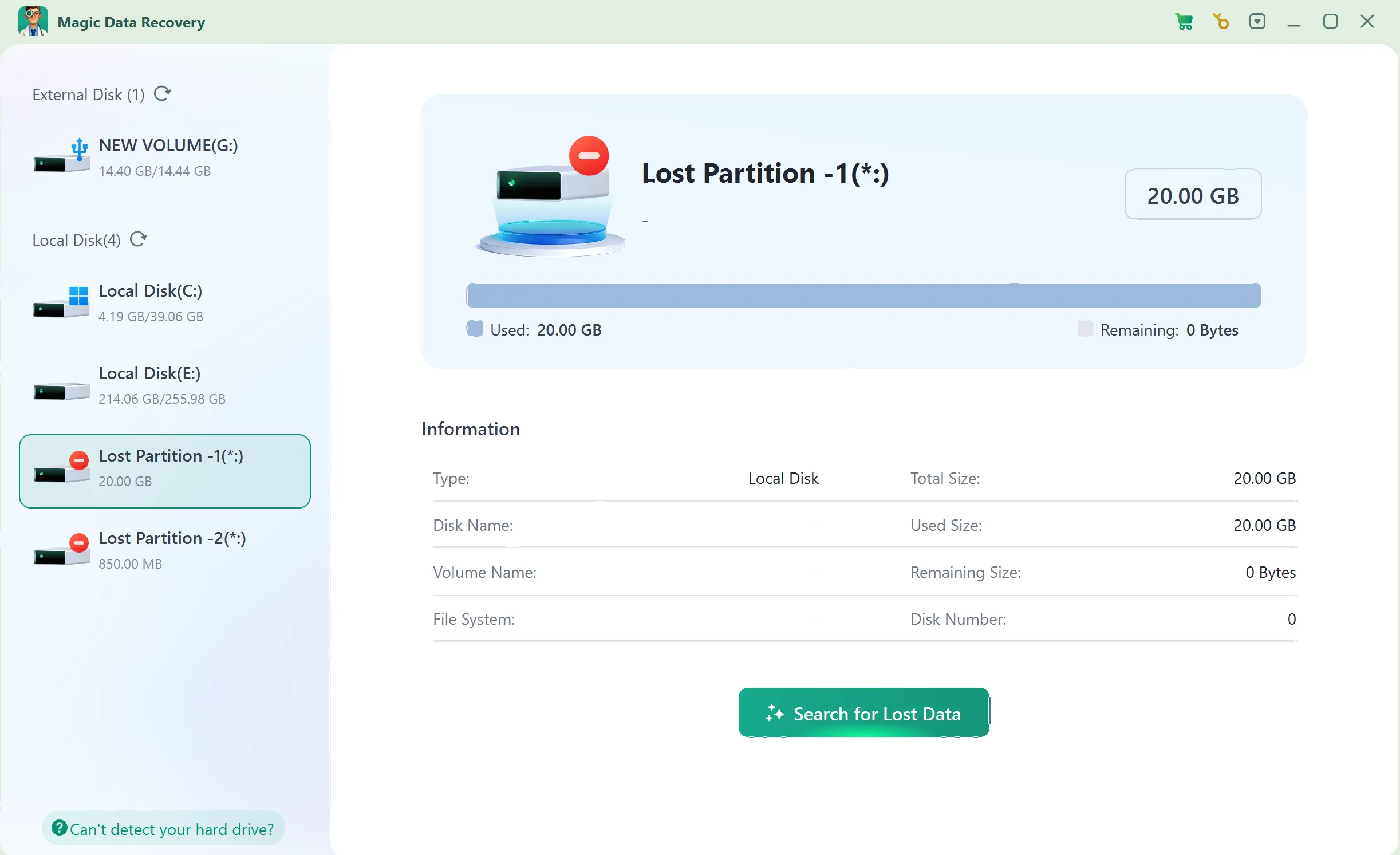
Paso 3: Buscar archivos perdidos
Start the scan. Meanwhile, avoid using the affected drive for other tasks.
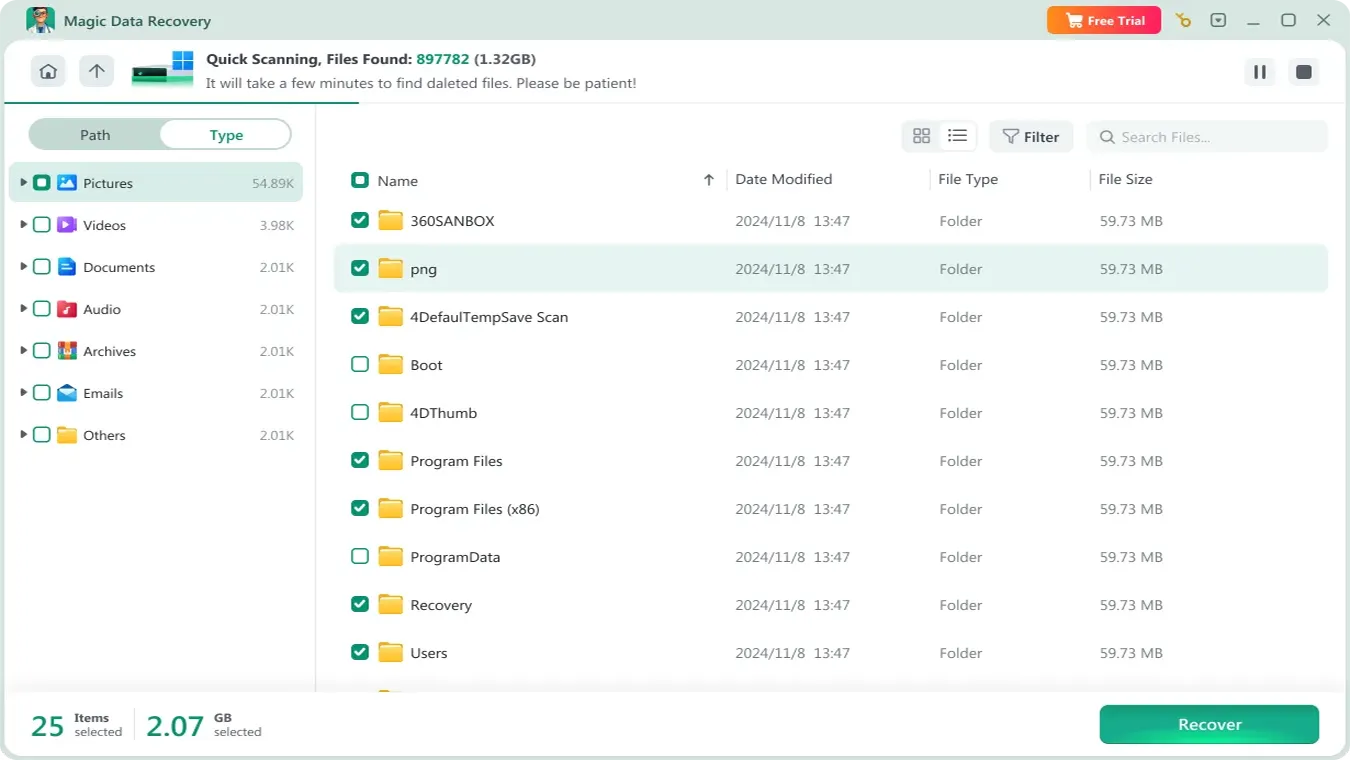
Step 4: Preview the Recovery Results
After scanning, preview supported files and verify the ones you need.

Paso 5: Recuperar archivos en otra unidad
Finally, save the files you need to another storage device. Never restore them to the source disk.
For a visual external hard drive recover files workflow, Magic Data Recovery is simpler than command-line recovery. However, software cannot restore fully overwritten data or repair severe physical damage.
Método 4: Utilizar la herramienta de recuperación de archivos de Windows
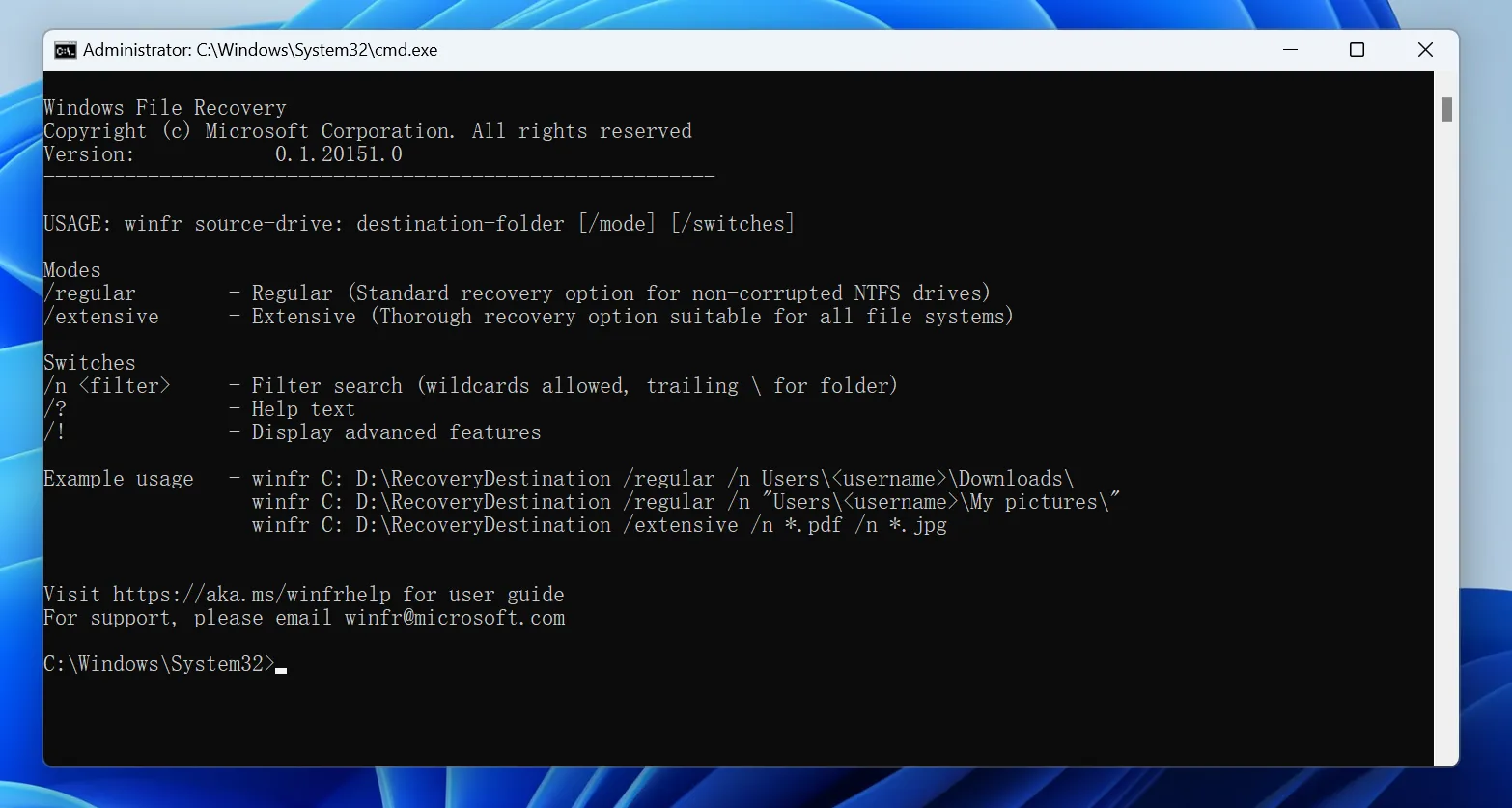
Windows File Recovery is Microsoft’s command-line recovery utility:
winfr E: D: /regular /n *.docx
Aquí, E: es la fuente y D: is the destination; they must be different drives. The tool is free, but it requires correct syntax and mode selection. Therefore, beginners may prefer Magic Data Recovery for a graphical external hard drive recover files proceso.
Método 5: Restaurar una versión anterior
If File History or another backup feature created an earlier copy, right-click the original folder, choose Propiedades, y abrir Versiones anteriores. Restore a suitable version if Windows lists one.
However, this method depends on an existing backup and does not scan the drive for deleted data.
Method 6: Recover Hidden Files with CMD
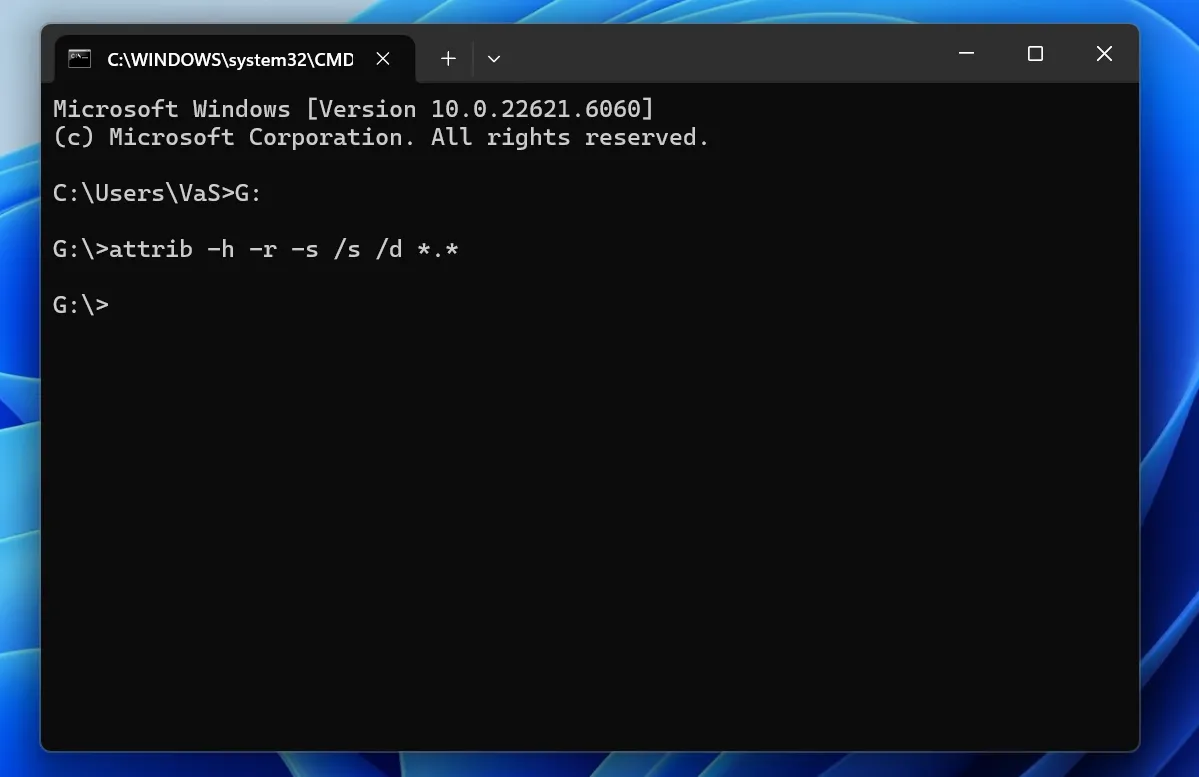
Sometimes malware or file attributes hide existing files from File Explorer.
Inténtalo:
attrib -h -r -s /s /d G:\*.*
Sustituir G: con la letra de unidad correcta.
This command can reveal hidden files, but it cannot restore permanently deleted or overwritten data. Therefore, if files remain missing, use an external hard drive recover files escanear.
Method 7: Use a Professional Data Recovery Service
Stop DIY recovery if the drive clicks, grinds, repeatedly disconnects, smells burnt, no longer spins, or suffered liquid or impact damage. These symptoms can indicate physical failure, so use a professional recovery lab.
External Hard Drive Recover Files: Which Method Is Best?
The best method depends on the cause and drive condition.
Solución | Lo mejor para | Dificultad |
Gestión de discos | Checking whether Windows detects the drive | Fácil |
Backup / File History | Existing backup copies | Fácil |
Magic Data Recovery | Deleted, formatted, RAW, or inaccessible data | Fácil |
Recuperación de archivos de Windows | Deleted and some formatted/corrupted cases | Avanzado |
Versiones anteriores | Earlier backup copies | Fácil |
CMD | Archivos ocultos | Medio |
Servicio profesional | Fallo físico | No DIY work |
First, confirm that Windows detects the drive. Next, use an existing backup if available. If no backup contains the files and the drive remains readable, recovery software becomes the next logical choice.
Por lo tanto, este external hard drive recover files sequence keeps the recovery path clear.
Should You Run CHKDSK Before External Hard Drive Recover Files?
Usually, no, especially when important files have no backup.
CHKDSK checks and repairs file-system problems, but repair operations can change file-system metadata. Therefore, recover critical files first. Afterward, run CHKDSK or reformat the drive if needed.
If your priority is an external hard drive recover files operation, save the data before repairing the disk.
Common External Hard Drive Recovery Mistakes to Avoid
Avoid these common mistakes:
- Copying new files to the affected drive
- Formatting the disk when Windows prompts you
- Running repair tools before recovering important files
- Instalación de software de recuperación en el disco afectado
- Volver a guardar los archivos recuperados en la misma unidad
- Repeatedly reconnecting a mechanically failing HDD
For example, copying new data after deletion may overwrite sectors that still contain lost files. As a result, even reliable software de recuperación de discos duros externos puede fallar.
Cómo prevenir futuras pérdidas de datos en discos duros externos
After recovery, keep another copy of important data, safely eject portable drives, and protect mechanical HDDs from drops. In addition, follow the 3-2-1 copia de seguridad principle: keep three copies, use two storage types, and keep one copy elsewhere.
Conclusion: External Hard Drive Recover Files Safely
El más seguro external hard drive recover files method depends on what caused the loss. First, confirm that Windows can detect the external drive. Next, check whether an existing backup contains the missing files. If no backup exists and the drive remains physically readable, recovery software becomes the practical next step. For physical failure, stop using the drive and seek professional help.
Magic Data Recovery is worth considering for Windows users who prefer a graphical workflow. It lets users select the affected drive, scan for lost data, preview supported files, and save recovered files elsewhere. In addition, it avoids the command-line learning curve of Windows File Recovery.
No tool can restore fully overwritten data or repair severe hardware damage. However, for common logical data loss, Magic Data Recovery provides a clear external hard drive recovery solution.
Compatible con Windows 7/8/10/11 y Windows Server
FAQ - External Hard Drive Recover Files
¿Puedo recuperar archivos de un disco duro externo?
Yes, many logical data-loss cases remain recoverable. You may restore deleted, formatted, or inaccessible files when new data has not overwritten the original storage space and the drive still works physically. For the best external hard drive recover files chance, stop using the disk first, confirm that Windows detects it, and then check backups or use recovery software.
¿Cómo puedo recuperar archivos borrados definitivamente de un disco duro externo?
First, stop writing new data to the drive. Next, check File History, cloud storage, another backup drive, or NAS storage for another copy. If no backup exists, scan the disk with external hard drive recovery software such as Magic Data Recovery. Finally, save recovered files to another drive to avoid overwriting additional recoverable data.
¿Puedo recuperar archivos de un disco duro externo formateado?
Often, yes. Formatting can remove file-system references before new data overwrites every underlying sector. Therefore, an external hard drive recover files scan may still find data if you stop using the drive quickly. Do not format the disk again, add new files, or run unnecessary repair tools before attempting recovery.
How can I recover files from an external hard drive without software?
Check File History, Previous Versions, cloud storage, another backup drive, or a NAS backup. These methods can restore files without third-party software when another valid copy already exists. However, permanently deleted files, formatted partitions, and some corruption cases usually require dedicated external hard drive data recovery software or a professional recovery service.
Can I recover files if the external hard drive is not detected?
It depends on where Windows can detect the drive. If Disk Management sees it but File Explorer does not, a logical issue may still allow recovery. However, if the computer cannot detect the drive anywhere, or the HDD clicks, powers off, or repeatedly disconnects, stop DIY attempts and contact a professional recovery service.
¿Debería ejecutar CHKDSK antes de recuperar mis archivos?
Usually not when important files have no backup. CHKDSK repairs file-system problems and may change disk structures during that process. Therefore, recover critical data first whenever possible. After you secure the files, you can run CHKDSK or reformat the drive to address remaining errors without putting the only recoverable copy at unnecessary risk.
Can a physically damaged external hard drive be recovered?
Sometimes, yes, but software is usually not the correct first solution. Clicking, grinding, liquid damage, severe impact, or a drive that no longer spins can indicate hardware failure. In that situation, disconnect the device and contact a professional recovery lab instead of repeatedly powering it on or testing multiple recovery applications.

Vasilii es un especialista en recuperación de datos con unos 10 años de experiencia práctica en este campo. A lo largo de su carrera, ha resuelto con éxito miles de casos complejos relacionados con archivos borrados, unidades formateadas, particiones perdidas y sistemas de archivos RAW. Su experiencia abarca tanto métodos de recuperación manual con herramientas profesionales como editores hexadecimales como soluciones automatizadas avanzadas con software de recuperación. La misión de Vasilii es poner los conocimientos sobre recuperación de datos al alcance tanto de los profesionales informáticos como de los usuarios de a pie, ayudándoles a salvaguardar sus valiosos activos digitales.