
8 modi per recuperare i file eliminati in modo permanente in Windows 10
L'eliminazione accidentale di file importanti è uno dei problemi più comuni degli utenti di Windows. In molti casi, i file vengono rimossi utilizzando Maiuscolo + Canc, Il cestino è stato svuotato o i dati sono andati perduti dopo che formattazione o errori del file system. A quel punto, la maggior parte degli utenti crede che i propri dati siano andati perduti per sempre. Tuttavia, Recuperare i file eliminati in modo permanente Windows 10 è spesso ancora possibile, se si adottano le misure giuste in modo rapido e corretto.
Questa guida spiega come funziona effettivamente l'eliminazione dei file in Windows, quali sono le opzioni di ripristino disponibili e quali sono le soluzioni più efficaci nei diversi scenari. Sia che si voglia ripristinare i file eliminati in modo permanente Windows 10utilizzando gli strumenti integrati, il Prompt dei comandi, i backup o un software di ripristino professionale come Magic Data Recovery, Questo articolo fornisce informazioni pratiche e comprovate metodi di recupero dei file cancellati che potete seguire con fiducia.
Supporta Windows 7/8/10/11 e Windows Server
Indice dei contenuti
Come funziona l'eliminazione dei file in Windows 10
Prima di tentare il recupero, è utile capire cosa significhi realmente “cancellato definitivamente”.
Quando un file viene eliminato in Windows 10:
- La voce del file viene rimossa dall'indice del file system.
- I dati effettivi rimangono sul disco fino a quando non vengono sovrascritti.
- Windows contrassegna lo spazio come disponibile per nuovi dati
A causa di questo comportamento, I file eliminati in modo permanente sono spesso recuperabili, purché l'area di archiviazione non sia stata riutilizzata. Questo vale soprattutto per HDD, unità USB e dischi esterni. SSD, d'altra parte, può innescare TRIM, che può ridurre il successo del recupero.
Che cosa fare immediatamente dopo la cancellazione permanente?
L'adozione tempestiva delle giuste misure può migliorare notevolmente le possibilità di recupero.
- Interrompere immediatamente l'utilizzo dell'unità interessata
- Evitare di installare software sullo stesso disco
- Non copiare nuovi file nella posizione
- Scegliete un metodo di recupero in base alla vostra situazione
Tenendo conto di ciò, analizziamo i metodi di recupero più efficaci.
Metodo 1: Recuperare i file eliminati in modo permanente con Magic Data Recovery
Quando i file vengono eliminati senza backup, software di recupero professionale è spesso la soluzione più affidabile. Magic Data Recovery è stato progettato specificamente per scenari complessi di perdita di dati.
Perché l'Magic Data Recovery funziona
Magic Data Recovery può recuperare i dati persi a causa di:
- Cancellazione definitiva (Shift + Canc)
- Cestino svuotato
- Formattazione del disco
- Errori del file system
- Partizioni corrotte o inaccessibili
Vantaggi principali
- Supporta migliaia di tipi di file
- Funziona con HDD, SSD, unità USB e schede di memoria.
- Offre modalità di scansione rapida e approfondita
- Consente l'anteprima prima del recupero
Caso d'uso tipico
Ad esempio, se sono stati eliminati documenti importanti da un PC Windows 10 e non esiste un backup, Magic Data Recovery può eseguire la scansione del disco, ricostruire le strutture dei file e ripristinare i dati accessibili in modo sicuro.
Se siete alla ricerca di una soluzione affidabile ed efficiente, Magic Data Recovery offre una combinazione equilibrata di usabilità e profondità tecnica.
Come recuperare i file cancellati utilizzando Magic Data Recovery
Seguite questi passaggi per recuperare i vostri dati in modo sicuro:
Fase 1: smettere di usare il disco rigido
L'uso continuato potrebbe sovrascrivere i dati cancellati. Scollegate immediatamente l'unità e ricollegatela dopo l'installazione di software di recupero dati.
Passo 2: Installare un software di recupero HDD professionale
Installare lo strumento su un disco diverso (non quello interessato). Una scelta affidabile è Magic Data Recovery, noto per il suo motore di scansione profonda e per l'elevata percentuale di recupero.
Supporta Windows 7/8/10/11 e Windows Server
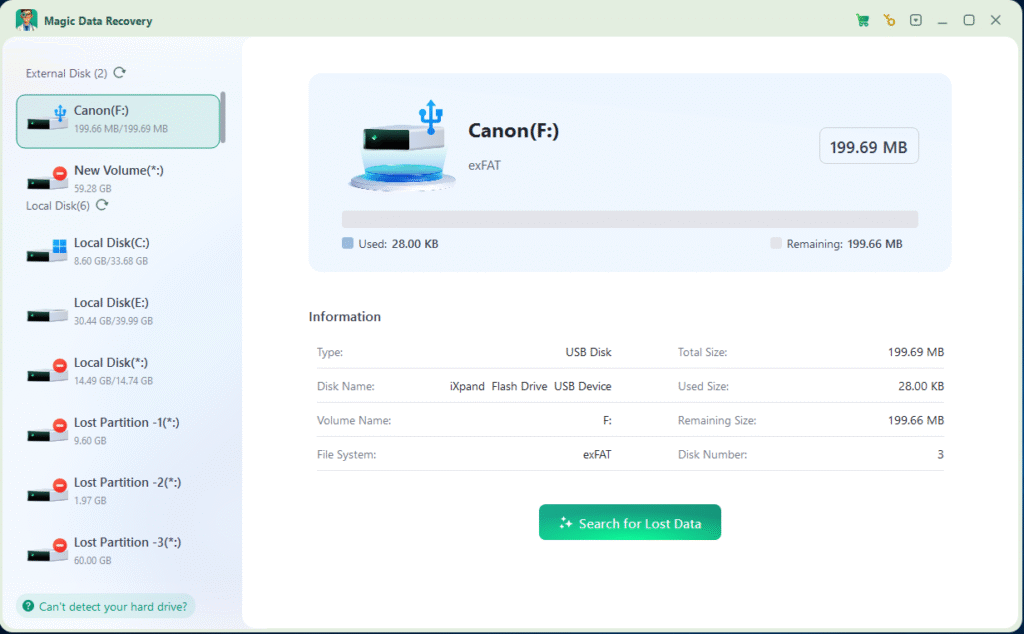
Fase 3: Selezionare l'HDD
Aprire il software e scegliere l'unità danneggiata dall'elenco dei dispositivi.
Passo 4: Eseguire una scansione completa
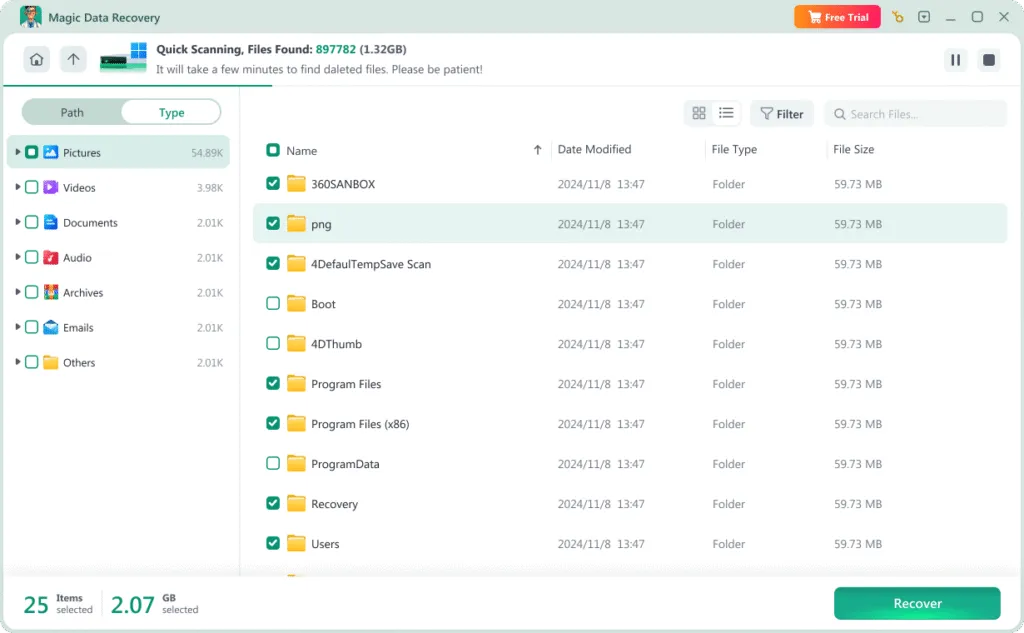
Iniziare con una scansione rapida per elencare alcuni file, quindi procedere con una scansione profonda per ottenere il massimo recupero.
Fase 5: Anteprima e ripristino
Visualizzare in anteprima i file, selezionare quelli necessari e salvarli su un'altra unità. In questo modo si evita la sovrascrittura dei settori originali e si aumenta la sicurezza dei dati ripristinati.

Metodo 2: Utilizzare il Recupero file di Windows (strumento Microsoft)
Recupero file di Windows è un'utilità a riga di comando fornita da Microsoft. È in grado di recuperare i file eliminati dai dispositivi di archiviazione locali.
Quando questo metodo è utile
- I file sono stati eliminati di recente
- Il disco non è stato utilizzato in modo intensivo dopo la cancellazione.
Limitazioni
- Solo a riga di comando (non adatto ai principianti)
- Successo limitato per le unità formattate o danneggiate
Questa opzione è più adatta agli utenti avanzati che hanno dimestichezza con la sintassi dei comandi.
Metodo 3: Ripristino dei file dalla cronologia dei file
Se la Cronologia file è stata attivata prima dell'eliminazione, il recupero è semplice.
Passi
- Aperto Impostazioni → Aggiornamento e sicurezza
- Selezionare Backup
- Cliccare Altre opzioni → Ripristino dei file
- Sfogliare e ripristinare i file richiesti
Questo metodo funziona solo se i backup sono stati configurati in anticipo.
Metodo 4: Ripristino delle versioni precedenti
Windows può memorizzare copie shadow di file o cartelle.
Come usarlo
- Fare clic con il tasto destro del mouse sulla cartella in cui si trova il file.
- Scegliere Proprietà
- Aprire la sezione Versioni precedenti scheda
- Ripristinare una versione precedente
Questo approccio dipende dalle impostazioni di protezione del sistema e potrebbe non essere sempre disponibile.
Metodo 5: Recupero tramite backup e ripristino (Windows 10)
Windows 10 include una funzione di backup integrata nota come Backup e ripristino (Windows 10).
Come funziona
- Aperto Pannello di controllo
- Vai a Sistema e sicurezza
- Selezionare Backup e ripristino (Windows 10)
- Cliccare Ripristino dei file
- Scegliere i file e la posizione di ripristino
Questo metodo è affidabile quando i backup del sistema vengono creati regolarmente.
Metodo 6: Recuperare i file dai backup del cloud
I servizi cloud spesso forniscono la cronologia delle versioni e la protezione dalla cancellazione.
I servizi supportati includono:
- OneDrive
- Google Drive
- Dropbox
Controllare il cestino del cloud o la cronologia delle versioni prima di tentare il ripristino del disco.
Metodo 7: Utilizzare servizi di recupero dati professionali
Quando il software si guasta o l'unità è fisicamente danneggiata, può essere necessario un servizio di recupero professionale.
Quando prenderlo in considerazione
- L'unità produce rumori insoliti
- Il disco non viene riconosciuto
- Grave danneggiamento del file system
Pur essendo efficace, questa opzione è costosa e richiede molto tempo.
Metodo 8: Ripristinare i file eliminati in modo permanente utilizzando il Prompt dei comandi (CMD)
Il Prompt dei comandi può aiutare a ripristinare l'accesso ai file nascosti da errori del file system.
Come usare CMD in Windows 10
- Cliccare con il tasto destro del mouse Inizio → Windows PowerShell (amministratore)
- Eseguire il comando:
chkdsk X: /f
Sostituire X con la lettera dell'unità.
- Al termine, eseguire:
ATTRIB -H -R -S /S /D X:*.*
Note importanti
- Questo metodo non consente di recuperare i dati sovrascritti
- È utile per i file nascosti o inaccessibili.
- Evitare di interrompere CHKDSK durante l'esecuzione
Il recupero di CMD è un ultimo passo pratico prima di utilizzare un software di recupero dedicato.
Conclusione
Il recupero dei file eliminati in modo permanente in Windows 10 dipende dal modo in cui i dati sono stati persi e dalle azioni intraprese in seguito. Gli strumenti integrati e i metodi CMD possono essere utili in casi limitati, soprattutto quando sono coinvolti backup o errori logici.
Tuttavia, quando i file vengono realmente eliminati e non esiste alcun backup, Magic Data Recovery offre un soluzione più affidabile. La sua capacità di gestire problemi di cancellazione, formattazione e file system lo rende una scelta pratica sia per gli utenti quotidiani che per i professionisti.
Se siete alla ricerca di un modo efficiente per Recuperare i file eliminati in modo permanente Windows 10, utilizzando un strumento di recupero dedicato può far risparmiare tempo e ridurre il rischio di ulteriori perdite di dati.
Supporta Windows 7/8/10/11 e Windows Server
Domande frequenti
È possibile recuperare i file eliminati in modo permanente in Windows 10?
È possibile recuperare i file eliminati in modo permanente?
Dove vanno a finire i file eliminati definitivamente in Windows 10?
I file eliminati in modo permanente vengono effettivamente cancellati?
Come eliminare definitivamente i file in modo che non possano essere recuperati?
Come ripristinare i file eliminati in modo permanente in Windows 10?
Quando si cancella un file dal computer, è sparito per sempre?
I file eliminati vengono memorizzati in modo permanente nel Cestino?

Erin Smith è riconosciuta come una delle scrittrici più professionali di Amagicsoft. Negli ultimi 10 anni ha continuamente affinato le sue capacità di scrittura e ha aiutato milioni di lettori a risolvere i loro problemi tecnologici.