
È possibile recuperare i file da un disco rigido formattato?
È possibile recuperare i file da un disco rigido formattato? dopo una formattazione accidentale, la reinstallazione di Windows o una modifica del file system? In molti casi sì, soprattutto quando l’unità è stata sottoposta a una formattazione rapida, è fisicamente integra e non sono stati salvati nuovi dati. Inizia controllando il Guida al recupero dei dati da un disco formattato, quindi smetti di utilizzare il disco interessato finché non avrai scelto un metodo di recupero sicuro.
La formattazione fa sparire i file da Esplora file, ma non sempre ne distrugge immediatamente il contenuto. Il risultato dipende dal tipo di formato, dalla tecnologia di archiviazione, dall'attività successiva del disco e dalle condizioni fisiche del dispositivo. Questa guida spiega cosa succede durante la formattazione, come valutare le possibilità di recupero e come Magic Data Recovery può aiutare in caso di perdita logica dei dati causata da formattazione, cancellazione o errori del file system.
Supporta Windows 7/8/10/11 e Windows Server
Indice dei contenuti
È possibile recuperare i file da un disco rigido formattato? La risposta diretta
Sì, È possibile recuperare i file da un disco rigido formattato? in molti casi di formattazione rapida la risposta è affermativa. Una formattazione rapida, di norma, ricostruisce le strutture chiave del file system e contrassegna lo spazio di archiviazione precedente come disponibile. I software di recupero potrebbero comunque individuare i vecchi record dei file o identificare i file in base alle loro firme, finché nuove informazioni non sovrascrivono quei settori.
Tuttavia, nessuno strumento affidabile può garantire che tutti i file vengano recuperati. Prima di iniziare, valuta la situazione con questa guida pratica:
Situazione | Prospettive di ripresa | Il passo successivo migliore |
HDD integro dopo una formattazione rapida | Spesso vantaggioso se non utilizzato | Esegui subito una scansione completa del disco |
Disco rigido esterno formattato per errore | Spesso favorevole, se ancora rilevabile | Collegalo a Windows ed esegui la scansione senza scrivere nuovi dati |
HDD dopo una formattazione completa di Windows | Basso | Controllare i backup, quindi effettuare una valutazione tramite una scansione o rivolgendosi a uno specialista |
Unità cancellata o sovrascritta in modo sicuro | Da molto basso a nullo | Non aspettarti che il software riesca a recuperare i dati |
SSD dopo la formattazione con TRIM attivo | Incerto e spesso inferiore | Spegnere e valutare rapidamente |
Un disco rigido che emette rumori di clic o stridii, bruciato o non rilevato | Non adatto alla scansione fai-da-te | Contatta un laboratorio di recupero dati professionale |
Microsoft precisa che la formattazione completa comporta la scrittura su ogni settore. Le sue linee guida relative al TRIM spiegano inoltre che i blocchi non più necessari possono essere eliminati dai dispositivi di archiviazione compatibili. Questi comportamenti rendono il recupero dati dopo una formattazione completa e su SSD meno prevedibile rispetto al recupero dopo una formattazione rapida su un HDD tradizionale.
Cosa fare subito dopo la formattazione
Le tue prime azioni possono essere più importanti del programma di recupero che scegli. Quando qualcuno ti chiede È possibile recuperare i file da un disco rigido formattato?, il consiglio più prudente è quello di impedire ulteriori operazioni di scrittura prima di tentare qualsiasi riparazione.
- Smetti di utilizzare l'unità. Non copiare file, scaricare aggiornamenti, creare cartelle né installare applicazioni su questo dispositivo.
- Scollegare un'unità esterna. Ricollegalo solo quando sei pronto a eseguire la scansione da un computer Windows funzionante.
- Non formattarlo di nuovo. Un secondo formato modifica ulteriori strutture del disco e potrebbe ridurre la possibilità di recupero.
- Evitare di eseguire CHKDSK prima del ripristino. I comandi di riparazione modificano i metadati del file system e potrebbero rimuovere voci che gli strumenti di recupero potrebbero altrimenti utilizzare.
- Preparare un'unità di destinazione separata. I file recuperati devono essere salvati su un supporto diverso dal disco formattato.
- Verificare la presenza di sintomi fisici. Interrompere l'uso se l'unità emette rumori simili a scatti o stridii, si surriscalda, emana odore di bruciato o si disconnette ripetutamente.
Quando Windows non riesce a leggere il file system e visualizza il disco come RAW, segui una procedura che dia priorità al recupero dei dati piuttosto che accettare la richiesta di formattazione. Questo Guida al recupero dei dati da un disco rigido RAW spiega perché il recupero dovrebbe avere la precedenza sulla riparazione.
Perché i file formattati potrebbero comunque essere recuperabili
Per capire È possibile recuperare i file da un disco rigido formattato?, ciò consente di separare le informazioni relative al file system dal contenuto dei file.
Un file system come NTFS, FAT32 o exFAT memorizza record che indicano a Windows dove iniziano i file, quali blocchi appartengono a ciascuno di essi e come sono organizzate le cartelle. Una formattazione rapida sostituisce o azzera gran parte di queste informazioni organizzative. Tuttavia, i blocchi sottostanti potrebbero ancora contenere foto, documenti, video, archivi e altri dati.
I software di recupero effettuano la ricerca in due modi principali:
- Ricostruzione del file system: Cerca i metadati rimanenti, i record delle directory e le informazioni di allocazione. Questo approccio può consentire di conservare i nomi originali e i percorsi delle cartelle.
- Scansione delle firme dei file: Esegue una scansione dei settori grezzi alla ricerca di intestazioni e strutture riconoscibili. Questo metodo consente di individuare i contenuti anche quando i record precedenti del file system sono gravemente danneggiati, sebbene i nomi e le cartelle possano risultare incompleti.
Pertanto, recupero del disco rigido formattato non equivale a annullare il comando di formattazione. Non è possibile semplicemente “annullare” la formattazione. Gli strumenti di recupero, invece, estraggono i dati sopravvissuti e li copiano in una destinazione sicura.
Formattazione rapida vs Formattazione completa vs Cancellazione sicura
Il metodo di formattazione influisce notevolmente sulla risposta a È possibile recuperare i file da un disco rigido formattato?.
Formato rapido
A formato rapido crea un nuovo file system senza eseguire la stessa operazione di scrittura completa del volume prevista dalla formattazione completa. Su un disco rigido in buone condizioni, ripristino dopo una formattazione rapida spesso è possibile se l'utente si ferma immediatamente. Più dati vengono scritti in seguito, meno blocchi originali rimangono disponibili.
Formato completo
A Windows formato completo scrive su tutto il volume e richiede molto più tempo. Di conseguenza, i normali software di recupero potrebbero trovare pochi contenuti utilizzabili o addirittura nessuno. Se non sei sicuro del tipo di formattazione utilizzato, valuta quanto tempo ha richiesto la formattazione e se è stata selezionata l’opzione “Formattazione rapida”. Non eseguire un’altra formattazione per testare l’unità.
Cancellazione sicura, riempimento con zeri o sovrascrittura ripetuta
Le operazioni di cancellazione sicura e di sovrascrittura sostituiscono intenzionalmente i contenuti memorizzati. In questi casi, il software non è in grado di ricostruire i dati che non esistono più. Anche un laboratorio di recupero dati non è in grado di ripristinare i settori che sono stati completamente sovrascritti.
Per una spiegazione più approfondita dei risultati relativi al formato dei post, si veda Dopo la formattazione, è possibile recuperare i file?.
I modi migliori per recuperare i file da un disco rigido formattato
Il metodo migliore dipende dall'esistenza o meno di un backup aggiornato, dallo stato fisico del disco e dalla tua dimestichezza con gli strumenti da riga di comando.
Metodo 1: Ripristinare prima da un backup
Un backup aggiornato è la soluzione più sicura e pulita per È possibile recuperare i file da un disco rigido formattato?. Controlla la Cronologia dei file, il Backup di Windows, OneDrive, un’altra piattaforma cloud, un NAS o un disco di backup esterno.
La funzione "Cronologia file" di Microsoft consente di ripristinare le versioni precedenti, a condizione che il backup di tali versioni sia stato effettuato prima della formattazione. Apri il percorso della cartella originale, seleziona Ripristino delle versioni precedenti, controllare la versione disponibile e ripristinarla in una posizione sicura. Questo metodo mantiene i nomi dei file e la struttura delle cartelle originali, ma funziona solo se la protezione tramite backup era già attiva.
Metodo 2: Utilizzo di Magic Data Recovery in caso di perdita logica dei dati
Quando non è disponibile alcun backup utilizzabile, dedicato software di recupero dati diventa il passo successivo concreto. Magic Data Recovery è pensato per gli utenti Windows che hanno bisogno di recuperare dati in seguito a formattazione accidentale, cancellazione, errori del file system, problemi con unità RAW, perdita di dati causata da virus o altri guasti logici.
Il suo punto di forza è un flusso di lavoro controllato: selezionare il disco interessato, eseguire la scansione, filtrare i risultati, visualizzare in anteprima i file recuperabili e ripristinare i dati selezionati su un’altra unità. Questo processo è più facile da verificare rispetto a un recupero alla cieca tramite riga di comando, specialmente quando il disco formattato contiene migliaia di file di vario tipo.
Perché Magic Data Recovery è la soluzione ideale per questo problema
Magic Data Recovery affronta i principali punti critici alla base di È possibile recuperare i file da un disco rigido formattato?:
- Gestisce situazioni relative a file formattati, cancellati, inaccessibili e con errori del file system da un'unica interfaccia.
- Esegue la scansione di dischi rigidi interni, dischi rigidi esterni, SSD, unità USB e schede di memoria collegati a Windows.
- L'anteprima e i filtri aiutano gli utenti a individuare documenti, foto, video e archivi importanti prima del recupero.
- Il processo guidato consente di evitare complessi comandi di ripristino.
- Gli utenti possono valutare i risultati della scansione prima di decidere quali file ripristinare.
Consideriamo un caso comune: durante la preparazione del supporto di installazione, si seleziona l'HDD esterno sbagliato. La formattazione viene completata, ma il disco continua a girare normalmente e risulta visibile in "Gestione disco". Lo si scollega immediatamente senza copiare nulla su di esso. In questa situazione, Magic Data Recovery è in grado di eseguire una scansione del dispositivo formattato e aiutarti a recuperare i file sopravvissuti su un disco separato.
Questo approccio è più affidabile per gli utenti comuni rispetto alla sperimentazione di diverse utility di riparazione, poiché si concentra sull'estrazione dei dati prima della riparazione del file system. Non sostituisce un servizio di riparazione in camera bianca in caso di danni fisici e non è in grado di recuperare i contenuti sovrascritti.
Come recuperare i dati da un disco rigido formattato con Magic Data Recovery
Passaggio 1: Installare il software su un disco fisico funzionante
Scaricare Magic Data Recovery su un altro disco interno, su un'unità di sistema esterna o su un secondo computer. Se possibile, evitare di installarlo su un'altra partizione dello stesso disco fisico interessato, poiché le operazioni di scrittura durante l'installazione potrebbero comunque sovrascrivere i settori danneggiati.
Supporta Windows 7/8/10/11 e Windows Server
Fase 2: Collegare e identificare l'unità formattata
Avviare il programma e verificare che il dispositivo corrisponda in termini di capacità, modello e struttura delle partizioni. La selezione di una sorgente errata comporta una perdita di tempo e può comportare rischi inutili.
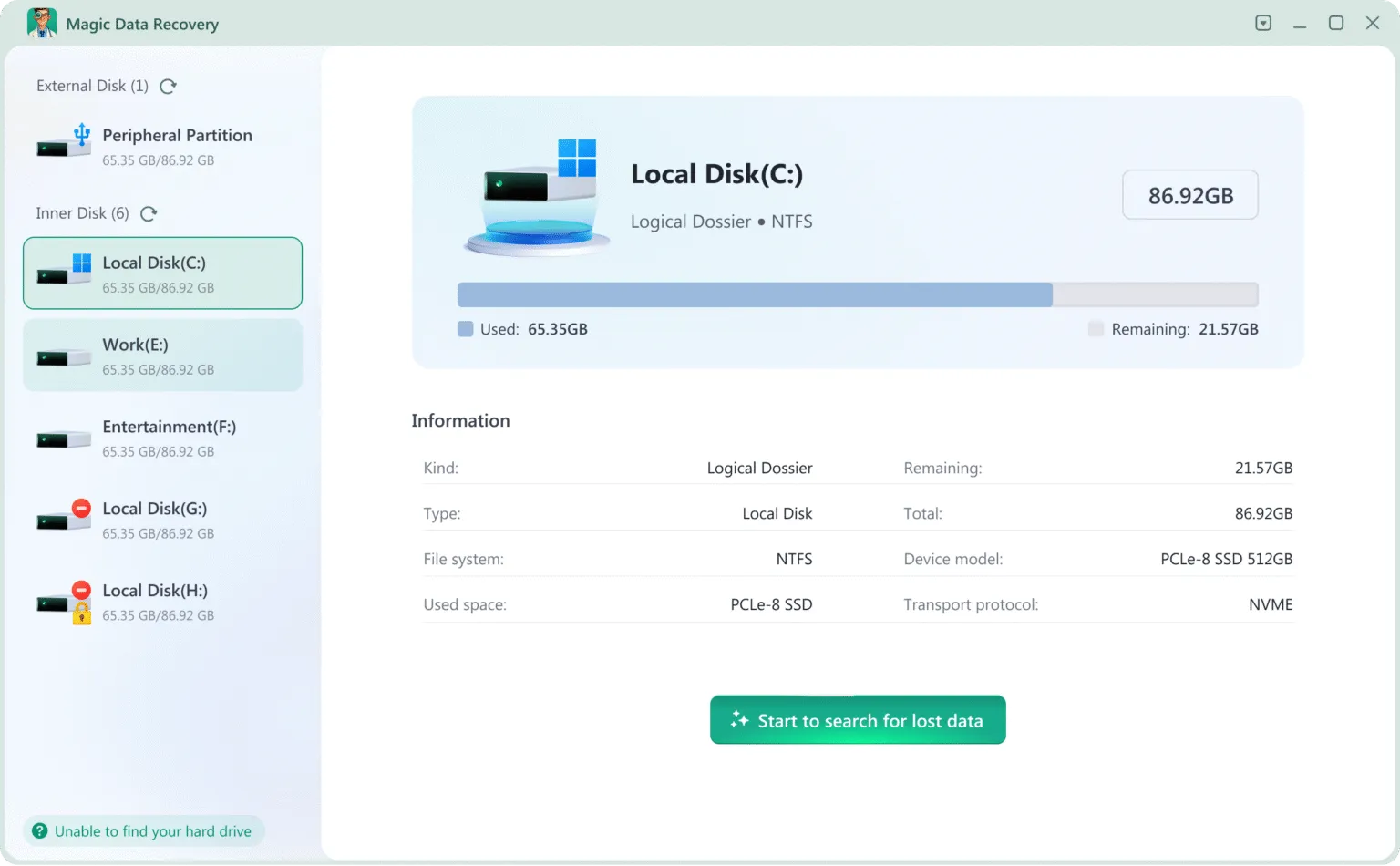
Fase 3: Eseguire la scansione completa del dispositivo
Avvia la scansione e lascia che esamini accuratamente l'unità. Un volume formattato richiede spesso un'analisi più approfondita rispetto a un file cancellato di recente. Evita di utilizzare il disco di origine mentre la scansione è in corso.
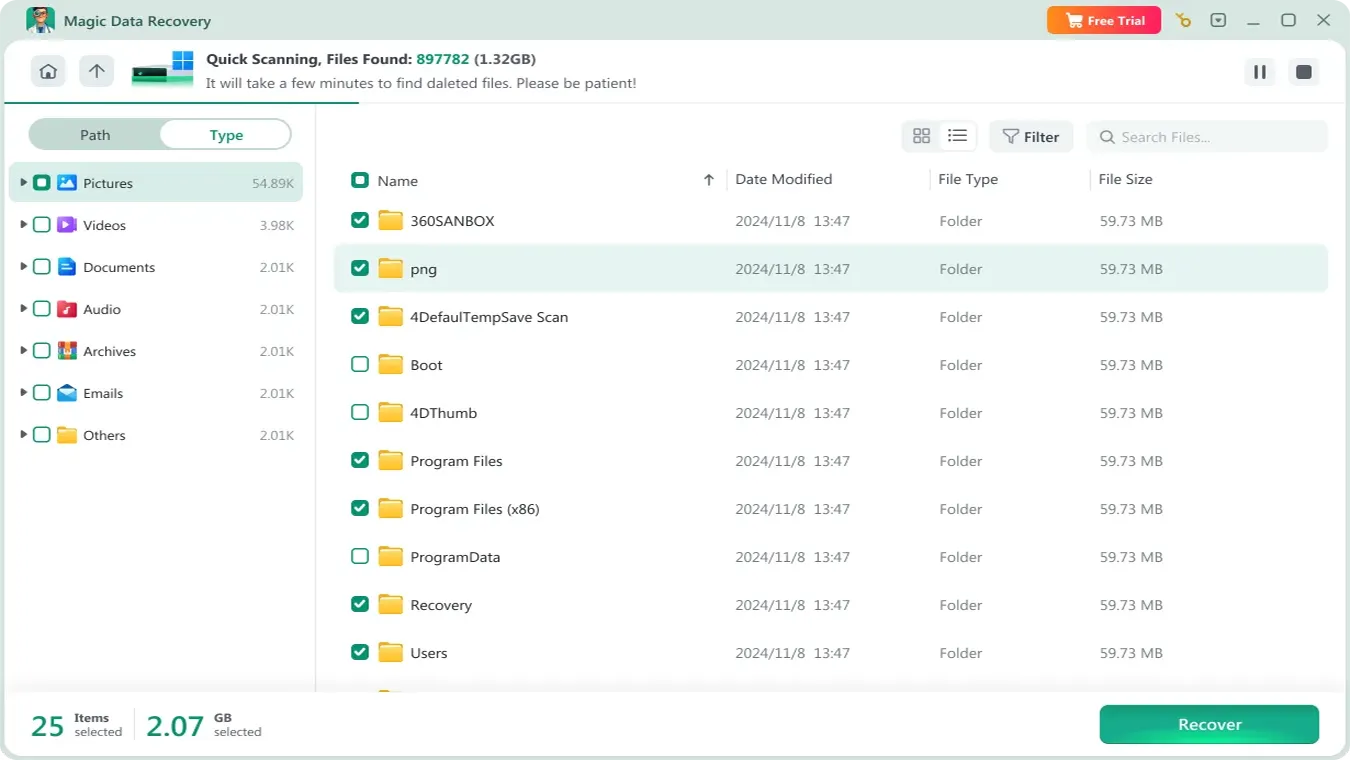
Passaggio 4: Filtra e visualizza in anteprima i file recuperabili
Restringi i risultati in base al nome del file, al tipo, alle dimensioni, alla data o al percorso, quando tali dettagli sono disponibili. Visualizza prima in anteprima gli elementi critici. Un'anteprima valida è un'indicazione utile del fatto che il contenuto potrà essere aperto dopo il recupero, anche se ogni file dovrà comunque essere verificato in seguito.

Fase 5: Ripristino su un'altra unità
Seleziona i file che ti servono e scegli una destinazione funzionante con spazio libero sufficiente. Non salvare mai i dati recuperati sul disco di origine durante la stessa sessione. Successivamente, apri alcuni documenti, foto, video e archivi rappresentativi per verificarne l'integrità.
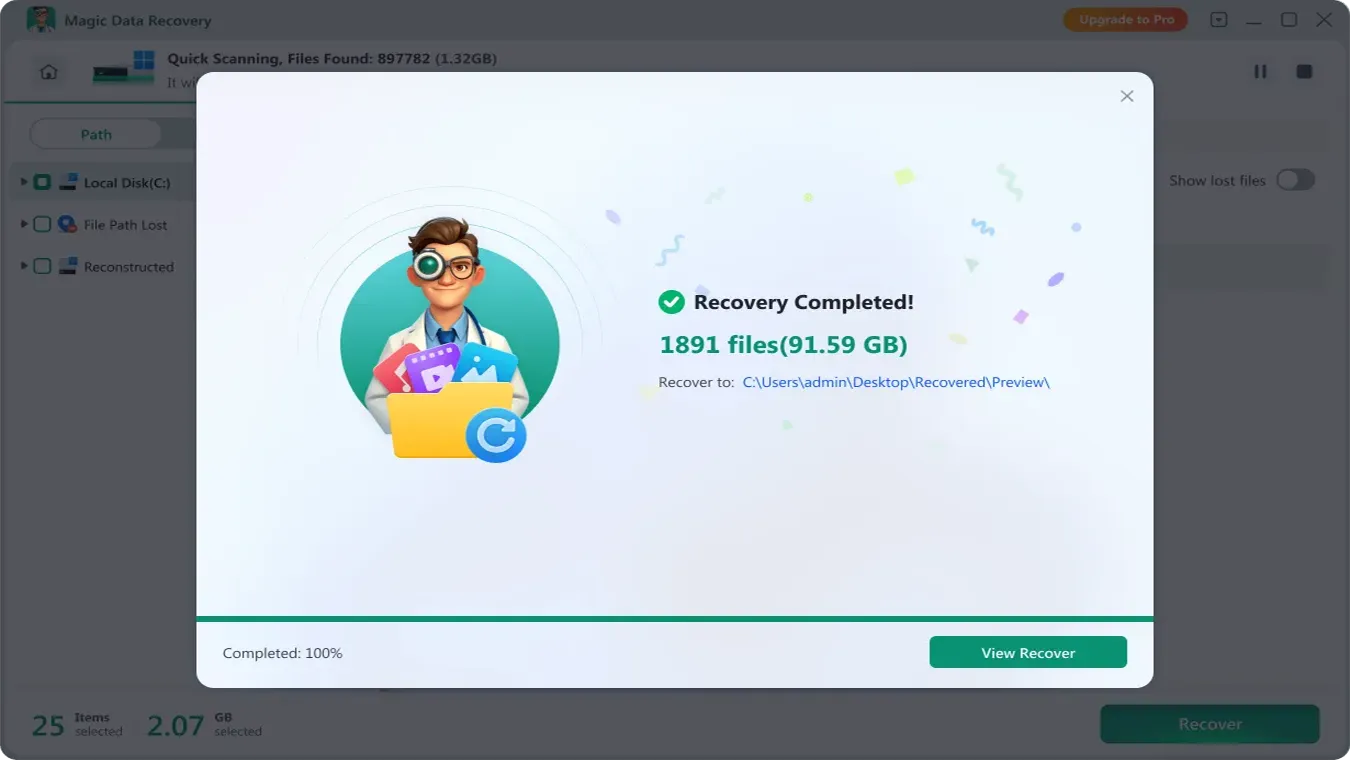
Se stai cercando una soluzione efficiente anziché una sequenza di comandi complicata, prova Magic Data Recovery e controlla i risultati della scansione prima di apportare ulteriori modifiche all'unità formattata.
Metodo 3: Prova il recupero file di Windows
Microsoft mette a disposizione Windows File Recovery, un'utilità da riga di comando per unità interne locali, unità esterne e dispositivi USB. La sua sintassi di base richiede che le unità di origine e di destinazione siano distinte:
winfr unità sorgente: unità destinazione: [/mode] [/switches]
Questo strumento può rivelarsi utile per gli utenti esperti, ma non dispone di un browser visivo dei file né di una funzione di anteprima. Gli errori di comando, le scansioni troppo generiche e i risultati poco chiari possono renderlo meno pratico quando è necessario individuare file specifici. Inoltre, non consente il recupero da archivi cloud o condivisioni di rete.
Metodo 4: Rivolgersi a un servizio professionale di recupero dati
Rivolgersi a un laboratorio specializzato è la scelta giusta quando il disco presenta danni fisici o un comportamento instabile. Non accendere ripetutamente un disco rigido che emette rumori di clic né eseguire una scansione prolungata su un'unità che continua a disconnettersi. I guasti meccanici potrebbero aggravarsi durante i tentativi di riparazione fai-da-te.
Usa questo Guida al servizio di recupero dati da disco rigido per confrontare il recupero logico con il recupero professionale a livello hardware.
Magic Data Recovery rispetto ad altre opzioni di recupero
Opzione | Il migliore per | Vantaggio principale | Limitazione principale |
Backup o Cronologia dei file | File inclusi in un backup precedente | Ripristino pulito con nomi e cartelle | Richiede un backup preformattato utilizzabile |
Magic Data Recovery | Operazioni di recupero dati su unità logiche con perdita di dati | Scansione visiva, filtraggio, anteprima e diversi scenari di recupero | Non è possibile riparare i componenti hardware fisici né recuperare i dati sovrascritti |
Recupero file di Windows | Utenti di Windows con competenze tecniche | Opzione gratuita della riga di comando di Microsoft | Mancanza di anteprima grafica e curva di apprendimento più ripida |
Laboratorio di recupero dati professionale | Unità che emettono rumori, bruciate, bagnate, cadute o non rilevate | Diagnosi e ripristino a livello hardware | Costi più elevati e perdita di controllo sul dispositivo |
Per la maggior parte degli HDD integri che sono stati sottoposti accidentalmente a una formattazione rapida, Magic Data Recovery offre un equilibrio pratico tra profondità di recupero, usabilità e controllo. Se disponibile, è comunque preferibile ricorrere a un backup, mentre in caso di guasto fisico è più sicuro affidarsi a un laboratorio.
È possibile recuperare i file dopo aver reinstallato Windows?
La risposta dipende da dove è stato installato Windows e dalla quantità di dati scritti durante l'installazione. Se hai formattato la partizione di sistema e hai completato una nuova installazione di Windows, i file del sistema operativo, gli aggiornamenti, i driver, i dati temporanei e le applicazioni potrebbero aver sovrascritto parte del contenuto precedente.
Ciononostante, È possibile recuperare i file da un disco rigido formattato? potrebbe comunque valere la pena approfondire la questione se i file mancanti occupavano settori che non sono stati riutilizzati. Smetti di installare programmi e di scaricare aggiornamenti. L’ideale sarebbe spegnere il computer, rimuovere l’unità e collegarla come dispositivo secondario a un altro PC Windows per eseguire una scansione.
Non aspettarti che la struttura originale delle cartelle rimanga intatta dopo una sovrascrittura estesa. Dai la priorità ai documenti e ai supporti insostituibili, visualizza in anteprima i risultati e recuperali su un altro disco fisico.
HDD vs SSD: perché il tipo di dispositivo è importante
Gli HDD e gli SSD tradizionali gestiscono lo spazio occupato dai file cancellati in modo diverso, quindi la risposta alla domanda È possibile recuperare i file da un disco rigido formattato? cambia a seconda della tecnologia di archiviazione.
Disco rigido formattato
Un disco rigido (HDD) memorizza i dati magneticamente. Dopo una formattazione rapida, i vecchi settori potrebbero rimanere leggibili finché non vengono sovrascritti da nuovi dati. Ciò rende un disco rigido inutilizzato uno dei candidati ideali per la cancellazione tramite software Recupero dati su disco rigido.
SSD formattato
Un SSD può ricevere notifiche TRIM che identificano i blocchi non più necessari. Il controller può eliminare tali blocchi durante la raccolta dei dati non più necessari in background. Il recupero dei dati potrebbe quindi risultare difficile anche se l'utente non ha copiato manualmente nuovi file. Spegnere rapidamente il dispositivo ed evitare scansioni ripetute se i dati sono di grande valore.
CMD è in grado di ripristinare un disco rigido formattato?
Non esiste alcun comando di Windows che ripristini direttamente un file system formattato allo stato precedente. CHKDSK ripara il file system corrente; non esegue recupero del disco rigido formattato e potrebbero modificare i metadati. DiskPart e Format creano o modificano le strutture dei dischi, pertanto non devono essere utilizzati prima del ripristino.
Windows File Recovery è un'utilità di recupero da riga di comando, ma si limita a estrarre i file sopravvissuti anziché ripristinare il formato originale. Per gli utenti che preferiscono risultati di scansione visibili e anteprime dei file, Magic Data Recovery offre un flusso di lavoro più intuitivo.
Errori comuni che riducono le possibilità di guarigione
Evita questi errori durante le indagini È possibile recuperare i file da un disco rigido formattato?:
- Continuare a utilizzare il disco formattato come di consueto.
- Installazione del software di ripristino sull'unità di origine.
- Salvataggio dei file recuperati nella posizione di origine.
- Eseguire CHKDSK o le operazioni di riparazione delle partizioni prima di estrarre i dati.
- Sto riformattando l'unità perché Windows continua a non riuscire ad aprirla.
- Analisi di un'unità che emette rumori di clic, cigolii, si surriscalda o si disconnette.
- Dare per scontato che il risultato della scansione implichi che ogni file recuperato sia integro.
- Il recupero dei file di scarso valore avviene per primi, mentre i file critici rimangono non verificati.
La procedura più efficace è quella di seguire una sequenza ben definita: diagnosticare l'unità, proteggerla da eventuali operazioni di scrittura, ripristinare dai backup quando possibile, eseguire la scansione solo su un disco fisicamente integro, visualizzare in anteprima i risultati e salvare su un altro dispositivo.
Quando il recupero del software non è la scelta giusta
Interrompi i lavori fai-da-te e rivolgiti a uno specialista quando:
- L'HDD emette rumori simili a clic, stridii, raschiature o rumori ripetuti dovuti all'avvio della rotazione.
- Il dispositivo ha subito danni causati da acqua, fuoco, urti o problemi elettrici.
- Il disco non viene rilevato nel BIOS, nell'UEFI, in Gestione disco né su un altro computer.
- Diventa insolitamente caldo o emana un odore di bruciato.
- La connessione si interrompe ripetutamente durante un semplice accesso.
- I dati sono sensibili dal punto di vista legale, fondamentali per l'attività aziendale o insostituibili e lo stato dell'unità è incerto.
In caso di problemi di diagnosi in assenza di chiari sintomi fisici, consulta questa guida su un Il disco rigido non viene riconosciuto prima di decidere se la scansione del software sia sicura.
Conclusione: è possibile recuperare i file da un disco rigido formattato?
Quindi, È possibile recuperare i file da un disco rigido formattato?? Spesso sì, soprattutto dopo una formattazione rapida su un disco rigido (HDD) integro che non è stato riutilizzato. Le possibilità di recupero diminuiscono dopo una formattazione completa di Windows, una cancellazione sicura, una sovrascrittura estesa o un’attività TRIM su un SSD. In caso di guasto fisico è necessario rivolgersi a un laboratorio specializzato piuttosto che ricorrere a un software.
I backup dovrebbero essere la vostra prima scelta. Quando non esiste alcun backup e l'unità è fisicamente integra, Magic Data Recovery è consigliato perché supporta la formattazione, la cancellazione, gli errori del file system, l'archiviazione RAW e altri scenari di perdita logica attraverso un processo chiaro di scansione, anteprima e recupero. Aiuta gli utenti comuni di Windows a verificare cosa è ancora recuperabile senza dover ricorrere a comandi complessi o promesse esagerate.
Per ulteriori metodi, norme di sicurezza e tutorial correlati, torna alla pagina Guida al recupero dei dati da un disco formattato. Se hai bisogno di una procedura di recupero più efficiente, esegui una scansione dell'unità interessata con Magic Data Recovery e salva i file recuperati su un altro dispositivo funzionante.
Supporta Windows 7/8/10/11 e Windows Server
Domande frequenti sul recupero dei file da un disco rigido formattato
È possibile recuperare i file da un disco rigido formattato?
Sì, È possibile recuperare i file da un disco rigido formattato? Spesso è possibile farlo dopo una formattazione rapida, purché il disco sia ancora integro e nessun nuovo dato abbia sovrascritto i vecchi settori. Smettete di utilizzare l'unità, controllate i backup ed eseguite la scansione da un altro disco Windows integro. Salvate tutti i file recuperati in una destinazione separata.
È possibile recuperare i file dopo una formattazione rapida?
Una formattazione rapida solitamente sostituisce le strutture del file system senza sovrascrivere ogni singolo settore di un disco rigido tradizionale. Pertanto, il contenuto dei vecchi file potrebbe rimanere accessibile per la scansione. Le possibilità di recupero sono maggiori se si scollega immediatamente l'unità, si evitano le riparazioni, si utilizza un software di recupero affidabile e si ripristinano i file trovati su un altro disco fisico.
È possibile recuperare i dati da un disco rigido completamente formattato?
Il recupero dei dati dopo una formattazione completa di Windows è molto meno probabile, poiché il processo sovrascrive ogni settore del volume. È comunque possibile controllare i backup o rivolgersi a uno specialista qualificato per valutare il caso, ma non ci si deve aspettare che un normale software riesca a ricostruire i contenuti sovrascritti. Evitare di eseguire un’altra formattazione o di utilizzare ulteriormente il disco.
È possibile recuperare i file dopo aver formattato e reinstallato Windows?
È possibile, ma i file di installazione di Windows, gli aggiornamenti, i driver e le applicazioni potrebbero aver sovrascritto parte dei vecchi dati. Smetti di utilizzare il computer, rimuovi l'unità interessata non appena possibile ed esegui una scansione come disco secondario da un altro PC. Tieni presente che la struttura delle cartelle potrebbe risultare incompleta e dai la priorità ai file insostituibili rispetto a quelli meno importanti.
CMD è in grado di recuperare i dati da un disco rigido formattato?
Windows File Recovery è in grado di eseguire la scansione dell'archivio locale tramite il Prompt dei comandi, ma nessun comando CMD è in grado di annullare effettivamente una formattazione. CHKDSK ripara il file system corrente e potrebbe modificare i metadati, quindi è consigliabile non eseguirlo prima del recupero. Uno strumento grafico dotato di filtri e anteprima è solitamente più semplice da utilizzare per gli utenti che non hanno familiarità con la sintassi dei comandi.
Come posso recuperare i file da un disco rigido esterno formattato?
Scollegate il disco rigido esterno e non copiate nulla su di esso. Collegatelo a un computer Windows funzionante, installate il software di recupero su un altro disco, eseguite la scansione del disco esterno, visualizzate in anteprima i file importanti e recuperateli su un altro supporto. Se il disco emette rumori metallici, si surriscalda o si disconnette ripetutamente, interrompete la scansione e rivolgetevi a un laboratorio specializzato.
Dove devo salvare i file recuperati?
Salvare sempre i file recuperati su un'unità fisica diversa, dotata di spazio libero sufficiente. La riscrittura dei file sull'unità di origine formattata potrebbe sovrascrivere altri file persi che non sono ancora stati recuperati. Dopo il recupero, aprire un campione rappresentativo di documenti, foto, video e archivi, quindi creare un secondo backup prima di riparare o riformattare il disco originale.
Quando è opportuno rivolgersi a un servizio professionale di recupero dati?
Scegliete un servizio professionale quando il disco rigido presenta sintomi fisici, quali rumori di clic o stridii, odore di bruciato, danni da urto, esposizione all’acqua, surriscaldamento grave o mancata rilevazione completa. Il software è destinato al recupero di dati persi a livello logico su dispositivi leggibili. L’accensione o la scansione ripetute di un disco rigido con guasti meccanici possono aggravare il danno e ridurre la quantità di dati recuperabili.

Jason ha oltre 15 anni di esperienza pratica nel settore della sicurezza dei dati informatici. È specializzato in tecnologie di recupero dati, backup e ripristino e riparazione dei file e ha aiutato milioni di utenti in tutto il mondo a risolvere complessi problemi di perdita di dati e di sicurezza.