
Um guia completo para recuperar seus dados perdidos em caso de falha lógica do HDD

Um Falha lógica do HDD ocorre quando o sistema de arquivos, a tabela de partições, os registros de inicialização ou outras estruturas de dados em um disco rígido ficam danificados ou ilegíveis. A unidade ainda pode ligar e aparecer no Windows, mas não é mais possível acessar arquivos, pastas ou partições inteiras normalmente.
Os sinais mais comuns incluem um disco rígido que aparece como RAW, uma partição ausente, uma mensagem do tipo “Sistema operacional não encontrado” ou o Windows solicitando que você formate o disco antes de usá-lo.
Antes de tentar corrigir uma falha lógica em um HDD, pare de gravar novos dados na unidade afetada. Se os arquivos forem importantes, recupere-os ou faça um backup antes de executar comandos de reparo, formatar a unidade ou criar uma nova partição.
Para usuários que procuram um Solução de HDD, a abordagem mais segura é recuperar primeiro os arquivos importantes e, em seguida, reparar o disco. Magic Data Recovery pode fazer a varredura de discos rígidos com danos lógicos, no formato RAW, formatados ou inacessíveis e recuperar os arquivos selecionados para outro dispositivo de armazenamento antes de se tentar qualquer reparo adicional.
Importante: Se o disco rígido emitir sons de clique, rangido, zumbido ou ruídos repetidos de aceleração, desconecte-o imediatamente. Esses sintomas podem indicar uma falha física, e não uma falha lógica, e o uso continuado pode agravar os danos.
O que é uma falha lógica de HDD?
A falha lógica do disco rígido é um problema no nível do software que impede o sistema operacional de ler corretamente os dados armazenados em um disco rígido.
Os componentes físicos da unidade podem ainda estar funcionando, mas o Windows não consegue interpretar o sistema de arquivos nem localizar os arquivos porque estruturas de dados importantes foram corrompidas, excluídas ou sobrescritas.
Uma maneira simples de entender isso é imaginar uma biblioteca em que todos os livros ainda estejam nas prateleiras, mas o catálogo que indica onde cada livro deve ficar tenha sido danificado. A informação pode ainda existir, mas o sistema não consegue mais localizá-la nem organizá-la corretamente.
Uma falha lógica pode afetar:
- O sistema de arquivos
- A tabela de partições
- O Tabela do arquivo mestre, ou MFT
- O setor de inicialização
- O Master Boot Record, ou MBR
- A Tabela de Partições GUID, ou GPT
- Registros de arquivos e pastas
- Informações sobre a inicialização do sistema operacional
Ao contrário de um disco rígido com danos físicos, um HDD com danos lógicos muitas vezes pode ser recuperado sem a necessidade de abrir a unidade. No entanto, o sucesso da recuperação depende do estado do disco e se novos dados sobrescreveram os arquivos originais.
Sintomas comuns de falha lógica no disco rígido (HDD)
Os sintomas a seguir podem indicar danos lógicos.
1. O disco rígido aparece como RAW
Uma partição do Windows em bom estado normalmente utiliza um sistema de arquivos reconhecido, como NTFS, FAT32 ou exFAT.
Se o Windows exibir a partição como RAW, o sistema de arquivos pode estar ausente, danificado ou ilegível. Você também pode receber uma mensagem como:
É preciso formatar o disco na unidade X: antes de poder usá-lo.
Não formate o disco se você ainda precisar dos arquivos armazenados nele.
2. A partição passa a estar desalocada
O HDD pode aparecer no Gerenciamento de Discos, mas parte ou toda a sua capacidade está marcada como Não alocado.
Isso pode ocorrer quando uma entrada de partição é excluída ou quando a tabela de partições fica corrompida. Os arquivos podem permanecer no disco, mesmo que o Windows não consiga mais exibir a partição original.
Não crie um novo volume no espaço não alocado antes de recuperar seus dados.
3. Arquivos ou pastas ficam inacessíveis
É possível que você consiga ver a letra da unidade, mas receba uma mensagem de erro ao abri-la, como, por exemplo:
- O arquivo ou diretório está corrompido e ilegível.
- Acesso negado.
- O parâmetro está incorreto.
- A localização não está disponível.
- O volume não contém um sistema de arquivos reconhecido.
Esses erros podem ser causados por corrupção do sistema de arquivos, registros de diretório danificados, problemas de permissão ou setores ilegíveis.
4. Uma partição ou letra de unidade desaparece
É possível que uma partição não apareça mais no Explorador de Arquivos, mesmo que o disco rígido esteja visível no Gerenciamento de Discos.
Em alguns casos, a partição está em boas condições, mas perdeu a letra da unidade. Em outros casos, a própria partição foi excluída ou danificada.
5. O Windows não consegue inicializar
Se a falha lógica afetar a unidade do sistema, o computador poderá exibir mensagens como:
- Sistema operacional não encontrado
- Dispositivo de inicialização não encontrado
- Tabela de partições inválida
- Ocorreu um erro de leitura do disco
- Não há dispositivo inicializável
Um erro de inicialização não significa necessariamente que o disco rígido esteja fisicamente danificado. Os registros de inicialização, a partição do sistema ou os arquivos do sistema operacional podem estar corrompidos.
6. Arquivos desaparecem ou exibem nomes e tamanhos incorretos
A corrupção lógica pode danificar registros de arquivos e informações de diretórios. Os arquivos podem desaparecer, aparecer com nomes incomuns, apresentar tamanho igual a zero bytes ou serem colocados em pastas inesperadas.
7. O Windows verifica a unidade repetidamente
O Windows pode solicitar repetidamente uma verificação do disco durante a inicialização caso detecte inconsistências no sistema de arquivos. Isso pode indicar erros lógicos, mas verificações recorrentes também podem ser um sinal de que a unidade está ficando instável.
Falha lógica versus falha física do disco rígido
Antes de tentar um reparo, determine se o problema é mais provavelmente de natureza lógica ou física.
Sintoma | Tipo provável de falha | Ação recomendada |
O HDD aparece como RAW | Lógico | Recupere os dados antes de formatar ou reparar |
A partição aparece como não alocada | Lógico | Não crie um novo volume; faça uma varredura em busca de dados perdidos |
Os arquivos estão faltando, mas o disco rígido é reconhecido | Lógico | Interromper a gravação de dados e iniciar a recuperação |
O Windows solicita que você formate o disco rígido | Lógico | Cancelar a solicitação de formatação |
O HDD não possui letra de unidade | Problema lógico ou de configuração | Verificar o gerenciamento de disco |
“Aparece a mensagem ”Sistema operacional não encontrado” | Lógico ou físico | Verifique se o disco rígido foi reconhecido e preste atenção a ruídos incomuns |
O disco rígido emite sons de clique ou rangido | Físico | Desconecte a unidade |
O HDD não é detectado na BIOS nem no Gerenciamento de Discos | Possivelmente físico | Verifique a conexão uma vez e, em seguida, considere procurar ajuda profissional |
O disco rígido se desconecta repetidamente | Possivelmente físico | Pare de usá-lo se os dados forem importantes |
O HDD causa travamentos graves durante as leituras | Possivelmente setores físicos ou defeituosos | Evite varreduras repetidas e considere criar uma imagem de disco |
Cheiro de queimado ou danos elétricos visíveis | Físico ou elétrico | Desconecte a unidade imediatamente |
Uma unidade também pode apresentar tanto corrupção lógica quanto degradação física. Por exemplo, setores defeituosos podem danificar os metadados do sistema de arquivos e fazer com que uma partição apareça como RAW.
Por esse motivo, não presuma que um disco rígido esteja em boas condições físicas apenas porque ainda liga.
Identificação dos sintomas de falha lógica do HDD
Se você não tiver certeza do tipo de erro no disco rígido, procure estes sintomas comuns de danos lógicos:
- Sistema de arquivos RAW: Seu computador mostra a partição do disco rígido como “RAW” e pergunta: “Você precisa formatar o disco na unidade X: antes de poder usá-lo”.” NÃO formate a unidade.
- Partições ausentes ou desaparecidas: A unidade aparece no Gerenciamento de disco, mas é mostrada como “Espaço não alocado”, ou as partições que estavam lá agora não existem mais.
- Falha na inicialização do sistema operacional: Seu computador não consegue inicializar, exibindo mensagens como “Sistema operacional não encontrado” se o sistema operacional estiver na unidade afetada.
Se você estiver enfrentando algum desses problemas, é muito provável que esteja lidando com uma falha lógica do HDD.
Como consertar um HDD com falha lógica
Podemos usar Ferramenta interna do Windows ’disk doctor“ - o comando chkdsk para reparar uma unidade USB corrompida. Esse comando é Utilitário de reparo oficial e de nível profissional da Microsoft que vem pré-instalado em todos os sistemas Windows, o que o torna um dos métodos mais confiáveis para corrigir erros de unidade sem software de terceiros. Entretanto, observe que essa operação pode acarretar certos riscos, pois ele fará alterações na estrutura do disco. Em alguns casos, essas alterações podem dificultar a recuperação posterior dos dados.
Certifique-se de que você tenha conhecimento suficiente do computador e tenha criado um backup do disco ou da partição antes de continuar. O comando CHKDSK fará alterações na estrutura do disco e, em alguns casos, essas alterações podem dificultar a recuperação posterior dos dados.
Etapas de reparo:
1. observe a letra da unidade: Conecte a unidade USB e abra o Gerenciamento de disco (clique com o botão direito do mouse no menu Iniciar) para ver qual letra foi atribuída a ela (por exemplo, G:). RAW significa que o sistema de arquivos ou a tabela de alocação de arquivos está danificada.


3.Digite o comando:chkdsk G: /f /r
Na janela de comando preta, digite o seguinte comando e pressione Enter. Certifique-se de substituir G: pela letra real de sua unidade USB.
- G: é a letra de sua unidade.
- /f diz ao comando para corrigir todos os erros que encontrar.
- O /r diz a ele para localizar setores defeituosos e recuperar informações legíveis (isso torna o processo mais demorado, mas é mais completo).


A solução mais segura para uma falha lógica de HDD
Ao se deparar com a corrupção lógica, a etapa mais importante é pare de usar a unidade imediatamente. Não tente executar utilitários de reparo, como o CHKDSK, nem tente reformatá-lo, pois essas ações podem gravar novos dados sobre os arquivos antigos, tornando a recuperação muito mais difícil ou até mesmo impossível.
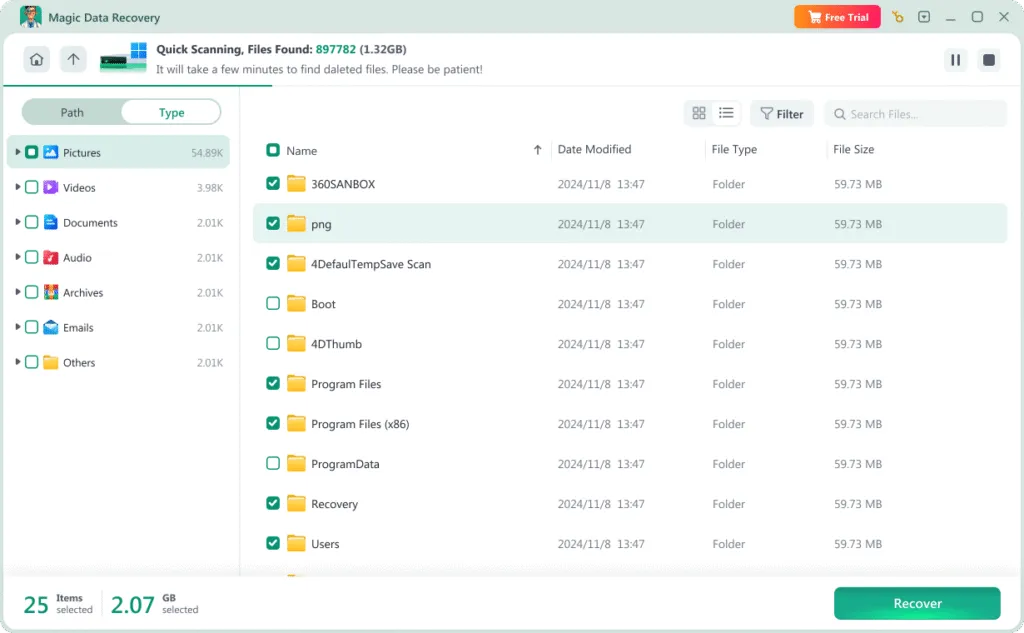
A solução mais segura e eficaz para a recuperação de dados de um disco rígido (HDD) é utilizar um software dedicado à recuperação de dados. Esse tipo de software realiza uma varredura somente de leitura nos pratos da unidade, contornando o sistema de arquivos corrompido para localizar e reconstruir seus arquivos originais.
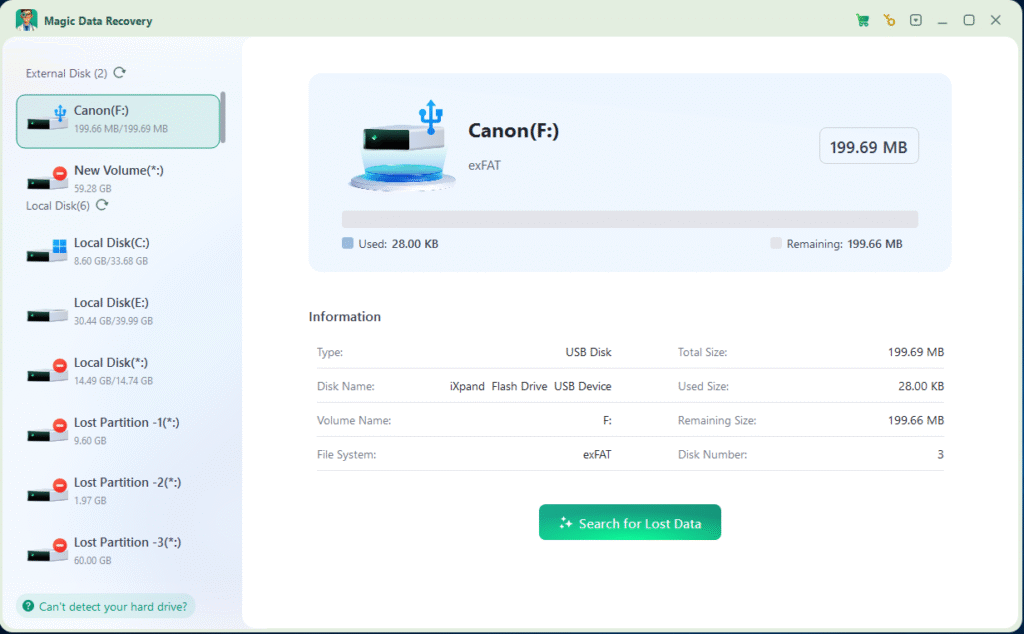
É aqui que Magic Data Recovery se destaca. Ele foi projetado especificamente para lidar com esses cenários, oferecendo uma maneira eficiente, porém fácil de usar, de recuperar seus dados de discos rígidos formatados, corrompidos ou inacessíveis.
Passo a passo: Recuperar dados de um HDD com falha lógica
O Magic Data Recovery simplifica um processo complexo. Siga estas etapas para recuperar seus arquivos com segurança.
1. interromper toda a atividade: Em primeiro lugar, para evitar a substituição de dados, não salve nenhum arquivo novo nem instale nenhum programa na unidade afetada. Se for a unidade principal do sistema, é melhor conectá-la a outro computador como uma unidade secundária para recuperação.
Compatível com Windows 7/8/10/11 e Windows Server
2. faça o download e instale o software: Baixar Magic Data Recovery em um computador separado, em funcionamento ou em uma unidade diferente. A instalação é rápida e direta.


Conclusão
Um Falha lógica do HDD isso nem sempre significa que o disco rígido ou seus arquivos estejam perdidos para sempre. Em muitos casos, o disco rígido ainda é reconhecido, mas o Windows não consegue acessar os dados armazenados porque o sistema de arquivos, a tabela de partições, as informações de inicialização ou outras estruturas lógicas foram danificadas.
O mais seguro Solução de HDD é parar de usar o disco afetado, verificar se há sinais de danos físicos, recuperar arquivos importantes para outro dispositivo de armazenamento e, só então, tentar reparar ou formatar o HDD original. Magic Data Recovery pode fazer a varredura de discos rígidos detectados como RAW, formatados, inacessíveis ou com danos lógicos, visualizar os arquivos recuperáveis e restaurar os dados selecionados para um local seguro.
Evite executar comandos de reparo, criar novas partições ou aceitar uma solicitação de formatação do Windows antes que seus arquivos importantes tenham sido recuperados. Se o disco rígido emitir ruídos incomuns, se desconectar repetidamente ou contiver dados insubstituíveis, pare de usá-lo e entre em contato com um serviço profissional de recuperação de dados.
Compatível com Windows 7/8/10/11 e Windows Server
PERGUNTAS FREQUENTES
O que é uma falha lógica do HDD?
Como posso saber se uma falha no disco rígido é lógica ou física?
É possível consertar uma falha lógica no disco rígido?
O CHKDSK consegue corrigir uma falha lógica no disco rígido?
Devo executar o CHKDSK antes de recuperar meus arquivos?
Devo formatar um disco rígido em formato RAW?
É possível recuperar dados de um disco rígido não alocado?
É possível recuperar dados de um disco rígido que não está sendo reconhecido?

Vasilii é um especialista em recuperação de dados com cerca de 10 anos de experiência prática na área. Ao longo de sua carreira, ele resolveu com sucesso milhares de casos complexos envolvendo arquivos excluídos, unidades formatadas, partições perdidas e sistemas de arquivos RAW. Sua experiência abrange métodos de recuperação manual usando ferramentas profissionais, como editores hexadecimais, e soluções automatizadas avançadas com software de recuperação. A missão do Vasilii é tornar o conhecimento confiável sobre recuperação de dados acessível tanto para profissionais de TI quanto para usuários comuns, ajudando-os a proteger seus valiosos ativos digitais.