
Fallos en las memorias USB: cómo reparar una memoria USB defectuosa y recuperar los datos

Puede producirse un fallo en la memoria USB cuando un Unidad flash USB no se detecta, aparece como RAW, solicita que se formatee, muestra 0 bytes, se bloquea durante el acceso o pierde archivos de forma repentina. Antes de intentar reparar la unidad, es importante determinar si el problema se debe a un daño físico o a un error lógico del sistema de archivos.
En esta guía se explican los síntomas y las causas más comunes de los fallos en las memorias USB, qué es lo que debes evitar en primer lugar, cómo comprobar si la unidad aún se puede recuperar y cómo recuperar archivos de forma segura de una memoria USB averiada.
Compatible con Windows 7/8/10/11 y Windows Server
Consejo rápido: Si la memoria USB defectuosa contiene archivos importantes, no la formatees, no ejecutes CHKDSK inmediatamente y no guardes archivos nuevos en ella. Si Windows sigue detectando la memoria USB, recupera primero tus archivos y repara la memoria USB más tarde.
Índice
¿Qué es un fallo en una memoria USB?
Un fallo en una memoria USB significa que una unidad flash USB ya no funciona con normalidad ni muestra correctamente los archivos almacenados. Es posible que la unidad no aparezca en Windows, muestre una capacidad errónea, se convierta en RAW, solicite un formateo o se bloquee al intentar abrir archivos.
No todos los fallos de las memorias USB son iguales. Algunos son fallos físicos provocados por conectores rotos, controladores dañados, chips NAND desgastados, daños por agua o problemas eléctricos. Otros son fallos lógicos provocados por la corrupción del sistema de archivos, una extracción insegura, un formateo accidental, malware o transferencias de archivos interrumpidas.
Síntomas habituales de un fallo en una memoria USB
Entre los síntomas habituales de un fallo en una memoria USB se incluyen:
1. Ni Windows ni ningún ordenador detecta la memoria USB.
2. La unidad aparece en «Administración de discos», pero no tiene letra de unidad.
3. Windows indica: “Debes formatear el disco antes de poder utilizarlo”.”
4. La memoria USB aparece como RAW o con 0 bytes.
5. Faltan archivos, están dañados o no se pueden abrir.
6. La transferencia de archivos se vuelve extremadamente lenta o se bloquea.
7. El conector USB está doblado, suelto, agrietado o presenta daños físicos.
8. El dispositivo se calienta de forma anómala tras enchufarlo.
Si la memoria USB sigue apareciendo con la capacidad correcta, es posible que el problema sea de carácter lógico y que la recuperación mediante software pueda solucionarlo. Si la unidad no aparece en ningún sitio o presenta daños físicos evidentes, suele ser más seguro recurrir a un servicio profesional de recuperación.
¿Qué provoca el fallo de una memoria USB?
Los fallos en las memorias USB pueden deberse tanto a problemas de hardware como de software. Entre las causas más comunes se encuentran la extracción incorrecta, un corte repentino de corriente durante la transferencia de archivos, la corrupción del sistema de archivos, la infección por malware, el formateo repetido, una memoria flash de mala calidad, el desgaste de las celdas NAND, los conectores USB rotos, los fallos del controlador y los daños causados por el agua o el calor.
En el caso de problemas lógicos, es posible que Windows siga pudiendo leer la memoria USB y que se pueda recuperar mediante un programa. En el caso de problemas físicos, conectar la memoria repetidamente, formatearla o intentar repararla puede agravar el fallo.
Qué hacer en primer lugar cuando falla una memoria USB
Cuando se produce un fallo en una memoria USB, las primeras medidas que tomes pueden influir en las posibilidades de recuperación. Sigue estos pasos antes de intentar repararla:
1. Deja de utilizar la memoria USB inmediatamente.
2. No formatees la unidad cuando Windows te lo pida.
3. No copies archivos nuevos en la memoria USB defectuosa.
4. Prueba con otro puerto USB o con otro ordenador para descartar problemas de conexión.
5. Comprueba si la unidad aparece en «Administración de discos» con la capacidad correcta.
6. Si la unidad USB sigue apareciendo, recupera los archivos importantes antes de ejecutar los comandos de reparación.
7. Si la unidad no se detecta en ningún sitio o presenta daños físicos, ponte en contacto con un servicio profesional de recuperación de datos.
Fallos físicos frente a fallos lógicos en las memorias USB: cómo distinguirlos
Antes de intentar la recuperación, determine si su memoria USB ha sufrido un fallo físico o lógico.
Signos de fallo físico de una memoria USB
Entre los signos de fallo físico de una memoria USB se incluyen un conector doblado o roto, grietas visibles, daños por agua, marcas de quemaduras, calentamiento anormal, falta de respuesta en cualquier ordenador o una memoria USB que muestre 0 bytes o una capacidad incorrecta. Estos síntomas pueden indicar daños en el controlador, en la memoria flash NAND o en la placa de circuitos.
Síntomas de un fallo lógico en una memoria USB
Entre los síntomas de un fallo lógico en una memoria USB se incluyen la pérdida de archivos, archivos dañados, errores del sistema de archivos RAW, mensajes del tipo “es necesario formatear”, carpetas inaccesibles, lentitud en la respuesta o problemas con la letra de la unidad. En muchos casos de fallo lógico, Windows sigue detectando la unidad USB, lo que significa que es posible que un programa de recuperación de archivos pueda analizarla.
👉 Si los síntomas son físicos, necesitará una reparación profesional. Si son lógicos, a menudo puedes solucionarlos manualmente o con un software de recuperación.
Categoría 1: Fallo de la memoria USB debido a daños físicos
Los fallos físicos en las memorias USB suelen producirse tras una caída de la unidad, al doblarse el conector, al exponerla al agua o al calor, al dañarse la placa de circuitos, o cuando falla el controlador o el chip flash NAND.
Si sospechas que hay daños físicos, no sigas conectando y desconectando la unidad USB, no intentes enderezar el conector repetidamente y no ejecutes software de recuperación en un dispositivo inestable. La recuperación física puede requerir una reparación a nivel de componentes, la lectura de chips NAND o equipos profesionales de creación de imágenes.
En esta situación, acudir a un taller de reparación local o a un servicio profesional de recuperación de datos es más seguro que intentar arreglarlo uno mismo.
Categoría 2: Fallo de la memoria USB provocado por errores lógicos
Los fallos lógicos de las memorias USB suelen producirse cuando el sistema de archivos o los registros de los directorios están dañados, aunque la unidad USB siga funcionando físicamente. Entre las causas más comunes se encuentran la extracción insegura, un corte repentino de corriente, la interrupción de la transferencia de archivos, el malware, el formateo accidental, los errores en la tabla de particiones o la corrupción del sistema de archivos.
Antes de ejecutar comandos de reparación, recupera primero los archivos importantes si los datos son relevantes. CHKDSK puede reparar algunos errores del sistema de archivos, pero también puede modificar los registros del mismo. Si la unidad USB aparece como «RAW», solicita que se formatee o contiene archivos que faltan, escanea y recupera primero los datos, y repara la unidad más tarde.
Una vez recuperados los archivos importantes, puedes ejecutar CHKDSK para detectar pequeños errores en el sistema de archivos:
chkdsk X: /f /r
Sustituya X por la letra de la unidad USB.

Solución 2: Utilizar un software de recuperación profesional
Si los arreglos manuales no funcionan o te parece arriesgado, la mejor opción es Magic Data Recovery.
Por qué funciona mejor en caso de fallo de la memoria USB:
- Recupera datos de memorias USB, tarjetas SD, unidades externas y más de 5000 tipos de archivos.
- La exploración avanzada restaura los archivos después de eliminación, formateo o corrupción.
- Interfaz fácil de usar con previsualización de archivos antes de la recuperación
- Recuperación segura que evita sobrescribir los archivos originales
Para los fallos lógicos, la recuperación basada en software tiene un muy alto porcentaje de éxito sin necesidad de costosos servicios de laboratorio siguiendo simples pasos.
1. Descargar e instalar el software
Consigue Magic Data Recovery en un ordenador independiente que funcione o instálalo en una unidad diferente. El proceso de instalación es rápido y sencillo.
Compatible con Windows 7/8/10/11 y Windows Server
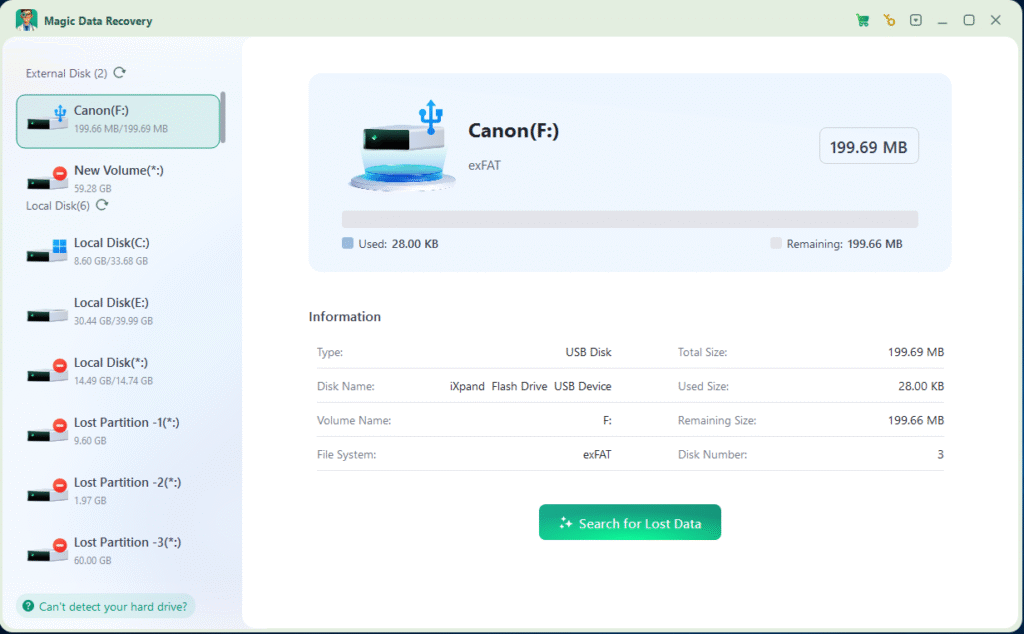
2. Seleccione y escanee la unidad
Abre Magic Data Recovery y verás una lista de todos los dispositivos de almacenamiento conectados. Elija la unidad que experimenta el fallo lógico.
3. Vista previa de los archivos encontrados
Tras el escaneado, el software mostrará los archivos recuperables en su estructura de carpetas original. Gracias a la función de vista previa, puede comprobar fotos, documentos y otros archivos antes de restaurarlos, para asegurarse de que solo recupera lo que necesita.
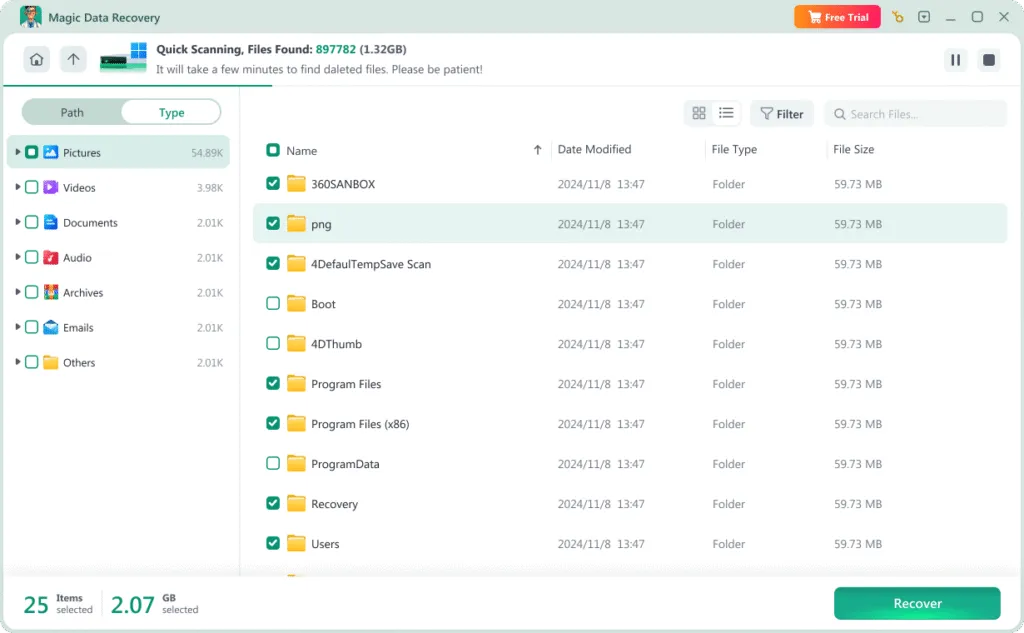

4. Recuperar y guardar datos de forma segura
Elija los archivos o carpetas que desea restaurar, haga clic en “Recuperar” y seleccione un destino seguro, como otra unidad interna, un disco duro externo o una unidad USB. Evita volver a guardar los archivos recuperados en la misma unidad dañada para evitar que se sobrescriban.

Conclusión
Un fallo en una memoria USB no siempre significa que tus archivos se hayan perdido para siempre. El primer paso es determinar si la memoria USB defectuosa presenta daños físicos o un problema lógico en el sistema de archivos.
Si la memoria USB presenta daños físicos, no se detecta en ningún ordenador, muestra una capacidad anómala o se calienta de forma anómala, evita intentar repararla repetidamente y ponte en contacto con un servicio profesional de recuperación de datos. Si la Unidad USB Si Windows sigue detectando la unidad, pero faltan archivos, no se puede acceder a ellos, están en formato RAW o están dañados, recupera primero los archivos y, a continuación, repara la unidad.
Si eliges el flujo de trabajo adecuado, podrás reducir el riesgo de sobrescribir datos y aumentar las posibilidades de recuperar con éxito los archivos de una memoria USB averiada, así como recuperar tus archivos perdidos utilizando Magic Data Recovery.
Compatible con Windows 7/8/10/11 y Windows Server
PREGUNTAS FRECUENTES
¿Qué es un fallo de una memoria USB?
¿Cómo puedo saber si el fallo de una memoria USB es físico o lógico?
¿Puedo solucionar un fallo en una memoria USB sin perder datos?
¿Por qué mi unidad USB pide ser formateada?
¿Puede CHKDSK solucionar un fallo en una memoria USB?
¿Puedo recuperar archivos de una memoria USB que no funciona?
¿Qué pasa si ningún ordenador detecta mi memoria USB?
¿Cómo puedo evitar que falle una memoria USB?

Vasilii es un especialista en recuperación de datos con unos 10 años de experiencia práctica en este campo. A lo largo de su carrera, ha resuelto con éxito miles de casos complejos relacionados con archivos borrados, unidades formateadas, particiones perdidas y sistemas de archivos RAW. Su experiencia abarca tanto métodos de recuperación manual con herramientas profesionales como editores hexadecimales como soluciones automatizadas avanzadas con software de recuperación. La misión de Vasilii es poner los conocimientos sobre recuperación de datos al alcance tanto de los profesionales informáticos como de los usuarios de a pie, ayudándoles a salvaguardar sus valiosos activos digitales.