
USB Memory Failure: How to Fix a Failed USB Drive and Recover Data

USB memory failure can happen when a USB flash drive is not detected, becomes RAW, asks to be formatted, shows 0 bytes, freezes during access, or suddenly loses files. Before trying to fix the drive, it is important to identify whether the problem is physical damage or a logical file system error.
This guide explains the common symptoms and causes of USB memory failure, what you should avoid first, how to check whether the drive is still recoverable, and how to recover files safely from a failed USB drive.
Supports Windows 7/8/10/11 and Windows Server
Quick Tip: If the failed USB drive contains important files, do not format it, do not run CHKDSK immediately, and do not save new files to the USB memory. If the drive is still detected by Windows, recover your files first and repair the USB drive later.
Table of Contents
What Is USB Memory Failure?
USB memory failure means a USB flash drive can no longer work normally or display stored files correctly. The drive may fail to appear in Windows, show the wrong capacity, become RAW, ask for formatting, or freeze when you try to open files.
Not all USB memory failures are the same. Some are physical failures caused by broken connectors, damaged controllers, worn NAND chips, water damage, or electrical issues. Others are logical failures caused by file system corruption, unsafe removal, accidental formatting, malware, or interrupted file transfers.
Common Symptoms of USB Memory Failure
Common symptoms of USB memory failure include:
1. The USB drive is not detected by Windows or any computer.
2. The drive appears in Disk Management but has no drive letter.
3. Windows says “You need to format the disk before you can use it.”
4. The USB drive shows as RAW or 0 bytes.
5. Files are missing, corrupted, or cannot be opened.
6. File transfer becomes extremely slow or freezes.
7. The USB connector is bent, loose, cracked, or physically damaged.
8. The device heats up abnormally after being plugged in.
If the USB memory is still detected with the correct capacity, the issue may be logical and software recovery may help. If the drive is not detected anywhere or has obvious physical damage, professional recovery is usually safer.
What Causes USB Memory Failure?
USB memory failure can be caused by both hardware and software issues. Common causes include unsafe ejection, sudden power loss during file transfer, file system corruption, malware infection, repeated formatting, poor-quality flash memory, worn NAND cells, broken USB connectors, controller failure, and water or heat damage.
For logical problems, the USB memory may still be readable by Windows and recoverable with software. For physical problems, repeated plugging, formatting, or repair attempts may make the failure worse.
What to Do First When USB Memory Fails
When USB memory failure happens, your first actions can affect the chance of recovery. Follow these steps before trying repairs:
1. Stop using the USB drive immediately.
2. Do not format the drive when Windows asks you to.
3. Do not copy new files to the failed USB memory.
4. Try another USB port or another computer to rule out connection problems.
5. Check whether the drive appears in Disk Management with the correct capacity.
6. If the USB drive is still detected, recover important files before running repair commands.
7. If the drive is not detected anywhere or shows physical damage, contact a professional recovery service.
Physical vs Logical USB Memory Failure: How to Tell the Difference
Before attempting recovery, determine whether your USB memory has suffered physical or logical failure.
Signs of Physical USB Memory Failure
Signs of physical USB memory failure include a bent or broken connector, visible cracks, water damage, burn marks, abnormal heating, no response on any computer, or a USB drive that shows 0 bytes or incorrect capacity. These symptoms may indicate controller, NAND flash, or circuit board damage.
Signs of Logical USB Memory Failure
Signs of logical USB memory failure include missing files, corrupted files, RAW file system errors, “formatting required” messages, inaccessible folders, slow response, or drive letter problems. In many logical failure cases, the USB drive is still detected by Windows, which means file recovery software may be able to scan it.
👉 If the symptoms are physical, you’ll need professional repair. If they’re logical, you can often fix them manually or with recovery software.
Category 1: USB Memory Failure Caused by Physical Damage
Physical USB memory failure usually happens after dropping the drive, bending the connector, exposing it to water or heat, damaging the circuit board, or when the controller or NAND flash chip fails.
If you suspect physical damage, do not keep plugging and unplugging the USB drive, do not try to bend the connector back repeatedly, and do not run recovery software on an unstable device. Physical recovery may require component-level repair, NAND chip reading, or professional imaging equipment.
In this situation, a local repair shop or professional data recovery service is safer than DIY repair.
Category 2: USB Memory Failure Caused by Logical Errors
Logical USB memory failure usually happens when the file system or directory records are damaged, but the USB drive is still physically working. Common causes include unsafe ejection, sudden power loss, interrupted file transfer, malware, accidental formatting, partition table errors, or file system corruption.
Before running repair commands, recover important files first if the data matters. CHKDSK may repair some file system errors, but it can also modify file system records. If the USB drive shows RAW, asks to be formatted, or contains missing files, scan and recover data first, then repair the drive later.
After important files are recovered, you can try CHKDSK for minor file system errors:
chkdsk X: /f /r
Replace X with the USB drive letter.

Solution 2: Use Professional Recovery Software
If manual fixes don’t work or you feel it is risky, the best option is Magic Data Recovery.
Why it works best for USB memory failure:
- Recovers data from USB memory, SD cards, external drives, and 5000+ file types
- Advanced scan restores files after deletion, formatting, or corruption
- User-friendly interface with file preview before recovery
- Safe recovery that avoids overwriting original files
For logical failures, software-based recovery has a very high success rate without the need for costly lab services by following simple steps.
1. Download and Install the Software
Get Magic Data Recovery on a separate, working computer or install it on a different drive. The setup process is fast and simple.
Supports Windows 7/8/10/11 and Windows Server
2. Select and Scan the Drive
Open Magic Data Recovery and you’ll see a list of all connected storage devices. Choose the drive experiencing logical failure.
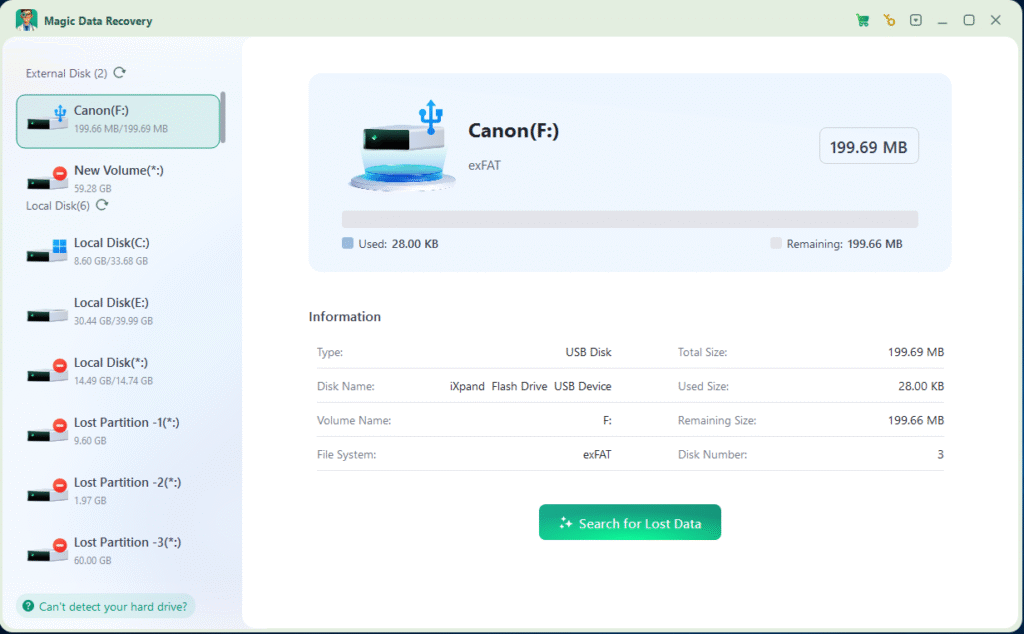
3. Preview the Found Files
After scanning, the software will display recoverable files in their original folder structure. Thanks to the preview feature, you can check photos, documents, and other files before restoring them—ensuring you only recover what you need.
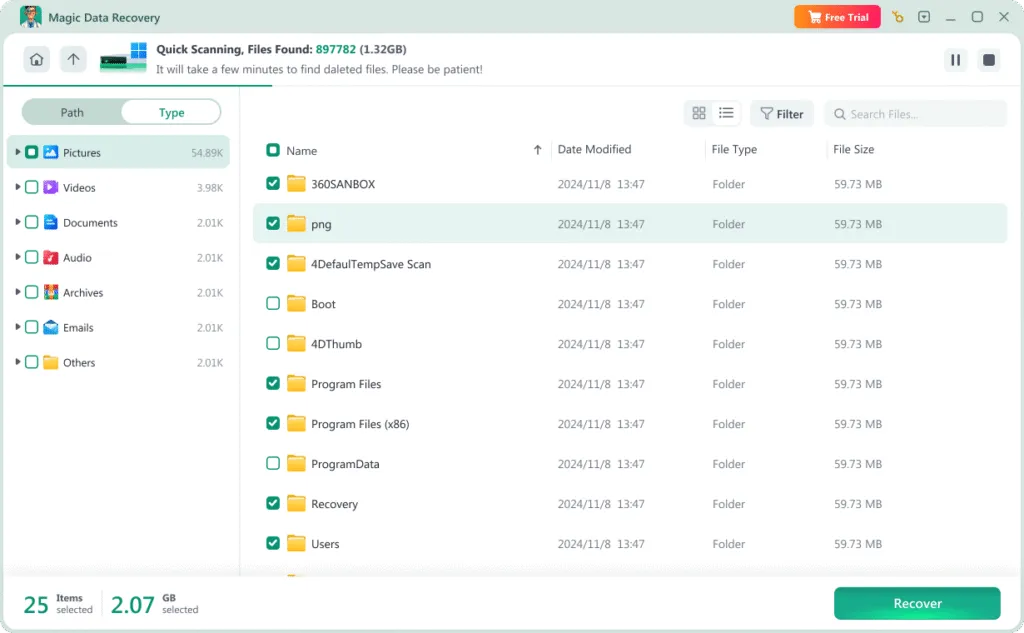

4. Recover and Save Data Safely
Choose the files or folders you want to restore, click “Recover” and select a safe destination such as another internal drive, an external HDD, or a USB drive. Avoid saving recovered files back onto the same damaged drive to prevent overwriting.

Conclusion
USB memory failure does not always mean your files are permanently lost. The first step is to identify whether the failed USB drive has physical damage or a logical file system problem.
If the USB memory has physical damage, is not detected on any computer, shows abnormal capacity, or heats up abnormally, avoid repeated repair attempts and contact a professional recovery service. If the USB drive is still detected by Windows but files are missing, inaccessible, RAW, or corrupted, recover your files first and repair the drive afterward.
By choosing the right workflow, you can reduce the risk of overwriting data and improve the chance of successful USB memory failure recovery, and recover your lost files using Magic Data Recovery.
Supports Windows 7/8/10/11 and Windows Server
FAQ
What is USB memory failure?
How do I know if USB memory failure is physical or logical?
Can I fix USB memory failure without losing data?
Why does my USB drive ask to be formatted?
Can CHKDSK fix USB memory failure?
Can I recover files from a failed USB drive?
What if my USB memory is not detected by any computer?
How can I prevent USB memory failure?

Vasilii is a data recovery specialist with around 10 years of hands-on experience in the field. Throughout his career, he has successfully solved thousands of complex cases involving deleted files, formatted drives, lost partitions, and RAW file systems. His expertise covers both manual recovery methods using professional tools like hex editors and advanced automated solutions with recovery software. Vasilii's mission is to make reliable data recovery knowledge accessible to both IT professionals and everyday users, helping them safeguard their valuable digital assets.