
Como recuperar dados de uma unidade formatada rapidamente
Selecionar acidentalmente a opção “Formatação Rápida” pode fazer com que anos de fotos, arquivos de trabalho ou backups desapareçam em segundos. A boa notícia é que talvez você ainda consiga recuperar dados de um disco formatado rapidamente, especialmente se for um disco rígido (HDD) e você não tiver gravado nada novo nele. Este guia explica o que mudou no formato, o que fazer imediatamente e como usar Magic Data Recovery ou outras soluções práticas recuperação de unidade formatada opções sem piorar a situação.
Resposta rápida: Pare de usar a unidade. Não a formate novamente, não execute o CHKDSK nem salve nada nela. Instale um software de recuperação em outro disco, faça uma varredura completa no dispositivo formatado e restaure os arquivos encontrados em um destino separado.
Compatível com Windows 7/8/10/11 e Windows Server
Índice
É possível recuperar dados de um disco formatado rapidamente?
Em muitos casos, sim. Uma formatação rápida cria novas estruturas do sistema de arquivos e marca o volume como disponível para novos dados. Ela não realiza o mesmo processo de gravação de zeros em todo o volume que uma formatação completa do Windows moderno. Consequentemente, grande parte do conteúdo antigo dos arquivos pode permanecer nos setores de armazenamento até que outro arquivo o sobrescreva.
Isso não significa que todos os registros antigos de bytes ou pastas permaneçam inalterados. Novos metadados do sistema de arquivos podem substituir partes dos registros anteriores. Uma ferramenta de recuperação pode, portanto, localizar alguns arquivos com seus caminhos originais, enquanto outros aparecem com nomes genéricos reconstruídos a partir das assinaturas dos arquivos.
Sua chance de Recuperar disco formatado rapidamente Os dados dependem principalmente do que aconteceu em seguida:
Fator | Perspectivas mais favoráveis de recuperação | Perspectivas de recuperação menos favoráveis |
Tipo de armazenamento | HDD mecânico | SSD com TRIM ativado |
Atividade após a formatação | Desconecte a unidade imediatamente | Windows, aplicativos ou arquivos gravados nele |
Tipo de formato | Formato rápido | Formatação completa ou apagamento seguro |
Promover a saúde | Estável e detectado normalmente | Está fazendo barulho, está desconectado ou não foi detectado |
Criptografia | Não criptografado ou com chave disponível | Chave do BitLocker indisponível |
Abordagem de recuperação | Verificação completa e unidade de salvamento separada | Reformatação, comandos de reparo ou salvamento na mesma unidade |
Agir rapidamente significa interromper as gravações, e não se precipitar na primeira solução que aparecer. Um HDD desligado não se apaga gradualmente por conta própria.
O que a “Formatação Rápida” realmente faz
O Windows oferece a opção “Formatação Rápida” porque ela prepara um volume muito mais rapidamente do que uma formatação completa. O processo grava uma nova estrutura de sistema de arquivos — como NTFS, exFAT ou FAT32 — para que o sistema operacional reconheça um volume vazio e pronto para uso. Você pode ler uma explicação mais detalhada neste guia sobre Como funciona a formatação rápida.
A distinção prática é simples:
- Uma formatação rápida substitui principalmente as estruturas do sistema de arquivos e libera o volume para reutilização.
- Uma formatação completa nas versões atuais do Windows também grava zeros em todo o volume, tornando a recuperação por meio de software muito menos viável.
- Um apagamento seguro ou uma sobrescrita deliberada destrói o conteúdo antigo, em vez de simplesmente remover suas referências.
É por isso que recuperação após formatação rápida O software verifica tanto os metadados preservados quanto as assinaturas de arquivos reconhecíveis. Ele pode reconstruir os caminhos originais quando os registros estiverem preservados ou identificar arquivos JPEG, DOCX, PDF, MP4 e ZIP com base em sua estrutura quando isso não for possível.
HDD x SSD: uma diferença crucial
Em um disco rígido mecânico, o conteúdo antigo geralmente permanece até que novas gravações ocupem os mesmos setores. Isso faz com que um HDD desligado e em bom estado seja uma boa opção para recuperar disco rígido formatado rapidamente digitalização.
Um SSD é menos previsível. O comando TRIM pode informar ao controlador que os blocos liberados não são mais necessários, permitindo que o dispositivo os apague internamente antes que um leitor os acesse. Desconecte imediatamente um SSD que tenha sido formatado acidentalmente.
Antes de tentar a recuperação após uma formatação rápida
Os primeiros cinco minutos, se forem bem conduzidos, podem ser mais importantes do que a marca do software de recuperação que você escolher. Siga estas regras antes de tentar recuperar formatação rápida dados:
- Interrompa todo o uso do volume afetado. Cancele downloads, transferências de arquivos e instalações.
- Desconecte uma unidade externa com segurança. Se for um disco secundário interno, desligue o computador antes de removê-lo.
- Não formate, inicialize, reparticione nem converta a unidade. Essas ações trazem mais mudanças.
- Evite usar o CHKDSK e ferramentas de reparo do sistema de arquivos por enquanto. O objetivo é reparar uma estrutura funcional, e não recuperar arquivos perdidos, e isso pode alterar metadados úteis.
- Prepare outro disco rígido. É necessário espaço livre suficiente para os dados recuperados.
- Verifique se há sintomas físicos. Ruídos, desconexões repetidas ou a não exibição do dispositivo no Gerenciamento de Discos exigem a intervenção de um laboratório especializado.
Se você formatou a partição do Windows e, em seguida, reinstalou o sistema operacional, pare de usar esse computador. Atualizações, registros e arquivos temporários geram gravações contínuas. Se possível, conecte o disco como uma unidade secundária a outro PC com Windows.
Como recuperar dados de um disco rígido formatado rapidamente
Comece pela fonte menos invasiva: um backup já existente. Se não houver uma cópia atualizada e a unidade continuar fisicamente em boas condições, execute uma verificação de recuperação com foco na leitura. Os métodos abaixo abrangem ambas as situações.
Método 1: Verifique primeiro os backups e as cópias na nuvem
Um backup mantém os nomes e pastas originais; portanto, verifique-o primeiro. Procure no Histórico de Arquivos, em Backup e Restauração, no OneDrive, no Dropbox, no Google Drive, em um NAS, em discos externos e no armazenamento específico de cada aplicativo.
Faça a restauração em outro disco em bom estado, e não no disco de origem formatado. Se o backup estiver incompleto, continue com uma verificação em nível de setor.
Método 2: Recuperar a unidade formatada rapidamente com o Magic Data Recovery
Magic Data Recovery É indicado para casos lógicos de perda de dados em que o dispositivo é reconhecido e funciona normalmente, mas os arquivos desapareceram após formatação, exclusão, erro no sistema de arquivos, reinstalação do Windows ou danos causados por vírus. O programa é compatível com mais de 5.000 tipos de arquivos e combina varreduras rápidas e aprofundadas com filtros e visualizações.
Em vez de reparar o volume primeiro, você pode fazer uma varredura nele, verificar os resultados e copiar os arquivos selecionados para outro local. Esse fluxo de trabalho visual é mais fácil de verificar do que uma linha de comando ao classificar muitas fotos ou documentos.
Passo 1: Instale o software em um local seguro
Baixe o Magic Data Recovery em uma unidade do Windows que esteja em boas condições. Nunca o instale na unidade de origem formatada. Para recuperar dados de uma unidade formatada rapidamente E:, por exemplo, instale-o em outro disco físico ou use um segundo computador.
Compatível com Windows 7/8/10/11 e Windows Server
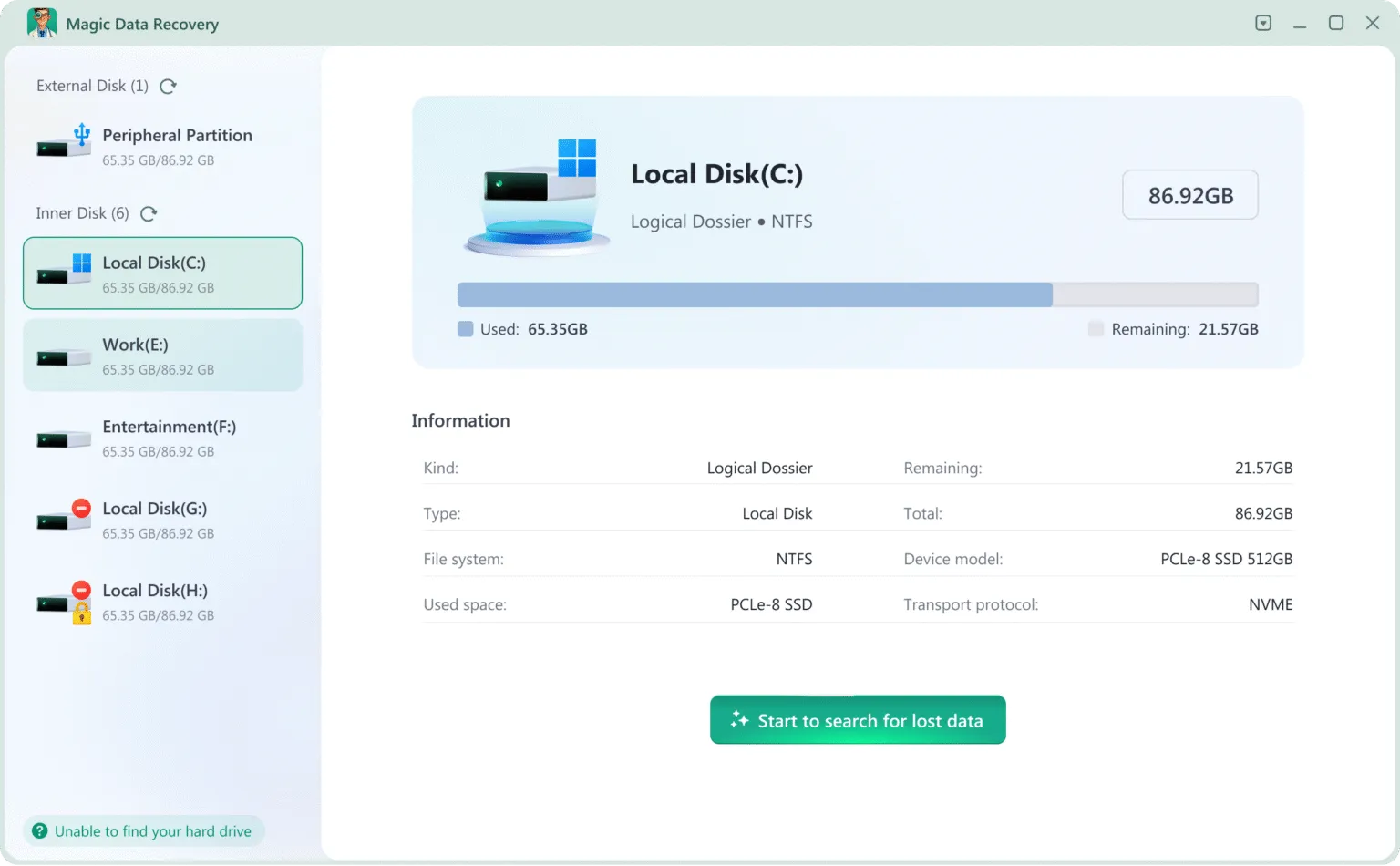
Etapa 2: Selecione a unidade física ou o volume correto
Identifique a fonte por capacidade, modelo e tamanho da partição — e não apenas pela letra da unidade. Selecione o volume formatado rapidamente e inicie a busca pelos dados perdidos.
Etapa 3: Aguarde até que a varredura seja concluída
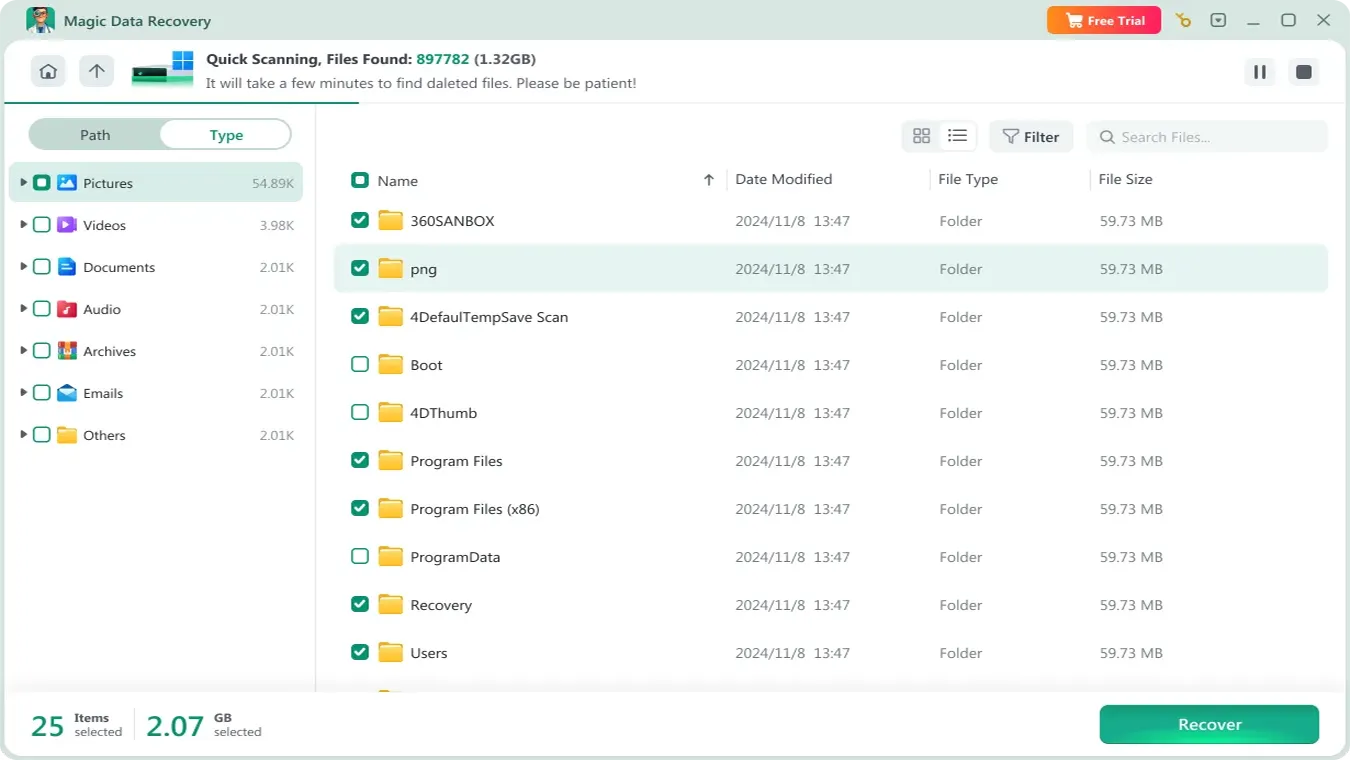
Não interrompa a verificação assim que alguns nomes conhecidos aparecerem. Uma verificação mais aprofundada pode localizar arquivos cujas entradas de diretório foram substituídas; portanto, deixe-a concluir quando os dados ausentes forem importantes.
Etapa 4: Filtrar e visualizar os resultados
Filtre por tipo, nome, caminho, tamanho ou data. Visualize documentos, imagens e vídeos importantes. Uma visualização funcional indica que o conteúdo está legível, mas verifique a cópia recuperada posteriormente.

Etapa 5: Recuperar arquivos para outro disco
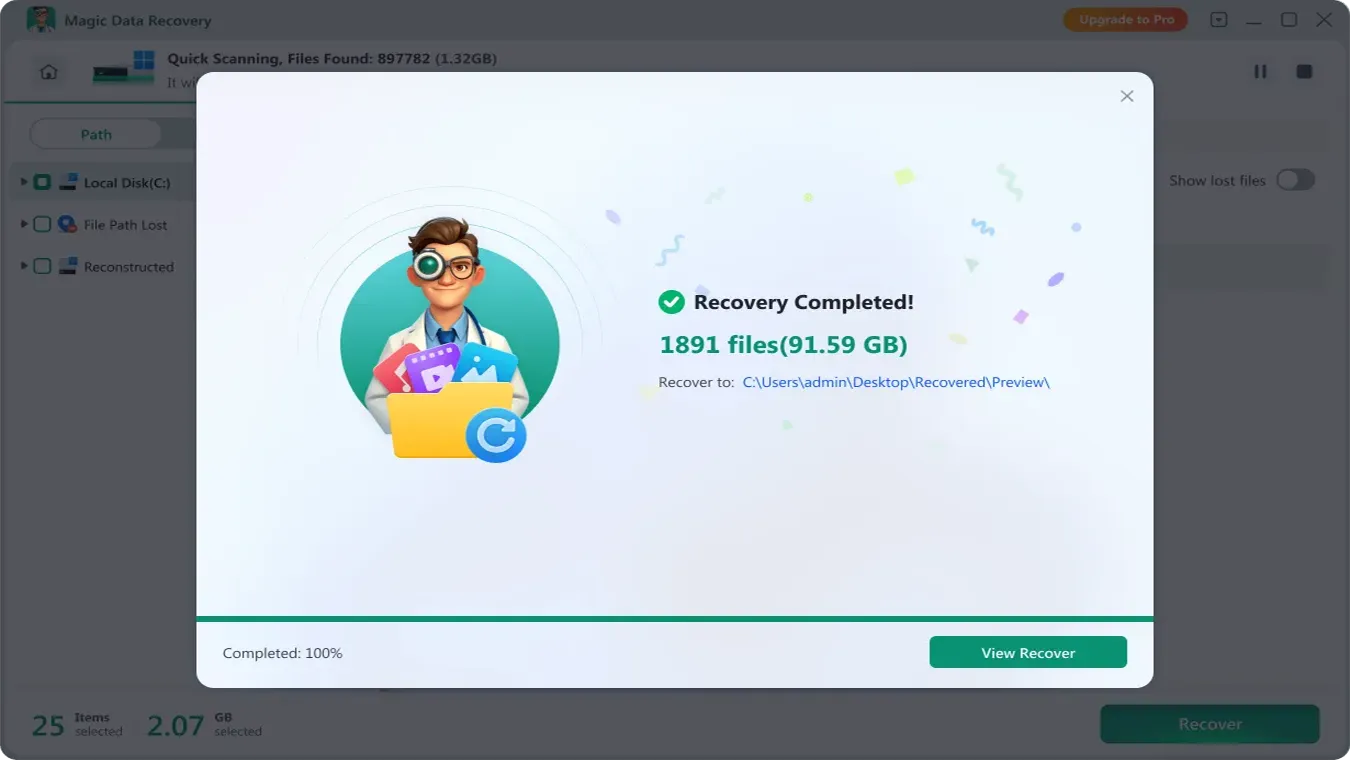
Recupere primeiro os arquivos prioritários e escolha outra unidade física como destino. Uma partição diferente no mesmo disco ainda pode sobrescrever setores recuperáveis. Em seguida, abra amostras de todos os tipos de arquivos importantes.
Por exemplo, um fotógrafo faz uma formatação rápida em um disco rígido externo de 2 TB em vez de um cartão SD e, em seguida, o desconecta sem copiar nada. Verificar o disco em outro computador e salvar as fotos em formato RAW encontradas em um disco separado é uma boa opção para se fazer por conta própria. Um disco rígido que está fazendo barulho ou um SSD que contém a única cópia do trabalho de um cliente merece uma decisão que priorize o laboratório.
Método 3: Use a Recuperação de Arquivos do Windows se preferir usar comandos
O Windows File Recovery da Microsoft é uma opção gratuita de linha de comando para armazenamento local. A Microsoft recomenda o modo Extensivo após a formatação de um disco NTFS e para a recuperação de arquivos em FAT ou exFAT. São necessárias duas letras de unidade diferentes: uma para a unidade de origem formatada e outra para a unidade de destino.
Por exemplo, para procurar arquivos DOCX e JPG na unidade E: formatada e salvar os resultados na unidade D:, abra o Windows File Recovery e execute:
- winfr E: D: /extensive /n *.docx /n *.jpg
Esse método é gratuito, mas não oferece visualização gráfica e exige cuidado com a sintaxe. Consulte a documentação da Microsoft Instruções para recuperação de arquivos do Windows antes de alterar o comando.
Método 4: Opte por um serviço profissional de recuperação quando necessário
Interrompa qualquer tentativa de conserto por conta própria se o disco emitir cliques, parar de girar, desaparecer durante a leitura, apresentar capacidade incorreta ou tiver sofrido danos causados por água, fogo ou impacto. Ligar e desligar repetidamente uma unidade com defeito pode agravar os danos. Um serviço profissional pode criar uma imagem controlada e trabalhar a partir dessa cópia.
O software é útil para garantir a estabilidade Recuperar disco formatado rapidamente caixa; isso não substitui o trabalho com componentes eletrônicos em sala limpa.
Por que o Magic Data Recovery é uma escolha prática
Nenhuma ferramenta confiável pode prometer que dados sobrescritos ou apagados pelo TRIM serão recuperados. Magic Data Recovery merece uma recomendação porque seus pontos fortes correspondem ao problema:
- Ele abrange os cenários certos. Ele lida com formatação, exclusão, erros no sistema de arquivos, volumes RAW, partições perdidas, reinstalação do Windows e perdas causadas por vírus.
- A busca vai além do sistema de arquivos atual. A verificação mais aprofundada é útil quando a formatação rápida substituiu os registros originais do diretório.
- Oferece ampla compatibilidade com arquivos. Mais de 5.000 tipos de arquivos abrangem documentos, mídias, arquivos e formatos menos comuns.
- Isso permite que você verifique antes de salvar. A visualização prévia e a filtragem ajudam a priorizar arquivos úteis, em vez de restaurar uma grande quantidade de resultados desconhecidos.
- Isso mantém o fluxo de trabalho acessível. Selecionar, digitalizar, visualizar e recuperar é mais fácil do que criar vários filtros de comando.
- Isso estabelece um limite razoável. Este produto destina-se à recuperação de dados perdidos por motivos lógicos em dispositivos de armazenamento em bom estado de funcionamento, e não à reparação física ou à recuperação de conteúdo sobrescrito.
É útil quando não há backup, oferece uma visualização prévia que falta no Windows File Recovery e permite uma verificação direta e independente para verificar se o disco está estável. Um laboratório continua sendo a melhor opção em caso de falha de hardware ou de dados de valor excepcional.
Se você precisar Recuperar disco rígido formatado rapidamente arquivos sem editar primeiro sua estrutura, vale a pena usar o Magic Data Recovery para fazer a varredura. Avalie-o com base nos arquivos que você consegue localizar e visualizar, e não em uma alegação de porcentagem irrealista.
Erros comuns que reduzem as chances de recuperação
A maioria das tentativas malsucedidas começa com gravações desnecessárias. Evite esses erros:
- Continuando a usar o disco rígido: Mesmo um download pequeno pode ocupar setores que antes continham um arquivo antigo.
- Instalando o software de recuperação na fonte: Os arquivos do programa e os dados temporários podem sobrescrever o que você deseja restaurar.
- Reformatação com outro sistema de arquivos: A conversão do NTFS para o exFAT gera mais metadados e não recupera os arquivos.
- Executar o CHKDSK antes da recuperação: A reparação de um sistema de arquivos recém-formatado não permite recriar o sistema anterior e pode alterar evidências úteis.
- Recuperação no mesmo disco físico: Os primeiros arquivos recuperados podem sobrescrever os próximos que ainda estão para serem encontrados.
- Supondo que todos os arquivos listados estejam intactos: Visualize os principais itens e teste os documentos, arquivos e vídeos recuperados.
- Verificar repetidamente um disco com falha: Se o aparelho se desconectar ou emitir ruídos incomuns, desligue-o e consulte um especialista.
Como verificar os dados recuperados
Concluir a varredura não é o fim de formatação rápida e recuperação de dados Trabalhe. Teste vídeos de grande porte, extraia arquivos de amostra e confirme se os documentos do Office não estão truncados. Compare o número e o tamanho dos arquivos com os backups, as listas na nuvem ou os registros do projeto.
Mantenha a fonte inalterada até verificar duas cópias do material recuperado. Em seguida, faça o diagnóstico, a repartição, a formatação e a verificação do estado do disco. Não retorne uma unidade com erros recorrentes à função de backup.
Conclusão
A resposta mais segura para Como recuperar um disco rígido formatado rapidamente O procedimento é simples: interrompa as gravações, verifique o dispositivo, faça uma varredura nele a partir de outro disco e salve os arquivos recuperados em outro local. Em outras palavras, a busca Como recuperar dados de um disco rígido formatado rapidamente isso leva à mesma regra: proteja a fonte antes de tentar a recuperação. O TRIM do SSD, novas gravações, criptografia, falhas físicas e formatação completa podem limitar drasticamente os resultados.
Magic Data Recovery é recomendado porque aborda os verdadeiros pontos críticos neste caso: perda de acesso ao diretório, incerteza quanto à integridade dos arquivos e a necessidade de realizar uma busca além do novo sistema de arquivos. Sua varredura mais profunda, ampla compatibilidade com arquivos, filtros e visualização prévia tornam-no uma opção prática para uma unidade em funcionamento afetada por perda lógica de dados. Se você precisar de uma visão geral mais abrangente sobre a recuperação antes de começar, consulte o artigo da Amagicsoft sobre guia de recuperação de disco formatado, e, em seguida, recupere os arquivos importantes em um dispositivo separado antes de realizar qualquer reparo.
Compatível com Windows 7/8/10/11 e Windows Server
Perguntas frequentes sobre a recuperação após formatação rápida
É possível recuperar dados formatados rapidamente?
Muitas vezes, sim. Uma formatação rápida cria novas estruturas do sistema de arquivos, mas pode deixar grande parte do conteúdo anterior dos arquivos intacto. A recuperação se torna menos provável após novas gravações, o TRIM do SSD, o apagamento seguro ou danos físicos. Pare de usar a unidade antes de fazer a varredura.
Em quanto tempo devo fazer uma verificação em uma unidade formatada rapidamente?
Faça a verificação somente depois de ter um plano seguro e uma unidade de destino separada. O simples passar do tempo não sobrescreve um disco rígido desligado; o uso contínuo, sim. Desconecte o dispositivo imediatamente, instale o software de recuperação em outro local e evite comandos de reparo antes da verificação.
É possível reverter uma formatação rápida sem usar nenhum software?
O Windows não possui um botão simples para “Desfazer formatação”. É possível restaurar arquivos a partir do Histórico de Arquivos, do armazenamento em nuvem ou de outro backup sem precisar de um software de recuperação. Se não houver nenhum backup, geralmente é necessário recorrer a uma ferramenta de recuperação ou a um serviço profissional para localizar os dados inacessíveis.
A formatação rápida apaga permanentemente um disco rígido?
Normalmente, não. Em um HDD, a formatação rápida cria principalmente novas informações do sistema de arquivos e marca o espaço como disponível. Alguns metadados antigos podem ser sobrescritos imediatamente, enquanto o conteúdo restante permanece recuperável apenas até que novos dados ocupem os mesmos setores.
É possível recuperar dados de um SSD formatado rapidamente?
É possível, mas a recuperação de dados em um SSD é menos previsível, pois o TRIM pode permitir que o controlador limpe internamente os blocos liberados. Desconecte o SSD imediatamente. Se os arquivos forem de valor inestimável, consulte um profissional antes de realizar varreduras repetidas ou reconectá-lo desnecessariamente.
Devo executar o CHKDSK depois de formatar rapidamente uma unidade por engano?
Não. O CHKDSK repara o sistema de arquivos atual; ele não restaura a estrutura formatada anterior. Como ele pode gravar alterações no volume, recupere ou crie uma imagem dos dados primeiro. Utilize ferramentas de reparo somente depois que os arquivos importantes estiverem armazenados com segurança em outro local.
Onde devo salvar os arquivos recuperados de um disco formatado?
Salve-os em um disco físico diferente com espaço livre suficiente. Uma outra partição no mesmo disco não é a opção mais segura, pois as gravações de recuperação podem sobrescrever dados ainda não localizados. Verifique os arquivos restaurados antes de reutilizar ou reformatar o disco de origem.
Quando devo recorrer a um laboratório de recuperação em vez de usar um software?
Procure um laboratório se o disco emitir cliques, desconectar-se repetidamente, não for reconhecido corretamente, apresentar danos físicos ou contiver dados de alto valor e insubstituíveis. O software é adequado para discos estáveis e reconhecidos normalmente que apresentem perda lógica; ele não pode reparar falhas de hardware nem recuperar setores sobrescritos.

Jason é especialista em recuperação de dados e suporte técnico, com mais de 15 anos de experiência prática. Ele tem trabalhado extensivamente com usuários finais, resolvendo casos complexos de perda de dados e oferecendo soluções práticas de recuperação para exclusões acidentais, unidades formatadas, sistemas de arquivos danificados, partições perdidas, falhas de sistema e outras emergências de recuperação. Sua especialização também abrange backup e restauração, reparo de arquivos e recuperação de desastres, com forte ênfase em orientações seguras, confiáveis e tecnicamente precisas.