
Recuperação de dados com IA: como funciona e o que pode ser recuperado

A IA está cada vez mais presente em softwares de recuperação de dados, mas o termo “recuperação de dados com IA” costuma ser usado de forma imprecisa. Algumas ferramentas aplicam o aprendizado de máquina ao reconhecimento de arquivos, ao reparo de mídias ou à análise de arquivos fragmentados, enquanto muitos programas de recuperação ainda dependem principalmente de registros do sistema de arquivos, assinaturas de arquivos e varredura no nível do setor.
Este guia explica como a IA pode auxiliar na recuperação de dados, o que ela pode recuperar de forma realista e onde começam suas limitações. Ele também apresenta uma solução prática de recuperação no Windows para recuperar arquivos perdidos devido a exclusão, formatação, problemas de partição e erros no sistema de arquivos. Para uma visão geral mais ampla dos cenários e métodos de recuperação, acesse nosso guia de recuperação de dados.
Índice
O que é recuperação de dados com IA?
Recuperação de dados de IA refere-se ao uso de aprendizado de máquina ou sistemas inteligentes relacionados em parte do fluxo de trabalho de recuperação. Dependendo do software, a IA pode auxiliar nas seguintes tarefas:
- Reconhecer o provável cenário de perda de dados.
- Priorização das áreas de armazenamento durante uma varredura.
- Classificação dos arquivos recuperados.
- Identificação de fragmentos que se assemelham a estruturas de arquivos conhecidas.
- Reparar certas fotos, vídeos ou documentos corrompidos.
- Recomendação do modo de digitalização mais adequado.
Os softwares tradicionais de recuperação de dados não são necessariamente “cegos” ou pouco sofisticados. Os mecanismos de recuperação consagrados analisam metadados do sistema de arquivos, registros de diretórios, estruturas de partições, assinaturas de arquivos e setores brutos de armazenamento. Essas técnicas podem recuperar arquivos excluídos de forma eficaz sem o uso de aprendizado de máquina.
A presença da IA, portanto, não torna automaticamente uma ferramenta mais eficaz. A recuperação ainda depende, principalmente, de os dados do arquivo original permanecerem intactos.
Como a IA pode auxiliar na recuperação de dados
Dependendo de como um programa de recuperação for projetado, a IA pode auxiliar na classificação de arquivos, na análise de mídias danificadas, no reconhecimento de padrões ou na reconstrução de determinados arquivos fragmentados. No entanto, essas funções variam consideravelmente de um produto para outro.
A IA não substitui o processo básico de recuperação. A maioria dos softwares de recuperação de dados ainda pesquisa registros do sistema de arquivos, verifica setores de armazenamento e identifica arquivos por meio de assinaturas reconhecíveis. A IA pode aprimorar certas etapas da análise, mas não pode garantir que os arquivos perdidos sejam recuperáveis.
Cenários comuns de perda de dados que as ferramentas de IA podem resolver
A maioria dos usuários sofre perda de dados devido a erros diários ou problemas inesperados no sistema. Ferramentas de recuperação de dados com tecnologia de IA são projetados para lidar com essas situações.
Exclusão acidental de arquivos
A exclusão acidental de documentos ou fotos importantes é um dos problemas mais comuns.
Mesmo depois que os arquivos desaparecem da lixeira, os dados subjacentes ainda podem existir no disco. Recuperação de dados com tecnologia de IA podem identificar esses fragmentos antes que eles sejam substituídos.
Unidades formatadas
Uma formatação rápida geralmente recria as estruturas do sistema de arquivos sem sobrescrever imediatamente todos os blocos de dados; portanto, alguns arquivos podem permanecer recuperáveis. Uma formatação completa, um apagamento seguro, uma reutilização extensiva ou o TRIM do SSD podem reduzir substancialmente ou eliminar as possibilidades de recuperação. Pare de usar o dispositivo formatado antes de fazer a varredura nele.
Avançado Ferramentas de recuperação de dados de IA analisar informações em nível de setor e reconstruir arquivos mesmo quando a estrutura de diretórios tiver sido removida.
Erros no sistema de arquivos
Falhas de energia, remoção insegura de dispositivos ou corrupção de disco podem danificar os sistemas de arquivos, como o sistema de arquivos de arquivos:
Nesses casos, Recuperação de dados com tecnologia de IA pode analisar os blocos de dados restantes e reconstruir os arquivos perdidos.
Ataques de vírus ou malware
O malware pode ocultar, excluir, corromper ou criptografar arquivos. Os softwares de recuperação podem localizar os arquivos originais excluídos ou cópias dos arquivos que sobreviveram, mas normalmente não conseguem descriptografar dados protegidos por ransomware sem a chave correta. Remova primeiro o malware e faça a verificação de uma imagem de disco ou de uma unidade isolada com segurança, sempre que possível.
As ferramentas de recuperação orientadas por IA podem detectar estruturas de arquivos anormais e localizar fragmentos de dados recuperáveis.
Como funcionam as ferramentas de recuperação de dados de IA
Entendendo como Ferramentas de recuperação de dados de IA operar pode ajudar os usuários a escolher a solução certa.
A maioria das ferramentas com tecnologia de IA segue um processo de vários estágios.
Análise inteligente de disco
A ferramenta examina o dispositivo de armazenamento e coleta informações estruturais, como:
- metadados do sistema de arquivos
- layout do setor
- padrões de distribuição de dados
Em seguida, os modelos de IA analisam essas estruturas.
Reconhecimento de padrões
Em vez de depender apenas de assinaturas de arquivo fixas, Recuperação de dados com tecnologia de IA detectam padrões que se assemelham a estruturas de arquivos conhecidas.
Isso permite que o software recupere arquivos que as ferramentas padrão podem não conseguir recuperar.
Reconstrução de fragmentos
Muitos arquivos excluídos ficam fragmentados.
Algumas ferramentas de recuperação tentam identificar e remontar fragmentos de arquivos utilizando registros do sistema de arquivos, estruturas de formatos conhecidas ou algoritmos especializados de reconstrução. O aprendizado de máquina pode auxiliar em formatos específicos, mas não é capaz de reconstruir o conteúdo exclusivo de um arquivo que já tenha sido sobrescrito.
Validação da integridade do arquivo
Por fim, o sistema valida os arquivos recuperados para garantir que eles possam ser usados e não estejam corrompidos.
Como escolher uma ferramenta de recuperação de dados com IA
Não escolha um software de recuperação baseando-se apenas na palavra “IA”. Compare os recursos que afetam diretamente o seu caso de recuperação:
- Cenário de perda de dados: A exclusão acidental, a formatação, a perda de partição, a corrupção de arquivos e os danos físicos exigem soluções diferentes.
- Sistemas de arquivos compatíveis: Verifique se há suporte para NTFS, FAT32, exFAT, ReFS, APFS, HFS+ ou Linux EXT, conforme necessário.
- Dispositivos compatíveis: Verifique a compatibilidade com discos rígidos (HDDs), SSDs, cartões SD, pen drives, discos externos, RAID ou NAS.
- Recurso de visualização: Uma pré-visualização que possa ser utilizada é uma evidência mais sólida da possibilidade de recuperação do que apenas o nome do arquivo.
- Varredura somente de leitura: A ferramenta não deve gravar intencionalmente os dados recuperados na unidade de origem.
- Limitações da versão gratuita: “Download gratuito” pode significar uma verificação gratuita, e não uma recuperação gratuita.
- Condição física: Não execute softwares “faça você mesmo” em uma unidade que esteja fazendo barulho, tenha sofrido danos causados pela água ou que se desconecte repetidamente.
Magic Data Recovery: Uma alternativa avançada para recuperação do Windows
Ao discutir Ferramentas de recuperação de dados com tecnologia de IA, Por isso, é importante se concentrar em soluções projetadas especificamente com algoritmos de IA, em vez de simplesmente adicionar recursos básicos de varredura.
O Magic Data Recovery é uma ferramenta de recuperação de dados para Windows projetada para cenários de perda lógica de dados, como exclusão acidental, formatação rápida, sistemas de arquivos RAW, partições danificadas e partições perdidas. Ele combina análise do sistema de arquivos, varredura rápida, varredura profunda de setores e detecção de assinaturas de arquivos para localizar dados recuperáveis.
O software é compatível com mais de 5.000 tipos de arquivos e funciona com unidades internas, discos rígidos externos, dispositivos USB, cartões de memória e outras mídias de armazenamento reconhecidas pelo Windows. Ele também pode fazer a varredura de dispositivos de armazenamento EXT2, EXT3 e EXT4 quando estes estão conectados a um computador com Windows.
Magic Data Recovery só deve ser descrito como “alimentado por IA” se a equipe de produto puder documentar o componente específico de aprendizado de máquina, as tarefas que ele realiza e como ele difere da digitalização convencional.
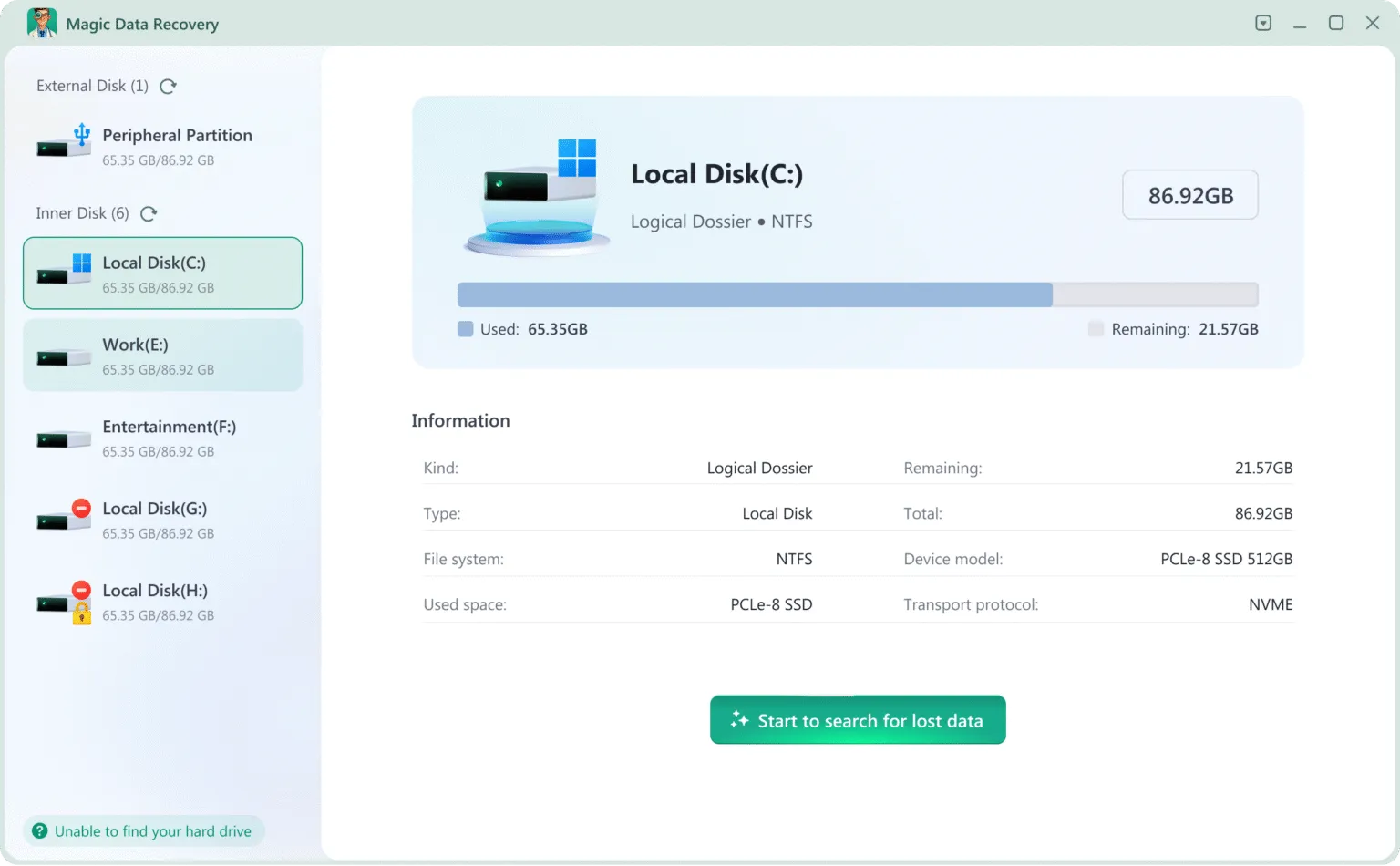
Principais problemas que o Magic Data Recovery resolve
Os usuários frequentemente enfrentam situações como:
- arquivos excluídos que não podem ser encontrados
- discos rígidos formatados
- partições corrompidas
- perda de dados relacionada a vírus
O Magic Data Recovery aborda esses cenários por meio da análise do sistema de arquivos, da varredura de setores brutos e do reconhecimento de assinaturas de arquivos. Os resultados efetivos dependem das condições do dispositivo de armazenamento e do fato de os dados originais terem sido sobrescritos ou não.
Compatível com Windows 7/8/10/11 e Windows Server
Principais vantagens do Magic Data Recovery
Vários fatores fazem com que essa ferramenta se destaque entre Ferramentas de recuperação de dados com tecnologia de IA.
Vários métodos de varredura
O Magic Data Recovery analisa os registros disponíveis do sistema de arquivos e realiza buscas mais aprofundadas no nível do setor quando as informações do diretório estão ausentes ou danificadas. Isso o torna adequado tanto para arquivos excluídos recentemente quanto para cenários mais complexos de perda lógica de dados.
Suporte a vários cenários de perda de dados
Magic Data Recovery apóia a recuperação de:
- exclusão acidental
- unidades formatadas
- corrupção do sistema de arquivos
- danos causados por vírus
- perda de partição
Interface amigável ao usuário
Embora a tecnologia por trás do Recuperação de dados com tecnologia de IA é complexo, a ferramenta simplifica o processo em algumas etapas:
- Selecione a unidade
- Digitalizar o disco
- Visualizar arquivos recuperáveis
- Restaurar arquivos selecionados
Esse fluxo de trabalho torna a ferramenta acessível até mesmo para usuários não técnicos.
Amplo suporte a dispositivos e tipos de arquivos
O Magic Data Recovery é compatível com discos rígidos internos (HDD) e SSDs, discos rígidos externos, pen drives, cartões de memória e outros dispositivos detectados pelo Windows. Ele é capaz de localizar mais de 5.000 tipos de arquivos, incluindo documentos, fotos, vídeos, arquivos de áudio, arquivos compactados, e-mails e formatos RAW de câmeras.
Como recuperar dados sem agravar a perda
Independentemente de uma ferramenta de recuperação utilizar IA ou não, as seguintes regras de segurança têm um impacto maior no sucesso da recuperação:
- Pare de usar o dispositivo afetado imediatamente.
- Não instale nenhum software de recuperação na unidade de origem.
- Não formate, inicialize, desfragmente nem execute o CHKDSK.
- Faça a varredura no disco físico ou na partição correta.
- Sempre que possível, visualize os arquivos importantes antes da recuperação.
- Salve os arquivos recuperados em uma unidade saudável diferente.
- Entre em contato com um serviço especializado caso o aparelho apresente sinais de falha física.
Recuperação de dados assistida por IA x recuperação tradicional: qual é a melhor?
A recuperação assistida por IA não é automaticamente melhor do que a recuperação tradicional. A análise de metadados do sistema de arquivos costuma ser o método mais eficaz para arquivos excluídos recentemente, pois pode preservar nomes de arquivos, caminhos, datas e estruturas de pastas originais. A varredura profunda baseada em assinaturas é útil quando os metadados foram perdidos, enquanto a IA pode auxiliar na priorização da varredura, na classificação ou em tarefas específicas de reconstrução.
As melhores ferramentas de recuperação combinam várias técnicas, em vez de dependerem exclusivamente da IA. Os usuários devem avaliar os resultados reais da visualização prévia, os sistemas de arquivos compatíveis, a segurança da varredura, a compatibilidade com dispositivos e os limites de recuperação, em vez de escolherem um software com base apenas no rótulo de “IA”.
Quando você deve usar ferramentas de recuperação de dados com IA?
É melhor usar Ferramentas de recuperação de dados de IA imediatamente após a perda de dados.
Evite gravar novos dados na unidade afetada, pois a substituição pode reduzir o sucesso da recuperação.
Situações comuns em que as ferramentas de recuperação de IA são úteis incluem:
- Recuperação de fotos ou documentos excluídos
- restauração de unidades externas formatadas
- Recuperação de dados de partições corrompidas
- correção de perda de dados relacionada a vírus
Se você estiver enfrentando esses problemas, uma solução com tecnologia de IA como a Magic Data Recovery pode proporcionar um processo de recuperação mais eficiente.
Conclusão
A IA pode auxiliar no reconhecimento de arquivos, na análise de mídia e em certas tarefas de reconstrução, mas não elimina as limitações fundamentais da recuperação de dados. Dados sobrescritos, apagamentos seguros concluídos, chaves de criptografia perdidas e dispositivos fisicamente danificados não podem ser restaurados de forma confiável simplesmente com o uso da IA.
Para situações comuns de perda de dados no Windows, como exclusão acidental, formatação rápida, partições inacessíveis e erros no sistema de arquivos, um programa de recuperação com varredura rápida, varredura profunda de setores e visualização de arquivos costuma ser a opção mais prática. Magic Data Recovery oferece esses recursos em discos internos, discos externos, dispositivos USB e cartões de memória.
Você também pode explorar nosso catálogo completo guia de recuperação de dados para conhecer outros métodos de recuperação e instruções específicas para dispositivos de armazenamento.
Compatível com Windows 7/8/10/11 e Windows Server
Perguntas frequentes sobre ferramentas de recuperação de dados com IA
A recuperação de dados por IA é melhor do que a recuperação tradicional?
A IA consegue recuperar arquivos sobrescritos?
A IA consegue recuperar dados de um disco formatado?
A recuperação de dados com IA consegue recuperar arquivos criptografados por ransomware?
A recuperação de dados por IA é segura?
O Magic Data Recovery utiliza IA?
A IA consegue recuperar dados de um SSD após o TRIM?
O que devo levar em consideração ao escolher uma ferramenta de recuperação de dados baseada em IA?

Jason é especialista em recuperação de dados e suporte técnico, com mais de 15 anos de experiência prática. Ele tem trabalhado extensivamente com usuários finais, resolvendo casos complexos de perda de dados e oferecendo soluções práticas de recuperação para exclusões acidentais, unidades formatadas, sistemas de arquivos danificados, partições perdidas, falhas de sistema e outras emergências de recuperação. Sua especialização também abrange backup e restauração, reparo de arquivos e recuperação de desastres, com forte ênfase em orientações seguras, confiáveis e tecnicamente precisas.