
How to Format SSD in Windows 11/10 Safely
How to Format SSD is a common question when you want to set up a new drive, fix a corrupted file system, reinstall Windows, or reuse an external SSD. However, formatting an SSD is not always risk-free. If the drive still contains important files, formatting may make them harder to access or recover, especially when the SSD is RAW, inaccessible, or accidentally formatted.
Before you continue, make sure you have backed up all important files. If you have already formatted the SSD by mistake or need to recover data from a formatted drive, read our formatted drive recovery guide first.
In this guide, you will learn how to format SSD safely in Windows, how to choose NTFS or exFAT, how to initialize a new SSD, how to format an external SSD, and what to do before formatting an unreadable or RAW SSD, and How to recover lost files using Magic Data Recovery once you did a mistake formatting.
Supports Windows 7/8/10/11 and Windows Server
Table of Contents
Quick Answer: How to Format SSD Safely
To format an SSD safely, back up or recover important files first, confirm that you selected the correct drive, choose the right file system, and use Quick Format for normal reuse. For most Windows users, NTFS is the best file system for an internal SSD, while exFAT is better for an external SSD used between Windows and macOS.
If the SSD is new, initialize it as GPT in Disk Management before creating and formatting a new volume. If the SSD is RAW, unreadable, or asks you to format it before use, do not format it immediately. Recover the files first, then format the SSD after your data is safe.
Why You May Need to Format an SSD
An SSD may need formatting for several reasons. Additionally, understanding the purpose helps determine the safest workflow.
Common situations include:
Preparing a new SSD for first-time use
Removing all data before selling or reusing the disk
Fixing file system corruption (RAW / unreadable SSD)
Partition changes or drive reorganization
Performing a clean installation of Windows
Converting from an old file system (exFAT/FAT32) to NTFS
Formatting is also required when learning how to format SSD Windows 10 or how to format SSD Windows 11 for OS installation.
Since SSDs use different controllers and wear-leveling techniques, formatting wipes logical structures, making previous data difficult or impossible to recover. Therefore, recovering files before hand is strongly recommended.
Before Formatting an SSD: Important Safety Checks
Before you format an SSD, take a few minutes to confirm that the process is safe. Formatting the wrong drive or formatting before recovery can lead to avoidable data loss.
Check these points first:
Make sure you selected the correct SSD.
Back up important files to another drive.
Do not format the SSD if it is RAW or unreadable and still contains needed files.
Do not save new files to the SSD before recovery.
Choose NTFS for Windows-only use.
Choose exFAT if you need to use the SSD on both Windows and macOS.
Use GPT for most modern Windows 11 and Windows 10 computers.
Use secure erase instead of normal format if you plan to sell or donate the SSD.
If the SSD contains files you cannot afford to lose, recover them before formatting.
Format vs Secure Erase: What Is the Difference?
Formatting an SSD and securely erasing an SSD are not the same. A normal format prepares the SSD for reuse, while secure erase is designed to remove data more thoroughly.
| Action | Best For | What It Does |
|---|---|---|
| Quick Format | Reusing your own SSD | Rebuilds the file system and makes the drive appear empty |
| Full Format | Deeper formatting, but not ideal for frequent SSD use | Takes longer and writes more data to the drive |
| Secure Erase | Selling, donating, or disposing of an SSD | Uses SSD-level erase commands to remove data more thoroughly |
| Diskpart clean | Removing partitions and rebuilding the SSD | Deletes partition information |
| Diskpart clean all | Full overwrite-style wiping | Writes zeros to the disk and takes much longer |
For normal use, Quick Format is usually enough. If privacy is your main concern, use secure erase instead of a standard format.
Which File System Should You Choose for an SSD?
Choosing the right file system is important when formatting an SSD. The best option depends on how you plan to use the drive.
| File System | Best For | Recommendation |
|---|---|---|
| NTFS | Internal SSDs used only on Windows | Best default choice for Windows 11/10 |
| exFAT | External SSDs used on Windows and macOS | Best for cross-platform storage |
| FAT32 | Older devices and small drives | Not recommended for modern SSDs because of file size limits |
| APFS | SSDs used only on macOS | Best for Mac-only use |
For most users searching how to format SSD on Windows, NTFS is the safest default choice. If you are formatting an external SSD for both Windows and Mac, choose exFAT.
Important Precautions Before Formatting an SSD
Before proceeding, consider these essential safety points:
① Never format an SSD immediately if it becomes unreadable
When Windows requests, “You need to format the disk before you can use it,” do not format until you attempt data recovery.
② Recover or back up data before formatting
SSD controllers use TRIM, which may erase blocks immediately after formatting. This makes data unrecoverable once overwritten.
③ Confirm the target drive
Always check the SSD’s drive letter or model name to avoid formatting the wrong disk.
④ Use a professional recovery tool if the SSD is corrupted
Magic Data Recovery provides a read-only scan that prevents further damage.
How to Format SSD in Windows (Standard Methods)
How to Format SSD Using File Explorer
Use this method when the SSD already appears in File Explorer and has a drive letter.
- Open File Explorer.
- Click This PC.
- Right-click the SSD partition you want to format.
- Select Format.
- Choose NTFS for Windows-only use or exFAT for Windows and Mac use.
- Keep Quick Format selected for normal reuse.
- Click Start and confirm the warning.
This is the easiest way to format an SSD that is already recognized by Windows.
How to Format New SSD Using Disk Management
Use Disk Management when the SSD is new, unallocated, or not showing in File Explorer.
- Right-click Start and choose Disk Management.
- Find the new SSD in the disk list.
- If Windows asks you to initialize the disk, choose GPT.
- Right-click the unallocated space.
- Select New Simple Volume.
- Assign a drive letter.
- Choose NTFS or exFAT.
- Select Perform a quick format.
- Click Finish.
After formatting, the new SSD should appear in File Explorer.
How to Format SSD Using Diskpart Command
Diskpart is useful when File Explorer or Disk Management cannot format the SSD correctly. However, it is also risky because selecting the wrong disk may erase another drive.
Use these commands carefully:
					diskpart
list disk
select disk X
clean
create partition primary
format fs=ntfs quick
assign
exit
Replace X with the correct SSD number.
If you want to format the SSD as exFAT, use this command instead:
format fs=exfat quick
Important: Do not run Diskpart clean on an SSD that contains files you still need.
Recover Data Before Formatting SSD with Magic Data Recovery
If the SSD contains important files, recover the data before formatting it. This is especially important when the SSD is RAW, inaccessible, corrupted, accidentally formatted, or asks you to format it before use.
Magic Data Recovery can help recover lost files from formatted SSDs, deleted files, corrupted file systems, inaccessible partitions, and other common data loss situations. It scans the SSD and allows you to preview recoverable files before saving them to another healthy drive.
How to recover SSD data before formatting:
- Install Magic Data Recovery on a different drive.
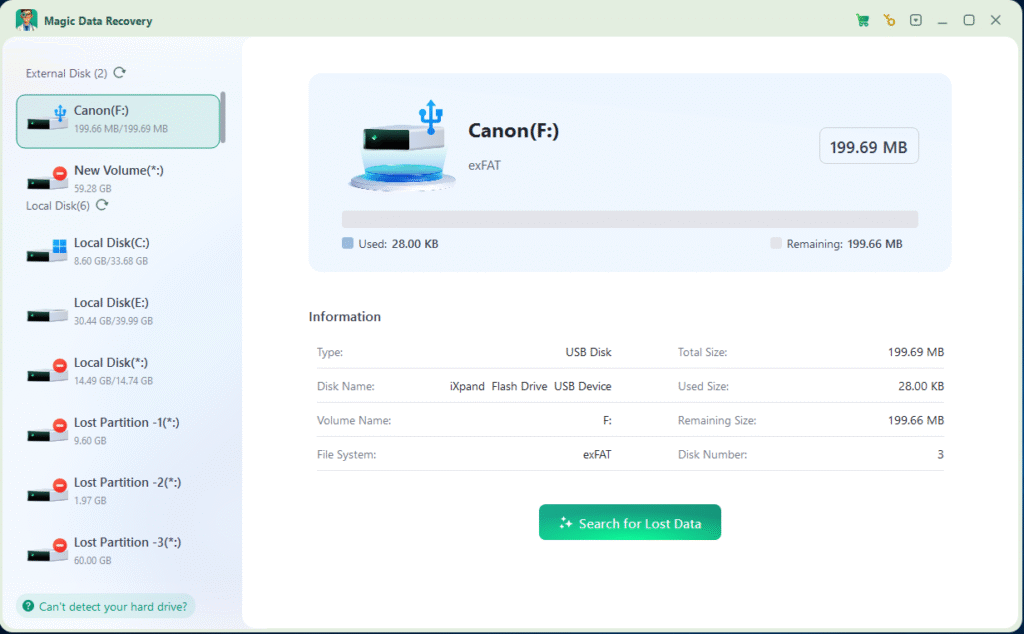
- Launch the software and select the affected SSD.
- Click Search for Lost Data.
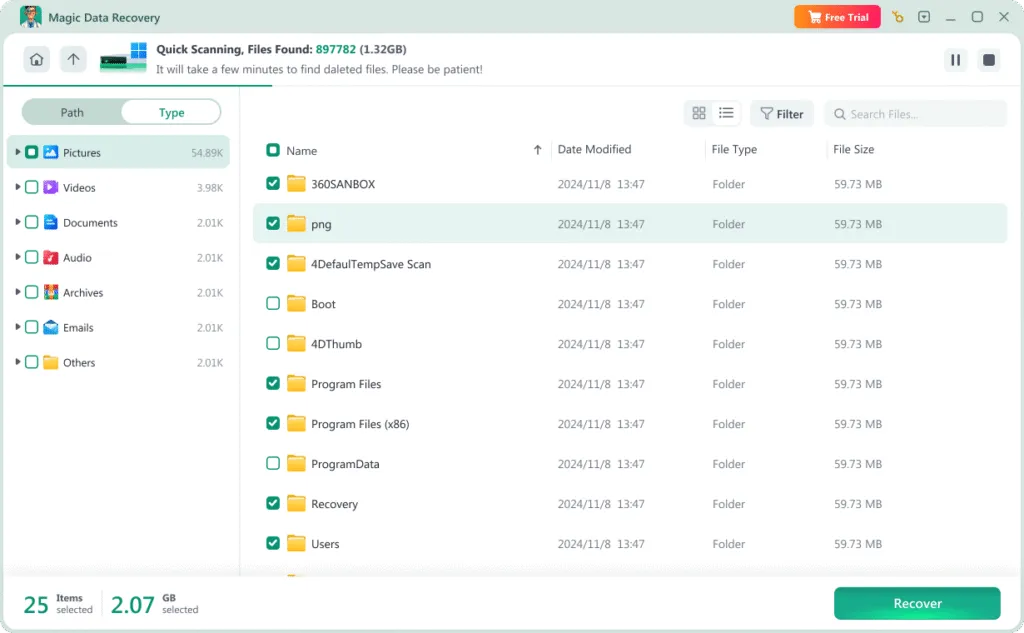
- Wait for the scan to complete.
- Preview the found files.
- Select the files you want to recover.
- Save them to another healthy drive.
- After your files are safe, format the SSD using one of the methods above.
Do not save recovered files back to the same SSD before formatting is complete.
How to Recover SSD Data Using Magic Data Recovery
Magic Data Recovery performs a non-destructive scan, allowing you to extract data safely before formatting your SSD.
Step-by-Step Recovery Process
1. Download and Install: Get Magic Data Recovery from the official website and install it on your computer.
Supports Windows 7/8/10/11 and Windows Server


Conclusion
Now you know how to format SSD safely in different situations. If the SSD is working normally, you can format it using File Explorer, Disk Management, Windows Settings, or Diskpart. For most Windows users, NTFS, GPT, and Quick Format are the recommended choices.
However, formatting is not the first step if the SSD is RAW, unreadable, accidentally formatted, or still contains important files. In that case, recover your files first with Magic Data Recovery and save them to another healthy drive before formatting.
If you need a complete guide for recovering files after formatting, read our formatted drive recovery guide.
Supports Windows 7/8/10/11 and Windows Server
FAQs About How to Format SSD
Is it safe to format an SSD?
What is the best way to format SSD?
Should I use NTFS or exFAT when formatting SSD?
Should I format my SSD MBR or GPT?
Should I quick format or full format an SSD?
How do I format a new SSD?
Can I format an SSD without losing data?
Why does Windows ask me to format my SSD?
Can I recover files after formatting an SSD?

Erin Smith is recognized as one of the most professional writers at Amagicsoft. She has continually honed her writing skills over the past 10 years and helped millions of readers solve their tech problems.