
Errori del disco SSD: Cause, soluzioni e recupero dati
Indice dei contenuti
Introduzione: Comprendere l'impatto degli errori dei dischi SSD
Cause comuni di errori del disco SSD
1. Problemi di firmware
Il firmware obsoleto o danneggiato è una delle cause principali di Errori del disco SSD. Il firmware controlla le operazioni dell'unità e le anomalie possono causare processi di lettura/scrittura errati, problemi di riconoscimento dell'unità o rallentamenti improvvisi.
Suggerimento: Controllare sempre il SSD Il sito web del produttore contiene gli ultimi aggiornamenti del firmware e seguire attentamente le fasi di installazione consigliate.
2. Blocchi difettosi o danni fisici
Le unità SSD memorizzano i dati in celle di memoria flash, che possono degradarsi nel tempo. I blocchi difettosi possono impedire la corretta lettura o scrittura dei dati, causando errori. Anche gli urti fisici, le temperature estreme o le sovratensioni elettriche possono danneggiare l'unità.
3. Arresto improprio e perdita di potenza
Frequenti spegnimenti impropri o perdite di potenza inaspettate possono interrompere le operazioni dell'unità SSD. Questo può corrompere il file system dell'unità o creare un'anomalia nel funzionamento dell'unità. errori del disco che influenzano le prestazioni.
4. Corruzione del file system
Problemi di file system, come NTFS o exFAT corruzione, può innescare errori del disco ssd. I sintomi più comuni includono cartelle inaccessibili, nomi di file strani o errori durante l'avvio.
5. Conflitti software
Alcune applicazioni, in particolare quelle che gestiscono grandi quantità di dati, possono entrare in conflitto con le operazioni dell'SSD. I programmi antivirus, gli strumenti di gestione del disco o i software mal ottimizzati possono involontariamente causare errori.
Sintomi di errori del disco SSD
- Improvvisi crash del sistema o errori di schermata blu
- File o cartelle mancanti
- L'SSD non viene riconosciuta dal BIOS o dal sistema operativo
- Prestazioni lente o errori di lettura/scrittura
- Messaggi di errore frequenti durante l'accesso ai file
Riconoscere tempestivamente questi sintomi può prevenire ulteriori danni e aiutarvi a prendere le misure adeguate.
Come risolvere gli errori del disco SSD
1. Controllare i collegamenti e l'hardware
Assicuratevi che l'unità SSD sia collegata correttamente. Cavi allentati o porte difettose possono imitare errori del disco. Provare a ricollegare l'unità o a utilizzare una porta SATA/USB diversa.
2. Aggiornare il firmware e i driver
Visitate il sito web del produttore dell'unità SSD per scaricare il firmware e i driver più recenti. Il firmware aggiornato spesso risolve i bug noti e migliora la stabilità.
3. Eseguire gli strumenti integrati
- Finestre: Utilizzo CHKDSK per scansionare e riparare gli errori del file system:
chkdsk X: /f /r
- Mac: Usate il First Aid di Utility Disco per verificare la presenza di errori del disco.
4. Evitare frequenti interruzioni di corrente
Investite in un gruppo di continuità (UPS) per le configurazioni desktop. Assicuratevi che i computer portatili vengano spenti correttamente per evitare il danneggiamento del file system.
5. Eseguire regolarmente il backup
Anche dopo aver risolto gli errori, i problemi di fondo possono persistere. Backup regolari ridurre il rischio di perdita permanente dei dati.
Recupero dei dati persi dagli errori del disco SSD
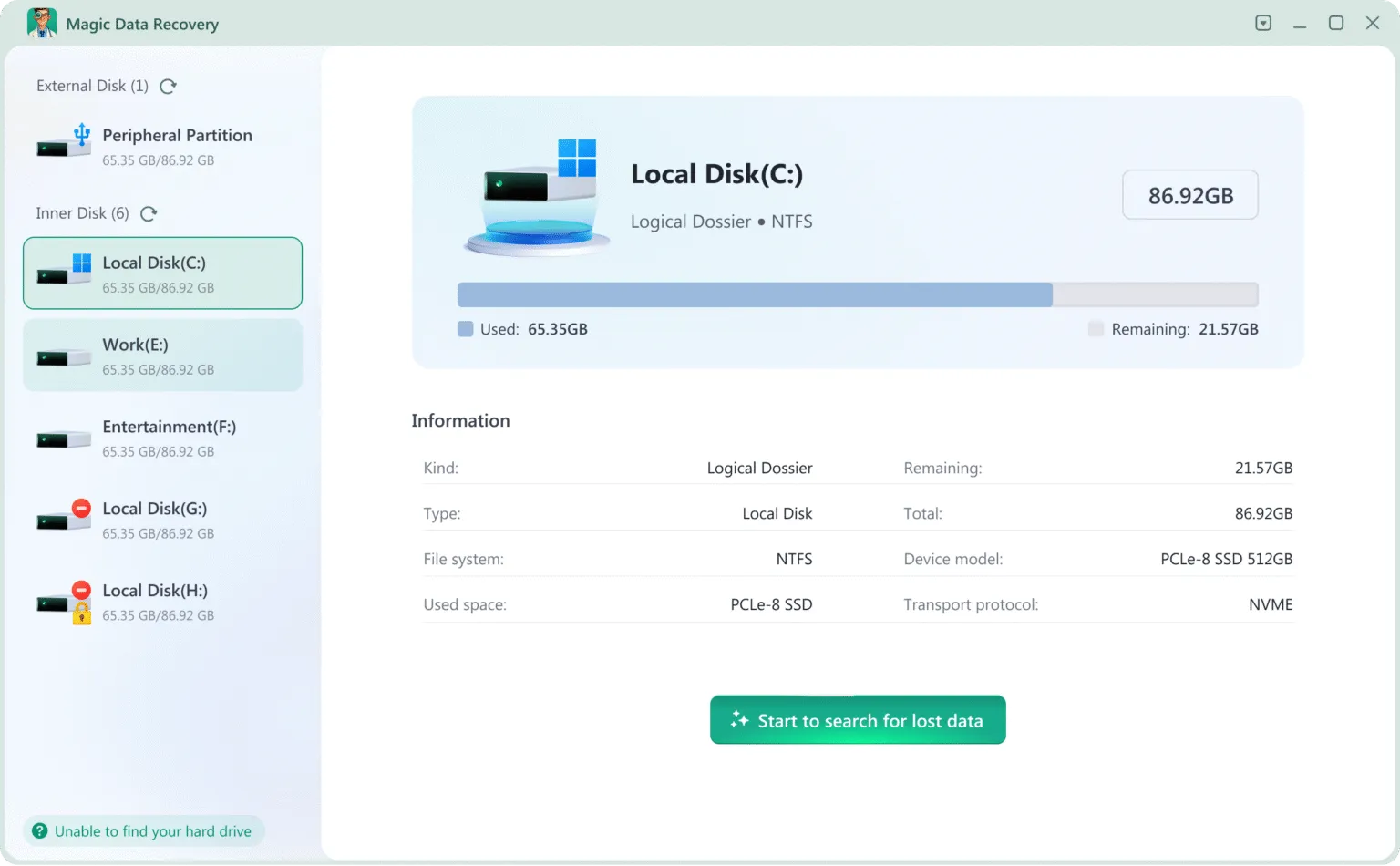
Perché scegliere Magic Data Recovery?
- Punto dolente centrale: Recupera i file persi dalle unità SSD anche dopo errori gravi o corruzione.
- Vantaggi: Supporta più tipi di file, scansione veloce e recupero sicuro senza sovrascrivere i dati esistenti.
- Scenari d'uso: Ideale per gli utenti che hanno problemi di avvio, partizioni mancanti o unità SSD danneggiate.
- Affidabilità: Rispetto al recupero manuale o agli strumenti gratuiti, offre tassi di successo più elevati e riduce il rischio di ulteriori danni.
Esempio: Se l'unità SSD diventa improvvisamente illeggibile a causa di un'anomalia del firmware, Magic Data Recovery può eseguire la scansione dell'unità e ripristinare in modo efficiente documenti, foto o video importanti.
Se state cercando una soluzione più efficiente per recuperare i dati persi, provate Magic Data Recovery per riavere accesso ai vostri file in modo sicuro.
Supporta Windows 7/8/10/11 e Windows Server
Suggerimenti preventivi per evitare gli errori dei dischi SSD
- Aggiornamenti regolari del firmware: Assicuratevi che il firmware dell'SSD sia sempre aggiornato.
- Monitoraggio della salute dell'SSD: Utilizzate strumenti come CrystalDiskInfo per monitorare i livelli di usura e le prestazioni.
- Manipolazione sicura: Evitare gli urti fisici, le temperature estreme e le sovratensioni elettriche.
- Spegnimento corretto: Eseguire sempre un arresto pulito per evitare il danneggiamento del file system.
- Dati di backup: Mantenere i backup di routine su unità esterne o su cloud storage.
Conclusione
Domande frequenti
Come risolvere gli errori sull'SSD?
Qual è il problema comune delle SSD?
Come sapere se l'SSD è difettosa?
Gli errori di lettura del disco sono comuni sulle unità SSD?
Qual è la durata di vita di un'unità SSD?
È possibile riparare un'unità SSD in avaria?
L'SSD può essere danneggiato?

Erin Smith è riconosciuta come una delle scrittrici più professionali di Amagicsoft. Negli ultimi 10 anni ha continuamente affinato le sue capacità di scrittura e ha aiutato milioni di lettori a risolvere i loro problemi tecnologici.