
SSD Disk Errors: Causes, Fixes & Data Recovery
Table of Contents
Introduction: Understanding the Impact of SSD Disk Errors
Common Causes of SSD Disk Errors
1. Firmware Issues
Outdated or corrupted firmware is a leading cause of SSD disk errors. Firmware controls the drive’s operations, and glitches can result in failed read/write processes, drive recognition problems, or sudden slowdowns.
Tip: Always check the SSD manufacturer’s website for the latest firmware updates and follow recommended installation steps carefully.
2. Bad Blocks or Physical Damage
SSDs store data in flash memory cells, which can degrade over time. Bad blocks can prevent proper reading or writing of data, leading to errors. Physical shocks, extreme temperatures, or electrical surges may also damage the drive.
3. Improper Shutdowns and Power Loss
Frequent improper shutdowns or unexpected power loss can interrupt SSD operations. This may corrupt the drive’s file system or create disk errors that affect performance.
4. File System Corruption
File system issues, such as NTFS or exFAT corruption, can trigger ssd disk errors. Common symptoms include inaccessible folders, strange file names, or errors during boot-up.
5. Software Conflicts
Certain applications, particularly those handling large amounts of data, may conflict with SSD operations. Antivirus programs, disk management tools, or poorly optimized software can unintentionally cause errors.
Symptoms of SSD Disk Errors
- Sudden system crashes or blue screen errors
- Missing files or folders
- SSD not recognized by BIOS or operating system
- Slow performance or read/write errors
- Frequent error messages when accessing files
Recognizing these symptoms early can prevent further damage and help you take appropriate action.
How to Fix SSD Disk Errors
1. Check Connections and Hardware
Ensure your SSD is properly connected. Loose cables or faulty ports can mimic disk errors. Try reconnecting the drive or using a different SATA/USB port.
2. Update Firmware and Drivers
Visit your SSD manufacturer’s website to download the latest firmware and drivers. Updated firmware often resolves known bugs and improves stability.
3. Run Built-in Tools
- Windows: Use CHKDSK to scan and repair file system errors:
chkdsk X: /f /r
- Mac: Use Disk Utility’s First Aid to check for disk errors.
4. Avoid Frequent Power Interruptions
Invest in an uninterruptible power supply (UPS) for desktop setups. Ensure laptops are shut down properly to prevent file system corruption.
5. Backup Regularly
Even after fixing errors, underlying issues may persist. Regular backups reduce the risk of permanent data loss.
Recovering Lost Data from SSD Disk Errors
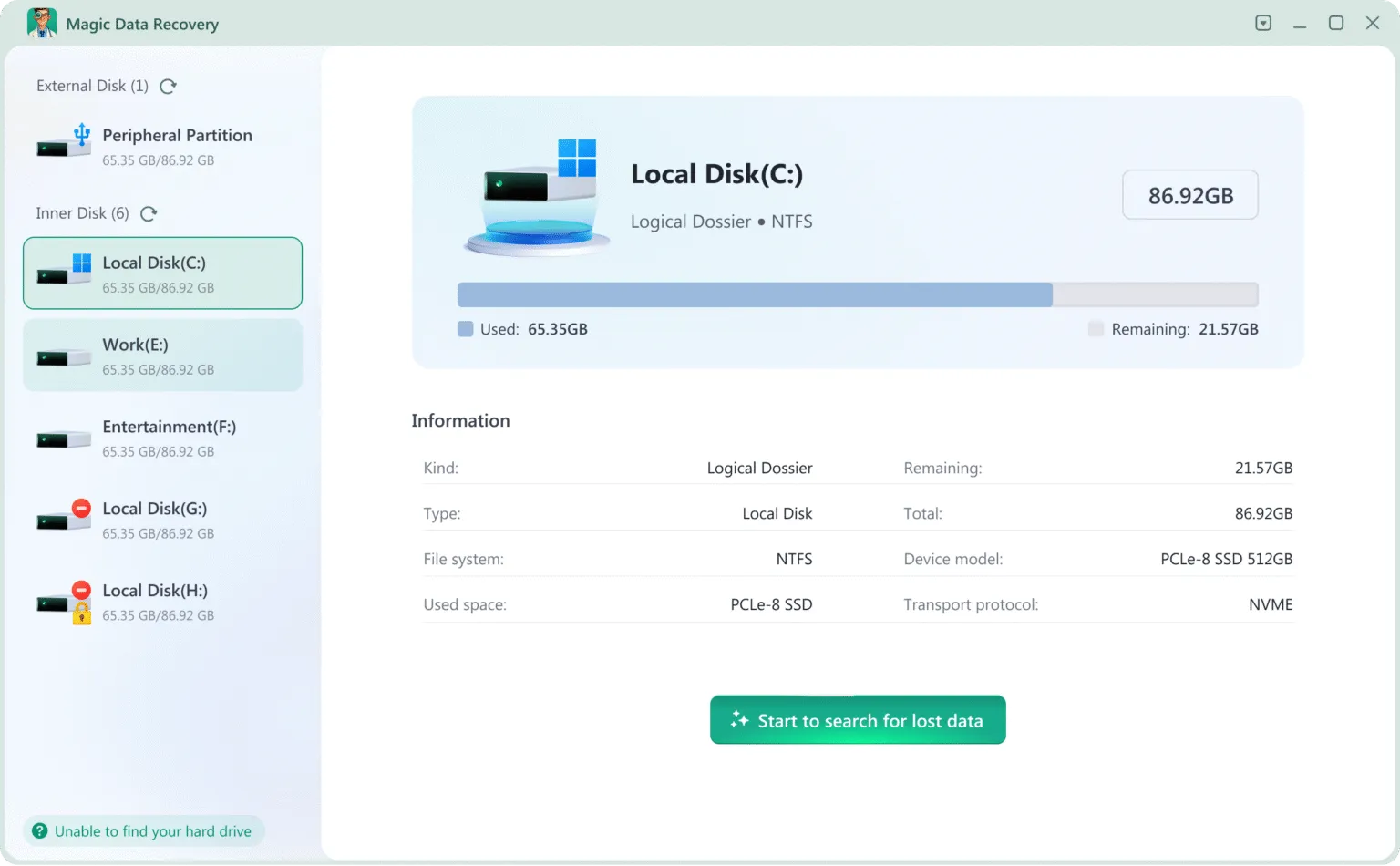
Why choose Magic Data Recovery?
- Core Pain Point: Recovers lost files from SSDs even after severe errors or corruption.
- Advantages: Supports multiple file types, fast scanning, and safe recovery without overwriting existing data.
- Usage Scenarios: Ideal for users experiencing boot failures, missing partitions, or corrupted SSDs.
- Reliability: Compared to manual recovery or free tools, it provides higher success rates and reduces risk of further damage.
Example: If your SSD suddenly becomes unreadable due to a firmware glitch, Magic Data Recovery can scan the drive and restore important documents, photos, or videos efficiently.
If you’re looking for a more efficient solution to recover lost data, try Magic Data Recovery to regain access to your files safely.
Supports Windows 7/8/10/11 and Windows Server
Preventive Tips to Avoid SSD Disk Errors
- Regular Firmware Updates: Ensure your SSD firmware is always up-to-date.
- Monitor SSD Health: Use tools like CrystalDiskInfo to track wear levels and performance.
- Safe Handling: Avoid physical shocks, extreme temperatures, and electrical surges.
- Proper Shutdowns: Always perform a clean shutdown to avoid file system corruption.
- Backup Data: Maintain routine backups on external drives or cloud storage.
Conclusion
FAQs
How to fix errors on SSD?
What is the common problem of SSD?
How to know if SSD is faulty?
Are disk read errors common on SSDs?
What is the lifespan of a SSD?
Can a failing SSD be repaired?
Can SSD be corrupted?

Erin Smith is recognized as one of the most professional writers at Amagicsoft. She has continually honed her writing skills over the past 10 years and helped millions of readers solve their tech problems.