
Unità SSD non riconosciuta: Cause, soluzioni e guida al recupero dei dati
Indice dei contenuti
Perché l'unità SSD non viene riconosciuta?
Un Unità SSD non riconosciuta L'errore è uno dei problemi di archiviazione più frustranti che gli utenti si trovano ad affrontare oggi. Si collega il SSD sul PC, ma non appare in Esplora file, Gestione del disco, o addirittura il BIOS. In molti casi reali, questo problema si verifica improvvisamente, dopo un aggiornamento del sistema, un'interruzione di corrente, uno spegnimento improprio o un errore di formattazione del disco.
Quando un Unità SSD non riconosciuta Quando si verifica un problema, gli utenti si preoccupano spesso di due cose:
- se l'hardware dell'SSD è danneggiato e
- se i loro dati importanti sono andati perduti in modo permanente.
La buona notizia è che molti problemi di rilevamento delle SSD sono software, Non si tratta di guasti fisici. Problemi come la perdita di partizioni o la trasformazione del file system in RAW possono impedire il corretto riconoscimento dell'unità. In questi scenari, strumenti di ripristino professionali come Magic Data Recovery può aiutare a recuperare i dati persi in modo sicuro utilizzando Soluzione SSD prima di ulteriori tentativi di riparazione.
Supporta Windows 7/8/10/11 e Windows Server
Cause di “Unità SSD non riconosciuta”
Un Unità SSD non riconosciuta Il problema può presentarsi in diversi modi:
- L'SSD non viene visualizzato in Esplora file
- SSD visibile in Gestione del disco ma contrassegnato come Non allocato
- Il file system SSD appare come RAW
- SSD non rilevata nel BIOS o nell'UEFI
- Windows mostra “Dispositivo sconosciuto” o non dà alcuna risposta.
Ogni sintomo è riconducibile a una diversa causa principale, per cui una diagnosi accurata è fondamentale prima di intervenire.
Cause comuni del mancato riconoscimento di un'unità SSD
Capire perché un Unità SSD non riconosciuta Il problema si verifica aiuta a scegliere la soluzione corretta e a evitare la perdita di dati.
1. Problemi di connessione o di alimentazione
Cavi SATA allentati, adattatori USB difettosi o alimentazione insufficiente sono spesso causa di errori di rilevamento delle SSD. Le unità SSD esterne sono particolarmente vulnerabili alle porte USB instabili.
Scenario tipico:
Un'unità SSD portatile funziona su un computer ma non su un altro a causa di un cavo USB danneggiato.
2. Partizione SSD mancante o persa
Se la tabella delle partizioni dell'unità SSD è danneggiata, l'unità potrebbe apparire come Non allocato. Questo accade comunemente dopo:
- Inizializzazione accidentale del disco
- Eliminazione della partizione
- Formattazione interrotta
In questo caso, il Unità SSD non riconosciuta Il problema è logico, non fisico.
3. Errore del file system RAW
Quando Windows non riesce a leggere il file system dell'unità SSD, può mostrare l'unità come RAW. Questo può essere causato da:
- Interruzione improvvisa dell'alimentazione
- Espulsione non sicura
- Corruzione del file system
Non è possibile accedere a un'unità SSD RAW senza formattarla, il che mette a rischio i dati.
4. Driver obsoleti o corrotti
I driver del controller di archiviazione non corretti possono impedire al sistema di riconoscere correttamente l'unità SSD.
5. Problemi di BIOS o firmware
Se l'unità SSD non viene rilevata nel BIOS, i motivi possono essere i seguenti:
- Porte SATA disabilitate
- Firmware SSD obsoleto
- Modalità di avvio errata (AHCI o RAID)
6. Guasto fisico dell'SSD
Anche se meno comune, NAND L'usura, il guasto del controller o il danneggiamento del firmware possono portare a un'unità SSD veramente morta.
Come risolvere il problema dell'unità SSD non riconosciuta (passo dopo passo)
Di seguito sono riportate le soluzioni comprovate per risolvere un Unità SSD non riconosciuta problema, partendo dai metodi più sicuri.
Soluzione 1: controllare le connessioni fisiche
- Ricollegare i cavi SATA o USB
- Provare con una porta o un adattatore diverso
- Testate l'SSD su un altro computer
Questo semplice passaggio risolve molti problemi di rilevamento.
Soluzione 2: Controllare Gestione disco
- Stampa Win + X → Gestione disco
- Individuare l'SSD
Possibili risultati:
- Non allocato: Partizione persa
- RAW: File system danneggiato
⚠️ Fare non Formattare l'unità se i dati sono importanti.
Soluzione 3: Recuperare i dati da SSD persi o RAW (consigliato)
Quando la perdita di partizione o i file system RAW causano una Unità SSD non riconosciuta problema, recupero dati dovrebbe essere la prima priorità.
Perché utilizzare Magic Data Recovery?
Magic Data Recovery è progettato per gestire in modo sicuro scenari complessi di perdita di dati SSD.
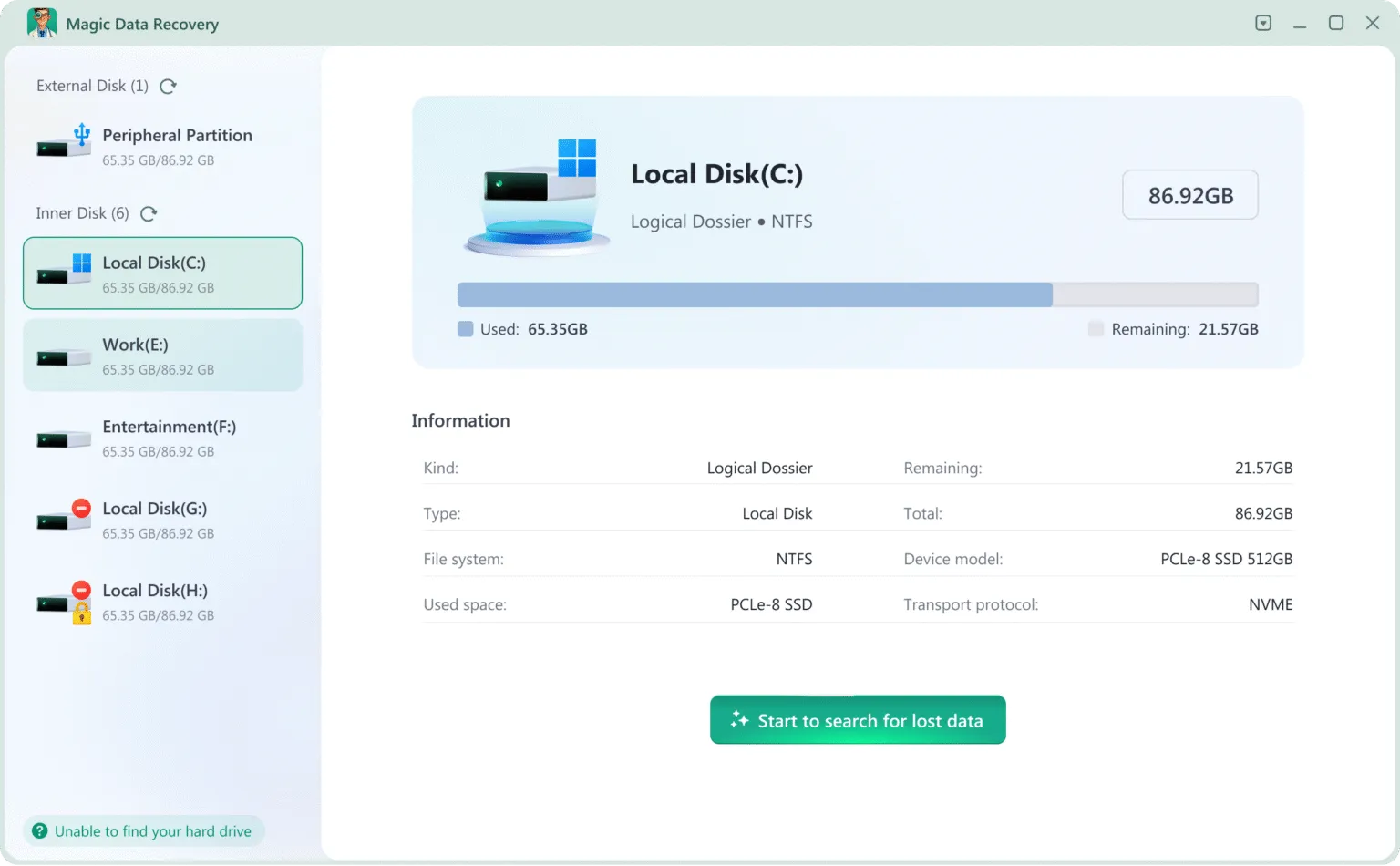
I problemi principali che risolve
- Partizioni SSD perse o eliminate
- Recupero del file system RAW
- SSD non riconosciuta dopo la formattazione
- Errori del file system che impediscono l'accesso
Vantaggi principali
- Tecnologia di scansione profonda per le unità SSD
- Supporti NTFS, FAT32, exFAT, RAW
- Recupero in sola lettura per evitare la sovrascrittura dei dati
- Interfaccia semplice e adatta a utenti non tecnici
Caso d'uso nel mondo reale
L'unità SSD di un utente diventa RAW dopo un arresto improvviso. Windows richiede la formattazione, ma Magic Data Recovery esegue una scansione diretta del disco e recupera documenti, foto e video senza modificare l'unità.
Rispetto ai comandi di riparazione manuali, Magic Data Recovery è più affidabile perché evita ulteriori danneggiamenti durante il processo di recupero.
Se siete alla ricerca di una soluzione di recupero SSD più sicura ed efficiente, Magic Data Recovery vale la pena di provare prima di qualsiasi tentativo di riparazione.
Supporta Windows 7/8/10/11 e Windows Server
Soluzione 4: Assegnare o modificare la lettera dell'unità
A volte l'unità SSD viene riconosciuta ma non ha una lettera di unità.
- Aperto Gestione del disco
- Fare clic con il tasto destro del mouse sull'SSD
- Scegliere Modifica della lettera dell'unità e dei percorsi
Soluzione 5: Aggiornare i driver di archiviazione
- Aperto Gestione dispositivi
- Aggiornamento dei controller SATA/USB
- Riavviare il sistema
Questa soluzione è utile quando i driver bloccano il riconoscimento dell'SSD.
Soluzione 6: Controllare le impostazioni del BIOS
- Accedere al BIOS/UEFI
- Confermare che l'SSD è abilitato
- Impostare la modalità SATA su AHCI
- Aggiornare il BIOS, se necessario
Se l'SSD non appare nel BIOS, è più probabile che si tratti di problemi hardware.
Come capire se un'unità SSD è fisicamente morta
Un Unità SSD non riconosciuta Il problema non è sempre sinonimo di guasto. Tuttavia, i segni di un'unità SSD esaurita includono:
- Non rilevato nel BIOS su più computer
- Nessun indicatore di alimentazione o di attività
- Strano odore di riscaldamento o di bruciato
In questi casi può essere necessaria una riparazione professionale.
Prevenzione di futuri problemi di riconoscimento degli SSD
- Espulsione sempre sicura delle unità SSD esterne
- Evitare perdite di potenza improvvise
- Mantenere aggiornati firmware e driver
- Mantenere backup regolari
Queste migliori pratiche riducono il rischio di ricorrenti Unità SSD non riconosciuta errori.
Conclusione
Un Unità SSD non riconosciuta Il problema può derivare da semplici problemi di connessione o da complessi guasti logici come la perdita di partizioni e file system RAW. Mentre i controlli hardware e le correzioni di sistema possono ripristinare l'accesso, Il recupero dei dati deve essere sempre al primo posto quando sono coinvolti file di valore.
Magic Data Recovery si distingue perché si concentra su recupero sicuro e di sola lettura, supporta scenari di guasto specifici per le SSD e fornisce risultati coerenti senza richiedere competenze tecniche avanzate. Per gli utenti che devono affrontare problemi di riconoscimento dell'SSD causati da errori logici, fornisce una soluzione più affidabile rispetto ai rischiosi comandi manuali.
Supporta Windows 7/8/10/11 e Windows Server
Domande frequenti
Come risolvere il problema dell'SSD non riconosciuto?
Come risolvere il problema dell'SSD non visualizzato sul PC?
L'SSD è morto se non viene rilevato?
Come risolvere il problema dell'SSD illeggibile?
Come capire se l'SSD è danneggiato?
Perché l'unità SSD non viene riconosciuta dal BIOS?
Come si diagnostica un'unità SSD morta?

Erin Smith è riconosciuta come una delle scrittrici più professionali di Amagicsoft. Negli ultimi 10 anni ha continuamente affinato le sue capacità di scrittura e ha aiutato milioni di lettori a risolvere i loro problemi tecnologici.