Skip to content
amagicsoft logo icon
  • Home
  • Products
    • Magic Data Recovery
    • Magic Recovery Key
  • Store
  • Blog
  • More
    • About Amagicsoft
    • Contact US
    • Privacy Policy
    • Terms
    • License Agreement
    • Refund Policy
  • English
    • 日本語
    • 한국어
    • Deutsch
    • Français
    • Español
    • Italiano
    • Português
    • 繁體中文
Wiki

Folder Access Denied Error Solutions

12.11.2025 Smith, Erin Comments Off on Folder Access Denied Error Solutions
fix-folder-access-denied-error
A Folder Access Denied error occurs when Windows or other operating systems prevent you from opening, modifying, or deleting a folder due to permission issues, encryption settings, or system restrictions. This is common in NTFS-formatted drives and shared network folders. It is not a sign of permanent data loss.

Table of Contents

How the Folder Access Denied Error Occurs

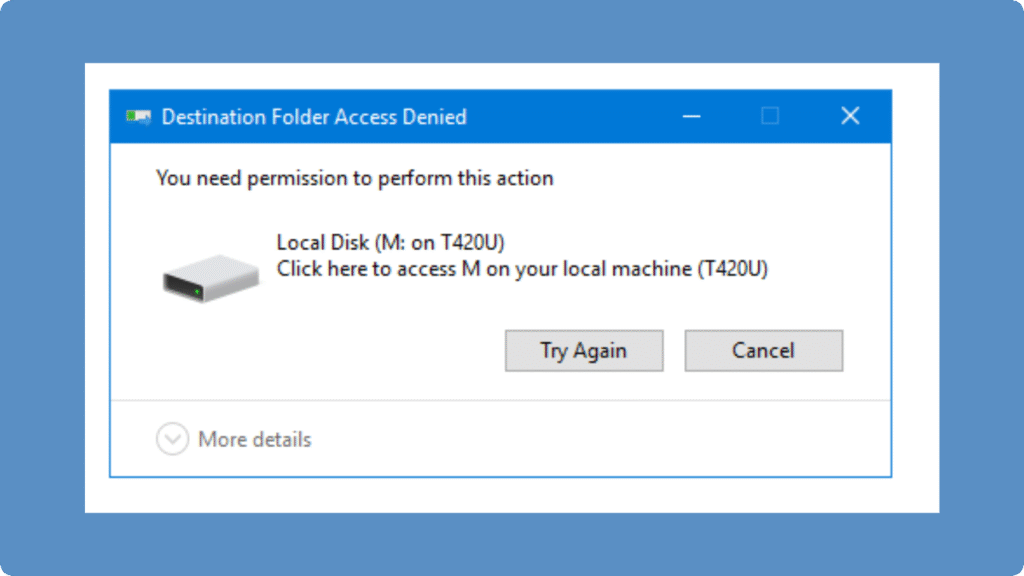
When you attempt to access a folder, the operating system checks your user permissions against the folder’s Access Control List (ACL). If your account lacks the required permissions, Windows displays an “Access Denied” message. Common scenarios include:

▪️ Trying to open a folder owned by another user.

▪️ Accessing system or program-protected directories.

▪️ Issues after transferring files from another computer or drive.

▪️ Conflicts in shared network folder permissions.
How the Folder Access Denied Error Occurs

Common Causes

Insufficient Permissions: Your account is not listed as an authorized user.

Ownership Conflicts: Files or folders transferred from another system retain the old owner’s ACL.

Read-Only or Encrypted Attributes: NTFS encryption or read-only settings restrict modifications.

Corrupted File System: Bad sectors or sudden shutdowns may cause folders to become inaccessible.

Step-by-Step Fixes

Follow these professional steps to regain access safely:

1. Take Ownership

fix access denied error with ownership

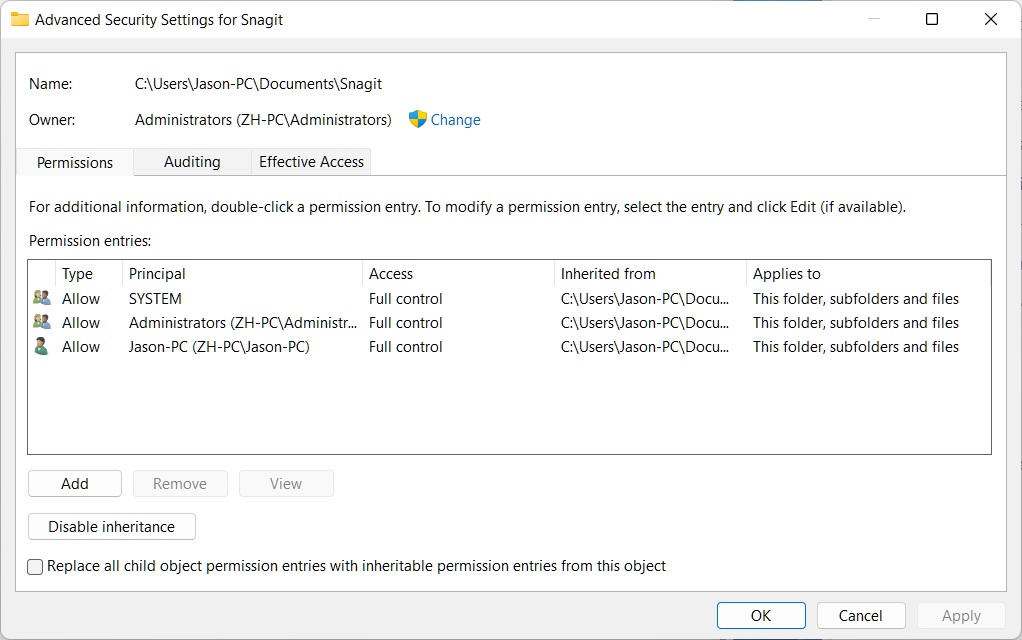
① Right-click the folder → Properties → Security → Advanced.

② Click Change next to Owner → Enter your username → Check Replace owner on subcontainers and objects → Apply.

2. Adjust Permissions
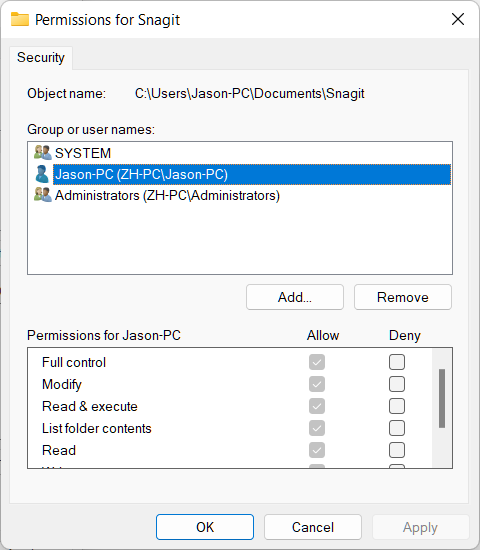
adjust permissions fix folder access denied

① Return to Properties → Security → Edit.

② Add your user account and assign Full Control.

③ Apply changes recursively to subfolders.

3. Check Read-Only or Encryption
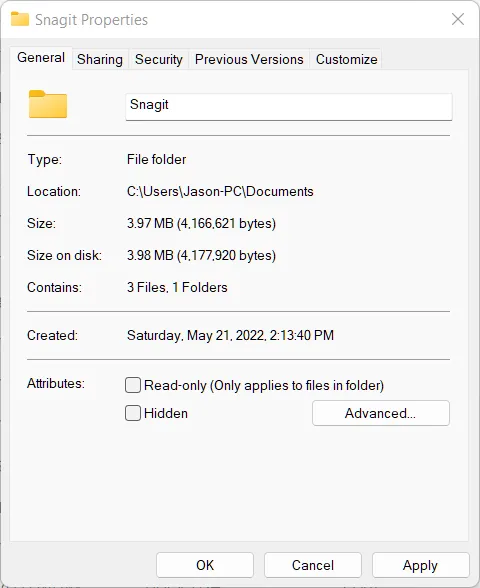
fix folder access-denied via check read only

① Right-click folder → Properties → General → Uncheck Read-only.

② For encrypted folders, ensure you have the correct encryption certificate or password.

4. Use Command-Line Tools (Advanced)

① Open Command Prompt as Administrator:

takeown /F "C:\Path\to\Folder" /R /D Y

icacls "C:\Path\to\Folder" /grant YourUsername:F /T

② These commands reclaim ownership and grant full control recursively.

5. Data Recovery Option

If the folder remains inaccessible due to corruption or accidental deletion, professional recovery software can safely restore your files. Magic Data Recovery or similar tools provide efficient, reliable recovery without overwriting existing data.

Examples

Network Folder Issue: You cannot access a shared project folder after a Windows update.

Transferred Drive Issue: Files from an old laptop show “Access Denied” on a new system.

System Folder Restriction: Windows prevents modifications in C:\Program Files for security reasons.

Conclusion

A Folder Access Denied error is usually caused by permission, ownership, or encryption issues. By systematically checking ownership, adjusting permissions, and using professional recovery tools if needed, you can safely regain access to your files without losing data.

If you need reliable assistance to regain folder access, consider using Magic Data Recovery, a professional tool to help recover your files safely and efficiently. Please download it now.

Download Magic Data Recovery

Supports Windows 7/8/10/11 and Windows Server

Folder Access Denied FAQs

1. What does a Folder Access Denied error mean?

This error occurs when your user account lacks the necessary permissions to open, modify, or delete a folder. It often relates to ownership restrictions, NTFS permissions, or encryption. Don’t worry—your files are usually safe and recoverable.

2. Why can’t I access a folder after transferring files?

Files moved from another system may retain previous ownership and ACL settings. If your current account isn’t recognized, Windows will block access. Adjusting permissions or taking ownership can restore access efficiently.

3. Can I resolve a folder permissions issue without administrator rights?

Some folders, particularly system or program directories, require administrative privileges to modify. Without them, you may only be able to view files. Logging in as an administrator or contacting IT support is recommended for full access.

4. Does an access denied error mean my files are lost?

No. Typically, the data is intact. The problem lies in permissions or encryption. Using safe recovery tools, like Magic Data Recovery, can help retrieve your files without risk of data loss.

5. How can I regain access to a restricted folder?

Start by taking ownership and adjusting permissions to give your account full control. For encrypted folders, ensure the correct certificates or passwords are used. If manual steps fail, professional recovery software can help regain access safely.

6. Are system folders like C:Program Files always protected?

Yes. Critical system folders are intentionally restricted to prevent accidental modification that could destabilize Windows. Only administrators can make changes, and careful steps should be followed to avoid breaking installed programs.

7. Why can external drives show an access denied error?

External NTFS drives or drives from other systems may block access because of retained permissions. Reclaiming ownership and resetting ACLs usually resolves the issue without affecting stored files.

8. What tool can help recover inaccessible folders safely?

Magic Data Recovery is a professional tool that scans drives, detects inaccessible folders, and restores files securely. It works without overwriting existing data and supports a variety of storage devices.
  • WiKi
Smith, Erin

Erin Smith is recognized as one of the most professional writers at Amagicsoft. She has continually honed her writing skills over the past 10 years and helped millions of readers solve their tech problems.

文章导航

Previous
Next

Search

Categories

  • Bitlocker Recovery
  • Deleted File Recovery
  • Disk Issue Fix
  • Documents Recovery
  • Format File Recovery
  • Hard Drive Recovery
  • License Key Recovery
  • Lost File Recovery
  • Memory Card Recovery
  • News
  • Partition Recovery
  • Password Recovery
  • Photo Recovery
  • SSD Recovery
  • USB Drive Recovery
  • User Guide
  • Video Recovery
  • Wiki
  • Windows Issue Fix

Recent posts

  • diagnose and fix file system error
    Fix File System Error: Complete Guide & Data Recovery
  • what is fragmented files
    Fragmented Files Explained: What They Are and How to Fix Them
  • a reliable partition recovery tool
    A Safe Guide to Disk Partition Recovery Tool

Tags

CHKDSK and Disk Tools Disk Repair Error Troubleshooting How to Magic Data Recovery Magic Recovery Key WiKi

Related posts

what is fragmented files
Wiki

Fragmented Files Explained: What They Are and How to Fix Them

08.01.2026 Jason No comments yet

If your computer feels sluggish or applications take longer to open, scattered data on your hard drive may be the cause. These scattered pieces are called fragmented files. So, what are fragmented files, why do they appear, and how can users fix them to boost system speed? This article will explain everything about this. Table […]

Fix The File Is Too Large for the Destination File System Error
Disk Issue Fix

Fix The File Is Too Large for the Destination File System Error

07.01.2026 Vasilii No comments yet

The error message “the file is too large for the destination file system” appears when you try to copy or move a file that exceeds the maximum size supported by the target storage device’s file system. A very common variation of this message is “the file is too big for the destination file system”, and […]

A Complete Guide to NAND Flash Storage
Wiki

A Complete Guide to NAND Flash Storage

07.01.2026 Vasilii No comments yet

If you have ever used an SSD, USB flash drive, memory card, or smartphone, you have relied on NAND flash storage—even if you did not realize it. When data suddenly disappears due to accidental deletion, formatting, or device failure, understanding how NAND-based storage works can make the difference between panic and confident recovery. The good […]

amagicsoft logo icon

Our vision is to become a globally renowned software brand and service provider, delivering top-tier products and services to our users.

Products
  • Magic Data Recovery
  • Magic Recovery Key
Policy
  • Terms
  • Privacy Policy
  • Refund Policy
  • License Agreement
Company
  • About Amagicsoft
  • Contact US
  • Store
Follow Us

Copyright © 2025 Amagicsoft. All Rights Reserved.

  • Terms
  • Privacy Policy